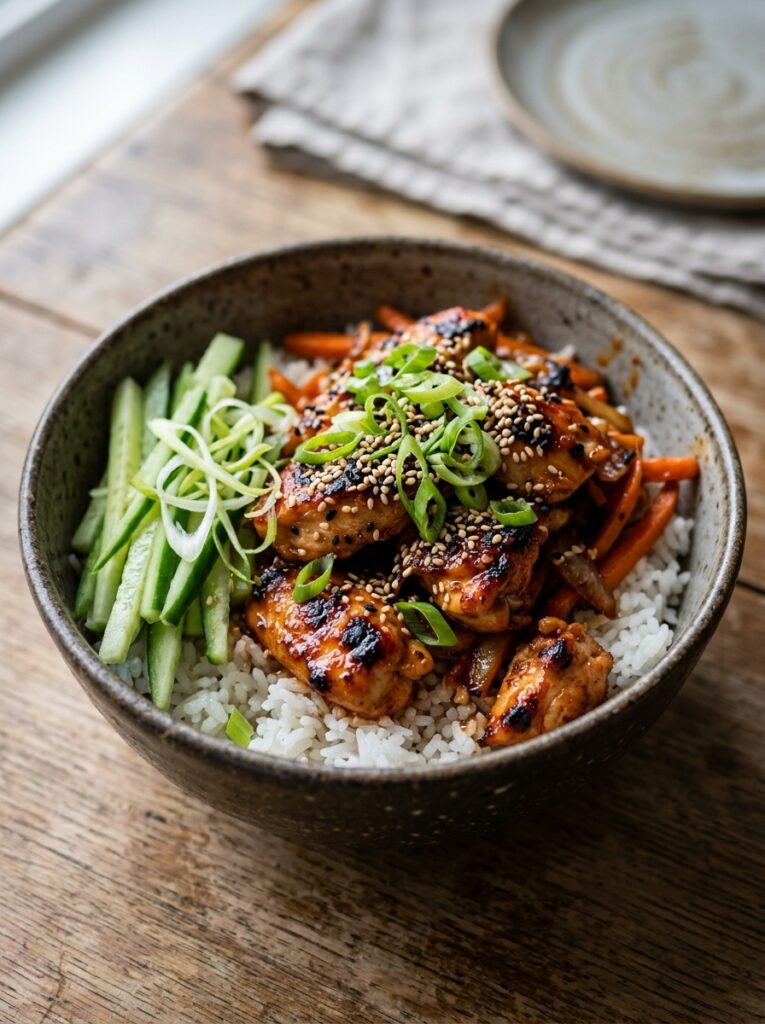
Chicken breast gochujang rice bowls are a flavorful Korean-inspired weeknight dinner that delivers spicy-sweet heat and tender protein over steamed rice. Chicken breast gochujang rice bowls are quick to assemble, family-friendly, and perfect for healthy meal prep. This complete recipe shows you exactly how to make the best chicken breast gochujang rice bowls at home with simple ingredients and reliable steps.
| Prep Time | Cook Time | Total Time | Servings | Difficulty | Cuisine |
|---|---|---|---|---|---|
| 15 minutes | 20 minutes | 35 minutes | 4 servings | Easy | Korean-inspired |
Why This Chicken Breast Gochujang Rice Bowls Recipe Works
The chicken breast gochujang rice bowls work because the gochujang marinade caramelizes quickly on the chicken, creating a glossy, spicy-sweet glaze that clings to every bite. I use a balanced mix of gochujang, soy sauce, sesame oil, garlic, and a touch of sweetener to keep the flavor bold without overpowering the tender chicken breast. The texture comes from thin-slicing the chicken for faster cooking, then searing hard for light browning and juicy centers. It is simple enough for beginners, yet reliable enough to make repeatedly for meal prep or busy family dinners.
Chicken breast gochujang rice bowls are versatile, with layered heat and umami that suit mild and bold palates. Home cooks like that the ingredients are easy to find, the process is straightforward, and the bowls reheat well for work lunches. The method locks in moisture, so the chicken stays succulent even when served cold over chilled rice or packed in containers.
If you love Korean flavors, you can pair this with a quick kimchi salad, or try a simple cucumber radish side for crunch. The sweetness of the rice tempers the heat, and the sesame oil adds a fragrant finish. Chicken breast gochujang rice bowls taste great with a lunchbox egg roll and can be customized with extra veggies for more fiber and color.
From a weeknight timing perspective, chicken breast gochujang rice bowls come together in about thirty-five minutes from start to finish. The sauce is whisked in one bowl, the chicken cooks in a skillet, and the rice steams in a rice cooker. This is a forgiving recipe that rewards high heat, fresh gochujang, and brief resting for juicier slices.
Chicken Breast Gochujang Rice Bowls Ingredients
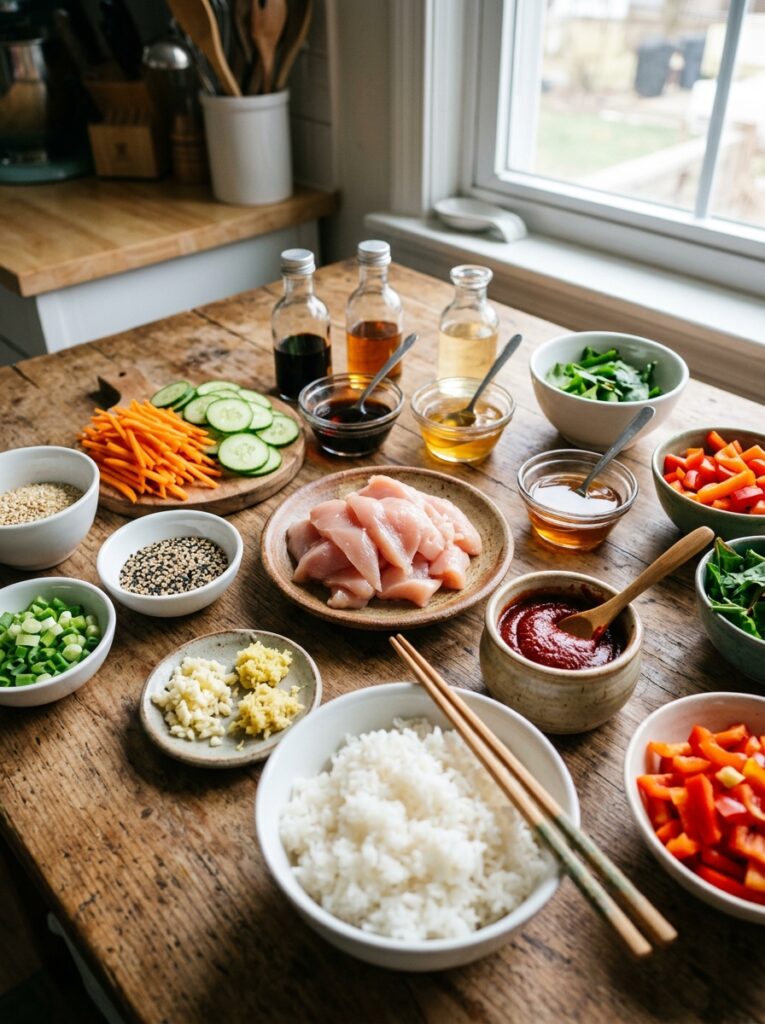
The ingredients for chicken breast gochujang rice bowls are simple and easy to customize based on what you have on hand.
| Ingredient | Quantity | Notes with alternatives |
|---|---|---|
| Chicken breast | 1.5 lb, thinly sliced | Use boneless skinless chicken thighs for richer flavor, or tofu for a plant-based option |
| Gochujang paste | 3 tablespoons | Use mild or hot, or mix with gochugaru for added heat depth |
| Soy sauce | 2 tablespoons | Use tamari for gluten-free, or coconut aminos for lower sodium |
| Sesame oil | 1 tablespoon | Use untoasted for lighter flavor, or omit and add toasted at the end |
| Garlic, minced | 3 cloves | Use garlic powder in a pinch, about 1 teaspoon |
| Ginger, grated | 1 teaspoon | Optional but recommended; use ground ginger 1/2 teaspoon if fresh is unavailable |
| Honey or sugar | 1 to 2 tablespoons | Balance the heat; maple syrup or brown sugar also work |
| Rice vinegar | 1 teaspoon | Adds brightness; lime juice is a fine substitute |
| Neutral oil for cooking | 1 tablespoon | Canola, avocado, or vegetable oil for high-heat searing |
| Cooked steamed rice | 4 cups | Jasmine, short-grain, or brown rice all work |
| Scallions, sliced | 3 stalks | For garnish and fresh bite |
| Sesame seeds | 1 teaspoon | For texture and aroma |
| Carrots, julienned | 1 cup | Raw or quick-pickled for crunch |
| Cucumber, sliced | 1 cup | Served cold for contrast with warm chicken |
How to Make Chicken Breast Gochujang Rice Bowls
Follow these steps to make chicken breast gochujang rice bowls with reliable results and juicy chicken.
Prep the Marinade
- Whisk gochujang, soy sauce, sesame oil, garlic, ginger, honey, and rice vinegar in a bowl until smooth.
- Set aside two tablespoons of the marinade for brushing during cooking.
Slice and Season Chicken
- Thinly slice chicken breast across the grain into 1/4-inch pieces for fast cooking.
- Toss chicken with the remaining gochujang marinade and let it rest for 10 minutes.
Cook the Rice
- Start steaming the rice while the chicken marinates so both are ready at the same time.
- Keep the rice warm in a covered pot or rice cooker until serving.
Sear the Chicken
- Heat a skillet over medium-high heat, add neutral oil, and spread the chicken in a single layer.
- Sear the chicken 2 to 3 minutes per side until browned and nearly cooked through.
Glaze and Finish
- Brush the reserved gochujang glaze over the chicken and cook 1 more minute until glossy.
- Remove from heat and let the chicken rest for 3 minutes to keep it juicy.
Assemble the Bowls
- Divide steamed rice among bowls and top with chicken, carrots, cucumber, and scallions.
- Sprinkle sesame seeds, add a drizzle of sesame oil if desired, and serve immediately.
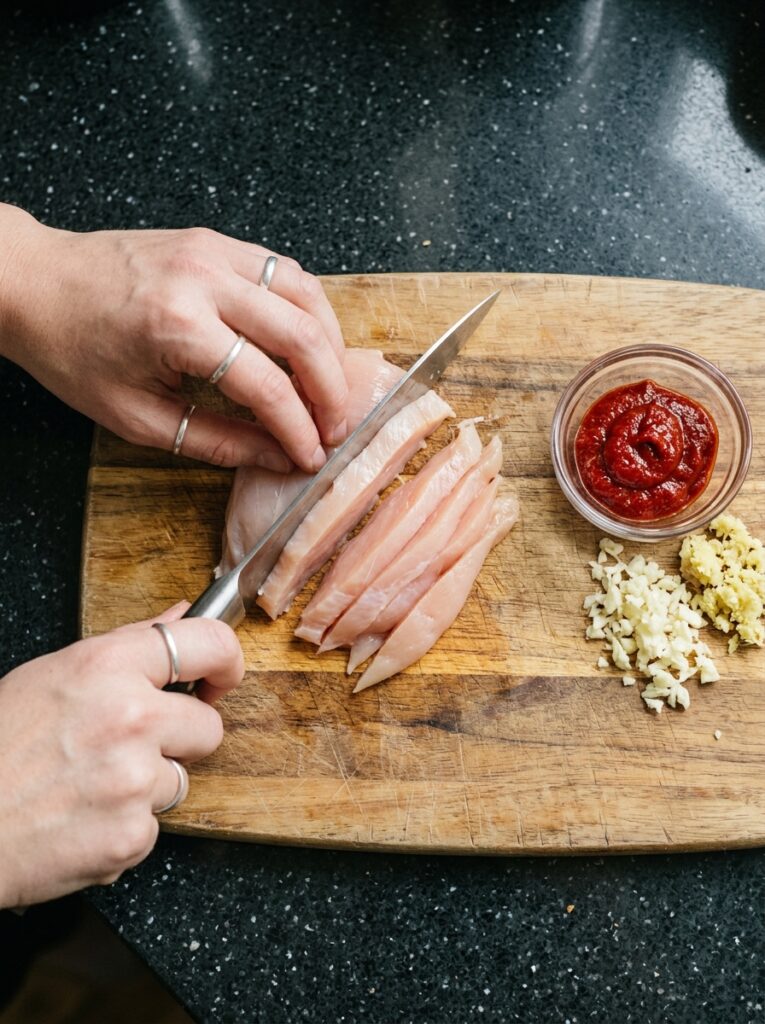
Chef Tips for Perfect Chicken Breast Gochujang Rice Bowls
For the best chicken breast gochujang rice bowls, slice chicken evenly and use high heat for quick searing. These tips help you dial in texture and flavor.
- Use very fresh gochujang for brighter heat, and stir it well before mixing since pastes can separate over time.
- Keep pieces uniform at about 1/4-inch thick to ensure fast, even cooking without drying out the lean breast meat.
- Cook in two batches if your skillet is small to avoid steaming the chicken and losing the sear and caramelization.
- Balance heat with sweetness by adjusting honey or sugar, tasting the marinade before adding the chicken.
- Rest the cooked chicken for a few minutes so the juices redistribute, which keeps the slices moist and tender.
- Prep the vegetables while the chicken marinates, so the bowls come together quickly and stay fresh and crunchy.
Common Chicken Breast Gochujang Rice Bowls Mistakes to Avoid
These common mistakes can undermine chicken breast gochujang rice bowls, but each one is easy to fix with a small technique change.
- Slicing chicken too thick causes uneven cooking; solution is to partially freeze the breast for 10 minutes and slice thin.
- Overcrowding the skillet steams the chicken; solution is to cook in batches and keep the pan hot for proper browning.
- Skipping the rest after cooking squeezes out juices; solution is to tent the chicken loosely and rest before slicing.
- Using old gochujang leads to flat flavor; solution is to buy a fresh jar and store it tightly in the refrigerator.
- Over-saucing too early can scorch due to sugars; solution is to reserve some marinade and brush it on near the end.
Best Chicken Breast Gochujang Rice Bowls Variations and Substitutions
These variations keep chicken breast gochujang rice bowls fresh and adaptable for different tastes and dietary needs.
| Ingredient | Substitution | Impact on Flavor |
|---|---|---|
| Chicken breast | Chicken thighs | Richer taste, slightly more fat, very juicy |
| Soy sauce | Coconut aminos | Milder sodium, gentle umami, slight sweetness |
| Honey | Brown sugar | Deeper caramel notes, thicker glaze |
| Gochujang | Miso and chili flakes | Umami-forward heat, different complexity |
| Sesame oil | Neutral oil only | Lighter aroma, finish with toasted sesame |
| White rice | Brown rice or quinoa | More fiber, nutty flavor, longer chew |
Serving Suggestions for Chicken Breast Gochujang Rice Bowls
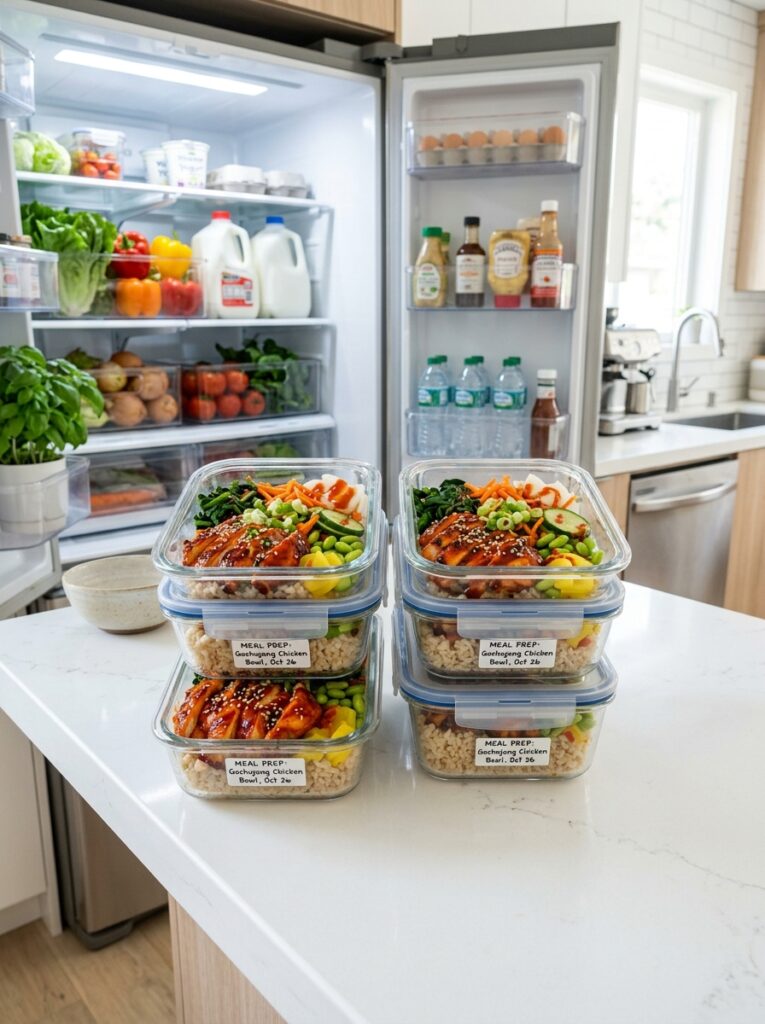
For satisfying chicken breast gochujang rice bowls, pair them with crunchy vegetables and light sides that complement the heat. Serve with quick-pickled carrots and cucumbers, a simple green salad with sesame vinaigrette, and a chilled citrus barley water for balance. For weeknight dinners, set up a toppings bar with extra scallions, sesame seeds, and roasted seaweed for DIY bowls. For gatherings, add a platter of Korean-style vegetable pancakes and keep bowls warm in a low oven. For meal prep, layer rice, chicken, and vegetables in containers and pack sauces separately to maintain texture.
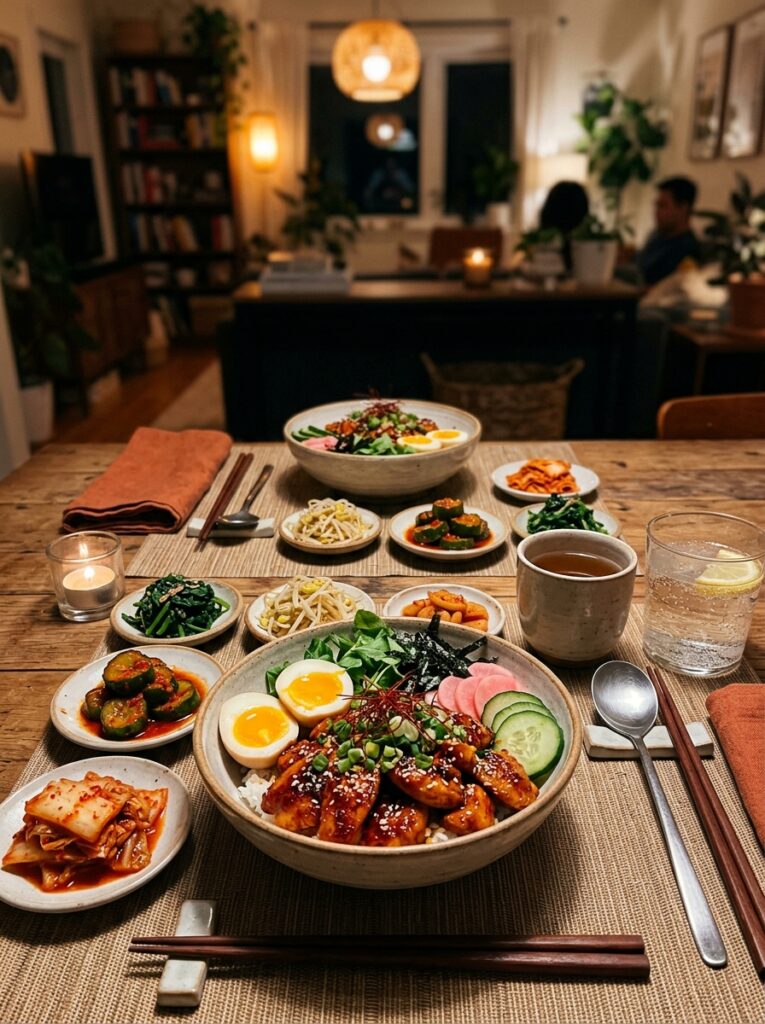
Storage and Reheating for Chicken Breast Gochujang Rice Bowls
Proper storage helps chicken breast gochujang rice bowls stay safe, tasty, and ready to eat throughout the week.
| Method | Duration | Instructions |
|---|---|---|
| Refrigerator | 3 to 4 days | Cool chicken quickly, store rice and chicken separately, and assemble bowls before eating. |
| Freezer | 2 to 3 months | Freeze cooled chicken in airtight bags; avoid freezing cucumbers and fresh scallions. |
| Reheating | 2 to 3 minutes | Warm chicken in a skillet over medium heat or microwave in 30-second bursts. |
| Make-ahead | Up to 4 days | Prep marinade and slice chicken in advance; cook fresh for best texture and flavor. |
| Food safety | Per USDA | Keep foods out of the danger zone; see USDA food safety guidelines for more details. |
Nutritional Information for Chicken Breast Gochujang Rice Bowls
This nutritional overview helps you plan balanced portions for chicken breast gochujang rice bowls.
| Nutrient | Amount per Serving |
|---|---|
| Calories | 450 to 520 |
| Protein | 35 to 40 g |
| Fat | 10 to 14 g |
| Carbohydrates | 55 to 60 g |
| Fiber | 2 to 4 g |
| Sugar | 6 to 9 g |
| Sodium | 800 to 1000 mg |
Approximate values.
Frequently Asked Questions About Chicken Breast Gochujang Rice Bowls
Can I make chicken breast gochujang rice bowls with pantry staples?
Yes, chicken breast gochujang rice bowls can be made with pantry staples like gochujang, soy sauce, sesame oil, garlic, and rice. For best flavor, add fresh scallions and cucumbers if available, but you can lean on frozen vegetables in a pinch. The pantry version still delivers balanced heat and savory depth for quick weeknight meals.
How do I know when the chicken in chicken breast gochujang rice bowls is fully cooked?
The safest method is to use a meat thermometer and confirm the chicken reaches 165°F at the thickest point. You can also slice a piece to check that the juices run clear and the center is opaque. Resting the chicken for a few minutes after cooking helps retain moisture and flavor in the bowls.
Why is my sauce too thick or too thin in chicken breast gochujang rice bowls?
Thick sauce happens when the glaze cooks too long and the sugars concentrate; fix it by adding a splash of water and brushing on at the end. Thin sauce occurs if the marinade is watery; reduce it in the pan for 1 minute to concentrate. Always taste and adjust sweetness and salt for balance.
Can I make chicken breast gochujang rice bowls ahead for meal prep?
Yes, chicken breast gochujang rice bowls are excellent for meal prep, and they hold well for 3 to 4 days in the fridge. Cook the chicken, cool it quickly, and store rice and vegetables separately to maintain texture. Assemble bowls just before eating or reheating for the best results.
What sides go best with chicken breast gochujang rice bowls?
Crunchy pickled vegetables, sesame cucumber salad, and roasted seaweed are excellent sides that complement the heat. A light miso soup or clear broth keeps the meal balanced and comforting. Fresh fruit or citrus water can cool the palate after the spicy gochujang finish.
How should I store leftover chicken breast gochujang rice bowls?
Refrigerate leftovers in airtight containers within two hours of cooking to maintain food safety. Keep rice and chicken separate from fresh garnishes if possible, so textures do not get soggy. Use within 3 to 4 days for best quality and reheat gently to preserve juiciness.
What is the best way to reheat chicken breast gochujang rice bowls?
Reheat chicken in a skillet over medium heat with a splash of water or broth to refresh the glaze. Microwave the rice in 30-second intervals, covered, to prevent drying out, then top with hot chicken. Add fresh garnishes after reheating for crispness and vibrant color.
Can I freeze chicken breast gochujang rice bowls?
Freeze the cooked chicken and rice for up to 2 to 3 months, and avoid freezing raw cucumbers or delicate greens. Thaw overnight in the fridge and reheat gently to preserve texture. Refresh the glaze by brushing on a little extra sauce after reheating.
What flavor variations work for chicken breast gochujang rice bowls?
For a citrus twist, add orange zest and a squeeze of juice to the glaze, which brightens the heat. For extra umami, include a teaspoon of miso in the marinade or a sprinkle of toasted seaweed on top. For a nutty profile, add crushed peanuts or a drizzle of chili oil for aroma.
Are chicken breast gochujang rice bowls beginner-friendly?
Yes, chicken breast gochujang rice bowls are beginner-friendly because the ingredients are easy to measure and the cook time is short. Slice the chicken uniformly, keep the pan hot, and brush the glaze on at the end to avoid scorching. Following the step-by-step instructions will give you consistent, delicious results every time.
Chicken breast gochujang rice bowls bring a simple path to bold Korean-style flavor in a healthy, meal-prep-friendly format. Make it once and you will crave the sweet heat, tender chicken, and fluffy rice again. The signature combination of spicy gochujang glaze and nutty sesame is what makes this dish memorable and worth repeating.
Print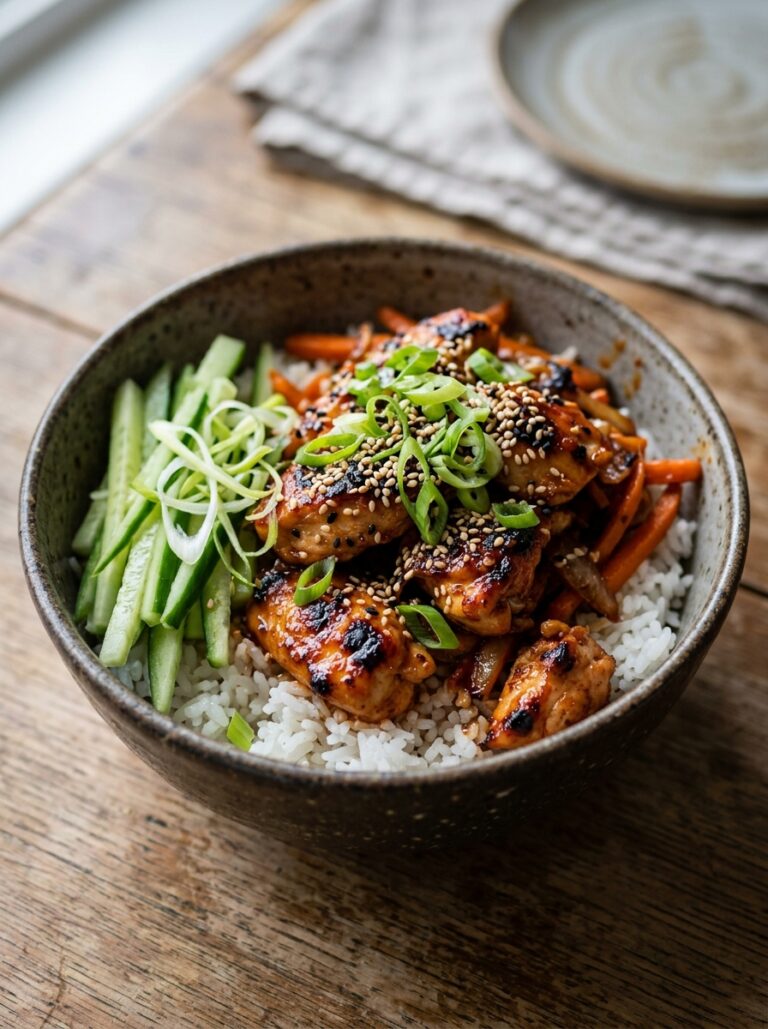
Chicken Breast Gochujang Rice Bowls
A quick, Korean-inspired dish with tender chicken simmered in a spicy-sweet gochujang glaze, served over steamed rice with fresh toppings like sesame oil and vegetables. Perfect for weeknight meals and meal prepping, this recipe is rich in umami and balanced heat, ideal for family diners or healthy lunches.
- Total Time: 35
- Yield: 4 servings 1x
Ingredients
4 boneless, skinless chicken breasts (approx. 6 oz each)
2 cups cooked steamed white or brown rice
2–3 tablespoons gochujang (Korean chili paste)
2–3 tablespoons low-sodium soy sauce
2–3 tablespoons sesame oil
3 garlic cloves, minced
1 tablespoon honey or brown sugar
1/4 cup grated carrots
1 small cucumber, sliced into matchsticks
1 green onion, thinly sliced
1 tablespoon toasted sesame seeds
1 teaspoon cornstarch (optional, for thickening)
3 tablespoons water or vegetable broth
Instructions
Thinly slice chicken breasts diagonally into strips.
In a bowl, mix gochujang, soy sauce, sesame oil, minced garlic, and honey. Pour half the marinade over the chicken and refrigerate for 15 minutes.
Heat a large skillet over medium-high heat and add the remaining marinade. Bring to a simmer.
Add sliced chicken to the skillet and cook for 8-10 minutes, stirring occasionally, until browned and cooked through. If using, mix cornstarch and water, then swirl into the sauce until slightly thickened.
Serve hot chicken over rice, and top with green onions, sesame seeds, carrots, and cucumber.
Notes
For extra heat, add a pinch of red pepper flakes to the marinade.
Serve with steamed rice at room temperature for a balanced texture.
Store leftovers in airtight containers and reheat in the microwave or oven.
Swap rice for quinoa or cauliflower rice for a low-carb option.
- Prep Time: 15
- Cook Time: 20
- Category: Lean Chicken
- Method: Stir fry
- Cuisine: Korean-inspired
- Diet: Non-Vegetarian
Nutrition
- Serving Size: 1 bowl
- Calories: 410
- Sugar: 10g
- Sodium: 3000mg
- Fat: 12g
- Saturated Fat: 2g
- Carbohydrates: 45g
- Fiber: 3g
- Protein: 30g
- Cholesterol: 85mg