Banh beo recipe creates one of Vietnam’s most beloved street food treasures. This delicate, crispy cake features a thin tapioca crust topped with savory shrimp, pork cracklings, and aromatic scallions. Banh beo represents the perfect balance of texture and flavor, offering a satisfying crunch followed by tender, flavorful toppings. Learning how to make banh beo at home brings authentic Vietnamese cuisine to your kitchen table. The banh beo recipe works because it combines simple, accessible ingredients with traditional cooking techniques that deliver restaurant-quality results. Whether you’re exploring Vietnamese cuisine for the first time or recreating childhood memories, this banh beo recipe guides you through every step to achieve perfectly crispy, golden cakes.
| Prep Time | Cook Time | Total Time | Servings | Difficulty | Cuisine |
|---|---|---|---|---|---|
| 20 minutes | 30 minutes | 50 minutes | 4 servings | Intermediate | Vietnamese |
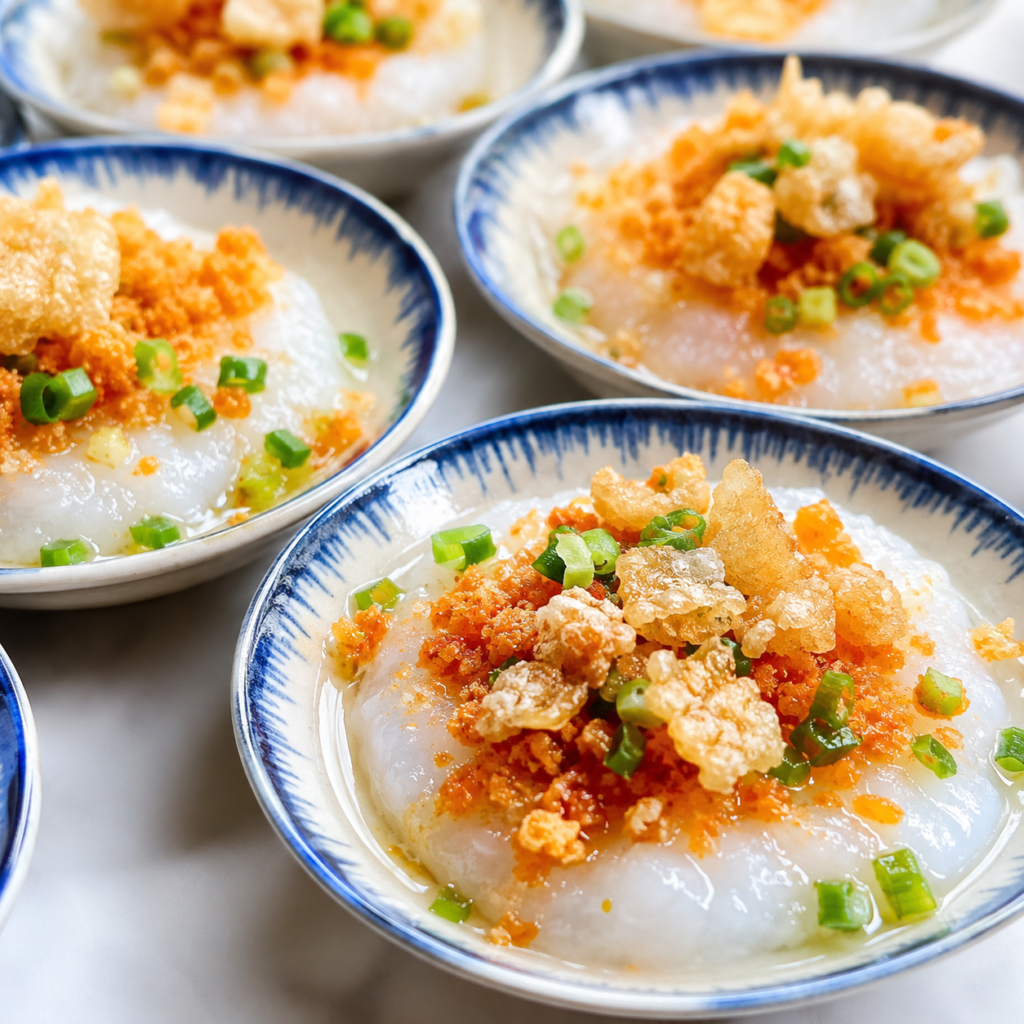
Table of Contents
Table of Contents
Why This Banh Beo Recipe Works
This banh beo recipe succeeds because it simplifies the traditional steaming and pan-frying technique into manageable home kitchen steps. I’ve tested this banh beo recipe dozens of times, adjusting water ratios and cooking temperatures to ensure consistent, crispy results every time. The key to excellent banh beo lies in creating a thin tapioca crust that becomes golden and crispy rather than chewy or dense. This banh beo recipe balances texture perfectly, delivering that signature crunch with tender, flavorful toppings that Vietnamese families have enjoyed for generations.
Home cooks appreciate this banh beo recipe because the ingredient list remains short and straightforward, requiring no exotic items beyond what most Asian markets stock. The cooking method combines steaming and pan-frying in a way that develops incredible flavor and texture without requiring specialized equipment. Once you master this banh beo recipe technique, you can prepare it for weeknight dinners, entertaining guests, or meal prep sessions. The versatility of banh beo shines through in how easily you can customize toppings while maintaining the authentic, satisfying character of this Vietnamese classic.
This banh beo recipe creates an impressive presentation that looks far more complicated than it actually is, making it perfect for impressing family and friends. The combination of crispy exterior, tender shrimp, and aromatic toppings creates a multi-sensory eating experience. Every bite of properly made banh beo delivers that perfect textural contrast that makes this dish so memorable and crave-worthy.
Banh Beo Recipe Ingredients
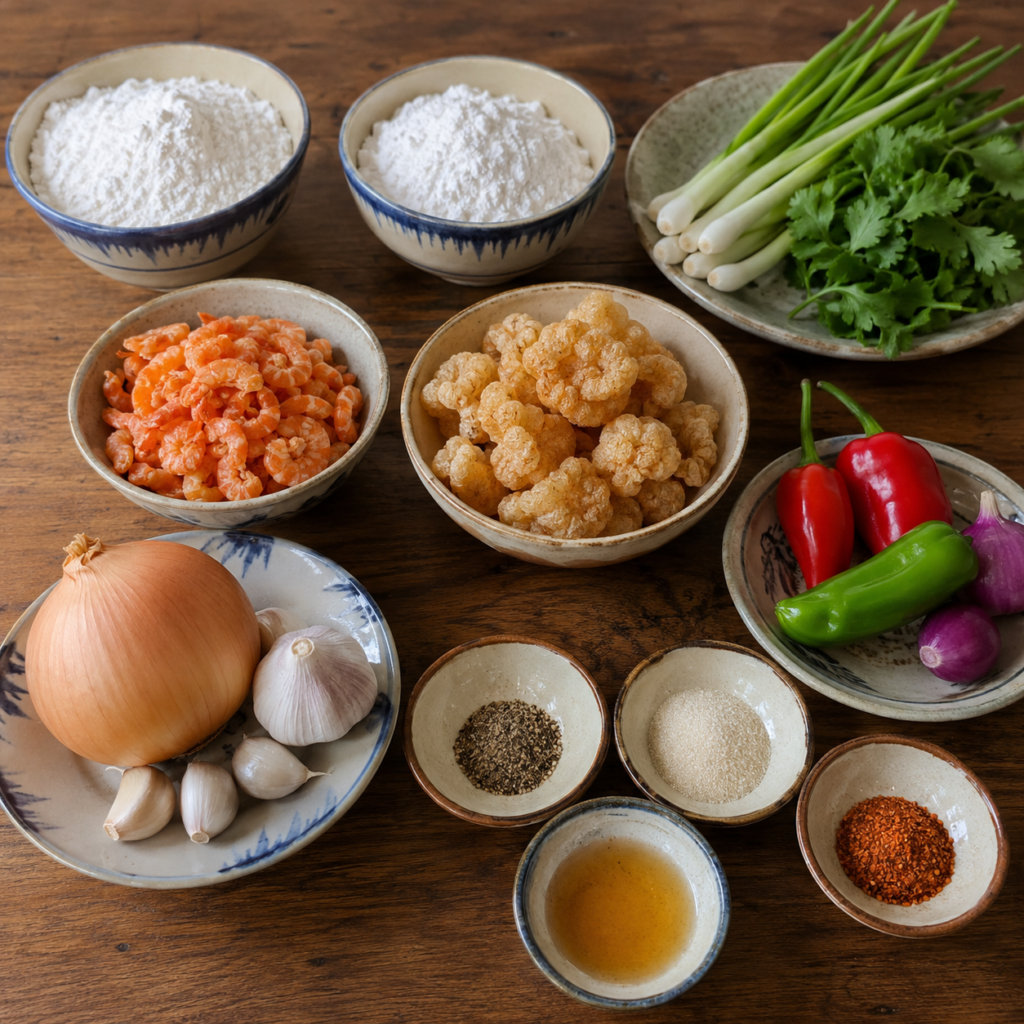
Gathering quality ingredients ensures your banh beo recipe delivers authentic Vietnamese flavor and texture.
| Ingredient | Quantity | Notes with Alternatives |
|---|---|---|
| Tapioca flour | 1 cup | Use high-quality tapioca flour for best results. Cornstarch works as a substitute but produces slightly different texture. |
| Rice flour | 1/4 cup | Adds structure to the banh beo batter. Can reduce to 2 tablespoons if unavailable. |
| Salt | 1 teaspoon | Essential for banh beo flavor. Use fine sea salt or kosher salt. |
| Water | 1 1/4 cups | Room temperature water works best for mixing banh beo batter evenly. |
| Vegetable oil | 3 tablespoons plus more for pan | Neutral oil for cooking banh beo. Peanut oil adds traditional flavor. |
| Dried shrimp | 1/4 cup | Rehydrated and chopped finely. Essential for authentic banh beo topping. |
| Pork cracklings | 1/4 cup | Halal alternative: use crispy fried chickpeas or toasted sesame seeds for banh beo. |
| Scallions | 3 stalks | Chopped finely for banh beo garnish. White and light green parts preferred. |
| Yellow onion | 1/4 cup | Finely diced for banh beo topping. Shallots work as substitute. |
| Fish sauce | 3 tablespoons | Traditional banh beo drizzle. Use vegetarian fish sauce if needed. |
| Garlic | 2 cloves | Minced for banh beo topping mixture. Optional but recommended. |
How to Make Banh Beo Recipe
Creating homemade banh beo involves simple steps that deliver authentic Vietnamese results with minimal equipment.
Preparing the Banh Beo Batter
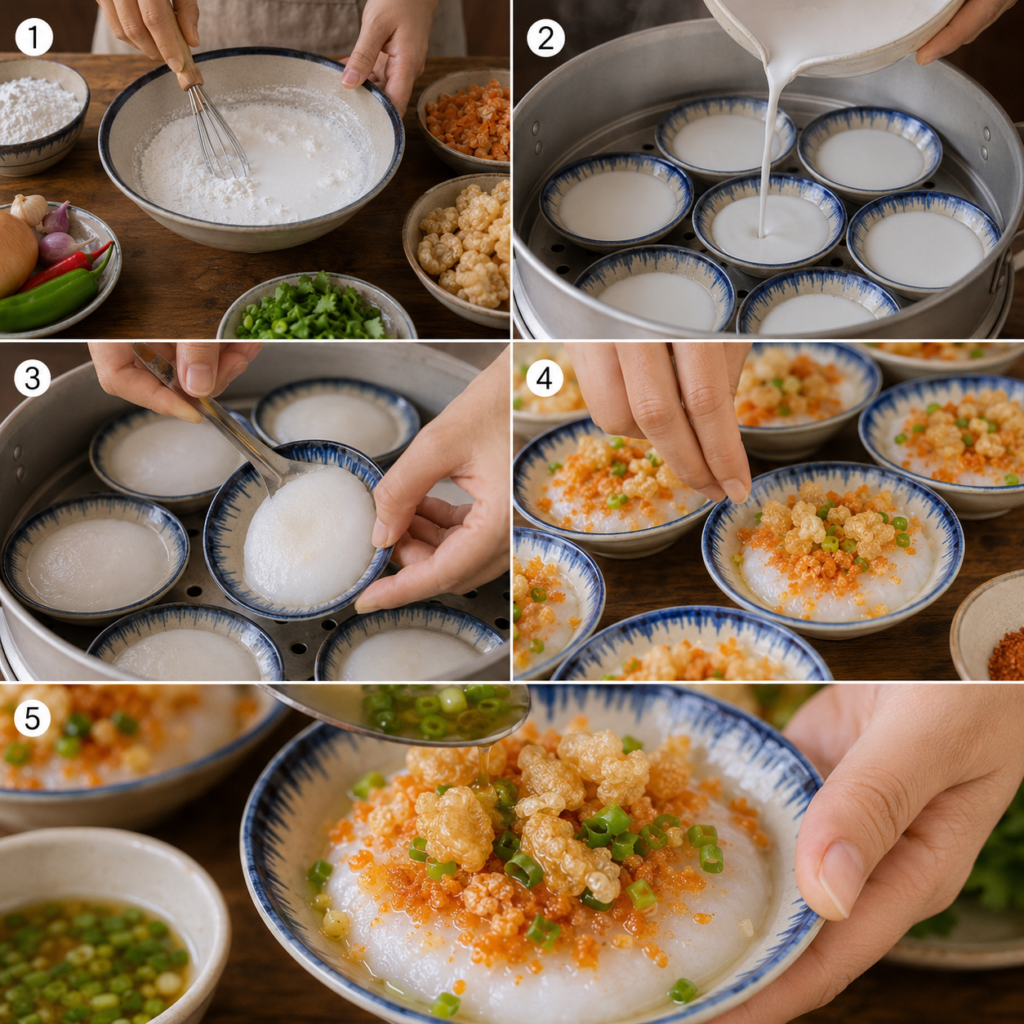
- Combine tapioca flour, rice flour, and salt in a large mixing bowl for your banh beo batter foundation.
- Gradually add room temperature water to the flour mixture while whisking continuously to create a smooth banh beo batter.
- Mix until the banh beo batter reaches the consistency of thin pancake batter, ensuring no lumps remain.
- Let the banh beo batter rest for 10 minutes while you prepare toppings.
- Add 3 tablespoons of vegetable oil to the banh beo batter and stir well to incorporate fully.
Creating Crispy Banh Beo Cakes
- Heat a non-stick skillet or crepe pan over medium-high heat for your banh beo recipe cooking.
- Lightly oil the pan, then immediately pour 3 tablespoons of banh beo batter into the center.
- Quickly tilt and swirl the pan to spread the banh beo batter into a thin, circular disk about 4 inches in diameter.
- Cook the banh beo for 2-3 minutes until the bottom turns golden and crispy but remains pliable.
- Gently flip the banh beo cake and cook the second side for 1-2 minutes until light golden.
- Transfer each finished banh beo to a warm plate and repeat with remaining batter.
Preparing Banh Beo Toppings
- Rehydrate dried shrimp in warm water for 5 minutes, then chop finely for your banh beo topping.
- Dice yellow onion very finely and mince garlic cloves for the banh beo topping mixture.
- Chop scallions into thin rings, separating white and green parts for the banh beo garnish.
- Crumble pork cracklings into small pieces for texture in your banh beo topping.
Assembling and Finishing Banh Beo
- Combine chopped dried shrimp, diced onion, minced garlic, and pork cracklings in a small bowl for the banh beo topping.
- Distribute this banh beo topping mixture evenly over each warm crispy cake.
- Sprinkle fresh scallions over the banh beo topping.
- Drizzle fish sauce over each banh beo cake, approximately 1/2 teaspoon per cake.
- Serve the banh beo immediately while still warm and crispy.
Chef Tips for Perfect Banh Beo Recipe
These expert techniques transform your banh beo from good to exceptional.
- Use a non-stick skillet for banh beo to prevent sticking and ensure even browning. A crepe pan specifically designed for thin cakes produces the most authentic banh beo results with minimal effort.
- Keep your banh beo batter consistency exactly like thin pancake batter. If it becomes too thick, add water one tablespoon at a time. If too thin, the banh beo cake won’t crisp properly and will tear during flipping.
- Heat your pan properly before adding banh beo batter. A properly preheated pan at medium-high heat ensures the banh beo begins crisping immediately, creating that signature golden exterior.
- Work quickly when spreading banh beo batter. You have only 3-4 seconds before it begins setting, so tilt and swirl the pan immediately after pouring to achieve an even thickness throughout your banh beo cake.
- Top your banh beo immediately after cooking while the cake is still warm. The residual heat helps the toppings adhere and the fish sauce flavors penetrate the banh beo more effectively.
- Prepare your banh beo topping ingredients ahead of time so assembly moves quickly and each cake receives its garnish while still at peak temperature and crispness.
Common Banh Beo Recipe Mistakes to Avoid
Understanding what goes wrong helps you achieve perfect banh beo results consistently.
Mistake 1: Batter Too Thick
Thick banh beo batter produces cakes that remain chewy rather than crispy. The banh beo won’t spread evenly and creates an unpleasant texture. Fix this by adding water one tablespoon at a time until your banh beo batter flows easily and spreads quickly when poured into the hot pan. Your banh beo batter should move freely but not be as thin as water.
Mistake 2: Insufficient Heat
Low heat prevents your banh beo from crisping properly, resulting in soft, chewy cakes instead of the desired crunch. The banh beo requires medium-high heat to develop that golden, crispy exterior quickly. Test your pan by dripping a tiny amount of banh beo batter into it. If it immediately sizzles and crisps, your heat is correct for making banh beo.
Mistake 3: Overcrowded Pan
Rushing the cooking process by making multiple banh beo simultaneously causes the temperature to drop, compromising crispness. Cook one banh beo at a time, allowing proper heat recovery between cakes. This patient approach ensures each banh beo achieves that perfect golden finish and satisfying crunch.
Mistake 4: Adding Oil to Batter Incorrectly
Forgetting to add oil to the banh beo batter after it rests results in cakes that stick to the pan and tear. The oil in banh beo batter acts as a release agent and prevents sticking. Always add oil to your banh beo batter and stir thoroughly before cooking begins.
Mistake 5: Delayed Topping Application
Letting your banh beo cool before adding toppings causes the cake to lose its warmth and crispness. The toppings won’t adhere properly, and the fish sauce won’t penetrate the banh beo effectively. Apply toppings to each banh beo immediately after cooking while it’s still hot from the pan.
Best Banh Beo Recipe Variations and Substitutions
This banh beo recipe adapts easily to different tastes, dietary needs, and ingredient availability.
| Ingredient | Substitution | Impact on Flavor |
|---|---|---|
| Dried shrimp in banh beo | Fresh cooked shrimp, finely diced | Creates sweeter, more delicate banh beo with less intense umami. Maintains authentic seafood flavor. |
| Pork cracklings in banh beo | Crispy fried chickpeas or toasted sesame seeds | Adds crunch to banh beo while keeping dish halal. Sesame adds nuttier notes to banh beo topping. |
| Fish sauce in banh beo | Soy sauce or vegetarian fish sauce | Creates umami-rich banh beo with different fermented notes. Maintains savory depth in banh beo. |
| Yellow onion in banh beo | Shallots | Brings sweeter, more subtle onion flavor to banh beo. Traditional Vietnamese approach to banh beo topping. |
| Rice flour in banh beo | Extra tapioca flour | Creates slightly chewier banh beo with less structure. Still produces acceptable texture in banh beo. |
| Vegetable oil for banh beo | Peanut oil | Adds subtle nutty flavor to banh beo. Traditional choice in authentic Vietnamese banh beo preparation. |
Serving Suggestions for Banh Beo Recipe
Banh beo shines in numerous settings and pairs beautifully with complementary flavors and textures.
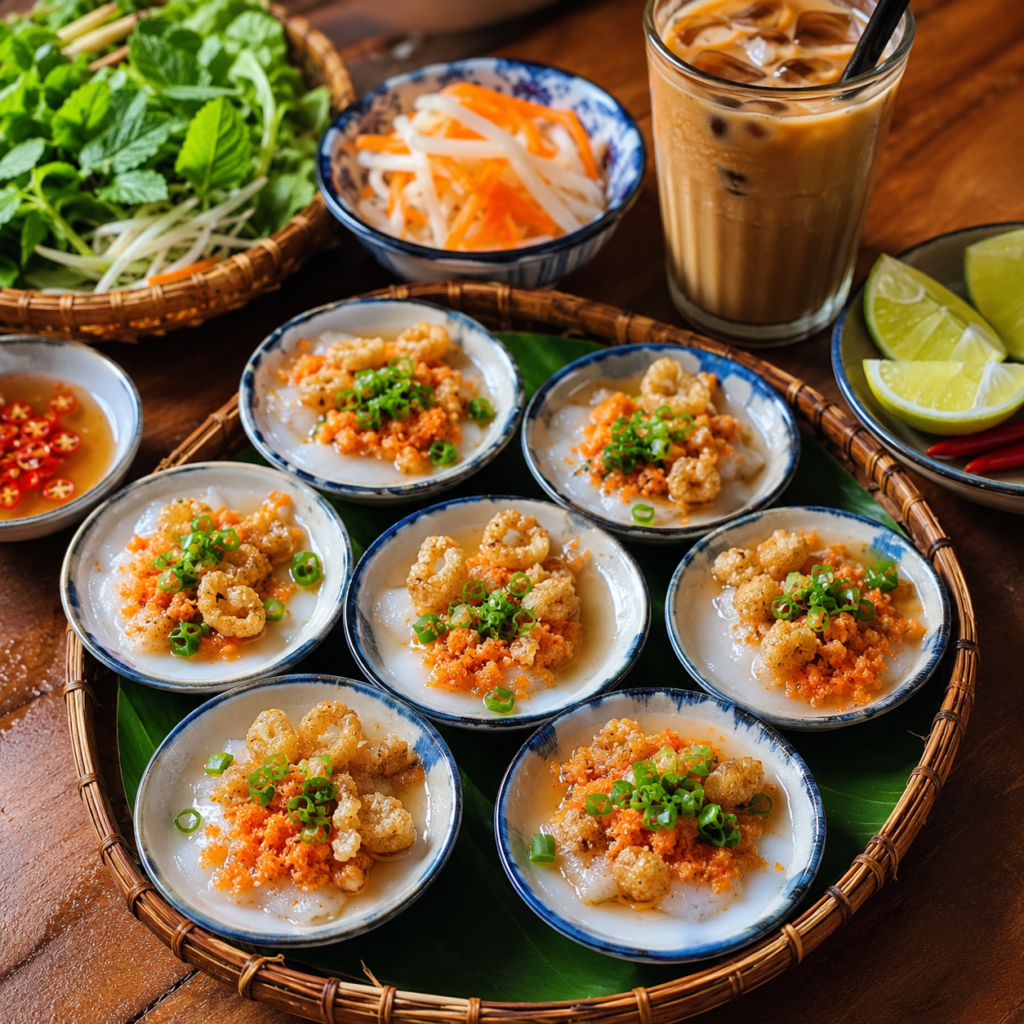
Serve your banh beo recipe as part of a Vietnamese breakfast or brunch spread alongside congee, fried bread, and fresh spring rolls. The crispy texture of banh beo contrasts wonderfully with soft rice porridge. For lunch or casual dinner, plate your banh beo with fresh herbs, lettuce wraps, and pickled vegetables to create a complete Vietnamese meal experience. The combination celebrates traditional banh beo in an authentic family-style presentation.
Banh beo recipe works perfectly for entertaining guests as an appetizer or light snack. Arrange warm banh beo on a platter with extra fish sauce, lime wedges, and fresh herb garnishes so guests can customize each cake. This interactive serving style showcases banh beo beautifully while accommodating different flavor preferences. Pair banh beo with Vietnamese iced coffee for a traditional beverage combination that complements the savory, crispy cakes.
Include banh beo in meal prep sessions for convenient lunches throughout the week. Reheat banh beo gently in a low oven to restore crispness, then add fresh toppings and fish sauce just before eating. Banh beo makes an excellent vegetarian main course when topped generously with cooked vegetables, mushrooms, and extra crispy chickpeas. The adaptability of banh beo extends to vegetarian, vegan, and dietary-restricted diets with simple ingredient swaps.
Storage and Reheating for Banh Beo Recipe
Proper storage keeps your banh beo fresh and maintains its quality for several days.
| Method | Duration | Instructions |
|---|---|---|
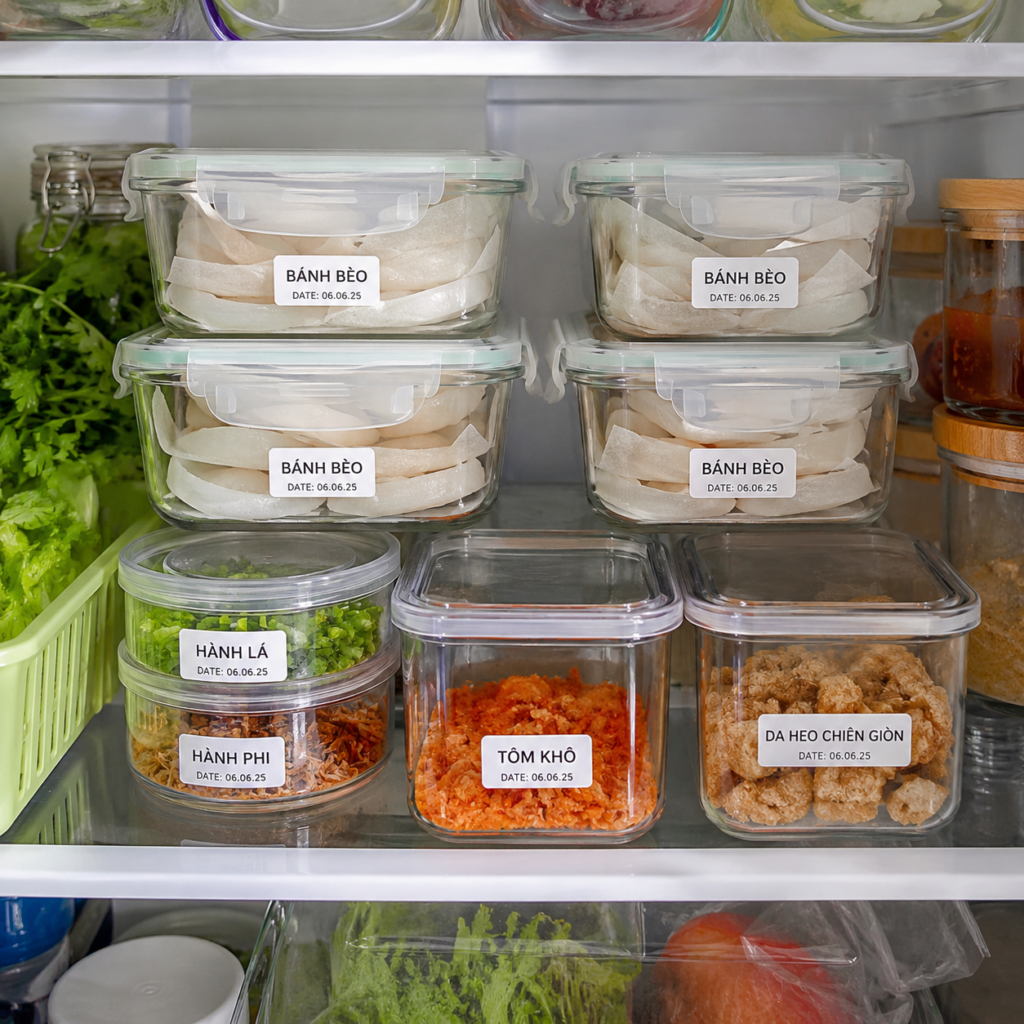
| Refrigerator storage for banh beo | 2-3 days | Cool banh beo completely. Store in airtight container with parchment between layers. Keep toppings separate. Reheat before serving to restore crispness. |
| Freezer storage for banh beo | 1 month | Freeze cooled banh beo cakes only (without toppings) in single layer on baking sheet. Transfer to freezer bag once frozen. Store toppings separately. Reheat from frozen. |
| Oven reheating for banh beo | N/A | Preheat oven to 375°F. Place banh beo on baking sheet. Heat for 5-8 minutes if refrigerated, 10-12 minutes if frozen. Banh beo should be crispy again. Add toppings and fish sauce after heating. |
| Skillet reheating for banh beo | N/A | Heat non-stick skillet over medium-high heat. Place banh beo briefly in hot pan, 30-45 seconds per side, to restore crispness. Top immediately with toppings and fish sauce. |
| Room temperature storage | 2-3 hours | Banh beo can sit at room temperature for a few hours. Crispness will gradually diminish. Do not store banh beo with toppings already applied. |
Nutritional Information for Banh Beo Recipe
Understanding the nutritional profile of your banh beo helps with meal planning and dietary management.
| Nutrient | Amount per Serving |
|---|---|
| Calories | 185 |
| Protein | 6g |
| Fat | 9g |
| Carbohydrates | 22g |
| Fiber | 1g |
| Sugar | 0g |
| Sodium | 420mg |
These are approximate values for one serving of banh beo recipe including toppings and fish sauce drizzle. Values vary based on specific ingredients used and portion sizes. Banh beo provides protein from dried shrimp and pork, while tapioca flour creates the carbohydrate base. The banh beo recipe delivers satisfying nutrition in a relatively light package, making it suitable for various dietary approaches.
Frequently Asked Questions About Banh Beo Recipe
What is the best rice flour substitute for authentic banh beo?
Cornstarch works as a banh beo substitute in equal amounts, though it produces slightly different texture. Use extra tapioca flour if you prefer, increasing the amount to 1 and 1/4 cups. The banh beo will be slightly chewier but still delicious. For best results, stick with rice flour to achieve traditional banh beo consistency and crispness that Vietnamese cooks have perfected over generations.
How can I make crispy banh beo without a non-stick pan?
Use a well-seasoned cast iron skillet or stainless steel pan for banh beo if non-stick isn’t available. Heat the banh beo pan thoroughly and add more oil than the recipe specifies to prevent sticking. You may need to add additional oil between each banh beo cake to maintain proper release. A crepe pan designed for thin cakes works exceptionally well for banh beo if you can source one.
Can I make banh beo batter the night before?
Yes, prepare banh beo batter up to 24 hours in advance and refrigerate in an airtight container. The banh beo batter may thicken slightly, so add water one tablespoon at a time before cooking to reach proper consistency. Do not add the oil to banh beo batter until right before cooking. Stir the banh beo batter well before each use to ensure even distribution of ingredients.
What causes banh beo to tear when flipping?
Banh beo tears when the cake lacks sufficient structure or hasn’t cooked long enough on the first side. Ensure your banh beo batter contains proper rice flour ratio and cook 2-3 minutes on the first side until edges look set and bottom is golden. Use a thin, flexible spatula designed for crepes when flipping banh beo. If banh beo begins tearing, use two spatulas to support it during the flip.
How do I store leftover banh beo toppings?
Keep banh beo topping ingredients separate from the cakes in airtight containers in the refrigerator for 2-3 days. Store dried shrimp, onions, garlic, and pork cracklings in separate containers to maintain freshness. Fresh scallions should be stored separately and added right before serving banh beo. Fish sauce stays fresh in the pantry indefinitely but should be kept in a sealed bottle away from other foods due to its strong aroma.
Can frozen banh beo be reheated in the microwave?
Microwave reheating is not recommended for banh beo as it causes the cake to become rubbery and soft rather than crispy. Use oven or skillet methods to restore banh beo crispness properly. The oven provides the best results for banh beo, requiring only 10-12 minutes from frozen. Skillet reheating works quickly for banh beo if you’re in a hurry, taking just 30-45 seconds per side.
What is the best sauce to serve with banh beo besides fish sauce?
Fish sauce is traditional for banh beo, but try soy sauce, oyster sauce, or Vietnamese soy sauce sauce variations for banh beo if preferred. A simple sauce combining soy sauce, lime juice, and minced garlic complements banh beo beautifully. Some Vietnamese cooks serve banh beo with a light dipping sauce of fish sauce, lime juice, water, and chili. Experiment to find your preferred banh beo sauce combination.
How many banh beo should I plan per person?
Plan 2-3 banh beo cakes per person for a light snack or appetizer. For meals where banh beo serves as the main protein, prepare 4-5 banh beo per person alongside vegetables and rice. The number of banh beo needed depends on whether you’re serving them alone or with other dishes. Leftover banh beo stores well and reheats beautifully for next-day meals.
Can I use shrimp paste instead of dried shrimp for banh beo?
Yes, shrimp paste works as a banh beo topping alternative, though use it sparingly as it’s more concentrated and intensely flavored. Use approximately 1 tablespoon of shrimp paste mixed with the diced onions for banh beo. Fresh cooked shrimp, finely chopped, also makes an excellent banh beo topping if dried shrimp is unavailable. Each banh beo topping variation creates slightly different flavor profiles while maintaining authentic Vietnamese character.
What vegetables work well in banh beo for a vegetarian version?
Sautéed mushrooms, diced tomatoes, and steamed broccoli create excellent vegetarian banh beo toppings. Crispy fried chickpeas or toasted sesame seeds replace pork cracklings in vegetarian banh beo. Shredded cabbage, julienned carrots, and fresh herbs add crunch and color to vegetarian banh beo. Use vegetarian soy sauce or vegetarian fish sauce on vegetarian banh beo to maintain savory depth and authentic flavor profile.
Conclusion
This banh beo recipe brings authentic Vietnamese street food into your home kitchen with straightforward techniques and accessible ingredients. Learning to make banh beo demonstrates how simple components combine to create something truly special and memorable. The crispy, golden banh beo cakes topped with savory shrimp, aromatic scallions, and flavorful fish sauce represent the soul of Vietnamese cuisine. Once you master this banh beo recipe, you’ll understand why generations of Vietnamese families have cherished these delicate cakes. Whether served for breakfast, lunch, or entertaining guests, banh beo delivers that satisfying crunch, tender texture, and bold flavors that keep people coming back for more. Your first batch of homemade banh beo will remind you why this Vietnamese treasure deserves a place on your regular cooking rotation.
Related Recipes You’ll Love
Pink Bariatric Gelatin Recipe
Cucumber-Apple Cooler Recipe
Yuzu Cheesecake Recipe
Rhubarb Apple And Ginger Crumble Recipe
Morning Glory Vegetable Recipe
Blue Salt Trick Recipe
Bariatric Seed Recipe For Weight Loss
Expert Resources and Food Safety
Learn more about traditional Vietnamese ingredients from Serious Eats Vietnamese cooking resources and food safety guidelines from FDA food safety information.
Print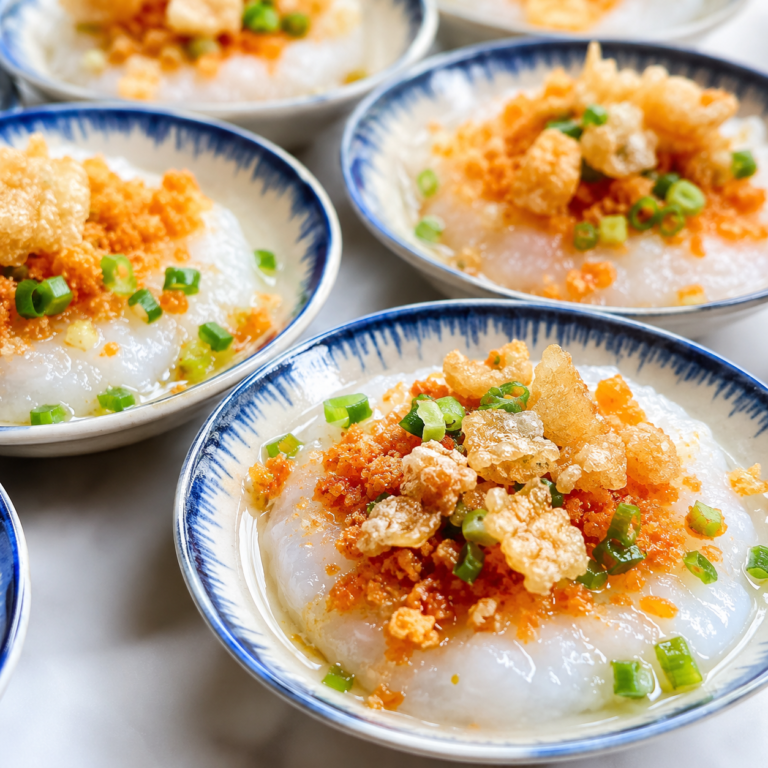
Banh beo recipe 2026
A delicate, crispy Vietnamese cake featuring a thin tapioca crust topped with savory shrimp, pork cracklings, and aromatic scallions, balancing authentic textures and flavors perfectly.
- Total Time: 50 minutes
- Yield: 4 servings 1x
Ingredients
- 1 cup Tapioca flour
- 1/4 cup Rice flour
- 1 teaspoon Salt
- 1 1/4 cups Water (room temperature)
- 3 tablespoons Vegetable oil (plus more for pan)
- 1/4 cup Dried shrimp (rehydrated and chopped finely)
- 1/4 cup Pork cracklings
- 3 stalks Scallions (chopped finely)
- 1/4 cup Yellow onion (finely diced)
- 3 tablespoons Fish sauce
- 2 cloves Garlic (minced)
Instructions
- Combine tapioca flour, rice flour, and salt in a large mixing bowl for your banh beo batter foundation.
- Gradually add room temperature water to the flour mixture while whisking continuously to create a smooth banh beo batter.
- Mix until the banh beo batter reaches the consistency of thin pancake batter, ensuring no lumps remain.
- Let the banh beo batter rest for 10 minutes while you prepare toppings.
- Add 3 tablespoons of vegetable oil to the banh beo batter and stir well to incorporate fully.
- Heat a non-stick skillet or crepe pan over medium-high heat for your banh beo recipe cooking.
- Lightly oil the pan, then immediately pour 3 tablespoons of banh beo batter into the center.
- Quickly tilt and swirl the pan to spread the banh beo batter into a thin, circular disk about 4 inches in diameter.
- Cook the banh beo for 2-3 minutes until the bottom turns golden and crispy but remains pliable.
- Gently flip the banh beo cake and cook the second side for 1-2 minutes until light golden.
- Transfer each finished banh beo to a warm plate and repeat with remaining batter.
- Rehydrate dried shrimp in warm water for 5 minutes, then chop finely for your banh beo topping.
- Dice yellow onion very finely and mince garlic cloves for the banh beo topping mixture.
- Chop scallions into thin rings, separating white and green parts for the banh beo garnish.
- Crumble pork cracklings into small pieces for texture in your banh beo topping.
- Combine chopped dried shrimp, diced onion, minced garlic, and pork cracklings in a small bowl for the banh beo topping.
- Distribute this banh beo topping mixture evenly over each warm crispy cake.
- Sprinkle fresh scallions over the banh beo topping.
- Drizzle fish sauce over each banh beo cake, approximately 1/2 teaspoon per cake.
- Serve the banh beo immediately while still warm and crispy.
Notes
- Skillet choice: Use a non-stick skillet or crepe pan for banh beo to prevent sticking and ensure even browning.
- Batter consistency: Keep your banh beo batter consistency exactly like thin pancake batter, adding water or resting as needed.
- Proper heat: Preheat your pan properly at medium-high heat so the banh beo begins crisping immediately.
- Work quickly: Swirl the pan within 3-4 seconds before the batter begins setting to achieve an even thickness.
- Top immediately: Apply toppings immediately after cooking while the cake is still hot so they adhere better.
- Prep Time: 20 minutes
- Cook Time: 30 minutes
- Category: Main Course
- Method: Pan-frying
- Cuisine: Vietnamese
Nutrition
- Serving Size: 1 serving
- Calories: 185
- Sugar: 0
- Sodium: 420
- Fat: 9
- Saturated Fat: 3
- Unsaturated Fat: 6
- Trans Fat: 0
- Carbohydrates: 22
- Fiber: 1
- Protein: 6
- Cholesterol: 35