The beginner sourdough bread recipe step step is a reliable way to make tangy, crusty loaves at home without commercial yeast. This method uses natural fermentation to build flavor and rise, making it approachable for first-time bakers who want homemade bread with simple tools.
| Prep Time | Cook Time | Total Time | Servings | Difficulty | Cuisine |
|---|---|---|---|---|---|
| 20 minutes | 30 minutes | 24 hours | 1 large loaf | Beginner | American/European |
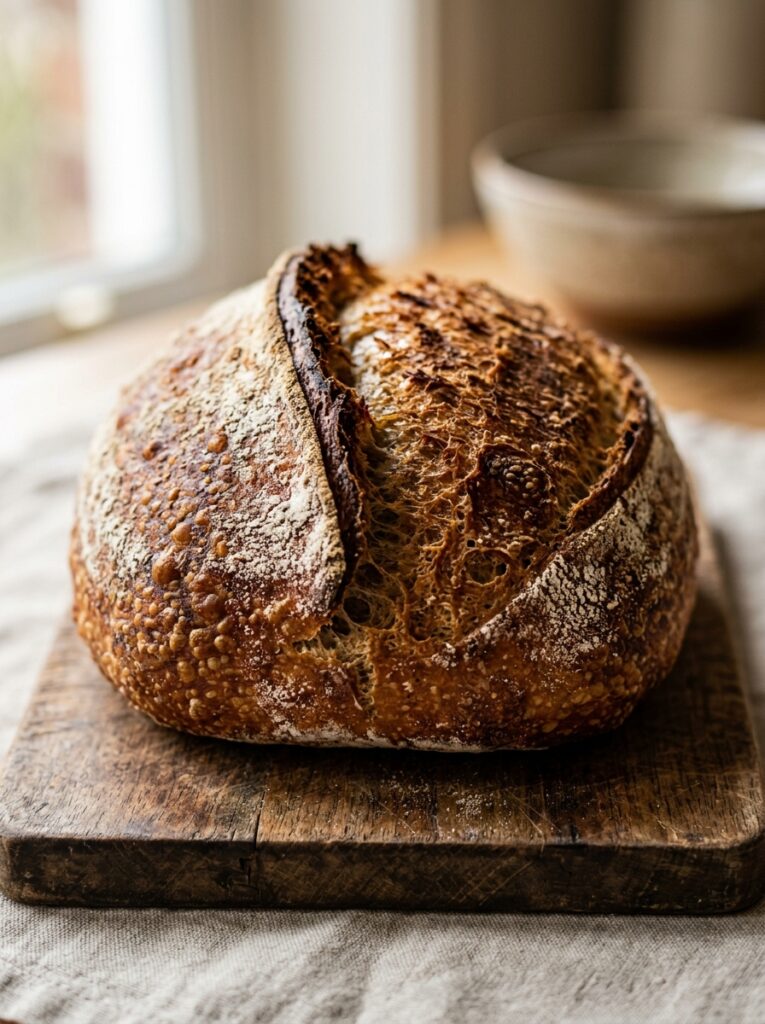
Why This beginner sourdough bread recipe step step Works
This beginner sourdough bread recipe step step works because it balances simplicity with structure, guiding you through fermentation and shaping without complex tools. I rely on this method for consistent loaves that deliver a crisp crust, open crumb, and gentle tang that enhances sandwiches and toast.
The recipe uses a naturally leavened starter to create lift, eliminating the need for commercial yeast while producing reliable rise and depth of flavor. You will see strong oven spring when you follow the timing and temperature cues, which helps avoid dense or gummy loaves common for new bakers.
Beginners will appreciate how the process breaks down into manageable phases—feed the starter, mix the dough, bulk ferment, shape, and bake—so each step feels approachable. The beginner sourdough bread recipe step step remains dependable when you stick to measured ingredients and simple visual indicators.
The flavor profile is versatile, with tangy notes that pair well with soups, salads, and roasted vegetables while staying mild enough for everyday meals. Texture is another strong point: a shattering crust and moist interior make this loaf stand out, and this beginner sourdough bread recipe step step offers steady results every time.
Home cooks like this method because it relies on time and attention rather than expensive gear, and it scales easily for weekly meal prep. With practice, you can tweak hydration and fermentation to match your climate and taste, while this beginner sourdough bread recipe step step keeps a consistent baseline for success.
beginner sourdough bread recipe step step Ingredients
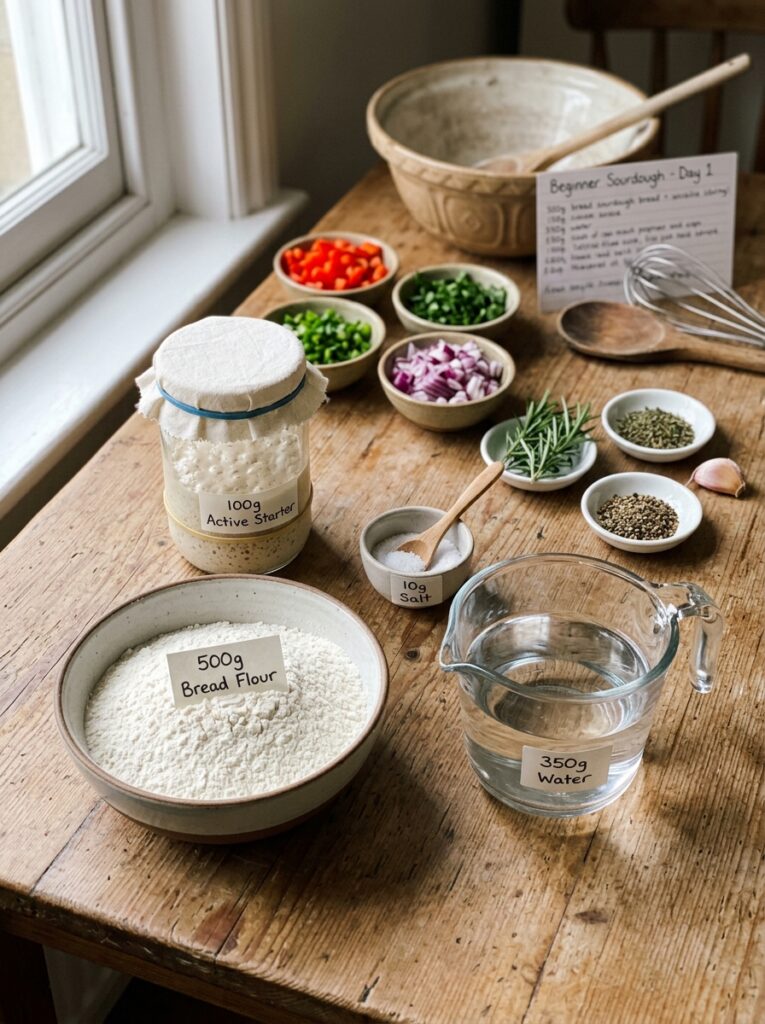
The ingredients for the beginner sourdough bread recipe step step are simple and measurable, which helps ensure consistent results. Quality flour, active starter, and accurate salt measurement set the foundation for reliable flavor and rise.
| Ingredient | Quantity | Notes with alternatives |
|---|---|---|
| Bread flour | 500 g | High-protein flour; substitute all-purpose flour for slightly less chew |
| Water | 350 g (about 350 ml) | Use filtered water at room temperature; adjust for flour absorption |
| Active sourdough starter | 100 g | Fed starter at peak; swap with 75 g flour and 75 g water starter if needed |
| Salt | 10 g | Fine sea salt; reduce to 8 g for a milder taste |
Use bread flour for strong gluten development, and ensure your starter is bubbly and doubled after feeding. For best results, weigh ingredients with a digital scale and adjust water based on your flour’s hydration; many bakers use a 70% hydration dough for an open crumb.
How to Make beginner sourdough bread recipe step step
Follow this step-by-step approach to make the beginner sourdough bread recipe step step with clarity. Each phase focuses on one action to keep the process beginner friendly and organized.
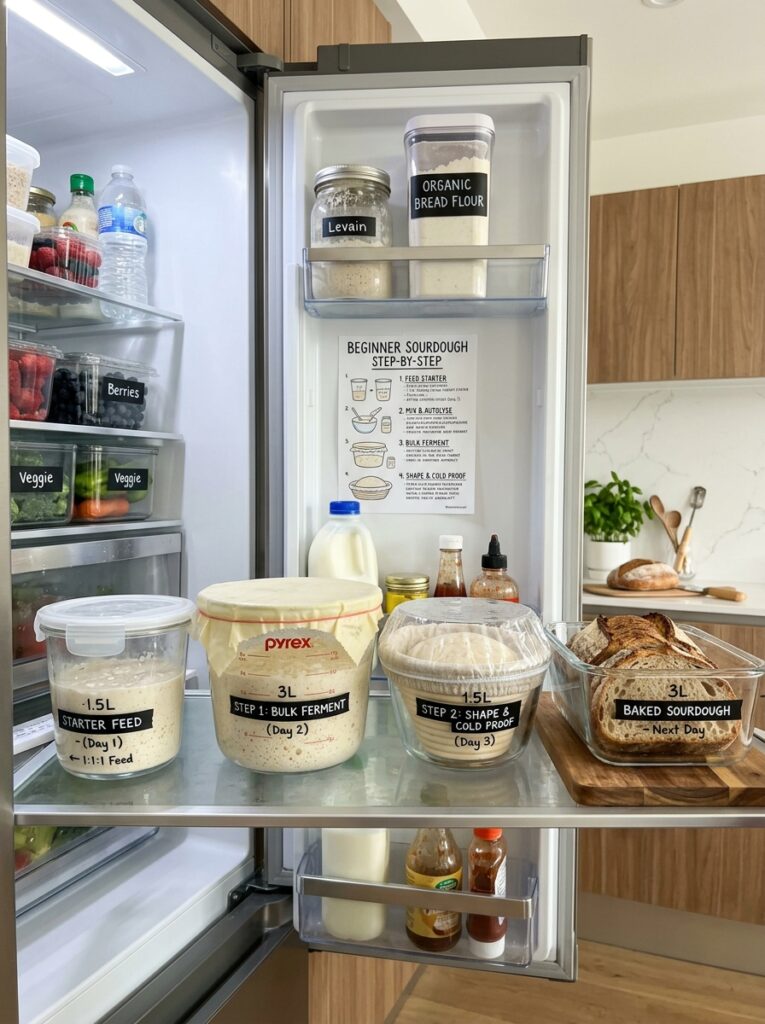
Phase 1: Feed the Starter
- Feed your starter in the morning so it peaks by mix time. Use a 1:1:1 ratio of starter to flour and water for predictable strength.
- Keep the starter in a warm spot around 75°F to 80°F for steady activity. This supports the beginner sourdough bread recipe step step by ensuring enough leaven.
- Watch for doubling and a domed surface to signal peak readiness. A ripe starter boosts rise and improves flavor.
Phase 2: Mix the Dough
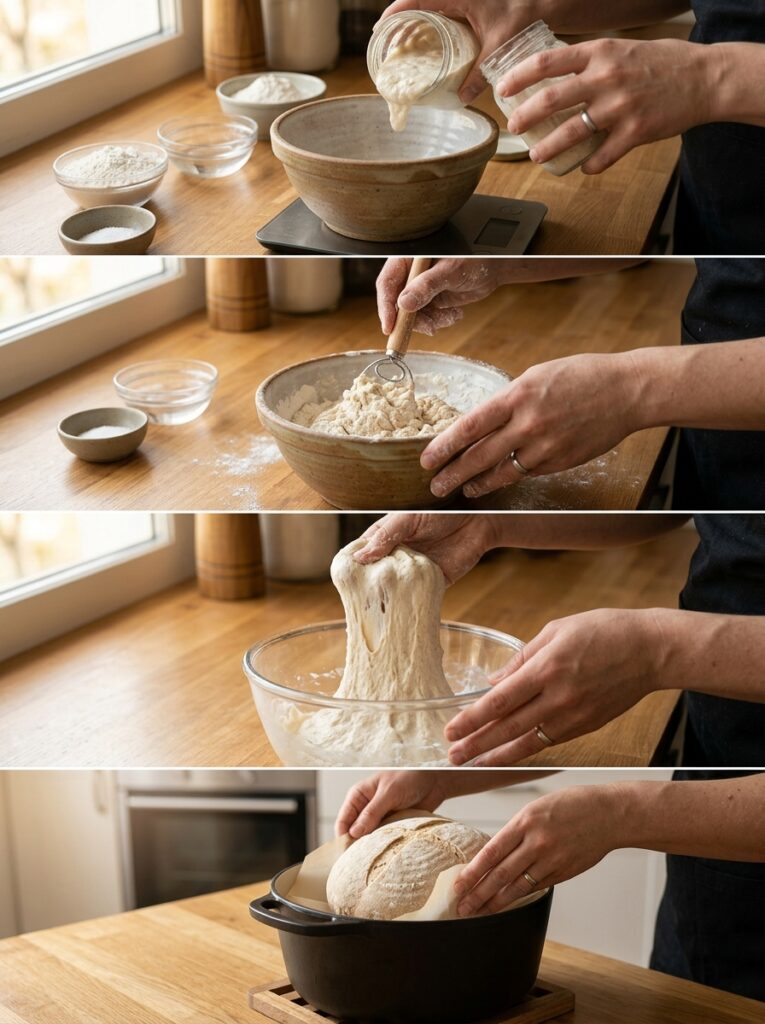
- Combine water and starter in a bowl until fully mixed. Add flour and stir until no dry bits remain.
- Add salt and pinch to distribute evenly. Rest the dough for 30 minutes to hydrate and relax gluten.
- Develop strength with gentle folds; this step sets structure for the beginner sourdough bread recipe step step.
Phase 3: Bulk Fermentation
- Perform stretch-and-fold every 30 minutes for 3 hours, covering between sets. This builds strength without heavy kneading.
- Let the dough rest undisturbed until it grows 50% to 75% in volume. Cooler kitchens may take longer, which is normal.
- Look for bubbles and a jiggly texture to confirm activity. This stage is essential for the beginner sourdough bread recipe step step.
Phase 4: Shape and Cold Proof
- Turn the dough onto a lightly floured surface and pre-shape into a round. Rest 15 minutes, then shape into a tight boule or batard.
- Place the loaf seam side up in a floured banneton and cover. Refrigerate 8 to 12 hours for flavor development.
- The cold proof helps the beginner sourdough bread recipe step step hold shape and score cleanly.
Phase 5: Bake
- Preheat oven with a Dutch oven to 500°F for 45 minutes. Score the dough with a sharp blade to control expansion.
- Bake covered for 20 minutes, then reduce to 450°F and bake uncovered for 20 to 25 minutes. Cool fully before slicing.
- Cooling finishes the bake and sets the crumb, securing the result of the beginner sourdough bread recipe step step.
Chef Tips for Perfect beginner sourdough bread recipe step step
Use precise timing and temperature to get the most from this beginner sourdough bread recipe step step. These tips help you fine-tune fermentation, shaping, and baking.
- Keep dough temperature near 78°F during bulk fermentation for consistent rise. Use an instant-read thermometer to monitor room and dough temperature.
- Hydration matters; start at 70% and adjust for your flour. If the dough feels sticky, add gentle folds instead of more flour.
- Score the loaf at a 30-degree angle and 0.5 cm deep for controlled expansion. Proper scoring prevents bursting and improves oven spring.
- Use a preheated Dutch oven to trap steam for the first 20 minutes. Add ice cubes for extra steam and a crisp, blistered crust.
- Cool the loaf for at least one hour before slicing. Cutting too early leads to gummy crumb and reduces flavor development.
Common beginner sourdough bread recipe step step Mistakes to Avoid
Understanding common errors will help you fix issues that can derail your loaf. Avoid these mistakes to keep the beginner sourdough bread recipe step step on track.
- Underfeeding the starter results in weak leaven and poor rise. Fix this by feeding a 1:1:1 ratio hours before mixing and confirming peak activity.
- Overproofing the dough creates flat loaves with a collapsed crumb. Reduce bulk time or proof in the fridge for structure and flavor balance.
- Inconsistent hydration causes stickiness or a dry crumb. Weigh ingredients and adjust water gradually to match your flour type.
- Skipping preheat limits oven spring and crust formation. Always preheat your Dutch oven or baking stone for at least 45 minutes.
- Scoring too shallow leads to blowouts and uneven expansion. Practice a confident, angled cut for a clean ear and controlled opening.
Best beginner sourdough bread recipe step step Variations and Substitutions
Simple swaps and add-ins can transform this beginner sourdough bread recipe step step while keeping the process approachable. Use the table below to plan variations.
| Ingredient | Substitution | Impact on Flavor |
|---|---|---|
| Bread flour | Whole wheat flour | Deeper nutty flavor; denser crumb |
| Water | Milk or oat milk | Milder taste; softer crust |
| Salt | Sea salt flakes | Subtle differences in salinity |
| Starter | Stiff starter | Less tang; improved shaping |
| Add-ins | Seeds or herbs | Extra aroma and texture |
Serving Suggestions for beginner sourdough bread recipe step step
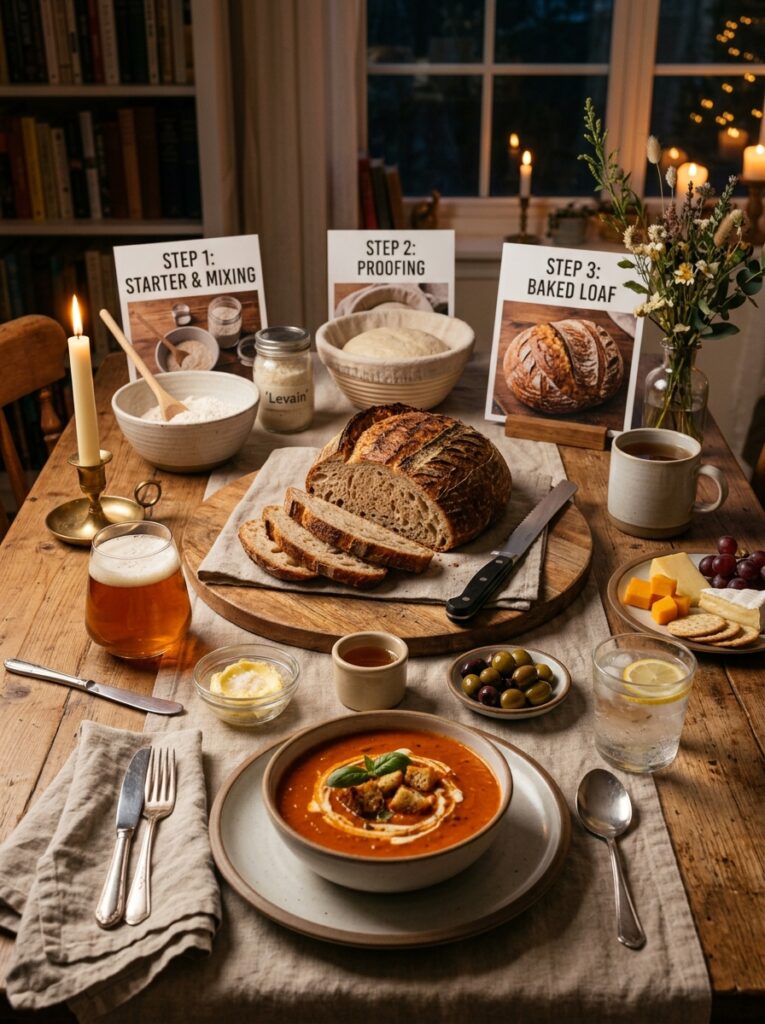
Serve this beginner sourdough bread recipe step step with soups, salads, and roasted vegetables for a balanced meal. It shines with hearty toppings and works well for family dinners, meal prep, and gatherings.
Pair slices with olive oil, balsamic vinegar, and herbs for a simple appetizer. For weeknight meals, use it for toast with avocado and eggs, or as a side for chicken dishes and vegetable stews.
During holidays, consider a bread board with cheeses, jams, and pickles. This beginner sourdough bread recipe step step is sturdy enough for leftovers, making it practical for meal prep and packed lunches.
Storage and Reheating for beginner sourdough bread recipe step step
Store and reheat this beginner sourdough bread recipe step step to keep the crust crisp and the crumb moist. Follow the methods below for best results.
| Method | Duration | Instructions |
|---|---|---|
| Room temperature | 2 days | Keep in a paper bag to retain crust; avoid plastic for crispness. |
| Refrigerator | 5 days | Wrap in linen or parchment; reheat slices for fresh texture. |
| Freezer | 3 months | Slice and freeze; toast directly from frozen for best results. |
| Reheating | 5 to 10 minutes | Oven at 350°F or toaster; warm slices until crust crisps. |
Nutritional Information for beginner sourdough bread recipe step step
Approximate values per slice for the beginner sourdough bread recipe step step help you plan balanced meals and macros.
| Nutrient | Amount per Serving |
|---|---|
| Calories | 180 |
| Protein | 6 g |
| Fat | 1 g |
| Carbohydrates | 36 g |
| Fiber | 2 g |
| Sugar | 1 g |
| Sodium | 220 mg |
Frequently Asked Questions About beginner sourdough bread recipe step step
Can I substitute all-purpose flour for bread flour?
Yes, you can use all-purpose flour in this beginner sourdough bread recipe step step, though the crust may be less chewy. Reduce water by 10 to 20 grams for better structure and handle the dough gently to avoid tearing.
How do I know when the loaf is done baking?
The loaf is done when the crust is deep golden brown and the internal temperature reaches 205 to 210°F. Tapping the bottom should sound hollow, and the crumb will set during the cooling period.
Why is my starter not rising?
A starter may not rise if it is underfed, too cold, or stored in a drafty area. Feed it consistently, keep it warm, and confirm activity before using it in the beginner sourdough bread recipe step step.
Can I make this dough ahead?
Yes, the long cold proof in the fridge makes it ideal for make-ahead baking. Mix and bulk ferment, then shape and refrigerate overnight for the beginner sourdough bread recipe step step.
What are good serving ideas?
Pair slices with soup, salads, and roasted vegetables for balanced meals. The beginner sourdough bread recipe step step also works with olive oil, herbs, and cheese for a simple appetizer.
How do I store and reheat properly?
Store at room temperature in a paper bag for two days, or refrigerate up to five days. Reheat slices in a 350°F oven or toaster to restore the crust in the beginner sourdough bread recipe step step.
Can I freeze this loaf?
Slice and freeze for up to three months for best results. Toast directly from frozen, and the beginner sourdough bread recipe step step will taste freshly baked.
What flavor variations can I try?
Add seeds, herbs, or whole wheat flour for aroma and texture. These variations keep the beginner sourdough bread recipe step step exciting while preserving the core method.
Is this recipe beginner friendly?
Yes, the beginner sourdough bread recipe step step uses clear phases and simple tools to build confidence. The method is forgiving with time and temperature adjustments.
What tools are essential?
Use a mixing bowl, digital scale, banneton or bowl lined with cloth, Dutch oven, and a razor blade for scoring. These basics make the beginner sourdough bread recipe step step accessible and reliable.
Explore related recipes for more baking ideas: no-knead bread tutorial, whole wheat pizza dough, and simple focaccia guide. For authoritative guidance, see USDA food safety and Food Network baking tips.
The beginner sourdough bread recipe step step is a trustworthy method for creating crusty, tangy loaves at home with minimal equipment. Practice the phases, refine fermentation, and enjoy the rewarding texture and aroma of a homemade sourdough loaf.
Print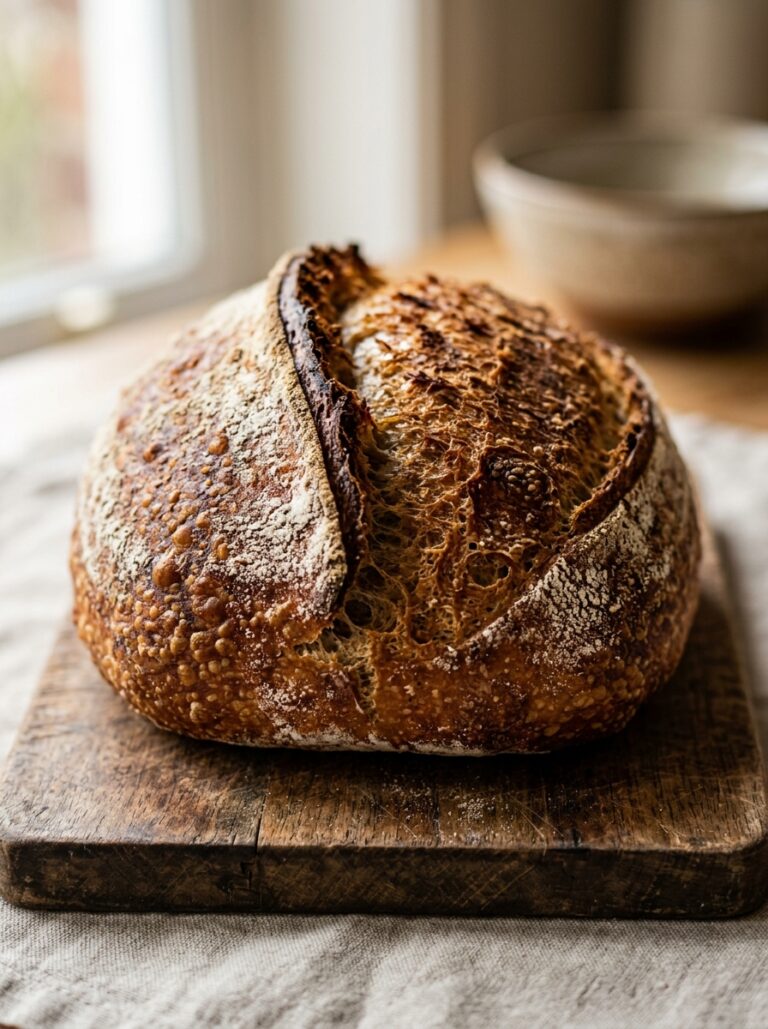
Beginner sourdough bread recipe step step
Make tangy, crusty sourdough bread with this simple starter method. No commercial yeast needed—just flour, water, salt, and time. Perfect for sandwiches and toast with a crisp, shattering crust and airy crumb.
- Total Time: 1440
- Yield: 1 large loaf 1x
Ingredients
500g bread flour
350g water
100g sourdough starter (refreshed and bubbly)
10g salt (preferably fine sea salt)
Instructions
Feed your sourdough starter 4–6 hours before baking
In a large bowl, combine 500g flour, 10g salt, and 100g starter
Add 350g water and mix until no dry flour remains, using a wet spatula
Cover and let bulk ferment at room temperature for 4–6 hours, feeding it once if necessary
Fold the dough gently every 30 minutes during fermentation if time permits
Turn dough onto a floured surface, shape into a boule or batard
Let perform cold proof in fridge for 12 hours
Preheat oven to 240°F with a baking stone or heavy baking sheet
Score the dough’s top and place on a parchment-lined baking sheet
Bake for 15 minutes, then reduce to 220°F and bake 10–15 more minutes
Cool completely before slicing
Notes
Use a kitchen scale for precise measurements
Ensure your starter is active and bubbly before mixing
Adjust water gradually if dough is too sticky
Baking on a preheated stone enhances oven spring
Store in a paper bag to maintain crust crunchiness
- Prep Time: 20
- Cook Time: 30
- Category: Quick Chicken
- Method: Baking
- Cuisine: American/European
- Diet: Vegetarian
Nutrition
- Serving Size: 1 large loaf
- Calories: 1950
- Sugar: 0g
- Sodium: 4000mg
- Fat: 10g
- Saturated Fat: 1.5g
- Carbohydrates: 340g
- Fiber: 10g
- Protein: 90g
- Cholesterol: 0mg