I have a confession to make: for years, my chicken tasted like shoe leather. Seriously! I would pull it out of the oven, hopeful and hungry, only to chew through something dry and flavorless. It was tragic. But then, I discovered that oven roasted chicken breast doesn’t have to be boring or dry. In fact, it can be the star of your dinner table!
Did you know that overcooking chicken by just a few minutes can strip away almost all its moisture? It’s true. In this guide, I’m going to show you exactly how to nail that perfect balance of crispy skin and tender meat. We are talking about a quick, healthy dinner option that is perfect for meal prep or a cozy night in. Whether you are a total beginner or a kitchen pro, get ready to change your chicken game forever. Let’s get cooking!
Choosing the Best Chicken for Roasting
You might think that all chicken is created equal, but I learned the hard way that is definitely not true. I used to just grab the biggest, cheapest package in the meat aisle and then wonder why my dinner tasted like rubber. It turns out, the type of bird you buy makes a huge difference in how your oven roasted chicken breast turns out. If you start with a low-quality piece of meat, it is really hard to make it taste amazing, no matter how much seasoning you pile on. Let’s look at what you should actually be looking for at the grocery store.
Air-Chilled vs. Water-Chilled
This was a game changer for me. Most of the cheap chicken you see is “water-chilled.” This means the processors cool the birds down by dunking them in giant vats of cold water. The problem? The meat absorbs a ton of that liquid. When you put it in the oven, all that extra water steams out. Instead of roasting, your chicken is basically steaming itself, which leaves it soggy and bland.
I highly recommend spending a couple extra bucks for air-chilled chicken. These are cooled with cold air, so they don’t hold onto extra water. The flavor is much more “chicken-y,” and because they aren’t water-logged, they brown so much better in the oven.
Watch Out for Size and Thickness
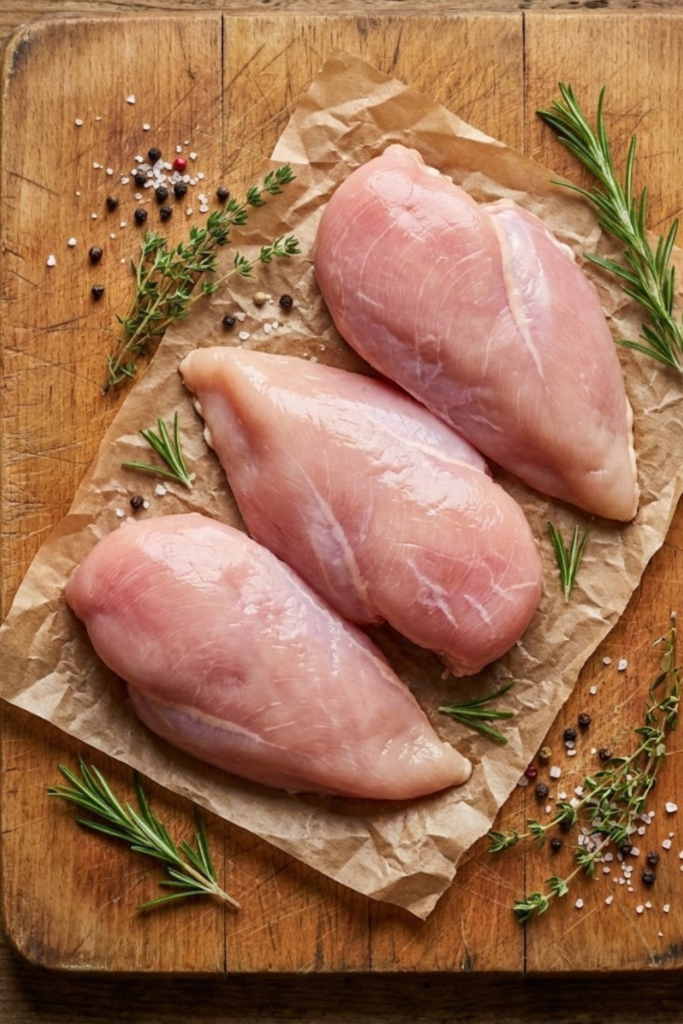
Have you ever noticed that chicken breasts these days are massive? Some of them are the size of a turkey! I try to avoid those huge ones because they often have a weird, woody texture that isn’t very pleasant to eat. I look for smaller organic breasts, usually around 6 to 8 ounces each.
More importantly, you want them to be the same size. If you cook a thick breast next to a thin one, the thin one will dry out before the thick one is even safe to eat. If your pack has uneven sizes, grab a heavy rolling pin or a meat mallet. Put the chicken between two pieces of plastic wrap and pound the thick part until it matches the thin part. It’s a great way to get some frustration out after a long day of teaching!
Bone-In vs. Boneless
I know we all love boneless, skinless breasts because they are easy. You don’t have to carve anything; you just cook and eat. They are great for a quick, healthy dinner. However, if you have extra time, bone-in, skin-on chicken breasts (sometimes called “split breasts”) are naturally juicier. The bone acts like a little heat shield, keeping the meat from cooking too fast, and the fat from the skin melts down to baste the meat.
Prep: Don’t Wash It, Just Dry It
Please, I am begging you, stop washing your raw chicken in the sink! I know our moms and grandmas did it, but it’s actually a bad idea. When the water hits the chicken, it splashes invisible bacteria all over your counters and sink. It’s not worth the risk.
Instead, take the chicken out of the package and use paper towels to pat it really, really dry. Moisture is the enemy of a good crust. If the surface is wet, it won’t brown. I use quite a few paper towels to get it totally dry before I even think about adding oil or spices.
The Secret Seasoning Blend
I have to be honest with you, for the longest time, I was terrified of over-salting my food. I would put just a tiny little sprinkle of salt on my chicken, bake it, and then wonder why it tasted like absolutely nothing. It was so frustrating! I eventually realized that chicken breast is basically a blank canvas. It doesn’t have much flavor on its own, so you really have to give it some help if you want your family to actually enjoy dinner. Over the years, I’ve messed around with a bunch of fancy mixes, but I always come back to a simple dry rub that I can make with stuff already in my cupboard.
Keeping It Simple with Pantry Staples
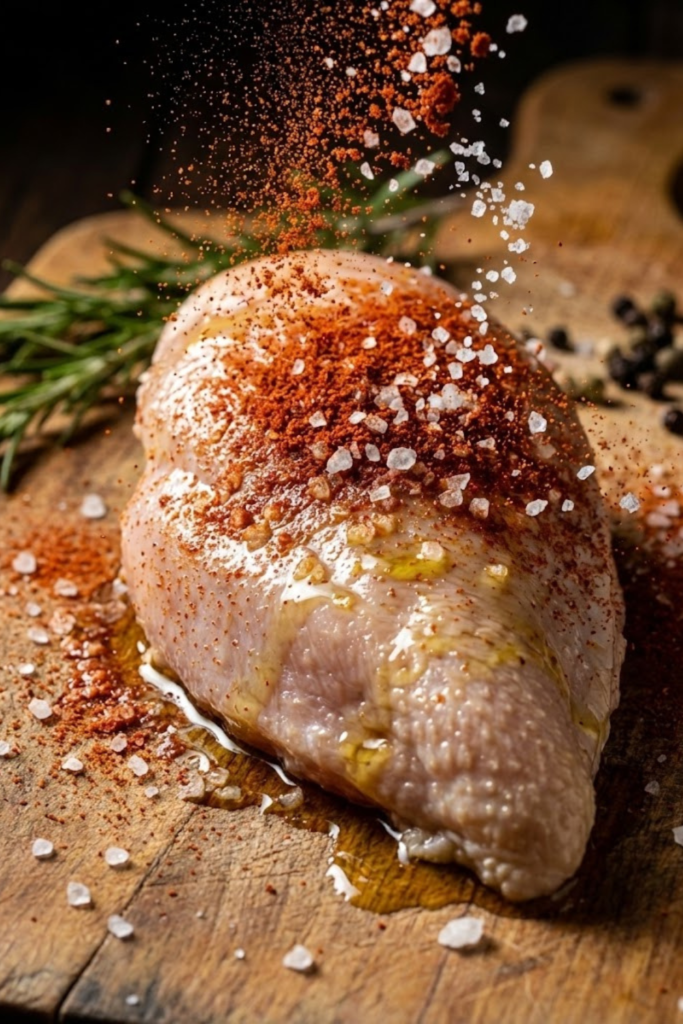
You do not need to go out and buy one of those expensive jarred spice blends. Half the time, they have too much salt and not enough actual flavor. My “secret” mix is really just four things: coarse kosher salt, black pepper, garlic powder, and smoked paprika.
I cannot stress this enough—use smoked paprika, not the regular sweet kind. It gives the chicken this gorgeous, deep red color that makes it look like it came off a charcoal grill, even though you just threw it in the oven. It also adds a little bit of a smoky smell that makes the whole kitchen smell amazing. If your family likes a little heat, you can add a pinch of cayenne pepper, but I usually leave it out so the kids don’t complain about their mouths burning.
The Oil: It’s Not Just for the Pan
Before I sprinkle a single grain of salt, I coat the chicken breasts in oil. Think of the oil as the glue that holds everything together. If you put spices on dry meat, they sort of just fall off or burn.
I used to use extra virgin olive oil for everything, but I learned that it can smoke and taste bitter at high temperatures (and we are going to roast this hot!). Now, I mostly use avocado oil. It handles the high heat of the oven way better. I drizzle it right over the meat and use my hands to rub it in. Yes, it gets messy, but it’s the only way to make sure every inch is coated. This oil coating is what helps the outside get that nice golden-brown crust we all want.
Dried Herbs vs. Fresh Herbs
I love the idea of using fresh herbs. They look so pretty in photos. But here is the reality: if you put fresh chopped garlic or fresh rosemary leaves on top of chicken and blast it at 400 degrees, they will burn. Burnt garlic tastes awful.
For roasting, dried herbs are your best friend. They are tough enough to handle the heat without turning into black ash. I usually add a teaspoon of dried oregano or dried thyme to my rub. If you really want that fresh herb flavor, chop up some fresh parsley or basil and sprinkle it on after the chicken comes out of the oven.
Marinating: Do You Really Need To?
Sometimes I see recipes that tell you to marinate the chicken for four hours. Who has time for that on a Tuesday? I sure don’t. While a marinade (like lemon juice, oil, and herbs) can make the meat tender, I’ve found that a generous dry rub works just as well for a quick weeknight meal. The salt in the rub actually starts to pull moisture to the surface and then re-absorbs it, seasoning the meat deeper down if you let it sit for just 10 or 15 minutes while the oven preheats. It is a huge time saver.
Ideal Temperature and Cooking Times
For years, I treated my oven like a slow cooker. I thought that if I cooked the chicken at a lower temperature, like 350°F, it would somehow be gentler on the meat and keep it moist. Boy, was I wrong. That low temperature just dried everything out because the chicken had to sit in the oven for so long to actually get cooked. It was like slowly dehydrating a grape into a raisin. If you want juicy chicken, you need to change your strategy.
Crank Up the Heat
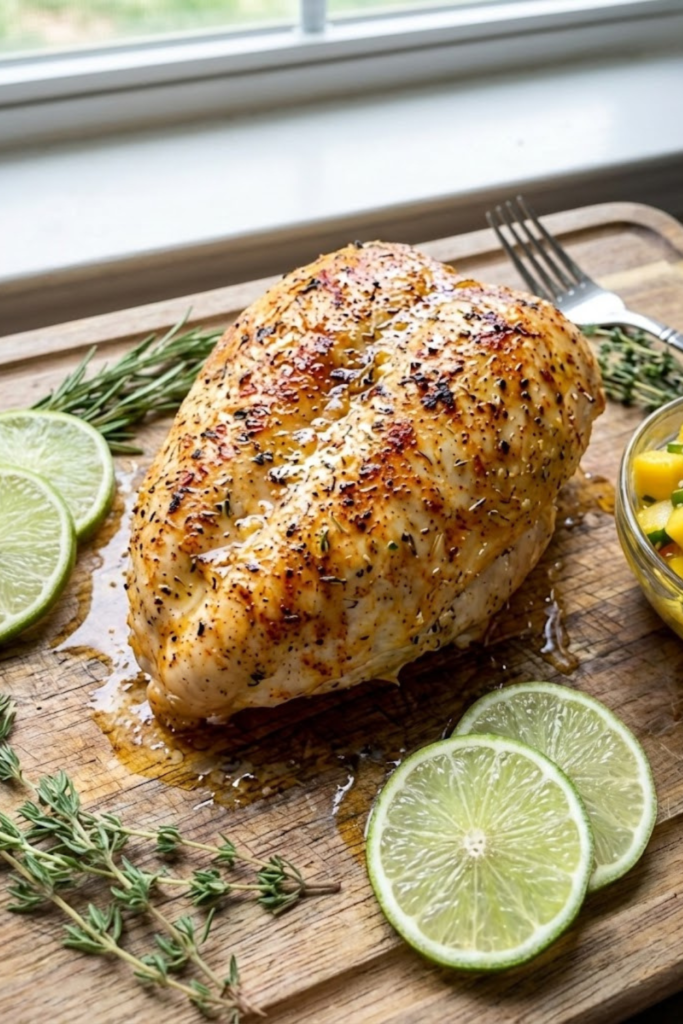
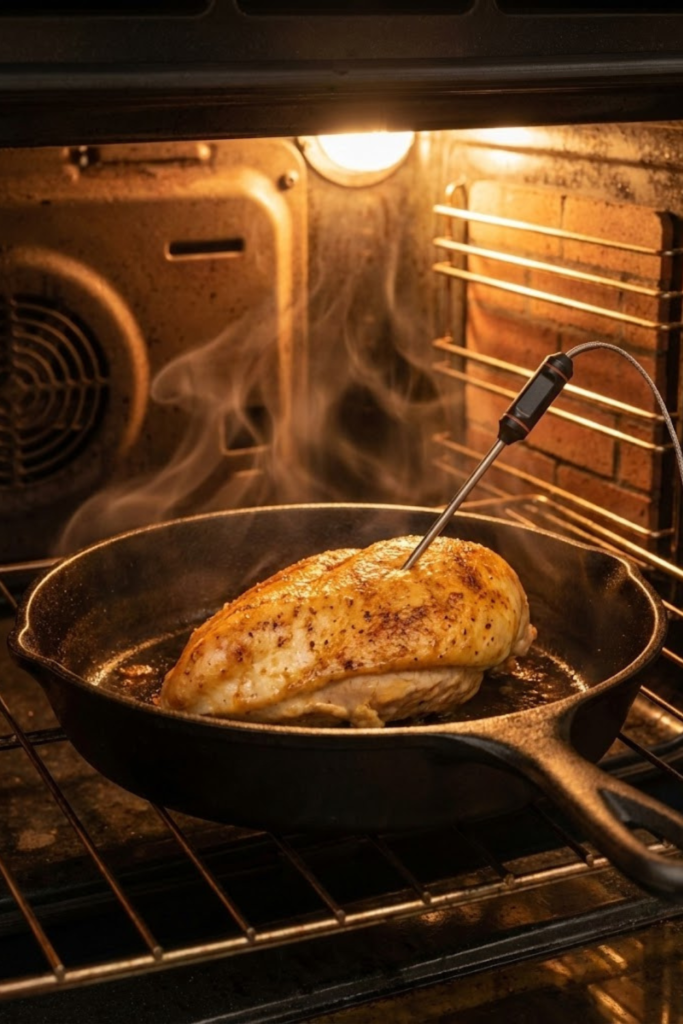
Here is the rule I live by now: fast and hot. You want to blast the chicken so the outside seals up and gets that nice golden color while the inside stays tender. I roast my chicken breasts at 400°F (200°C) or even 425°F if I’m in a hurry.
At high heat, the chicken cooks through quickly—usually in about 20 minutes—which leaves less time for the juices to evaporate. It’s the difference between steaming the meat and actually roasting it. Trust me, don’t be afraid of the high dial on your oven. It handles it just fine.
How Long Does It Take?
I wish I could give you one magic number, like “cook it for exactly 19 minutes,” but every piece of chicken is different, and every oven is a little weird. However, as a general guideline for the high heat method (400°F):
- Small breasts (around 6oz): Check them at 15-18 minutes.
- Medium breasts (around 8oz): usually take 18-22 minutes.
- Large breasts (10oz+): might need 22-25 minutes (but try to avoid these big ones if you can!).
If you are roasting vegetables on the same pan, like broccoli or asparagus, this timing usually works out perfectly for them too. It makes dinner so much easier.
The Only Way to Know It’s Done
This is the most important thing I will tell you today: buy a digital meat thermometer. They are cheap, you can get them at any grocery store, and they will save your dinner.
I used to cut into the chicken to “check” if it was pink. Bad idea. Once you cut it, all the juice runs out, and you are left with dry meat. Or I would use the “poke test,” pressing on it to see if it felt firm. Honestly, that is just guessing.
The safe internal temperature for chicken is 165°F. However—and this is the trick—you should take the chicken out of the oven when the thermometer reads 160°F. Why? Because of something called “carryover cooking.” The meat holds onto the heat and continues to cook for a few minutes while it sits on your counter. If you wait until it hits 165°F in the oven, it will probably rise to 170°F or higher while it rests, and then it gets tough.
So, pull it at 160°F, let it sit, and it will finish perfectly. It takes the stress out of wondering if you are going to give your family food poisoning or serve them shoe leather.
Resting: The Most Important Step
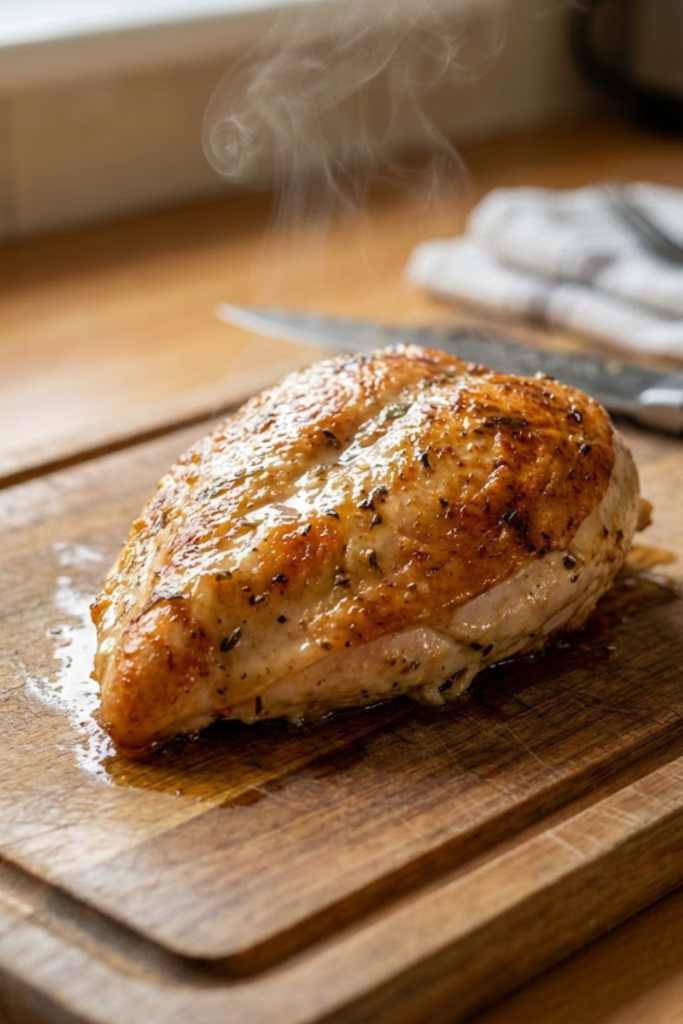
This is the hardest part of the entire recipe. Seriously. You have just spent time seasoning the meat, the kitchen smells amazing, your stomach is growling, and the timer finally goes off. You pull that beautiful, golden oven roasted chicken breast out of the oven, and everything in your body wants to cut into it right away.
I used to do exactly that. I would take the pan out, grab a fork and knife, and slice right into the thickest part to “test” it. And then? A giant puddle of juice would flood the cutting board. I didn’t realize it at the time, but I was basically watching all the flavor and moisture run away. By the time I put the meat on the plate, it was dry and tough. I ruined dinner right at the finish line!
If you want juicy chicken, you have to learn the art of patience. Here is why resting is absolute magic and how to do it properly.
Why We Wait (The Science Bit)
Think of the chicken breast like a water balloon. When it is in the hot oven, the heat squeezes the muscle fibers tight. All the natural juices get pushed to the center of the meat, away from the heat.
If you cut it the second it comes out, those juices are still under pressure in the middle. They will explode out onto your plate. But, if you let the meat sit for a bit away from the heat, those muscle fibers relax. As they relax, the juices redistribute. They spread back out to the edges. So, when you finally take that first bite, the juice is inside the meat where it belongs, not wasted on the counter.
The “Tent” Technique
So, what do you do while you wait? You don’t want the chicken to get cold. This is where “tenting” comes in.
Take the chicken off the hot sheet pan (because the pan is still cooking it!) and move it to a clean cutting board or a warm serving platter. Tear off a piece of aluminum foil. Gently drape it over the chicken.
Do not wrap it tight! If you wrap it like a burrito, the steam gets trapped, and that nice crispy crust you worked hard for will get soggy. You just want to loosely cover it to keep the heat in while letting a little steam escape. It’s like giving the chicken a light blanket.
Five to Ten Minutes
How long do you have to stare at it? I recommend waiting at least 5 to 10 minutes. I know, it feels like forever when you are hungry.
I use this time to finish up the rest of the meal. It’s perfect for tossing the salad, steaming some green beans, or wrangling the kids to wash their hands and actually sit at the table. By the time everyone is seated and the sides are served, the chicken is ready.
Trust me, that ten-minute wait makes a bigger difference than any marinade or spice rub ever could. It changes the texture from “chewy” to “melt in your mouth.” It is the difference between an okay dinner and a meal your family asks for again next week. So, hands off! Let it rest. It is worth it.
Serving and Meal Prep Ideas
I am a huge fan of the “cook once, eat twice” rule. As a teacher, my weeknights are usually crazy with grading papers or driving kids to practice, so having food ready to go is a total lifesaver. This oven roasted chicken breast is perfect for that because it goes with literally everything.
The One-Pan Wonder
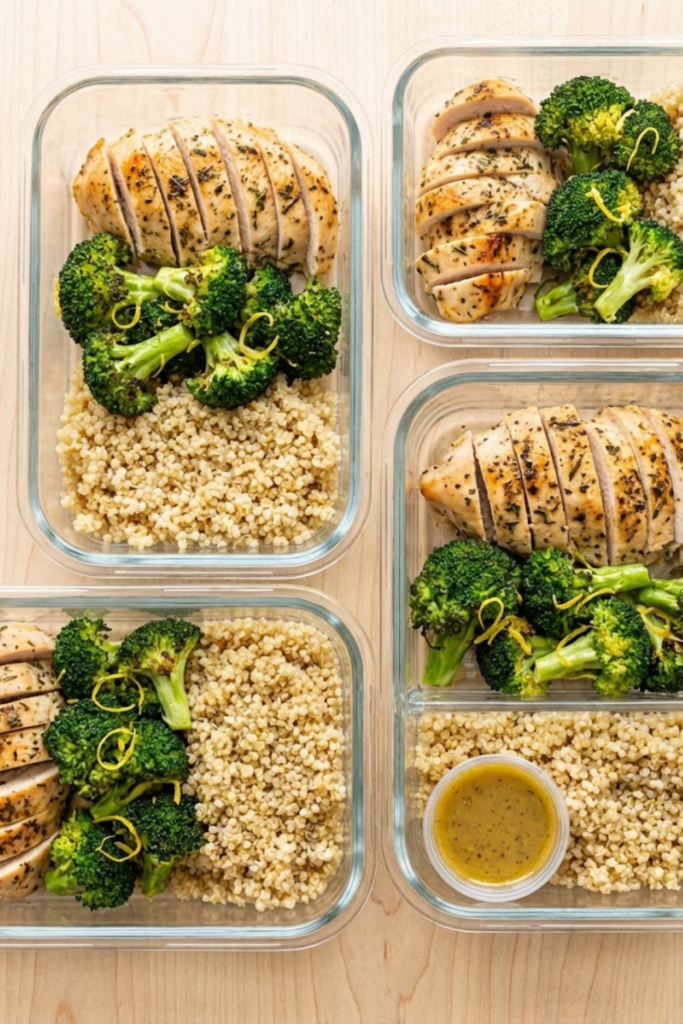
Since the oven is already hot and blasting at 400 degrees, why not cook your sides at the same time? I love making this a sheet pan dinner. I toss some broccoli florets, asparagus, or chopped sweet potatoes in a little oil and salt. I spread them out on the baking sheet right next to the chicken. They usually take about 20 minutes to roast, which is the exact same time the chicken needs. It’s magic. You get a whole healthy dinner with only one dirty pan to wash. That is my kind of math!
Lunch for the Week
If I am smart enough to make extra on Sunday, my lunches are set for the week. I let the chicken cool down completely, then I slice it into strips. It is great cold on top of a Caesar salad or in a grain bowl with some quinoa and veggies. It saves me from buying expensive cafeteria food or hitting the drive-thru when I’m stressed.
Storing Leftovers
To keep it fresh, I put the leftover chicken in an airtight container or a glass snap-ware dish. It stays good in the fridge for about 3 to 4 days. If you meal prep on Sunday, you are good until Thursday lunch.
How to Reheat Without Ruining It
Here is the tricky part. If you zap chicken in the microwave on high for two minutes, it will taste like rubber. It just kills it. If I have to use the microwave, I sprinkle a tiny bit of water on the meat and cover it loosely with a paper towel. Then I heat it on 50% power just until it’s warm. It takes a little longer, but it keeps the meat from turning into a hockey puck. Better yet, if you are at home, warm it up in a skillet with a splash of chicken broth. It tastes almost as good as day one.
Well, we made it to the end of the lesson! I really hope you are feeling a lot better about tackling oven roasted chicken breast now. I know it can feel a little scary to try a new method, especially if you have eaten dry, flavorless bird your whole life like I did for so many years. But honestly, once you try this high-heat method, you are never gonna go back to the old way of low-and-slow baking.
Let’s just do a quick recap before I let you go, just like I do with my students before a test (don’t worry, there is no test today!). If you take anything away from this guide, just remember the “Big Three” rules:
- Dry it off: Get that moisture off the surface so it can brown.
- Cook it hot: 400°F is the sweet spot to seal in juices.
- Let it rest: Give those juices time to settle back into the meat.
If you get those three things right, the seasoning is really just the cherry on top. You can use my garlic-paprika mix, or you can shake on some taco seasoning, lemon pepper, or whatever random spices you have sitting in the back of your cupboard. The technique is what matters most. Once you master the technique, you can make this recipe taste a million different ways.
Cooking dinner shouldn’t be a source of stress. It should be the time you get to relax and feed the people you care about. This recipe is my way of giving you a little bit of time back in your evening. No standing over a hot stove flipping meat, no complicated sauces to whisk. Just simple, good food that is actually good for you.
Imagine opening your fridge on a Wednesday night and seeing a container full of perfectly cooked, juicy chicken ready to go. You can throw it on a salad, wrap it in a tortilla, or just eat it cold right out of the box (I won’t judge, I do it all the time). It makes the whole week run smoother.
If you found this guide helpful, do me a huge favor. Please save this recipe to your “Dinner Ideas” or “Healthy Recipes” board on Pinterest. It helps other home cooks find it so they can stop eating sad, dry chicken too! I’d love to know if you try it, so feel free to leave a comment if you do.
Happy cooking, everyone! You’ve got this.