I have a confession to make: for years, I was terrified of cooking dark meat! But once I discovered the magic of oven roasted chicken thighs, my dinner rotation changed forever. Did you know that chicken thighs are actually more forgiving than breasts because the higher fat content keeps them moist even if you slightly overcook them? That’s a game-changer for busy weeknights.
In this article, we aren’t just tossing bird parts in a pan. We are going to achieve that holy grail of home cooking: shatteringly crispy skin with meat that falls off the bone. Whether you are a meal-prep pro or just looking for a quick sheet pan dinner, this guide has you covered!
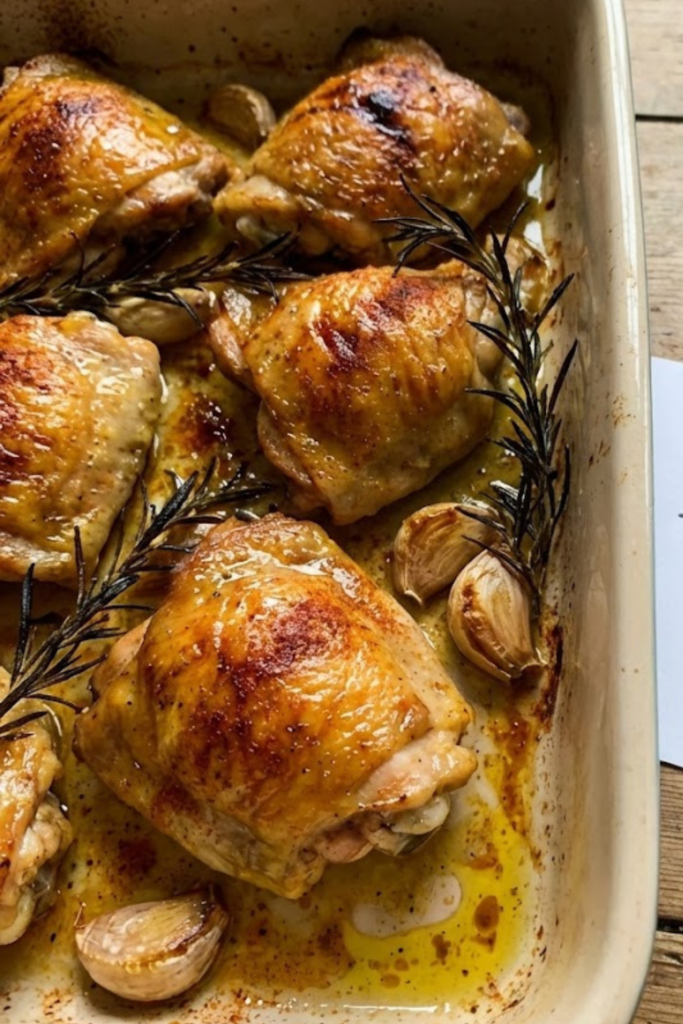
Why Bone-In Skin-On Chicken Thighs Are Superior
I have to be honest with you. For a long time, I was scared to cook anything that had a bone in it. I used to grab those packs of boneless, skinless breasts because I thought they were easier and maybe a bit “cleaner” to handle. But looking back, I realize I was making my life harder and my dinners way less tasty. Once I finally gave bone-in skin-on chicken thighs a real shot, I realized just how much I had been missing out on. It wasn’t just a small change; it completely fixed my dry chicken problem.
The Bone Keeps It Juicy
Here is the thing about cooking meat: it dries out fast. I can’t tell you how many times I have accidentally turned a chicken breast into something that tasted like a shoe leather because I got distracted grading papers or helping with homework.
Chicken thighs are different. They are incredibly forgiving. The bone actually acts like a little heat shield. It slows down the cooking process from the inside out, which helps the meat stay moist. Even if you leave them in the oven five minutes too long because the phone rang, they usually come out juicy anyway. Dark meat naturally has a bit more fat, which melts down and keeps everything tender. It is pretty hard to mess these up, which is exactly what I need on a busy Tuesday.
You Need the Skin for Flavor
If you take the skin off before you cook it, you are throwing away the best part. I know we worry about calories, but keeping the skin on during roasting is a game changer. As the fat under the skin renders (that’s just a fancy word for melts), it naturally bastes the meat. It drips down and soaks into the chicken, giving it a flavor you just can’t get with a dry rub alone. Plus, that crispy, golden-brown crunch you get at the end? You can’t fake that with a skinless cut. It adds a texture that makes a simple dinner feel like something special.
It Is Way Cheaper
Have you seen grocery prices lately? It feels like every time I walk into the store, the bill goes up. One of the biggest reasons I switched to bone-in thighs is the price tag. They are almost always cheaper per pound than the boneless stuff. I can feed my whole family for a fraction of the cost just by being willing to deal with a bone. It’s a simple swap that saves me money every single week.
Better for You Than You Think
People think white meat is the only healthy option, but dark meat has its perks too. It is packed with iron and zinc, which are things a lot of us don’t get enough of. So, you aren’t just saving money and getting better flavor; you are actually getting some good nutrients in there too.
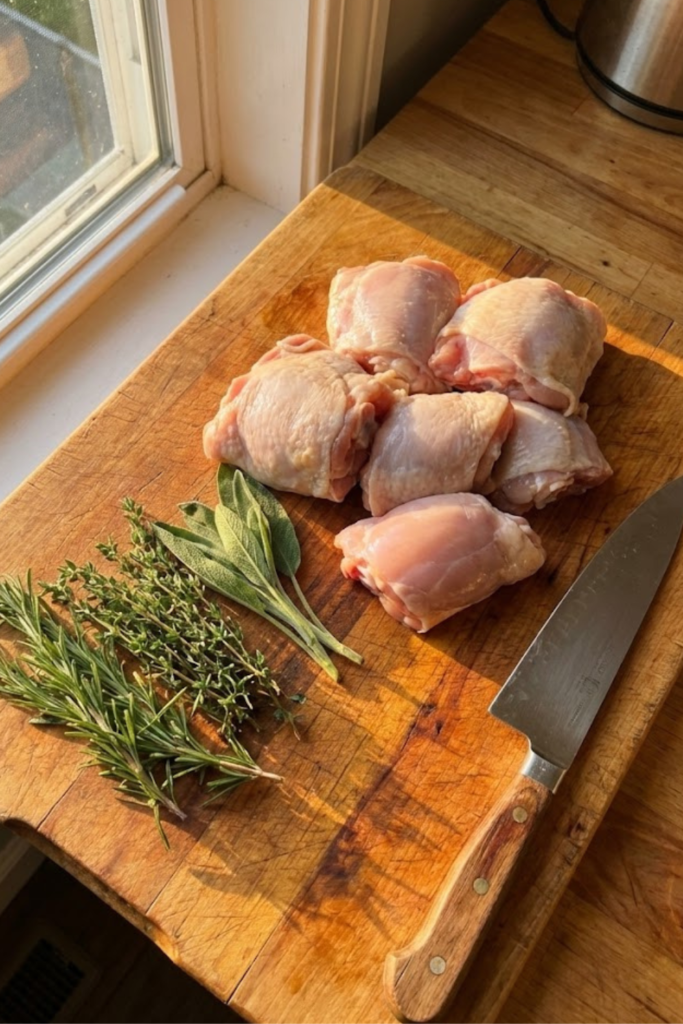
The Secret Dry Rub for Maximum Flavor
I’ll be the first to admit it—I used to be pretty boring with my seasonings. I’d just sprinkle a little salt and pepper on my oven roasted chicken thighs and call it a day. It was fine, but it wasn’t great. My kids would eat it, but nobody was asking for seconds. Then I started playing around with a homemade dry rub, and everything changed. Now, the smell of this chicken roasting in the oven brings everyone into the kitchen before it’s even done.
Why a Dry Rub Is Better Than a Marinade
For a long time, I thought you had to soak chicken in a liquid marinade for hours to get any flavor. The problem with that, especially when you want crispy skin, is that marinades add way too much moisture. When you use a dry rub, you are packing on the flavor without making the skin soggy. It creates this beautiful crust that seals in all the juices. Plus, you don’t have to plan ahead for hours—you can just rub it on and pop the tray in the oven.
My Go-To Spice Blend
You probably already have everything you need in your cabinet right now. I like to start with a base of smoked paprika. It gives the chicken a gorgeous deep red color and a tiny bit of wood-fired taste without being spicy. Then I add plenty of garlic powder and onion powder.
One thing I learned the hard way: don’t be stingy with the salt. Salt does more than just season; it helps break down the proteins and draws moisture out of the skin so it can get crunchy. I also toss in some dried oregano or thyme for an earthy smell that makes the whole house smell like a cozy Sunday dinner. If you like a little kick, a tiny pinch of cayenne pepper goes a long way, but I usually leave that out if I’m cooking for picky eaters.
Don’t Forget the Oil
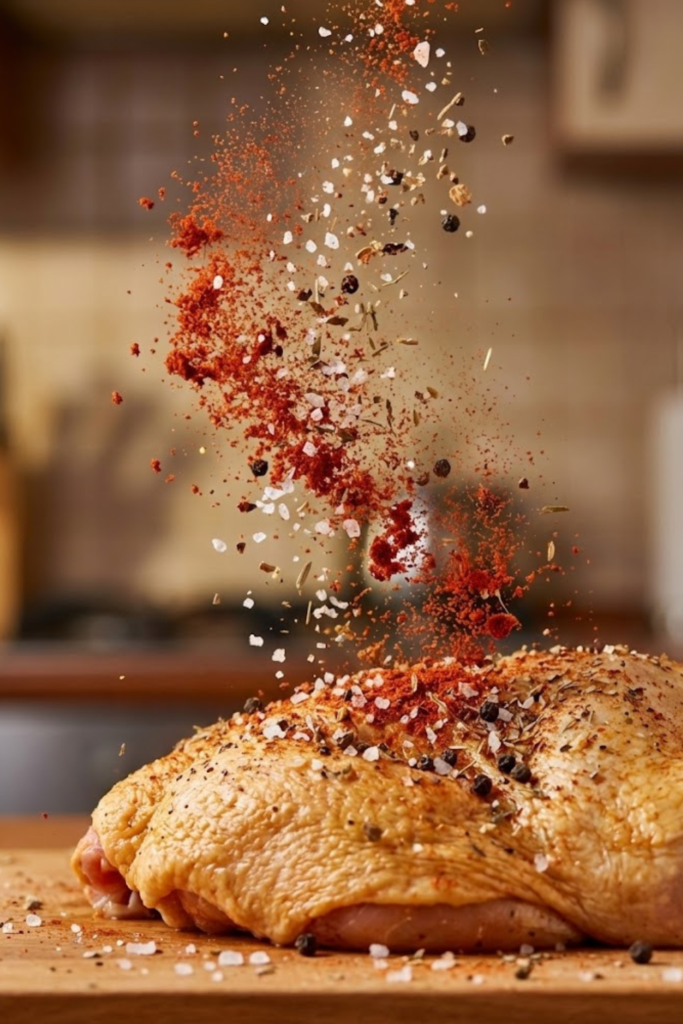
Even though we are using a dry rub, you still need a little bit of fat to help it stick. I usually just drizzle a little olive oil over the thighs and rub it in with my hands before I shake the spices on. It helps the heat from the oven distribute evenly across the skin. You don’t need much—just enough so the chicken looks shiny. This simple step helps the spices melt into the skin instead of just sitting on top and burning. It really makes a difference in how the final dish looks and tastes.
Step-by-Step: How to Bake Chicken Thighs Perfectly
I used to think that roasting chicken was as simple as putting it in a pan and turning on the oven. While that technically works, I ended up with a lot of soggy skin and unevenly cooked meat. Over the years, I’ve realized that the “how” is just as important as the “what.” Following a specific routine makes the difference between a dinner that is just okay and one that everyone talks about for the rest of the week.
The Paper Towel Trick
The absolute biggest mistake I see people make—and I made it for years—is taking the chicken straight from the plastic pack and putting it in the pan. If the skin is wet, it will steam instead of fry. Now, I always take a few extra minutes to pat every single piece of chicken completely dry with paper towels. I mean really dry, top and bottom. It feels like a waste of paper towels sometimes, but it’s the only way to get that crunch. If there is moisture on the surface, the skin just won’t get that golden-brown color we all want.
Crank Up the Heat
For a long time, I cooked everything at 350°F because that’s what my mom did. But for oven roasted chicken thighs, you really need to turn the heat up. I usually set my oven to 400°F or even 425°F. This high heat is what renders the fat quickly. It makes the fat melt away from the skin so it can crisp up while the inside stays juicy. At lower temperatures, the skin just gets rubbery before the meat is actually done.
Let the Air Circulate
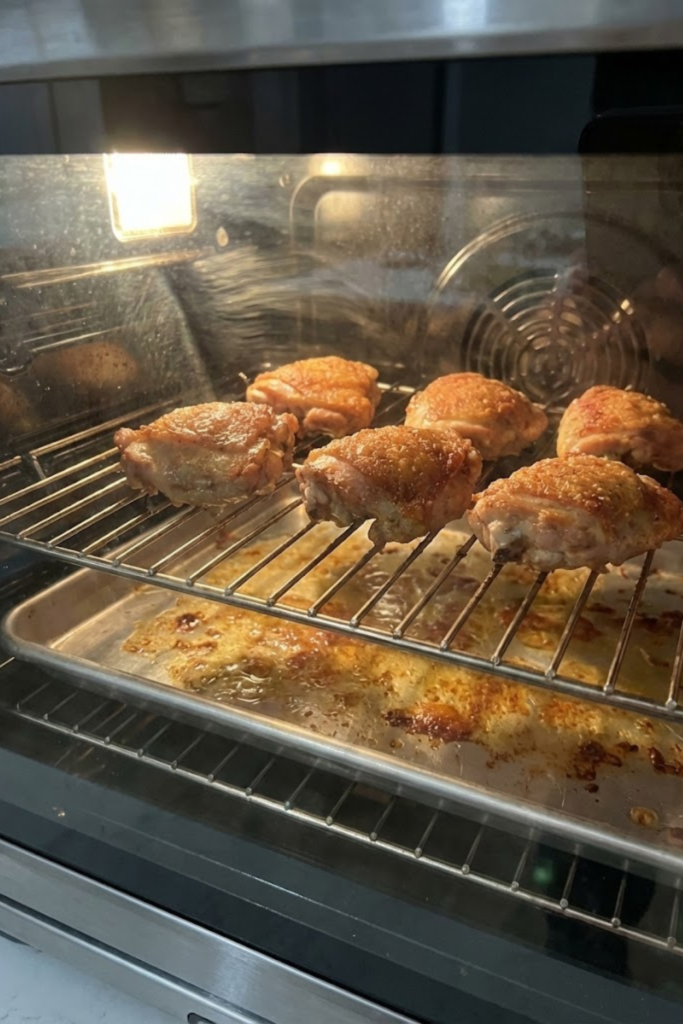
Another thing that changed my cooking game was using a wire rack. Instead of laying the thighs flat on a baking sheet where they sit in their own juices, I put them on a rack inside the pan. This allows the hot air to get underneath the chicken. When the air can circulate all the way around, the bottom of the thigh gets cooked properly too, and you don’t end up with a “soggy bottom.”
Timing is Everything
Usually, these take about 35 to 45 minutes. I’ve noticed that larger thighs need that full 45 minutes to really let the skin get dark and delicious. I don’t move them around or flip them; I just let the oven do its thing. The smell will start to change when they are close to being done—it goes from a raw smell to a deep, savory aroma that fills the whole hallway.
Checking for Doneness and Resting
I remember the first time I cooked a big Sunday dinner for my family. I was so nervous about everyone getting sick that I cooked the chicken until it was basically a piece of wood. I didn’t have a thermometer back then, so I just kept cutting into it to see if it was still pink. By the time I served it, all the juices had run out onto the cutting board, and the meat was tough. I’ve learned since then that knowing exactly when to pull the chicken out—and what to do next—is the real secret to a perfect meal.
Use a Meat Thermometer
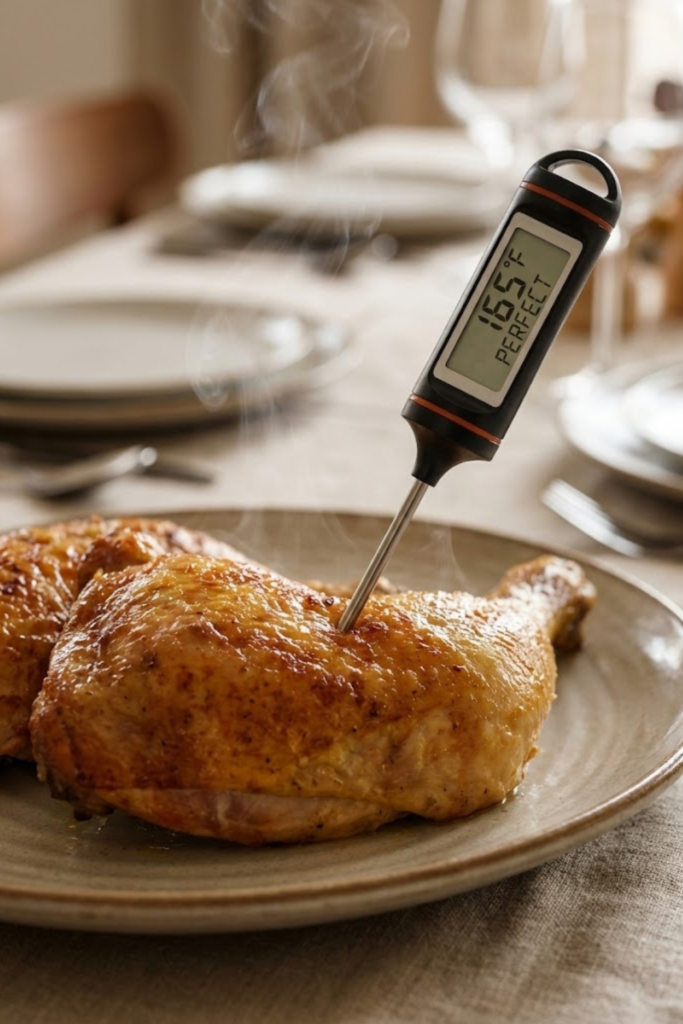
If you want to stop guessing, you need a meat thermometer. It’s the only way to be 100% sure. For oven roasted chicken thighs, you are looking for an internal temperature of 165°F. However, because thighs have more fat and connective tissue than breasts, I actually think they taste better when they hit about 175°F. At that temperature, the meat gets really tender and starts to pull away from the bone easily. Just make sure you poke the thickest part of the meat and don’t hit the bone with the metal tip, or you’ll get a wrong reading.
Look for the Visual Signs
If you don’t have a thermometer yet, you can look for a few clues. The skin should be a deep, dark golden brown and feel firm when you tap it with a fork. When you pierce the meat, the juices that run out should be completely clear, not cloudy or pink. Also, look at the joints; the meat should start to shrink back from the bone slightly. That’s a good sign that the heat has done its job all the way through.
The Magic of Resting
This is the hardest part because the house smells amazing and everyone is hungry, but you have to let the chicken sit. I always move my thighs to a clean plate or a wooden board and let them rest for at least 5 to 10 minutes.
If you cut into them right away, all that juice we worked so hard to keep inside will just pour out. Resting lets the muscle fibers relax so they can soak those juices back in. I usually just use this time to finish up the side dishes or set the table. Trust me, those few minutes of waiting make a huge difference in how juicy the first bite is.
Carryover Cooking
One little tip I picked up is that the chicken keeps cooking even after you take it out of the oven. This is called carryover cooking. The temperature usually goes up another 5 degrees while it sits on the counter. So, if you pull them out at 170°F, they will be a perfect 175°F by the time you actually put them on a plate.
Serving Suggestions and Side Dishes
When I first started making these chicken thighs, I was so focused on getting the skin crispy that I completely forgot about the rest of the meal. I’d end up standing at the kitchen counter eating a thigh with a side of… nothing. Now that I’ve done this a few hundred times, I’ve figured out which sides actually make the meal better without adding a ton of extra work.
The Magic of One-Pan Veggies
The best part about oven roasted chicken thighs is the liquid gold they leave behind in the pan. I’ve learned that if I toss some chopped potatoes, carrots, or Brussels sprouts right onto the baking sheet (or in the pan underneath the wire rack), they soak up all that salty, savory chicken fat. By the time the chicken is done, the vegetables are tender and flavorful. It’s a whole dinner with only one pan to wash, which is the kind of math I like to do after a long day at school.
Balancing the Richness
Since chicken thighs are a bit more oily and rich than a breast, I like to serve them with something bright and fresh to cut through that fat. A simple green salad with a sharp lemon vinaigrette or even some quick-pickled cucumbers works wonders. My kids really like it when I make a cold coleslaw with plenty of vinegar. It wakes up your taste buds so every bite of chicken tastes just as good as the first one.
Starchy Favorites
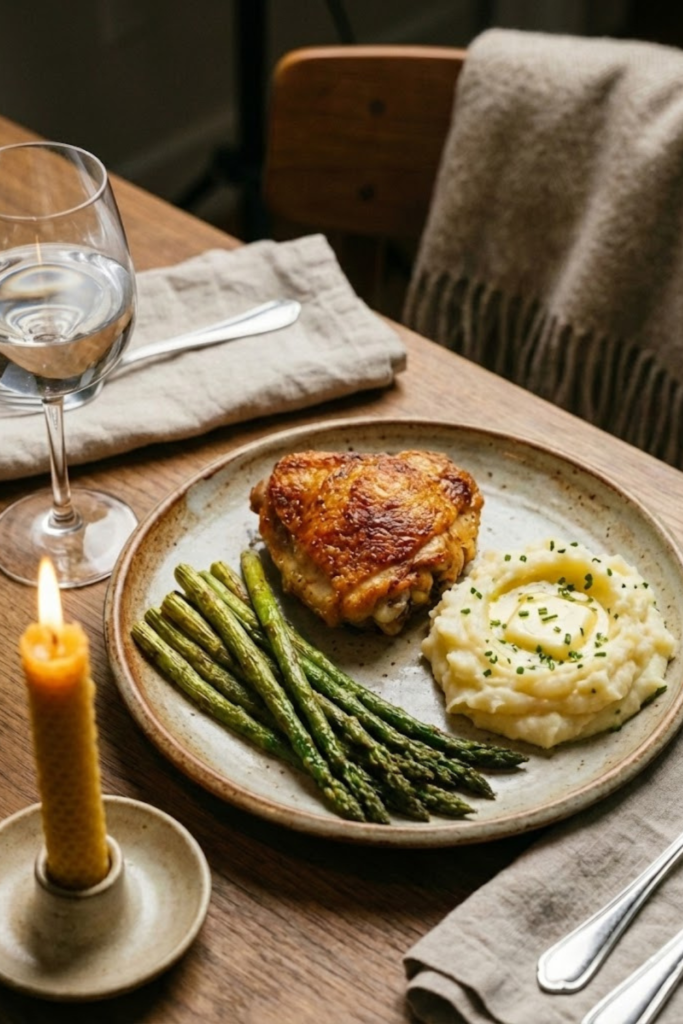
If you aren’t doing the one-pan veggie route, you can’t go wrong with mashed potatoes or rice. My family loves it when I make a big pot of fluffy white rice to soak up any extra juices from the plate. If I’m feeling a bit more fancy, I’ll buy a loaf of crusty bread from the bakery section and toast it up. There is nothing better than using a piece of bread to wipe up the last bit of seasoning and oil left on your plate.
A Simple Sauce
Most of the time, the chicken is so juicy it doesn’t need a sauce. But every now and then, I’ll whisk together a little honey and grainy mustard, or maybe a squeeze of fresh lemon juice with some chopped parsley. It adds a little “pop” to the plate. Just don’t pour it over the top of the chicken until you are ready to eat, or you’ll ruin that crispy skin we worked so hard to get!
I really hope this guide helps you get over any “chicken anxiety” you might have. Making oven roasted chicken thighs has become one of those back-pocket recipes for me—the kind I can make when I’m tired, when I’m on a budget, or when I just want something that tastes like a warm hug. It’s funny how a simple switch from white meat to dark meat, and turning the oven up a few degrees, can completely change how your family feels about dinner time.
The best part about this recipe is that it’s just a starting point. Once you get the technique down—the patting dry, the high heat, and the resting—you can change the spices however you like. You can go with lemon and herb one night and spicy chili rub the next. It’s a reliable, delicious way to feed the people you love without spending hours scrubbing pans or stressing over a complicated recipe.
I’ve found that the more I cook simply, the more I actually enjoy being in the kitchen. There’s something so satisfying about hearing that skin crackle when you take the pan out of the oven and knowing that the inside is going to be perfectly juicy every single time. Give it a try this week, and I bet it becomes a staple in your house just like it did in mine.
Don’t lose this recipe! Pin this image to your Pinterest board to save it for later so you always have the perfect temperature and timing handy.