You know that feeling when you’ve had a long, exhausting week and all you crave is a hug in a bowl? That was me last Tuesday. I stared at the picked-over remains of a store-bought bird sitting on my counter and thought, “Is this it?” Absolutely not! Did you know that nearly 40% of the flavor potential in a roasted chicken is locked away in the bones we usually throw away? It’s a tragedy, really.
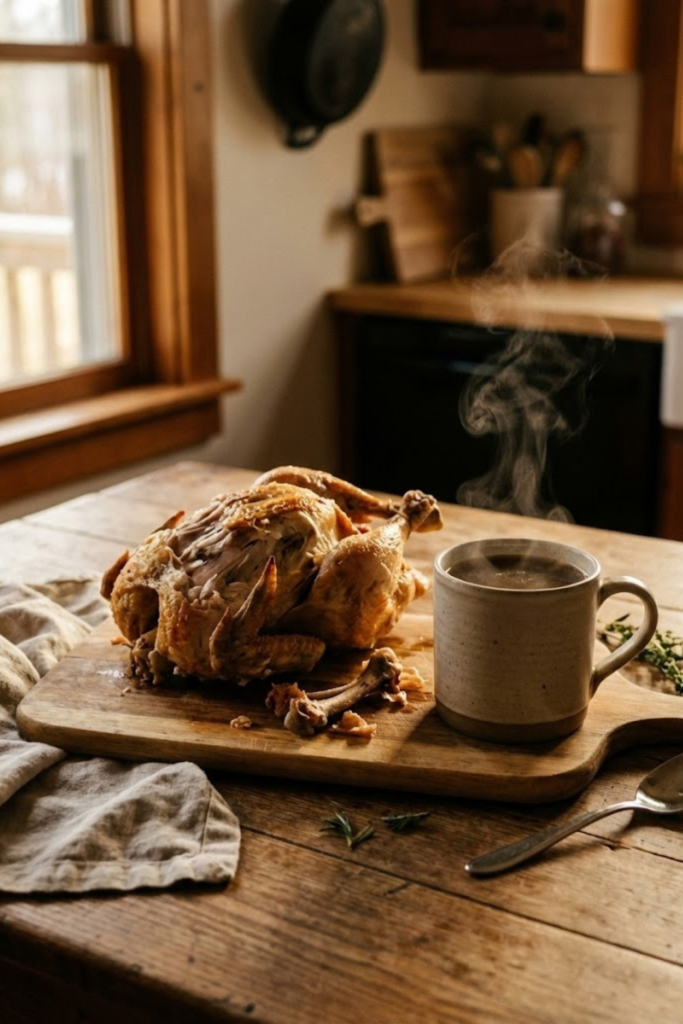
I decided to stop wasting and started simmering. The result? A homemade chicken soup so rich and gelatinous it practically healed my soul on the spot. Using a rotisserie chicken carcass is the ultimate hack for busy home cooks who want that slow-simmered taste without the all-day effort. In this post, I’m going to show you exactly how to extract every ounce of liquid gold from that bird. Grab your stockpot; we’re making magic happen!

Why Rotisserie Chicken Makes the Superior Stock
Listen, I used to be that person who bought cartons of chicken broth at the store. I thought, “Why bother making it? It’s only a dollar.” But then I actually made stock from a leftover Costco rotisserie chicken, and my mind was blown. It wasn’t just better; it was a completely different food group. If you are still throwing that carcass in the trash, we need to have a serious talk. You are basically throwing away flavor.
The difference between a “meh” soup and a “wow” soup usually comes down to the base. And honestly, nothing beats a bird that has already been roasted to perfection.
The Flavor is Already Built In
Here is the science bit, but I’ll keep it simple. When a chicken gets roasted, something called the Maillard reaction happens. It’s just a fancy way of saying things get brown and caramelized. That browning creates a deep, savory taste that raw chicken bones just don’t have.
When you use raw bones, you usually have to roast them in the oven for an hour before you even start boiling water to get that same taste. Who has time for that on a Tuesday? With a rotisserie chicken, the grocery store did the hard work for you. You get that deep, golden, roasted flavor immediately because the bones have already cooked in their own juices for hours. It’s like a shortcut to flavor town without any extra effort.
It Saves You Serious Cash
Let’s look at the math. A raw whole chicken can cost anywhere from $10 to $15 depending on where you shop. A rotisserie chicken is usually around $5 to $8.
When you buy the pre-cooked one, you get a hot dinner for the family that night. Then, you use the bones to make gallons of free stock. Finally, you use that stock and leftover meat for a second meal (the soup). That is two family dinners for the price of a sandwich. In this economy, stretching a dollar like that is a big deal.
The “Jiggle” Factor (Collagen)
Okay, this might sound gross, but stick with me. Good stock should wiggle like Jell-O when it gets cold in the fridge. That wiggle comes from collagen breaking down into gelatin.
Rotisserie chickens are usually cooked slow and low, which starts breaking down the connective tissue before you even get it home. When you simmer those bones again, you extract all that good stuff. This makes the soup have a rich mouthfeel that coats your tongue. Plus, it’s supposedly great for your gut and joints. Store-bought broth is usually just water and salt; it never has that hearty texture. Once you see the “jiggle” in your homemade pot, you’ll know you did it right.
Essential Ingredients for Your Soup Pot
A great soup is like a good classroom: you need a strong foundation and a few distinct personalities to make it interesting. You can’t just throw chicken bones in water and expect magic. You need a supporting cast of ingredients to coax that flavor out and build a broth that tastes like it came from a grandmother’s kitchen, not a can.
Here is what you need to grab from your pantry and fridge before you get started. It’s mostly basic stuff, but how you use it matters.
The “Holy Trinity” of Flavor
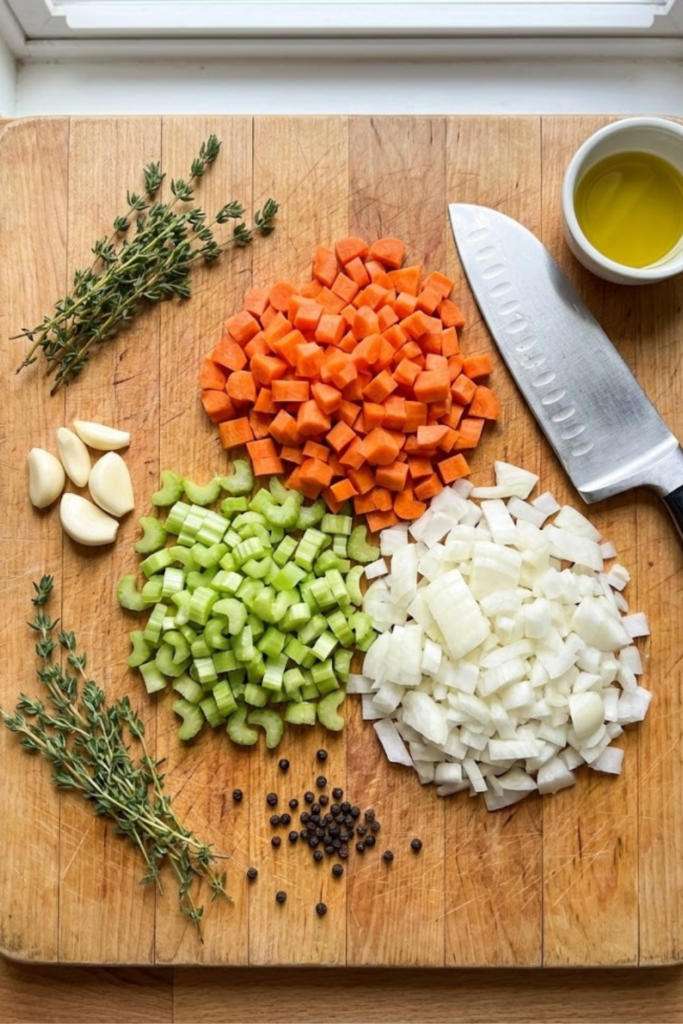
In the cooking world, they call this mirepoix (pronounced meer-pwah), but in my house, we just call it the starter pack. It is a mix of onions, carrots, and celery. The classic rule is a ratio of 2:1:1. That means for every two cups of onions, you want one cup of carrots and one cup of celery.
This mix provides that sweet, savory base that we all associate with chicken soup. Even if you think you don’t like celery, please don’t skip it! I have tried making soup without it, and it just tastes flat. When it cooks down, the bitterness goes away and it just adds a savory depth you really need. If you are making the stock, just chop these vegetables into big, rough chunks. If you are adding them to the final soup later, cut them into nice, spoon-sized pieces.
Fresh vs. Dried Herbs
There is a time and place for both. I usually put dried herbs, like thyme and bay leaves, in at the beginning of the simmer. Dried herbs are tough; they need heat and time to release their oils. I always throw in two bay leaves. I honestly don’t know exactly what flavor they add, but the soup feels incomplete without them—it’s an earthy background note.
Save your fresh herbs, like parsley or dill, for the very end. If you put fresh parsley in at the start, it will turn brown and slimy by the time you are ready to eat. Sprinkle it on right before serving to get that pop of green and a fresh, grassy taste.
The Secret Acid
This is the one tip that changes everything. You need an acid. When I make the bone broth, I add a splash of apple cider vinegar. It helps break down the bones so you get more minerals and collagen (the good stuff) into your broth. You won’t taste the vinegar, I promise.
Later, when you are finishing the soup, if it tastes a little “heavy” or dull, squeeze in some fresh lemon juice. It brightens the whole pot up immediately. It’s like opening a window in a stuffy room.
Pantry Staples for Health
Finally, I always toss in whole black peppercorns and a few smashed cloves of garlic. You don’t even need to peel the garlic if it’s just for the stock; just smash it with the side of your knife and toss it in. I also like to add a pinch of turmeric. It gives the soup a beautiful golden yellow color and it’s an anti-inflammatory, which is great if you are fighting off a cold.
Step-by-Step: From Carcass to Comfort Bowl
Okay, we have our ingredients and our leftover bird. Now we have to actually make the thing. Don’t worry, it looks like a lot of steps, but most of it is just letting the pot sit on the stove while you go do laundry or watch TV.
This process is broken down into two main parts: making the liquid gold (the stock) and then turning that into the actual soup.
Picking the Meat First
This is the mistake I see people make all the time. Do not—I repeat, do not—throw the whole carcass with good meat still on it into the boiling water. If you boil cooked chicken breast for three hours, it turns into something that tastes like wet cardboard.
Before you start, use your fingers to pull off any good, bite-sized pieces of white or dark meat that are still clinging to the bones. Save this meat in a bowl and put it in the fridge. We will add it back at the very end so it stays tender. You want the pot to contain only bones, skin, cartilage, and maybe the wings if nobody ate them.
Simmering the Stock
Dump your bones and your “ugly” vegetable chunks (onions, carrots, celery) into your biggest stockpot. Fill it with cold water until everything is just covered by about an inch. Turn the heat to high just to get it bubbling, then immediately turn it down to low.
You want a gentle simmer, not a rolling boil. If you boil it too hard, the fat emulsifies into the liquid and makes your stock look cloudy and muddy. We want it clear. Put a lid on it, but leave it slightly cracked so steam can escape. Let it hang out there for at least 2 hours, but 4 hours is better. Your house is going to smell amazing.
Straining Success
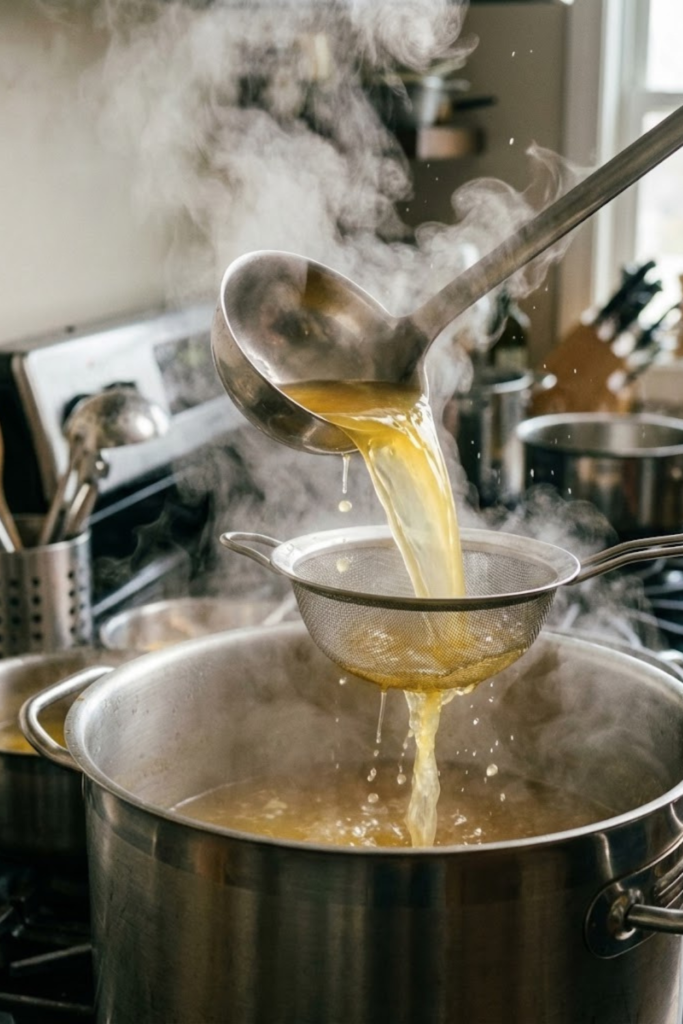
This part can be messy, so be careful. You need to get the liquid out and leave the junk behind. I put a fine-mesh strainer (or a colander if that’s all you have) over a large bowl or another pot.
Pour the contents through the strainer. Discard the old bones and the mushy vegetables—they have given all their flavor to the broth and are basically tasteless now. What you have left in the bowl is your homemade bone broth. If you see a lot of fat floating on top, you can skim it off with a spoon, but I usually leave a little bit for flavor.
Building the Soup
Now, rinse out your big pot and put it back on the stove. Add a little oil and sauté your fresh, chopped carrots, onions, and celery for about 5 minutes until they start to soften.
Pour your beautiful homemade broth over the fresh veggies. Let this simmer for about 15 minutes until the carrots are tender. Finally, take that cooked chicken you saved in the fridge earlier and dump it in. Since it’s already cooked, it just needs 2 minutes to warm through. Taste it, add salt and pepper, and you are done. It’s that simple.
Customizing Your Bowl: Noodles, Rice, or Low-Carb?
One of the best things about making soup at home is that you don’t have to follow a strict set of rules. It’s your pot, your rules. In my house, we actually have a bit of a divide. My youngest only wants traditional noodles, while I usually try to keep things lighter with veggies. The great news is that this rotisserie chicken base works for literally anything.
You can customize each bowl individually, which is a lifesaver if you have picky eaters or different dietary needs under one roof. Here is how to navigate the starch situation without ruining the whole batch.
The Great Noodle Debate
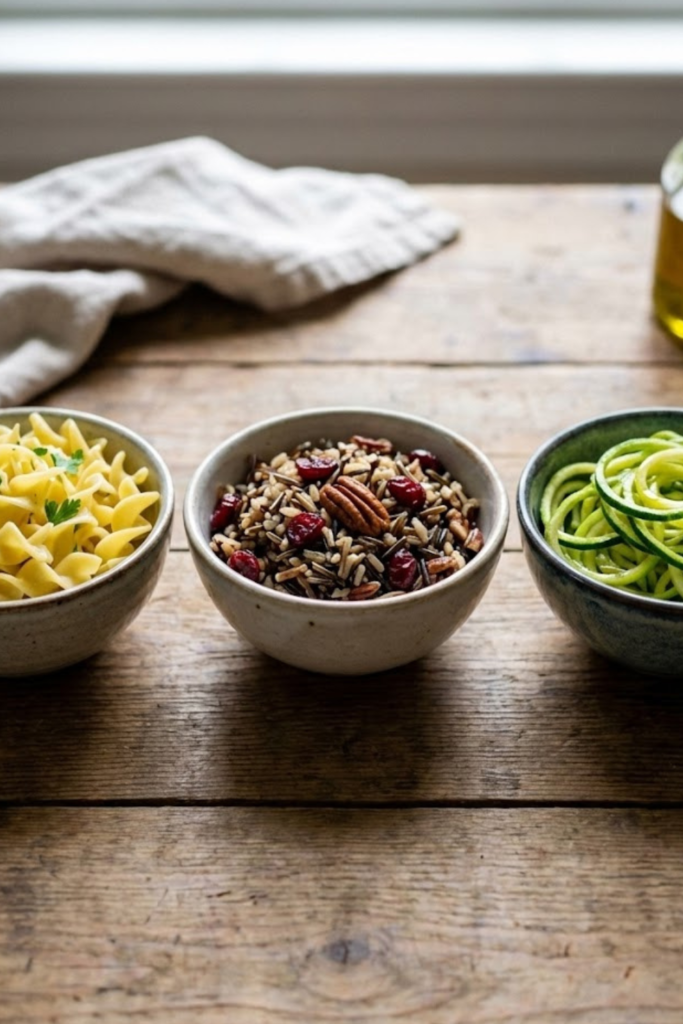
If you want that classic “sick day” soup vibe, you probably want egg noodles. They are thick, yellow, and hearty. Rotini or fusilli work well too because the spirals hold onto the broth.
However, I have a very important rule for you: Cook your noodles separately.
I learned this the hard way. If you throw raw noodles directly into your big pot of soup, two bad things happen. First, the starch from the pasta clouds up your nice clear broth. Second, and this is the worst part, the noodles act like sponges. If you have leftovers (and you will), those noodles will sit in the fridge overnight and drink up all your liquid. You will open the container the next day to find a solid block of mush and no broth. Just boil the pasta in a separate pot, drain it, and add a scoop to each person’s bowl right before you ladle the hot soup over it.
Rice and Grains
If you want something a bit more filling or gluten-free, rice is a solid choice. White rice is fine, but it can get soft really fast. I prefer using a wild rice blend. It has a nutty flavor and a chewy texture that holds up better against the hot liquid.
Just like the noodles, I usually cook the rice on the side. However, wild rice takes a long time to cook (like 45 minutes), so if you are planning on this, start it early. Quinoa is another good option if you want a protein boost, but rinse it really well first or it can make your soup taste bitter.
Keeping It Low-Carb (Keto & Paleo)
Trying to watch your carbs? This soup is actually perfect for that. You can swap the starch entirely for more veggies. “Zoodles” (zucchini noodles) are popular, but be careful not to overcook them. Zucchini turns into mush if you look at it wrong.
Honestly, I don’t even boil them. I just put raw zucchini spirals in the bottom of my bowl and pour the boiling hot soup over them. The heat from the broth cooks them perfectly in about two minutes, keeping them slightly crunchy. You can also use cauliflower rice or even cabbage ribbons.
Want a Creamy Twist?
Sometimes clear broth feels a little too light. If you want something richer, akin to a comfort chowder, you can change the texture at the very end. Once you take the pot off the heat, stir in a splash of heavy cream or half-and-half. If you are dairy-free, a can of full-fat coconut milk works wonders. It changes the flavor profile completely, making it silky and velvety. Just don’t let it boil after adding the dairy, or it might curdle/separate.
Storing and Freezing Leftover Soup
Let’s be honest, nobody makes a “small” batch of soup. The whole point of getting the stockpot out is to make enough food to feed an army, or at least to feed yourself for lunch for the next few days. I call this accidental meal prep. But there is a right way and a wrong way to store it. If you do it wrong, you end up with sour soup or a cracked jar in the freezer.
Here is how I manage my leftovers so nothing goes to waste.
Cooling Down Safely
This is actually a big food safety thing that a lot of home cooks ignore. You cannot just take a massive, boiling pot of soup and shove it directly into the refrigerator. If you do that, the soup stays hot in the middle for too long, which is basically a party for bacteria. Plus, it heats up your fridge and might spoil your milk.
You need to cool it down fairly fast. I usually ladle the soup into smaller, shallow containers right away. This helps the heat escape. If I’m in a rush, I’ll fill my kitchen sink with a few inches of ice water and set the whole pot in there (carefully!) to bring the temperature down before packing it up.
Freezing Tips for Later
Future You is going to be so happy that Past You put soup in the freezer. It’s the best feeling to come home tired and realize dinner is already done.
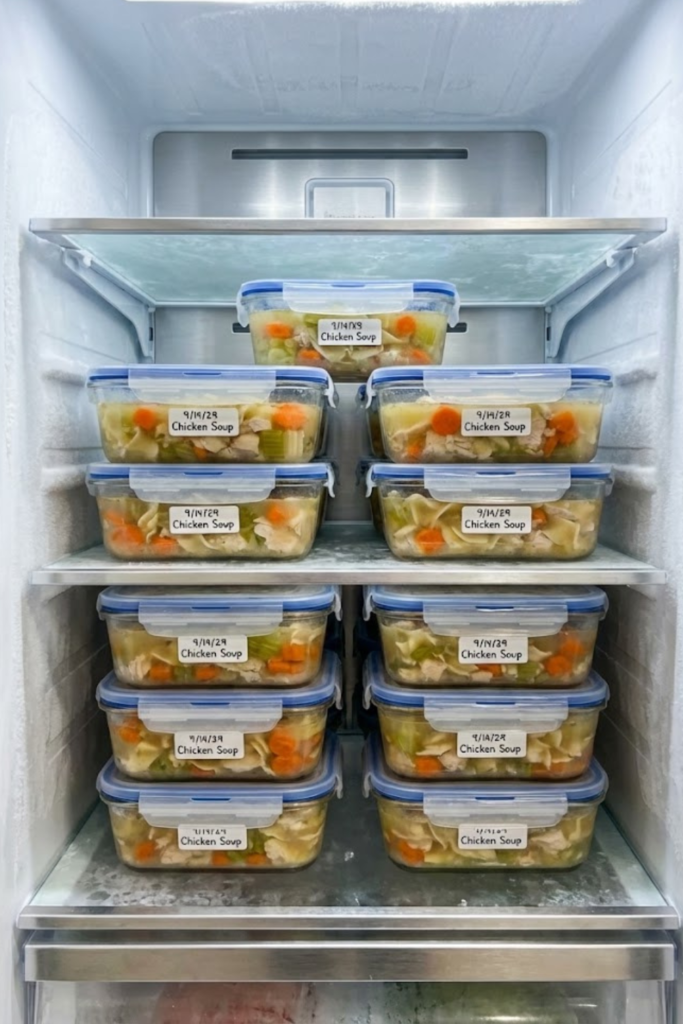
If you plan to freeze it, remember what I said earlier: do not freeze the noodles. Freezing cooked pasta ruins the texture completely. Just freeze the broth and meat/veggies. When you thaw it out later, you can boil fresh noodles while the soup heats up.
Also, liquids expand when they freeze. If you fill a glass jar all the way to the top and freeze it, the glass will shatter. I have cleaned up that mess before, and it isn’t fun. Leave about an inch of empty space at the top of your container to give the soup room to grow. I really like using those flat silicone freezer bags because they stack flat and save space.
How Long Does It Last?
I am a stickler for expiration dates. Generally, chicken soup will stay good in the refrigerator for 3 to 4 days. After day four, I wouldn’t risk it. If it smells slightly sour or funky, toss it. It’s not worth the stomach ache.
In the freezer, it will taste best if you eat it within 3 months. It’s safe to eat after that, but I find the flavor starts to get a little “freezer burn-y” and the vegetables get a bit too mushy.
Reheating the Right Way
When it’s time to eat your leftovers, the microwave is fine for a single bowl, but the stove is better. Pour the soup into a saucepan and bring it to a simmer.
Since the soup has been sitting, the flavors might have dulled a little bit. This is a great time to add a tiny squeeze of fresh lemon juice or a pinch of salt to “wake it up.” If you froze it, let it thaw in the fridge overnight before heating, or just run warm water over the container until the block of soup pops out, then melt it down in a pot on low heat.
Well, there you have it. We have gone from a picked-over skeleton of a bird that looked ready for the trash to a pot of liquid gold that smells like a hug. Honestly, writing this down makes me want to run to the store and grab another chicken just so I can start the process all over again.
Making your own rotisserie chicken soup isn’t just about following a recipe. It is about slowing down for a minute. I know life gets crazy. Between grading papers, managing a household, and just trying to keep my head above water, it is easy to reach for the can opener. But I promise you, that metal can never tastes like this. There is something really special about taking “scraps” and turning them into something that nourishes your family. It feels like a small victory against the chaos of the week.
If you are a beginner cook, please don’t be intimidated by the idea of making stock. It is one of the most forgiving things you can cook. If you boil it too long? It just gets stronger. If you forget the celery? It will still taste good. It is hard to mess this up. Once you get into the habit of saving your bones, it just becomes second nature. You will start looking at every roast chicken as a “pre-soup” opportunity.
Plus, let’s not forget the budget part. As a teacher, I watch my pennies pretty closely. Getting two full, healthy meals out of one inexpensive item is a huge win for my wallet. It feels good to know I am squeezing every bit of value out of what I bought. It’s smart, it’s thrifty, and it’s delicious.
I really hope you give this a try this weekend. Put the pot on, let it simmer while you relax, and enjoy the way your whole house smells. It is better than any candle you can buy.
If you found this guide helpful, or if it inspired you to finally use that leftover carcass, please do me a huge favor. Pin this recipe to your “Comfort Food” or “Dinner Ideas” board on Pinterest. It helps other people find the recipe, and it helps me keep sharing these tips with you.
Now, go grab a spoon and enjoy that bowl. You earned it!