I used to think that achieving that audible, potato-chip-style crunch on chicken skin was impossible without a deep fryer—until I tried this game-changing method! Did you know that moisture is the number one enemy of crispy skin? In this guide, I’m going to show you exactly how to bake crispy chicken thighs that are tender on the inside and golden on the outside, using a simple pantry staple you probably already have. Get ready to banish rubbery skin forever and master a dinner staple that will have your family begging for seconds!
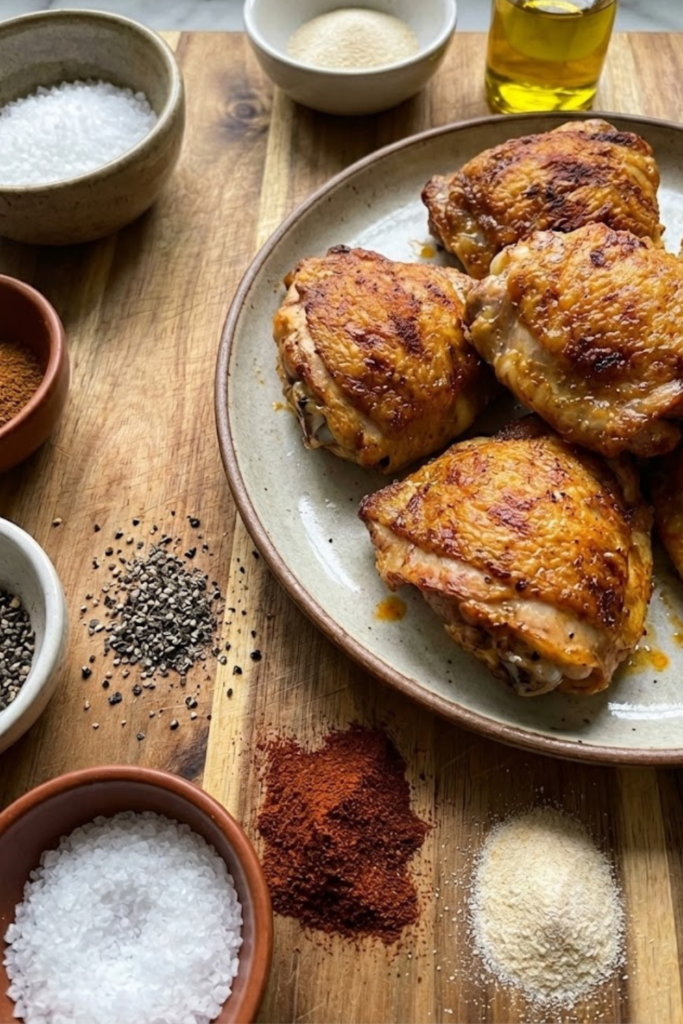
Why Chicken Thighs Are the Best Cut for Roasting
Look, I’ll be honest with you. For a solid decade of my cooking life, I was strictly a “white meat only” kind of person. I bought into the idea that boneless, skinless chicken breasts were the holy grail of healthy eating. But man, I was so wrong. I can’t tell you how many dinners I ruined with dry, rubbery meat that required a gallon of water just to swallow. It was embarrassing.
I remember this one specific dinner party back in my early 30s. I tried to roast breasts for six people, and by the time they came out of the oven, they had the texture of a shoe. That was the day I finally gave up and grabbed a pack of bone-in thighs instead. It was a total game-changer. If you are chasing that perfect crispy chicken thighs experience, you have to start with the right cut.
The Forgiveness Factor
The biggest reason I stick with thighs now is that they are incredibly forgiving. I am not a professional chef; I’m a busy person who sometimes forgets to set the timer.
If you overcook a chicken breast by five minutes, it’s ruined. It turns into sawdust. But chicken thighs? They actually handle heat way better. Because they have more connective tissue and fat, they don’t dry out immediately.
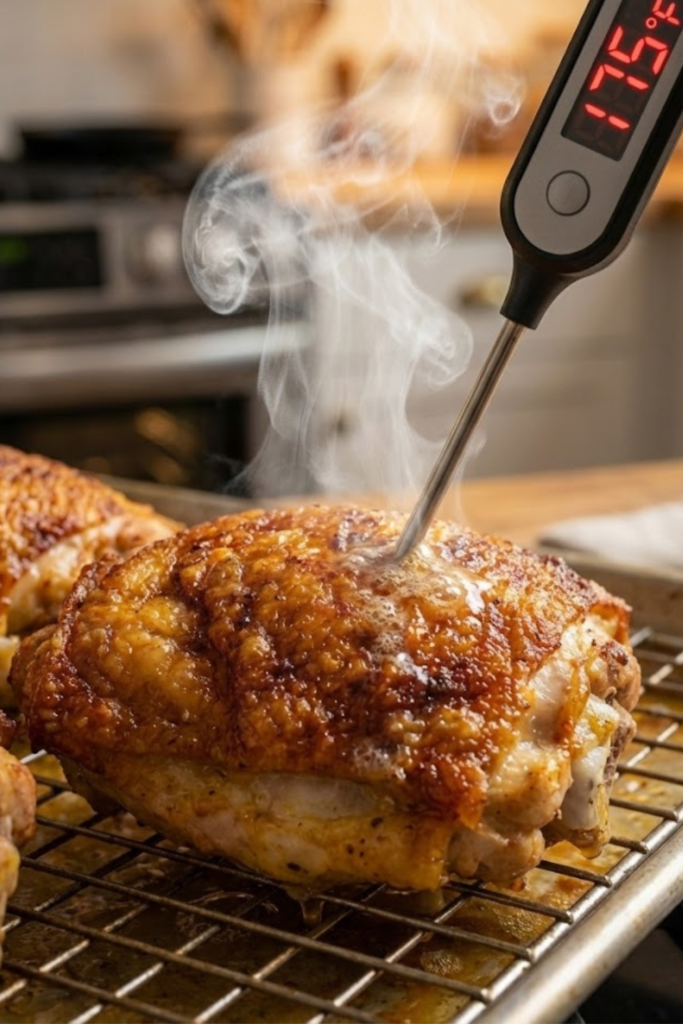
In fact, while the “safe” temperature for chicken is 165°F, I’ve found that thighs actually taste better when cooked to about 175°F or even 180°F. The meat gets more tender at that higher temp. It falls right off the bone. You basically can’t mess this up, which is my favorite kind of cooking.
Flavor and the “Juice” Reality
Let’s talk about flavor for a second. Dark meat just tastes like, well, chicken. White meat is often a blank canvas that needs a ton of help, but thighs bring their own rich flavor to the party.
When you roast them at high heat, the fat inside the thigh renders out. This basically means the chicken is self-basting while it cooks. That rendering process is exactly what you need to get that crispy chicken skin we all want.
If the meat is too lean, the skin just sort of dries out and gets tough. You need that fat underneath to bubble up and fry the skin from the bottom. That is the secret to the crunch.
More Bang for Your Buck
Have you seen grocery prices lately? It’s wild out there.
Bone-in, skin-on chicken thighs are almost always the cheapest cut in the meat department. I can usually feed my whole family for a fraction of the cost of buying breasts or tenders.
I love that I can buy a huge family pack, roast them all up on a Sunday, and have leftovers for lunch. They reheat way better than breasts, too. A reheated chicken breast is usually sad and tough, but a thigh stays juicy even the next day.
So, if you’ve been hesitant to switch to dark meat, just trust me on this one. It’s cheaper, it’s tastier, and it’s way less stressful to cook. once you bite into that juicy meat with the salty, crackling skin, you won’t go back.
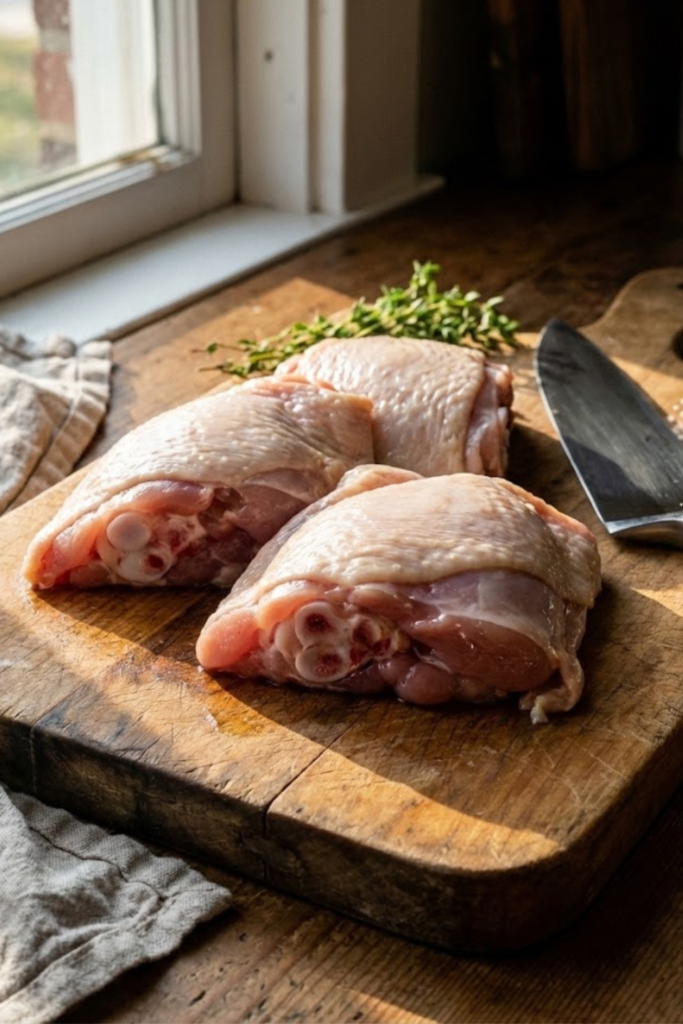
The Secret Science to Ultra-Crispy Skin
I used to pull my chicken out of the oven and just sigh. The flavor was fine, but the skin was always sad and soft. I wanted that loud crunch you get from fried chicken, but I really didn’t want to deal with a pot of hot oil.
Then I learned a little kitchen science. It turns out, moisture is the enemy of crispiness. If your chicken is wet, it steams. Steaming equals soggy skin.
Here is exactly how I fixed it.
Dry It Out Completely
First, you have to get that chicken bone dry. I mean really dry.
I grab a handful of paper towels and pat every single thigh until the paper comes away dry. You have to get in all the little creases, too.
Do not skip this step. If you put oil on wet skin, it just slides right off. You need the skin to be tacky so the oil and spices actually stick. If you leave water on there, the oven spends the first ten minutes just evaporating that water instead of crisping the skin.
The Baking Powder Trick
This part sounds crazy, but stay with me. I mix a little bit of baking powder into my spice rub.
Please make sure you use baking powder, not baking soda. Baking soda tastes like metal and will ruin your dinner. You also want the aluminum-free kind if you can find it.
The powder changes the pH level of the chicken skin. This helps it brown faster and get super crunchy. It creates these tiny little bubbles on the surface that shatter when you bite them. It works like magic.
Let the Air Move
Another mistake I made for years was just throwing the chicken onto a flat baking sheet.
The problem is that the juices run out and pool around the meat. The bottom of the chicken ends up boiling in that liquid. Nobody wants a soggy bottom.
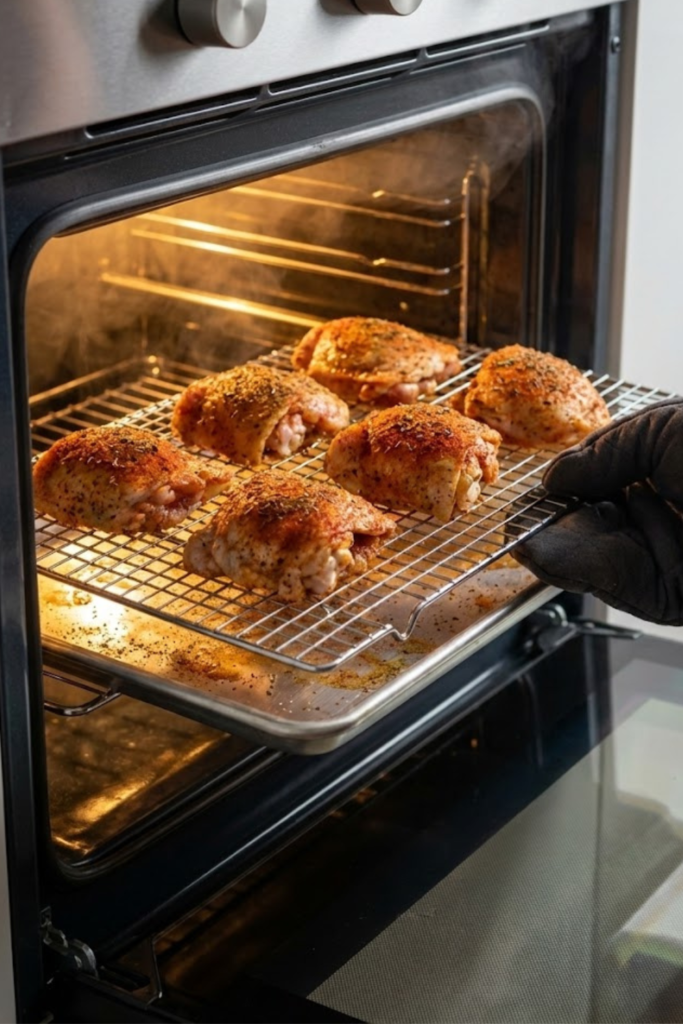
Now, I always use a wire rack set inside a rimmed baking sheet. This lifts the chicken up.
The hot air can circle all the way around the thigh. This dries out the skin from every angle. If you don’t have a wire rack, you can crumple up some foil to make a little bed for the chicken, but a rack is definitely better.
Crank the Heat
Low and slow is great for a pork roast, but it is terrible for crispy chicken thighs.
You need high heat to render the fat. I set my oven to at least 400°F. Sometimes I even go to 425°F if I’m in a hurry.
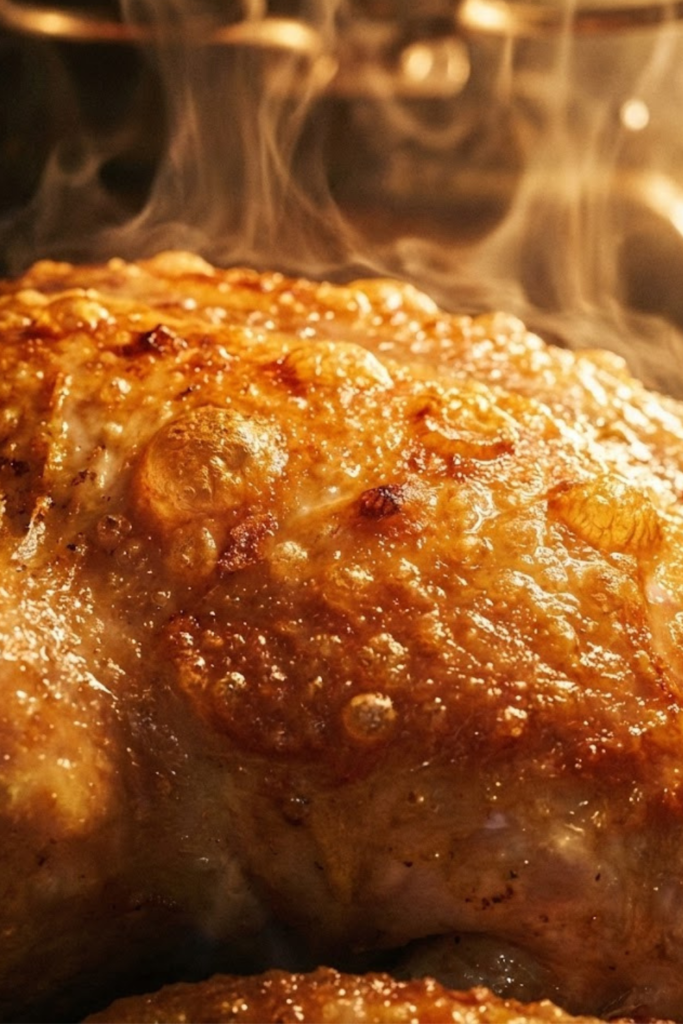
That high heat blasts the skin and turns the fat underneath into liquid. That liquid fat basically fries the skin from the inside out. If you cook it too low, the fat just sits there and the skin gets rubbery. You want to see that skin bubbling when you look through the oven window.
Essential Ingredients and Seasoning Blends
You really don’t need a pantry full of expensive stuff to make this work. In fact, my favorite rub uses spices you probably already have in your cabinet right now. I’m a big believer that simple is usually better, especially on a busy Tuesday night.
First, you need a binder. I use oil. It helps the spices stick to the meat and it helps conduct the heat to crisp up that skin.
I usually reach for light olive oil or avocado oil. I try to avoid extra virgin olive oil for this because the oven gets so hot, and that fancy oil can start to smoke and smell bad. You want an oil that can handle the heat.
My “Go-To” Spice Mix
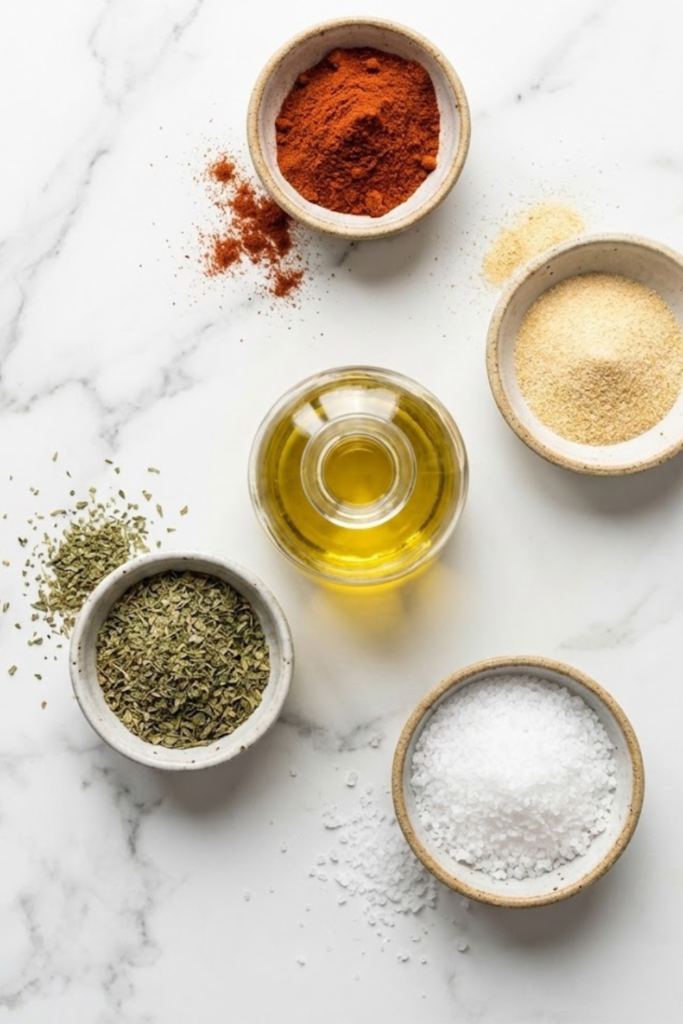
I’ve tried a lot of store-bought rubs, but I always go back to making my own. It takes two minutes. Here is exactly what I throw in a small bowl:
- Smoked Paprika: This is my secret weapon. It gives the chicken that beautiful, deep red color so it doesn’t look pale and sad. It also adds a tiny bit of smokiness that makes it taste like it came off a grill.
- Garlic Powder & Onion Powder: You might want to use fresh garlic, but don’t. At 400°F, fresh garlic burns and turns bitter. Powder gives you all the flavor without the burnt bits.
- Dried Oregano: Just a pinch adds a nice earthy smell.
- Cayenne Pepper: I like a little kick. If you have kids who think black pepper is too spicy, you can definitely skip this.
- Kosher Salt: This is important. The grains of Kosher salt are bigger and flatter than regular table salt. They stick to the chicken better and draw out moisture more evenly. If you only have table salt, use about half as much, or it will be way too salty.
Changing It Up
While that dry rub is my standard, sometimes I get bored.
If I’m making this in the summer, I might swap the paprika for a Lemon-Pepper blend. It’s really fresh and zesty.
Or, if I’m feeling fancy, I’ll brush on a honey-garlic sauce in the last 5 minutes of cooking. Just be careful with sauces that have sugar. If you put them on too early, the sugar will burn before the chicken is cooked through. Stick to the dry rub until you get the hang of it.
Step-by-Step Cooking Instructions
Now that we have our ingredients ready, let’s get cooking. This part goes pretty fast, so I like to have everything laid out on the counter before I start.
1. Get the Oven Ready
First things first, turn your oven on to 400°F (200°C). It needs to be fully hot before the chicken goes in. If you put the meat in a cold oven, it will just steam, and you can say goodbye to that crunch.
While it heats up, I grab my baking sheet. I always line it with aluminum foil first. I hate scrubbing pans after dinner, and the foil catches all the dripping grease. Then, I place my wire rack right on top of the foil. Spray the rack with a little non-stick spray so the skin doesn’t get stuck later.
2. The “Under the Skin” Trick
Here is the part where you have to get your hands dirty. Most people just sprinkle the spice rub on top, but that is a mistake.
I gently lift up the skin of the chicken thigh—it pulls back pretty easily—and I rub some of the spice mix directly onto the meat. This makes the actual meat taste good, not just the skin. Then, I pull the skin back over and rub the rest of the spices all over the top. Make sure every inch is covered.
3. Give Them Space
When you put the thighs on the rack, make sure they aren’t touching each other. They need their personal space.
If they are crammed together, the heat can’t get to the sides, and those spots will stay soft and gummy. I usually fit about 6 to 8 thighs on a standard sheet pan with plenty of room for the air to flow between them.
4. The Bake
Pop the tray into the oven. I usually set my timer for 35 minutes to start.
At the 35-minute mark, take a peek. You want the skin to look deep golden brown and crispy. If it still looks pale, leave it in. I often let mine go for 40 or even 45 minutes depending on how big the thighs are.
I always use an instant-read meat thermometer to check them. You want the internal temperature to be at least 165°F, but honestly, I aim for 175°F. It sounds high, but for dark meat, that higher temp makes the texture so much better and less stringy. Once they hit that number, pull them out and let them rest for 5 minutes before you dig in.
Troubleshooting Common Mistakes
I have set off my smoke detector more times than I care to admit. It happens to the best of us. Cooking at high heat can be a little tricky until you get used to it.
If your chicken didn’t come out perfect the first time, don’t beat yourself up. Here are the most common things that go wrong and how I fix them.
My Chicken is Soggy on the Bottom
This is the number one complaint I hear. You bite into the top and it’s great, but the bottom is wet and mushy.
This almost always happens because the chicken was sitting in its own juice. Did you use the wire rack? If you just put the thighs directly on the metal pan or the foil, the fat has nowhere to go. It just pools around the meat.
If you don’t have a wire rack, here is a little cheat: slice up some onions or potatoes and sit the chicken on top of them. The vegetables act like a rack, and they taste delicious after soaking up the chicken fat.
The Spices Burned
If your chicken comes out looking black instead of brown, check your spice jar.
Did you use a rub with sugar in it? Or maybe a “BBQ Rub” from the store? Sugar burns really fast at 400°F. I save the sweet sauces for the very end.
Also, be careful with fresh garlic. I love garlic, but fresh minced garlic will turn into bitter little black charcoal bits in a hot oven. Stick to the garlic powder for roasting.
The Smoke Alarm is Going Off
Because chicken thighs have a lot of fat, that fat drips down onto the pan. At high temperatures, that hot oil can start to smoke.
If your kitchen gets smoky, try pouring a little bit of water into the bottom of the baking sheet (under the rack) before you start. It stops the grease from hitting the hot metal and smoking. Just don’t add too much, or you will create steam and lose your crunch.
The Meat is Still Tough
If you take a bite and the meat feels rubbery or tough, you probably actually undercooked it.
I know we are taught to be scared of dry chicken, but thighs are different. They need time to break down. If the internal temp is only 165°F, the meat might still be a little tight. Put them back in for another 5 or 10 minutes. When they hit 175°F or 180°F, the texture transforms and gets super tender. Don’t be afraid of the extra time.
Serving Suggestions and Sides
Honestly, these chicken thighs are pretty rich. Between the juicy dark meat and that salty, crispy skin, there is a lot of fat going on. That’s why I try to serve them with sides that balance things out. You don’t want a meal that feels too heavy.
Keep It Simple with Veggies
Since the oven is already blazing hot at 400°F, I hate making a separate mess on the stove. I usually just roast a tray of vegetables right alongside the chicken.
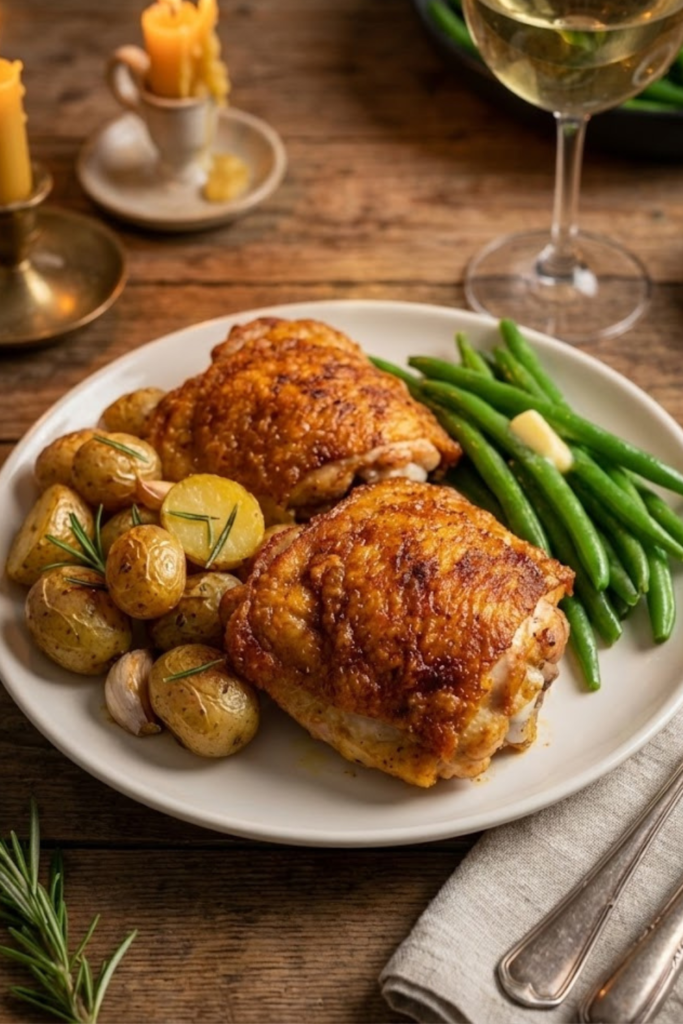
Green beans or asparagus work perfectly. I toss them in a little oil and salt and throw them on the bottom rack for the last 15 or 20 minutes of cooking. The high heat makes them nice and crunchy, not mushy.
If I am feeling really lazy (which is often), I just make a big green salad with a vinegar-based dressing. The acid in the vinegar cuts right through the grease of the chicken. It’s a perfect combo.
The Starchy Stuff
My kids, of course, want potatoes.
Mashed potatoes are a classic choice because you can spoon some of those amazing pan drippings over them like gravy. You don’t even need to make a real gravy; the juice from the pan is flavor gold.
Rice pilaf is another good one. It soaks up the juices on your plate really well. Sometimes I make a “one pan” meal and roast potatoes on the same tray as the chicken, but be careful—if you crowd the pan too much, you lose the crispiness. I prefer doing them on a separate tray if I have the space.
Sauces and Dips
The chicken is good enough to eat plain, but sometimes we like to dip.
- Hot Honey: This is my current obsession. Drizzle a little spicy honey over the hot chicken right before you serve it. The sweet and spicy mix is incredible.
- Ranch: If you have picky eaters, a side of ranch dressing usually gets them to eat anything.
- Chimichurri: This is a green herb sauce that is super fresh. It brightens up the whole dish if you want something that feels a little fancier.
So, there you have it. You really don’t need a deep fryer to get that crunch. It just comes down to a few simple things: drying the skin really well, using a wire rack so air can move, and not being afraid of a hot oven.
Once I started making chicken this way, it completely changed our weekly dinner rotation. My family actually asks for this more than takeout now, which is a huge win for my wallet. It’s cheap, it’s easy, and it tastes like you spent hours in the kitchen even though you mostly just let the oven do the work.
Give it a try this week. And if you finally get that loud crunch we all love, do me a huge favor—pin this recipe to your ‘Weeknight Dinners’ board on Pinterest! It helps other people find the recipe, and I love seeing what you guys cook up. Happy cooking!