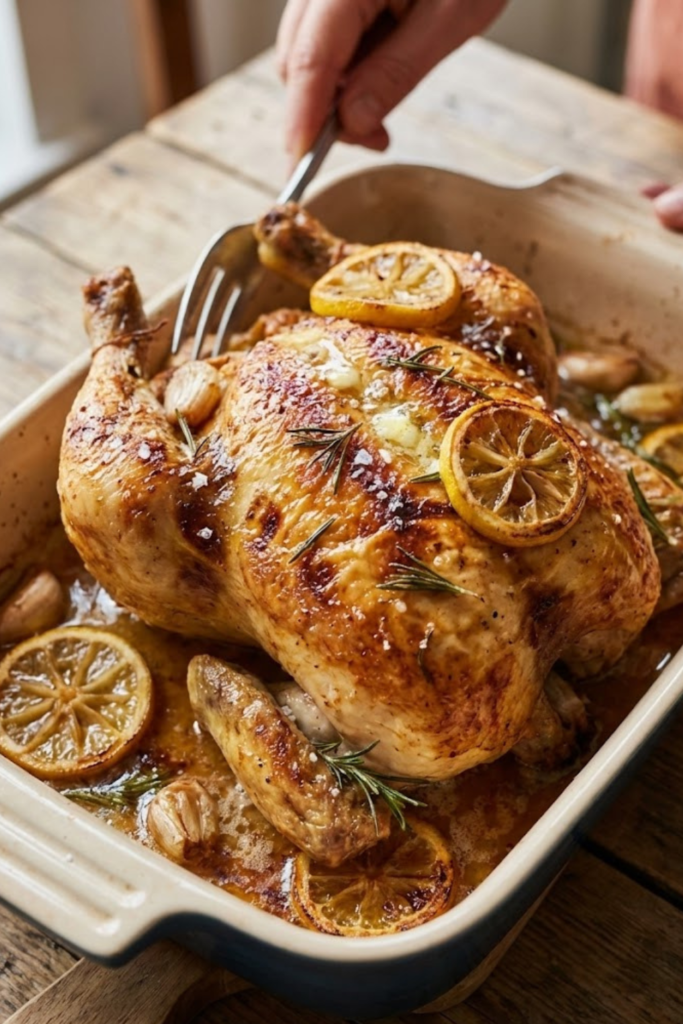
You know that feeling when you pull a chicken out of the oven, hoping for a masterpiece, but it ends up dry enough to sand a deck? Yeah, I’ve been there! It’s heartbreaking. But let me tell you, perfecting an oven roasted chicken is easier than you think, and it is a total game-changer for weeknight dinners. Did you know that over 90% of home cooks overcook their poultry simply because they trust the clock instead of a thermometer? It’s true!
In this guide, I’m going to walk you through my absolute favorite method. We’re talking golden-brown skin that crackles when you touch it and meat so tender it practically falls off the bone. Grab your apron, because we are about to make your kitchen smell like heaven!
Choosing the Best Bird for Roasting
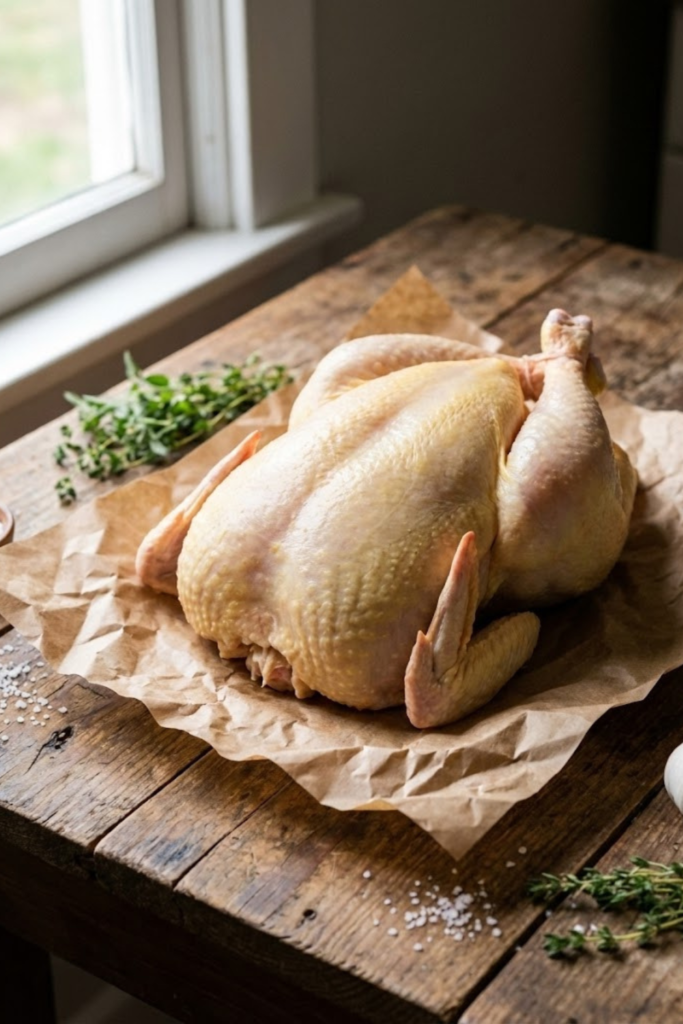
You might think a chicken is just a chicken, but let me tell you, that isn’t really the case. When I stand in the meat aisle, I sometimes feel a bit overwhelmed by all the colorful labels. But for a perfect Sunday roast, the bird you pick makes a huge difference. I learned this the hard way years ago when I bought a massive “stewing hen” thinking it would feed more people. Big mistake. It was tough as shoe leather. For roasting, you generally want to look for a young chicken labeled as a “broiler” or “fryer.”
The Right Size for Even Cooking
I always look for a chicken that weighs around 4 to 5 pounds. This is the sweet spot. If you get a bird that is much bigger, like those 7-pound roasting chickens, you run into trouble. The breast meat often dries out before the thickest part of the thigh is cooked through. A 4-pound bird cooks evenly and usually feeds my family of four with just enough leftover for a chicken salad sandwich the next day. If you have a big crowd coming over, I honestly think it is better to roast two smaller chickens side-by-side than one giant one. It’s easier to manage and the meat just tastes better.
Organic, Free-Range, or Conventional?
Look, I know groceries are getting expensive. I’m a teacher, so I watch my budget carefully. You do not have to buy the most expensive organic bird to have a delicious dinner. However, I have noticed a real difference with “air-chilled” chickens. Many standard chickens are cooled in big vats of water, which means they absorb liquid. You end up paying for that water weight, and it makes the skin soggy. Air-chilled birds are cooled by cold air. The meat flavor is more concentrated, and the skin crisps up much easier because it isn’t waterlogged. If you can catch them on sale, that is the way to go.
Dealing with Frozen Birds and Prep
Fresh is usually easiest because you don’t have to plan ahead as much. But I keep a spare chicken in the freezer for weeks when I can’t get to the store. If you use frozen, you have to let it thaw in the fridge. Give it a good two days (48 hours). Please don’t leave it on the counter; that’s just asking for a stomach ache.
Also, before you do anything, check the inside cavity! I once roasted a chicken with the little bag of giblets still inside the plastic wrapper. It melted and smelled terrible. So, always reach inside and pull out the neck or organ bag. Once it’s empty, grab some paper towels and pat that bird dry. Dry skin is the first step to that crunch we all want.
Essential Seasonings and Marinades for Flavor
I honestly used to be scared of over-seasoning my food. I’d sprinkle a tiny bit of salt and pepper on top and hope for the best. The result? A bird that tasted like… well, nothing much. Chicken is like a blank canvas, and it really needs a heavy hand with the spices to wake it up. If you are afraid of salt, we need to get over that fear right now. The biggest difference between restaurant chicken and what we usually make at home is the amount of seasoning they use.
The Magic of Salt (and Waiting)
Here is a trick that changed my life: salt your chicken early. I don’t mean right before you put it in the oven. I try to salt my bird the morning of, or even the night before if I’m organized enough. Chefs call this “dry brining,” but I just call it planning ahead. I use coarse kosher salt because it sticks better than the fine table stuff.
I rub the salt all over the skin and even inside the cavity. Then, I let it sit in the fridge uncovered. This does something cool—it pulls a little moisture out, dissolves the salt, and then the meat sucks that salty juice back in. It seasons the meat all the way to the bone, not just the top layer. Plus, drying out the skin in the fridge helps it get crispy later.
Butter Goes Under, Oil Goes Over
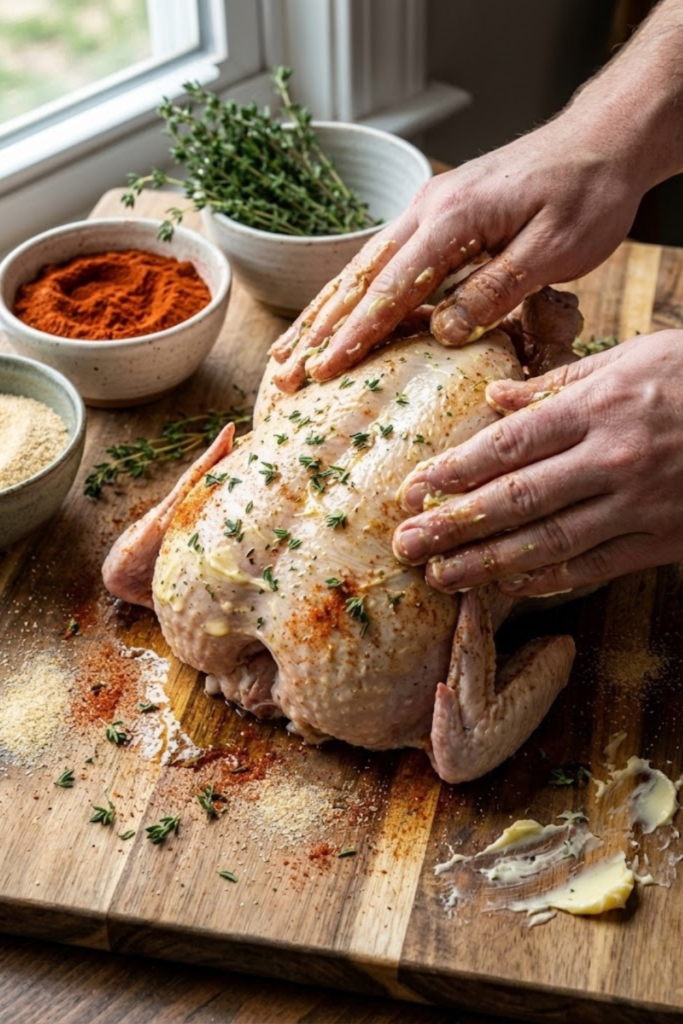
This part is a little messy, but you have to do it. You need to separate the skin from the meat on the breast. I gently slide my fingers under the skin (try not to tear it!) to make a little pocket. Then, I shove soft butter mixed with herbs right in there.
I usually mash up some unsalted butter with chopped rosemary, thyme, and maybe a little garlic powder. Putting this under the skin keeps the breast meat incredibly moist while it cooks. On the outside of the skin, I prefer to use olive oil rather than butter. Butter has milk solids that can burn and turn black if the oven is too hot. Oil can handle the heat better and helps the skin fry to a golden brown crunch.
Don’t Forget the Inside
You aren’t going to eat the stuff you put inside the chicken cavity, but it acts like a flavor steamer. I never leave it empty. I usually cut a lemon in half and shove it in there along with a whole head of garlic that I’ve cut the top off.
As the chicken roasts, the heat releases steam from the lemon and garlic, which perfumes the meat from the inside out. It is a subtle difference, but it makes the kitchen smell amazing. Sometimes I throw in a bunch of fresh thyme or sage stems if I have them wilting in my veggie drawer. It’s a great way to use up herbs that are about to go bad. Just remember to fish all that stuff out before you carve the bird!
The Secret to Perfectly Crispy Skin
If there is a fight at my dinner table, it is usually over who gets the crispy skin. There is nothing sadder than a beautiful roasted chicken with skin that is rubbery and chewy. It’s gotta have that crunch. I spent years making soggy chicken before I figured out the few simple things that actually matter. It is not about fancy equipment; it is mostly about getting rid of moisture.
Moisture is the Enemy
I cannot stress this enough: water is the enemy of crispiness. If the skin is wet when it goes into the oven, the heat has to evaporate that water before it can start browning the skin. This creates steam. Steam makes things soft, not crunchy.
After I take the chicken out of the package, I use a lot of paper towels. I pat down every inch of the bird. I get under the wings and between the legs. You want the skin to feel tacky and dry to the touch. Also, please do not wash your chicken in the sink! The USDA says it spreads germs all over your kitchen, and honestly, it just adds more water that we are trying to get rid of anyway.
The Baking Powder Hack
This sounds weird, but trust me on this one. I read about this trick a few years ago and I use it all the time now. I mix a teaspoon of baking powder (not baking soda!) into my salt and pepper rub.
You want to make sure you use aluminum-free baking powder so it doesn’t taste metallic. The baking powder changes the pH level of the chicken skin. It helps break down the proteins just a little bit, which allows the skin to get browner and crispier much faster. It creates tiny little air bubbles that turn into a fantastic crunch. You won’t taste it at all, but you will definitely hear the difference when you take a bite.
To Truss or Not to Truss?
Trussing is just a fancy word for tying the chicken legs together with string. I used to do this religiously because it makes the bird look like a picture in a magazine. But here is the thing: when you tie the legs tight against the body, you are covering up skin. The skin between the leg and the breast doesn’t get exposed to the hot air, so it stays soft and flabby.
Lately, I have stopped tying the legs. I let them hang loose. It looks a little messier, but the hot air can circulate all around the legs. This helps the dark meat cook a bit faster (which is good because it takes longer than the breast) and it makes sure every inch of skin gets hit by the heat. If you really want that super crispy texture all over, leave the string in the drawer.
Oven Temperature and Roasting Times
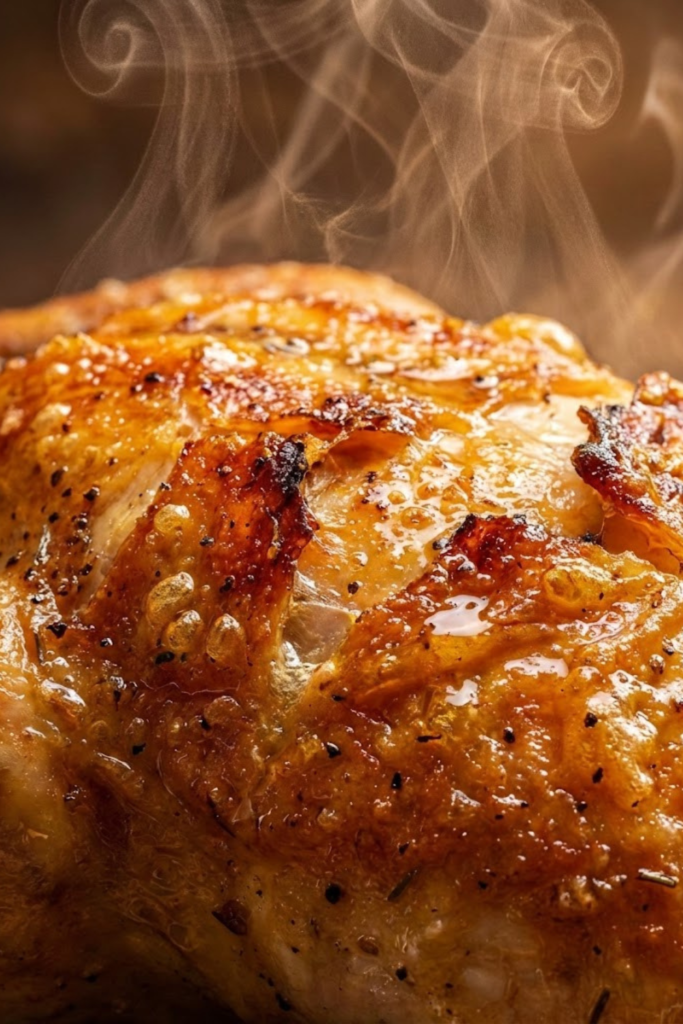
Figuring out the right temperature is where most people get tripped up. I used to just set the oven to 350 degrees because that is what my mom did for literally everything, from cookies to casseroles. But for a really good roast chicken, 350 is just too low to start. You end up with pale, flabby skin. To get that golden-brown look like the pictures, you have to be a little brave with the heat.
The High-Heat Blast
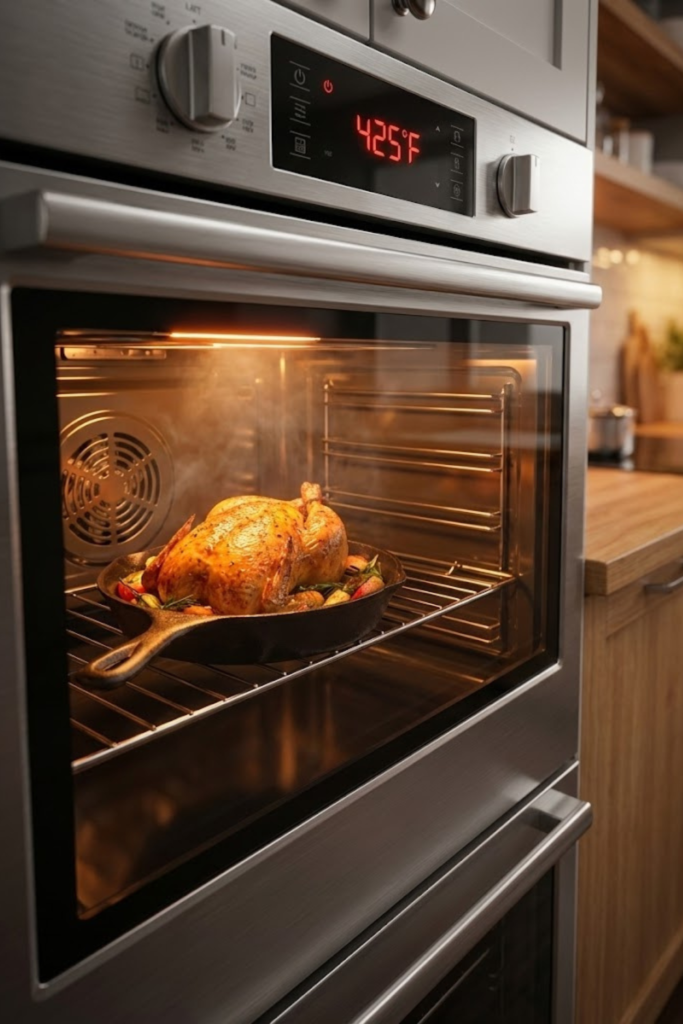
I like to start things off hot. I preheat my oven to 425 degrees F (around 220 C). I know, it sounds high, and sometimes my smoke detector chirps at me if my oven isn’t super clean, but it is worth it.
I put the chicken in for about 15 to 20 minutes at this high temperature. This blast of heat shocks the skin and starts the browning process immediately. It renders the fat quickly so it fries the skin from the outside. If you start low, the fat just slowly melts and makes everything soggy. After that first 20 minutes, I turn the oven down to 375 degrees F. This lets the inside finish cooking without burning the outside to a crisp.
Don’t Trust the Clock
If a recipe tells you to cook a chicken for exactly one hour and thirty minutes, please ignore it. Cooking by time is the number one reason people eat dry chicken. Every oven is different. My oven runs a little hot, while my sister’s oven takes forever to heat up. Plus, every chicken is a slightly different shape and weight.
The only way to know if your bird is done is to use a meat thermometer. You don’t need a fancy expensive one; a simple digital instant-read stick works fine. You want to poke it into the thickest part of the thigh, but don’t hit the bone! The bone gets hotter than the meat and will give you a fake reading.
Understanding Carryover Cooking
Here is the science part (I am a teacher, after all). You want to take the chicken out before it hits the target temperature. The official safe temperature for poultry is 165 degrees F. However, if you leave it in the oven until it hits 165, it will be overcooked by the time you carve it.
I pull my chicken out when the thermometer reads about 160 degrees F. Huge pieces of meat continue to cook after you take them out of the heat. The internal heat keeps rising for about 10 minutes while it sits on the counter. This is called “carryover cooking.” If you take it out at 160, it will coast right up to 165 perfectly. If you wait until 165 to pull it, it might hit 170 or 175, and then you’ll need a lot of gravy to swallow it.
Resting and Carving Your Roasted Chicken
We have made it to the final stretch! The chicken is out of the oven, the skin looks amazing, and your kitchen smells better than any scented candle you could buy. But this is actually the hardest part of the whole process because you have to wait. My kids are usually hovering around the counter with forks in their hands, but I have to be the “mean teacher” and swat them away. If you cut into that bird right now, you are going to ruin all your hard work.
The Resting Period
When the chicken is cooking, all the juices get squeezed out of the meat fibers and rush toward the center of the bird. If you slice into it the second it comes out of the heat, all that liquid will pour out onto your cutting board. You will be left with a puddle on the board and dry meat on your plate.
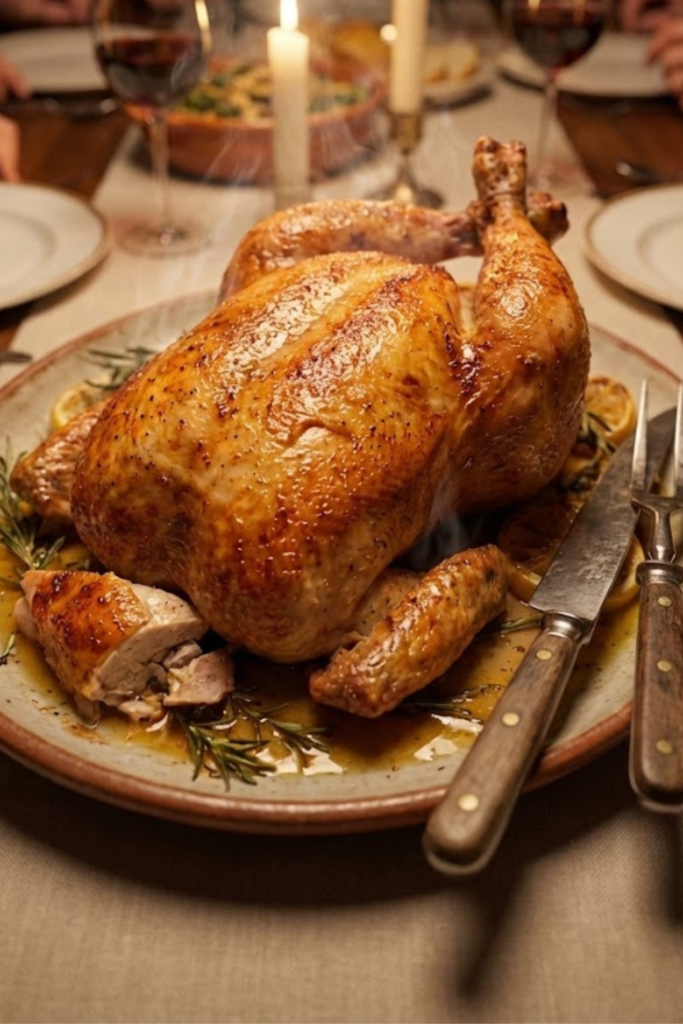
I let my roasted chicken rest for at least 15 to 20 minutes. I usually leave it in the pan or move it to a cutting board with a groove to catch drips. I tent a piece of foil loosely over the top to keep it warm, but don’t wrap it tight or the steam will make that crispy skin soggy again. During this time, the juices move back into the meat, acting like a sponge. It makes every bite juicy.
Carving 101: Don’t Just Hack at It
Carving used to scare me. I used to just hack away until it looked like a mess. But there is a logic to it. You need a sharp knife and a fork. Start with the legs. I pull the leg away from the body and slice through the skin. If you pull hard enough, the thigh bone will pop out of the socket, and you can cut right through the joint without hitting bone.
Once the legs and wings are off, I go for the breast meat. I feel for the breastbone right in the middle (the keel bone) and slice straight down along one side of it. Then I use the knife to gently peel the meat away from the rib cage. If you did it right, the whole breast should come off in one nice piece, which you can then slice into pretty medallions.
Don’t Throw Away the Bones!
After you have eaten all the meat, please do not throw that carcass in the trash! That is liquid gold. I throw the bones, the neck, and any leftover skin into a big ziplock bag and toss it in the freezer.
When I have two or three carcasses saved up, I dump them in a big pot with water, an onion, and some carrots. I let it simmer all day on Sunday. It makes the most incredible homemade chicken stock that is better than anything in a carton. It’s free food, basically.
Serving Suggestions
While the bird rests, that is the perfect time to finish your sides. Since the oven was on high heat, I usually roast some potatoes or carrots on the rack underneath the chicken. The dripping fat hits the veggies and makes them taste unbelievable. A simple green salad with a vinaigrette cuts through the richness of the meat perfectly. Dinner is served!
You Can Do This!
We have reached the end of the lesson! If you stuck with me this far, you are ready to tackle Sunday dinner like a pro. I know looking at a raw whole chicken can be a little intimidating. It’s lumpy, it’s slippery, and it feels like a big project. But honestly, once you do it a couple of times, it becomes total muscle memory. You won’t even need to look at the recipe anymore.
The “Cheat Sheet” for Success
If you take anything away from this guide, just remember the three golden rules we talked about. First, dry that skin. If you want that crackle that everyone fights over, moisture is your enemy. Use those paper towels liberally. Second, salt is your friend. Don’t be shy with it. It needs time to work its magic, so plan ahead if you can. And third, and most importantly, trust the thermometer, not the clock. It is the only way to know for sure that your bird is safe to eat but still juicy. I cannot tell you how many dinners I ruined by guessing the time before I bought a cheap digital thermometer.
Why It’s Better Than Store-Bought
I get it, those rotisserie chickens at the grocery store are super convenient. I buy them too when I’m running late from school and the kids are starving. But have you ever looked at the ingredient list on those bags? They are often pumped full of sodium solutions and preservatives to keep them “moist” while they sit under those heat lamps for four hours.
When you roast it yourself, you control exactly what goes in. You know the butter is real, the herbs are fresh, and the chicken is high quality. The flavor is just cleaner. Plus, let’s be real, a plastic container of lukewarm chicken never smells as good as a bird roasting in your own oven. That smell alone is enough to get my teenagers out of their rooms without me having to yell.
Give It a Try!
I really hope you give this method a shot this weekend. Don’t stress if it isn’t picture-perfect the first time. My first few attempts years ago were… well, let’s just say the dog was very happy with the leftovers. But you learn as you go. Cooking is about feeding the people you love, not winning a contest.
If you found these tips helpful and want to save this recipe for later, please pin the image below to your Dinner Ideas or Sunday Roast board on Pinterest! It helps other home cooks find us and saves you from hunting for the recipe next week.