Have you ever bitten into a piece of chicken so perfectly crisp on the outside yet impossibly juicy on the inside that it made you pause just to savor the moment? That’s exactly what this dish does! Chicken thighs are the unsung heroes of the poultry world—forgiving, flavorful, and budget-friendly. In fact, culinary surveys show that dark meat popularity has surged by over 15% in home kitchens recently, and for good reason.
Whether you’re a busy parent needing a quick weeknight win or a foodie aiming to impress without the stress, mastering the art of herb seasoning is your secret weapon. I’m going to walk you through everything you need to know to transform simple ingredients into a rustic masterpiece. Let’s get cooking!
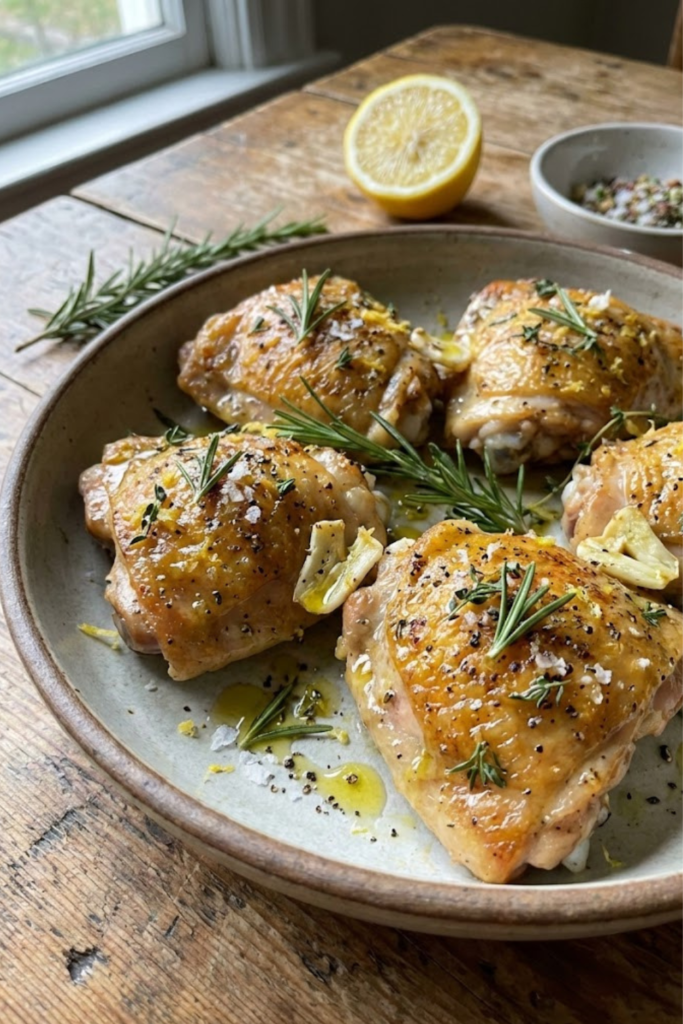
Selecting the Best Chicken Thighs
I honestly used to think chicken was just chicken. You grab the package with the lowest price tag and head to the checkout, right? Well, after ruining a few Sunday dinners with rubbery meat, I learned that picking the right thighs is actually the most important step. You can have the best herb mix in the world, but if the meat isn’t good, the dish won’t shine. I look for specific things now every time I go to the grocery store, and it makes a huge difference in how the final meal turns out.
Bone-In vs. Boneless: The Big Debate
For this herb-seasoned recipe, I always tell people to go with bone-in, skin-on thighs. I know, boneless and skinless fillets are super convenient and easier to cut up for kids. But we really want flavor here. The bone helps the meat cook evenly and keeps it from drying out in the oven. It adds a richness that you just don’t get with the boneless cuts.
Plus, we need that skin. The skin acts like a shield for the meat and, more importantly, it holds onto our seasoning rub. If you use skinless thighs, the herbs can sometimes burn or just slide off into the pan juices. When you roast skin-on thighs, the fat renders out and fries the skin from the bottom up, making it crispy and delicious.
Check the Color and Liquid
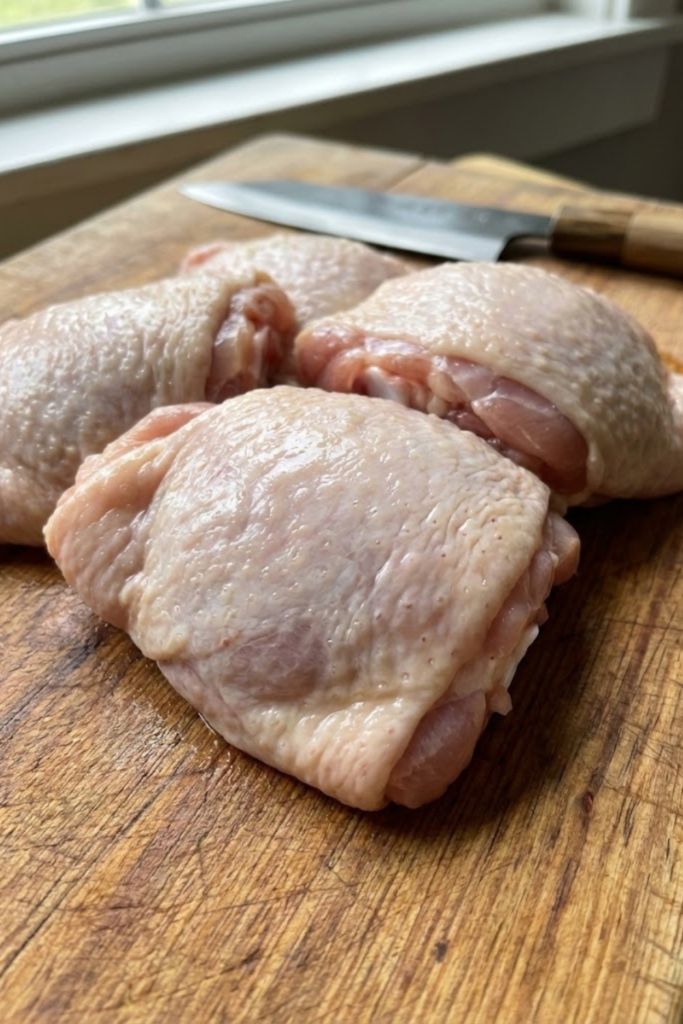
Don’t be shy about inspecting the package closely. Fresh chicken thighs should have a nice pinkish hue. If the meat looks gray, dull, or really pale, I usually leave it there. Another thing I look for is the liquid in the tray. If the chicken is sitting in a pool of pink juice, it’s probably going to be soggy. I try to find trays that look relatively dry. Excess moisture stops the skin from getting crispy, which is the best part of this dish.
Air-Chilled is Worth the Extra Coins
You might see “air-chilled” on labels lately. It usually costs a dollar or two more, but I think it is totally worth it. Most commercial chicken is cooled down in big vats of cold water, which means the meat absorbs that water like a sponge. When you cook it, all that water steams out, and your chicken steams instead of roasts. Air-chilled birds are cooled with cold air, so they taste more like chicken and less like water. If your budget allows for it, grab the air-chilled pack. You will notice the difference immediately.
Crafting the Perfect Herb Seasoning Blend
I used to grab those pre-mixed shaker bottles from the spice aisle, thinking they were good enough. They weren’t bad, but they were mostly just salt and not enough actual flavor. Once I started mixing my own herbs in a little bowl on my counter, everything changed. It takes maybe two minutes, and the difference is night and day. You get to control what goes in, which means less sodium and way more taste.
The Heavy Hitters: Rosemary and Thyme
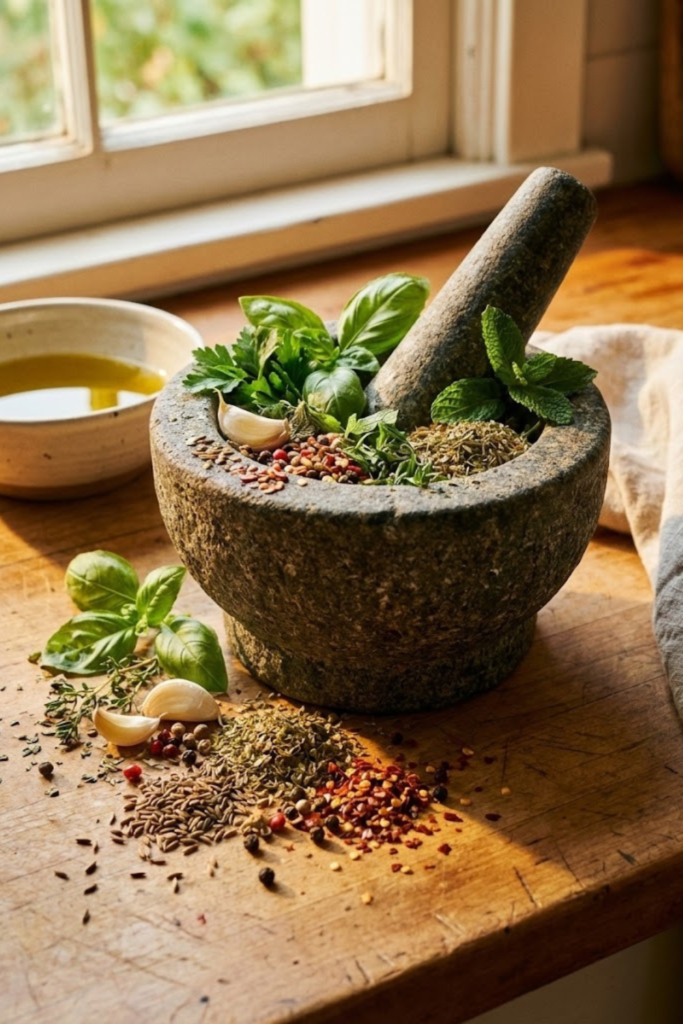
For chicken thighs, you really want woody herbs. I always reach for rosemary and thyme first. They have strong, earthy flavors that don’t get lost when you roast the chicken at high heat. If you have a garden or can buy fresh, that is awesome. Finely chop them up so you don’t get big sticks in your teeth.
But let’s be real, I don’t always have fresh herbs in the fridge. Dried herbs work perfectly fine too. In fact, dried oregano is a staple in my kitchen because it packs a punch. If you are using dried, just remember they are stronger than fresh, so you don’t need quite as much. A good rule of thumb I use is one teaspoon of dried herbs equals about a tablespoon of fresh.
Don’t Forget the Garlic and “Glue”
Herbs alone are great, but they need help sticking to the meat. I call this the “glue.” I usually use a good glug of olive oil. It helps the skin crisp up and makes sure your spices don’t just fall off into the pan. Sometimes I use melted butter if I’m feeling fancy, but olive oil is my everyday go-to.
You also need savory depth. I mix in garlic powder and onion powder to every single batch. Fresh garlic burns too easily in the oven, turning bitter, so the powder is actually safer here. It gives you that savory kick without the risk of burnt bits. And please, be generous with the salt and black pepper. Chicken loves salt; it brings out all the other flavors.
Making It Your Own
The best part about making your own blend is that you can tweak it. Sometimes I like a little heat, so I throw in a pinch of crushed red pepper flakes or cayenne. If it’s summer, I might zest a lemon right into the mix for something brighter.
I usually mix all my dry spices in a small jar first. I give it a good shake, then I sprinkle it over the oiled chicken. I use my hands to rub it in really well, getting under the skin if I can. That’s where the flavor really soaks into the meat. It’s messy, but it’s the only way to get every bite seasoned perfectly.
Step-by-Step Cooking Techniques
I remember staring at the oven window so many times, wondering if dinner was going to be edible or if I’d have to order pizza. Cooking meat can feel a little scary because nobody wants to serve something raw, but nobody wants dry, chewy leather either. Honestly, once I figured out a few basic methods, cooking chicken thighs became the easiest part of my week. You really just need good heat and a little bit of patience to get it right.
The Oven Roasting Method
This is my go-to for Sunday dinners because it is mostly hands-off. The biggest mistake I used to make was setting the oven temperature too low. If you roast at 350°F, the fat doesn’t render out fast enough, and the skin stays rubbery. I always crank my oven up to 400°F (200°C) now. That high heat is what gives you that golden, crackling skin that everyone fights over.
Also, don’t crowd the pan! I used to try to squeeze as many pieces as possible onto one baking sheet. Bad idea. If the thighs are touching, air can’t circulate around them. Instead of roasting, they end up steaming in their own juices. Give them some personal space on the tray, and they will crisp up beautifully.
Pan-Searing for Extra Crunch
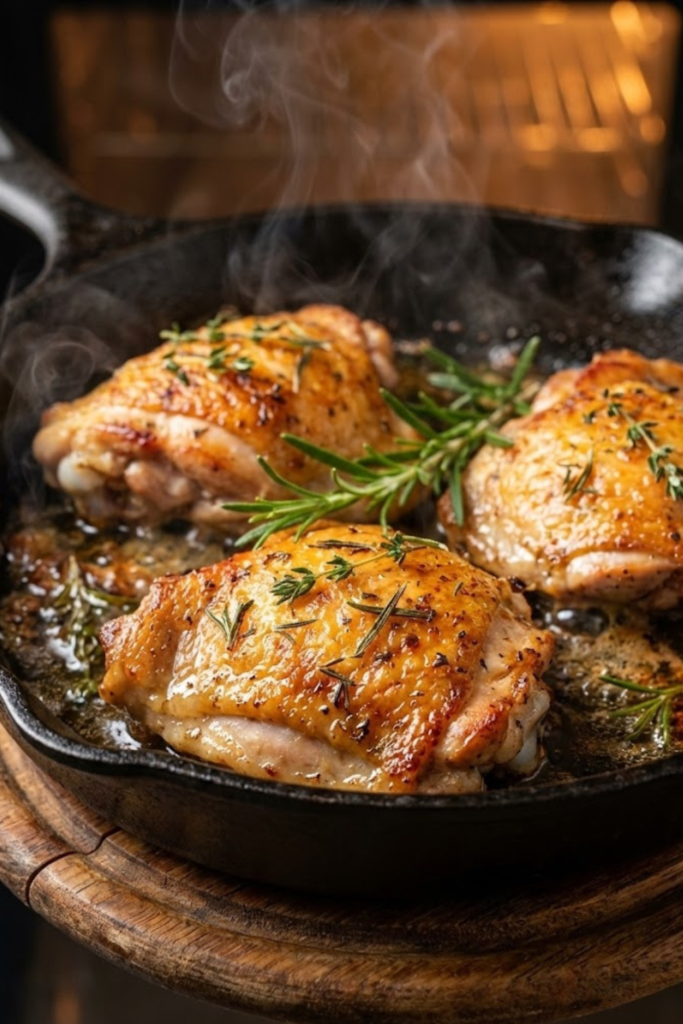
If I have a bit more time and want to impress someone, I use my cast iron skillet. It’s heavy, but it holds heat like nothing else. I start the chicken skin-side down on the stove over medium-high heat. You have to let it sit there without moving it. I know it’s tempting to peek, but if you try to lift it too early, the skin will tear. Wait about 5 or 6 minutes until it releases naturally from the pan. Once the skin looks like a potato chip, flip it and stick the whole skillet into the oven to finish cooking.
The Air Fryer Shortcut
I finally bought an air fryer last year, and I get why people love them. It is perfect for weeknights when everyone is hungry right now. It works like a mini convection oven. I usually cook thighs at 380°F for about 18 to 22 minutes. You have to flip them halfway through. The moving air dries out the skin super fast, which is great for crunch, but keep an eye on them so they don’t burn.
The Only Way to Know It’s Done
Please stop cutting into the chicken to check if it’s done! I used to do this, and all those delicious juices would run out onto the cutting board, leaving the meat dry. The only tool you really need is a digital meat thermometer. They are cheap and save you so much guessing. Stick it into the thickest part of the meat (without touching the bone). Once it hits 165°F (74°C), it is safe to eat. Actually, I pull mine out at 160°F because the temperature keeps rising a little while it rests on the counter.
Serving Suggestions and Pairings
I used to be the cook who focused so hard on the main dish that I completely forgot about the rest of the plate. I remember rushing to pull the chicken out of the oven, feeling so proud of that golden skin, only to realize we had nothing to go with it. We ate plain chicken that night, and it was a little sad. Now, I try to think about the whole meal. The great thing about roasted chicken thighs is that they are pretty friendly. They get along with almost anything you put on the table.
What Goes on the Side?
Since your oven is already hot and blasting at 400 degrees, the smartest thing to do is roast your sides right along with the meat. I love using root vegetables. Carrots, parsnips, and sweet potatoes are sturdy enough to handle the high heat. I just chop them into chunks, toss them with a little oil and salt, and put them on a separate baking sheet. They usually finish cooking right around the same time the chicken rests.
If I am in the mood for comfort food, I make mashed potatoes. There is something about the herb seasoning and the salty juices mixing with creamy potatoes that feels like a warm hug. It’s classic for a reason. If the meal feels too heavy, I switch directions and make a quick salad. Arugula is my favorite here because it has a peppery bite that cuts through the fat of the chicken skin. Just a simple dressing of lemon juice and olive oil is all you need.
Don’t Waste the Pan Drippings
This is the best trick I learned from watching cooking shows. After you take the chicken out of the pan, look at the bottom. See those stuck-on brown bits? Chefs call that “fond,” but I just call it flavor gold. Please do not scrub that away in the sink! While the chicken rests on a cutting board, I put the skillet back on the stove (be careful, the handle is extremely hot!).
I pour in a splash of chicken broth or a little white wine. Scrape the bottom with a wooden spoon until all those brown bits dissolve into the liquid. Let it bubble for a minute, then stir in a tiny square of cold butter. It creates a simple, glossy sauce that tastes amazing poured over the meat. It takes two minutes, but it makes the dinner feel like it came from a fancy restaurant.
A Little Glass of Something
I am definitely not a wine expert, just a teacher who enjoys a glass on a Friday night. With herb-seasoned chicken, I found that white wine usually works better than red. Red wine can sometimes be too heavy and overpowers the delicate taste of the thyme and rosemary. A crisp Sauvignon Blanc or a Chardonnay is really nice. The acidity in the white wine helps balance out the richness of the dark meat and the olive oil. If wine isn’t your thing, a cold iced tea with plenty of lemon slices is a solid choice too.
The Leftover Lunch Plan
I almost always cook more thighs than we can actually eat. Cold chicken is actually really tasty the next day. I pull the meat off the bone and use it for sandwiches. It is way better than that slimy deli meat you buy in plastic tubs. You can also toss the cold meat into a grain bowl with some rice and cucumbers for a quick work lunch. Sometimes, I just chop it up and throw it into a pasta sauce or a quick quesadilla. Since the flavor is already baked in, you don’t have to do much work to make the leftovers taste good.
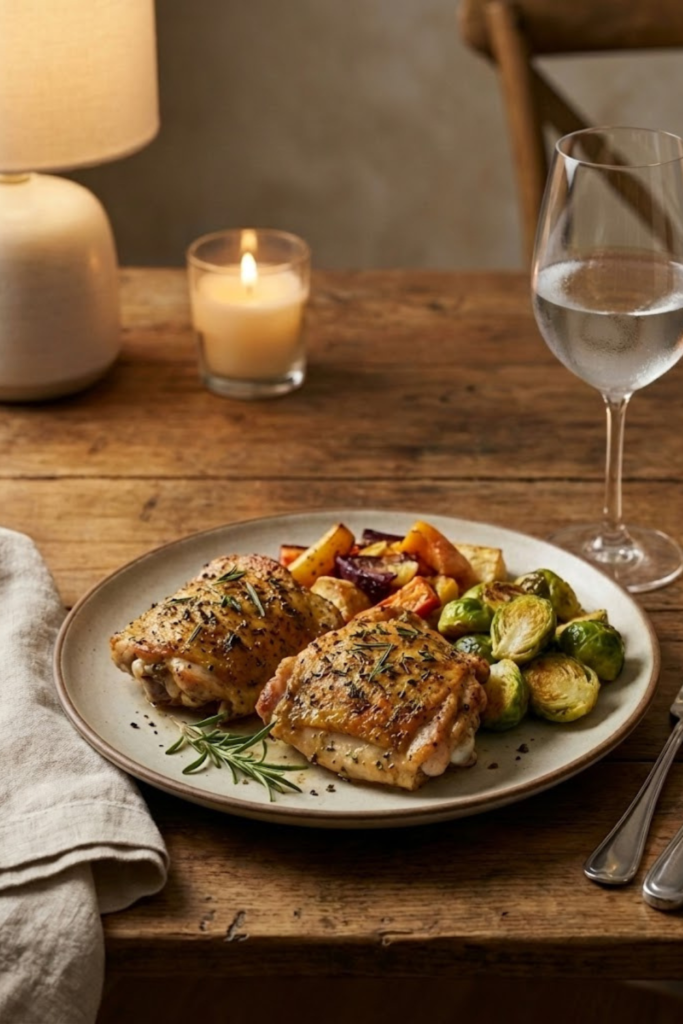
We have covered a lot of ground today. I really hope you feel a little more ready to tackle chicken thighs than I did when I first started cooking for myself. It is funny how something so simple—just chicken, herbs, and heat—can turn into such a confusing mess if you don’t know the little tricks. But now you know about picking the right meat and why high heat is your best friend.
Why This Recipe is a Keeper
I keep coming back to this specific way of cooking for a few reasons. First off, it is cheap. Chicken thighs are usually way more affordable than breasts, and they have so much more flavor. In a world where grocery bills seem to go up every single week, that matters. Second, it is forgiving. You can accidentally leave thighs in the oven for an extra five minutes, and they will still be juicy. Try doing that with a chicken breast, and you will be chewing on dry strings. It is just a reliable meal that works for a busy Tuesday or a relaxed Sunday.
Real Life Happens
I want to be honest with you. Even with the best instructions, things can go wrong. Maybe your oven runs hotter than mine, or maybe you got distracted by a phone call and forgot to set the timer. If you burn the skin a little bit or the meat isn’t picture-perfect the first time, don’t beat yourself up. We have all been there. My first attempt at “herb chicken” years ago was basically charcoal on the outside and raw on the inside. We ended up ordering pizza and laughed about it. You learn by doing. Just keep trying, and you will get the hang of it.
You Got This
Cooking isn’t about being a fancy chef with a tall white hat. It is just about feeding the people you care about and maybe enjoying a good bite yourself. Don’t feel like you have to follow my herb list exactly, either. If you hate rosemary, leave it out! Cooking is personal. Maybe you love cumin or want to try a barbecue rub. That is totally fine. The technique of roasting at 400 degrees works no matter what spices you put on top. Use this recipe as a starting block, not a rule book.
Pin It for Later
If you found this guide helpful, or if you just want to save the recipe so you don’t lose it by next Tuesday, please pin this to your “Weeknight Dinners” or “Healthy Recipes” board on Pinterest! It helps me out a ton, and it makes sure you can find those cooking temps when you are standing in the grocery store wondering what to buy. Happy cooking, everyone!