I’ll never forget the Tuesday night chaos—work ran late, the kids were starving, and my fridge looked depressingly empty. Then I spotted it: the lonely half-eaten rotisserie chicken from Sunday. Rotisserie chicken creamy pasta to the rescue! Honestly, this dish saved my sanity that night.
Did you know that over 600 million rotisserie chickens are sold in the U.S. every year? That’s a lot of potential pasta nights! In this article, we’re going to turn that grocery store convenience bird into a gourmet-style feast that tastes like you slaved over the stove for hours (but I promise, you won’t!). We’re talking luscious, velvety sauce clinging to perfectly cooked noodles—absolute heaven in a bowl. Let’s get cooking!
Why Rotisserie Chicken is the MVP of Weeknight Pasta
I used to be that person who thought “homemade” meant you had to start with raw chicken breasts every single time. Let me tell you, I spent years serving my family rubbery, boiled chicken mixed into sauce because I was trying to be a “proper” cook. It wasn’t until a frantic Tuesday after a long day of grading papers that I grabbed a rotisserie bird on my way home. I shredded that bad boy into a pan, and my rotisserie chicken creamy pasta changed forever.
The Flavor Advantage
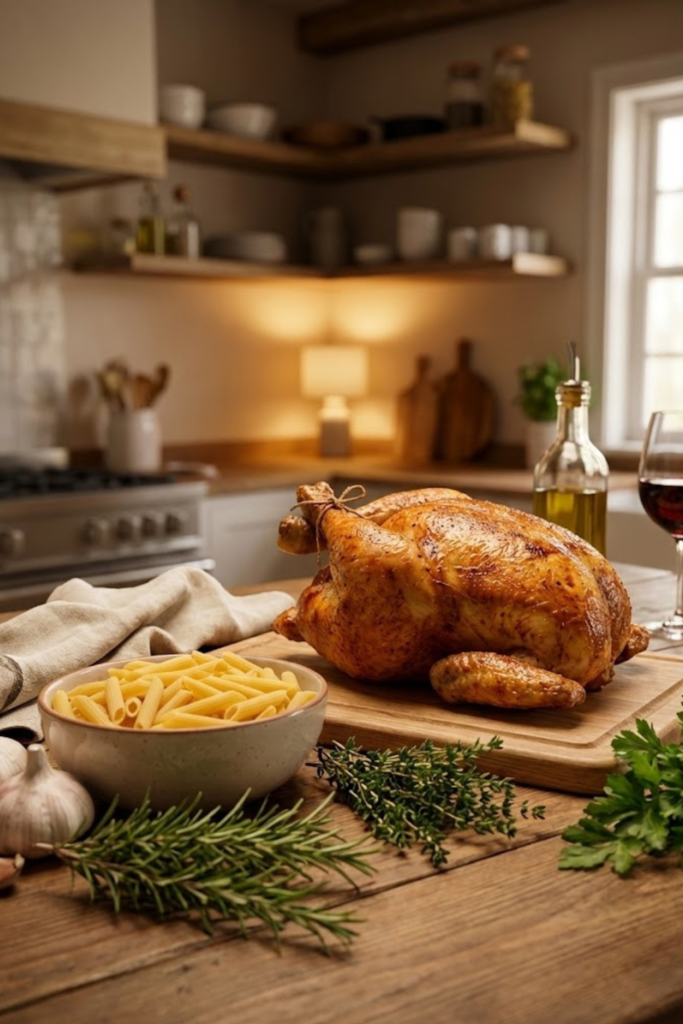
Here is the thing about raw chicken breast: it is bland. You have to work really hard to make it taste like anything. Pre-cooked rotisserie chickens are usually brined and slow-roasted, meaning the seasoning has penetrated all the way to the bone. When you toss that savory, salty meat into a cream sauce, it leaks all that goodness right into the dish.
I remember making an alfredo from scratch once and poaching my own chicken. My husband ate it, but he asked, “Did you forget the salt?” That hurt. With a store-bought bird, the work is done for you. The mix of dark and white meat also adds a texture you just can’t get from a standard breast fillet.
Ditching the Raw Meat Stress
Let’s be real for a second—handling raw poultry is a pain in the neck. You have the sliminess, the constant hand washing, and the paranoia about cross-contamination. I hate sanitizing my cutting board three times just to make dinner.
Using a rotisserie chicken completely removes the raw meat step. You literally just pull the meat off the bone. It turns a 45-minute ordeal into a 20-minute meal. For a rotisserie chicken creamy pasta, speed is the name of the game.
Cost and Portion Control
I have found that one Costco chicken (which costs five bucks where I live) yields about 3 to 4 cups of meat. If I’m making pasta for just the four of us, I only need half of that chicken. The rest goes into tacos or chicken salad for my lunch the next day.
A mistake I used to make was throwing away the carcass immediately. Don’t do that! Even if you aren’t making soup right now, freeze those bones. But for the pasta itself, using pre-cooked meat is usually cheaper per pound than buying raw trimmed fillets. It’s a budget saver that tastes like you spent way more money than you actually did.
Mastering the Creamy Sauce: Ingredients You Need
If there is one thing I have learned after years of cooking for a picky family, it is that the sauce makes or breaks the meal. You can have the best chicken in the world, but if your sauce is watery or bland, nobody is going to ask for seconds. For this rotisserie chicken creamy pasta, we want a sauce that hugs the noodles, not one that slides right off them.
The Dairy Foundation
I used to try and cut calories by using skim milk or even 2% milk in my creamy pastas. Big mistake. Every time I did that, the sauce ended up thin and sad. It just wouldn’t thicken up no matter how long I let it simmer.
For a truly comforting dish, you really need to use heavy whipping cream or at least half-and-half. The fat content is what gives you that velvety texture. I remember one Friday night trying to use almond milk because that’s all we had—let’s just say the kids ordered pizza that night. Stick to the real stuff; it’s worth it for the texture alone.
Cheese Matters: Grate It Yourself
I know, I know. Buying the bag of pre-shredded cheese is so much easier. I have done it a million times when I’m in a rush. But here is the problem: that bagged cheese is coated in stuff like potato starch or cellulose to keep it from clumping together in the bag.
When you melt it, that coating stops the cheese from breaking down smoothly. You end up with a grainy, gritty sauce instead of a smooth one. I learned this the hard way when my sauce turned into a clumpy mess. Buy a block of Parmesan or Pecorino Romano and grate it yourself. It takes two extra minutes, but the difference is huge.
Aromatics and Garlic
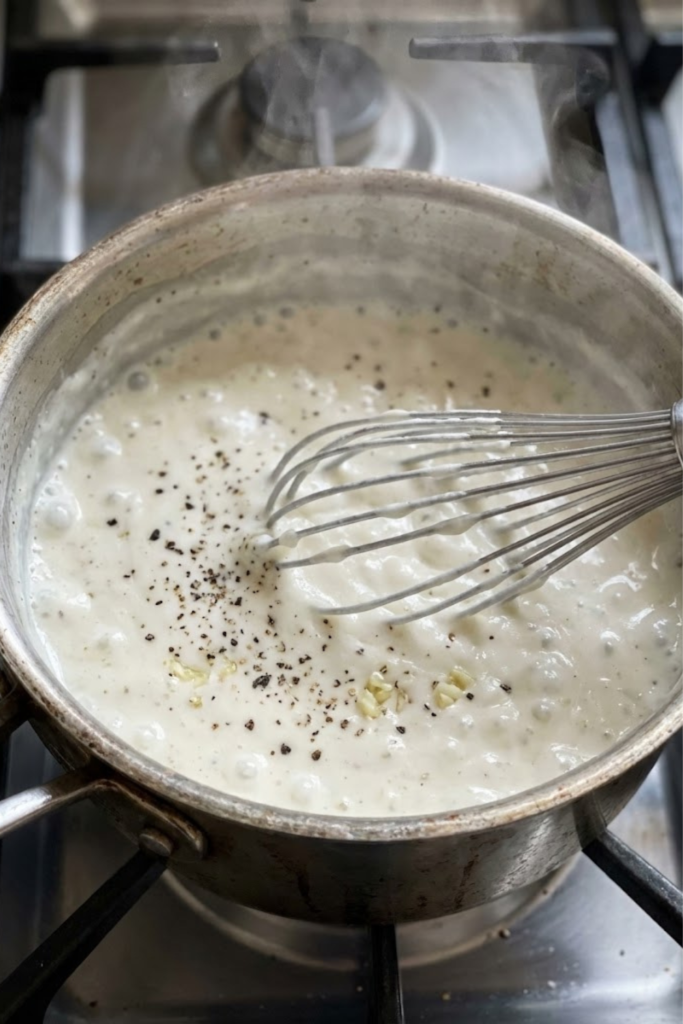
You can’t just dump cream in a pan and call it a day. You need a flavor base. I always start by melting butter and sautéing fresh garlic. And please, don’t use the jarred garlic if you can help it. It has a weird, vinegary taste that messes up the creaminess.
I usually chop up a little onion or shallot too. Cooking these in butter until they are soft releases all those good smells. It cuts through the heaviness of the cream so the dish doesn’t feel like a brick in your stomach.
The Secret Weapon: Pasta Water
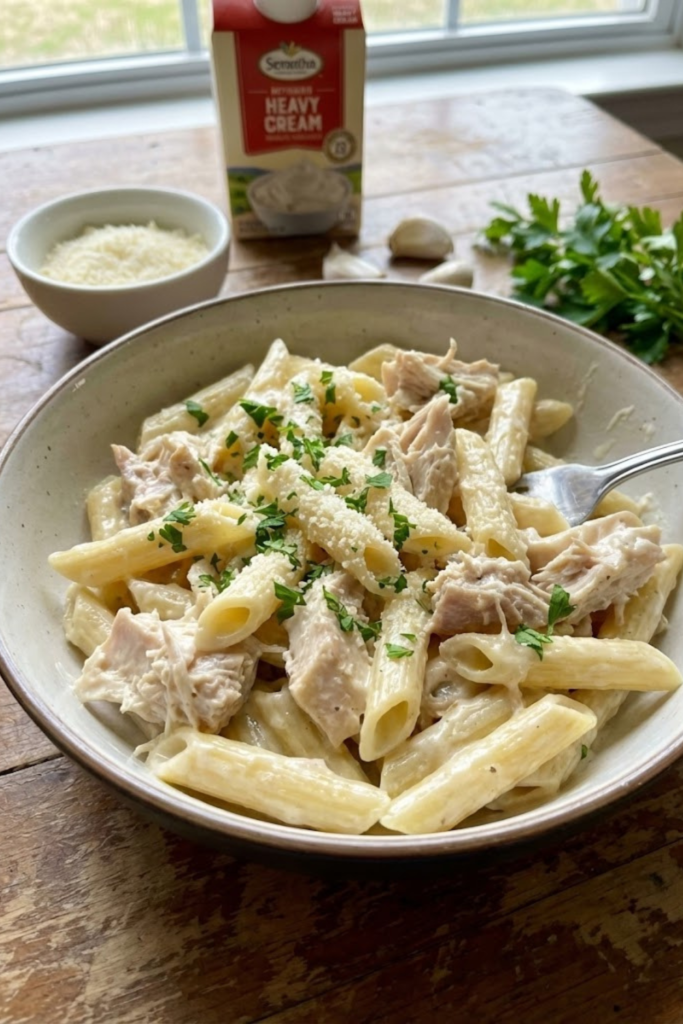
This is the trick that changed my cooking life. Before you drain your noodles, scoop out a cup of that cloudy, starchy water. When you mix your cheese and chicken into the sauce, add a splash of this water. The starch helps bind the oil and liquid together, making the sauce glossy and thick. It is like magic glue for your rotisserie chicken creamy pasta.
Choosing the Perfect Pasta Shape for Creamy Sauces
I used to think pasta was pasta. You know, just grab whatever box is on sale for 99 cents and call it a day. But have you ever tried to eat a thick, chunky sauce with thin angel hair pasta? It is a total disaster. The sauce sits at the bottom of the bowl, and you are left eating plain, sad noodles while the good stuff goes to waste. For a rich rotisserie chicken creamy pasta, the shape you pick is actually super important for the final eating experience.
Why Holes are Holy
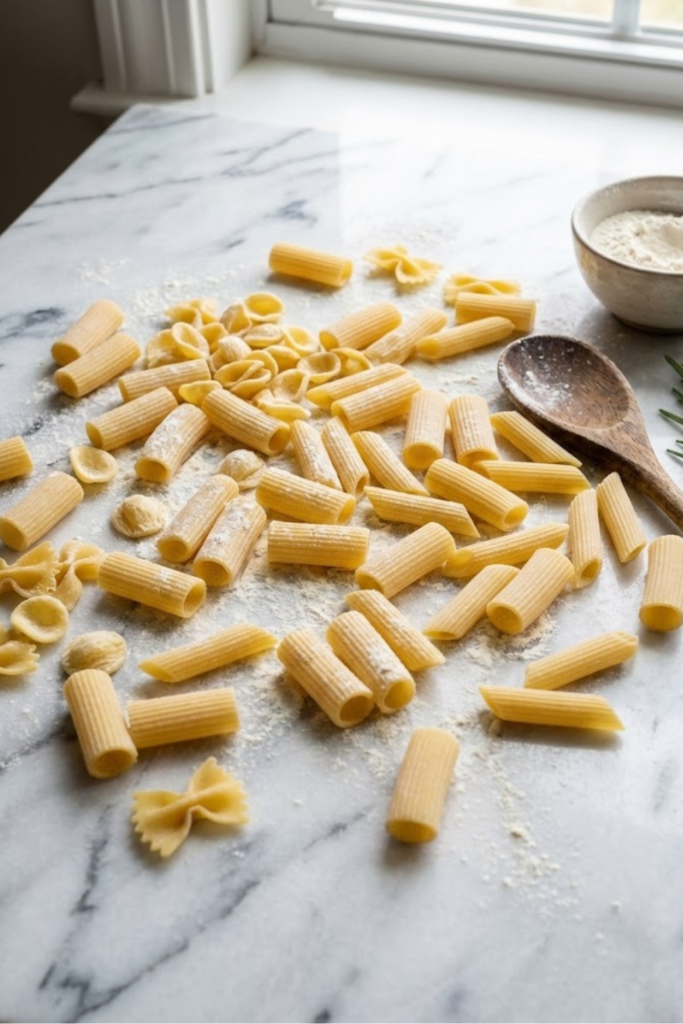
For this kind of dish, I almost always go for something with a hole in the middle. My absolute favorite is Penne or Rigatoni. The reason is pretty simple: the sauce gets trapped inside the tube.
When you take a bite, you get a little explosion of that creamy goodness that was hiding inside the noodle. It reminds me of those jelly-filled donuts, but savory. Ziti is another good option, but I find Rigatoni holds up a bit better if you are tossing it vigorously in the pan. I once used smooth Ziti, and the sauce just slid right off. My kids actually complained that it “wasn’t cheesy enough” even though I used a mountain of cheese. It was just all sitting at the bottom of the plate!
The Deal with Long Noodles
If you really want that slurping experience, you can go with long noodles, but you have to be careful. Spaghetti is usually too thin for a heavy cream sauce with big chicken chunks. It gets clumpy and doesn’t really support the weight of the meat.
If I am feeling a bit fancy, I will grab Fettuccine or Linguine. These are flat and wide, so they have more surface area for the cream to stick to. It gives the dish more of a classic Alfredo vibe. Just make sure you toss it really well so every strand gets coated. There is nothing worse than finding a clump of dry noodles stuck together in the middle of your bowl because you didn’t mix it enough.
Ridges vs. Smooth
Here is a pro tip: always look for the word “Rigate” on the box. That means “ridges” in Italian. Those little lines on the outside of Penne or Rigatoni are there for a reason. They act like little grips for the sauce.
I accidentally bought smooth Penne once (Penne Liscio), and it was a total letdown. The sauce had nothing to hold onto. It makes a bigger difference than you might think. It is like trying to climb a smooth wall versus a rock wall—you need those handholds!
Don’t Overcook It
Finally, watch that timer like a hawk. Since we are going to toss the pasta into the hot sauce at the end to marry the flavors, you want to drain it before it is fully done. If the box says 11 minutes, I drain it at 9 or 10. If you cook it all the way and then add it to the bubbling sauce, it turns into mush. Nobody likes mushy pasta, especially when you are trying to impress the family with a nice dinner.
Level Up Your Pasta: Add-Ins and Variations
One thing I love about this rotisserie chicken creamy pasta is that it is basically a blank canvas. The base recipe is delicious on its own, but sometimes I get bored eating the same thing, or I just need to use up whatever random stuff is sitting in my produce drawer. You can easily turn this into a completely different meal with just one or two extra ingredients.
Sneaking in the Veggies
Let’s be honest, serving a bowl of white carbs and white sauce can feel a little heavy. I always have a bag of spinach in the fridge that I swore I was going to use for salads but never did. This pasta is the perfect place to hide it.
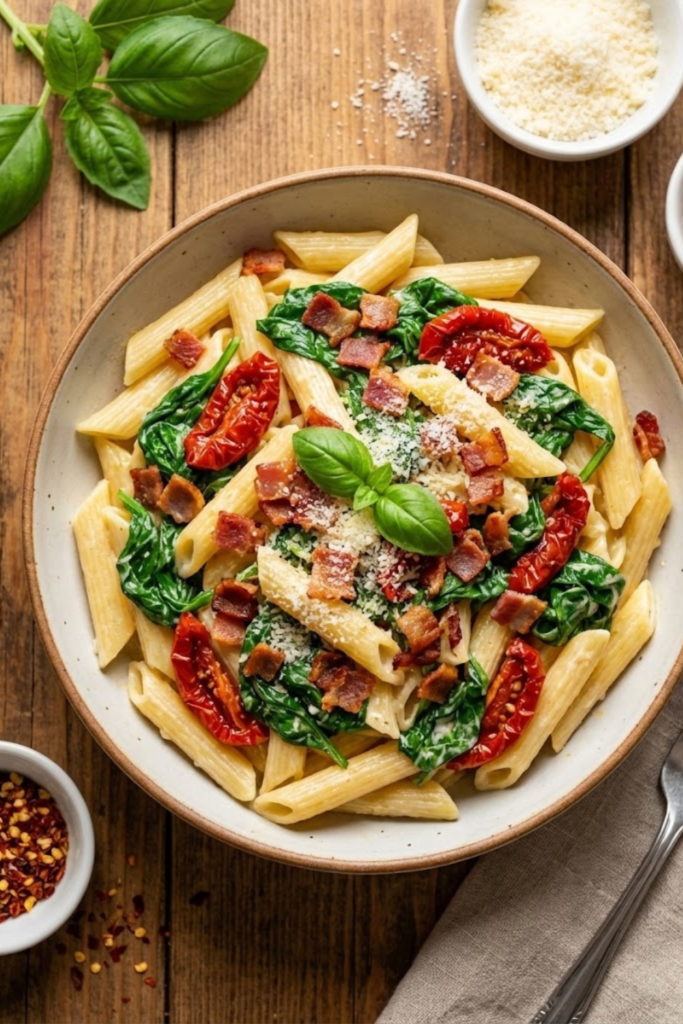
I usually throw a big handful of baby spinach into the pan right at the very end. You don’t even need to cook it separately. The heat from the pasta and the sauce wilts it down in about 30 seconds. It adds a nice pop of color and makes me feel slightly better about eating a bowl of cream. Frozen peas are another winner, especially with kids. I just toss them in with the boiling noodles for the last minute of cooking. It’s sweet, easy, and adds zero prep time.
Bringing the Heat
Sometimes, all that cream and cheese can be a bit much. My husband loves spicy food, so we often do a “Cajun” version of this dish. I’ll sprinkle a good teaspoon of Cajun seasoning onto the chicken before I toss it into the sauce.
If you don’t have Cajun spice, just a pinch of red pepper flakes makes a huge difference. It cuts through the richness of the dairy so you don’t feel like you are eating something bland. It wakes up your palate. Just go easy if you are serving little ones—I learned that lesson the hard way when my daughter refused to eat dinner because it was “too spicy.”
The Bacon Factor
If I have had a really bad week at school, I pull out the big guns: bacon. Everything tastes better with bacon, right? I like to fry up three or four slices until they are super crispy, then crumble them on top right before serving.
You can also sauté some mushrooms in the bacon grease if you are feeling fancy. The earthy flavor of the mushrooms pairs so well with the garlic and cream. It gives the dish a savory, umami flavor that feels like something you would get at a restaurant.
Don’t Skip the Green Stuff
Finally, please don’t skip the fresh herbs at the end. I used to think parsley was just a garnish that restaurants used to make the plate look pretty. But chopping up some fresh parsley or basil and stirring it in adds a freshness that this heavy dish really needs. It brightens everything up. Dried herbs work in a pinch, but fresh is definitely better here.
Storage and Reheating Tips for Leftovers
If you are anything like me, you cook once hoping to eat twice. Taking leftovers to school for lunch is the only way I survive the week without spending a fortune. But rotisserie chicken creamy pasta can be a bit tricky the next day. You know how the sauce gets all hard and the grease separates? It looks kind of gross if you don’t treat it right, but with a few tricks, it can be just as good on day two.
The Fridge Situation
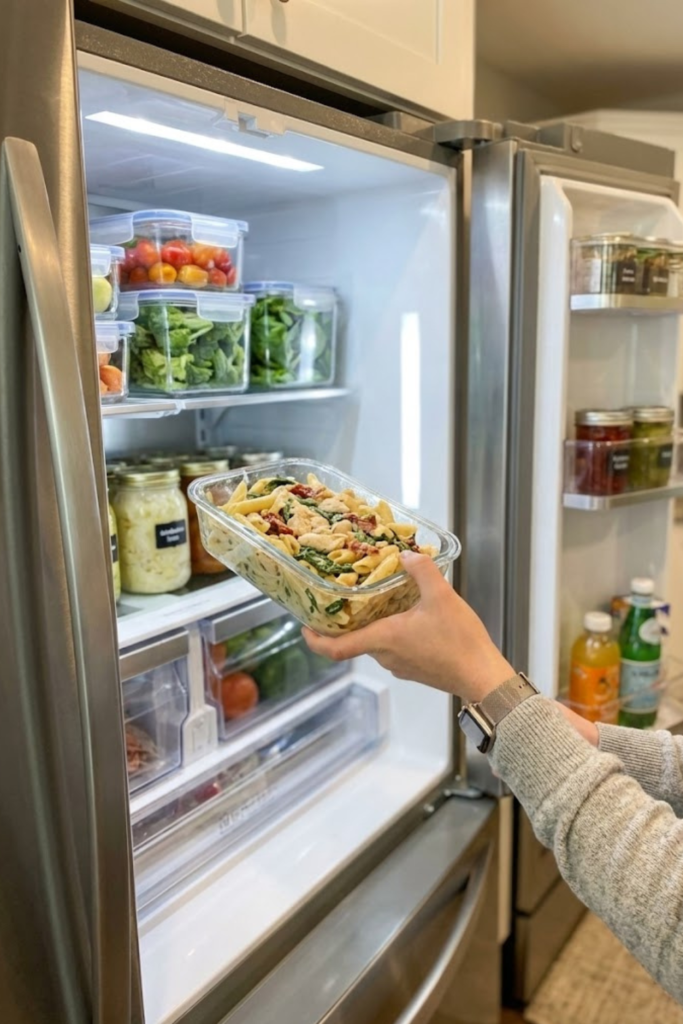
First off, you got to store it properly. I never leave the pasta sitting out in the pan while I clean up the kitchen. As soon as it cools down a bit, I get it into a good container with a tight lid. If you leave it exposed to the air, the noodles get crunchy and dry around the edges, and no amount of sauce will fix that.
It usually stays good in the fridge for about 3 to 4 days. Although in my house with two teenagers, it rarely lasts past day two. If you are meal prepping on Sunday for the whole week, just be careful by Thursday or Friday. Always give it the sniff test. If it smells even a little sour, toss it.
The Magic Splash
Here is the most important thing I can tell you: do not just shove the bowl in the microwave as is. The sauce has thickened up in the fridge because of the butter and cheese. If you heat it up dry, the oil will split from the solids, and you will have a greasy mess.
Before I heat it up, I always add a “splash.” If I am at home, I use a little milk or broth. If I am in the staff lounge at school, I literally just use a spoonful of water from the tap. It sounds weird, but as it heats up, you stir that liquid in, and it helps the sauce become creamy again. It brings it back to life.
Stovetop vs. Microwave
Look, if I am reheating this for dinner the next night, I put it back in a saucepan on the stove. I add a splash of milk and stir it gently over low heat. This makes it taste almost exactly like it did freshly cooked.
But let’s be real. At 11:30 AM on a Tuesday between classes, I am using the microwave. The trick is to not blast it on high power. I do 30 seconds, stir, add my splash of water, and then do another 30 seconds. If you zap it for two minutes straight, the chicken gets rubbery and explodes all over the microwave walls.
Skip the Freezer
One last tip: don’t try to freeze this. I tried it once thinking I was being super organized for the month. Cream-based sauces really do not like the freezer. When I thawed it out, the texture was all grainy and separated. It looked curdled and unappetizing. Just eat it fresh or keep it in the fridge; it is not worth the disappointment.
Well, there you have it. We have covered pretty much everything you need to know to turn a grocery store bird into a gourmet feast. I hope you are feeling a little more confident about tackling dinner tonight. Honestly, this rotisserie chicken creamy pasta has saved my bacon more times than I can count. It is one of those recipes that proves you don’t need to spend hours in the kitchen or a fortune at the store to put a hot, comforting meal on the table.
Why This Recipe Stuck
I think the reason this dish became such a staple in my house isn’t just because it tastes good. I mean, it is delicious—creamy, cheesy, and savory—but it is really about the peace of mind. Knowing that I can walk in the door at 5:30 PM, totally exhausted, and still have everyone fed and happy by 6:00 PM is a huge relief. It stops me from ordering takeout, which saves my wallet, and it gets us all sitting around the table together. That is the real win for me.
Give Yourself a Break
If you try this and your sauce breaks a little, or you overcook the pasta by a minute, please don’t stress about it. I have made every mistake in the book. Cooking is supposed to be messy and imperfect. The important thing is that you made something with your own hands. Your family isn’t going to critique the viscosity of the sauce; they are just going to be happy they are eating. So, give yourself some grace. You are doing a great job.
Share the Love
If you enjoyed this recipe or found my rambling tips helpful, I would be so grateful if you could share it. It really helps other busy parents find these ideas.
Please pin this recipe to your “Weeknight Dinners” or “Easy Pasta Recipes” board on Pinterest. That way, the next time you are standing in the kitchen staring at a half-eaten rotisserie chicken and wondering what on earth to do with it, you will know exactly where to find the answer. Happy cooking, everyone!