Have you ever looked forward to a healthy dinner only to bite into a piece of meat that tasted like dry shoe leather? It’s the worst, right? You aren’t alone; a recent culinary survey found that over 60% of home cooks struggle with drying out lean poultry! But don’t worry, because I’ve been there and found the solution. In this guide, I’m going to show you exactly how to master chicken breast with herb seasoning so it comes out tender, aromatic, and mouthwatering every single time—get your oven ready, because we are about to change your weeknight dinner game forever!
Choosing the Best Chicken and Herbs for Maximum Flavor
Don’t Buy the Water-Logged Stuff
I have to admit something embarrassing. For years, I bought those giant, rock-hard bags of frozen chicken because they were cheap. I thought I was being thrifty. But every time I cooked them, my pan would fill up with this weird, white liquid. It wasn’t roasting; it was boiling in its own sadness. My chicken breast with herb seasoning never stood a chance. The flavor just washed away.
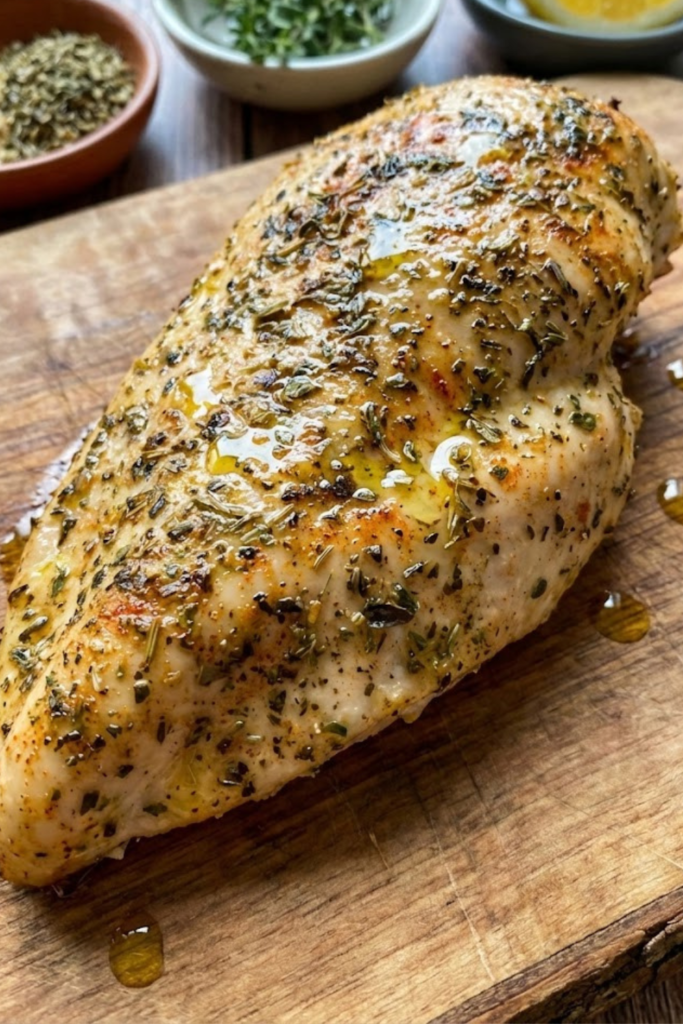
Now, I tell everyone to look for “air-chilled” on the label. It sounds fancy, but it just means the chicken wasn’t cooled in a vat of chlorinated water. The texture is completely different. If you can’t find air-chilled, that’s okay. Just make sure you aren’t buying meat that has “15% retained water” on the package. You are paying for expensive water at that point! If you do use standard grocery store chicken, pat it down with paper towels until it’s bone dry.
Why I Leave My Fresh Herbs Alone
I love my little kitchen garden. I really do. But for this recipe, keep the fresh basil on the plant. I learned this lesson the hard way when I tried to be “gourmet” for a dinner date. I covered the meat in fresh chopped herbs and threw it in a 400-degree oven. The result? Burnt, bitter black flakes that tasted like ash. It was a disaster.
Dried herbs are actually better here. They can handle the high heat without burning. Plus, they are more concentrated. When you make chicken breast with herb seasoning, you want that savory crust that dried oregano and thyme provide. It adds a texture that soft, fresh herbs just can’t give you. My go-to mix usually involves dried basil, oregano, and a pinch of rosemary. It smells like an Italian restaurant in my kitchen when it bakes.
The “Glue” Matters
You need something to make those spices stick. I went through a phase where I was afraid of oil. I tried to just press the spices onto dry meat. Spoilers: it fell right off. You ended up with plain chicken and a pile of burnt spices on the baking sheet.
You need a binder. I prefer avocado oil because it has a high smoke point. It handles the oven heat better than extra virgin olive oil, which can sometimes smoke and taste a bit off at high temps. You don’t need to drown it—just a tablespoon is enough to coat the meat. This helps the chicken breast with herb seasoning get that beautiful golden color.
Secret Weapons for Flavor
Herbs are the star, but they need backup. Garlic powder and onion powder are non-negotiable for me. Please, do not use fresh garlic here. Just like the fresh herbs, minced garlic will burn before the chicken is cooked through. Stick to the powder.
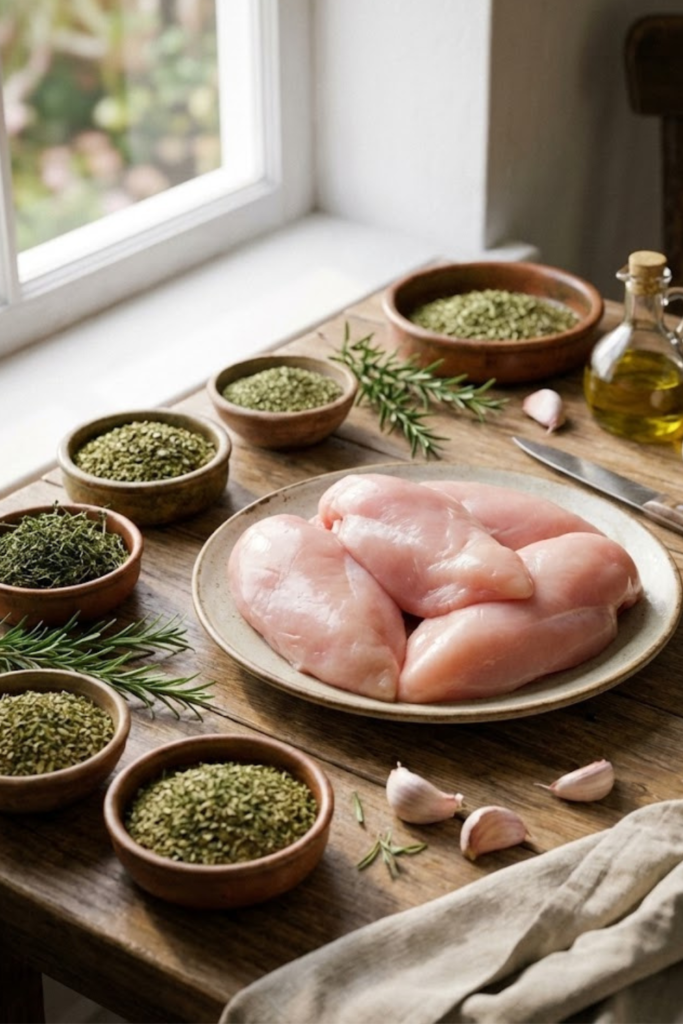
I also add a teaspoon of smoked paprika. Not the sweet kind, the smoked kind. It gives the meat a look that suggests it spent time on a charcoal grill, even though we are just using the oven. It adds a depth that makes people ask, “What is in this?” making your chicken breast with herb seasoning feel special even on a Tuesday night. Plus, making your own blend means you control the salt. Store-bought packets are usually sodium bombs, and we don’t need that.
Preparing the Meat: The Secret to Locking in Moisture
Get Your Anger Out
If there is one tool I use the most for chicken, it isn’t a fancy knife. It’s my meat mallet. For years, I skipped this step because I was lazy. I would just throw the breasts in the pan exactly how they came out of the package. The problem? One end of a chicken breast is usually thick, and the other is thin. By the time the thick part was safe to eat, the thin part was basically jerky.
Now, I put the meat between two pieces of plastic wrap and pound it. You don’t have to go crazy. You just want it to be even, maybe about half an inch thick all around. It makes the cooking time way faster, which means less time for the meat to dry out. Plus, it’s a great way to relieve some stress after a long day at work!
The Dry Rub Massage
After pounding, I grab the paper towels again. I know I mentioned this before, but you really have to dry the meat. If the surface is wet, the oil and herbs just slide right off. You want that chicken breast with herb seasoning to actually keep the seasoning on the meat, right?
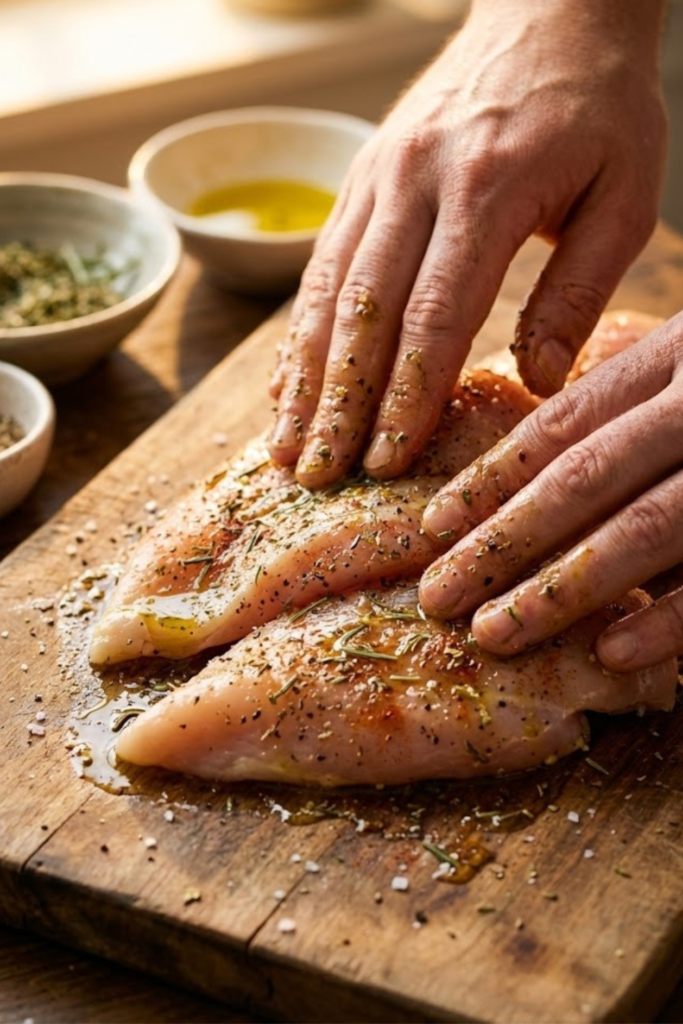
Once it’s dry, I pour my oil and herb mix right onto the chicken. Don’t be shy with it. I use my hands to rub it in. It feels a bit gross, I know. But you have to work the spices into the nooks and crannies. If you just sprinkle it on top, you get flavorless spots. I try to make sure every inch is covered in that green and red speckle.
Stop the Temperature Shock
This is a mistake I made for a long time. I would take the chicken out of the fridge and put it straight into a 400-degree oven. That is a huge temperature shock. The meat fibers seize up and get tough immediately.
Now, I let the prepped chicken sit on the counter while the oven preheats. Usually, about 15 to 20 minutes. It takes the chill off. I’ve noticed the chicken cooks more evenly and stays way juicier this way. Just don’t leave it out for hours obviously, but a few minutes helps a lot. It’s a small change, but it makes a big difference in the final texture.
Baking Instructions and Temperature Guide
Crank Up the Heat
For years, I was afraid of high heat. I thought if the oven was too hot, I would burn dinner. So I baked everything at 350 degrees. It took forever, and my chicken always came out dry and sad.
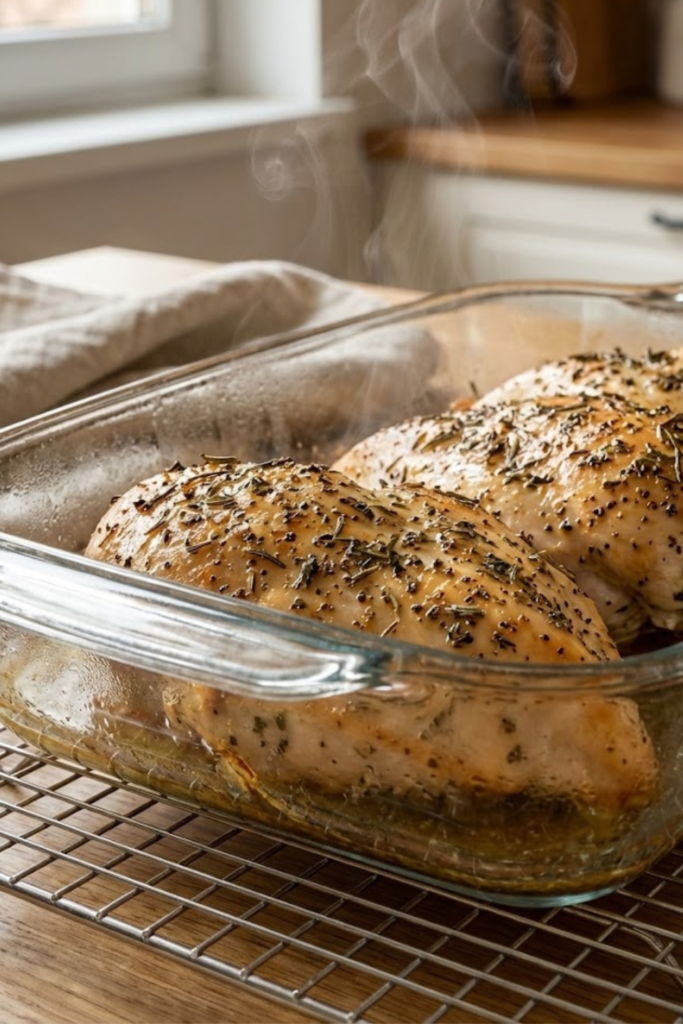
The trick I learned is to go hotter. Set your oven to 400°F (200°C). It sounds high, but it’s perfect for chicken breast with herb seasoning. You want it to cook fast so it doesn’t have time to dry out. At this temperature, a standard breast usually takes about 18 to 22 minutes. It cooks the outside quickly while keeping the inside moist. Just keep an eye on it around the 18-minute mark.
Stop Cutting It Open!
This was my worst habit. I would pull the pan out and slice into the thickest part of the meat to see if it was pink. It worked to check doneness, but I watched all the juices run out onto the pan. By the time we sat down to eat, the meat was dry as a bone.
Please, spend ten dollars and buy a meat thermometer. It is the best tool for your kitchen. You stick it in the thickest part, and when it hits 165°F (74°C), you take it out. That’s it. No guessing, and no cutting the meat open prematurely. It guarantees your chicken is safe to eat without turning it into leather.
The Hardest Part: Waiting
When the timer goes off, your kitchen is going to smell amazing. You will want to eat immediately. But you have to wait. This is called “resting” the meat.
When chicken cooks, the juices bunch up in the center. If you cut it right away, they spill out. If you let the chicken breast with herb seasoning sit on the counter for about 5 to 10 minutes, those juices flow back out to the edges. It makes every bite juicy. I usually tent a piece of foil over the top loosely so it stays warm while I finish setting the table. It makes a huge difference.
Serving Suggestions and Delicious Pairings
What Goes on the Plate?
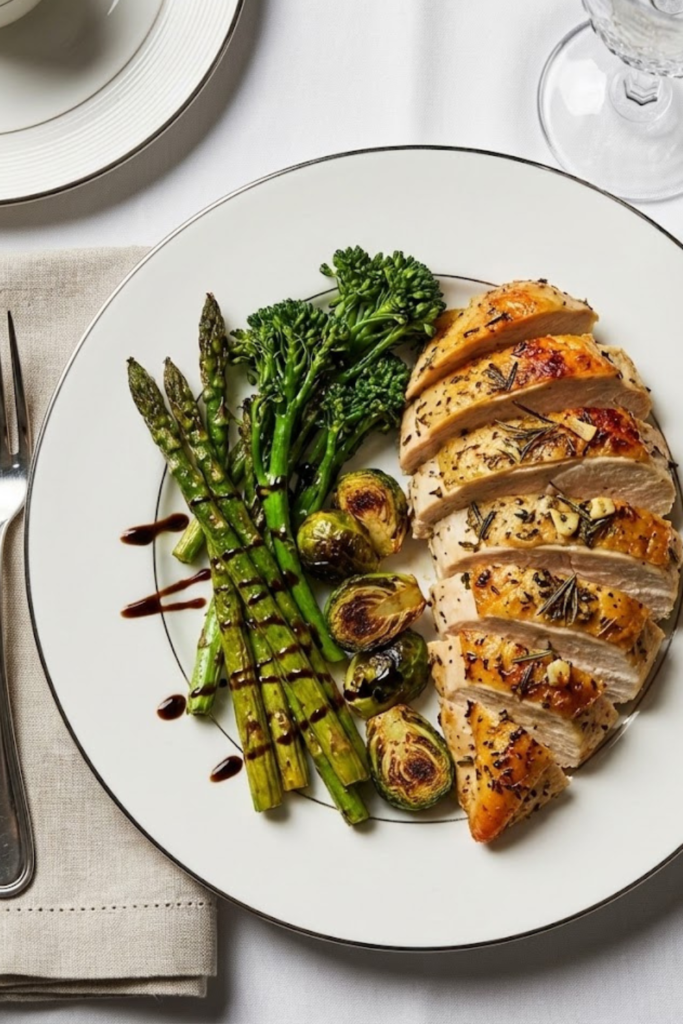
Honestly, half the time I just eat the chicken right off the cutting board because I’m impatient. But if I’m actually sitting down for a meal, I need some green stuff. Since the oven is already hot, I usually toss in a tray of asparagus or broccoli. Just drizzle them with a little oil and salt. They cook pretty fast, so I put them in when the chicken has about 15 minutes left.
If I’m feeling really hungry, I make a pot of rice or quinoa. The chicken breast with herb seasoning has a lot of flavor, so you don’t need the sides to be super fancy. The grains soak up any of the juices on the plate, which is the best part. A simple Greek salad with cucumbers and tomatoes is also perfect if you want to keep things light.
Lunch for the Week
This is my favorite part. I almost always cook four or five breasts at a time, even though there are only three of us eating. Why? Because this chicken is amazing cold. I slice it up really thin and put it in containers.
For lunch, I’ll throw it on top of a salad or wrap it in a tortilla with some spinach and cheese. It beats buying those expensive pre-packaged sandwiches at the store. The herb crust stays flavorful even after it’s been in the fridge. Just a heads up, if you microwave it, don’t blast it for two minutes. It will get rubbery. I usually do 30 seconds just to take the chill off, or I just eat it cold.
Keep it Fresh
I store the leftovers in those glass containers with the snapping lids. Plastic is fine, but sometimes it holds onto smells. The chicken stays good for about three or four days. If you haven’t eaten it by Thursday, it’s probably time to toss it. I tried freezing the cooked chicken once, but I didn’t love the texture when it thawed out. It was a bit watery. So I stick to the fridge and try to eat it all during the week.
I know cooking after a long day feels like a chore sometimes. I have definitely had those nights where I just want to order pizza and be done with it. But honestly, mastering this chicken breast with herb seasoning changed things for me. It’s fast, it’s healthy, and it actually tastes good. You don’t need to be a fancy chef to make a dinner that your family asks for again.
I really hope this guide helps you out the next time you are standing in the kitchen wondering what to make. If you try it and love it, could you do me a huge favor? Take a picture and pin this recipe to your dinner board on Pinterest. It helps more people find these tips, and I love seeing what you guys cook up! Happy cooking!