I have to confess something—for years, I was terrified of cooking dark meat! I thought it was greasy and complicated. Boy, was I wrong! Did you know that chicken thighs are actually more forgiving than breasts? It’s true! In fact, because of the higher fat content, it’s almost impossible to dry them out if you follow the right steps. I’ve burned my fair share of dinners, but once I mastered the art of using high-quality olive oil to get that skin shattering-crisp, everything changed.
We are going to dive deep into making the best dinner of your life. I’m talking about succulent meat pulling away from the bone and flavors that pop. Let’s get cooking!
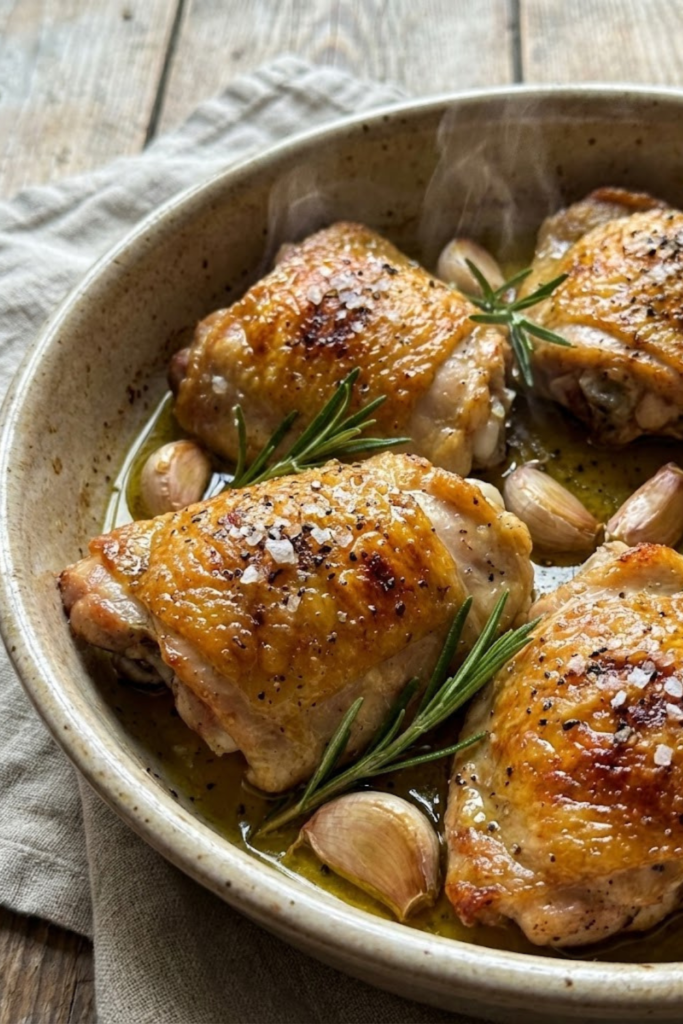
Why Extra Virgin Olive Oil is the Secret Weapon for Crispy Skin
I have to be honest with you; I used to be terrified of roasting with extra virgin olive oil. I read somewhere that it had a low smoke point and would turn my kitchen into a smoky disaster zone. So, I stuck to butter or vegetable oil for years. Big mistake. My chicken was often either burnt or sadly soggy.
It wasn’t until I watched a cooking show late one night that I saw a chef drenching chicken thighs with olive oil before tossing them into a scorching hot oven. I thought he was crazy. But I tried it the next night, and my mind was blown. The skin wasn’t just cooked; it was like a potato chip. It shattered when I bit into it.
I learned that the fear of burning olive oil is mostly a myth when it comes to roasting chicken. Since the chicken releases juices, the oil doesn’t just sit there and burn. It actually helps conduct the heat into the skin better than anything else I have tried.
The Moisture Mistake
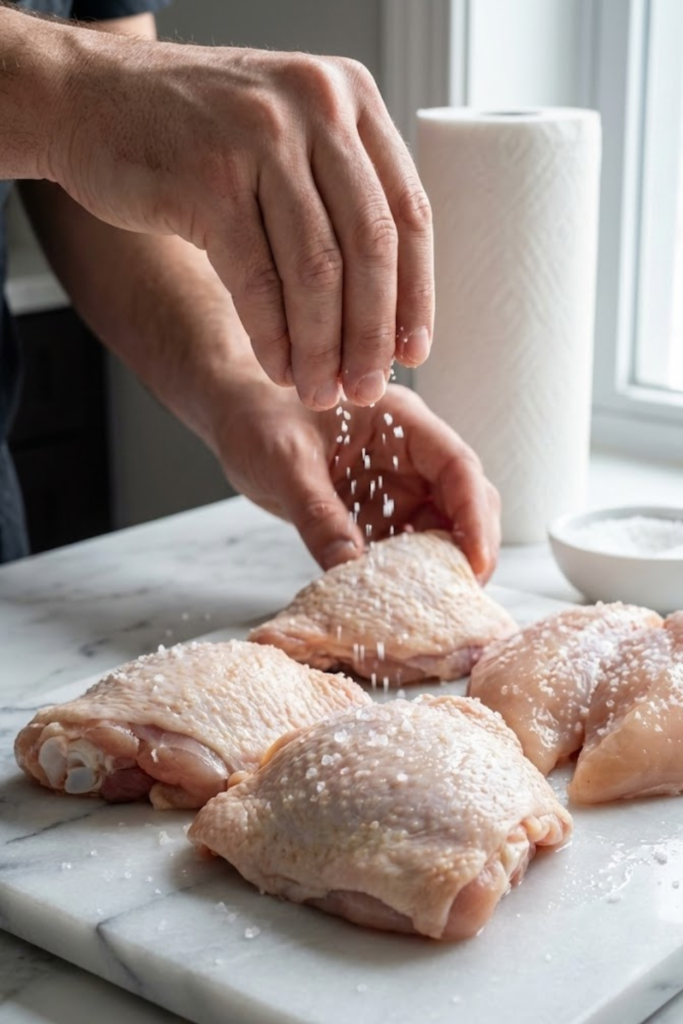
Here is a hard lesson I learned: oil and water hate each other. For the longest time, I would wash my chicken (I know, don’t yell at me, I stopped!) or just take it out of the package and slap the oil on. The oil would bead up and slide right off into the pan.
The skin would end up steaming instead of roasting. Steam is the absolute enemy of crispy skin. Now, I am obsessive about paper towels. I pat those thighs down until they are bone dry. When you apply the oil to dry skin, it sticks. It creates a seal. That seal is what fries the skin while the meat stays juicy underneath.
Why Butter Isn’t Better
I love butter. I really do. But for high-heat roasting? It fails me almost every time. Butter contains water and milk solids. When you roast it at 400 degrees, the water creates steam (again, the enemy!), and the milk solids burn quickly. You end up with black specks on your chicken before the meat is even done.
Olive oil is pure fat. It can take the heat much better in this context. It helps render out the fat that is naturally under the chicken skin. When I make chicken thighs with olive oil, the fat renders out slowly and bastes the meat. It’s a beautiful cycle of flavor that butter just can’t compete with in a high-heat oven.
The Flavor Factor
Let’s talk about taste for a second. Vegetable oil does the job, sure, but it tastes like nothing. Extra virgin olive oil adds this grassy, peppery kick that pairs so well with savory poultry. It feels rustic and hearty.
When the oil mixes with the chicken juices in the bottom of the pan, it creates the most incredible “liquid gold.” I usually tear off a chunk of crusty bread and mop it up right from the skillet. It’s my little chef’s treat before I serve dinner to the family. Trust me, once you switch to a good quality olive oil, you won’t go back to the bland stuff.
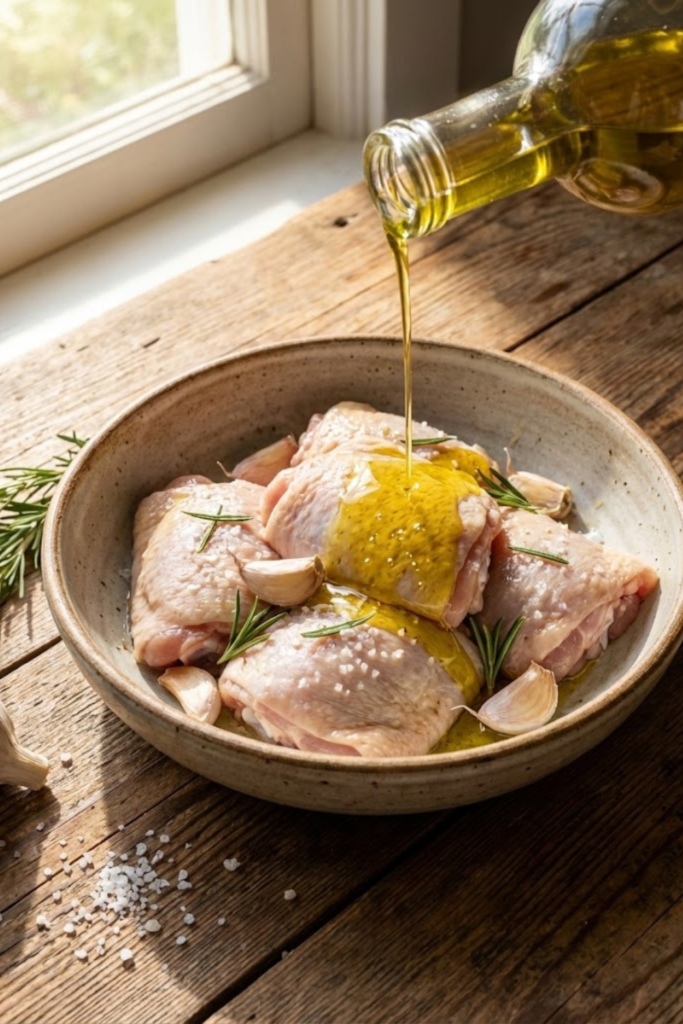
Preparing Your Chicken: Bone-In vs. Boneless Thighs
When I first started cooking chicken thighs with olive oil, I remember standing in the meat aisle at the grocery store for way too long. I was staring at the packages, totally confused. Should I get the ones with the bone? Or the boneless ones that cost a dollar more per pound? I used to grab the boneless ones just because I thought they were easier to deal with. But honestly, I was missing out on so much flavor.
There is a time and a place for both cuts, and knowing the difference has saved my dinner more than once. It really changes how you cook the meal.
The Flavor vs. Speed Trade-off
Here is the deal. Bone-in, skin-on thighs are my absolute favorite for this specific recipe. Why? Because the bone keeps the meat moist. It acts like a little heat shield so the meat doesn’t dry out while the skin gets crispy. Plus, they are usually cheaper. If you are on a teacher’s budget like me, saving that extra money matters! The only downside is they take longer to cook—usually about 35 to 45 minutes in the oven.
Boneless, skinless thighs are great if you are in a huge rush. They cook super fast, usually in about 20 minutes. But you have to be careful. Without the skin to protect the meat and the bone to keep it juicy, they can get rubbery if you leave them in too long. For this crispy skin guide, you really need the skin-on variety. That crunch is the best part, and you just can’t get it with the skinless kind.
The 20-Minute Counter Rule
This might sound like a small thing, but do not put cold chicken straight into a hot oven. I used to pull the package right from the fridge and throw it in the pan. My chicken cooked unevenly every single time. It would be burnt on the outside and still pink in the middle. It was a total disaster.
Now, I set the package on the counter for about 20 minutes while I chop my veggies or grade a few papers. You want to take the chill off the meat. This helps the heat travel through the chicken evenly. It makes a huge difference in the final texture. Just make sure you don’t forget about it and leave it out for hours!
Grab Your Scissors
You don’t need fancy knife skills to prep thighs. I actually use my kitchen shears for this part. Sometimes the store-bought thighs look a little messy. They often have these long, dangling pieces of skin or big chunks of fat hanging off the sides.
I take a minute to snip those extra bits off. If the skin is too long and tucks under the meat, it won’t crisp up. It just sits in the juice and gets soggy and slimy. Nobody wants slimy skin. You want the skin to fit neatly over the top of the meat like a little blanket. It makes the final dish look so much better, like something you’d get at a restaurant.
The Marinade Matrix: Garlic, Herbs, and Lemon Variations
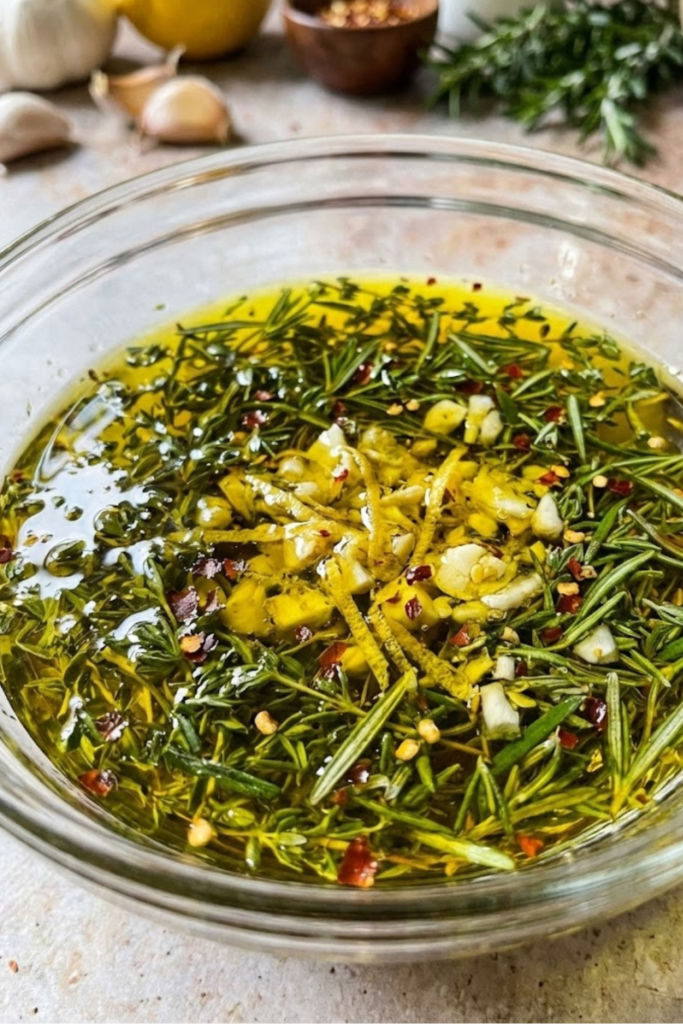
I used to spend a fortune on those bottled marinades from the grocery store. You know the ones—they are loaded with sugar and ingredients I can’t even pronounce. One day, I ran out and had to improvise with what I had in my pantry. That is when I realized that making your own marinade for chicken thighs with olive oil is actually cheaper, healthier, and tastes way better.
You don’t need to be a chemist to figure this out. The olive oil acts as the vehicle. It grabs onto all those spices and herbs and delivers them right into the meat. If you just sprinkle spices on dry chicken, they might burn or fall off. But when you mix them into the oil? That flavor sticks.
Keeping It Simple
On a busy Tuesday night after grading papers, I am not trying to be a gourmet chef. I just want food on the table. My go-to mix is what I call the “Holy Trinity” of seasoning: Kosher salt, cracked black pepper, and garlic powder.
Please, do not use table salt. It’s too salty and has a weird metallic taste. Kosher salt has bigger flakes and it dissolves into the chicken perfectly. I mix these three things into a small bowl of olive oil and whisk it with a fork. Then I rub it all over the chicken. It sounds boring, but the garlic powder gets nice and toasty in the oven, and the salt makes the chicken taste more like… chicken. It works every time.
The Lemon Warning
I went through a phase where I wanted everything to taste like a Greek vacation. I started drowning my chicken in lemon juice hours before cooking. Big mistake. Here is a tip I learned the hard way: acid cooks meat.
If you leave lemon juice on raw chicken for too long, the texture gets mushy and chalky. It’s not pleasant. Now, if I want that citrus flavor, I use the zest (the yellow skin) of the lemon in the marinade. It has all the essential oils and perfume without the strong acid. If I really want the sour kick, I squeeze a fresh lemon over the thighs after they come out of the oven. It keeps the flavor bright and the meat texture perfect.
How Long Should It Sit?
There is a lot of debate about this. Some people say you have to marinate overnight. Honestly? I rarely plan that far ahead. Chicken thighs are not as thick or dense as a roast beef. They soak up flavor pretty fast.
I usually toss the chicken in the oil and herb mix right before I turn the oven on. By the time the oven heats up to 400 degrees (which takes about 20 minutes in my old stove), the chicken is ready to go. If you have the time to let it sit for an hour in the fridge, great. It might be a little more flavorful. But don’t stress if you only have 15 minutes. The high heat and the olive oil will do most of the work for you.
Mastering the Bake: Oven Temperature and Timing
I used to think that “low and slow” was the golden rule for cooking all meat. For years, I set my oven to 350 degrees because that is what my mom always did for her casseroles. But every time I tried to roast chicken thighs at that temperature, the results were disappointing. The meat was cooked, sure, but the skin looked pale, sad, and rubbery. It was chewy in a bad way.
I finally learned that to get that restaurant-quality crunch, you need heat. Real heat. You have to get comfortable cranking that dial up, even if it feels a little scary at first.
Finding the Sweet Spot
After ruining a few Sunday dinners with soggy chicken, I experimented and found the magic number: 400 degrees Fahrenheit (about 200 degrees Celsius).
At 400 degrees, the heat is intense enough to blister the skin and render out the fat quickly. This “frying” action is what gives you the crunch. If you cook it lower, the fat just slowly melts and makes everything greasy. At 400, I can usually put the chicken in and walk away for 35 to 40 minutes. It gives me just enough time to help my kid with a math problem or wash the prep bowls before the timer goes off.
Give Them Personal Space
Here is a mistake I made constantly in my early cooking days. I would try to jam an entire family pack of thighs onto one small cookie sheet. They were packed in there tight, shoulder to shoulder, with no room to breathe.
When you crowd the pan like that, the heat cannot circulate around the meat. Instead of roasting, the chicken steams in its own juices. You end up with grey, wet skin that slides right off the bone. Gross. Now, I make sure to give them space. I pretend they are students in detention—keep them separated! If they aren’t touching, the hot air can get to the sides and crisp up every inch. If you have too much chicken, just use two pans. It is worth the extra dishwashing to avoid soggy food.
The Cast Iron Trick
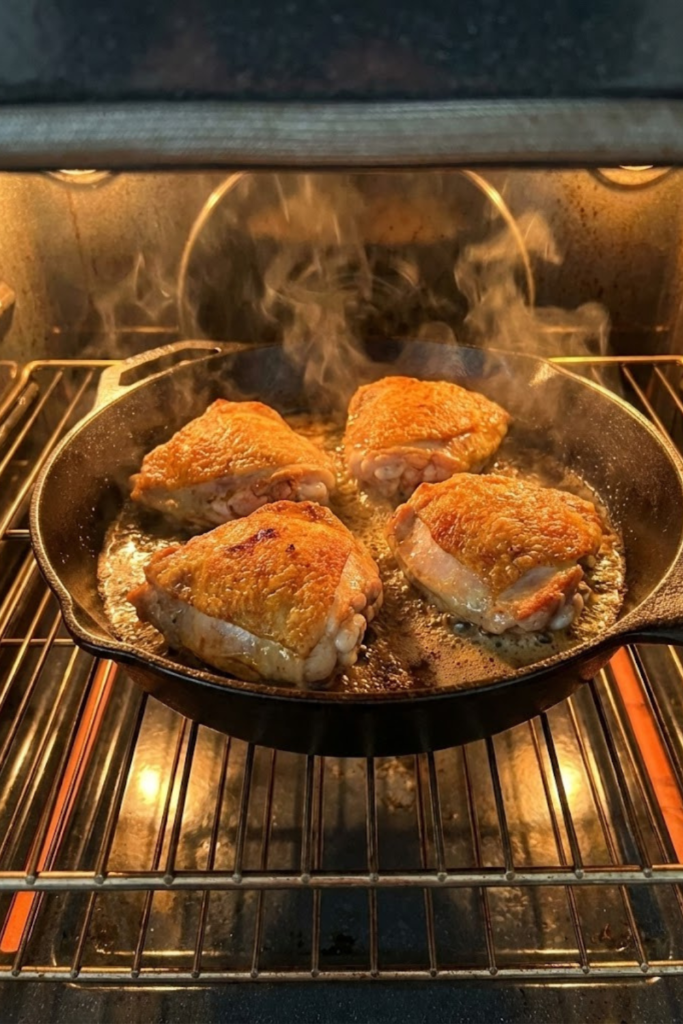
If you own a heavy cast iron skillet, this is its time to shine. I love using mine for chicken thighs with olive oil. I start the chicken skin-side down on the stove burner for just 3 or 4 minutes until it gets a little golden. Then, I flip it over and shove the whole heavy pan straight into the hot oven.
The thick iron holds heat way better than a thin baking sheet. It cooks the thighs from the bottom up while the oven air cooks the top. This means the bottom of the chicken gets crispy too, not just the top skin. It’s a game changer.
Throw Away the Clock
Well, not literally. But please, buy a cheap meat thermometer. I used to cut into the chicken with a knife to check if it was done, but that just lets all the delicious juice run out.
For dark meat like thighs, the rules are a little different than for breasts. While 165 degrees is technically safe to eat, I actually let my thighs get to 175 degrees. Dark meat has more connective tissue. At the higher temperature, that tissue breaks down and melts, making the meat incredibly tender. It won’t dry out like a breast would. Trust me, waiting for that higher number results in meat that pulls right off the bone.
Serving Suggestions and Storing Leftovers
Getting the main dish on the table is a huge victory in my house. But I used to have this problem where I would pull these beautiful, golden chicken thighs with olive oil out of the oven, and then realize I had nothing to go with them. A lonely piece of chicken on a big white plate looks a little sad, doesn’t it?
Over the years, I have figured out a few tricks to make this a complete meal without creating a mountain of dirty dishes. Because let’s be real, nobody wants to wash pots and pans until midnight on a school night.
The Potato Trick
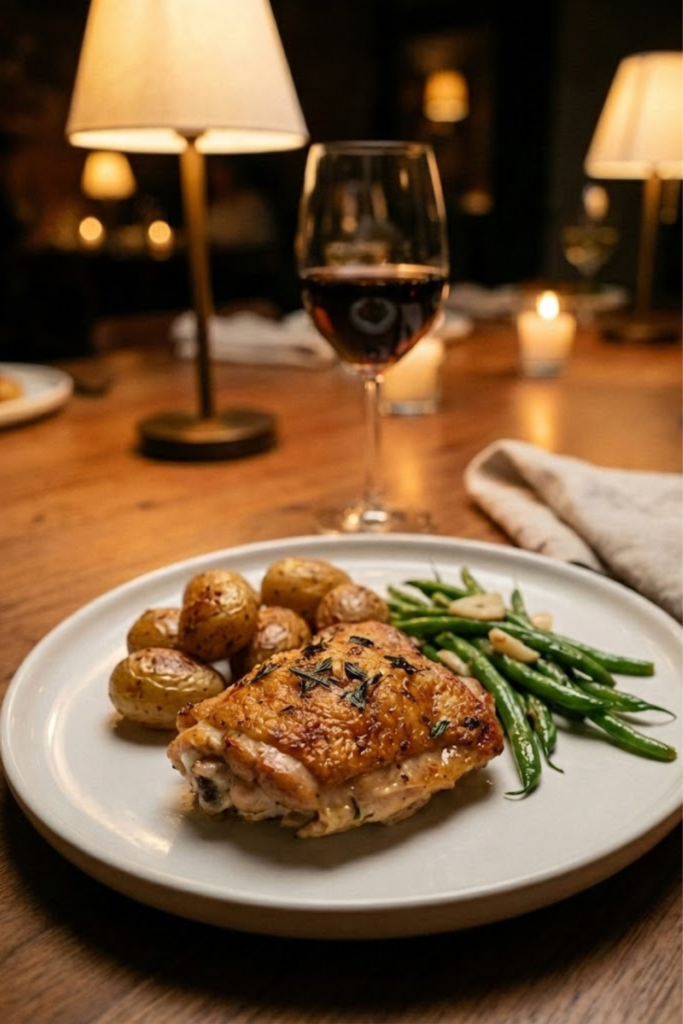
Since your oven is already blasting away at 400 degrees, you should put that heat to good use. My absolute favorite thing to serve with this is roasted potatoes. I cut up some red potatoes into chunks, toss them in the same bowl I used for the chicken marinade (why waste that flavor?), and throw them on a separate sheet pan.
They take about the same amount of time to cook as the bone-in thighs. So, I put them in together and take them out together. It is effortless. If I am feeling healthy, I might toss some asparagus or broccoli on the tray for the last 15 minutes. Just don’t put the veggies in too early or they turn into mush.
Don’t Waste the Juice
When you take the chicken out of the pan, do not—I repeat, do not—throw away that liquid at the bottom. My husband calls it “liquid gold.” It is a mix of the olive oil, chicken fat, and all the spices you used.
I like to spoon a little bit of it over the chicken right before I serve it. It makes the meat look shiny and adds a huge punch of flavor. If you cooked potatoes or rice, pour some of that drippings over them too. It is better than any gravy you can buy in a jar.
The Microwave Ban
We need to have a serious talk about leftovers. I usually cook a double batch so I don’t have to cook the next night. But the microwave is the enemy of crispy skin. If you zap that beautiful thigh for two minutes, the skin turns into a wet, rubbery mess. It is heartbreaking.
If you want to eat the leftovers hot, use your toaster oven or an air fryer. I pop them in the air fryer at 350 degrees for about 5 minutes. The skin sizzles up again and gets crunchy, almost like it was freshly fried. If you don’t have those gadgets, just stick it back in the regular oven for 10 minutes. It is worth the wait.
Lunch the Next Day
Sometimes, I don’t even bother heating it up. Cold chicken thigh meat is actually really good. I shred the meat off the bone and toss it into a salad for my lunch break at school. The olive oil from the cooking process stays on the meat, so you barely even need salad dressing. It saves me from buying that expensive cafeteria food, and it tastes way better too. Just make sure you store the chicken in an airtight container in the fridge; it stays good for about 3 to 4 days.
Well, we made it to the end. I really hope you are feeling a little more brave about cooking chicken thighs with olive oil now. I know I used to look at those packages of raw meat and just feel tired. But honestly, this recipe has saved my sanity more times than I can count. It is one of those meals that tastes like you spent hours in the kitchen, but really you just threw it in the oven and graded papers for 30 minutes while the magic happened.
If you take anything away from this whole guide, please let it be the paper towel rule. I cannot stress it enough. If that skin is wet, it will never get crispy. It will just be sad and soggy. So pat it dry! Take the extra thirty seconds to do it right. And don’t be stingy with the salt. A big pinch of kosher salt makes all the difference in the world between bland food and something that tastes amazing.
Also, trust the olive oil. I know we are told that it burns easily, but in this case, it is your best friend. It gives you that golden crunch that makes everyone fight over the last piece. My kids used to pick the skin off and leave it on the plate. Now? They eat that part first. That is a huge win in my book.
And think about the smell. There is nothing better than walking into a house that smells like roasting garlic and herbs. It just feels like home. It makes the whole house feel warm and cozy, especially on a cold winter night. It convinces everyone that you are a master chef, even if you are just trying to get through the week like the rest of us.
Cooking doesn’t have to be perfect. I have burned plenty of things and set off the smoke detector more than I care to admit. But this dish is forgiving. Even if you leave it in a few minutes too long, those thighs will still be juicy because of the bone. So give yourself a break and give this a try tonight.
If you found this helpful, do me a huge favor. Pin this recipe to your Dinner Ideas board on Pinterest. It helps you find it later when you are standing in the grocery store wondering what to make, and it helps other people find my little corner of the internet. Happy cooking, everyone!