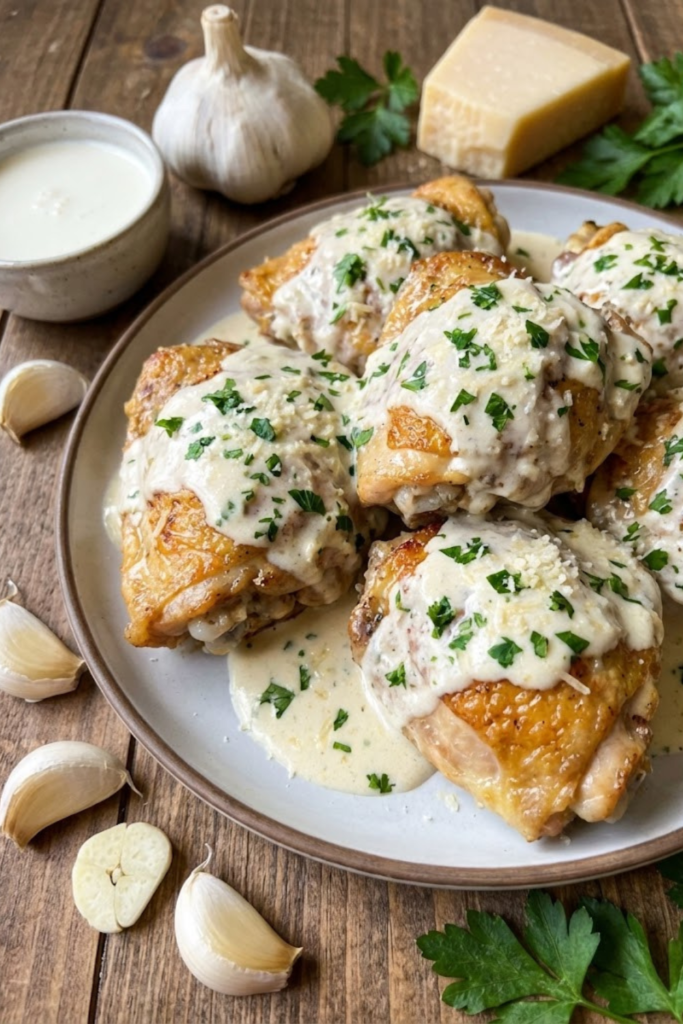
Do you know that dark meat chicken, like thighs, contains significantly more iron and zinc than chicken breasts? It’s true! That’s just one reason I am absolutely obsessed with this dish. There is something magical about the sound of chicken skin crisping up in a hot skillet—it’s pure music to my ears! We aren’t just making dinner tonight; we are creating a masterpiece. This chicken thighs with white sauce recipe is a total game-changer for busy weeknights. It’s rich, it’s savory, and honestly? It’s a warm hug on a plate. Let’s dive right into this creamy deliciousness!
Choosing the Best Chicken Thighs for Skillet Meals
You might think chicken is just chicken, but let me tell you, that is definitely not the case. I used to buy whatever was on sale or whatever looked easiest to cook, usually those pale chicken breasts. But after years of feeding a hungry family and trying to keep things interesting on a budget, I’ve learned that the type of meat you buy makes or breaks this dish. When we are making chicken thighs with white sauce, the goal is flavor, and that starts way before you turn on the stove. We want juicy meat and that satisfying crunch, and you can’t get that if you pick the wrong pack at the store.
Bone-In vs. Boneless: The Real Difference
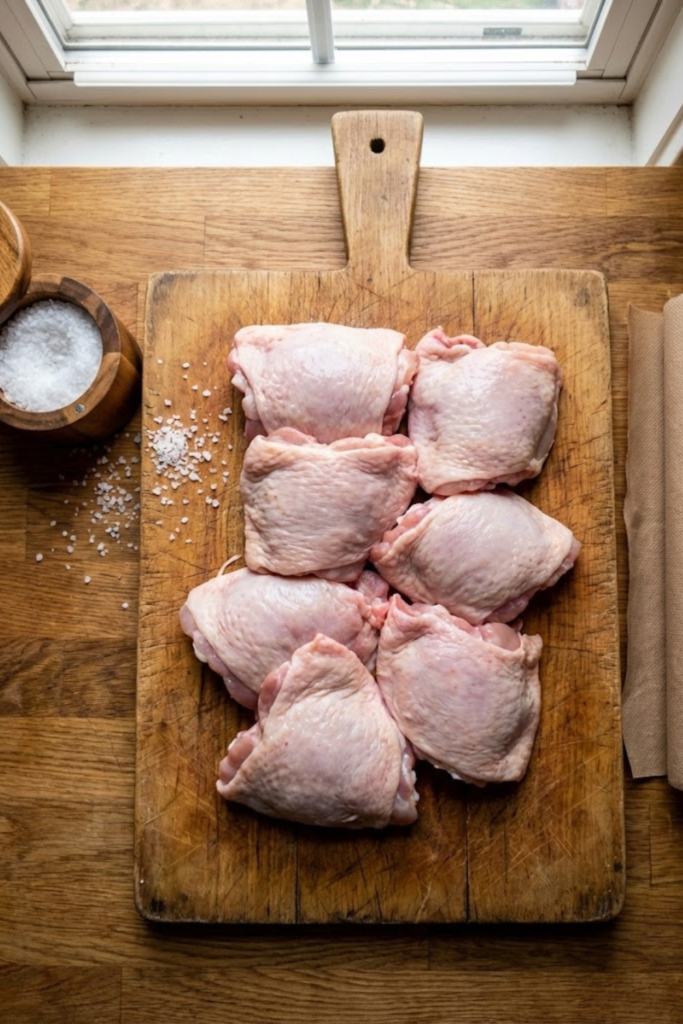
I get asked this a lot: “Can I just use boneless skinless thighs?” You can, but I really don’t recommend it for this specific recipe. Here is why. Bone-in, skin-on chicken thighs are the gold standard for skillet meals. The bone helps the meat cook evenly and keeps it from drying out while it sits in the pan.
But the real star here is the skin. When you sear that skin in the hot pan, it releases fat that flavors the whole dish. That rendered fat is what we use to cook the garlic and onions later. If you use skinless thighs, you have to add more oil or butter, and it just doesn’t taste the same. Plus, biting into that crispy, salty skin with the creamy sauce? It is the best part. If you are in a huge rush, boneless works, but you will miss out on the texture.
How to Pick the Fresh Stuff
I’m a teacher, so I like to grade things, even my groceries. When you are standing in the meat aisle, don’t just grab the top package. Look at the color. You want the meat to have a nice pinkish hue. If it looks gray or dull, put it back. The fat should be white or creamy, not yellow.
Also, check the package for liquid. If the chicken is swimming in a lot of pink water, it usually means it’s been sitting there a while or it was pumped full of saline solution. I try to find “air-chilled” chicken if it’s on sale because it browns better, but regular works fine too. Just trust your eyes. If it looks sad in the package, it won’t look happy on your plate.
The Paper Towel Trick
Once you get that chicken home, there is one step you absolutely cannot skip. You have to dry it off. I know it sounds like an extra step, but listen to me. If you put wet chicken into a hot pan, it steams instead of searing. You won’t get that golden-brown color; you’ll just get gray, rubbery skin.
I take a few paper towels and pat down each thigh really well on both sides. You want the skin to feel dry to the touch. This helps the salt and pepper stick better and guarantees that when it hits the heat, it crisps up immediately. It takes two minutes, but it makes a huge difference in the final result.
Essential Ingredients for the Creamy Garlic Sauce
You can cook the chicken perfectly, but if the sauce is bland or breaks, the whole dinner is kind of a flop. I’ve made this sauce a hundred times, and I’ve learned exactly what works and what turns into a watery mess. We want a rich, velvety white sauce that coats the back of a spoon, not something that looks like skim milk. When you are standing in the grocery store, it is tempting to grab shortcuts, but a few specific choices here make all the difference between an okay dinner and a great one.
Why Heavy Cream Wins Every Time
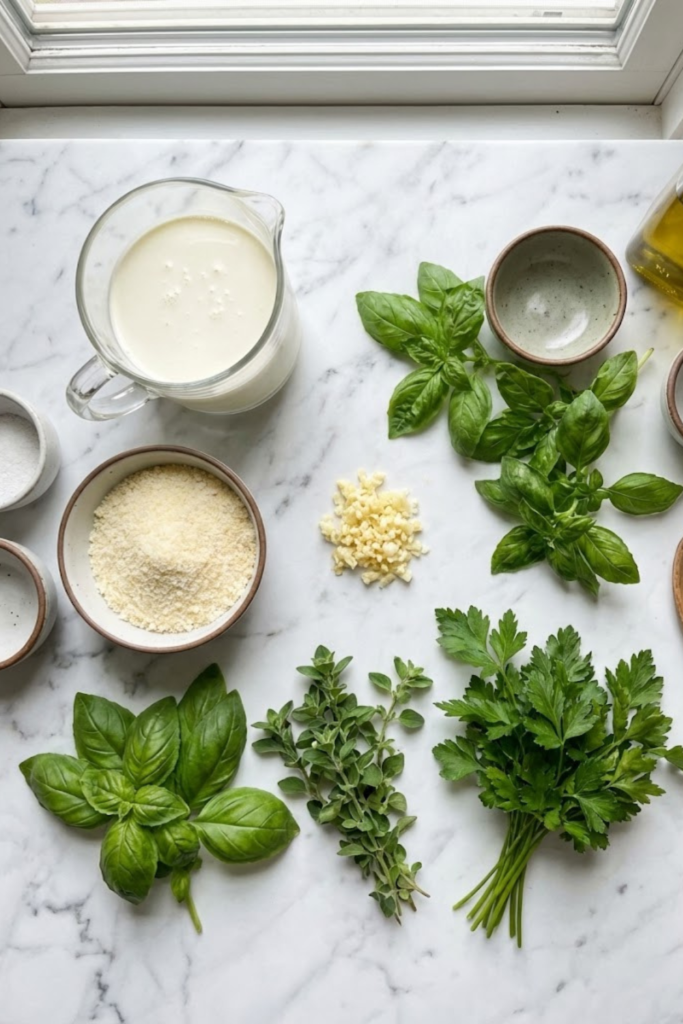
I know, I know. We all want to be a little healthier. But when you are making chicken thighs with white sauce, you really need to reach for the heavy whipping cream. I have tried using half-and-half, and even whole milk thickened with flour, but it just is not the same. Heavy cream reduces down into this luxurious, thick sauce that holds up to the heat without needing a roux. If you use milk, it might curdle when it hits the hot pan or interacts with the acidity from the wine or lemon later, and nobody wants a grainy sauce. It’s one meal—live a little and buy the heavy stuff.
The Garlic and Onion Base
For the aromatics, I stick to the basics: yellow onion and fresh garlic. A lot of people try to use garlic powder here to save time. While I love garlic powder for a dry rub on the meat itself, you need the actual minced cloves to build the flavor foundation in the pan. I usually use about four or five cloves. My rule is: if the recipe says two, I double it. We are garlic people in this house. You want to sauté them in the rendered chicken fat until they are soft and smelling amazing. That smell is usually when my kids come running into the kitchen asking when dinner is ready.
Please Grate Your Own Cheese
This is the one thing I will nag you about. Do not buy the pre-shredded cheese in the bag for this recipe. Those bags have potato starch or cellulose on the cheese to keep the strands from sticking together in the package. That stuff stops the cheese from melting smoothly in your sauce. You end up with a gloopy, stringy texture instead of a smooth cream sauce. Buy a wedge of parmesan and grate it yourself right before you cook. It takes two minutes, melts instantly, and tastes way fresher than the plastic-tasting stuff in the bag.
Keeping the Seasoning Simple
You don’t need a fancy spice cabinet for this. I use kosher salt, cracked black pepper, and a good Italian seasoning blend. The Italian seasoning usually has dried basil, oregano, and thyme, which pairs perfectly with the cream. I prefer kosher salt over table salt because it’s easier to control how salty things get. Sometimes I add a pinch of red pepper flakes if I want a little kick, but that’s totally optional if you have picky eaters.
Step-by-Step Instructions for Pan-Seared Chicken
Now for the fun part. This is where you really feel like a chef. You don’t need a culinary degree to pull this off, just a little patience. I used to rush this part and end up with soggy skin or burnt garlic, so follow these steps carefully. We are building layers of flavor here, and it is easier than it looks.
Getting that Perfect Sear
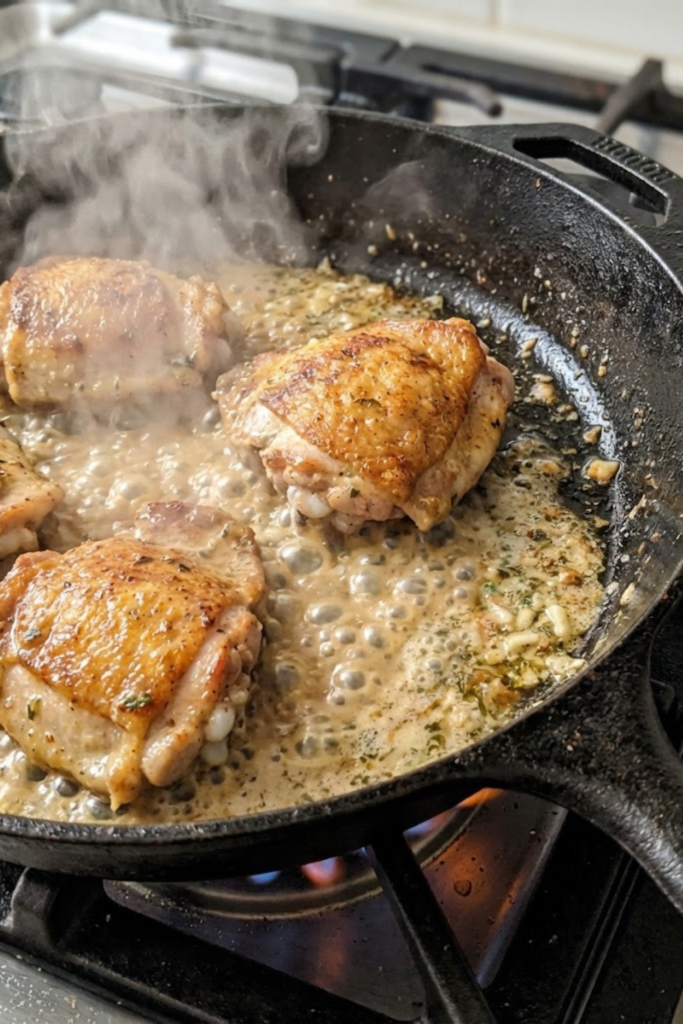
First things first, grab your biggest skillet. Cast iron is my favorite because it holds heat really well, but a good stainless steel pan works too. Heat a splash of olive oil over medium-high heat. You want it hot enough that the oil shimmers. Place your chicken thighs skin-side down in the pan.
Here is the hardest part: do not touch it. Seriously. Leave it alone for about 5 to 6 minutes. If you try to flip it too early, the skin will stick to the pan and tear off. You want the skin to release naturally. You’ll know it’s ready to flip when it’s deep golden brown and crispy, kinda like a potato chip. Flip it over and cook for another few minutes just to seal the other side, then take the chicken out and set it on a plate. It won’t be cooked all the way through yet, but don’t worry, we finish it in the sauce.
Scrape Up the Brown Bits
Look at the bottom of your pan. See those brown sticky bits stuck to the metal? That is called “fond,” and it is pure flavor gold. Don’t wash the pan! If there is too much grease, you can pour a little out, but leave about a tablespoon of the rendered fat. Toss in your onions and cook them until they are soft.
This is where I like to “deglaze” the pan. Pour in a little chicken broth or a splash of dry white wine if you have it open. As the liquid bubbles, take a wooden spoon and scrape those brown bits up so they mix into the liquid. It smells incredible. Add your garlic now so it doesn’t burn. Burnt garlic tastes bitter and can ruin the whole dish, so I only cook it for about 30 seconds until it’s fragrant.
Simmering to Perfection
Now, lower the heat to medium-low. Pour in your heavy cream and stir in the parmesan cheese and Italian seasoning. Let it bubble gently. It should start to look slightly thicker. Nestle those crispy chicken thighs back into the pan, skin-side up. You want the skin to stay above the sauce so it stays crunchy.
Let everything simmer together for about 10 to 15 minutes. This finishes cooking the chicken and lets the sauce thicken up. I always use a meat thermometer to check. You want the thickest part of the meat to hit 165°F. If the sauce gets too thick, just add a splash more broth. If it’s too thin, let it bubble a bit longer. Once it is done, garnish with fresh parsley and serve it hot!
Serving Suggestions and Side Dish Pairings
You have this beautiful skillet of chicken thighs with white sauce ready to go, but now you need to figure out what to put next to it. Since the sauce is the main event here, you really need to pick sides that act as a vehicle for all that creamy garlic goodness. Honestly, my family would probably drink the sauce with a straw if I let them, but serving it over a solid starch is the socially acceptable way to do it.
The Starch Situation: Potatoes or Noodles?
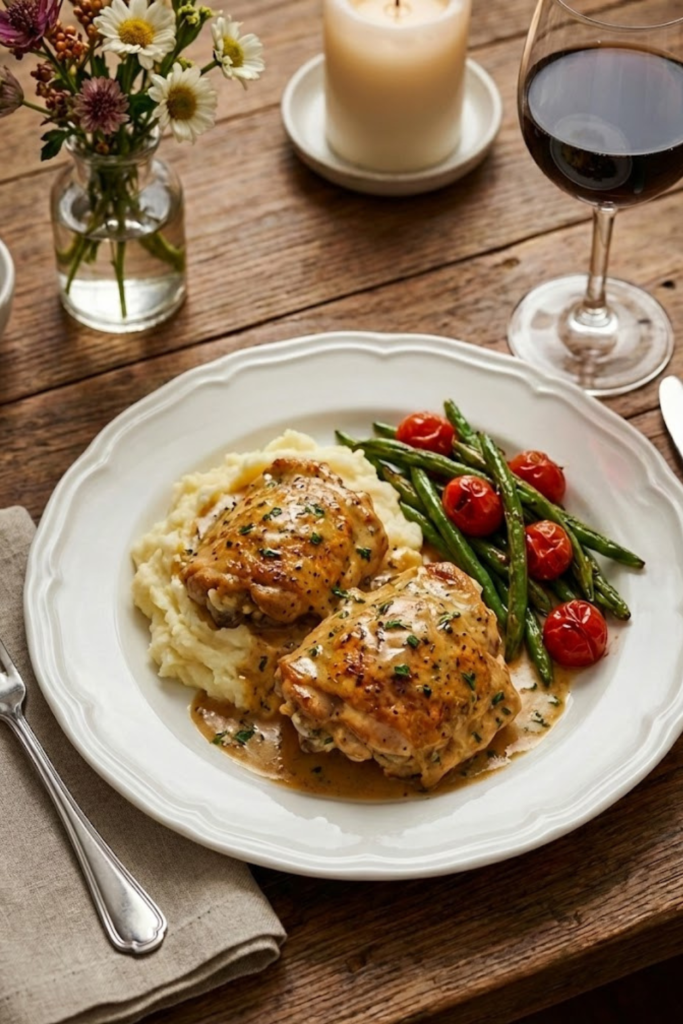
For me, mashed potatoes are the undisputed champion for this meal. There is just something about creamy potatoes mixing with that parmesan sauce that feels like a warm hug. I usually whip up a quick batch of red-skin mashed potatoes—I leave the skins on because I’m a little lazy and I like the texture. When you spoon that extra sauce over the potatoes? Oh man, it is incredible.
If potatoes aren’t your thing, or you don’t feel like boiling water, egg noodles are a fantastic runner-up. They have those little ridges that catch the sauce really well. I just toss them with a little butter and parsley so they don’t stick, and then pile the chicken right on top. Jasmine rice works too, especially if you want to soak up every last drop, but noodles or potatoes definitely feel more like “comfort food” to me.
Getting Your Greens In
Since the chicken and sauce are pretty rich (thanks to that heavy cream), I always try to serve something green and fresh to balance it out. You need a little crunch to cut through the creaminess. My go-to is roasted green beans. I just toss fresh green beans on a sheet pan with olive oil, salt, and pepper, and roast them in the oven while the chicken simmers on the stove. They get a little crispy and sweet.
Asparagus is another great option, especially in the spring. If I’m really pressed for time, I’ll just steam some broccoli in the microwave. I know, it’s not fancy, but the white sauce makes plain broccoli taste amazing. My youngest actually eats his veggies this way, so I count that as a major win.
Keeping It Light
I know a lot of us are watching what we eat these days. If you are doing low-carb or keto, this chicken recipe is actually perfect for you because it’s high in protein and healthy fats. You just have to swap out the pasta. Zucchini noodles (zoodles) are surprisingly good here. If you cook them quickly so they stay crunchy, they add a nice freshness.
Cauliflower rice is another easy swap. I buy the frozen bags that you can steam right in the microwave. It doesn’t have a ton of flavor on its own, but once it mixes with the garlic and rendered chicken fat, you won’t even miss the real rice. It’s a great way to enjoy the meal without feeling too heavy afterward.
Storage and Reheating Tips for Leftovers
Let’s be real, leftovers are the best part of cooking a big meal. Having lunch ready for the next day without lifting a finger? Yes, please. But when you are dealing with chicken thighs with white sauce, you have to be a little careful. Cream-based sauces are a bit temperamental. They like to separate or get oily if you treat them mean. I have learned the hard way that you can’t just blast this in the microwave for two minutes and expect it to taste like it did fresh out of the pan. If you store it right, though, I honestly think the flavors get a little better the next day because the garlic has time to really soak into the meat.
Storing it Safely
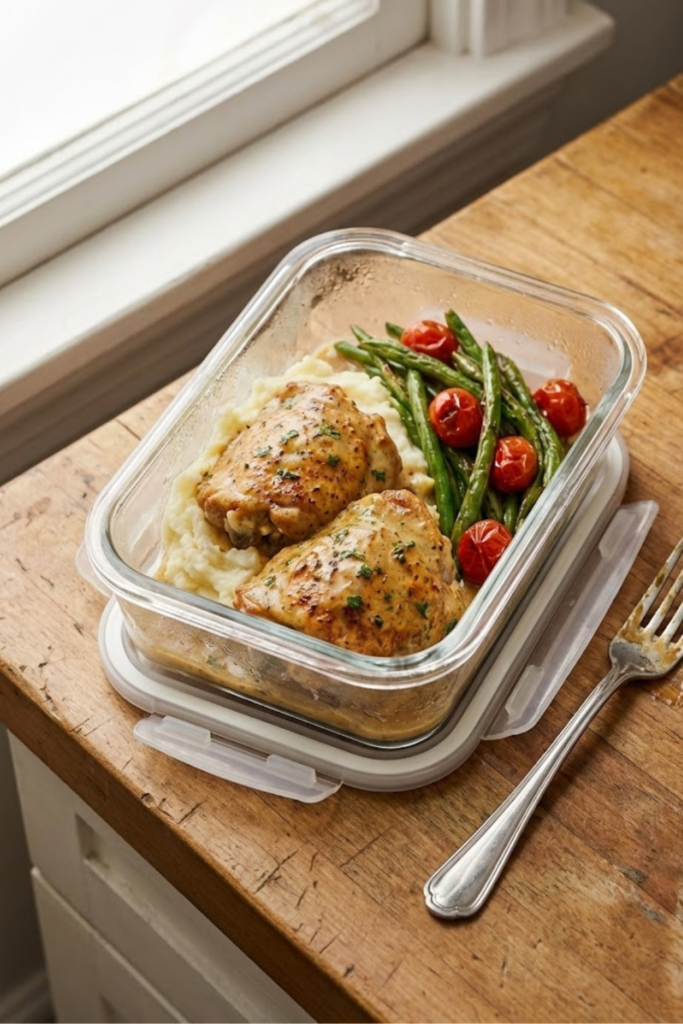
First off, don’t let the chicken sit out on the counter all night. I know, you get full and tired, and doing dishes is the last thing you want to do. But for safety—and flavor—get it in the fridge within two hours. You want to let it cool down a bit before you put the lid on, though. If you seal it while it’s steaming hot, water drips from the lid back into your sauce and waters it down.
I use those glass containers with the snap-on lids. Plastic works too, but sometimes the garlic smell sticks to it forever, and nobody wants their brownie to taste like garlic next week. You can keep this in the fridge for about 3 to 4 days. After that, it gets a little sketchy, and I usually toss it. Better safe than sorry, right?
The Right Way to Reheat
Okay, here is where most people mess up. If you put this in the microwave on high, the oil is going to separate from the cream, and you will end up with a greasy, curdled mess. It is edible, but it is not pretty. The best way to reheat this is back on the stovetop. I grab a small skillet or saucepan and put the chicken and sauce in there over low heat.
Because the sauce thickens up a lot in the fridge (it basically turns into a solid), you usually need to add a splash of liquid to loosen it up. A tablespoon of chicken broth or even a little water works wonders. Stir it gently while it warms up. It takes about five minutes, but it brings the sauce back to that creamy, smooth texture you had the night before. If you must use the microwave, do it in 30-second bursts and stir in between. And maybe cover it so it doesn’t splatter all over the inside of your microwave.
A Note on Freezing
I get asked this alot, especially for meal prep. Technically, yes, you can freeze it. But honestly? I wouldn’t do it. Cream sauces and freezers are not best friends. When the sauce thaws out, the water and fat tend to separate, and it gets this weird, grainy texture. It still tastes fine, but the texture is just off. If you really want to freeze it, maybe freeze just the cooked chicken and make a fresh batch of sauce when you are ready to eat. It takes a little more time, but your tastebuds will thank you.
Why This Recipe is a Keeper
We have covered a lot of ground today, from picking out the perfect pack of chicken at the store to reheating your leftovers so they don’t turn into a greasy mess. I truly believe that cooking shouldn’t be stressful. We all have enough stress with work, kids, and just trying to keep the house from falling apart. That is why I love this chicken thighs with white sauce recipe so much. It feels fancy and special, like something you would order at a nice restaurant, but you can make it in your pajamas on a Tuesday night.
The Perfect Weeknight Solution
I know how hard it is to get dinner on the table when you are tired. There are nights when I just want to order pizza and call it a day. But making this dish is honestly therapeutic for me. Smelling the garlic and onions sizzling in the pan, watching the cream bubble up—it helps me unwind. Plus, seeing my family actually sit down and eat without complaining? That is the best reward.
This meal checks all the boxes. It is fast, taking less than 30 minutes once you get the hang of it. It is filling, so you don’t need to make three different side dishes to keep everyone happy. And it is budget-friendly. Chicken thighs are usually way cheaper than breasts or steak, so you can feed a whole crew without breaking the bank.
Confidence in the Kitchen
I hope this guide gave you the confidence to try something new. A lot of people are intimidated by cooking with stainless steel or cast iron, or they are scared of making a homemade cream sauce. But as you can see, it is really just a few simple steps. You sear the meat, you sauté the veggies, you simmer the sauce. That’s it.
Once you master this technique, you can use it for anything. Swap the chicken for pork chops. Add mushrooms or spinach to the sauce. Use rosemary instead of Italian seasoning. Cooking is like teaching—you learn the basics, and then you figure out your own style. Don’t be afraid to mess up. Even if the skin isn’t perfectly crispy or the sauce is a little thin, it is still going to taste delicious because you made it with good ingredients.
Save It for Later
If you stuck with me this far, thank you! I love sharing these recipes with you. If you plan on making this, do me a huge favor and save it. Pin this recipe on Pinterest! It helps me out a ton, and it makes it way easier for you to find it next time you are standing in the grocery store wondering what to make for dinner. Just click the little “P” button and add it to your “Weeknight Dinners” board. Let me know in the comments how it turned out for you—I love hearing your stories!