I’ll never forget the first time I tried to make chicken thighs with Dijon sauce for a dinner party; I was so nervous about undercooking the meat that I dried it out completely, but after plenty of trial and error, I’ve realized the secret is really just patience and a good hot pan. It’s funny how we think we need fancy ingredients to make a 5-star meal, but honestly, some cheap bone-in thighs and a jar of mustard are all you need to create some serious magic in the kitchen. I prefer using a cast-iron skillet because it holds heat like a champ, and let’s be real, scraping up those browned bits—or fond, as chefs call it—is the best part of making the sauce. This recipe is a lifesaver for busy weeknights in 2026 because it feels special but comes together in like 30 minutes, and trust me, that creamy, tangy sauce is going to have you licking your plate clean.
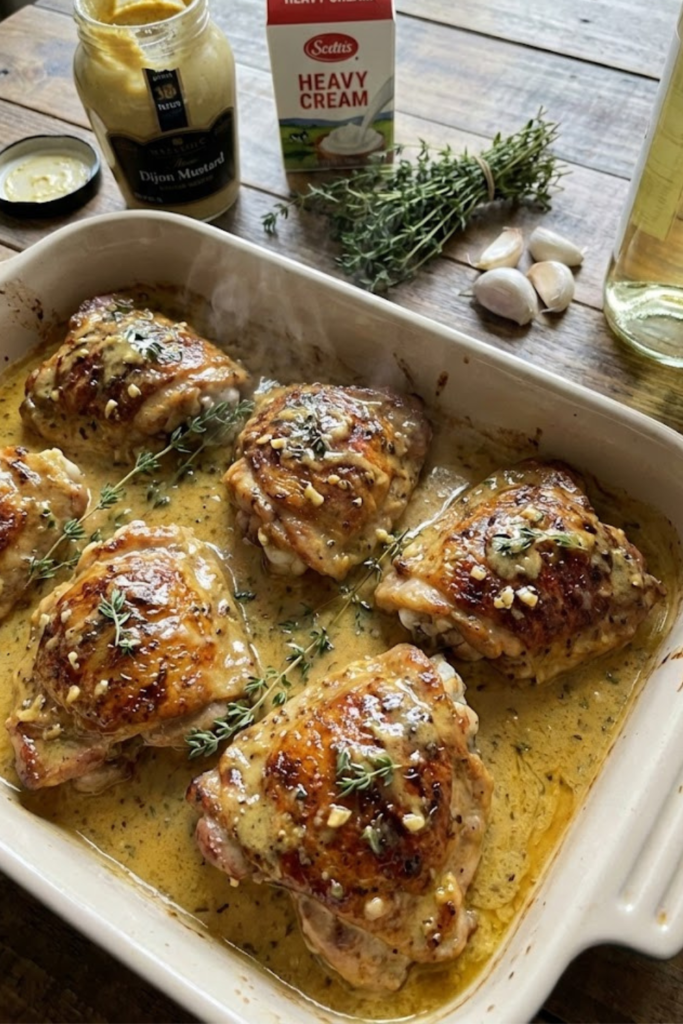
Why Bone-In Skin-On Chicken Thighs Are the MVP
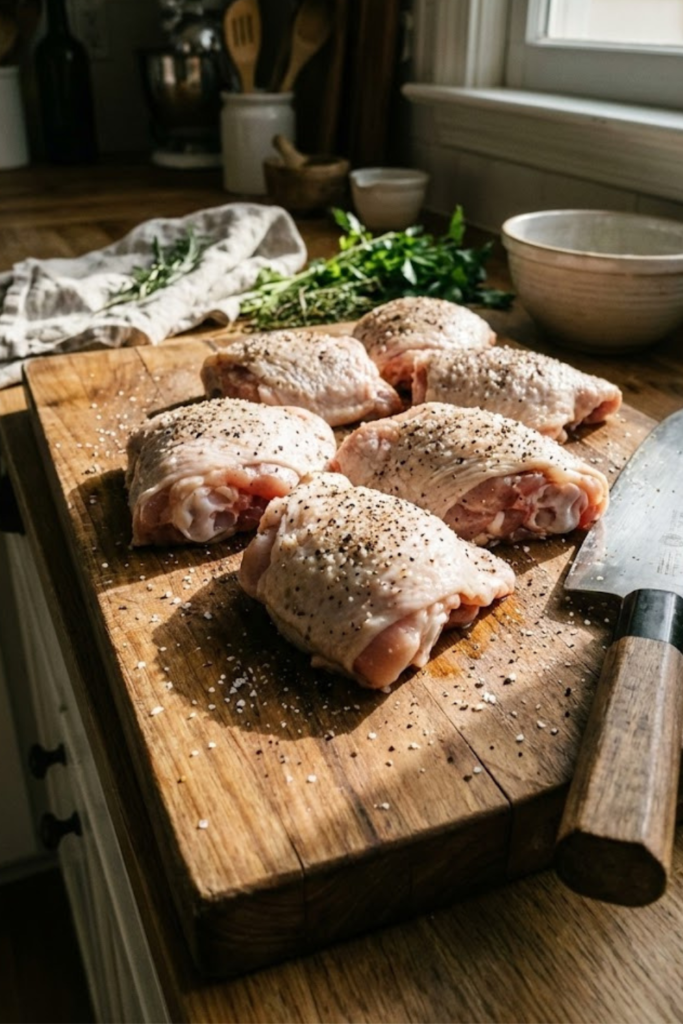
I used to be one of those people who only bought boneless, skinless chicken breasts because I thought they were “healthier” or easier to deal with. Boy, was I wrong. If you are still stuck buying those expensive packs of white meat, we really need to have a talk! The thing about chicken thighs—specifically the ones with the bone and skin still on—is that they just have way more flavor. It’s almost impossible to dry them out. The bone actually helps keep the meat juicy while it cooks, so you don’t end up with that sad, chewy texture that happens so fast with breasts.
Plus, let’s be real for a second—they are usually a lot cheaper at the grocery store. I can feed my whole family for way less money using thighs, which is a huge win these days with food prices going up. And the skin? That is the best part. When you sear it right in a hot pan, it gets super crispy, almost like a potato chip. You just can’t get that kind of crunch with a skinless cut. So yeah, you save some cash and get better flavor; it’s pretty much a no-brainer for me now.
Ingredients for the Perfect Creamy Dijon Sauce
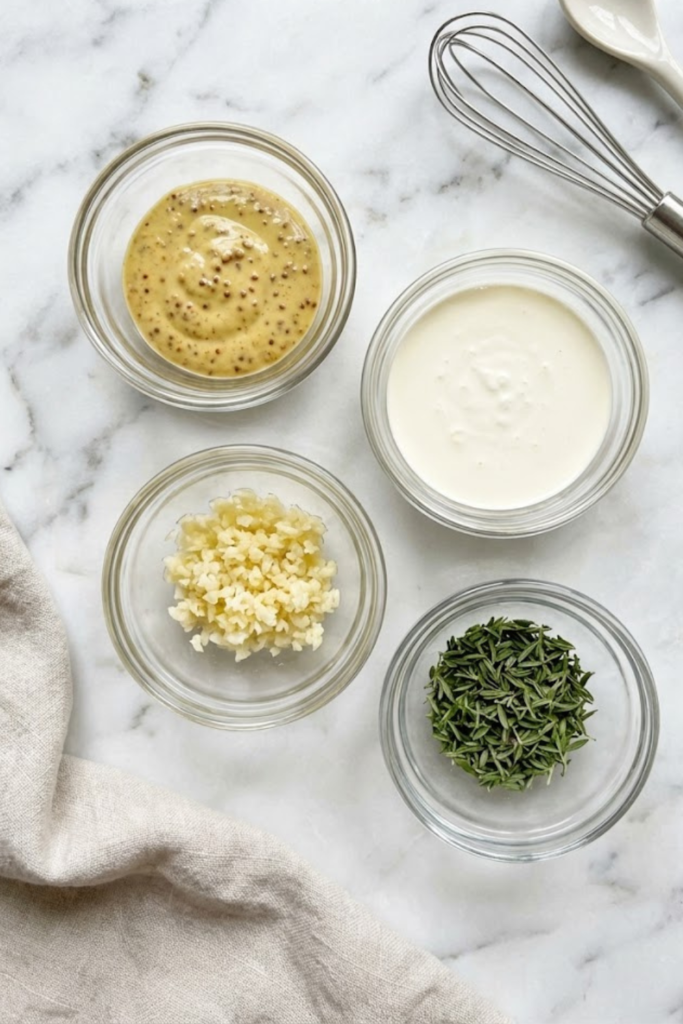
You might look at the sauce in the pictures and think it takes a chef to make it, but honestly, you can find everything you need at the regular grocery store. I used to think I needed expensive ingredients to make food taste good, but that is so not true. The most important part here is obviously the mustard. I like to use two kinds if I have them—smooth Dijon for that strong kick and the grainy mustard because it adds a nice texture. If you only have the smooth kind, that’s totally fine too.
Please, whatever you do, don’t try to swap the heavy cream for milk. I tried that once because I was trying to cut calories, and the sauce just turned out watery and split apart. It was a mess. You need the heavy cream or even crème fraîche so it gets thick and glossy. Also, I use shallots instead of regular onions. They are a bit sweeter and not as harsh, which goes really well with the white wine. If you don’t drink alcohol, just use a little chicken broth and a squeeze of lemon juice to cut through all that richness. It really balances everything out so it doesn’t feel too heavy.
Step-by-Step: Searing the Chicken to Perfection
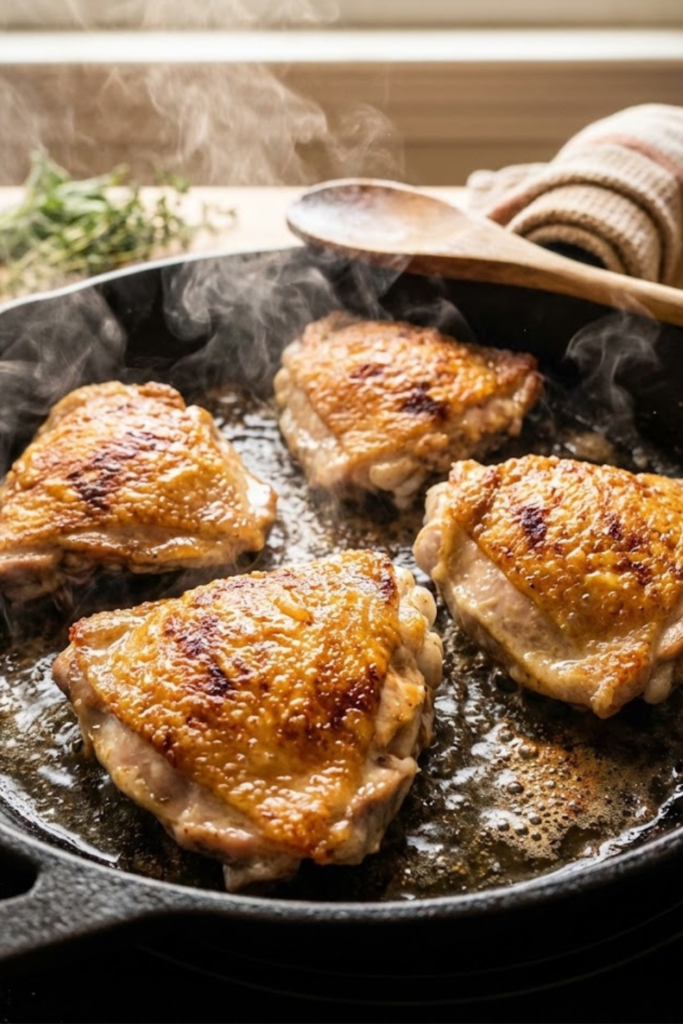
I used to ruin dinner constantly by throwing my chicken into a thin, flimsy pan. The heat would go crazy, burning the outside while the inside stayed raw. Now, I always grab my heavy cast-iron skillet or a stainless steel pan with a thick bottom. It just holds the heat better. You want to get the pan hot first, but then turn it down a bit once the chicken goes in. It’s all about cooking it slowly enough so that the fat under the skin melts away—chefs call this rendering. If you rush it with high heat, the skin gets chewy and rubbery, and nobody wants that.
This was the hardest lesson for me to learn: stop poking the meat! When you put the chicken skin-side down, you have to leave it alone. Seriously, don’t try to lift it to check. If it sticks to the pan, it’s not ready yet. It will release on its own when it’s perfectly crispy and golden. I usually let it go for about 10 to 12 minutes on just the skin side. For the temperature, I know the safety guides say 165°F is safe, but I actually like taking my thighs closer to 175°F. Unlike breasts, they don’t dry out at that temp; the meat actually gets more tender and falls off the bone better.
Mastering the Pan Sauce Technique
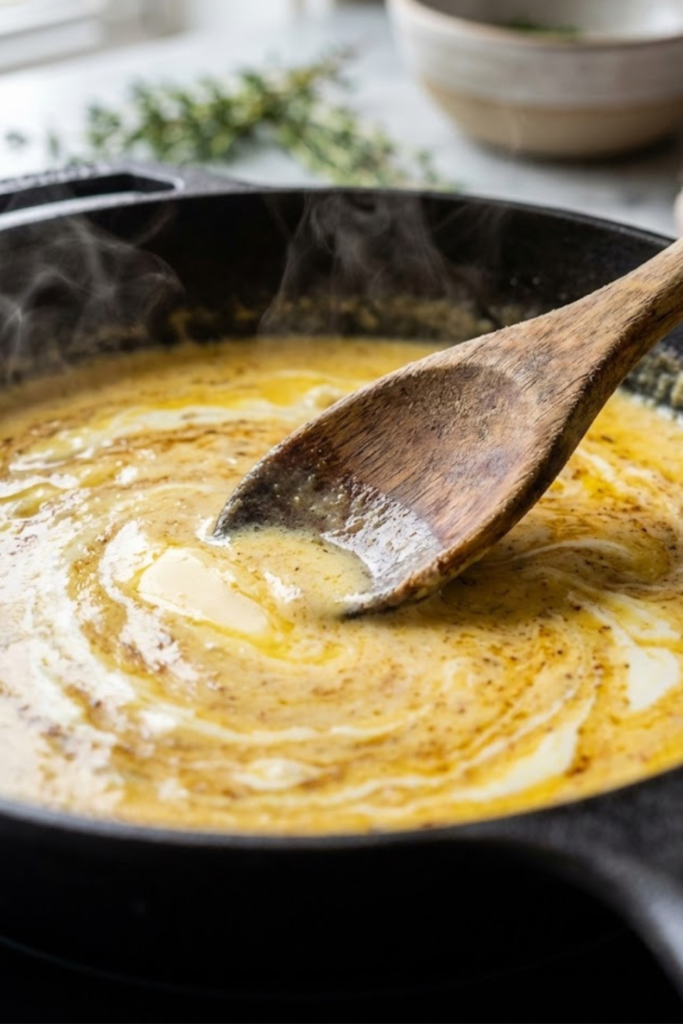
Okay, so once you take the chicken out, you’re gonna see all these brown bits stuck to the bottom of the skillet. Don’t wash that! That is pure flavor gold right there. I used to think I burned the pan, but actually, you need that stuff to make the sauce taste good. This is where you pour in your white wine or chicken broth. It’s gonna hiss and steam a lot, which is totally normal. Just grab a wooden spoon and scrape all that goodness off the bottom while the liquid bubbles.
You have to let it cook down for a few minutes. If you add the cream too soon, the flavor won’t be as strong. I usually wait until the liquid is reduced by about half. Then, stir in the cream and let it simmer. How do you know it’s done? I use the spoon test. Dip a spoon in the sauce and run your finger down the back of it. If the line stays clear and the sauce doesn’t run back together right away, it’s perfect. Right at the end, I like to stir in a little cold butter. It makes the sauce look shiny and fancy, just like in a restaurant.
What to Serve with Creamy Chicken Thighs
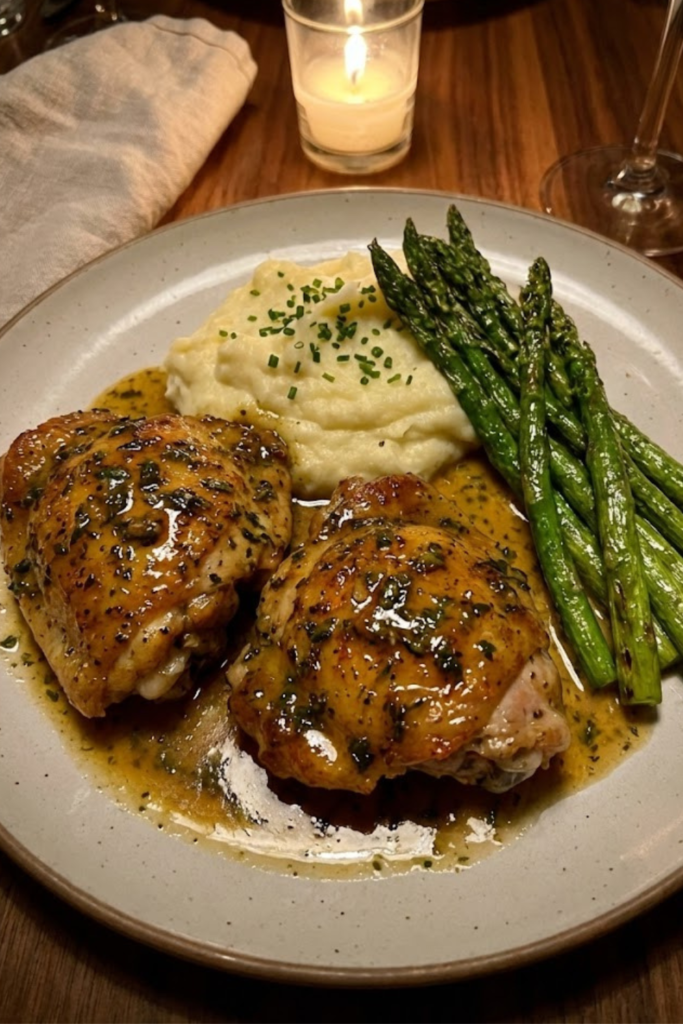
Honestly, the sauce is the star of the show here, so you definitely need something on the plate to soak up every last drop. My family gets pretty upset if I serve this without mashed potatoes. There is just something about mixing that tangy, creamy mustard sauce with fluffy potatoes that feels like a warm hug. If I am running low on time or just feeling a bit lazy (it happens to the best of us!), I will boil some egg noodles and toss them with a little butter. They work just as well and are way faster to make.
Since the chicken and sauce are pretty rich with all that cream and skin, I like to balance it out with something green. I usually just roast some asparagus or green beans in the oven while the chicken is cooking. It’s easy because you can just throw them on a sheet pan with oil and salt. If I want to feel a bit healthier, a simple salad with a vinegar dressing is great because the acid cuts through the heavy cream. For anyone trying to watch their carbs, cauliflower mash is a solid option. I promise, when it’s covered in this sauce, you can barely tell it’s a vegetable.
Storage and Reheating Tips for Leftovers
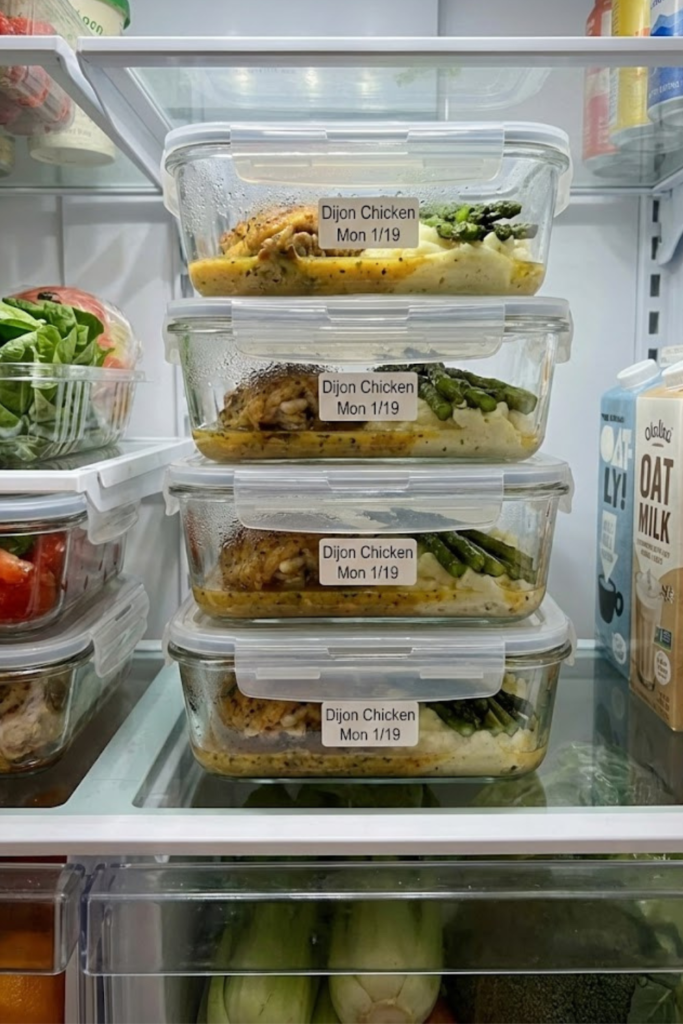
We usually eat this all up, but sometimes my eyes are bigger than my stomach. If you have leftovers, they keep pretty good in the fridge for about 3 or 4 days. I just use those glass containers with the snap lids to keep it fresh. Now, reheating is where you have to be careful. I learned the hard way that the microwave is the enemy here. If you zap it on high, the creamy sauce separates into a greasy oil slick, and the chicken gets rubbery. It’s gross, honestly.
Instead, I put the chicken and sauce back into a small pan on the stove. Turn the heat to low—like, really low—and add a splash of water or broth to loosen it up. Cover it and let it warm up slowly. It takes a few minutes, but it keeps the sauce smooth. Also, I wouldn’t try freezing this one. Cream sauces get weird and grainy when they thaw out, and the texture is never the same. It’s just one of those meals you gotta enjoy fresh or from the fridge.
So, there you have it. We covered pretty much everything from getting that skin super crispy to whipping up a sauce that tastes like you went to culinary school (even if you just learned it today!). I really believe this Chicken Thighs with Dijon Sauce isn’t just a dinner recipe; it really is like a warm hug on a plate after a long day. It’s saved me from ordering takeout more times than I can count, and it always makes the house smell amazing.
Oh, and before you go! If you think you might want to make this again—and I’m betting you will—do yourself a favor and Pin this recipe to your “Weeknight Favorites” board on Pinterest. It’s the best way to save it so you aren’t scrambling to find it next time you are standing in the grocery aisle wondering what to make. Happy cooking!