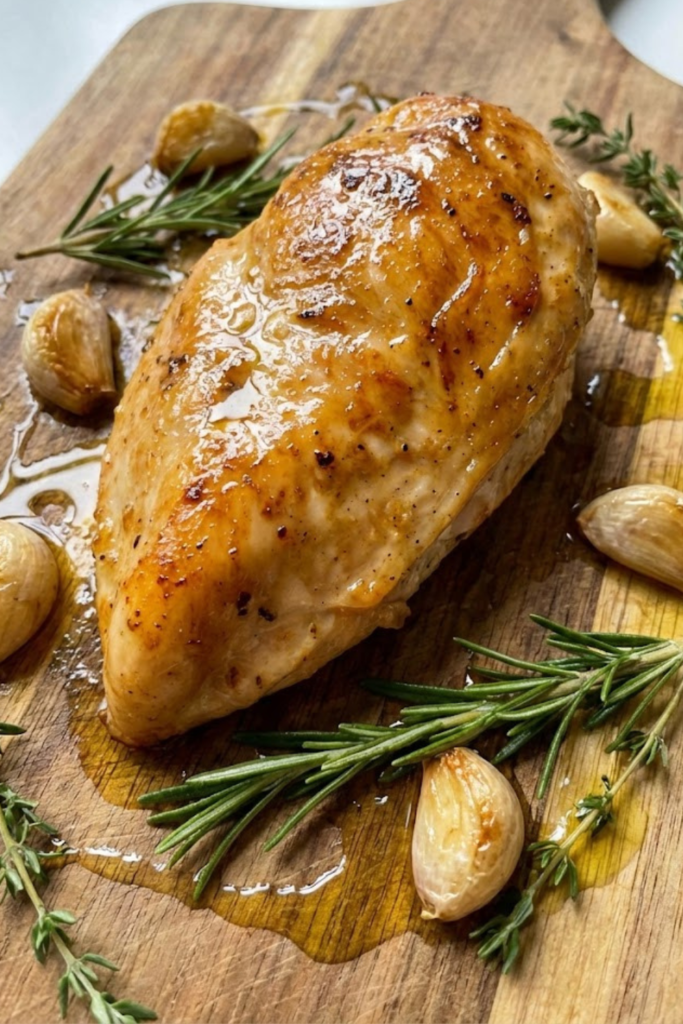
Have you ever stared at a plain chicken breast and felt absolutely uninspired? I have definitely been there! But let me tell you, this recipe for chicken breast with roasted garlic is going to change your entire weeknight dinner rotation. It is not just food; it is an experience! “Garlic is the ketchup of intellectuals,” and when you roast it, it transforms into this sweet, buttery spread that elevates poultry to a gourmet level. In this article, we are going to dive deep into creating the juiciest bird you’ve ever tasted. We will cover everything from the marinade to the oven settings, ensuring you never have to suffer through dry meat again. Let’s get cooking!
Why Roasted Garlic is the Secret Weapon for Flavor
I have to be honest with you guys, for the longest time, I was terrified of using whole garlic cloves. I remember this one time back in my early twenties—I was trying to impress a date (who is now my husband, thankfully!) and I put about ten raw cloves into a pasta dish. It was inedible. It was so spicy and pungent that we actually ended up ordering pizza.
That flavor disaster kept me away from fresh garlic for years. But then I discovered roasting.
When you make chicken breast with roasted garlic, you aren’t getting that sharp, biting flavor that ruins dates. You are getting something completely different. It’s mellow, spreadable, and honestly, kind of sweet. It totally changes the vibe of the whole meal.
The Magic of the Maillard Reaction
Okay, I’m going to put my teacher hat on for a second here. There is a fancy term for what happens in the oven called the Maillard reaction.
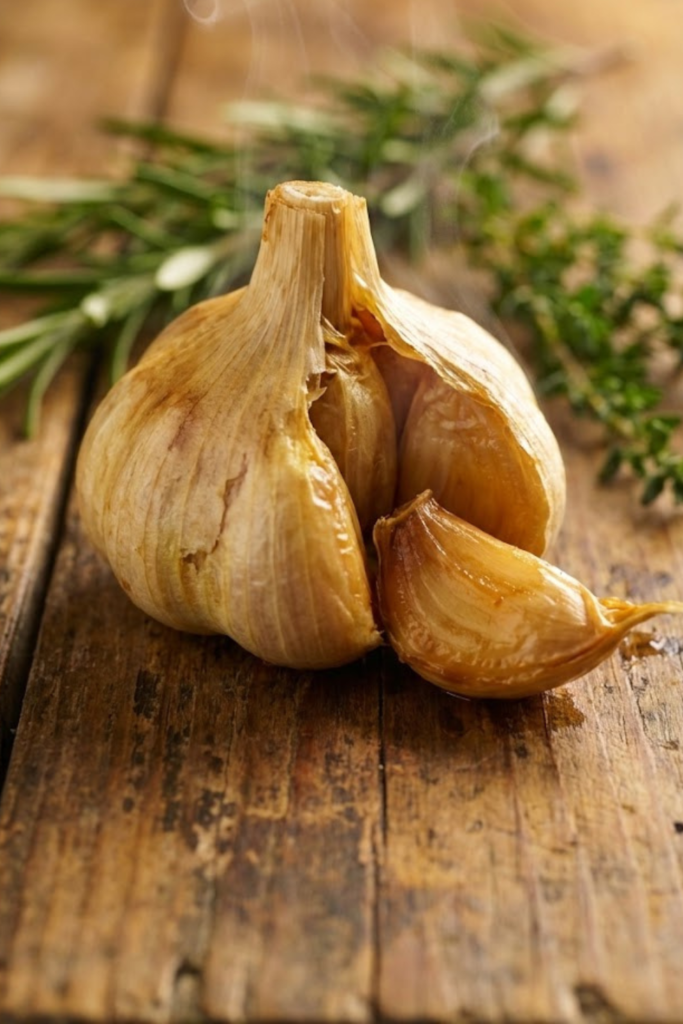
You don’t need to memorize that for a test or anything. Basically, it just means that the heat breaks down the sugars in the garlic. This process turns those rock-hard cloves into soft, golden nuggets of gold.
It removes all the bitterness. If you have ever thought chicken breast was boring, it’s probably because it lacked a deep, savory element like this. I was shocked the first time I smeared a roasted clove on a piece of meat; it tasted like I had been cooking for hours, even though the oven did all the heavy lifting.
Flavor That Actually Hugs You
The best part about this chicken breast with roasted garlic situation is how it pairs with other stuff in your pantry.
I used to just throw salt on my bird and call it a day. Boring! But roasted garlic acts as a bridge. It connects the mild flavor of the chicken with herbs like fresh rosemary or thyme.
- Rosemary: The piney scent cuts through the richness.
- Thyme: Adds a subtle, earthy lemon note.
- Oregano: gives it that classic Italian grandma feel.
When you roast the garlic right alongside the chicken, the oils mix together on the pan. It creates this natural sauce that you barely have to work for.
It’s Surprisingly Good for You
I’m not a doctor, but I’ve read enough to know garlic is a powerhouse. It is great for your immune system, which we all need help with during flu season, right?
Combining that with lean protein like chicken breast makes for a dinner that feels indulgent but is actually pretty clean. You get all that comfort food feeling without the heaviness of a deep-fried meal.
I made this mistake of thinking “healthy” meant “flavorless” for way too long. Don’t be like me. You can have your chicken breast with roasted garlic and eat it too. It’s the secret weapon I keep in my back pocket for when I need a win on a Tuesday night.
Essential Ingredients for Your Chicken Marinade
I think of the marinade as the dress rehearsal for the main event. If you don’t get this part right, the show—or in this case, dinner—is going to flop.
I have ruined a lot of meat in my day by just throwing it in a pan with zero prep. It ends up rubbery and sad. Over the years, I learned that you don’t need a hundred ingredients to make chicken breast with roasted garlic taste amazing. You just need the right ones.
Here is what I grab from my pantry every single time.
Picking the Right Oil
For the longest time, I just grabbed whatever bottle was cheapest at the store. Usually, that was vegetable oil.
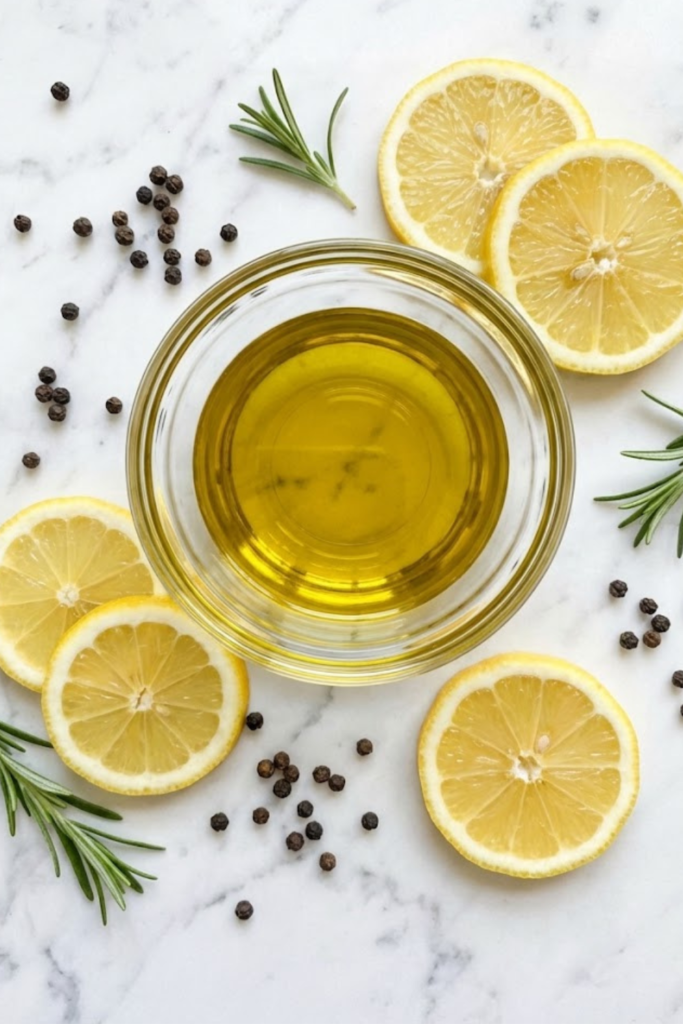
But for this recipe, you really want some flavor. I usually reach for extra virgin olive oil. It has that grassy, rich taste that soaks right into the roasted garlic.
However, here is a tip I learned the hard way: if you are cranking your oven super high (like over 400 degrees), olive oil can sometimes smoke up the kitchen. If my smoke detector goes off one more time, my dog might actually pack his bags and leave. So, if you are worried about that, avocado oil is a great swap. It handles the heat better but still keeps the chicken moist.
You Need Some Acid
This sounds weird, right? Why would I put acid on my food?
I’m talking about lemon juice or white wine vinegar. I used to skip this step because I was lazy. Big mistake. The acid actually helps break down the fibers in the meat. It makes the chicken breast tender so you aren’t chewing on a piece of shoe leather later.
I usually squeeze half a lemon right over the chicken before I add the spices. It brightens everything up.
Fresh Herbs vs. Dried Herbs
Okay, here is the deal. I love the idea of a garden. I really do. But half the time, my “fresh” herbs are wilting in the back of the fridge.
If you have fresh rosemary or thyme, definitely use it! It looks pretty and smells incredible. But don’t feel bad if you have to use the dried stuff in the jar.
The trick is knowing that dried herbs are stronger. If a recipe calls for a tablespoon of fresh thyme, just use a teaspoon of dried. I learned that after I accidentally made a batch of chicken that tasted like I was eating a pine tree.
The Salt and Pepper Ratio
Please, I am begging you, do not be shy with the salt.
Chicken breast is naturally pretty bland. It needs help. I use Kosher salt because the flakes are bigger and it’s easier to control. I sprinkle it on like I’m expecting snow.
Fresh cracked black pepper is also a must. The pre-ground stuff just looks like dust and doesn’t have that spicy kick that cuts through the roasted garlic.
Mix these simple things together, and you are halfway to a dinner that tastes like you actually went to culinary school (even if you just learned it from a blog like me).
Step-by-Step Guide to Baking Perfect Chicken Breast
Okay, so we have our ingredients. Now we actually have to cook the thing. This used to be the part where I would panic and just stare at the oven, hoping for a miracle.
But I’ve done this enough times now to know that following a routine helps. You don’t have to be a master chef to get this right. You just need to pay attention to a few small details.
Getting the Chicken Ready
First things first, look at your chicken breasts. Are they huge? Sometimes I buy them and they look like they came from a turkey, not a chicken.
If one end is super thick and the other is thin, they aren’t going to cook evenly. The thin part will dry out before the thick part is safe to eat. I hate that.
So, I usually take a rolling pin or a heavy pan and pound the thick parts down a bit. It’s actually a great way to get some stress out after a long week of teaching! You want them to be roughly the same thickness all the way across. It makes a huge difference.
Dealing with the Garlic
For the roasted garlic, you have two choices.
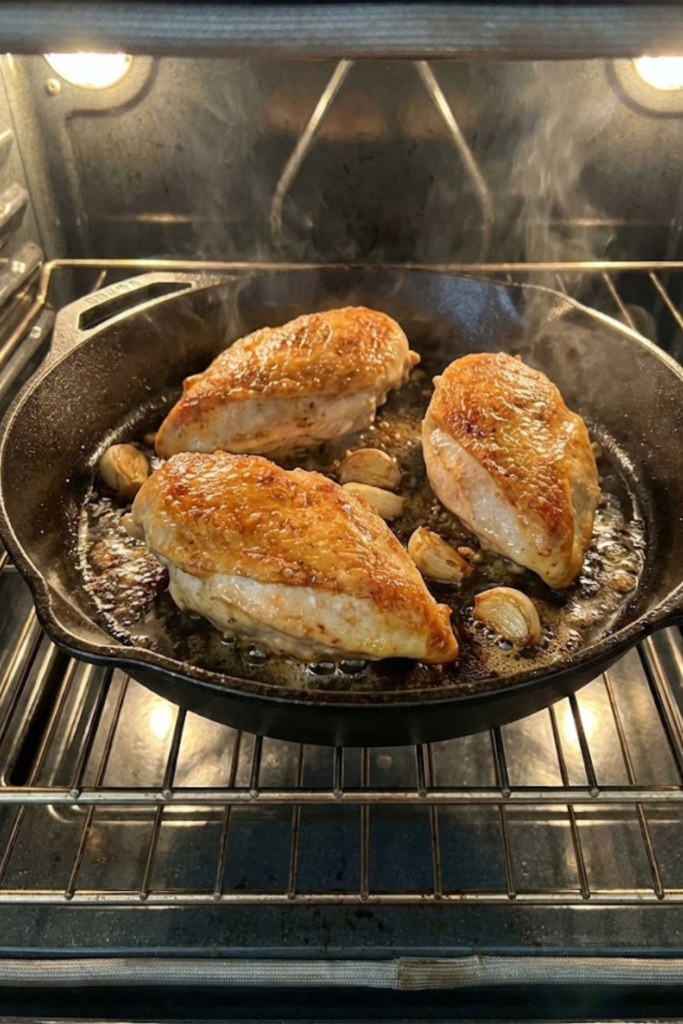
If you are lazy like me on a Friday, you can just peel the cloves and scatter them in the pan around the chicken. They will roast in the chicken juices, which is delicious.
But if you want that spreadable, golden paste, you should roast a whole head of garlic. I cut the top off the bulb, drizzle it with oil, and wrap it in foil. I usually throw this in the oven while it’s preheating so it gets a head start.
The Right Temperature
I used to bake chicken at 350°F because I thought low and slow was better. I was wrong.
For boneless chicken breast, you want a higher heat. I set my oven to 400°F (200°C).
The high heat cooks the meat faster, which means it doesn’t have time to dry out. It seals the juices in. It usually takes about 20 to 25 minutes, depending on how thick your pieces are.
Use a Thermometer (Please!)
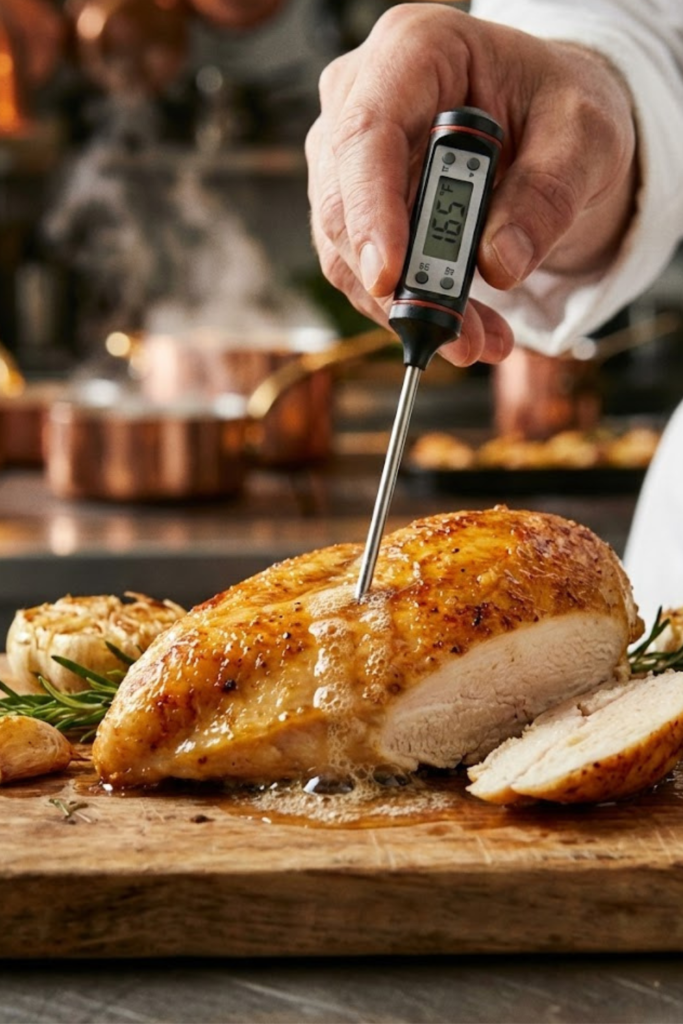
If you take one thing away from this, let it be this: buy a meat thermometer.
I used to slice into the chicken to check if it was pink. But letting all the juice run out just makes it dry!
You want the internal temperature to hit 165°F (74°C). As soon as my thermometer beeps at 165, I pull that pan out immediately. I don’t let it sit in there for “just one more minute.” That one minute is the difference between juicy chicken and a hockey puck.
Trust me, spending ten bucks on a thermometer saved my family from so many bad dinners.
Common Mistakes When Cooking Boneless Skinless Chicken
I have messed up a lot of dinners. It happens. But with boneless skinless chicken, I feel like the mistakes are usually the same ones over and over again.
I used to wonder why my food never tasted like the stuff at restaurants. It turns out, I was doing a few things that were sabotaging my meal before I even put it on the table. Here is what you need to watch out for so you don’t end up with a sad, dry dinner.
The “Dry Chicken” Syndrome
We have all had that chicken that tastes like sawdust. It is the worst.
Usually, this happens because we leave it in the oven too long. But here is the other thing I learned: you have to let it rest.
I used to pull the pan out and immediately put the meat on plates because everyone was hungry. Big mistake. When the chicken is hot, the juices are moving around really fast inside. If you cut it right away, all that liquid runs out onto the cutting board.
Just let it sit there on the counter for about 5 to 10 minutes. It allows the juices to settle back into the meat. It keeps the chicken breast juicy.
Don’t Crowd the Pan
I hate doing dishes. I really do. So I used to try to fit everything—the chicken, the potatoes, the broccoli—on one single sheet pan.
But here is the problem: if the chicken pieces are touching each other, or if they are buried under vegetables, they don’t roast. They steam.
Steamed chicken is… well, it’s edible. But it doesn’t get that nice golden brown color or that roasted flavor we want. You want hot air to circulate around each piece. So spread them out. If you need to use two pans, just use two pans. It is worth the extra scrubbing later.
The Cold Meat Problem
This one sounds weird, but don’t cook cold chicken.
If you take the meat straight from the refrigerator and throw it into a hot 400-degree oven, it shocks the meat. The outside cooks super fast while the inside is still cold. This usually leads to uneven cooking and tough meat.
I usually take the package out of the fridge about 20 minutes before I start cooking. I let it sit on the counter while I chop the garlic or wash the veggies. Letting it come to room temperature helps it cook way more evenly. It’s a small step, but it helps a lot.
Serving Suggestions and Low-Carb Side Dishes
Now that you have this amazing chicken, you can’t just eat it by itself. Well, I guess you could, but my family would definitely look at me funny if I didn’t put anything else on the table.
The good news is that since your oven is already hot, you can make your sides right alongside the main dish. It saves time, and honestly, who wants to wash more pots than they have to?
Easy Vegetable Pairings
Since we are baking at 400°F, roasted vegetables are the perfect choice. They love high heat just as much as the chicken does.
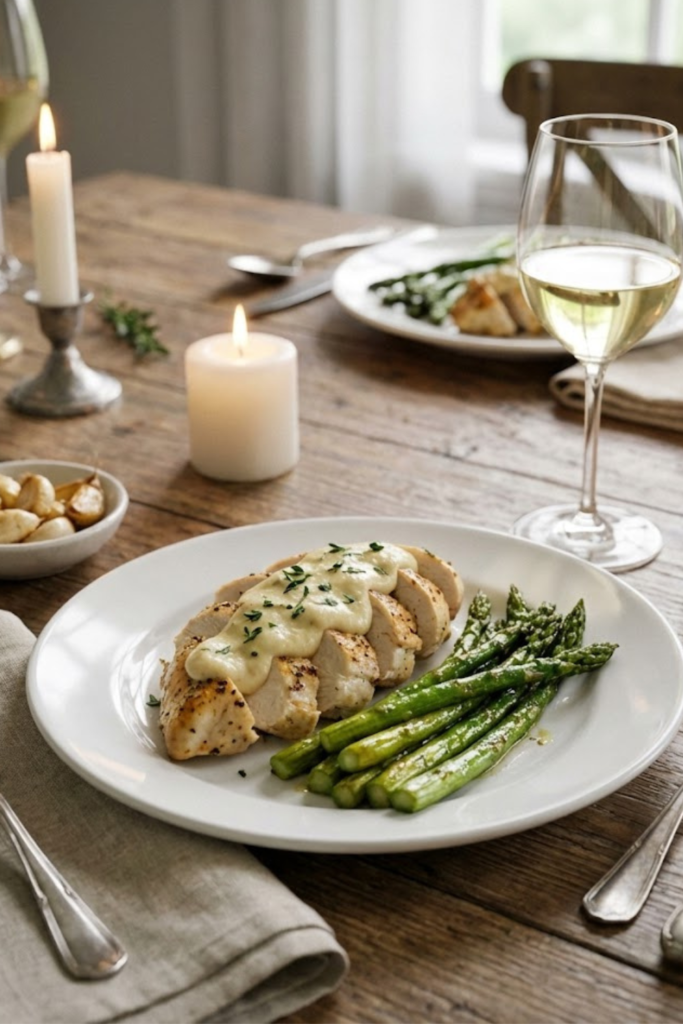
I usually grab a bunch of asparagus or some broccoli florets. You can toss them in a bowl with a little bit of that same olive oil and salt you used for the meat.
- Asparagus: It cooks fast. I usually throw it on the pan for the last 10 minutes.
- Zucchini: Slice it into rounds. It gets soft and soaks up the garlic flavor really well.
- Broccoli: If you like crispy edges (which are my favorite part), put these in at the same time as the chicken.
Doing it this way keeps the meal low-carb, which I try to stick to during the week so I can have pizza on Fridays.
If You Want Some Comfort Food
If you aren’t watching your carbs, mashed potatoes are the best friend of roasted garlic chicken.
Remember those soft garlic cloves we roasted? Squeeze them right into your mashed potatoes. Mash it all up with some butter and milk. It tastes like something you would get at a fancy steakhouse.
Creamy polenta is another good one. It’s soft and warm, and it acts like a sponge for any of those juices left in the pan.
A Fresh Salad to Balance It Out
Sometimes, the garlic and the chicken can feel a little heavy. That is why I love a simple green salad on the side.
I don’t do anything crazy here. Just some mixed greens, maybe some cherry tomatoes, and a sharp vinaigrette dressing. The vinegar cuts through the rich, buttery taste of the garlic. It cleans your palate so every bite of chicken tastes just as good as the first one.
It’s all about balance. You have the savory chicken, the tender veggies, and the fresh salad. It’s a perfect plate.
So, there you have it. You are now officially ready to tackle chicken breast with roasted garlic.
I really hope you give this a try. I know it can feel easier to just order takeout after a long day of work (believe me, I know), but this meal is worth the little bit of effort. It fills the whole house with the best smell.
We covered the importance of roasting that garlic until it’s sweet, how to pick the right oil so you don’t smoke out your kitchen, and why a meat thermometer is the best five dollars you will ever spend.
You don’t have to be a professional cook to make food that tastes good. You just need a few good tricks up your sleeve.
If this recipe helps you out, or if you just manage to make a dinner that your kids actually eat without complaining, please pin this recipe on Pinterest! It helps other home cooks find us. And if you make it, tag me! I’d love to see how it turned out.