Hey there! Let’s talk about that moment when the smell of roasting chicken hits you—it’s pure magic, right? I remember the first time I actually nailed a pan sauce; I felt like a Michelin-star chef standing in my tiny apartment kitchen! There is simply nothing better than chicken thighs with pan juices spooned over mashed potatoes or crusty bread. It’s the kind of meal that feels fancy but is actually incredibly humble. In fact, a recent poll showed that over 60% of home cooks prefer thighs over breasts for their flavor and forgiveness in the pan. Get ready to ditch the dry poultry and dive into flavor town!
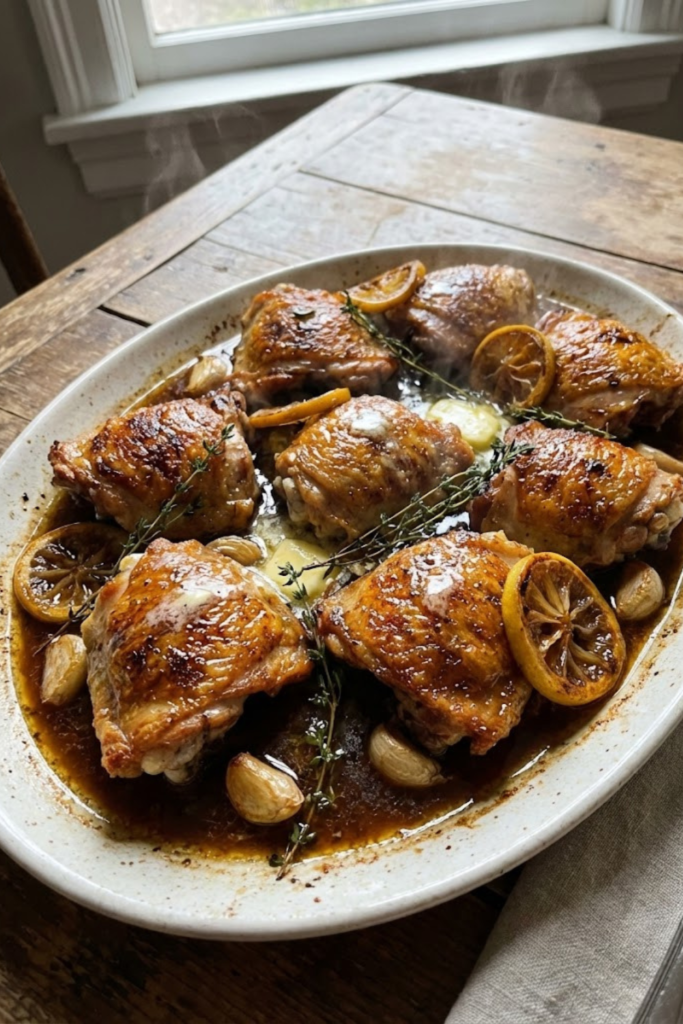
Why Bone-In Skin-On Thighs Are the Real MVP
I have a confession to make. For years, I was terrified of cooking meat with the bone in. I used to buy those pale, boneless skinless breasts because I thought they were “healthier” or easier to deal with. Boy, was I wrong. I can’t tell you how many rubbery, dry dinners I served my poor family before I finally saw the light. The truth is, if you want that rich, restaurant-quality flavor, you have to embrace the dark meat.
When I first switched to chicken thighs with pan juices, it was a total game changer. I remember standing over the stove, worrying that I was burning everything, only to realize that the fat rendering out was actually liquid gold.
Built-In Flavor Protection
Here is the thing about chicken breasts: they are unforgiving. You look at them wrong, and they dry out. But thighs? They are the most forgiving cut in the bird. The bone actually acts like a little heat shield, cooking the meat from the inside out while keeping it moist.
I’ve definitely left thighs in the oven ten minutes too long because I was busy helping my son with his math homework. Guess what? They were still juicy. In fact, while breast meat starts turning to sawdust at 165°F, thighs actually get better and more tender if you take them up to 175°F or even 185°F. The connective tissue breaks down and makes everything soft. It’s hard to mess this up, which is exactly my kind of cooking.
The Secret Sauce is in the Skin
If you take the skin off, you are literally throwing away the best part of the meal. I used to trim it all off, thinking I was being good. Huge mistake. You need that skin to render out slowly to create the base for your sauce.
Without that rendered fat, you can’t make real chicken thighs with pan juices. The skin protects the meat from the direct heat of the skillet, getting crispy and golden while the meat stays tender underneath. Plus, when you deglaze that pan later, that fond (the brown bits stuck to the bottom) mixed with the rendered fat creates a depth of flavor you just can’t get from a carton of stock. It’s flavor that you get for free just by buying the right cut.
Saving Money while Eating Better
Let’s be real for a second—groceries aren’t getting any cheaper. Bone-in thighs are almost always cheaper per pound than the boneless stuff. So, not only does it taste better, but it’s easier on the wallet. It feels like a fancy cheat code. You save money, you get better flavor, and you look like a pro chef when you spoon those chicken thighs with pan juices over some mashed potatoes. It’s a win-win situation if I ever saw one.
Ingredients for the Perfect “Liquid Gold” Pan Sauce
You know, for the longest time, I thought making a sauce required some kind of culinary degree or magic wand. I would stare at those fancy cooking shows where they whip up a glossy gravy in seconds and think, “Yeah, right.” But honestly, making the sauce for chicken thighs with pan juices is actually pretty simple once you have the right lineup of ingredients. It is really just about gathering a few things before you start cooking so you aren’t scrambling around the kitchen while the pan is hot.
I call it “liquid gold” because my youngest daughter once asked for “more of the gold stuff” on her potatoes, and the name just stuck. To get that rich flavor, you don’t need expensive stuff, but you do need specific items to make it work.
The Liquid Lifter
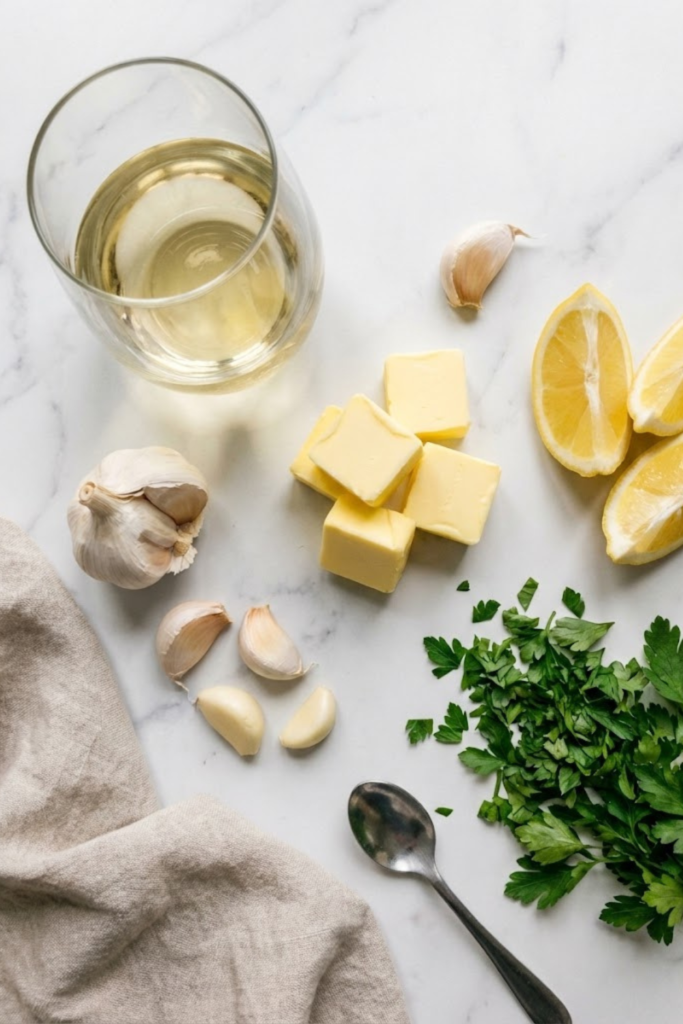
First up, you need something to get all those brown bits off the bottom of the pan. Chefs call those bits “fond,” but I just call it flavor. I usually grab a dry white wine, like a Sauvignon Blanc or Pinot Grigio. I’m not buying the expensive stuff—just whatever is on sale usually works fine.
If you don’t cook with alcohol, that is totally fine too. A good quality chicken broth works great. The main goal here is to have a cold liquid hit that hot pan to lift up the caramelized bits left behind by the chicken skin. That reaction is the foundation of the whole dish.
The Aromatics
Next, you need the flavor boosters. I almost always swap out regular onions for shallots when I make this. Shallots are a little sweeter and more mild, and they melt down into the sauce beautifully without leaving big chunky pieces.
Garlic is a must, obviously. I smash a few cloves but leave them whole or in big slices so they don’t burn. Burnt garlic ruins everything—I learned that the hard way during a dinner party a few years back! Fresh herbs like thyme or rosemary sprigs thrown in whole add a nice earthiness that makes the kitchen smell amazing.
The Cold Butter Trick
Here is the secret weapon: cold butter. I used to melt the butter before adding it, but that actually makes the sauce greasy. You want to cut a few tablespoons of butter into cubes and keep them in the fridge until the very last second.
When you whisk in cold butter at the end, it emulsifies (a fancy word for mixes together perfectly) with the liquid. This gives your chicken thighs with pan juices that glossy, restaurant-style look and a velvety texture that coats the back of a spoon.
A Pop of Acid
Finally, don’t forget the lemon. This might sound odd, but the sauce can get really rich and heavy with all that chicken fat and butter. A quick squeeze of fresh lemon juice right at the end cuts through the fat. It brightens the whole dish up. It’s like adding a pinch of salt; you don’t necessarily taste the lemon itself, but it makes everything else taste more like itself.
Step-by-Step: How to Master the Sear and Simmer
Alright, this is the part where the rubber meets the road. Or I guess, where the chicken meets the pan. I know trying a new method can feel a little scary, especially when you are dealing with hot oil and splattering grease. But honestly, mastering chicken thighs with pan juices is mostly about patience and leaving things alone. My husband always laughs because I’m a bit of a hoverer in the kitchen, but for this recipe, I have learned to step back and let the stove do the work.
You don’t need fancy equipment, but a heavy pan helps. I use my grandmother’s old cast iron skillet. It holds heat like a champ.
Dry Skin Equals Crispy Skin
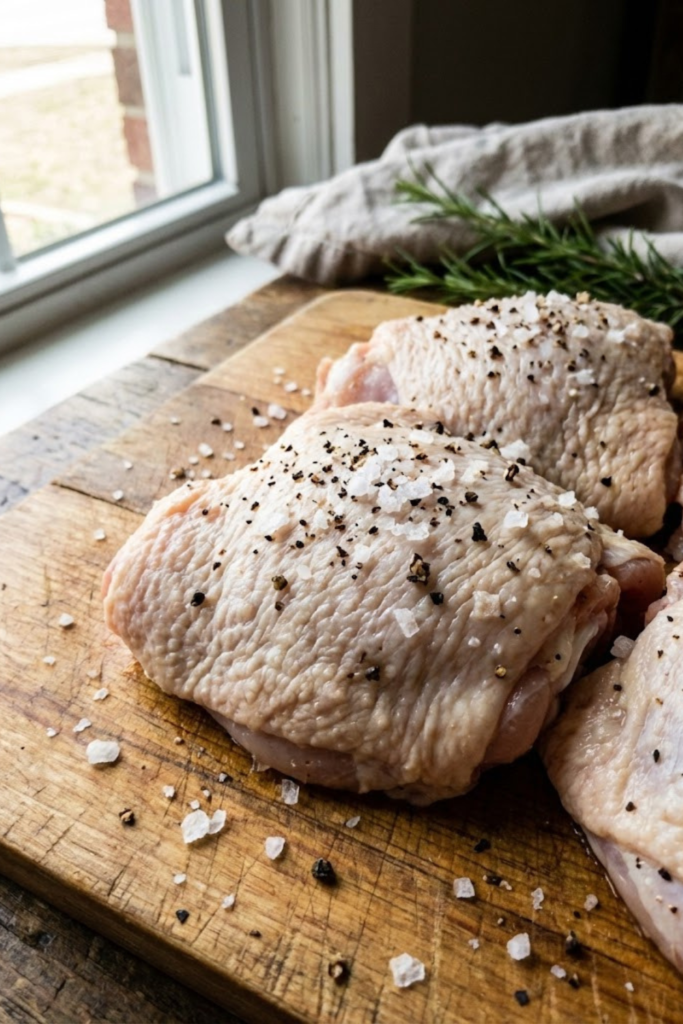
Before you even turn on the burner, you have to dry that chicken off. I mean really dry it. I use a handful of paper towels and pat down every nook and cranny of the chicken skin. Moisture is the enemy here. If the skin is wet when it hits the pan, it will steam instead of sear, and you will end up with soggy, gray skin. Nobody wants that. We want that golden, cracker-crisp texture that makes a tapping sound when you hit it with a fork.
The Patience of the Sear
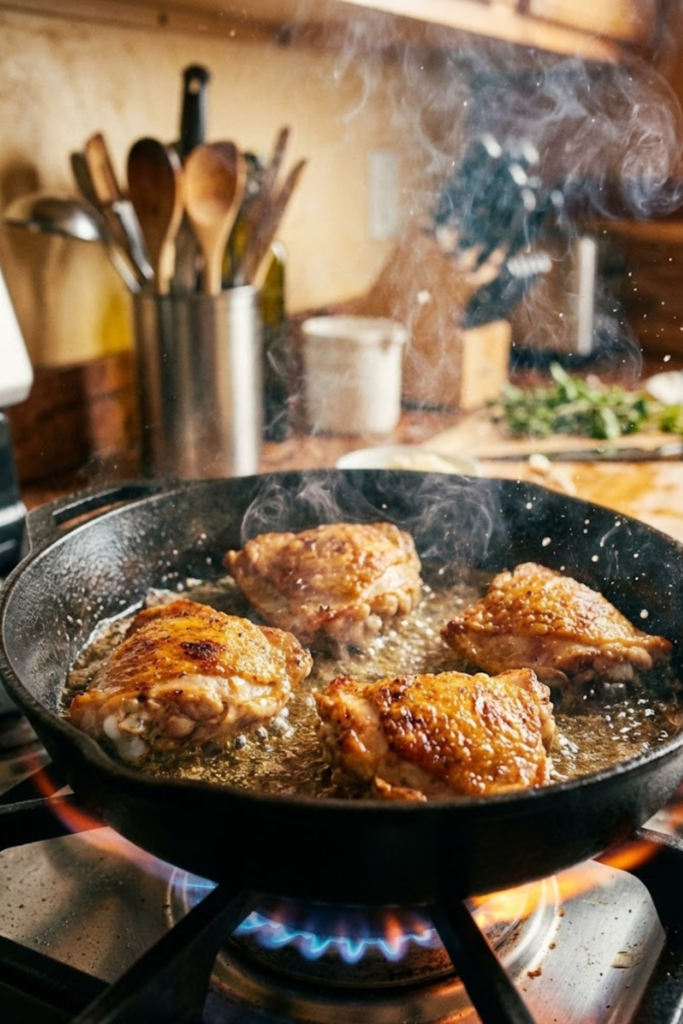
Heat your oil over medium-high heat until it shimmers. Carefully place the thighs in, skin-side down. You should hear a loud sizzle immediately. If you don’t, the pan wasn’t hot enough. Now, here is the hard part: don’t touch it.
Seriously, put the tongs down. You need to let it cook undisturbed for about 12 to 15 minutes. It seems like a long time, I know. I usually use this time to wash up the prep dishes. If you try to lift the chicken and it sticks to the pan, it’s telling you it isn’t ready yet. It will release naturally when the skin is perfectly crisp.
The Oven Finish
Once the skin is deep golden brown, flip the thighs over. You’ll see all that beautiful rendered fat in the bottom of the pan. Now, instead of trying to cook it all the way through on the stove (which usually burns the outside before the inside is done), slide the whole skillet into a 400°F oven.
This gently finishes cooking the meat without drying it out. It usually takes about 10 to 15 minutes. You want the internal temperature to reach at least 175°F. Trust me, unlike breasts, thighs are actually better when cooked to a higher temperature.
The Hardest Step: Resting
When you pull that skillet out, it’s going to smell amazing. You will want to dive right in. Don’t do it! Transfer the chicken to a plate and let it rest for at least 10 minutes. This allows the juices to redistribute back into the meat. If you cut into it right away, all that flavor runs out onto the cutting board instead of staying in your chicken. While it rests, you can make your pan sauce in the hot skillet.
Serving Suggestions to Soak Up Every Drop
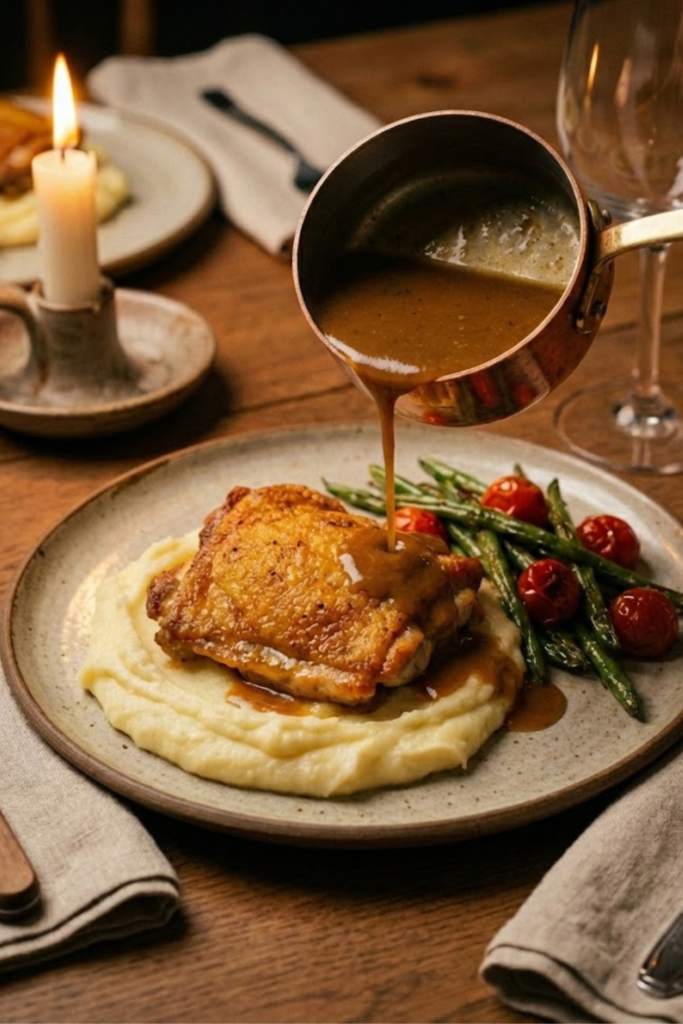
Now that you have done the hard work, you need to think about how to serve this masterpiece. I used to just throw some steamed broccoli on a plate and call it a day, but I quickly realized that was a mistake. When you make chicken thighs with pan juices, the sauce is basically the main event. If you don’t have something on the plate to catch that liquid gold, it just runs all over the place, which is a total waste of flavor. My kids literally lick their plates when I get the sides right, which I take as the highest compliment.
The Best Carb Companions
You absolutely need something starchy to act as a vehicle for the sauce. My go-to is always mashed potatoes. I make a little well in the center of a big scoop of potatoes and pour the extra pan juices right in there. It’s like a little swimming pool of butter and chicken flavor.
If I don’t feel like peeling potatoes on a Tuesday night, I grab a loaf of crusty sourdough bread from the bakery on my way home. There is something so satisfying about tearing off a big chunk of bread and mopping up the bottom of the skillet. My husband prefers creamy polenta, which is also delicious because it gets really soft and mixes with the lemon-butter sauce perfectly. Just don’t serve this with plain rice; I find the sauce just slides right off it.
Balancing with Greens
Since this dish is pretty rich with the chicken skin and the butter, you need something fresh to cut through it. I usually go for roasted asparagus or green beans. Since the oven is already hot from finishing the chicken, I just toss the veggies on a baking sheet with a little olive oil and salt and throw them in on the rack below the skillet.
It’s easy because everything finishes at the same time. I tried serving this with a heavy casserole once, and it was just too much food. You want something light and snappy to balance out the heavy, savory meat.
What to Drink
I am definitely not a wine expert—I usually just buy whatever has a pretty label—but I have learned that a crisp white wine goes best here. Since we used a dry white wine to deglaze the pan, drinking the same wine with dinner makes sense. A cold glass of Sauvignon Blanc or Pinot Grigio tastes great because the acidity cleans your palate between bites of the buttery chicken. If you aren’t into wine, an iced tea with extra lemon works just as well.
Family Style is Best
Honestly, I stopped plating everyone’s food in the kitchen years ago. For a meal like this, I put a trivet on the dining table and set the hot cast iron skillet right in the middle. It looks rustic and cool, plus it keeps the food warm while we are getting settled. Everyone can reach in and spoon as much sauce as they want over their food. It feels more cozy, like a real family dinner should be. Plus, that means one less serving platter for me to wash later!
Final Thoughts on Your New Favorite Dinner
So, there you have it. You now have the roadmap to making the kind of dinner that makes everyone stop and ask, “Wow, what smells so good?” It really isn’t magic, and it definitely isn’t rocket science. It is just about treating simple ingredients with a little bit of respect. Making chicken thighs with pan juices has become a weekly ritual in my house, not just because it tastes amazing, but because it brings a sense of calm to the end of a busy day.
I know we covered a lot of steps, from drying the skin to timing the sear just right. But I promise you, after you do it once or twice, you won’t even need to look at the recipe anymore. It will just become muscle memory. You will hear the sizzle of the fat and know exactly when it’s time to flip.
Why This Recipe Sticks
The reason I keep coming back to this dish is that it delivers so much reward for so little effort. You get that crispy, salty skin that tastes like a potato chip. You get meat that is falling-off-the-bone tender. And then you have that sauce—that rich, lemony, buttery sauce that ties everything together.
I used to think that “fancy” food meant buying expensive steaks or spending hours chopping twenty different vegetables. But this meal taught me that the best food is often the simplest. It is humble, honest food that fills you up and makes you feel good. Plus, looking at the empty plates at the end of the night is the best feeling in the world for a cook.
A Note on Leftovers
If by some miracle you actually have leftovers (which is rare in my house), they are fantastic the next day. I usually shred the cold chicken and toss it into a salad for lunch. Since the meat was cooked on the bone, it stays moist even after sitting in the fridge overnight. You can also reheat the pan juices gently on the stove and pour them over rice or pasta. Just don’t try to microwave the skin if you want it to stay crispy—an air fryer or a toaster oven is your best friend for reheating.
Share the Love
I really hope you give this a try this week. It might just change the way you look at chicken dinner forever. If you do make it, I would love to see how it turned out!
Call to Action: Did this recipe make you hungry? Save this pin to your “Weeknight Dinners” board on Pinterest so you never lose this liquid gold recipe! It’s a lifesaver for those nights when you want something special but don’t have the energy to fuss. Happy cooking!