Is there anything actually better than the smell of butter and shallots hitting a hot pan? I seriously doubt it! I remember the first time I tried to make a pan sauce; I completely burned the garlic and set off the smoke alarm. My dog hid under the couch for an hour! But after years of tweaking (and fewer fire alarms), I’ve finally nailed this recipe.
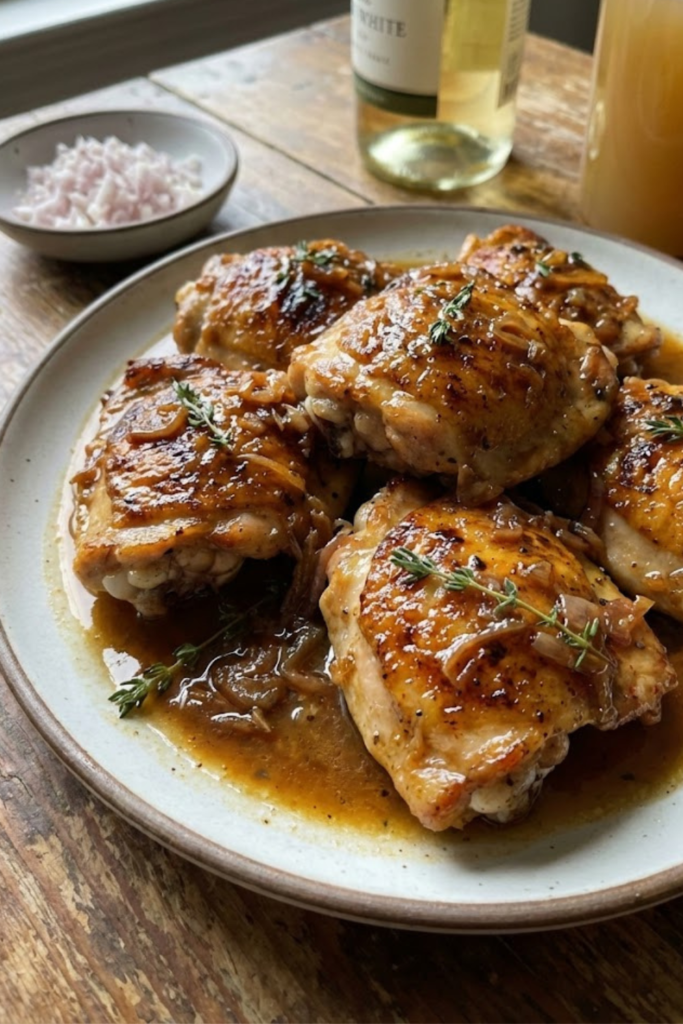
This isn’t just another chicken dinner; it is a “lick the plate clean” situation. Did you know that chicken thighs are more forgiving than breasts, making them perfect for home cooks who are afraid of drying out their meat? It’s true! In this guide, we are going to dive deep into creating the most tender chicken thighs with shallot sauce you’ve ever tasted. Let’s get cooking!
Why Bone-In Skin-On Chicken Thighs Are Essential
Look, I have to be honest with you. For years, I was that person who only bought boneless, skinless chicken breasts. I thought I was being “healthy” or whatever, but my dinners were sad. I remember one specific Tuesday back in 2018 when I made a stir-fry that tasted like seasoned rubber bands. My kids pushed it around their plates, and I ended up ordering pizza. It was a low point for my cooking confidence. That’s when I finally decided to switch to bone-in skin-on chicken thighs, and I haven’t looked back since.
The Flavor is Just Better
There is actual science behind why the bone matters, but let’s keep it simple. When you cook meat on the bone, it slows down the cooking process just a little bit. This helps the meat stay incredibly juicy. With chicken thighs, the bone also contributes a depth of flavor you just can’t get from a boneless cut.
I’ve found that the marrow and structure of the bone actually insulate the meat. It prevents it from seizing up and getting tough when the heat hits it. If you want that rich, savory taste that makes you close your eyes when you take a bite, you need the bone. It acts like a flavor conductor right into the center of the cut.
That Crispy Skin Though
Okay, we need to talk about the skin. This is the best part! If you buy skinless meat, you are missing out on the best texture contrast known to man. When you sear chicken thighs properly, that skin turns into a golden, crackling crust.
I used to be scared of the fat. But here is the thing I learned: a lot of that fat renders out into the pan. You aren’t eating all of it, but it leaves behind a crispy layer that protects the meat underneath. Without the skin, you just have exposed meat that dries out fast. Plus, that rendered fat is liquid gold for making the shallot sauce later. Don’t throw it away!
Saving Money at the Store
Let’s be real, groceries are expensive these days. I am always looking for ways to stretch my budget without eating ramen every night. Bone-in chicken thighs are almost always cheaper per pound than the boneless breast varieties.
I did a little math last week at my local shop. The boneless breasts were nearly double the price of the bone-in thighs. By switching cuts, I saved enough to buy a nicer bottle of white wine for the sauce (and maybe a glass for the chef). It’s a win-win situation. You get better flavor and you keep more money in your pocket.
They Are Hard to Mess Up
This is probably the biggest reason I recommend thighs to my friends who are nervous cooks. Chicken breasts are unforgiving. If you cook a breast for one minute too long, it’s ruined. It becomes dry and chalky.
Thighs are different. Because they have a higher fat content and that connective tissue, they are super forgiving. I’ve accidentally left chicken thighs in the pan while dealing with a laundry crisis, and they still came out tender. The meat can handle a higher internal temperature without turning into sawdust.
If you are aiming for that perfect 165°F but accidentally hit 175°F, it’s going to be fine. Actually, some people argue they are even better at slightly higher temps because the connective tissue breaks down more. It gives you a safety net that other cuts just don’t offer. So, grab the bone-in pack next time. Your tastebuds will thank you.
Ingredients You Need for the Perfect Shallot Sauce
You might think you can just throw whatever is in your fridge into the pan, but trust me, specific ingredients make a huge difference here. I remember trying to make this with a regular yellow onion years ago because I was too lazy to go back to the store. It was… okay. But it wasn’t magical. The sauce was too sharp and chunky. To get that restaurant-quality taste at home, you need to be a little picky with your grocery list.
The Shallots (Obviously)
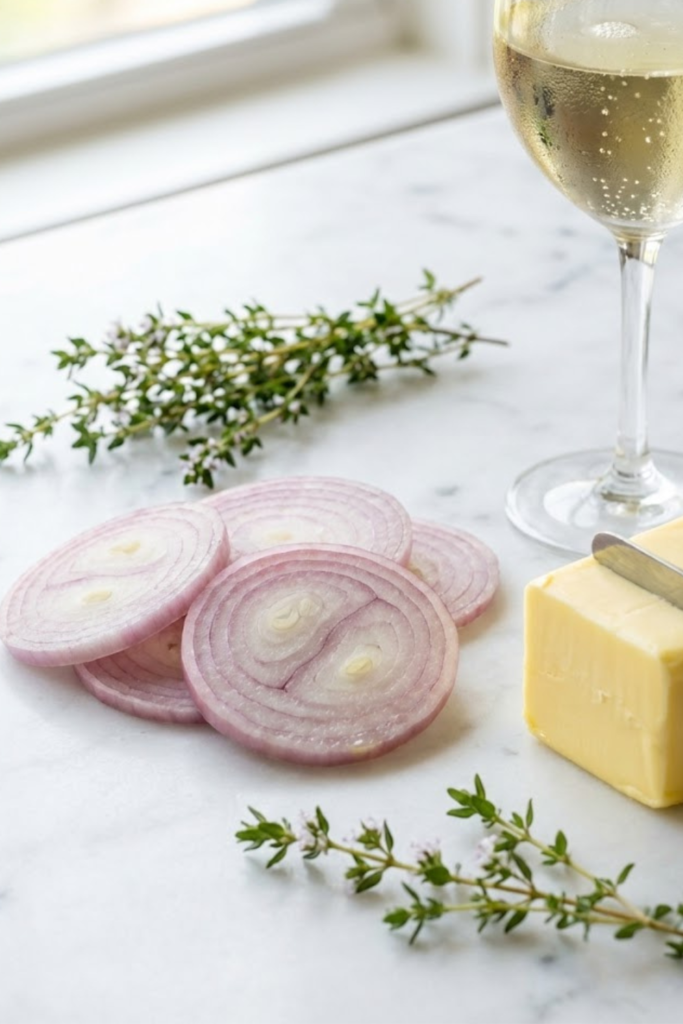
First off, let’s talk about the star of the show. Shallots look like small, stretched-out onions with papery copper skin. They are not the same as red onions! Shallots have a much milder, sweeter flavor. When you cook them down in butter, they almost melt.
I usually grab about 3 or 4 large shallots for this recipe. If you use a regular onion, the sauce will taste strong and pungent. Shallots give you that delicate, fancy flavor without punching you in the face. You want to mince them pretty small so they cook quickly and blend right into the gravy.
Liquid Gold: The Stock
Please, I am begging you, do not use water to make your pan sauce. Water adds volume but zero flavor. You need a good quality chicken stock or bone broth. I prefer the low-sodium kind so I can control how salty the final dish is.
If you have homemade stock in the freezer, use it! That’s the best option. But honestly, most weeknights I am just opening a carton from the pantry. The gelatin in a good stock helps thicken the sauce so it coats the back of a spoon instead of running all over the plate.
The Acid: Dry White Wine
To get all those brown tasty bits off the bottom of the pan (chefs call that deglazing), you need acid. A dry white wine is perfect for this. I usually buy a Sauvignon Blanc or a Pinot Grigio. My rule is: if you wouldn’t drink a glass of it, don’t cook with it.
If you don’t do alcohol, that is totally fine. You can swap the wine for a little bit of chicken broth mixed with a splash of apple cider vinegar or lemon juice. You just need that tartness to cut through the heavy butter and fat. It balances everything out.
Fresh Herbs
Dried herbs are great for long stews, but for a quick pan sauce, fresh is best. I grab a small plastic clamshell of fresh thyme or rosemary. Dried thyme can sometimes have a woody, dusty texture that doesn’t soften up enough in the short cooking time.
Strip the little leaves off the stems and chop them up. It adds a pop of green and a fresh, earthy smell that makes your whole kitchen smell amazing.
Step-by-Step: How to Sear Chicken Thighs Perfectly
I used to think making restaurant-quality chicken at home was some big secret I wasn’t cool enough to know. But honestly, it really just comes down to patience. I remember standing over the stove years ago, poking the meat every thirty seconds because I was bored. Don’t do that! If you follow these steps exactly, you will get that crunch everyone loves.
Dry the Meat First
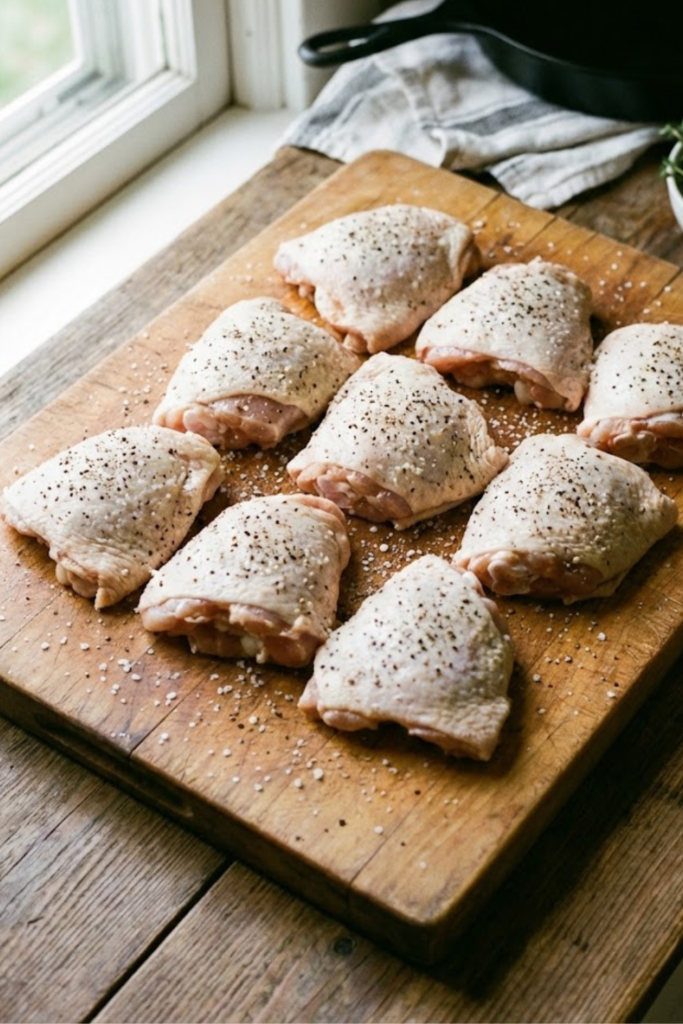
This is the step most people skip, and it ruins everything. You have to pat the chicken dry with paper towels. I mean really dry. If the skin is wet when it hits the pan, it creates steam. Steam makes the skin soggy and gray instead of brown and crispy.
I grab a few sheets of paper towel and press them all over the thighs. It feels a little weird handling raw meat like that, but it is necessary. You want the surface to be tacky, not slippery.
Get the Pan Hot
Grab your heaviest pan. I love my cast iron skillet for this, but a stainless steel pan works too. Put it on the stove over medium-high heat and let it sit there for a few minutes.
Add a splash of high-heat oil, like vegetable or canola oil. You know it’s ready when the oil starts to shimmer and move around the pan quickly like water. If you put the chicken in a cold pan, it will stick, and you’ll end up scrubbing the pan for an hour later.
The Searing Process (Don’t Touch It!)
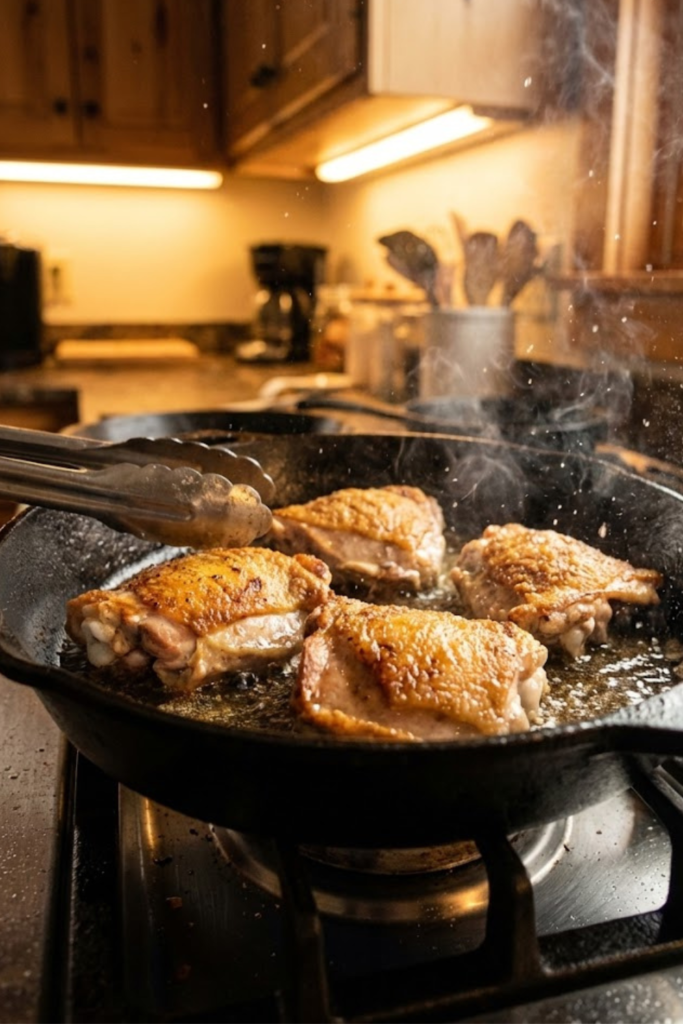
Place the chicken thighs in the pan, skin-side down. You should hear a loud sizzle immediately. If you don’t hear it, the pan isn’t hot enough. Take it out and wait.
Once they are in, do not move them. Seriously, step away from the stove. I tell my students all the time that patience is a virtue, and it applies here too. Let them cook skin-side down for about 8 to 10 minutes. If you try to lift one and it sticks to the pan, it’s not ready. When the skin is perfectly crisp, it releases naturally from the metal.
Finishing Through
When the skin looks like deep golden brown armor, flip the thighs over. The second side cooks faster, usually about 5 minutes.
I always use a digital meat thermometer to check. You are looking for an internal temperature of 165°F (74°C). Poke the thermometer into the thickest part of the meat without touching the bone. Once it hits that number, take them out and put them on a plate. Do not leave them in the hot pan or they will keep cooking and dry out.
Mastering the Pan Sauce Technique
Okay, the chicken is resting on a plate. Now look at your pan. See all those brown, crusty bits stuck to the bottom? Do not wash them out! That stuff is called “fond,” which is just a fancy French word for “base.” That is where all the deep flavor lives. If you scrub that out, you are literally washing away the best part of the meal.
Using the Fond
I learned this the hard way. I used to think the pan was just dirty and I’d grab a clean one to make gravy. Big mistake. The fond is basically concentrated caramelized chicken juices. It looks messy, but it is the secret ingredient. Just leave it right where it is.
Sautéing the Aromatics
First, pour out most of the grease from the pan, but leave about a tablespoon in the skillet. Toss your minced shallots right into that hot fat. They will sizzle and smell amazing immediately. Stir them around with a wooden spoon for a minute or two until they look soft and glassy. You don’t want to burn them, just wake them up. If the pan seems too dry, just add a tiny splash of olive oil.
Deglazing the Pan
Now comes the fun part: deglazing. Take your white wine (or broth mixture) and pour it into the hot pan. It is going to steam and hiss a lot—watch your face! While it bubbles, take your wooden spoon and scrape those brown bits off the bottom so they dissolve into the liquid.
Let it bubble effectively for about 3 to 5 minutes. You want the liquid to shrink down by about half. This concentrates the flavor so the sauce isn’t watery. If you skip this, your sauce will just taste like hot wine, which isn’t very tasty.
Mounting the Butter
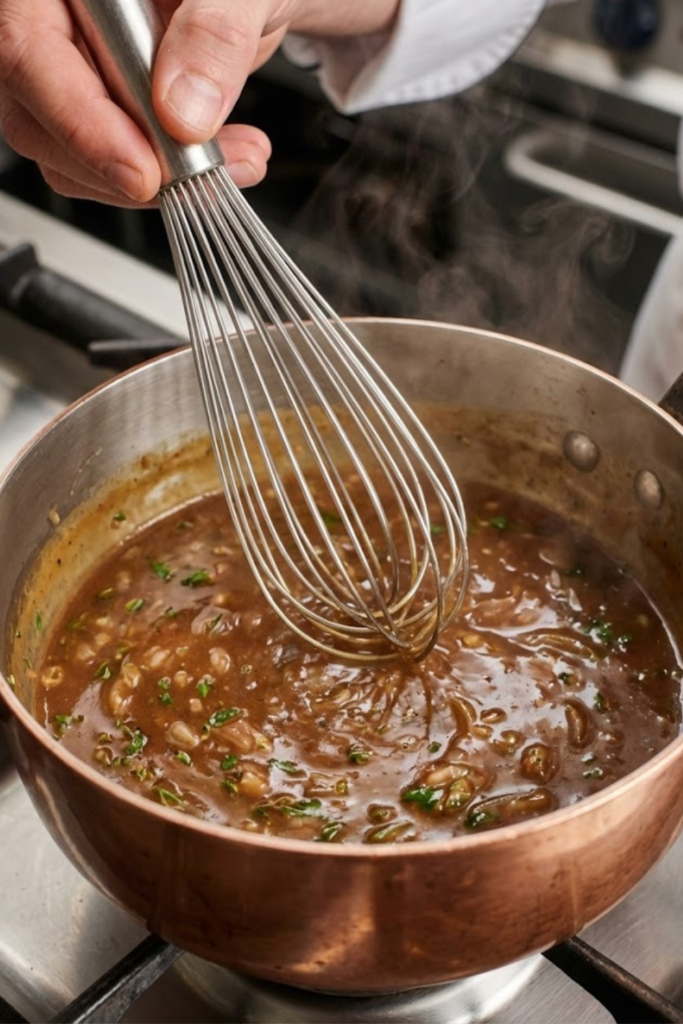
Finally, turn the heat down to low. This is the secret step that makes the sauce taste like it came from a restaurant. Grab a few cubes of cold butter—yes, it needs to be cold—and whisk them into the sauce one by one.
As the butter melts, it makes the sauce thick and glossy. Chefs call this “monter au beurre,” but I just call it delicious. It emulsifies the sauce so it doesn’t separate. Once the butter is melted, stir in your fresh thyme, taste it to see if it needs a pinch of salt, and you are done.
Serving Suggestions and Side Dishes
You worked hard on that sauce, so please don’t let it go to waste. You need a “vehicle” to get it from the plate to your mouth. I have tried serving this with just a side salad before, and it was a mistake. I spent the whole meal wishing I had something starchy to soak up the gravy.
The Starchy Pairings
My absolute favorite thing to serve this with is creamy mashed potatoes. There is just something about smooth potatoes mixed with that salty, buttery chicken gravy that feels like a hug after a long day. It’s classic comfort food.
If I am running late (which happens more than I like to admit), I might just boil some egg noodles or make a quick rice pilaf. Rice is great because it catches the sauce in between the grains. And honestly? A big slice of crusty sourdough bread is non-negotiable for me. You need it to wipe the plate clean at the end.
Add Some Greens
Since this dish is pretty rich with the chicken skin and the butter, you really need something fresh to balance it out. I don’t like serving heavy sides like mac and cheese here; it’s just too much heavy food on one plate.
I usually roast some asparagus in the oven while the chicken cooks. It’s easy and doesn’t take much focus. Garlicky green beans are another solid choice that my family actually eats without complaining. If I’m feeling really lazy, I just toss some arugula with lemon juice and olive oil. The sharp bitterness of the greens cuts right through the fat, which is nice.
What to Drink
If you opened a bottle of wine to cook with, you might as well drink a glass, right? Since we used white wine in the sauce, stick with that for dinner.
A buttery Chardonnay goes really great with the shallots because it mimics the richness of the dish. But a crisp Sauvignon Blanc works too if you want something lighter to wash it down. Just don’t pair it with a heavy red wine like a Cabernet; it’ll totally overpower the taste of the chicken.
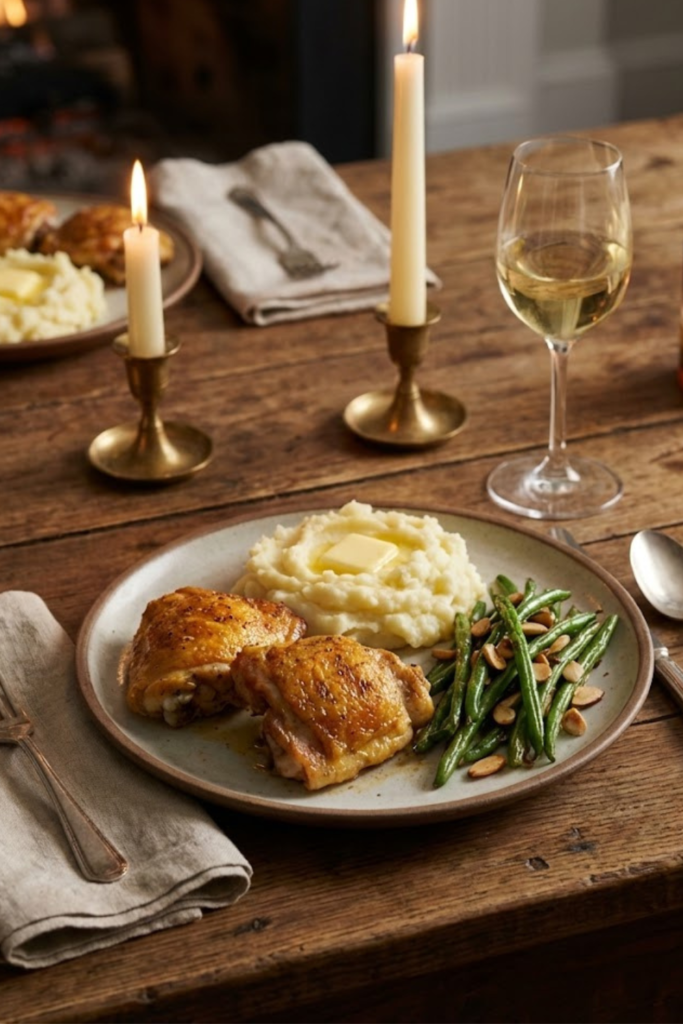
Honestly, learning to make these chicken thighs with shallot sauce changed how I cook on weeknights. It looks fancy enough for a special dinner, but I promise it is easy enough for a regular Tuesday when you are tired. That mix of the loud crunch from the skin and that salty, rich gravy? It is just the best.
If you make this, your family is going to think you took cooking lessons. Just don’t tell them how easy it actually was! It’s one of those meals that feels like a lot of work but actually comes together pretty fast once you get the hang of it.
Do me a huge favor? Pin this recipe to your “Best Chicken Dinners” board on Pinterest. It helps me out a ton, and that way, you won’t lose it when you are hungry next week!