I used to think that “restaurant-quality” chicken was some kind of gatekept secret that only chefs with tall hats knew. Did you know that nearly 60% of home cooks overcook chicken because they fear it being raw? Honestly, I was the queen of dry, rubbery meat for years until I realized that chicken thighs with creamy pan sauce are the ultimate cheat code for a perfect dinner. You get that incredible crispy skin and a sauce so good you’ll want to drink it with a straw! Let’s dive into how to make this happen in your own kitchen without the stress.

Why You Should Always Choose Bone-In Skin-On Thighs
Look, I’ll be the first to admit that for a long time, I was a total chicken breast snob. I thought I was doing the right thing for my health, but honestly, I was just making my family eat dry, boring meat every Tuesday night. It was pretty rough. We would sit there chewing forever, and I’d have to drown the plate in ranch just to make it go down. Then I finally gave chicken thighs with creamy pan sauce a try using the bone-in, skin-on kind. My life changed right then. The difference in flavor is just huge, and I’m never going back to those flavorless white meat slabs again.
The Bone is Like a Flavor Battery
A lot of people think the bone is just a hassle that gets in the way of your knife. But as someone who has spent years in a classroom, I like to think of the bone as a little heat conductor. It helps the chicken cook from the inside out more evenly. But even better than that, the bone is packed with moisture. While the meat cooks, the bone keeps everything around it juicy and tender. If you pull that bone out before you cook, you lose all that natural protection. I’ve noticed that bone-in meat has a much deeper, richer taste that you just can’t get with the boneless stuff. It’s the secret to why restaurant chicken always tastes better than what we usually make at home.
You Need the Fat for the Sauce
The skin is actually the most important part of this whole recipe. When you put that chicken skin-side down in a hot pan, the fat starts to melt out. This is what cooks call rendering. That yellow liquid gold left in the pan is the base for your sauce. If you use skinless thighs, you’re missing out on all that natural fat that makes the cream sauce taste so good. Plus, let’s be real, the crispy skin is the best part! Getting that perfect, salty crunch against the tender meat is what makes this dish a total winner. Without the skin, the sauce just feels like it’s missing its soul.
Thighs are Much More Forgiving
One thing I tell everyone is that thighs are way harder to mess up than breasts. If you get distracted by the kids or a phone call and leave them in the oven five minutes too long, they are still going to be delicious. A chicken breast would turn into a piece of wood in that time. Since they have a little more fat, they stay moist even if your timing isn’t perfect. They are also usually a lot cheaper at the grocery store. You get way more flavor and a better texture for less money. It really is a win-win for any home cook trying to put a good meal on the table without a lot of stress. Make sure you don’t trim off too much of that skin either; you want every bit of that flavor for the pan.
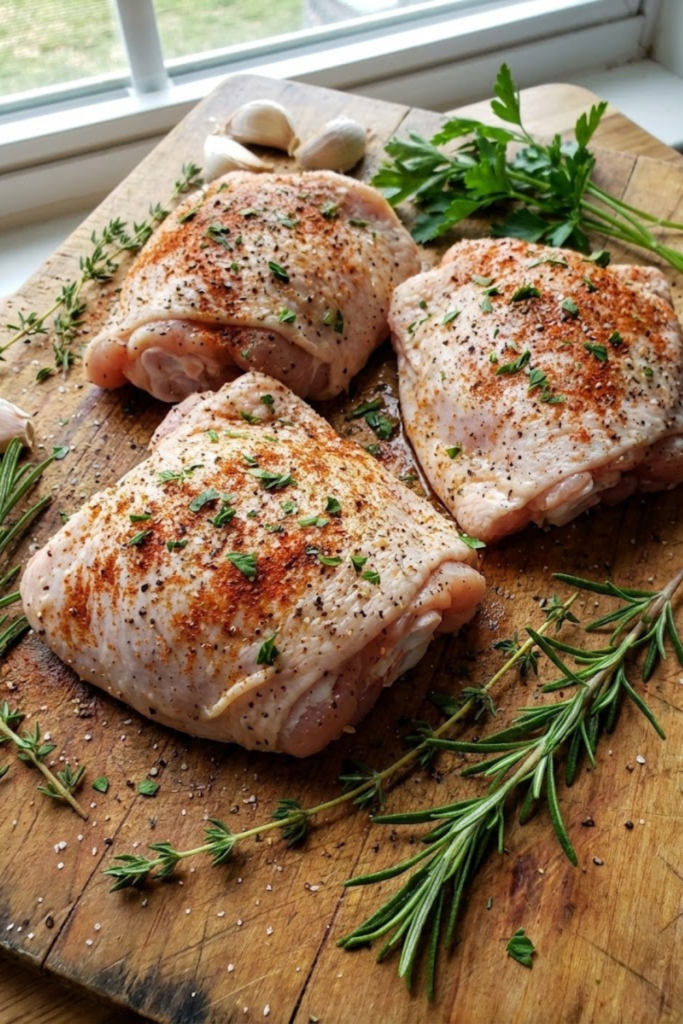
The Secret to the Perfect Golden-Brown Sear
I remember the first time I tried to make chicken thighs with creamy pan sauce, I totally butchered the most important part. I was in a rush—as usual—and I just tossed the chicken straight from the plastic package into a lukewarm pan. Instead of getting that beautiful, crackling golden skin you see in magazines, I ended up with this weird, grey, soggy mess. It looked like the chicken had been boiled in its own juices, and let me tell you, it was not appetizing at all. My husband tried to be nice about it, but even the dog seemed skeptical. I realized pretty quickly that getting a good sear isn’t about luck; it’s about a few simple rules that I now follow every single time.
Dry Your Chicken Like Your Life Depends on It
The biggest mistake people make is putting wet meat into a hot pan. Water is the absolute enemy of a good sear. If there is moisture on the skin, the heat from the pan has to evaporate all that water before it can actually start browning the meat. This basically steams your chicken, which is the opposite of what we want. Now, I grab a big handful of paper towels and I press down on every single thigh until they are bone-dry. I even let them sit out on the counter for about fifteen minutes if I have the time. When the skin is dry, it hits that oil and immediately starts to crisp up. It makes a huge difference in how the chicken thighs with creamy pan sauce turn out.
Pick a Heavy Pan and Get it Hot
You really need the right tool for this job. I used to try using those cheap non-stick pans, but they just don’t get the job done. For a real sear, you want something heavy like a cast iron skillet or a good stainless steel pan. These hold onto heat much better. You want to see the oil shimmering and just starting to show a tiny bit of smoke before you lay that chicken in there skin-side down. Don’t crowd the pan either! If you put too many pieces in at once, the temperature of the pan drops too fast, and you’re back to that soggy steam situation I mentioned earlier. I usually do four at a time so they have plenty of breathing room.
The Hardest Part: Don’t Touch It!
This is where I used to struggle the most because I’m naturally a bit impatient. Once you put that chicken in the pan, you have to leave it alone. I mean it—don’t even poke it for at least six to eight minutes. If you try to flip it and it feels like it’s sticking to the pan, that is the chicken telling you it isn’t ready yet. When the skin is perfectly seared and crispy, it will naturally release from the surface of the pan. I usually set a timer and go fold some laundry or something so I’m not tempted to mess with it. When you finally flip it and see that deep mahogany color, you’ll know it was worth the wait. Plus, all those little brown bits left in the pan are what make your sauce taste like a million bucks.
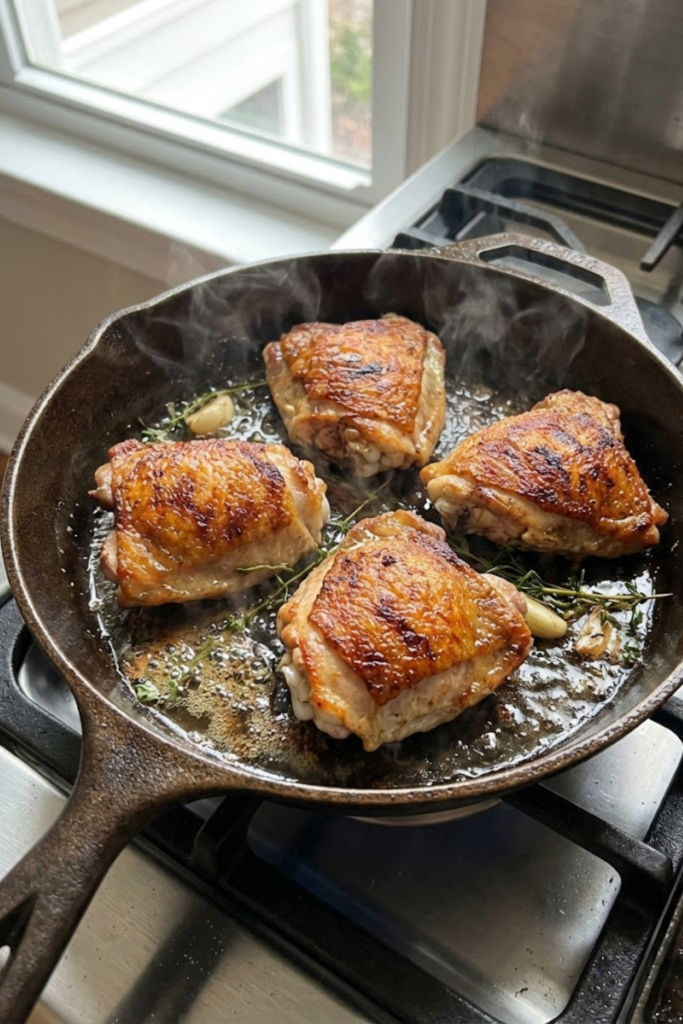
Building a Velvety Creamy Pan Sauce From Scratch
I used to think making a sauce was basically magic. I’d watch those cooking shows where they swirl a pan and suddenly it’s a masterpiece. I thought you needed some fancy degree or expensive tools, but honestly, once you get the hang of it, you’ll never buy a jar of gravy again. After you take that chicken out of the pan, you’ve got all these little brown bits stuck to the bottom. Don’t you dare wash that pan! Those bits are called “fond,” and they are like concentrated flavor nuggets. Building this chicken thighs with creamy pan sauce really starts with those leftovers in the skillet. It looks like a mess, but it’s actually the start of something great.
Deglazing the Pan for Max Flavor
The first step is called deglazing, and it sounds way more complicated than it actually is. You just pour a little liquid—I usually use chicken broth or a splash of white wine—into the hot pan. It’s going to hiss and steam like crazy, which is totally normal. I like to use a wooden spoon to scrape up all those brown bits while the liquid bubbles away. This is how you get all that savory goodness back into your sauce. If you skip this part, your sauce is going to taste thin and boring. I tell my students that this is where the real cooking happens. It’s like cleaning the pan but getting a reward for it!
Adding Your Aromatics
Once the pan is scraped clean and the liquid has cooked down a bit, I throw in my aromatics. I’m a huge fan of shallots and garlic. Shallots are like the fancy cousin of an onion—they’re sweeter and don’t make you cry as much. I sauté them in a little butter right in the same pan until they smell amazing. You have to be careful not to burn the garlic, though. Burnt garlic tastes bitter and can ruin the whole vibe of your chicken thighs with creamy pan sauce. I usually wait until the very last minute to add the garlic so it just gets soft and fragrant without turning black. This part makes the whole house smell like a five-star restaurant.
Getting the Perfect Balance
Now, for the best part: the heavy cream. When you pour that cream in, the whole thing turns into this beautiful, silky gold color. But here is the trick I learned the hard way: cream on its own can be a little too heavy. You need something sharp to cut through that richness. I always squeeze in some fresh lemon juice or add a tiny bit of Dijon mustard at the end. It brightens everything up so it doesn’t just feel like a bowl of fat. You want a sauce that coats the back of a spoon and makes you want to lick the plate. It’s the kind of sauce that makes your family think you’ve been taking secret night classes!

Final Tips for the Best Chicken Thighs with Creamy Pan Sauce
I really hope you’re feeling excited about trying this out tonight. When I first started teaching my friends how to cook, this was always the dish that made them feel like actual pros. There is just something so satisfying about hearing that crunch when you bite into the meat and then tasting that rich, velvety sauce. It’s a real confidence booster in the kitchen! But before you head off to the grocery store to grab your supplies, I wanted to share a few final thoughts and some “teacher tips” that I’ve picked up over the years. These are the little things that separate a good dinner from a meal that your family will be begging for every single week.
What to Serve on the Side
One of the best parts about making chicken thighs with creamy pan sauce is figuring out what to put under it. You spent all that time making a beautiful sauce, so you definitely don’t want it to go to waste on the plate. I almost always serve this with a big pile of mashed potatoes. The sauce acts like a gourmet gravy that just makes everything taste better. If you aren’t a potato person, some crusty bread is a must. You’ll want to use it to swipe up every last drop of that sauce. My kids also love it over white rice or even some buttered noodles. Just make sure whatever you choose can soak up that goodness!
Troubleshooting Your Sauce
Sometimes things don’t go exactly as planned, and that is totally okay. Cooking is a journey, not a test you have to pass on the first try. If your sauce looks a little too thick, don’t panic. You can just whisk in another splash of chicken broth or even a little bit of water to thin it out until it’s just right. If it’s too thin, let it bubble for another minute or two so it can reduce down. And if the sauce ever looks like it’s “breaking” or getting oily, just take it off the heat and whisk in a tiny bit of cold butter. It usually brings everything back together like magic.
Practice Makes Perfect
Don’t be too hard on yourself if your first batch isn’t picture-perfect. I’ve burned my fair share of garlic and had plenty of soggy chicken skins in my time. The more you make this, the more you’ll get a “feel” for your stove and your pans. Each kitchen is a little different, and that’s part of the fun. Once you master the basic steps, you can start getting creative by adding things like mushrooms, spinach, or different herbs.
If you found this guide helpful and you’re proud of how your dinner turned out, please share it on Pinterest! I’d love to see more people enjoying a real, home-cooked meal that actually tastes good. Happy cooking, and I hope your kitchen smells amazing tonight!