Did you know that nearly 75% of home cooks admit to accidentally drying out their chicken breasts at least once a month? It’s a culinary tragedy! I used to be one of them, chewing through rubbery meat and pretending it was “fine.” But let me tell you, this chicken breast with garlic rosemary recipe changed the game for me entirely.
We aren’t just making dinner tonight; we are creating an aromatic experience that smells like a rustic Italian kitchen. Whether you are a total beginner or a seasoned pro, this method guarantees juicy perfection every single time!
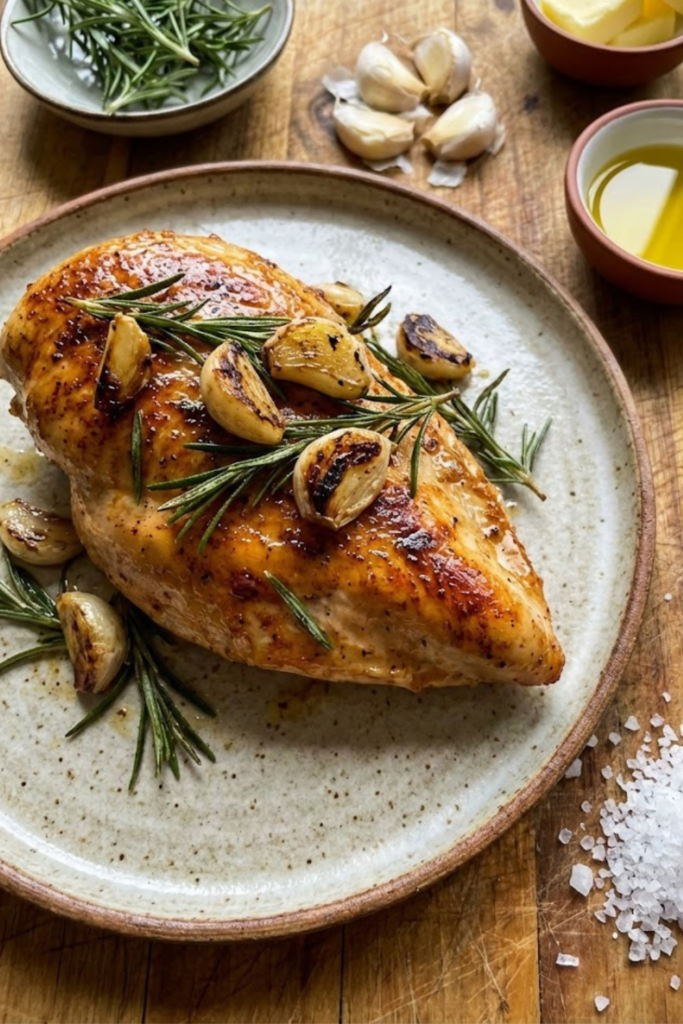
Essential Ingredients for Aromatic Garlic Rosemary Chicken
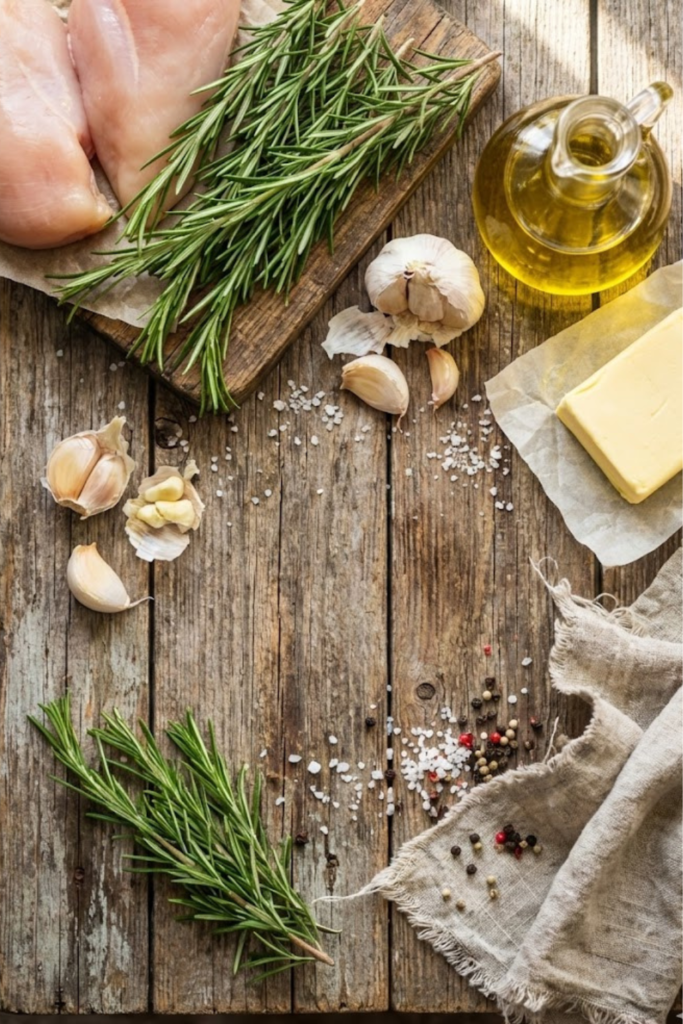
Look, I have ruined my fair share of dinners. For the longest time, I thought all chicken was created equal and that the dusty jar of dried rosemary in the back of my cabinet was “good enough.” I was wrong. It’s actually kind of embarrassing how many times I served rubbery, flavorless meat before I realized ingredients are the whole ball game.
When you are making a simple chicken breast with garlic rosemary, there is nowhere for poor quality ingredients to hide. You can’t mask a bad bird with heavy cream or cheese here. It’s just the meat, the heat, and the aromatics.
Picking the Right Bird
I used to just grab the cheapest pack of family-sized breasts at the grocery store. Big mistake. You want to look for “air-chilled” chicken breasts if you can find them.
Most commercial chicken is cooled in big vats of cold chlorinated water, which the meat absorbs like a sponge. When you cook it, that water steams out, making it impossible to get a good sear. Air-chilled chicken hasn’t absorbed that extra water, so it tastes like actual chicken and sears beautifully. It costs a dollar or two more, but it saves you from the “soggy grey meat” sadness.
Fresh vs. Dried: The Rosemary Rule
Please, for the love of food, do not use dried rosemary needles for this. I’ve tried it, and it feels like eating little sharp sticks. It just doesn’t work.
You need fresh rosemary sprigs. When the hot butter hits those fresh leaves, the oils release and perfume the entire kitchen. It’s a scent that makes your neighbors jealous. If you absolutely can’t find fresh, use a tiny pinch of dried, but honestly? It’s not the same vibe.
The Fat Equation
We are using a mix of fat here, and there is a specific reason for it. I used to cook with just butter, but the milk solids would burn and turn bitter before the chicken was cooked through.
- Olive Oil: Raises the smoke point so we don’t set off the fire alarm.
- Unsalted Butter: Adds that rich, nutty flavor we crave.
- The Mix: Using 50% of each gives you the best of both worlds.
Also, use unsalted butter so you can control the salt levels yourself. Nothing is worse than accidentally over-salting a dish because your butter was already loaded with sodium.
Garlic: Don’t Mince It Yet
Here is a trick I learned the hard way after burning a ton of garlic. For this recipe, we aren’t mincing the garlic fine; we are smashing the whole cloves.
When you mince garlic too early, it burns in the hot pan and tastes acrid. By smashing the clove with the side of your knife and leaving it whole, it infuses the oil gently without turning into charcoal. It’s a small tweak, but it makes a massive difference in the final taste of your chicken breast with garlic rosemary.
Preparing Your Chicken for the Pan
Okay, before we even think about turning on the stove, we have some work to do. I know, I know. You just want to cook. But trust me, prepping the meat is actually more important than the cooking part. I used to skip this and wonder why my chicken was tough and uneven, but once I started doing these few steps, everything changed.
This isn’t hard, but you have to pay attention to the details.
The Pounding Method
Most chicken breasts you buy are huge and uneven. One end is thick and the other is thin. If you cook them like that, the thin end turns to leather before the thick end is even safe to eat.
You need to pound them out. You don’t need fancy equipment for this. I use a meat mallet, but a heavy rolling pin or even the bottom of a heavy jar works too. Put the chicken between two pieces of plastic wrap and give it a few good whacks until it’s about one inch thick all the way across. This helps it cook evenly so you aren’t playing a guessing game.
The Room Temperature Rule
This is the step everyone wants to skip because we are all in a rush. Please don’t.
Take your chicken out of the fridge about 15 or 20 minutes before you cook it. If you throw ice-cold meat into a hot pan, the temperature drops too fast and the chicken “seizes” up. It makes the fibers tight and tough. Let it take the chill off on the counter while you get your garlic and rosemary ready. It makes the meat much more tender.
Dry Brining and Seasoning
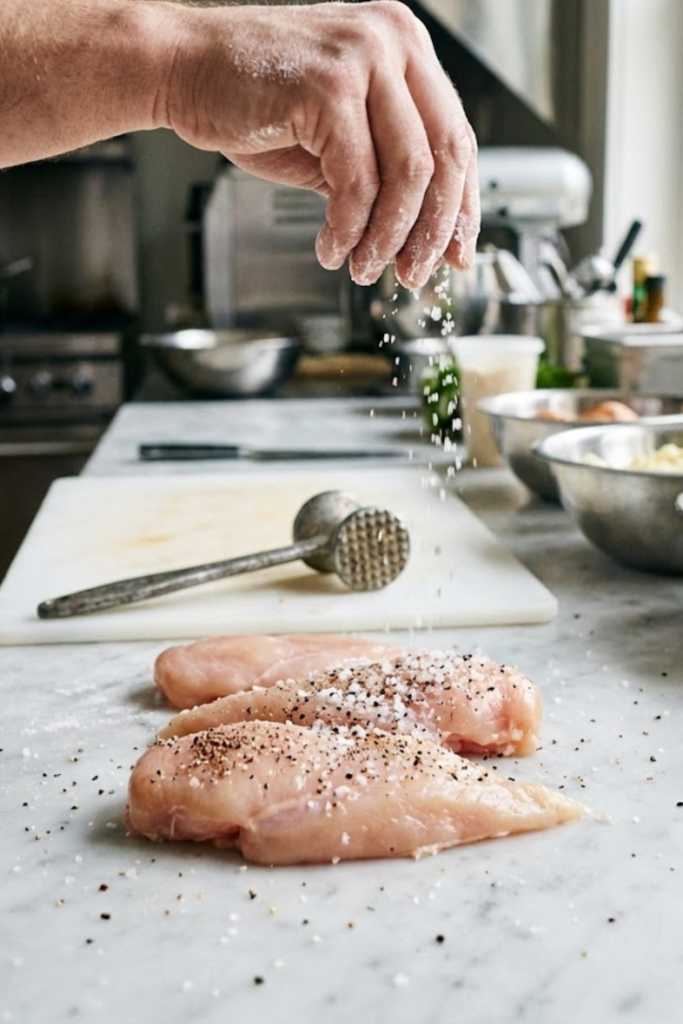
Water is the enemy here. If your chicken is wet, it won’t get that nice golden brown crust; it will just steam in its own juices. Gross.
Grab some paper towels and pat the chicken dry on both sides. Get it as dry as you possibly can. Once it’s dry, season it generously with coarse salt. I like to press the salt, black pepper, and minced rosemary right into the meat with my hand so it sticks. This “dry brine” pulls a little moisture to the surface and creates a killer crust when it hits the oil.
Step-by-Step Cooking Instructions
Alright, class is in session! This is the part where we actually cook. If you did the prep work I told you about, this part is going to be a breeze. Don’t be nervous. We are just heating up some meat, not building a rocket.
Here is exactly how I do it to get that perfect chicken breast with garlic rosemary without burning the house down.
Heating the Pan
Get your skillet out. I use a heavy cast iron pan because it holds heat really well, but a stainless steel one works too. Just don’t use a flimsy non-stick pan if you can help it; you wont get a good crust.
Put the pan on the stove over medium-high heat. Let it get hot. You want it hot enough that when you add the oil, it shimmers and moves fast, like water. If it starts smoking like crazy, take it off the heat for a second—it’s too hot.
The Sear (Do Not Touch It!)
Add your olive oil and swirl it to coat the bottom. Now, lay your chicken breasts into the pan. Lay them away from you so the hot oil doesn’t splash back and hit your stomach. I learned that the hard way and ruined a favorite shirt.
Once the chicken is in the pan, stop. Put your hands behind your back if you have to. Do not touch the chicken.
Let it cook undisturbed for about 5 or 6 minutes. It needs time to develop that golden-brown color. If you try to lift it and it sticks to the pan, it’s telling you it’s not ready yet. Wait another minute. It will release on its own when it’s seared.
The Flip and Baste
Okay, flip the chicken over. It should look beautiful and golden. Now, turn the heat down to medium or medium-low. We don’t want to burn the next ingredients.
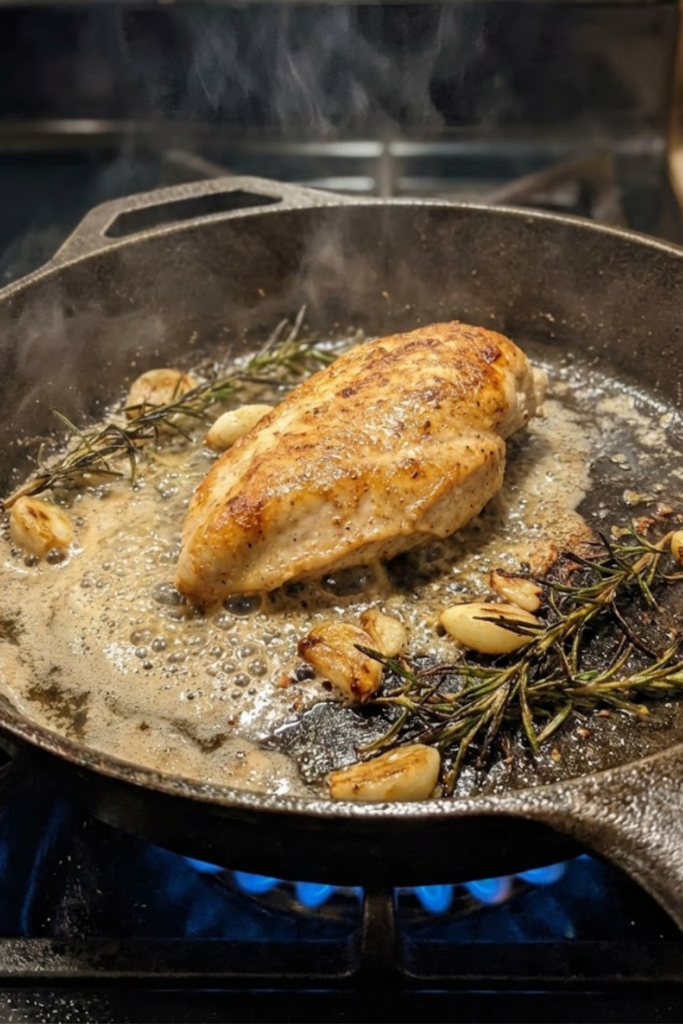
Toss in your knob of butter, the smashed garlic cloves, and your fresh rosemary sprigs. The butter is going to melt and start foaming. This is good. It’s going to smell incredible in your kitchen right about now.
The Basting Technique
This sounds fancy, but it’s just spooning sauce. Tilt the pan a little bit so the melting butter, oil, and chicken juices pool at the bottom with the garlic and rosemary.
Take a large spoon, scoop up that hot, bubbling liquid, and pour it over the chicken breasts. Keep doing this. Scoop and pour. Scoop and pour. This is called basting. It helps cook the chicken from the top down and keeps it super moist. Plus, it forces that garlic and rosemary flavor right into the meat. Do this for another 5 minutes or so until the chicken is cooked through.
Tips for Ensuring Juicy Chicken Every Time
Okay, we are in the home stretch. The hard part is over, but if you stop paying attention now, you might still end up with dry meat. I used to think I could just guess when chicken was done by poking it or cutting it open. Do not do that! Cutting into hot chicken lets all the juice run out, and then you are left with a sad, dry piece of meat.
Here are the few things I do every single time to make sure my chicken breast with garlic rosemary is perfect.
Get a Digital Thermometer
Seriously, this is the best ten bucks you will ever spend for your kitchen. Stop guessing.
You want to take the chicken out of the pan when it hits 160°F (71°C). I know, the safety rules say 165°F. But here is the science part: the meat keeps cooking for a few minutes after you take it off the heat. It’s called “carryover cooking.” If you wait until it hits 165°F in the pan, it will shoot up to 170°F or higher while it sits on the plate, and then it gets tough. Pull it at 160°F, and it will rise to the perfect temp on its own.
The Resting Phase
This is non-negotiable. When you take the chicken out of the pan, put it on a cutting board or a warm plate and just leave it alone.
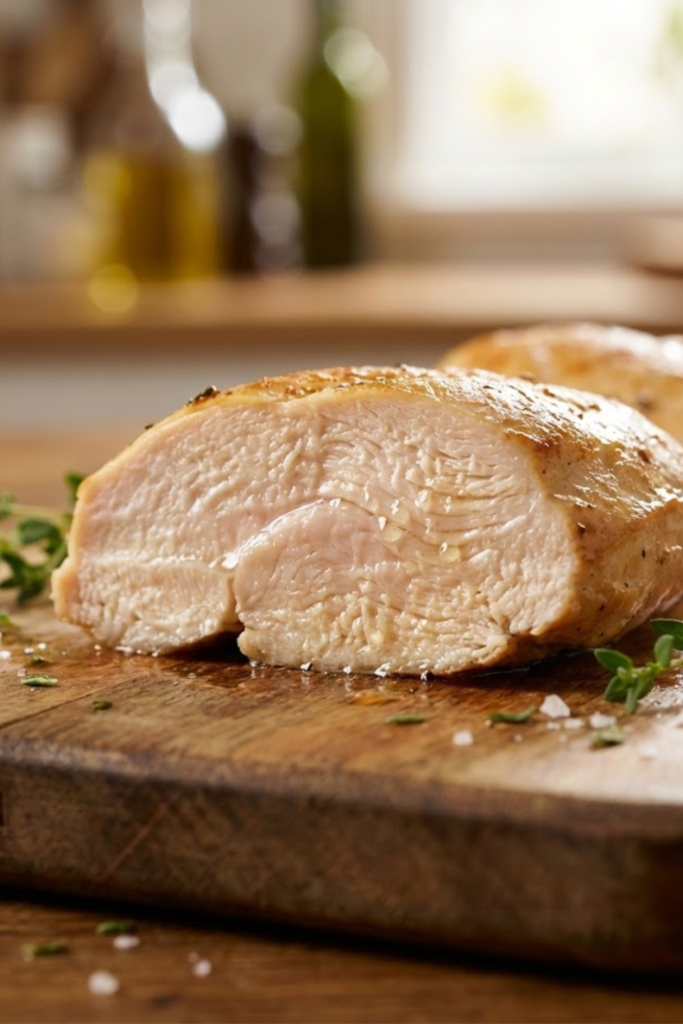
Give it 5 to 10 minutes. When meat cooks, all the juices squeeze into the center. If you cut it right away, they spill out all over the board. If you let it rest, the juices relax and spread back out through the meat. This is the difference between a juicy bite and a dry one.
Don’t Crowd the Pan
I know we all want to get dinner done fast, but if you jam four big chicken breasts into one skillet, they won’t sear. They will just sweat.
The moisture from the chicken needs room to escape. If the pan is too full, that moisture gets trapped and steams the meat instead of browning it. If you have a lot of chicken to cook, do it in batches. It takes a little longer, but the taste is way better.
The Butter Finish
This is a little restaurant trick I picked up. While your chicken is resting on the board, take a tiny piece of cold butter and put it right on top of the hot meat.
It will melt slowly and mix with the rosemary and garlic juices on the surface. It adds a nice glossy shine and an extra little kick of richness right before you serve it. It makes the dish feel special, even if it’s just a Tuesday night.
Serving Suggestions and Pairings
Now for the fun part! The chicken is done, the kitchen smells amazing, and everyone is hungry. But you can’t just put a piece of meat on a plate and call it a day. Well, you can, but it’s way better if you have some sides to soak up that garlic-rosemary butter.
I’m a total sucker for a good side dish. Sometimes I think I like them more than the main course. Here is what I usually serve with this chicken breast with garlic rosemary to make it a full meal.
Starchy Sides are a Must
Since this recipe uses a lot of butter and olive oil, you have this amazing sauce left in the pan. Do not throw that away!
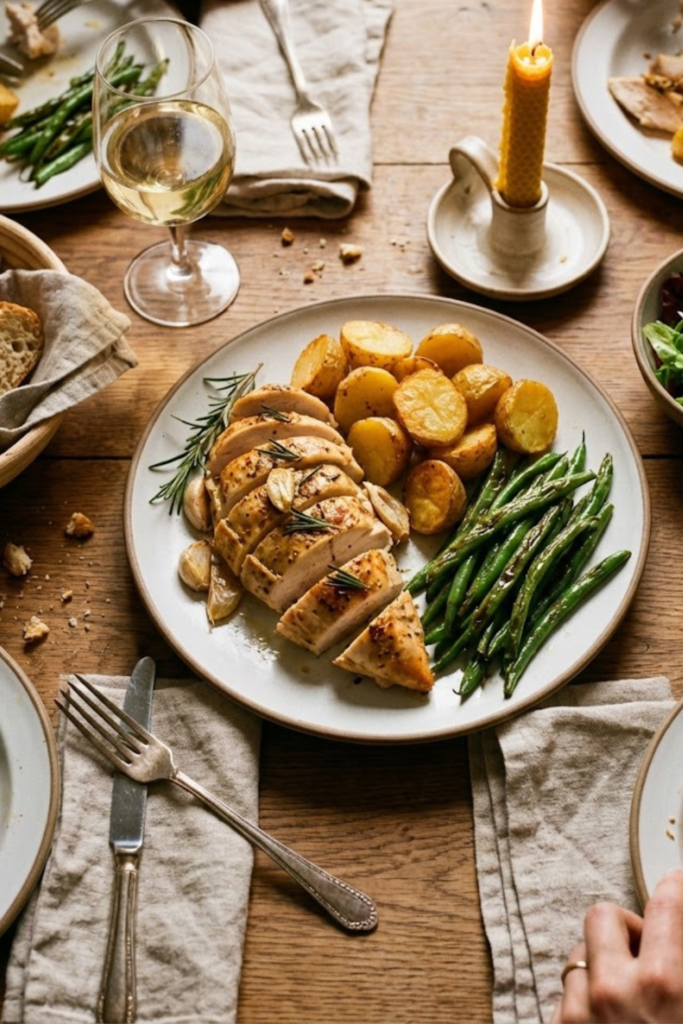
You need something starchy to mop it up. My go-to is roasted baby potatoes. I just toss them in the oven while the chicken is prepping. If you want comfort food, creamy garlic mashed potatoes are a winner too. Or, if I’m feeling a little fancy, I’ll make a simple risotto. There is nothing better than mixing a bite of chicken with a scoop of creamy rice.
Add Some Green
Because the chicken is rich with all that butter, you want a vegetable that cuts through the fat. Something crisp and fresh works best.
I usually do sautéed asparagus with a little lemon juice. The acid in the lemon balances out the butter perfectly. Fresh green beans are great too. If I don’t feel like cooking another vegetable, I just grab a bag of arugula, toss it with vinaigrette, and pile it right on top of the chicken. The hot chicken wilts the greens just a little bit, and it’s delicious.
Wine Pairing
I am definitely not a wine expert, but I know what tastes good.
Since this is a white meat dish with herbs, a chilled Chardonnay is perfect. It has a buttery taste that matches the sauce. If you prefer red wine, go for a Pinot Noir. It’s light enough that it won’t overpower the chicken. Or, you know, just drink whatever you have in the fridge. I won’t judge.
Leftover Ideas
If you are lucky enough to have leftovers, they are gold for lunch the next day.
Cold rosemary chicken makes the best sandwiches. I slice it thin and put it on toasted sourdough with a little mayo and lettuce. It’s also great chopped up cold over a big salad. Honestly, sometimes I just stand in front of the fridge and eat a piece cold right out of the container. It’s that good.
So, that is really all there is to it. Cooking shouldn’t be scary. I used to look at a raw piece of chicken and worry I was going to mess it up or serve something inedible. But once you break it down into these simple steps—pounding it flat, drying it off, and basting it with that amazing garlic butter—it becomes easy.
This chicken breast with garlic rosemary has become my safety net. It’s the meal I make when I’m tired, when I have guests, or when I just want something that tastes like a hug.
I hope you give this a try in your own kitchen. Don’t worry if it isn’t picture-perfect the first time. It will still taste good. And once you get the hang of it, you won’t want to cook chicken any other way.
If this recipe helped you out or saved your dinner, please pin it on Pinterest! It helps other home cooks find it, and I’d love to see your photos if you try it. Happy cooking!