Let’s be real for a second—there is nothing sadder than a dry, rubbery piece of chicken. It’s the culinary equivalent of a rainy beach day! I remember the first time I tried to impress a date with a “fancy” French dinner; I served a chicken breast so dry it could have been used as a doorstop. We ordered pizza. But hey, failures are just stepping stones, right?
Did you know that overcooking poultry is the number one complaint among home cooks? That stops today. I’m going to show you how to nail this chicken breast with shallot sauce so perfectly that you’ll feel like a Michelin-star chef in your own pajamas. We are talking golden-brown crusts, tender meat, and a sauce so savory you’ll want to drink it with a straw (I won’t judge). Let’s dive into this flavorful journey!
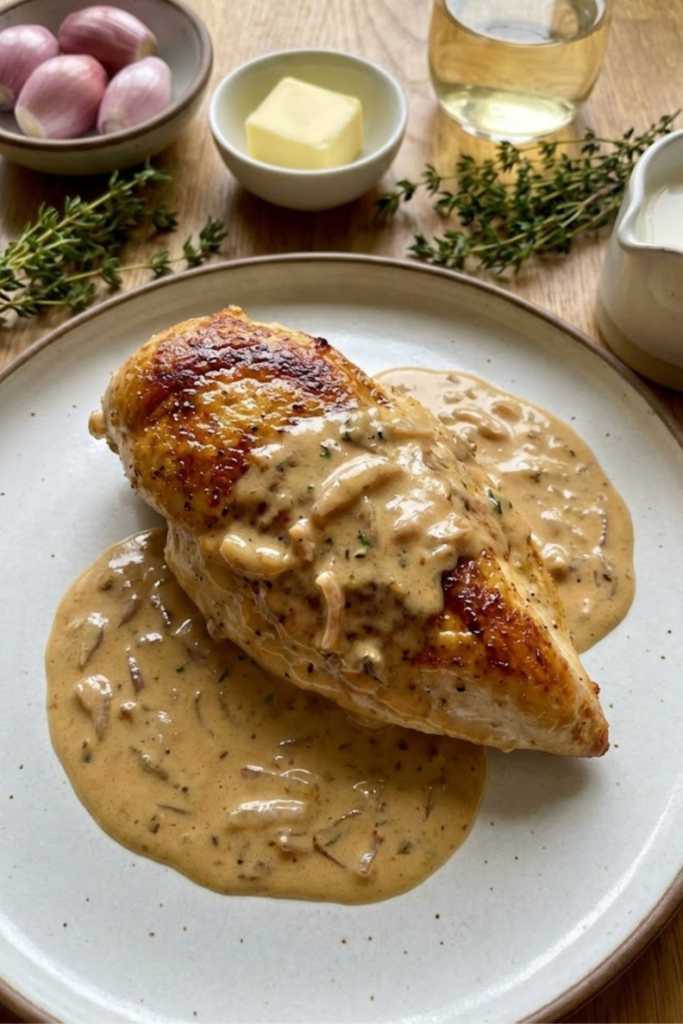
Why This Shallot Pan Sauce Changes Everything
I’ve spent plenty of years standing over a stove, and if there’s one thing I’ve learned, it’s that chicken breast can be a bit of a bore on its own. It’s kind of the “plain white t-shirt” of the meat world. It’s fine, sure, but it needs a little something extra to really make it pop. The second I figured out how to make a real shallot pan sauce? Well, my whole kitchen game changed overnight. It was like going from an old black-and-white TV to full 4K color. Suddenly, my “boring” Tuesday night dinners felt like a celebration.
It’s All About the Brown Bits (The Fond)
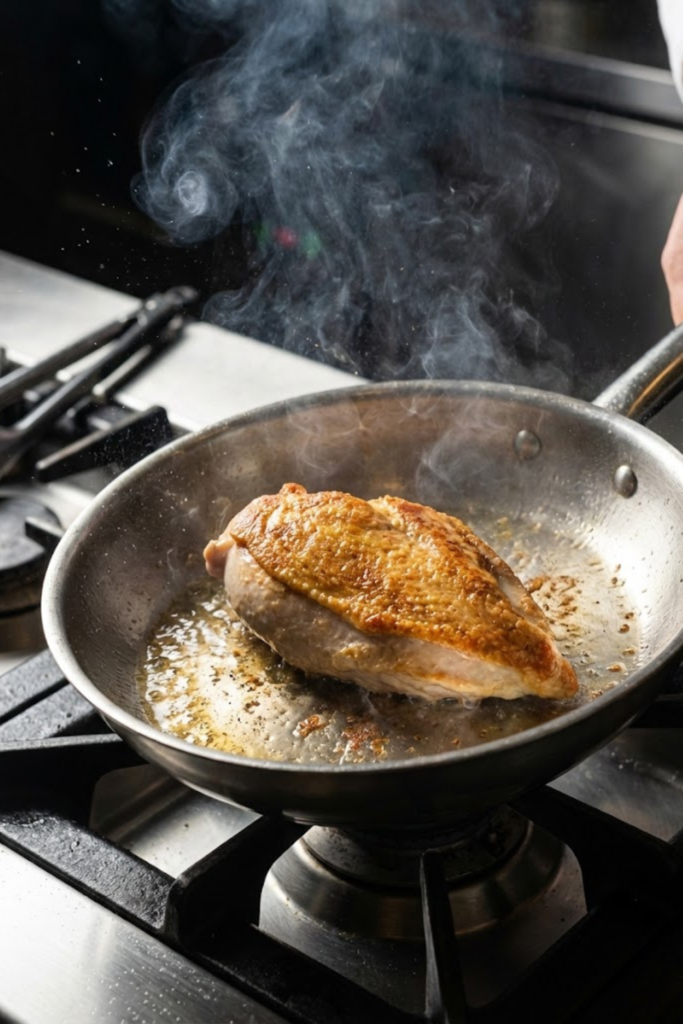
Let me tell you a secret that most professional chefs know but don’t always explain clearly to us home cooks. When you sear that chicken in the pan, you see those little crusty brown bits stuck to the bottom? Some folks think that’s just a mess they’ll have to scrub off later with a lot of elbow grease. I used to think that too! I’d soak the pan in soapy water and complain. But those bits are actually called “fond.” That’s just a fancy word for flavor gold.
When you add liquid to that hot pan—a process called deglazing—you are picking up all that concentrated chicken goodness. It’s what makes the sauce taste like it took hours to simmer when it really only took about five minutes. It’s the difference between a sauce that tastes like a packet of gravy and one that tastes like a high-end restaurant meal.
Shallots: The Secret Weapon
Now, why shallots? Why not just grab a regular old yellow onion from the pantry? I get asked this a lot by people I teach. Think of a shallot as the onion’s more sophisticated, sweeter cousin. It doesn’t have that sharp, aggressive “bite” that makes you want to brush your teeth three times after dinner. Instead, shallots melt down into the sauce and give it a mild, almost garlicky sweetness. It feels very fancy, but you can find them at almost any grocery store for just a few cents. Using them makes the whole dish feel special, like something you’d pay thirty dollars for at a French bistro downtown.
One Pan, No Stress
One big reason I love this sauce is because it keeps things simple. I don’t want to wash five different pots on a busy weeknight. You cook the chicken, move it to a plate, and then you make the sauce right in the same pan while the meat rests. It’s fast, it’s easy, and it makes you look like a total pro in front of your family or guests. Plus, the sauce helps keep the chicken moist, so even if you overcooked the meat a tiny bit, the sauce covers it up and nobody will even notice. It’s a real lifesaver when you’re tired but still want a real, home-cooked meal that actually tastes good.
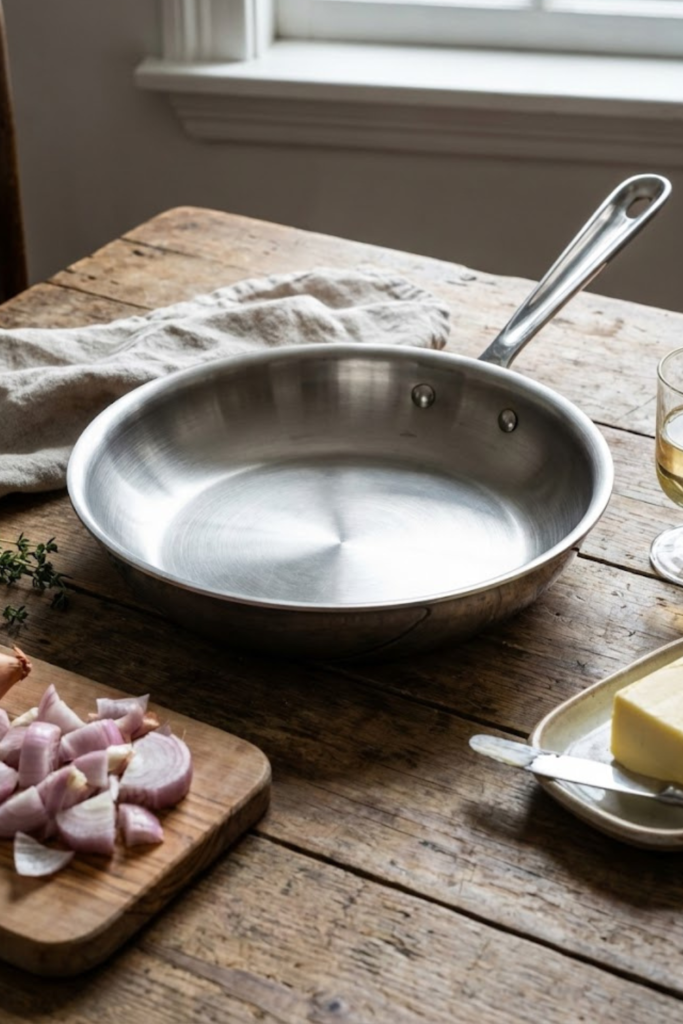
Ingredients You’ll Need for Perfect Chicken
Before you start heating up your stove, you need to make sure your counter is set up with the right stuff. I used to be the kind of person who just grabbed whatever was on sale at the store. I thought chicken was just chicken, you know? But then I realized that the quality of what you put in the pan really changes what comes out of it. It’s like trying to build a house with cheap wood—it might look okay at first, but it won’t hold up. For this dish, we want items that work together to create a really deep flavor.
The Right Bird Makes a Difference
I always tell my friends to look for air-chilled chicken breasts if they can find them. Most of the cheaper chicken you find is cooled in big vats of cold water. That sounds okay, but the meat actually soaks up that water like a sponge. When you go to cook it, all that extra liquid leaks out into the pan, and instead of getting a nice brown sear, your chicken just kind of boils in its own juices. Air-chilled chicken costs a bit more, but it tastes way more like actual chicken and gets that golden crust we are looking for. Also, try to get pieces that are about the same size so they finish cooking at the same time.
Picking Your Liquids and Herbs
For the sauce, you’re going to need a dry white wine. I usually go for a Sauvignon Blanc or a Pinot Grigio. Just stay away from anything sweet like a Riesling, or your dinner will taste like dessert! If you don’t want to use alcohol, you can use a bit more chicken broth with a squeeze of lemon juice to get that tartness. For the herbs, fresh thyme is my favorite. It has an earthy smell that fits perfectly with the sweetness of the shallots. If you can’t find thyme, tarragon is another great choice that gives it a nice French vibe.
The Fat Component
Lastly, don’t skimp on the butter. We use a little olive oil to sear the chicken because it can handle higher heat without smoking up the whole kitchen. But at the very end, we whisk in a cold knob of unsalted butter. This makes the sauce thick and shiny. It’s the part that makes everyone ask how you made it. Don’t forget the salt and pepper too; seasoning at every step is the real secret to a tasty meal.
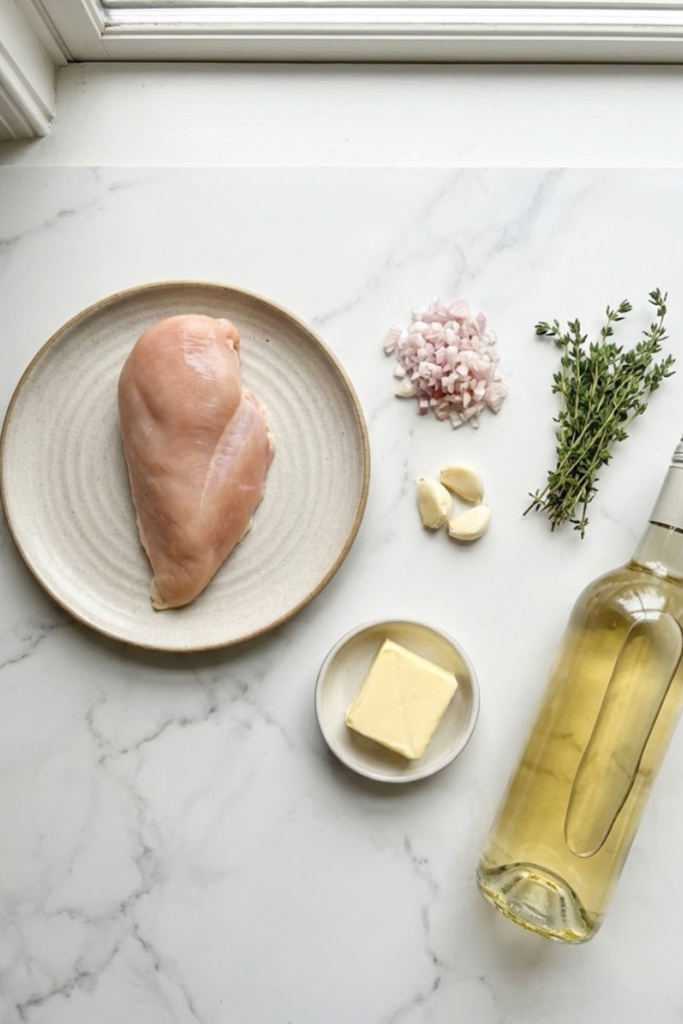
Step-by-Step: Searing the Chicken Breast
Alright, let’s get down to the actual cooking part. Searing chicken might sound like a basic skill, but it is where most people mess up. I can’t tell you how many times I’ve seen folks end up with a piece of meat that is burnt on the outside and raw in the middle. It’s frustrating! But once you learn a few simple tricks, you will be able to do this with your eyes closed. This part of the process is about building texture and flavor, so let’s make sure we do it right.
Get That Chicken Level
Before you even think about turning on the stove, you need to look at your chicken. Usually, a chicken breast is thick at one end and thin at the other. If you just throw it in the pan like that, the thin part will be dry as a bone by the time the thick part is safe to eat. My favorite way to fix this is to put the chicken between two pieces of plastic wrap and give it a few good whacks with a heavy pan or a meat mallet. You aren’t trying to turn it into a pancake; you just want it to be the same thickness all the way across. This helps the meat cook evenly and much faster.
Don’t Fear the Salt
Now, let’s talk about seasoning. I used to be really shy with the salt because I thought I was being healthy. Big mistake. Most of that salt stays on the surface to create a tasty crust. Pat the chicken dry with a paper towel first. If the meat is wet, it will steam instead of sear. Once it’s dry, sprinkle a good amount of salt and pepper on both sides. You want to do this right before you put it in the pan. If you salt it too early, it pulls moisture out to the surface, which is exactly what we don’t want.
Keep Your Hands Off the Pan
Heat your oil in the pan until it’s shimmering but not smoking. When you drop the chicken in, you should hear a loud sizzle. If you don’t hear that sound, the pan isn’t hot enough! Now, here is the hardest part: leave it alone. Don’t poke it, don’t move it, and don’t peek for at least four or five minutes. The chicken needs time to form that golden-brown crust. If you try to flip it and it sticks to the pan, it’s telling you it isn’t ready yet. Once it releases easily, flip it over and cook the other side until it reaches 160°F.
The Hardest Part: Waiting
When the chicken is done, take it out and put it on a plate. Do not cut into it yet! I know you’re hungry, but if you cut it now, all those delicious juices will run out all over the plate, leaving you with dry meat. Cover it loosely with some foil and let it rest for about five to ten minutes. While the chicken is resting and those juices are settling back into the meat, we are going to use that same pan to make our amazing sauce. It’s a win-win situation.
Mastering the Creamy Shallot Reduction
Now that your chicken is resting and staying juicy under its little foil tent, it’s time for the real magic. This is the part of the recipe where your kitchen starts to smell like a fancy French restaurant, and your neighbors start wondering what you’re cooking. Making a pan sauce can feel a little scary if you’ve never done it before, but trust me, it’s mostly just stirring and watching. We are going to use all that flavor left behind in the pan to make something truly special.
Getting the Shallots Just Right
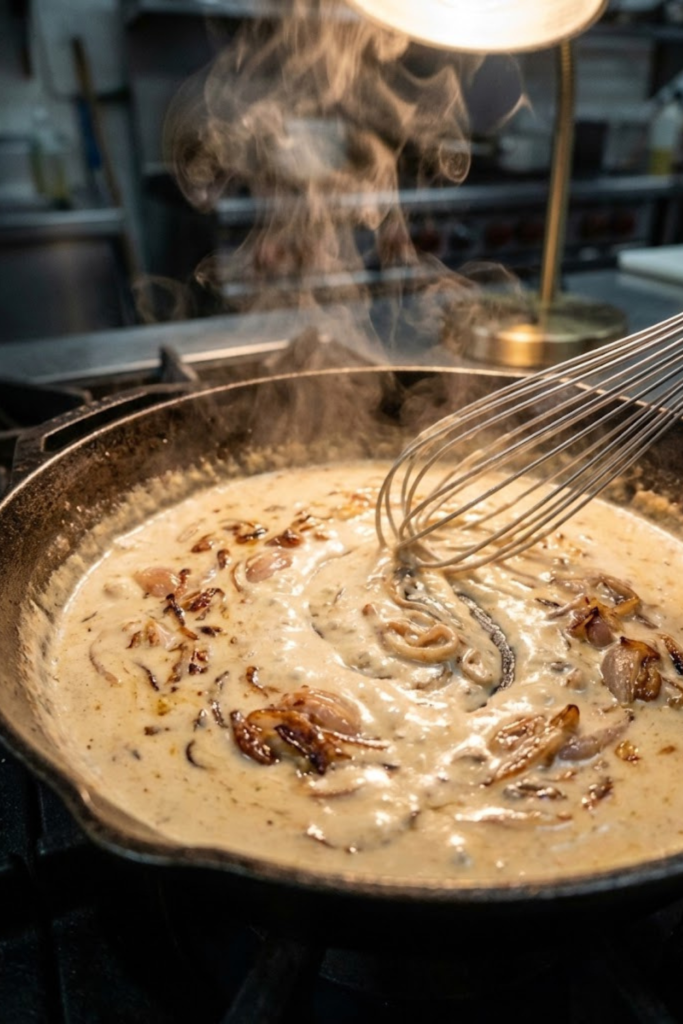
Since you just took the chicken out, the pan is still hot and has some of those tasty fats left over. If it looks a bit dry, go ahead and drop in a small piece of butter. Toss in those finely chopped shallots. You want to hear a gentle sizzle, not a loud pop. If the pan is too hot, the shallots will burn and turn bitter, which basically ruins the whole vibe. Stir them around for about two or three minutes. You are looking for them to get soft and look a bit see-through. I like to scrape the bottom of the pan with my wooden spoon during this part to start loosening up those brown bits we talked about earlier.
The Magic of the Deglaze
Once the shallots are soft and smelling sweet, grab your white wine. Pour about half a cup into the pan. It’s going to hiss and steam like crazy—don’t be scared! This is the deglazing part. Use your spoon to really scrub the bottom of the skillet. All those stuck-on chicken bits will dissolve into the wine, turning it a deep, beautiful color. Let the liquid bubble away until there is only about half of it left. This concentrates the flavor so it’s nice and strong. If you don’t let it reduce enough, your sauce will be watery and thin, and nobody wants that on their plate.
Finishing with the Gloss
The final step is what makes this sauce look professional. Turn the heat down to low. You don’t want the sauce boiling anymore. Take a couple of cold tablespoons of butter and whisk them in one at a time. This is a trick called “mounting with butter.” It makes the sauce thick, creamy, and shiny. If you have some fresh thyme or parsley, throw that in now too. Pour any of the juices that leaked out of the resting chicken back into the pan—that’s pure flavor! Give it one last stir, and you’ve got a sauce that is honestly good enough to eat with a spoon. Put your chicken back in for a second to coat it, and you’re ready to serve.
Troubleshooting Common Mistakes
Look, I’ve made more mistakes in the kitchen than I’d like to admit. One time, I got so distracted talking to my neighbor that I let the shallots turn into little pieces of charcoal. It happens! Even after years of teaching folks how to cook, I still have days where things don’t go perfect. The good news is that most kitchen disasters can be fixed if you know what to do. If your chicken breast with shallot sauce isn’t looking like the pictures just yet, don’t worry about it. Let’s look at some of the most common hiccups and how to patch them up so you can still enjoy a great dinner.
Fixing a Broken Sauce
Sometimes you add that cold butter at the end and instead of a smooth, silky sauce, you see oily streaks and clumps. We call this a “broken” sauce. Usually, this happens because the pan was way too hot when you added the butter, or you let it boil after the butter was in there. If this happens, don’t panic! Just add a tiny splash of water or a teaspoon of heavy cream and whisk it really fast. Most of the time, the sauce will come back together and look great again. It’s a simple fix that saves a lot of stress.
What to Do if You Burn the Shallots
Shallots are small and delicate, so they go from perfect to burnt in a heartbeat. If they turn dark brown or black, they will taste very bitter and that flavor will get into everything. There is no way to fix burnt shallots, honestly. If they burn, the best thing to do is wipe the pan out and start that part over. It only takes three minutes to chop another shallot, and it’s much better than eating a bitter sauce. Next time, keep the heat on medium-low and keep them moving around the pan.
Handling Dry or Bland Chicken
If you cut into your chicken and it feels a bit tough, it likely stayed in the pan too long. To save it, slice the chicken thin and let it soak in that shallot sauce for a few minutes before serving. The sauce will help hide the dryness and add some moisture back. If the dish just tastes “flat” or boring, it probably needs more acid. Stir in a little squeeze of fresh lemon juice or another tiny splash of wine. It’s amazing how a little bit of sour can make all the other flavors wake up and taste much better. Make sure to taste it one last time before putting it on the table!
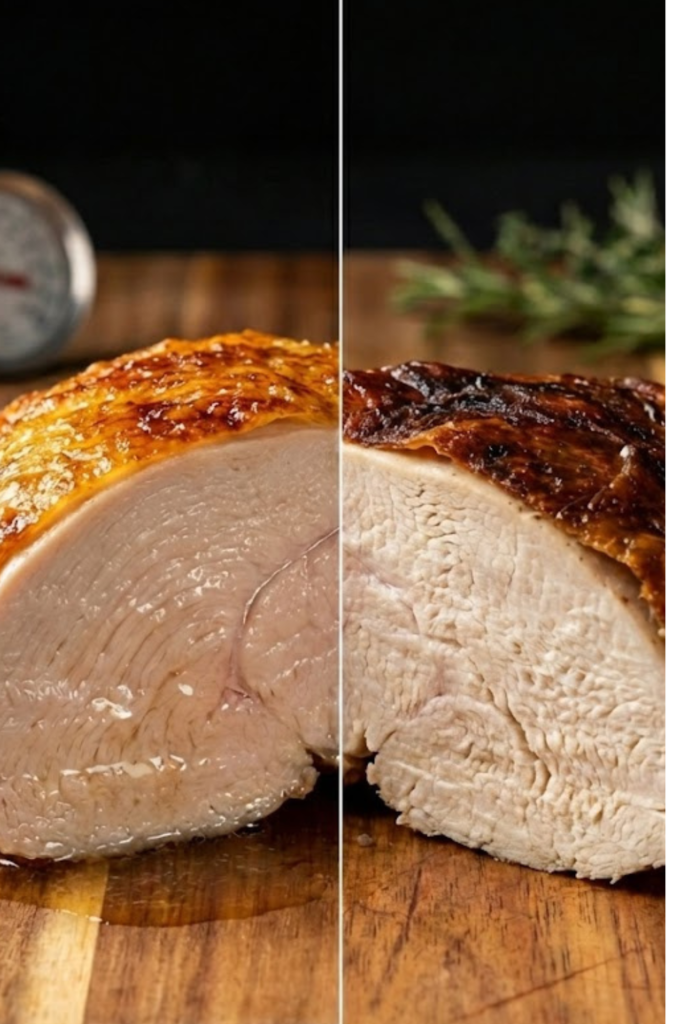
So, we have gone through the whole process together, from picking out that air-chilled chicken at the store to whisking in that final bit of butter for the perfect shine. I really hope you feel a lot more confident about getting in front of your stove tonight. Cooking doesn’t have to be this scary thing that only experts do in fancy restaurants. Most of the time, it’s just about having a bit of patience and knowing a few simple tricks, like letting your meat rest or not moving the chicken too early when it’s trying to get that nice brown crust. Once you see that golden color in your own pan, you’ll know exactly what I’m talking about.
Think about how far you’ve come just by reading this guide. You know about “fond” now, which is a word that even some experienced cooks don’t really use! You know why shallots are the better choice for a delicate sauce and why hitting that chicken with a pan to make it flat is the key to it being juicy. These are the kinds of things that turn a “meh” meal into something your family will ask for every single week. My own kids used to complain when I said we were having chicken for dinner, but now they are the first ones at the table because they want that extra spoonful of sauce on their potatoes. It makes all the effort worth it.
If you made it this far, you are definitely ready to start cooking. Don’t worry if your first try isn’t 100% perfect. My first few pan sauces were a bit of a mess, but that’s how we learn. Just keep your heat in check, don’t burn your shallots, and remember to taste everything as you go. The more you do it, the more natural it will feel. Before you know it, you won’t even need to look at this guide anymore because you’ll just “know” when the sauce is thick enough or when the chicken is perfectly cooked.
I would really love to see how your dinner turned out! If this guide helped you make a chicken breast that wasn’t dry for once, please share it with your friends. You can pin this recipe to your “Easy Dinners” or “Weeknight Meals” board on Pinterest so you can find it the next time you have a couple of chicken breasts in the fridge and no idea what to do with them. Happy cooking, and I’ll see you in the next recipe!