Listen, I’ve burned more chicken breasts than I care to admit! It’s a rite of passage for every home cook, right? One day it’s a dry brick, and the next, it’s a soggy mess. But here is the thing: a study once showed that nearly 60% of home cooks feel intimidated by seasoning meat correctly. That is just wild to me! You don’t need a cabinet full of expensive spices to make something incredible. I found out the hard way that chicken with simple seasoning is actually the secret to a five-star dinner. My first attempt was a disaster because I tried to use twenty different herbs at once. Now? I stick to the basics. It’s all about balance and heat. Let’s dive into how you can make a meal that tastes like a tropical vacation right in your own kitchen!
Essential Ingredients for the Best Seasoned Chicken
I’ve spent about fifteen years standing in front of a classroom, and if there is one thing I’ve learned, it’s that keeping things simple usually works best. It is the same way in the kitchen. When I first started cooking, I thought I had to use every single herb in my rack to make a meal taste fancy. I remember one Tuesday night I tried to make a herb-crusted chicken that had so much rosemary it tasted like I was eating a pine tree. My kids wouldn’t even touch it! Since then, I’ve found that chicken with simple seasoning actually tastes a whole lot better because you can actually taste the meat. You just need a few staples that work hard to bring out the best flavors.
Why Salt and Pepper are the Real MVPs
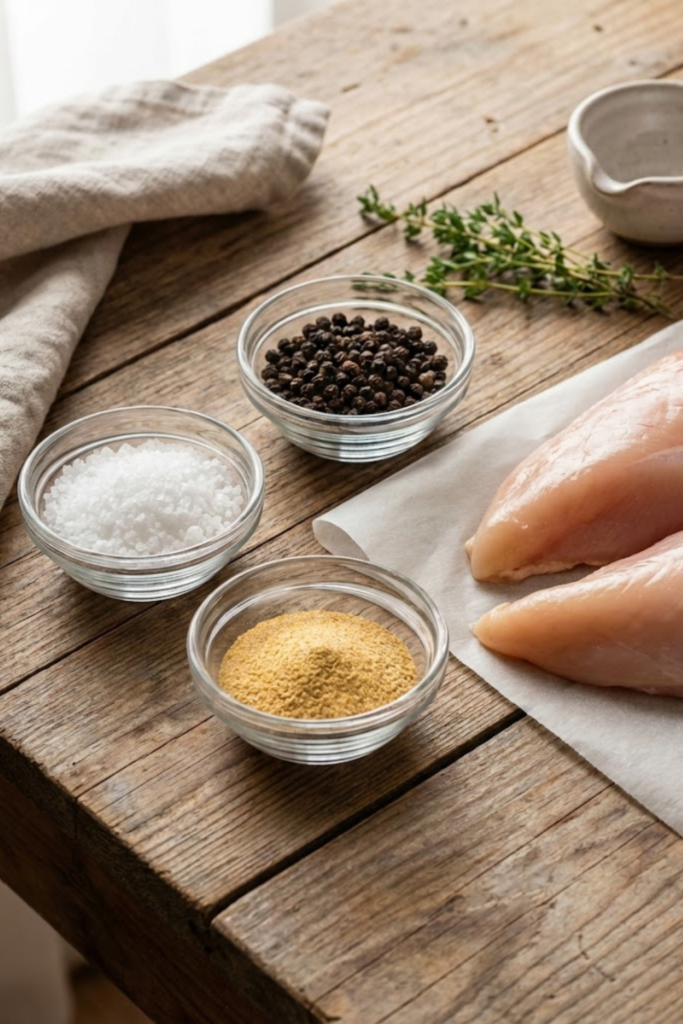
You might think salt is just salt, but it really makes a huge difference. I always use kosher salt because the grains are bigger. This helps me see exactly how much I’m putting on the meat. If you use that fine table salt, it’s easy to overdo it before you even realize what happened. Then there is the pepper. If you can, get a grinder and crack it fresh. The stuff that comes pre-ground in the little tin cans just doesn’t have that spicy kick. Fresh pepper adds a layer of heat that makes the other spices wake up. I usually do a heavy pinch of salt and a good dusting of pepper on both sides of the chicken.
The Magic of Garlic and Onion Powder
These two are my secret weapons. I love fresh garlic, but in a hot pan, it burns way too fast. Burnt garlic is bitter and will ruin your whole dinner. Using powders instead gives you a nice, even coat that sticks to the chicken. It creates this savory crust that is just delicious. I usually use a bit more garlic powder than onion powder because I love that deep flavor. It makes the house smell amazing while it’s cooking. It’s a simple way to add depth without much effort.
Picking the Right Oil or Fat
To get those spices to stay put, you need a little oil. I usually grab olive oil because it is easy and tastes good. You don’t need much—just enough to coat the chicken so the seasoning doesn’t fall off into the pan. Sometimes I’ll use avocado oil if I’m cooking at a really high heat because it doesn’t smoke as much. This part is key because it helps the outside of the breast get that golden brown color we all love. Just a tablespoon or two rubbed over the meat makes a world of difference for the final look and taste.
My Fail-Proof Method for Pan-Searing
I’ve been teaching for fifteen years now, and if there is one thing that translates from the classroom to the kitchen, it is the value of patience. Kids don’t learn a new concept overnight, and you certainly can’t rush a good piece of meat if you want it to taste right. I remember one Tuesday after a really long day of grading papers, I was so hungry I just threw a chicken breast into a lukewarm pan. I was in such a hurry that I kept flipping it every single minute, hoping it would cook faster. It ended up looking gray and rubbery, almost like an old pencil eraser! It was a total letdown. That was the day I realized I had to change how I made my chicken with simple seasoning. If you want that golden brown color and a juicy bite, you have to follow a few steps and stop messing with the food while it cooks.
Don’t Start With a Cold Skillet
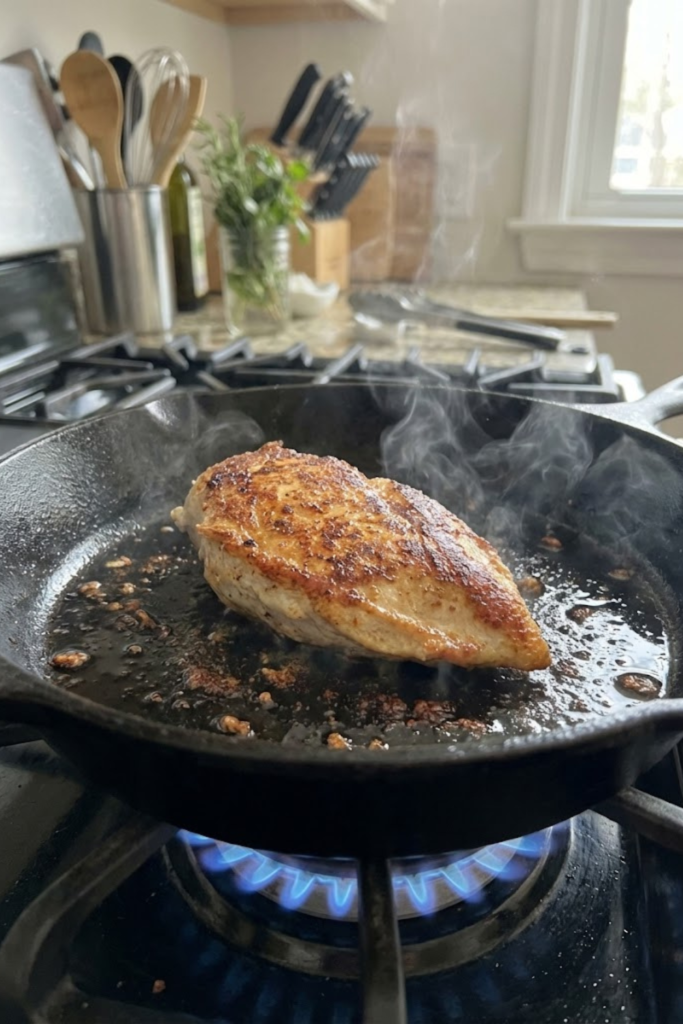
The biggest mistake I see people make is being too fast to get the meat into the pan. You really need to heat your skillet over medium-high heat first. Give it a few good minutes to get hot. I usually wait until the oil starts to shimmer just a little bit. If you drop a tiny pinch of your spices in and it doesn’t sizzle right away, the pan isn’t ready yet. When the pan is properly hot, it creates a sear that locks in all those juices. If the pan is cold, the chicken just sits there and leaks out its moisture. Then you end up with dry meat that doesn’t have any flavor. A hot pan is the first step to making a meal your family will actually enjoy.
The Power of Leaving it Alone
Once that chicken hits the pan, you need to leave it alone. In my house, I call this the “Do Not Touch” rule. It is so tempting to poke at it or peek underneath with a spatula, but you have to resist! For about five or six minutes, just let it sit there. This is how you get that beautiful brown crust that makes chicken with simple seasoning look like it came from a restaurant. If you try to flip it too soon, the meat will stick to the bottom and tear apart. When the chicken is ready to flip, it will actually release itself from the pan naturally. If it is sticking, it is just the pan’s way of telling you it needs another minute.
Using a Thermometer Every Time
I used to try and guess if the chicken was done by cutting into the middle with a knife. That is a bad move because all the juices run out and the meat gets tough. Now, I always keep a meat thermometer in my kitchen drawer. It is the only way to be 100% sure. You are looking for an internal temperature of 165 degrees. I usually take my chicken off the heat when it hits 162 or 163 degrees because the heat stays inside and keeps cooking it for a minute after you move it to a plate. This little trick keeps the meat from turning into a dry hockey puck. It is a simple tool, but it makes a huge difference in the final result.
Simple Seasoning Hacks for Oven Roasting
I have spent fifteen years teaching middle schoolers, and if there is one thing I know, it is that sometimes the most basic instructions are the ones people skip. In my classroom, if I don’t tell the kids exactly where to put their names on the paper, they end up on the back or in the corner! Cooking is the same way. I used to think that roasting a tray of chicken with simple seasoning was just about tossing it in the oven and walking away. I remember one Sunday I was so busy grading essays that I just threw the meat on a pan and forgot about it. When I pulled it out, the skin was sad and soggy, and it looked more like it had been boiled than roasted. It was a huge bummer for my Sunday dinner. I learned that day that even the simplest recipes need a few little tricks to turn out right.
The Secret to Crispy Skin is Paper Towels
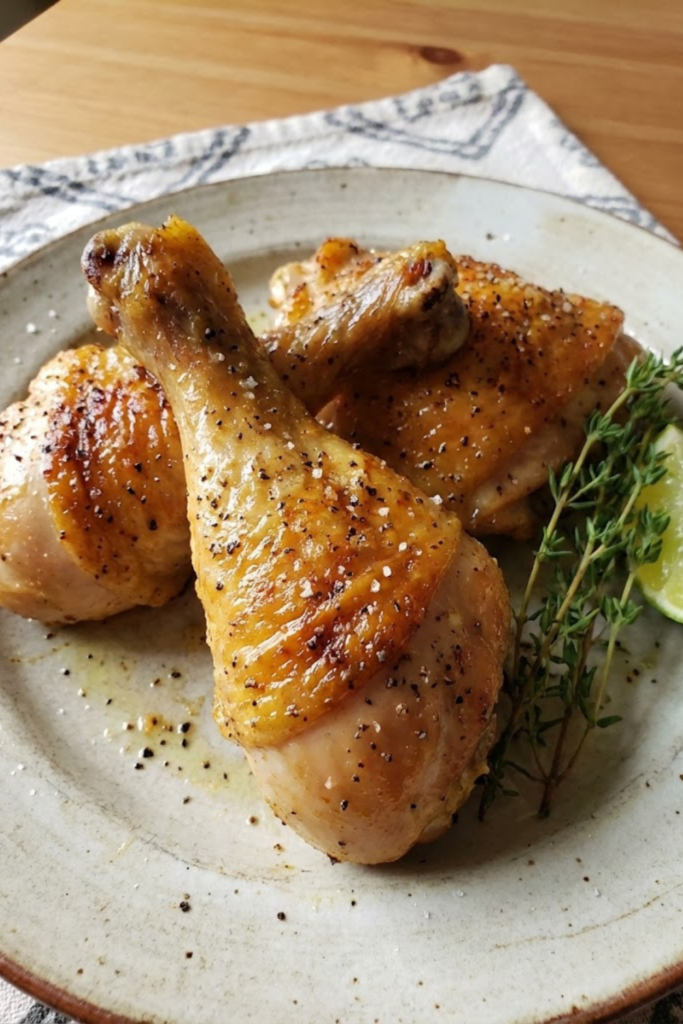
If you want that golden, crunchy skin that everyone fights over at the table, you have to get rid of the moisture. I always tell people to grab a stack of paper towels and pat that chicken until it is bone-dry. If the meat is wet when it goes into the oven, it just steams. Steam is the enemy of crispy skin! Once it’s dry, that’s when you rub on your oil and your chicken with simple seasoning mix. The salt and spices will stick way better to dry skin than wet skin anyway. It’s a small step, but it’s the difference between a “meh” meal and one that has everyone asking for seconds.
Let the Meat Rest Before You Cut It
This is the hardest part for me because the house smells so good that I just want to eat right away. But you have to wait! When you take the tray out of the oven, all the juices are bubbling right near the surface. If you cut into it immediately, all that flavor just runs out onto the cutting board. I usually set a timer for ten minutes and put a piece of foil loosely over the top. This lets the juices move back into the middle of the meat. It makes the chicken so much more tender. It’s like letting the kids have five minutes of quiet time before a big test; it just makes everything go smoother.
A Tiny Bit of Citrus Goes a Long Way
Even though we are sticking to a basic spice rub, a little squeeze of lemon or lime at the very end can really change the game. I like to zest a little bit of the peel right over the top while the chicken is resting. It doesn’t make it taste like fruit, but it makes the garlic and pepper tastes pop even more. It’s a cheap way to make a basic meal feel a lot more special without having to go buy a bunch of weird ingredients from the store. Just a little zing is all you need to finish things off.
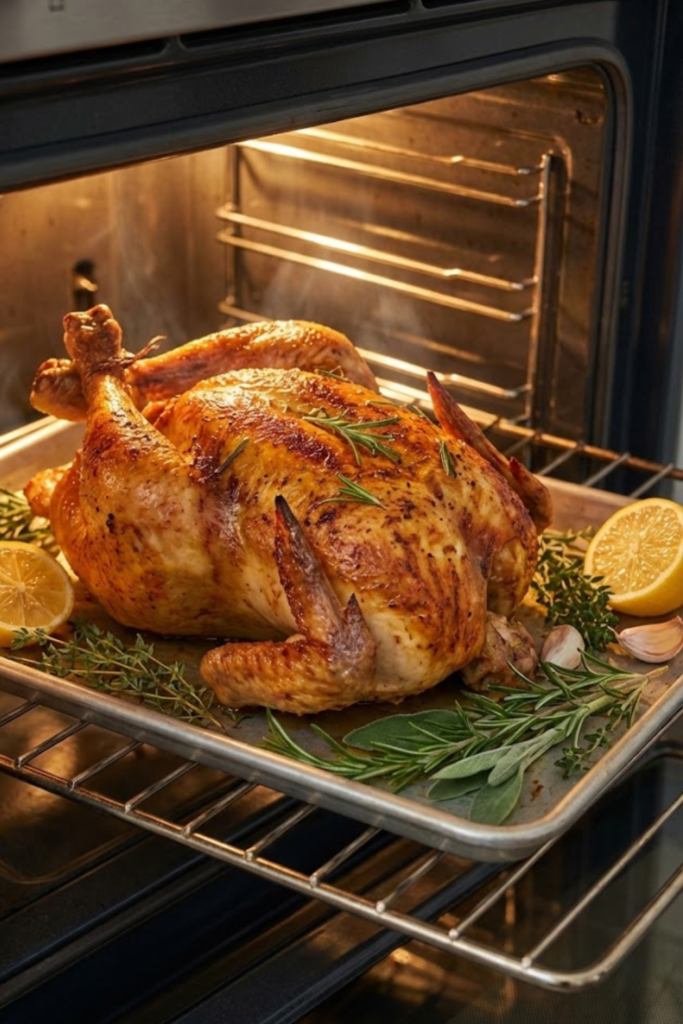
Well, we’ve covered a lot of ground today, haven’t we? It’s funny how something as basic as chicken with simple seasoning can actually take a bit of practice to get just right. As a teacher, I always tell my students that the hardest part of any lesson is usually the stuff we think is the easiest. We tend to rush through the basics because we want to get to the “exciting” part, but the basics are what hold everything together. I’ve spent fifteen years trying to get kids to slow down and check their work, and I have to tell myself the same thing when I am standing in front of my stove. If you take your time, dry off the meat, and let the pan get hot, you are going to have a dinner that tastes better than anything you can get at a fast-food drive-thru.
I really hope these tips help you out during those busy weeknights when you just want a good meal without a ton of dishes. I know how it is—you come home tired, the kids are asking for snacks every five minutes, and the last thing you want to do is look at a recipe with twenty ingredients. That’s why I love this method so much. It’s reliable, it’s cheap, and it works every single time. Plus, once you get the hang of it, you can start adding your own little twists. Maybe one day you’ll add a bit of paprika or some dried herbs from your own garden. That is the best part of cooking; once you know the rules, you can start to play around with them a little bit.
If this guide helped you make a juicy piece of chicken tonight, I would really love to hear about it! It makes my day to know that someone else is having a win in the kitchen. Also, if you found this helpful, please share this post on Pinterest! It really helps other busy home cooks find these simple tips so they can stop struggling with dry, boring meals too. Sharing is caring, as I always tell my students! Thanks so much for reading along with me today. I’ll see you in the next one, and until then, happy cooking and enjoy every single bite!