I used to be part of the 64% of home cooks who absolutely nuked their poultry because I was terrified of serving undercooked meat, but let me tell you, discovering chicken thighs with thyme butter changed my entire dinner rotation. There is honestly nothing sadder than choking down dry, flavorless chicken breast, so I finally ditched the fear and embraced the fat—specifically, the rich, golden goodness of butter foaming up with smashed garlic and fresh herbs. The first time I tried this, I actually almost burned the butter because I was distracted by my kids, but that nutty, browned flavor ended up being a happy accident that makes the dish pop. This recipe isn’t just about getting food on the table; it’s about saving your sanity with a meal that tastes like a restaurant splurge but takes less effort than grading a stack of quizzes, giving you that perfect crispy skin and juicy meat every single time.
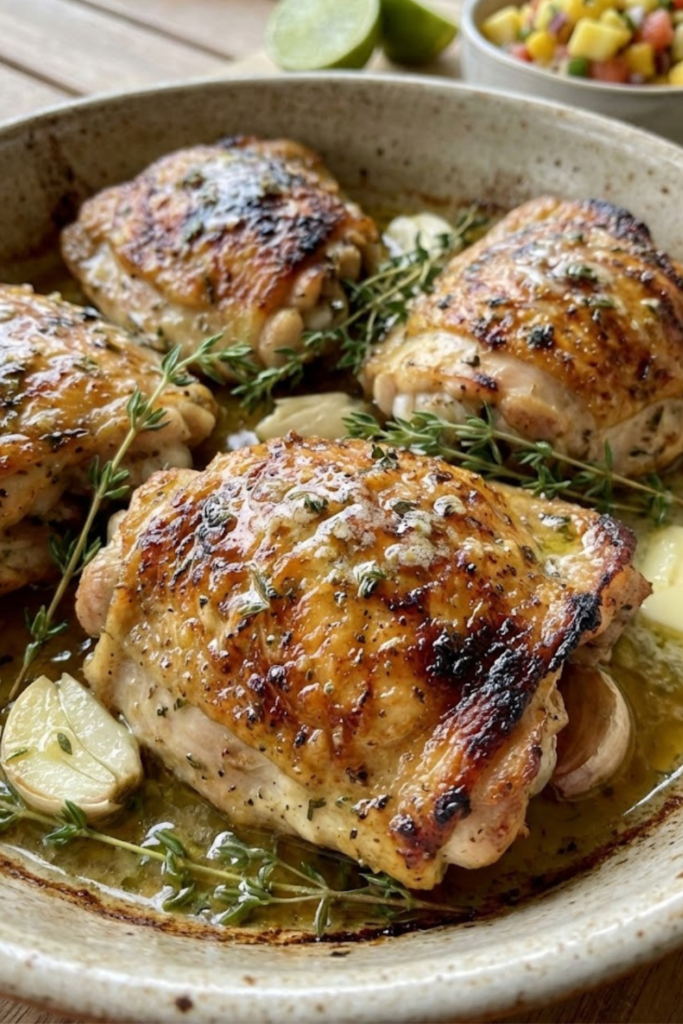
Why Thyme Butter is the Secret Weapon for Poultry
Let me tell you why thyme butter is the secret weapon here. For years, I just sprinkled dried spices on top of my chicken and hoped for the best. It was usually okay, but never amazing. The thing I learned is that fat—like butter—is what actually moves flavor around. When you mix chopped thyme into soft butter, you are creating a little flavor bomb.
If you just put herbs on top, they can burn in the hot pan. But inside the butter? They are safe. As the butter melts down, it coats the chicken thighs completely. This does two things. First, it stops the meat from drying out. We have all had that dry chicken that feels like chewing on cardboard, right? This stops that. Second, the butter carries that earthy thyme taste deep into the nooks and crannies of the meat. It works way better than oil in my opinion because the butter solids brown up and get nutty. It turns a plain Tuesday dinner into something that tastes like you spent hours on it.
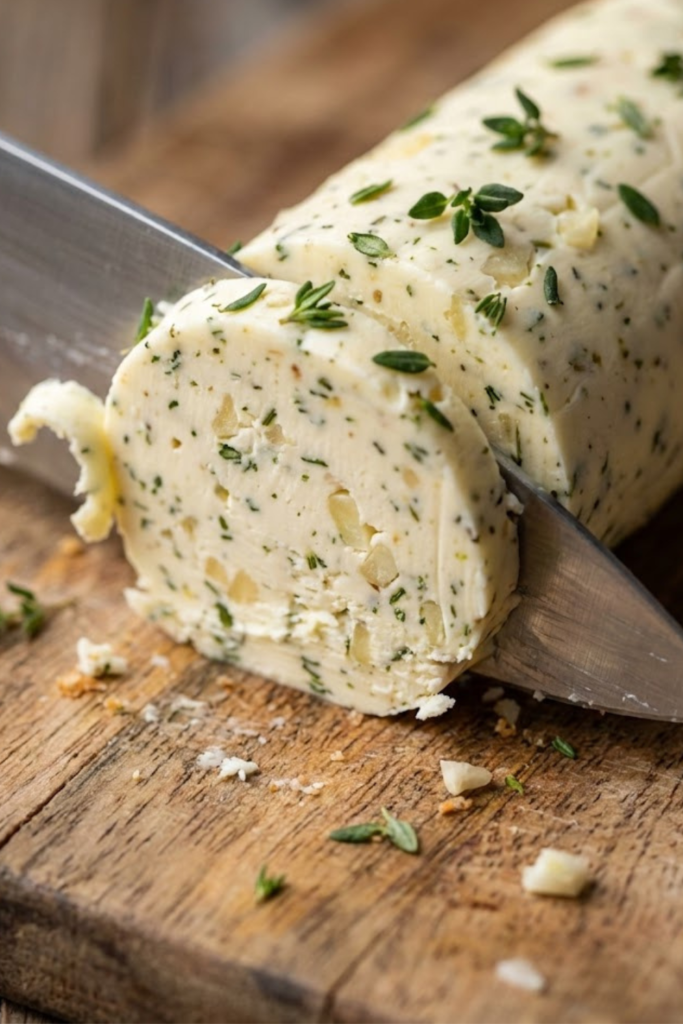
Ingredients Checklist: Fresh vs. Dried Herbs
Okay, let’s talk about what you actually need to buy. When I’m at the grocery store, I always go for the bone-in, skin-on chicken thighs. I know the boneless skinless ones look easier and cleaner, but trust me, you really want that skin. It gets so crispy in the pan, and the bone keeps the meat juicy while it cooks. If you use boneless, they dry out way too fast, and nobody wants that.
For the herbs, please try to get fresh thyme sprigs if you can find them. I’ve tried this with the dried stuff from the back of my spice cabinet when I was in a rush, and it just didn’t taste right. The dried powder can taste kind of dusty and doesn’t give you that fresh smell that fills up the kitchen. Plus, the little green leaves look fancy in the butter.
Lastly, make sure you grab unsalted butter. This is a big one! I made the mistake once of using salted butter and then adding salt to the chicken like I usually do. It was barely edible. By using unsalted, you can control exactly how salty it gets without ruining dinner.
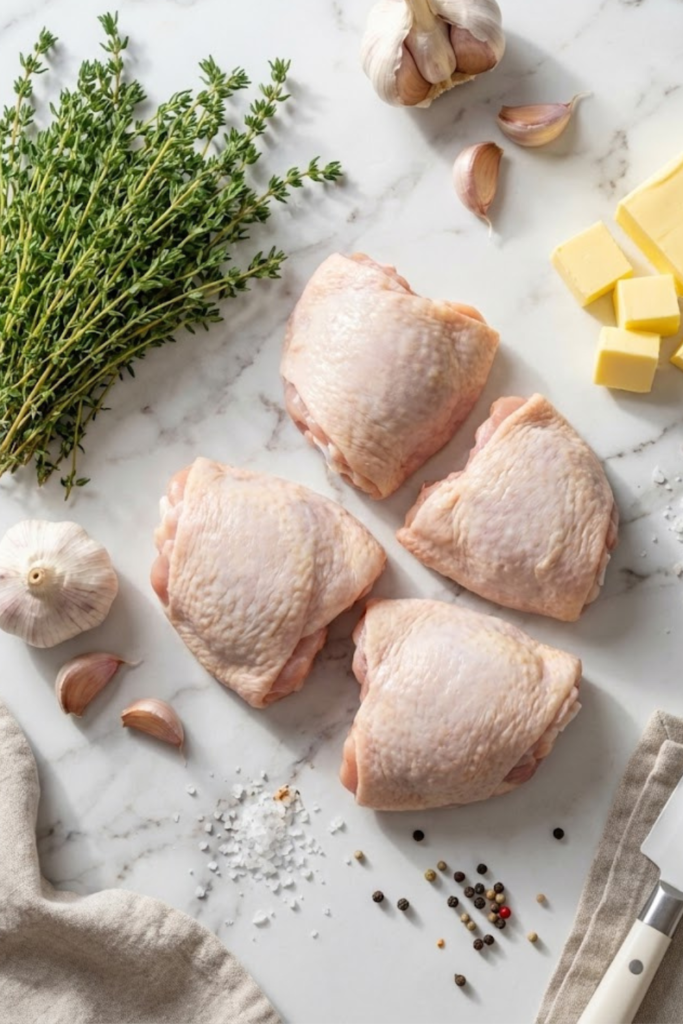
Step-by-Step Guide to Crispy Skin
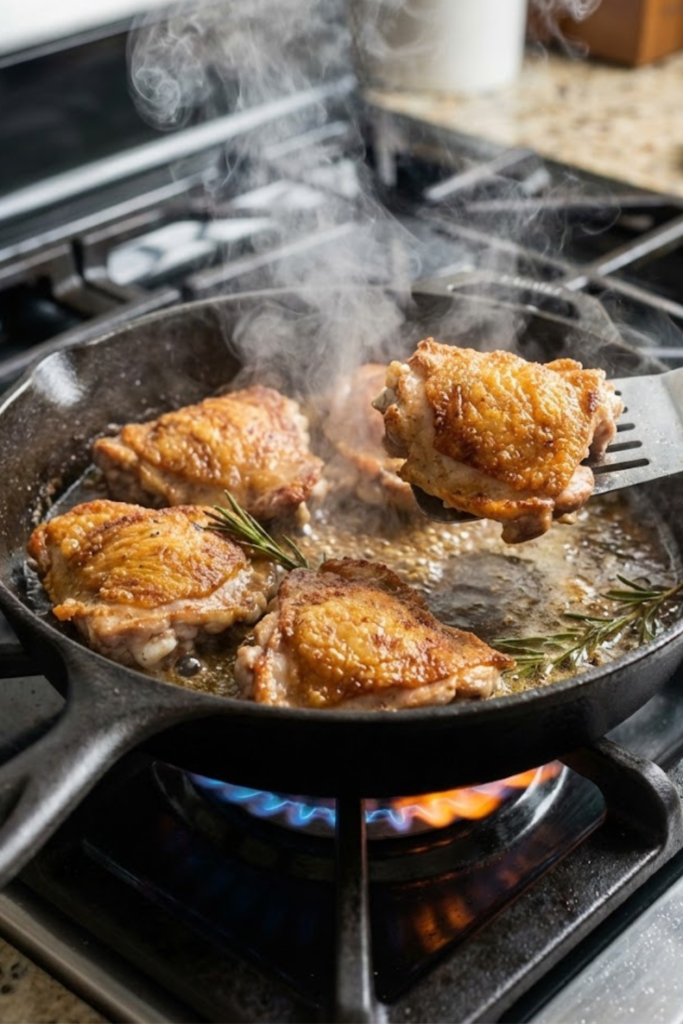
Alright, here is the part where most people mess up. If you want that crunch that sounds like a potato chip when you bite into it, you have to pat the chicken dry. I mean really dry. I use a bunch of paper towels and get every bit of moisture off the skin. If the chicken is wet when it hits the pan, it just steams instead of frying, and you end up with soggy skin. Nobody wants that. For the pan, I always grab my heavy cast iron skillet. It holds heat way better than those flimsy non-stick pans. If you don’t have one, a stainless steel pan works too, but cast iron is the king here. Now, here is a weird tip I learned: put the chicken in the pan skin-side down while the pan is still cold. I know, it sounds wrong. But as the pan heats up slowly, it melts the fat under the skin (that’s called rendering). This makes the skin super thin and crispy without burning it. Just let it sit there and don’t touch it for like 15 minutes.
Don’t get impatient and try to flip it early because the skin will stick to the metal and tear right off, which is basically a tragedy in the kitchen. I usually set a timer on my stove so I’m not tempted to poke at it with my tongs every two minutes. You will actually hear the sizzle change from a quiet hiss to a loud, happy crackle as that fat starts to bubble. If the pan seems like it’s smoking too much, just turn the dial down a hair, but don’t move the chicken! You want to see a deep, mahogany brown color peeking out from the edges before you even think about turning them over. Sometimes I even use a heavy press or another smaller pan to weigh the thighs down so every inch of that skin makes contact with the heat. It’s a bit of a waiting game, but that first crunch you hear when you finally take a bite makes all the patience totally worth it.
Making and Basting with Garlic Thyme Butter
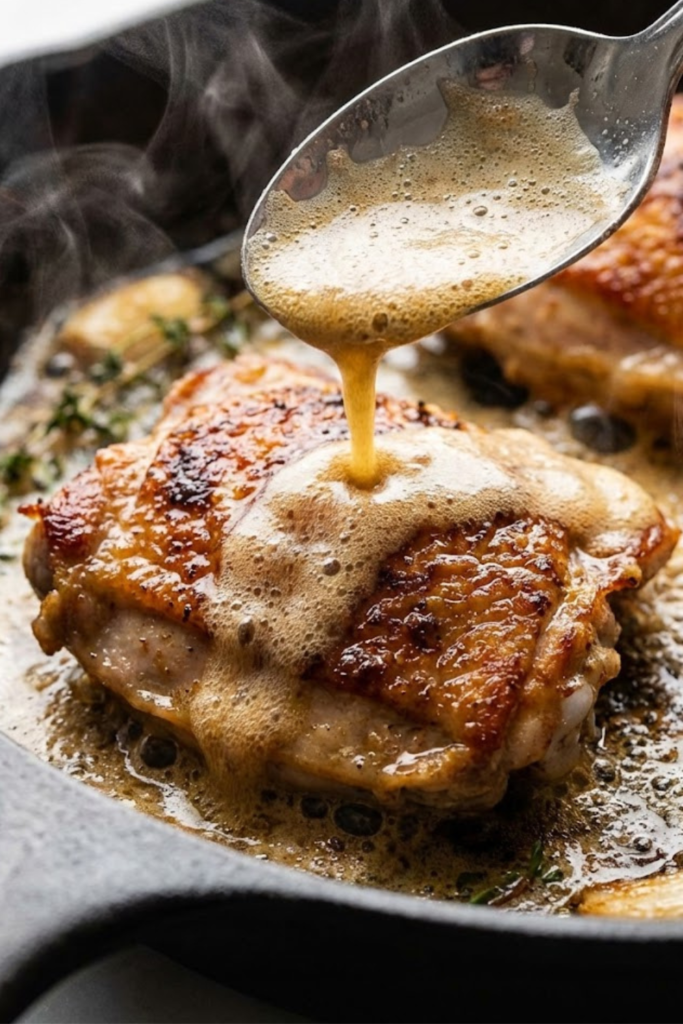
Now comes the part that makes your kitchen smell amazing. You don’t want to add the butter right away, or it will just burn and taste bitter. Wait until you have flipped the chicken over. Once that skin is looking golden and beautiful, toss in a big chunk of your thyme butter and those smashed garlic cloves. As the butter melts and starts foaming, tilt the pan a little bit so it pools at the bottom. Take a big spoon and scoop that hot, garlicky liquid up and pour it over the chicken repeatedly. Chefs call this “basting,” but I just call it giving the chicken a flavor bath. Do this for a minute or two. It helps cook the top of the chicken without making the skin soggy. It feels a little fancy to stand there spooning butter, but it makes a huge difference in how juicy the meat turns out.
Make sure you keep an eye on the color of the butter as you work. You want it to look like a dark honey color, but if it starts getting too black, just turn the heat down a notch. I like to throw the actual thyme sprigs right into the bubbling fat because they sizzle and release all those oils that make the house smell like a holiday dinner. If you have any extra garlic, don’t be shy about tossing in a few more cloves; they get soft and sweet while they fry in the butter. Sometimes I even use two spoons at once if I’m feeling impatient, just to get that coverage perfect. Just watch out for little splashes of hot fat, because that stuff stays hot for a long time and can give you a nasty little sting. By the time you’re done, the chicken should look like it’s glowing from all that rich herb-infused goodness.
Perfect Pairing: What to Serve with Butter Chicken
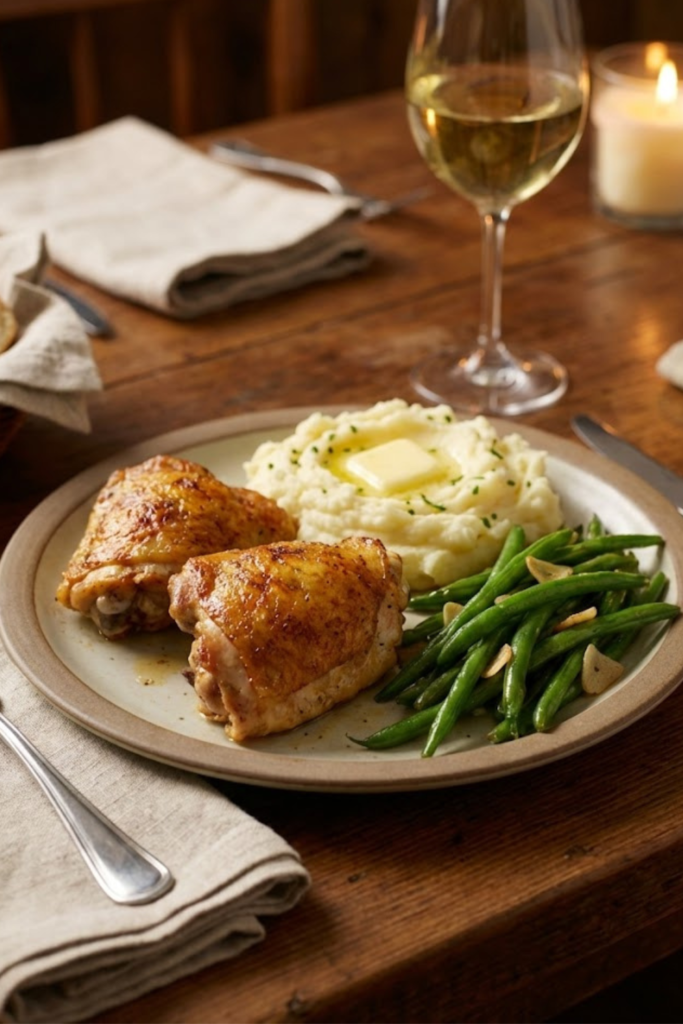
You definitely don’t want to let that golden liquid in the pan go to waste. I always serve this with something starchy to soak up the leftover butter sauce. My go-to is usually mashed potatoes because they are easy and my kids actually eat them, but a big slice of crusty sourdough bread works great too for mopping up the plate. If I am trying to get some greens in, I will roast some green beans or asparagus on the side. You can even toss them in the skillet after the chicken comes out to get some of that flavor on them. Since the dish is pretty rich with all that fat, a glass of crisp white wine like a Chardonnay or Sauvignon Blanc tastes really good with it. It helps cut through the heaviness so you don’t feel too stuffed afterwards.
Sometimes, if I am running super late, I just boil a pot of wide egg noodles instead of peeling potatoes. They cook in like six minutes and coating them in that garlic butter is honestly life-changing. For a lighter option, I’ve tried cauliflower rice, and the herb butter makes it actually taste edible. Don’t forget something acidic like a simple cucumber salad with vinegar; it balances out all that rich butter really well. Honestly, whatever you pick, just make sure it’s something you can drag through that sauce because leaving it in the pan is a crime.
So, that is really all there is to it. You don’t need to go to fancy cooking school to make a dinner that tastes this good. It is just simple ingredients coming together to make something special. Seriously, give this a try next time you are staring at a package of chicken and don’t know what to do. You can even squeeze a little lemon juice on top if you want to change it up. If you found this helpful, do me a huge favor and Pin this guide to your ‘Weeknight Dinners’ board on Pinterest so you can find it again later!