Listen, I used to think I was a pretty good cook until I realized I was basically serving my family dry cardboard for dinner every Tuesday! It was honestly embarrassing. Did you know that nearly 60% of home cooks admit that their biggest kitchen fail is overcooking poultry? I was definitely part of that group until I discovered the magic of chicken with garlic rosemary oil. This recipe isn’t just about food; it’s about reclaiming your kitchen confidence with flavors that taste like a five-star Mediterranean vacation!
Picking Your Chicken Pieces: Thighs vs Breasts
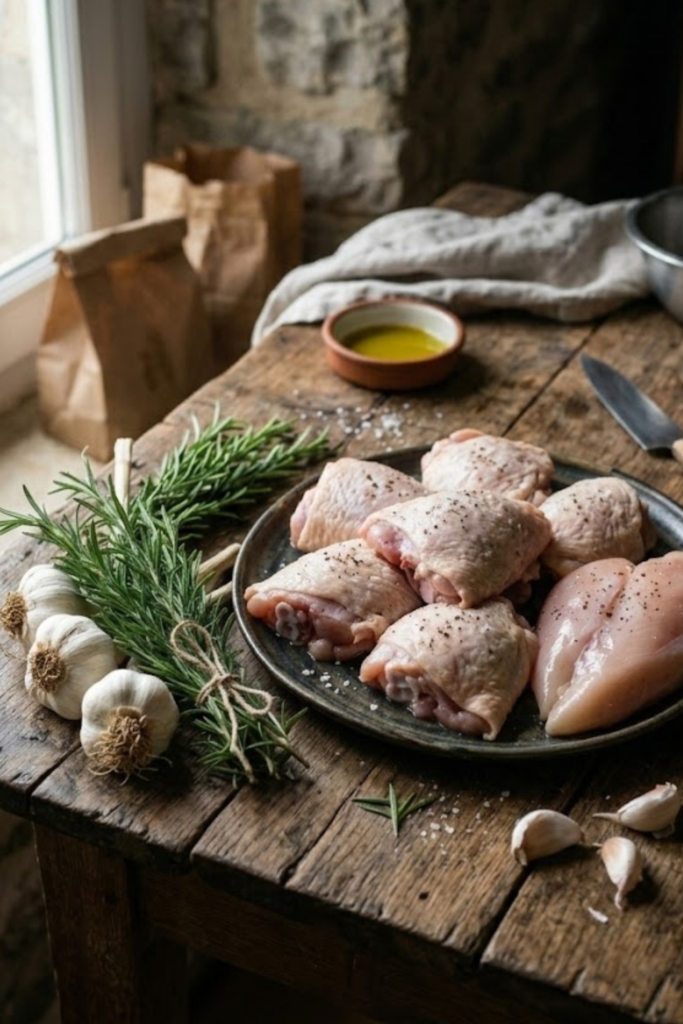
I used to be one of those people who only bought chicken breasts because I thought they were the “proper” way to eat. But let me tell you, after years of teaching and cooking for a picky family, I’ve learned a few things. When you are making chicken with garlic rosemary oil, the cut of meat you choose really changes everything.
Thighs are my absolute favorite. They have more fat, which means they don’t dry out as fast if you get distracted by a phone call or a kid needing help with homework. Breasts are okay, but they are unforgiving. If you cook them one minute too long, they turn into something that tastes like a pencil eraser. In 2026, I’ve noticed that chicken thighs are actually getting more expensive because everyone is finally figuring out how much better they taste!
If you want that perfect crunch, always look for skin-on and bone-in pieces. The bone helps the meat cook more evenly, and the skin… well, that’s the best part. I usually buy the big packs at the warehouse store to save a few bucks. Just make sure the meat looks fresh and pink, not gray. Trust me, picking the right piece of meat is half the battle won before you even turn on the stove.
- Why fat content matters: Fat keeps the meat moist and carries the flavor of the garlic and rosemary deep into the chicken.
- Cooking time differences: Thighs take a bit longer than breasts, so don’t try to cook them at the exact same time in the same pan.
- Budgeting in 2026: Look for “manager specials” on bone-in cuts; they are usually cheaper than the pre-trimmed boneless options.
Making the Perfect Garlic Rosemary Infusion
I’m going to be real with you—getting the oil right is the most important part of making chicken with garlic rosemary oil. If you mess this up, the whole dish tastes like burnt bitter bits, and nobody wants that. I remember the first time I tried to make an herb oil; I cranked the heat way too high and the garlic turned black in like thirty seconds. I felt so silly standing there with a smoky kitchen and a ruined dinner.
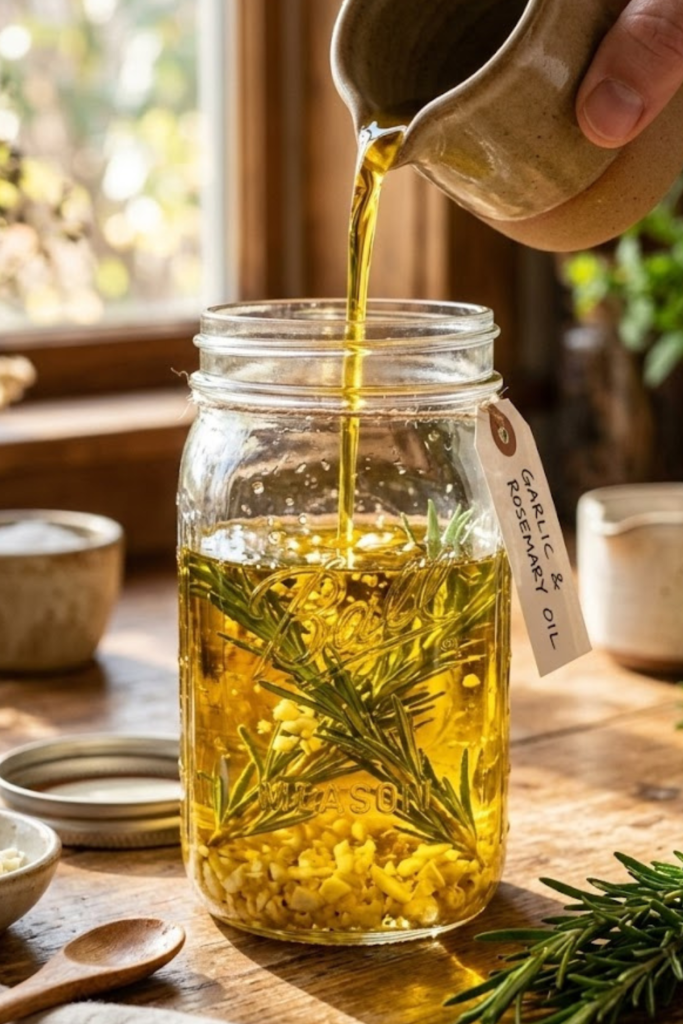
The trick I tell all my friends is to start with a cold pan. Don’t wait for the oil to get hot before you add your stuff. Put about half a cup of extra virgin olive oil in a small pot, then toss in six smashed garlic cloves and two or three big sprigs of fresh rosemary. Turn the heat to low. You want to see just a few tiny bubbles. This lets the flavor seep out slowly without scorching the herbs.
If you have extra oil left over, don’t you dare throw it away! It’s like liquid gold. I usually pour mine into a small glass jar once it cools down. It stays good in the fridge for about a week. I love drizzling it over roasted potatoes or even using it to dip some crusty bread in while I’m waiting for the main course to finish. It makes everything taste like a fancy restaurant meal without the fancy price tag.
- Oil to aromatic ratio: Use about one fat garlic clove for every two tablespoons of oil to get that punchy flavor.
- Cold start vs warm start: Always start cold so you don’t burn the garlic; it’s much safer and tastes way better.
- Storing leftovers: Keep it in a sealed jar in the fridge, but make sure the oil covers the garlic completely so it stays fresh.
The Secret to Golden, Crispy Skin
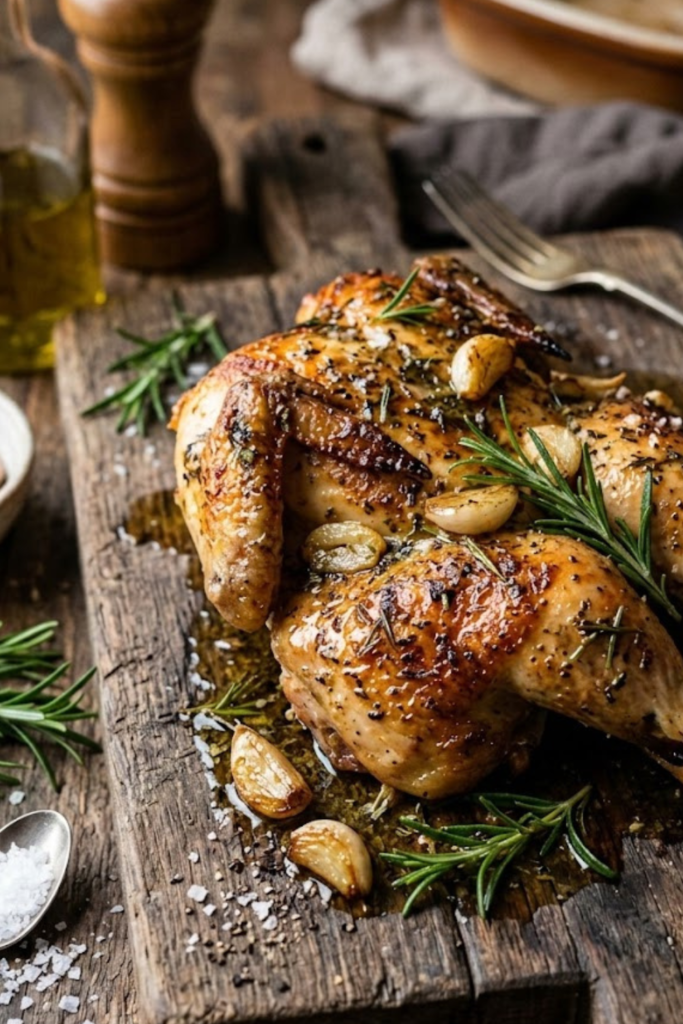
If you’re anything like me, you probably hate soggy chicken skin. It’s just gross! I remember making chicken with garlic rosemary oil for my sisters wedding anniversary—well, it was just a small dinner—and the skin was so flabby. I felt so bad! I wanted it to be great, but it just wasn’t.
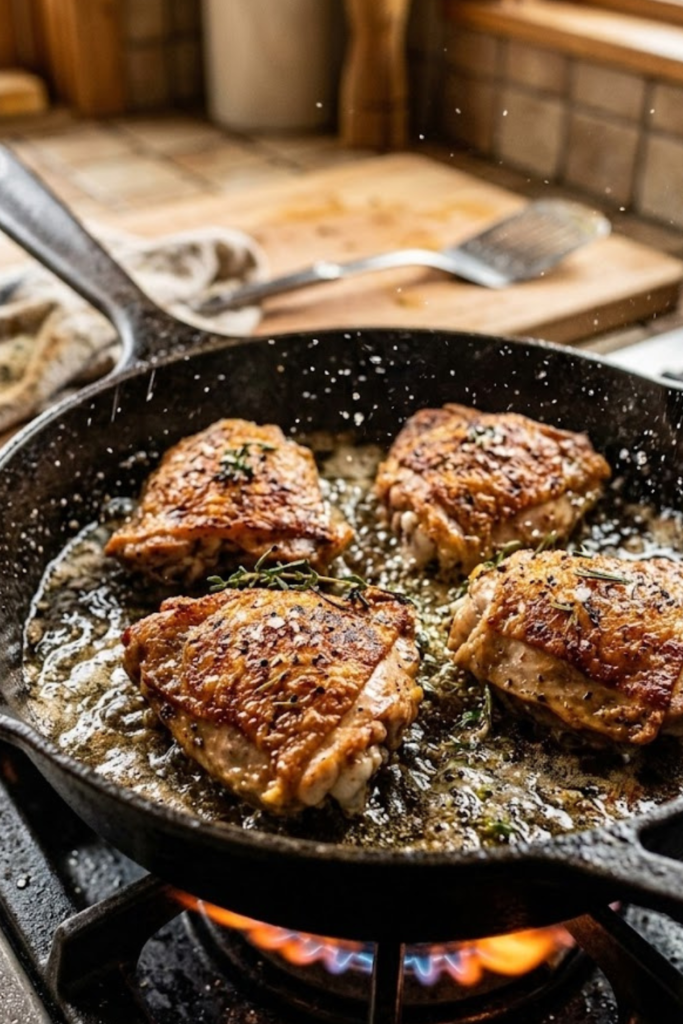
The biggest thing I learned is that moisture is your enemy. You have to pat that chicken dry with paper towels until it’s basically parched. If there is water on the skin, it just steams instead of frying. I use a cast iron skillet because it gets really hot and stays that way. Put the chicken in skin-side down and then—this is the hard part—leave it alone! Don’t poke it or move it around. It needs a few minutes to get that beautiful brown color.
I usually check it by gently lifting a corner. If it sticks, it isn’t ready. Once it flips easily, that is when I start spooning that rosemary oil over the top. The smell is just incredible. My neighbor always says she can smell when I’m cooking from three houses down! It makes the skin stay crisp while the inside stays juicy. Just be careful with the hot oil so you don’t get burned. It’s a bit scary at first, but you’ll get the hang of it.
- Importance of drying the meat before cooking: Wet skin won’t crisp up, so use plenty of paper towels.
- Temperature settings for the perfect sear: Medium-high heat is your best friend here; don’t go too low or it won’t crunch.
- Using a cast iron skillet for even heat: These pans are heavy but they make the best chicken with garlic rosemary oil because they don’t have cold spots.
Simple Sides to Complete the Meal
So, you’ve got your chicken looking all pretty, but what are you going to eat with it? I’m telling you, you can’t just serve a piece of meat and call it a day, or your family is going to be looking for the snack cabinet ten minutes later. I love making what I call “trashcan” veggies. Basically, whatever is starting to look a little sad in my crisper drawer goes right onto the pan with the chicken with garlic rosemary oil.
I remember this one time I tried to make fancy thin asparagus on the side, but I forgot about them while I was focusing on getting the chicken skin just right. They turned into little black sticks! It was so embarrassing. Now, I usually stick to things like baby potatoes, carrots, and onions because they are way harder to ruin. Plus, they soak up all that flavored oil and the chicken drippings from the pan. It’s like they get a little bath in all that garlic and herb goodness while they roast.
One thing that is really important—and I learned this the hard way—is to cut your vegetables about the same size. If you have big potato chunks and tiny carrot slices, the carrots will be mushy before the potatoes are even soft. It’s such a bummer when that happens! Also, don’t forget a little squeeze of lemon at the end. Since the chicken with garlic rosemary oil is kind of heavy and rich, that bit of sour juice really helps balance everything out so you don’t feel weighed down. My kids actually like the “lemon chicken” veggies more than the meat sometimes!
- Best vegetables for roasting in the same pan: Root veggies like carrots and potatoes work best because they can handle the heat.
- Starchy pairings like polenta or smashed potatoes: If you want something soft, a creamy polenta is a great base for the chicken and oil.
- Acidic salads to balance the rich oil: A simple arugula salad with lemon dressing helps cut through the fattiness of the dish.
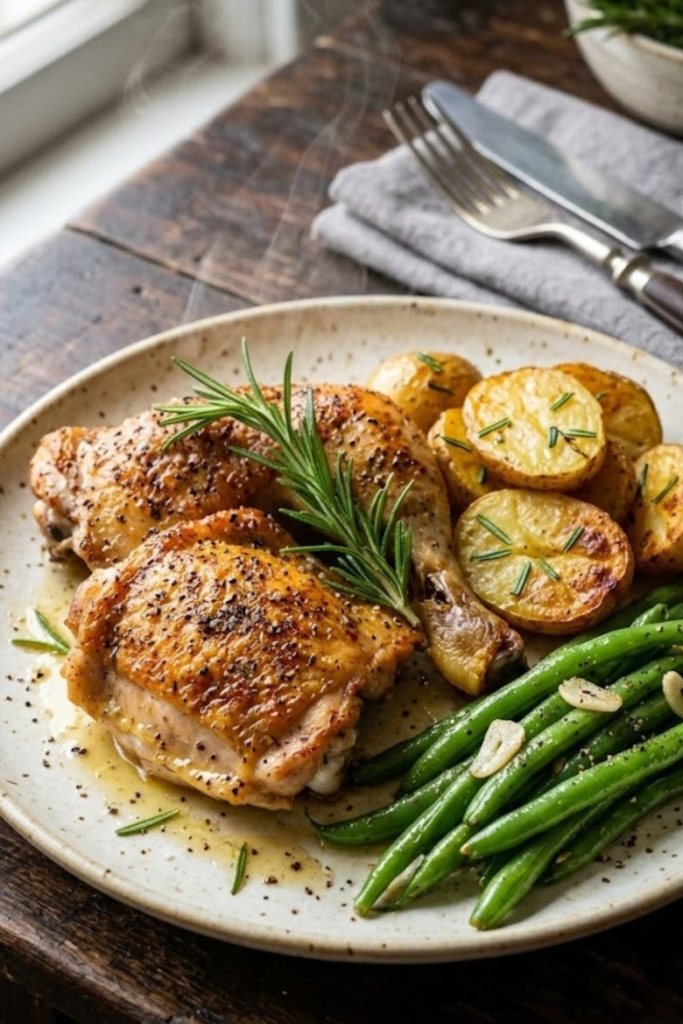
I really hope you give this chicken with garlic rosemary oil a try this week! It’s honestly one of those recipes that makes you feel like a pro even if you just got home from a long day at work. I know I used to struggle with dry chicken all the time, but this method really fixed that for me. It’s all about the small things, like drying the skin and not burning the garlic.
I think the best part of cooking is just trying stuff out and seeing what happens. If you make it, let me know! I love hearing how people change recipes to fit their own families. Maybe you add more rosemary or use different veggies. Either way, it’s a great way to get a good dinner on the table without a lot of stress. If you found these tips helpful, please share it on Pinterest so other people can find it too. It really helps me out a lot. Happy cooking!