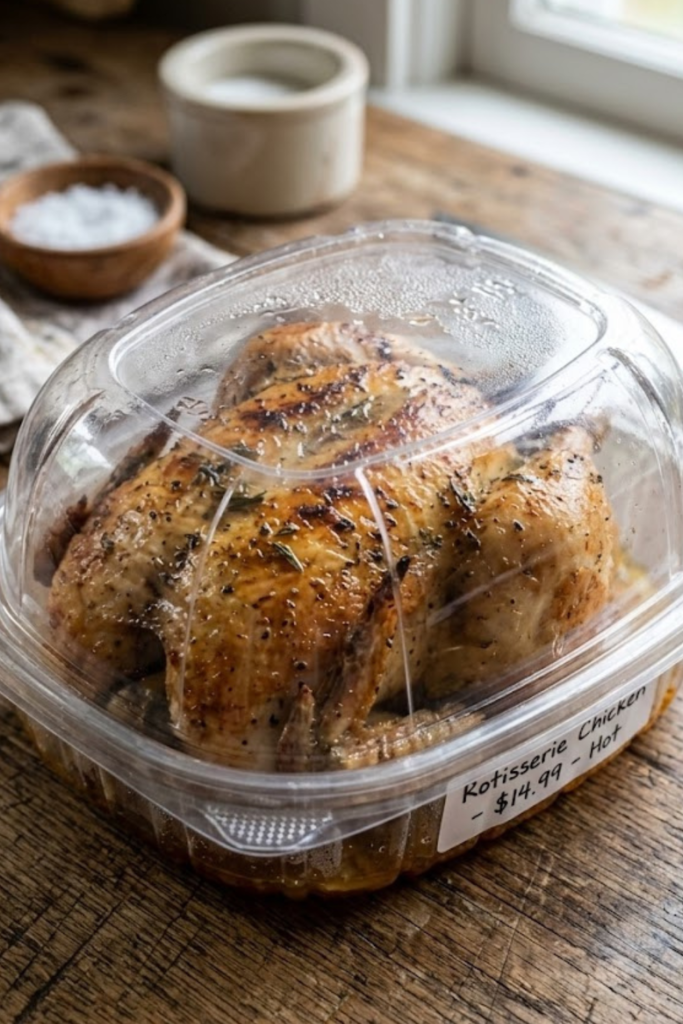
Did you know that Americans consume over 900 million rotisserie chickens every single year? That is a massive amount of potential flavor being tossed in the trash! I used to be one of those people who just ate the meat and threw away the carcass, thinking “who has time for stock?” Oh, how wrong I was!
Making a rotisserie chicken soup base is honestly like finding free money in your coat pocket, but it tastes way better. It’s thick, it’s golden, and it has that deep, “cooked all day” vibe without actually taking all day. I’m going to show you how to squeeze every drop of goodness out of that store-bought bird.

Prepping the Carcass and Aromatics
I used to just throw the whole skeleton into the pot and call it a day. But I learned a few things over the years that really leveled up my rotisserie chicken soup base. First off, you gotta get all the meat off that you want to eat later. If you leave it on during the boiling process, it turns into flavorless stringy bits. I save the breast meat for chicken salad and keep the dark meat for the soup itself.
The real secret is in the bones. I take a heavy knife or even just my hands and break the larger bones like the legs and the back. This lets the marrow get out into the water. It makes the liquid much thicker and more satisfying. Without doing this, your broth might feel a bit thin, almost like flavored water. I usually try to snap the joints specifically because that’s where all that good gelatin is hidden. When the base cools down later, you want it to look almost like Jell-O—that’s how you know you got all the good stuff out of the bird!
When it’s time for the veggies, don’t worry about making them look pretty. I don’t even peel my carrots most of the time—I just give them a good scrub. For the onions, I actually leave the yellow skins on. It sounds weird, but the skins give the rotisserie chicken soup base a beautiful golden color that looks like it came from a fancy restaurant. Just chop them into big chunks and toss them in.
I also like to throw in the celery hearts and those leafy tops that most people toss in the trash. They have so much concentrated flavor! If you have some garlic cloves rolling around in the bottom of your pantry, just smash them with the side of your knife and throw them in too—skins and all. I’ve found that the more “scraps” I use, the more complex the flavor becomes. It’s a great way to clean out the vegetable drawer while making something delicious. Don’t forget a couple of bay leaves and some black peppercorns; they add a little punch that cuts through the richness of the chicken fat.
The Low and Slow Simmering Secret
Once you have your pot loaded up, it’s tempting to just crank the heat and get it over with. I’ve made that mistake more than once! If you boil the water too hard, the fat and proteins mix together and you end up with a cloudy, greasy mess. To get that clear, beautiful rotisserie chicken soup base, you need patience. When the water boils too fast, it acts like a blender, emulsifying the fat into the liquid. You want that fat to stay separate so you can skim it off later for a clean, light finish.
I start by covering everything with cold water. Starting cold helps the flavors pull out of the bones slowly. I also add a tiny splash of apple cider vinegar. Don’t worry, you won’t taste it at all. The acid just helps break down the stuff in the bones so you get more of that healthy collagen. This is what gives the broth that rich, silky texture that feels so good on a sore throat. If you just use plain water, you miss out on a lot of those deep nutrients hidden inside the carcass.
Once the pot starts to get hot, look for what I call “the smile.” It’s when just a few tiny bubbles pop up on the surface every second. If it looks like a hot tub, it’s too high! Keep it at that gentle simmer for at least four hours. Your house is going to smell amazing, like a big warm hug. I usually do this on a Sunday afternoon while I’m catching up on shows or grading papers.
If you see some grayish foam floating on top during the first hour, don’t panic. That’s just some of the proteins rising to the surface. I keep a big spoon nearby and just scoop that stuff out and toss it. It makes the final rotisserie chicken soup base look much clearer. Also, resist the urge to stir the pot! Stirring breaks up the veggies and makes the broth murky. Just let it sit there and do its thing. By the time the four hours are up, the liquid should have reduced slightly and turned a deep, golden color. You’ll know it’s ready when the bones literally start to fall apart when you touch them with a spoon.

Straining and Storing Your Liquid Gold
I’ve had my fair share of kitchen disasters, like the time I tried to strain my rotisserie chicken soup base and accidentally poured the whole thing down the drain because I forgot to put a bowl under the colander! I literally sat on my kitchen floor and cried for a minute because that was four hours of work gone. Now, I always set my bowl in the sink first and then put the fine-mesh strainer on top. It seems like such a simple thing, but when you’re tired and the kitchen is steamy, it’s easy to make a silly mistake that wastes all that effort.
You really want to get a fine-mesh strainer for this part. If you just use a regular pasta strainer, you’re going to get bits of bone and soggy herbs in your final soup, which is super gross. I usually go a step further and line it with a paper towel or some cheesecloth to catch every single tiny bit of sediment. The goal is to have a liquid that looks like melted amber. Getting those tiny particles out makes the broth look so much more professional, and it keeps the texture smooth when you’re sipping it from a mug on a cold day.
Cooling and Storage Tricks
- The Ice Bath: Don’t just shove a hot pot in your fridge; it’ll raise the temp and spoil your milk.
- Portion Control: I love using silicone muffin molds to freeze the rotisserie chicken soup base into pucks.
- Labeling: Trust me, you won’t remember if that jar is chicken stock or apple juice in three weeks.
Once you’ve got it strained, you gotta cool it down fast. I fill my sink with cold water and ice, then set the bowl of broth in there. It’s a bit of a pain, but it keeps the flavor fresh and prevents bacteria from moving in. I usually get about 3 or 4 quarts from one bird, which is plenty for a few family dinners. If you leave it sitting on the counter all night, it might start to smell a bit “off,” and we definitely don’t want to get anyone sick.
If I’m not using it right away, I pour it into mason jars, but I leave a good inch of space at the top. This is the most important part! Liquid expands when it freezes. If you fill them to the brim and put them in the freezer, the glass will crack, and you’ll have a big ol’ mess of glass shards and frozen soup. I usually stick a piece of masking tape on the lid and write the date with a sharpie. This rotisserie chicken soup base stays good in the freezer for about six months, but it never lasts that long at my house! I often find myself grabbing a frozen “puck” of broth just to add some extra flavor to my rice or to sauté some veggies. Having these little flavor bombs ready to go is such a lifesaver on busy weeknights when I don’t have time to cook from scratch.

So, there you have it! Making your own rotisserie chicken soup base is one of those small things that makes a huge difference in how your cooking tastes. It’s cheap, it’s easy, and it makes you feel like a real chef in your own kitchen. Plus, your house will smell like a dream for hours.
I honestly think this is the best way to get your money’s worth out of those store-bought birds. Instead of just getting one dinner, you’re getting the start of three or four more meals that actually taste like they took all day to prep. There is just something so satisfying about seeing those jars of liquid gold sitting in your fridge, ready to be turned into a healing noodle soup or a creamy risotto whenever you need it. Once you get into the habit of saving the carcass, you’ll probably find yourself looking for reasons to buy a rotisserie chicken every time you go to the store!
Did you find this guide helpful? Pin it to your “Comfort Food” or “Kitchen Hacks” board on Pinterest so you can find it next time you have a leftover chicken!