I used to think cooking a chicken breast was a coin flip—either it was raw in the middle or as dry as a desert flip-flop! Did you know that over 40% of home cooks admit to overcooking chicken just to “be safe”? Honestly, I was one of them until I discovered the magic of a slow-infused chicken breast with rosemary garlic oil. It’s a total game-changer, friends! The woodsy scent of fresh rosemary hitting a hot pan with smashed garlic is basically my love language.
I remember the first time I actually got it right; the chicken didn’t just taste like “chicken,” it tasted like something you’d pay thirty bucks for at a bistro downtown. It’s funny how such a simple trick with herbs and a bit of oil can turn a boring Tuesday night dinner into the meal everyone is asking for seconds of. You don’t need to be a professional chef to make this happen in your own kitchen, either. I’m going to show you exactly how to time everything so the garlic doesn’t burn and the meat stays tender. Let’s dive into how to get that golden-brown crust and succulent center you’ve been dreaming of.
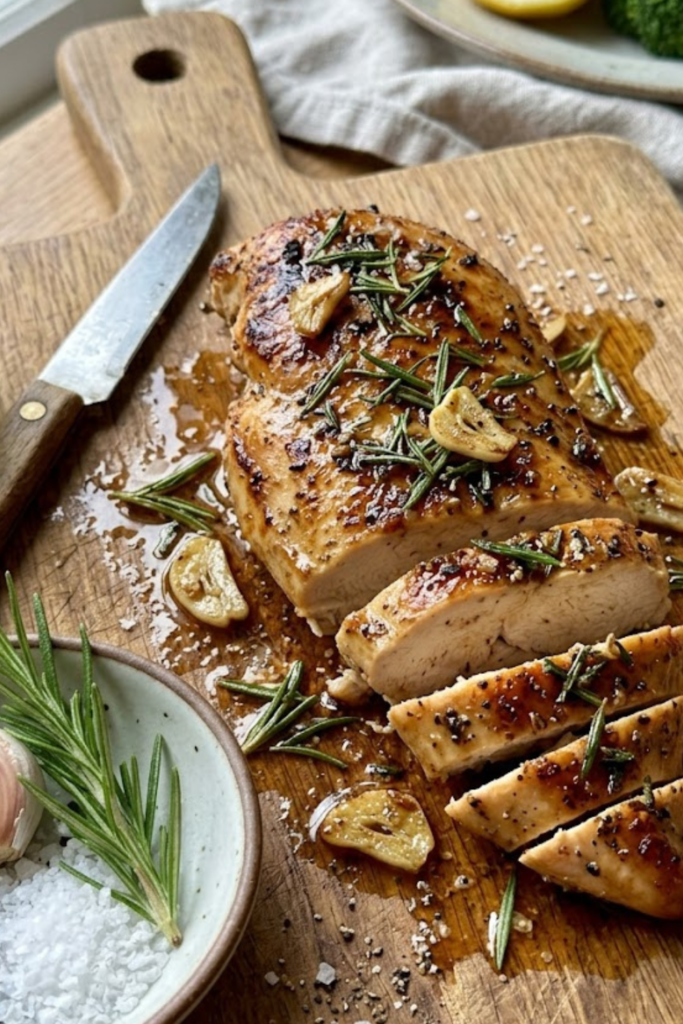
The Secret to the Perfect Rosemary Garlic Infusion
I used to just toss everything in the pan at once, but that’s a big mistake. If you want that deep, restaurant-style flavor, you gotta treat your oil like a sponge. It needs to soak up all the goodness before the chicken even touches it.
I always start by grabbing a few fat cloves of garlic. Don’t worry about chopping them into tiny bits—that actually makes them burn too fast and turn bitter. I just lay them on my board and give them a good whack with the side of my knife. These smashed cloves release all their juices into the oil much better.
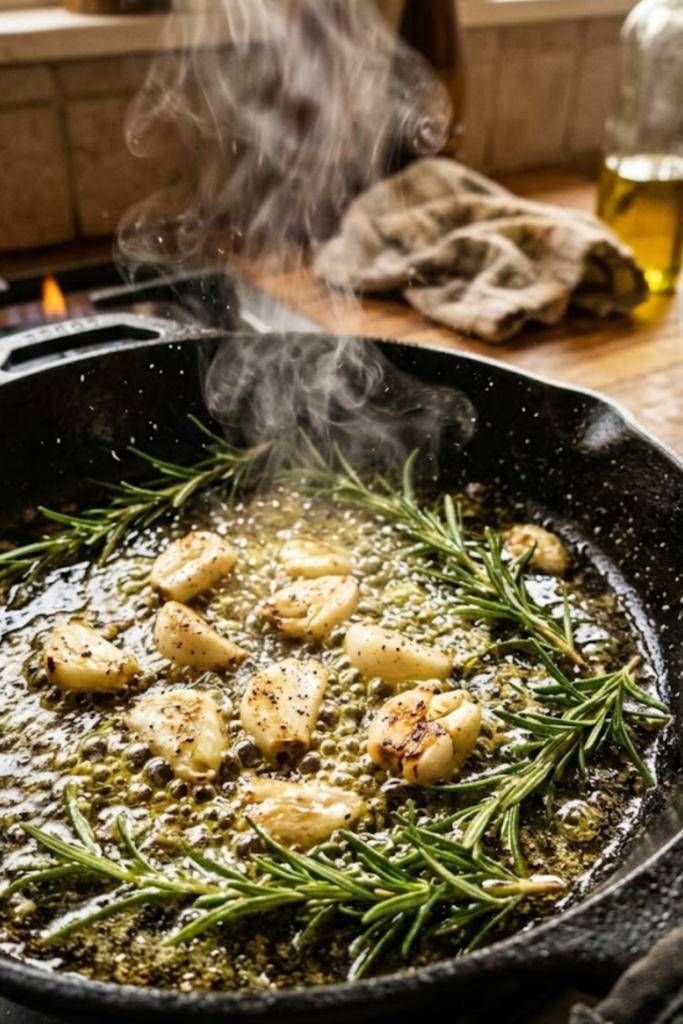
Once your pan is warming up with some olive oil or avocado oil, throw in those garlic pieces and two or three big sprigs of fresh rosemary. You’ll know it’s working when your whole kitchen starts smelling like a dream. You want the oil to shimmer, not smoke. If the garlic starts turning dark brown, turn the heat down a notch. We want a nice golden tan, not a burnt crunch. This little head start is what makes the chicken taste like it’s been marinating for hours when it’s really only been minutes.
You can actually see the rosemary needles start to stiffen up and turn a slightly darker green as they give up their oils. I like to move the sprigs around with my tongs just to make sure every inch of that pan is coated in that herb scent. Sometimes I even press down on the garlic one more time while it’s in the hot oil to get that last bit of flavor out. If you’re using a cast iron skillet, this part is even better because the pan holds the heat so well. The goal is to create a flavored base that acts like a blanket for your chicken. If you rush this part, you’re just cooking meat in plain oil, and that’s how you end up with boring dinner. I usually let the aromatics dance in the pan for about two minutes before I even think about grabbing the poultry. It’s a small wait, but your taste buds will definitely thank you later. This technique is basically a shortcut to gourmet cooking that anyone can do without a lot of practice.
Preparing Your Chicken for Maximum Flavor Absorption
You can’t just throw a cold chicken breast into a pan and hope for the best. If you do, you’ll end up with a piece of meat that’s thick on one side and thin on the other, which means the thin part turns into a hockey puck while the middle is still pink. I learned this the hard way after a few embarrassing dinner parties!
The first thing I do is grab my meat mallet. If you don’t have one, a heavy rolling pin or even a small frying pan works just fine. I put the chicken between some plastic wrap and give the thicker parts a few good taps until the whole breast is about the same thickness. This is the secret to getting it juicy all the way through.
Once the chicken is flat, I like to make sure it isn’t straight-out-of-the-fridge cold. Letting it sit on the counter for just ten minutes helps it cook more evenly so the outside doesn’t get tough before the inside is done. I usually use that time to get my rosemary and garlic ready. If you skip the pounding step, you’re basically fighting against the physics of the meat, and nobody has time for that on a weeknight. I also make sure to check for any weird bits of fat that need trimming off. A clean, even surface is exactly what we want for that rosemary garlic oil to grab onto. It might feel like an extra step, but skipping this is why most people end up with rubbery chicken. Taking these few minutes makes a world of difference in how tender the final bite feels.
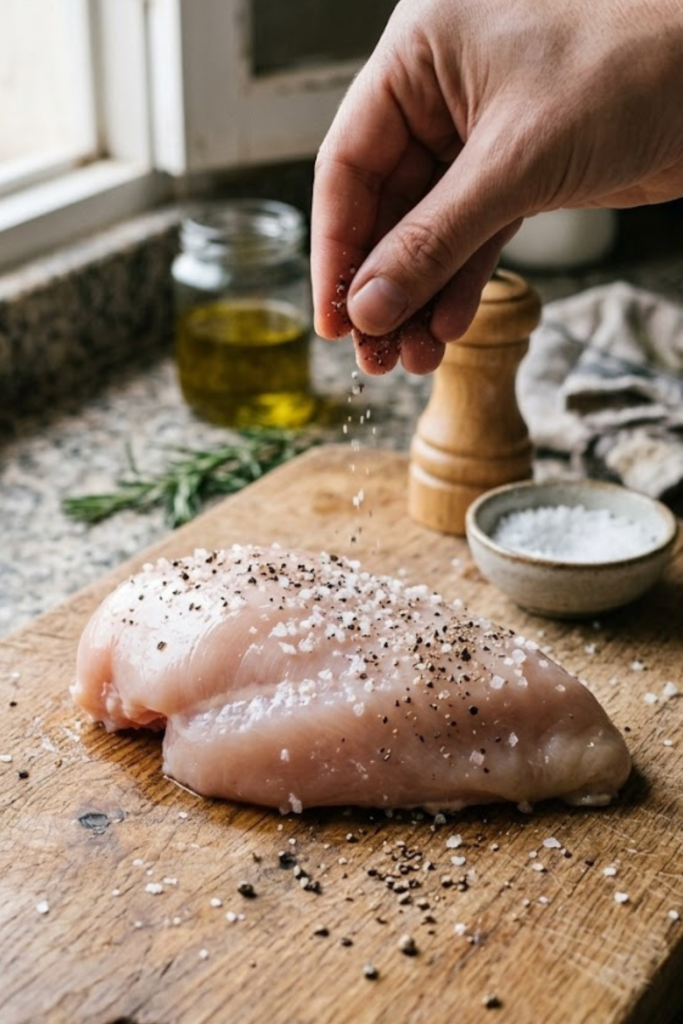
Next, I hit it with plenty of salt and pepper. I like to let it sit for about 15 minutes if I have the time. This acts like a quick brine and helps the meat hold onto its moisture. But here is the most important tip: take a paper towel and pat that chicken bone-dry right before it goes in the oil. If the surface is wet, it just steams. If it’s dry, it sizzles and gets that beautiful golden crust we’re looking for.
Step-by-Step Searing and Basting Technique
Once that oil is fragrant and your chicken is prepped, it is time for the fun part. I usually wait until the oil is good and hot—you should see a little shimmer on the surface. Carefully lay the chicken in the pan. You want to hear a loud sizzle right away! If it’s quiet, your pan isn’t hot enough, and you won’t get that gold color.
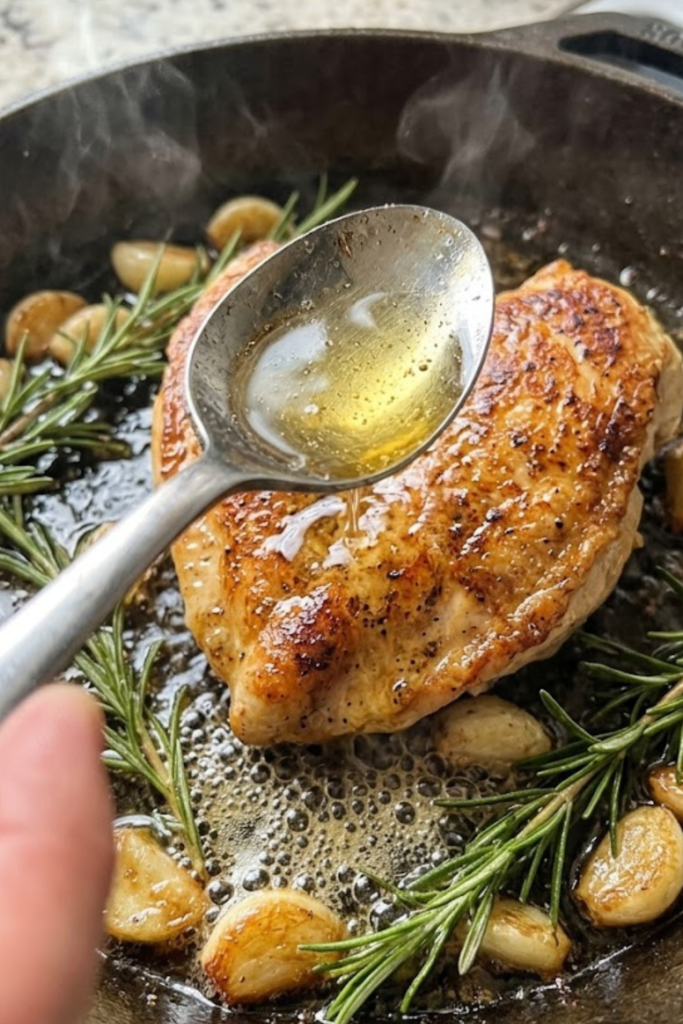
I let it cook without touching it for about 5 to 6 minutes. Resist the urge to peek! When you flip it over, that’s when the magic happens. I tilt the pan slightly so the oil, garlic, and rosemary pool at the bottom. I take a big spoon and just keep pouring that hot, herb-flavored oil right over the top of the meat. This is called basting, and it keeps everything moist while the middle finishes cooking.
You’ll notice the rosemary starts to crackle and the garlic gets soft and buttery during this part. I like to keep the heat at a medium-high level so the oil stays active but doesn’t start smoking out the whole kitchen. If you see the garlic getting too dark, just scoot it on top of the chicken breast to keep it from burning. This basting method is really what separates a boring piece of meat from something special. It builds up layers of flavor that you just can’t get from a regular oven. Plus, it gives the chicken a glossy, beautiful look that makes it look like it came from a fancy restaurant. I usually do this for the last three or four minutes of cooking until the crust is nice and firm.
I always keep my meat thermometer handy because I don’t like guessing. I pull the chicken out as soon as it hits 165°F. If you go much past that, it starts getting tough. Let it rest on a plate for five minutes before you slice it. This lets the juices settle back into the meat instead of running all over your cutting board. Trust me, waiting those five minutes is the hardest part, but it makes a huge difference.
Look, cooking the perfect chicken breast with rosemary garlic oil isn’t about having a fancy kitchen or expensive gear. It’s really just about having a little patience and letting those aromatics do the heavy lifting for you! I hope these tips help you skip the “dry, rubbery chicken” phase of life a lot faster than I did. Once you get that golden crust and that woodsy rosemary scent filling your home, you’ll never want to go back to plain old baked chicken again.
I’ve found that once you master this basic pan-searing method, you can pretty much cook anything. You can even try adding a splash of lemon juice or a pinch of red pepper flakes to the oil at the very end to give it a little extra kick. It’s one of those reliable meals that makes you feel like a pro even on a busy Tuesday night. Just remember to keep an eye on that garlic so it stays sweet and golden rather than bitter. There is nothing quite like the sound of that sizzle and the smell of fresh herbs to make a house feel like a home.
If you try this out and love how juicy it turns out, please save this recipe and share it on Pinterest! I’d love to hear how yours turned out or if you added any of your own little twists to the oil. Happy cooking, and enjoy every single bite!