Did you know that Americans eat over 90 pounds of chicken every single year? It’s basically the ultimate canvas for flavor, but let’s be honest—it can get pretty boring if you’re just doing the same old seasoning salt every night. I’ve spent a lot of years in my kitchen trying to get that perfect “shatter-crisp” skin and an aroma that actually sticks to the meat.
I finally figured out that using a specific chicken with savory garlic oil technique changes everything. It’s not just about throwing garlic in a pan; it’s about how you treat that oil to make sure it doesn’t get bitter. I remember one time I tried to rush it and ended up with a house that smelled like burnt tires! Since then, I’ve refined this method to be super easy and consistent. Whether you are a pro or just starting out, this is going to be your new favorite way to make dinner.
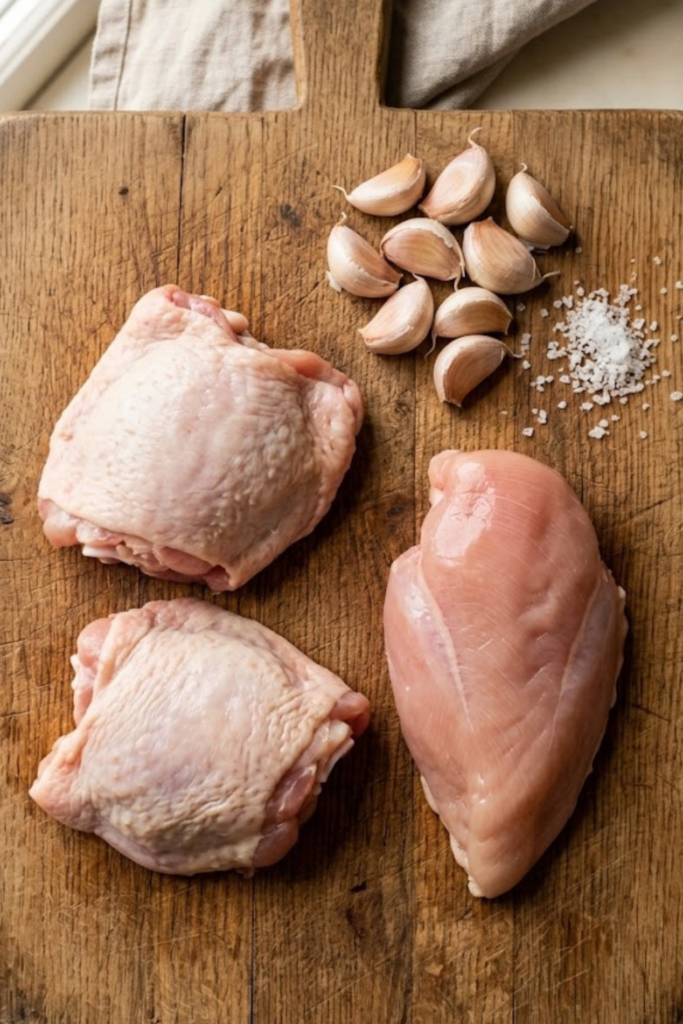
Choosing the Right Cut: Thighs vs. Breasts for Garlic Infusion
When I first started cooking this, I always reached for chicken breasts. I thought, “Hey, they’re lean and healthy, right?” But I quickly realized that breasts can get dry and rubbery faster than you can say “garlic.” If you overcook them by even a minute, you’re basically chewing on a sponge. After a few failed Sunday dinners, I switched over to bone-in, skin-on thighs, and I haven’t looked back since.
The reason thighs work so much better for a savory garlic oil recipe is the fat content. As the chicken cooks, that fat renders out and mixes with the garlic-infused oil in the pan. It creates this amazing sauce that stays juicy even if your stove runs a bit hot. Plus, the skin acts like a little blanket that protects the meat while it soaks up all those aromatics.
If you really prefer white meat, you can still use breasts, but I’d suggest keeping the skin on or using “airline” cuts. It helps keep the moisture in. Here’s a little trick I use: I let the chicken sit on the counter for about 15 minutes before I start. Putting ice-cold meat into a pan makes the muscles tighten up, which makes it tough. Giving it a little time to reach room temperature helps it cook way more evenly.
I also make sure to pat the skin bone-dry with a paper towel. If there’s any water left on the surface, the chicken will just steam instead of getting that nice brown color. I learned that the hard way when my “crispy” chicken turned out pale and soggy. Now, I’m pretty careful about drying it off so the umami flavors really pop.
Honestly, the difference is night and day. When you use thighs, the meat actually pulls in that garlic flavor all the way to the bone. I’ve found that if I’m using breasts, I have to poke a few tiny holes in the meat just to get the oil to penetrate a little deeper, otherwise only the outside tastes like anything. Another thing to think about is the cost—thighs are usually way cheaper at the grocery store, so you’re getting a better meal for less money. I usually buy the big family packs and freeze what I don’t use. Just make sure you defrost them completely in the fridge before you try to sear them, or you’ll end up with a burnt outside and a frozen middle, which is a total mood killer for dinner.
The Secret to the Ultimate Savory Garlic Oil
I remember the first time I tried making a garlic-heavy dish. I thought, “Hey, the hotter the pan, the faster the flavor!” Man, was I wrong. I ended up with these tiny, bitter black charcoal bits that ruined a perfectly good batch of chicken. It was a total disaster!
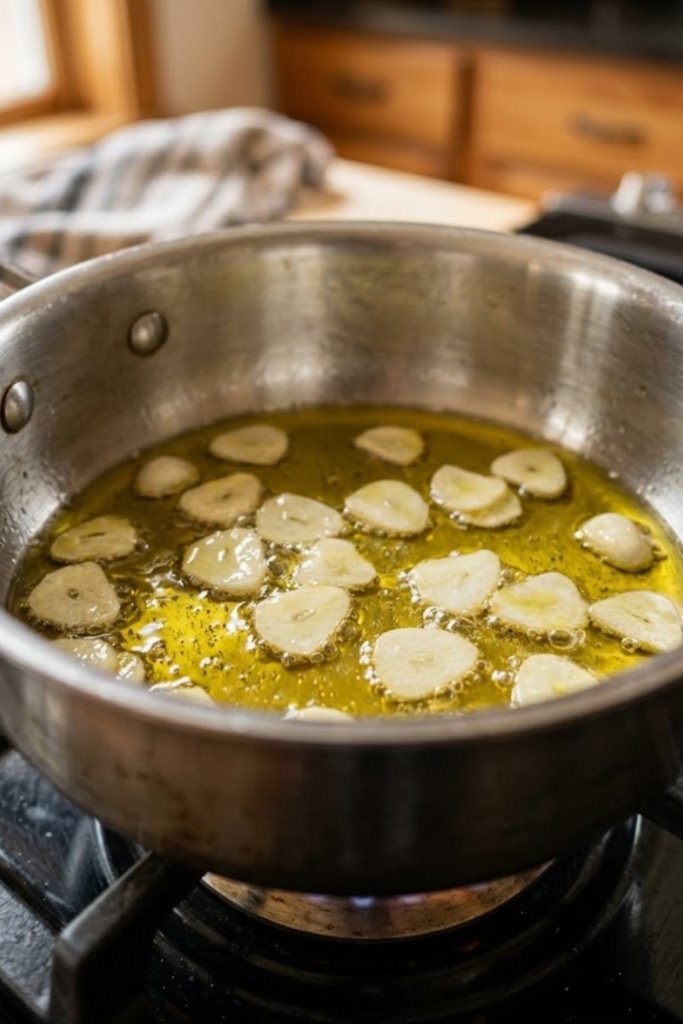
To get that savory garlic oil just right, you have to be patient. I’ve learned that starting the garlic in a cold pan is the way to go. You put your sliced cloves in the oil before you even turn on the stove. This lets the flavor seep out slowly as the temperature rises. If you drop garlic into a screaming hot skillet, it burns in like five seconds. Trust me, I’ve done it more times than I’d like to admit. This “cold start” method is basically the science of avoiding that nasty, acrid taste that happens when garlic overcooks.
Adding a Little Extra Kick
Once the oil is warm and the garlic is dancing around, that is when I like to boost the profile. I usually throw in some aromatics like a sprig of fresh thyme or a pinch of red pepper flakes. The heat of the oil wakes up the oils in the herbs and the spice from the flakes, making the whole thing smell like a dream. I once tried adding some dried rosemary at the same time, but I forgot that dried herbs can burn too. My kitchen smelled like a campfire, and not in a good way! Now, I wait until the oil is almost done before throwing in those extra bits.
Don’t Waste a Drop
Whatever you do, don’t throw away any oil you don’t use for the chicken. I keep a little glass jar on my counter for the leftovers. This garlic-infused oil is like liquid gold for later in the week. I use it for quick stir-fries or drizzle it over roasted vegetables like broccoli or potatoes. It gives everything a deep, slow-cooked flavor even if you’re just throwing a quick meal together on a Tuesday night.
Searing Techniques for Golden, Crispy Skin
Now, here is where most people get nervous. They put the chicken in the pan and start poking at it every thirty seconds. I used to do the same thing because I was scared it was burning! But if you want that perfect, golden-brown crunch that goes so well with savory garlic oil, you have to leave it alone. I call it the “patience phase.”
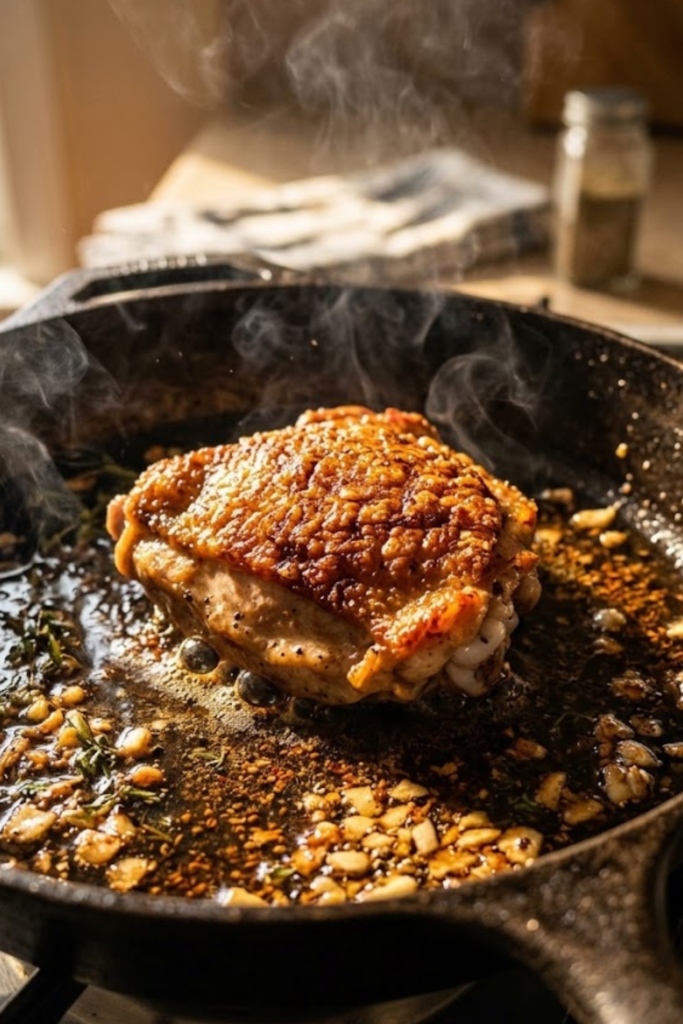
Once your pan is at a nice medium-high heat, lay the chicken skin-side down. You should hear a loud sizzle right away. If it’s quiet, the pan isn’t hot enough. I usually set a timer for about 6 to 8 minutes and literally walk away from the stove so I’m not tempted to flip it too early. You’ll know it’s ready when the chicken releases itself from the pan. If you try to lift it and it sticks, it’s telling you it needs more time to develop that Maillard reaction crust.
One thing I found out by accident is that using a heavy cast iron skillet makes a huge difference. It holds the heat way better than those thin non-stick pans. When the skin is finally crispy, I flip it over and pour that beautiful garlic-infused oil right over the top. The smell is just incredible—it fills up the whole house.
I always make sure to use a meat thermometer to check the internal temperature. I aim for 165 degrees. I remember one time I thought I could just “feel” when it was done, and I ended up serving my husband chicken that was still pink in the middle. Talk about embarrassing! Now, I don’t take any chances. After it’s done, I let the meat rest for five minutes. This lets the juices settle back in so they don’t all run out the moment you take a bite.
If you skip the resting part, all that hard work goes to waste because the meat gets dry almost instantly. I also like to tilt the pan slightly at the very end and use a large spoon to keep basting the chicken with the hot oil. This makes sure every little nook and cranny gets covered in that garlic goodness. It’s a trick I saw a chef do once, and it really helps build up a deep, dark color on the skin. Plus, it smells so good that my neighbors usually end up knocking on the door asking what’s for dinner! Just be careful not to splash yourself, because that oil stays hot for a long time.
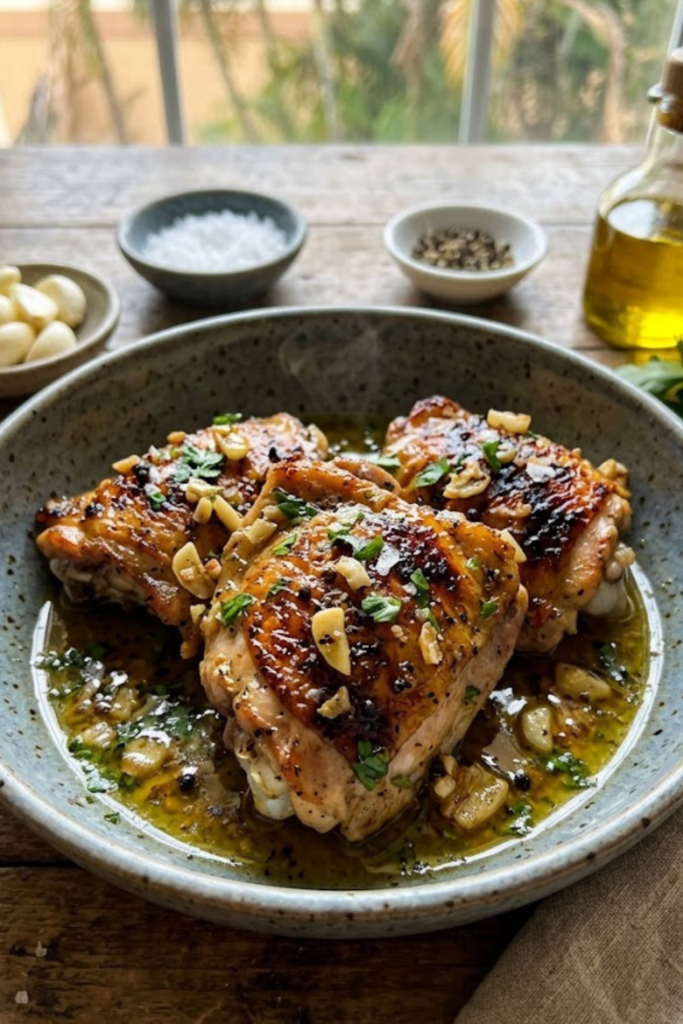
At the end of the day, making chicken with savory garlic oil isn’t about being a fancy chef. It’s about those little moments in the kitchen—the smell of the garlic hitting the oil and that first satisfying crunch of the skin. I’ve messed this up more times than I can count, but once you get the hang of the “cold start” for your oil and letting the pan do the work, you’ll never go back to plain old baked chicken again.
This dish has become a total staple in my house because it’s simple but feels like a treat. Plus, if you have any of that garlic oil left over, drizzle it on some crusty bread or toss it with some pasta the next day. It’s like a gift that keeps on giving!
If you try this out, I’d love to hear how it went for you. Did you add any extra herbs? Did your family go as crazy for the garlic chips as mine does?
If you enjoyed this recipe and want to keep it handy for your next dinner, please share it on Pinterest! It really helps others find these easy kitchen tips.