I’ve spent years in my kitchen trying to figure out why chicken is so boring. Did you know that nearly 75% of home cooks report that their chicken breasts come out dry and flavorless? It’s a tragedy! I used to be one of them, chewing on what felt like a salted sponge. But then I discovered the magic of a chicken breast with savory butter glaze, and everything changed! This dish is a total game-changer for your Tuesday night dinner routine. It’s fast, it’s fancy, and it smells like a five-star steakhouse in your own home. You’re going to love how the butter bubbles up and creates that gorgeous golden crust!
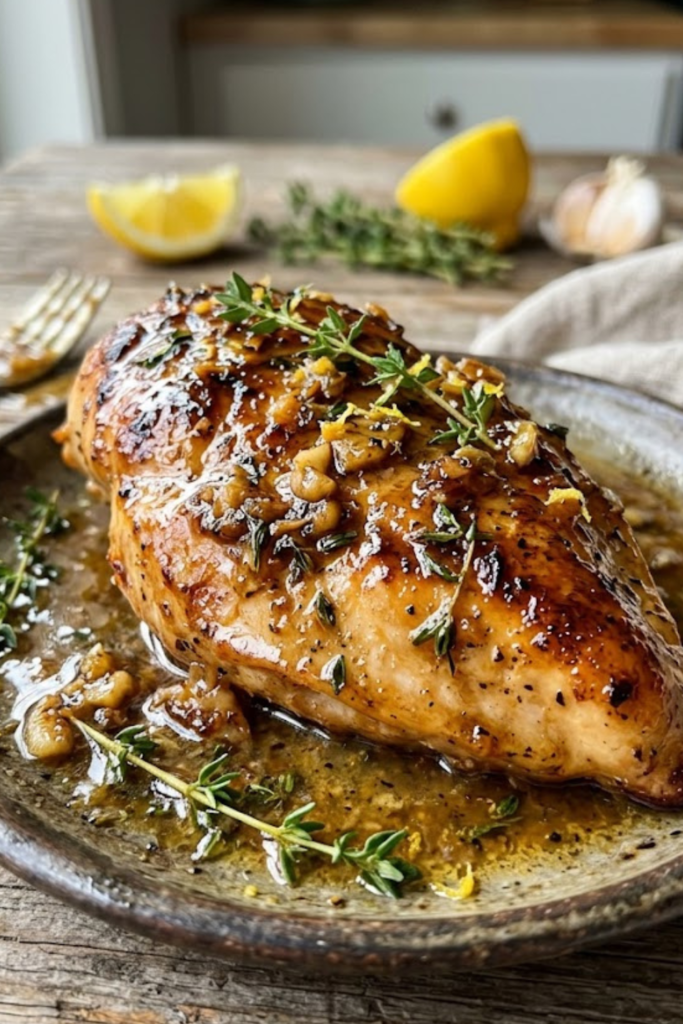
Picking the Best Meat for Your Butter Glaze
I have spent a lot of time standing in the meat aisle at the grocery store feeling pretty confused. If you want to make a really good chicken breast with savory butter glaze, you have to start with the right piece of meat. I used to just grab the biggest pack that was on sale, but I found out that was a big mistake. Those huge, thick breasts take way too long to cook. By the time the middle is safe to eat, the outside is hard as a rock!
I tell my students all the time: look for the smaller ones. If you can find organic or air-dried chicken, it usually tastes a lot better. It doesn’t have all that extra water pumped into it like the cheap stuff does. If you do end up with a thick piece, just lay it flat on your board and slice it through the middle. We call that butterflying. It makes the chicken thinner so it cooks fast and stays moist.
Here is my best tip that I wish someone told me years ago. Don’t take the chicken straight from the fridge and put it in the hot pan. It’s like when you’re warm and cozy in bed and someone throws an ice cube down your back—you tense up! Chicken does the same thing. Let it sit on the counter for about 15 minutes so it’s not so cold. This helps it stay tender and juicy when that butter hits it. It makes a world of difference for your dinner.
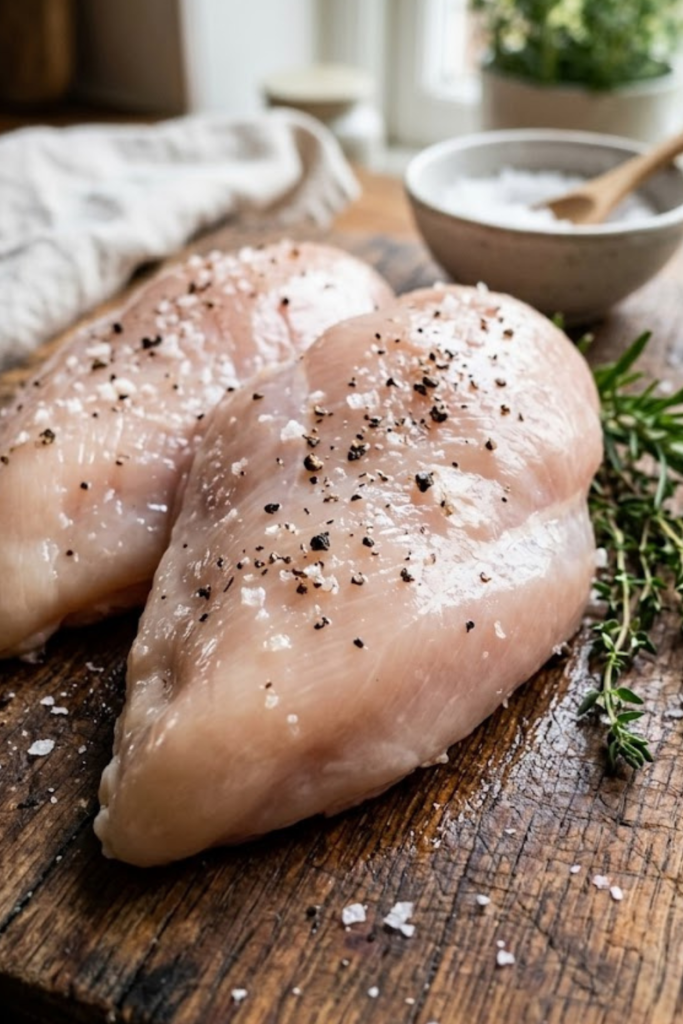
You should also look closely at the meat for something called white striping. If you see tiny white lines running across the muscle, the chicken might be “woody,” which means it will be tough no matter how much butter you use. I always avoid those packs. Also, right before you start, grab a paper towel and pat the meat completely dry. If the chicken is wet when it hits the pan, it will just steam and turn a sad grey color instead of getting that golden crust. I like to sprinkle my salt and pepper about ten minutes before cooking so the seasoning actually sinks into the meat. If you wait until it’s in the pan, the salt just bounces off into the oil. If you buy the chicken in those big plastic packs with the soggy pads at the bottom, get it out of that packaging as soon as you get home. Those pads just hold onto old moisture and make the meat taste less fresh. Getting the prep right is half the battle when you want a perfect chicken breast with savory butter glaze.
The Art of the Perfect Skillet Sear
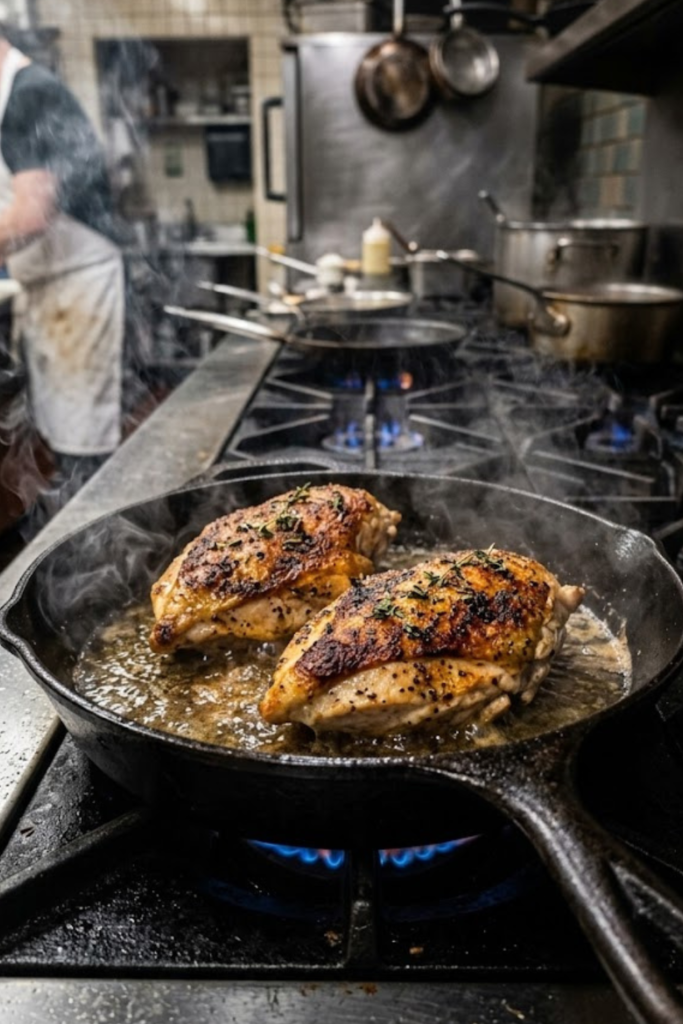
I used to think any old pan would work for my chicken. I had this thin, cheap pan from my first apartment and everything stuck to it like glue. If you want that chicken breast with savory butter glaze to look like the pictures in a magazine, you really need a heavy pan. A cast iron skillet is my favorite because it holds onto heat so well. It stays hot even when you put the cold meat in, which is what you want.
Once the chicken is in the pan, just leave it alone! I know it’s hard. I used to poke and prod at it because I was worried it would burn. But if you move it too soon, you won’t get that pretty brown crust. That crust is where all the good taste is. Usually, I wait about five minutes before I even try to flip it over. If it’s sticking to the bottom, it probably isn’t ready to turn yet. Just be patient and wait for it to release on its own.
I always keep my meat thermometer handy. You don’t want to guess if it’s done. If you cut into it to check, all the juices run out and you end up with dry meat that tastes like cardboard. I pull my chicken out of the pan when it hits 160 degrees. It keeps getting hotter while it sits on the plate for a minute. By the time you sit down to eat, it’ll hit 165 degrees and be perfectly safe and juicy. It’s way better than overcooking it until it’s like a piece of wood.
Another thing I learned the hard way is to never crowd your pan. If you try to cram four big pieces of meat into a small skillet, the temperature drops way too fast and they just end up steaming in their own juices instead of getting that nice sear. You want plenty of space between the pieces so the steam can get out. I usually use a tiny bit of oil with a high smoke point, like avocado oil, to get the pan ready before the butter ever enters the picture. You’re looking for a loud, aggressive sizzle the moment the meat touches the pan—if it’s quiet, it’s just not hot enough yet. Getting that deep, golden brown crust is actually what helps the glaze stick to the meat later on. It might take a couple tries to get your stove settings right, but once you see that perfect color, you’ll feel like a total pro!
Making the Glaze That Everyone Will Crave
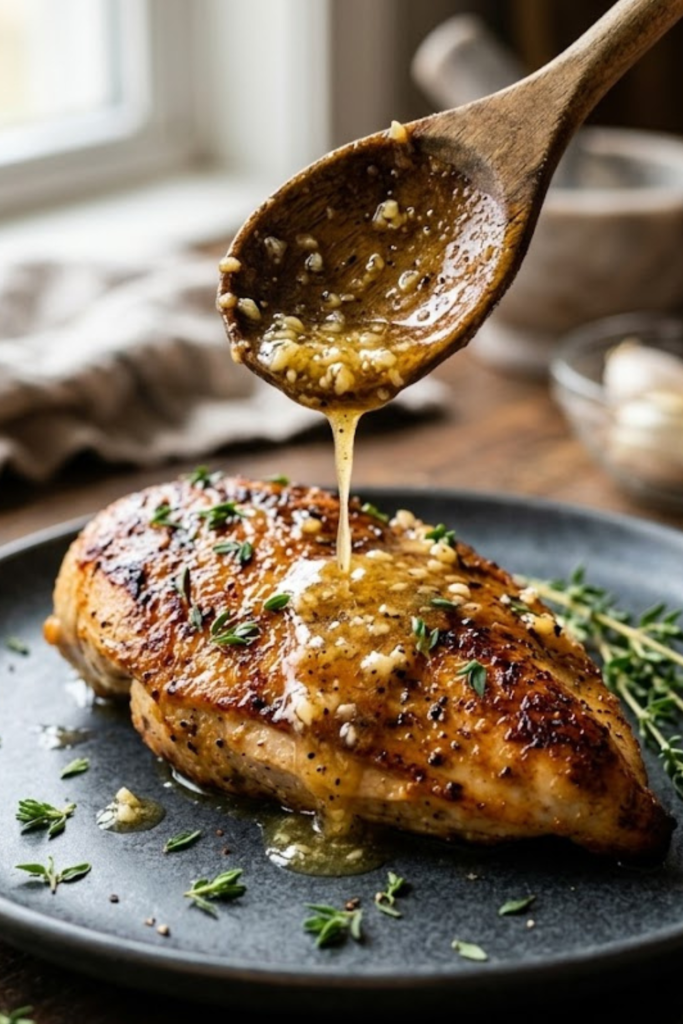
I remember watching a cooking show where the chef kept pouring butter over a steak with a big spoon. I thought it was just for show, but then I tried it with my chicken breast with savory butter glaze and my mind was blown. It is the secret to making the meat taste rich and look like it came from a fancy restaurant.
To get the flavor right, you need a balance. You have the fat from the butter, but you need a little “zing” to go with it. I always use a tiny splash of lemon juice or even a little bit of honey at the very end. If you just use butter, it can feel a bit too heavy. I usually toss in some smashed garlic cloves and fresh thyme right when the butter starts to bubble and foam up in the pan.
One big mistake I made when I was first learning was putting the herbs in too early. They just burned and tasted like charcoal! Now I wait until the last two minutes of cooking. I tilt the pan a little so the butter pools at the bottom, then I use a big spoon to keep pouring that hot, garlic-flavored butter right over the top of the chicken. We call this basting. It’s a little messy, but it makes the chicken so shiny and moist. If the butter starts to look too dark, just pull the pan off the heat for a minute. You want it to smell nutty, not burnt.
You will know the glaze is perfect when the butter turns a light tan color. This is often called brown butter, and it has this amazing toasted smell that fills up the whole house. I usually sprinkle a little extra pinch of flaky sea salt right as the glaze is finishing because it makes all those savory flavors stand out. Make sure you don’t walk away from the stove during this part! Butter can go from perfect to burnt in just a few seconds. Once you take the chicken out, let it sit on a plate for five minutes. Pour all that leftover butter from the pan right over the top while it rests. This lets the meat soak up every single drop of that goodness. My kids always fight over who gets the extra sauce at the bottom of the plate, so I usually make a little more than I think I need!
So, that is how I make my chicken breast with savory butter glaze. It took me a lot of burnt butter and dry dinners to finally get it right, but now it’s my favorite thing to cook. Just remember the three big rules: don’t start with cold meat, use a heavy pan for a good sear, and keep that butter moving when you’re basting!
If you follow these steps, your chicken is going to be juicy every single time. It’s a great way to make a simple dinner feel special without spending hours in the kitchen. I really hope this helps you feel more confident at the stove. Once you master that golden glaze, you’ll never want to go back to plain old baked chicken again!
If you loved this recipe, please share it on Pinterest so others can find it too!