Did you know that Americans buy over 900 million rotisserie chickens every single year? That is a whole lot of bones that usually end up in the trash! Honestly, I used to be one of those people until I realized I was literally throwing away “liquid gold.” Making a rotisserie chicken soup stock recipe isn’t just about being frugal; it’s about that deep, roasted flavor you just can’t get from a store-bought carton. Today, I’m going to show you how to take those leftover remains and turn them into a base so good, your family will think you spent all day hovering over a stove in a fancy French restaurant!
I remember one rainy Tuesday when I was about to toss a chicken carcass in the bin. I paused and thought, “There has to be more I can do with this.” It seemed like it might be a lot of work, but I quickly learned it’s actually one of the simplest things you can do in a kitchen. You just need a big pot, some cold water, and a little bit of time. The smell that fills your home is way better than any expensive candle you can buy at the mall. Plus, your house feels so much warmer and more inviting while that pot is bubbling away on the stove. By the time you’re done, you’ll have a freezer full of stock that makes every single meal you cook taste ten times better. It is a great way to feel like a pro cook without needing any fancy skills or expensive tools!
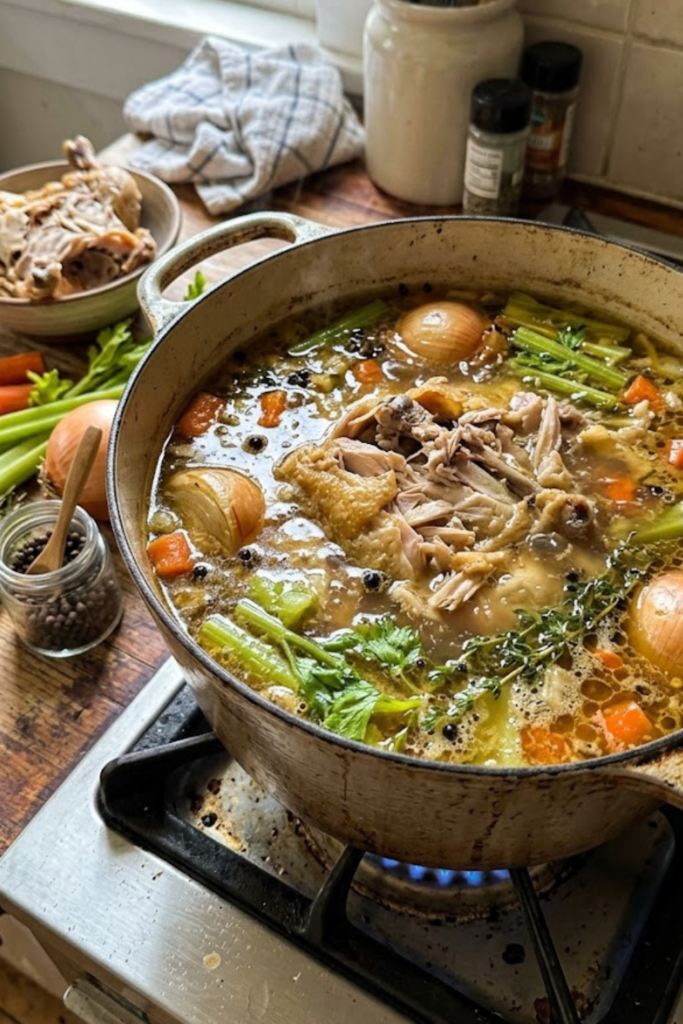
The Secret to a Rich Rotisserie Base
Most folks think making a stock is just throwing bones in water and hoping for the best, but there is a real trick to getting that deep flavor. The big secret is using a chicken that has already been roasted. Since you are using a rotisserie chicken, the grocery store already did the heavy lifting for you. Those bones are dark and caramelized, which is a fancy way of saying they have a lot of toasted flavor built right in.
When you simmer these roasted bones, you get a much darker and tastier liquid than if you used plain raw chicken. I always tell people to look for the “jiggle” once the stock cools down. If your stock turns into a jelly-like blob in the fridge, you hit the jackpot! That is the gelatin coming out of the joints and connective tissue. It makes the soup feel rich and velvety when you eat it, instead of just feeling like thin water.
Also, please do not toss the skin in the trash! I know it looks a bit greasy, but that skin is covered in the seasonings from the rotisserie oven. It adds a nice layer of fat—which some cooks call schmaltz—that really carries the flavor across your tongue. Just remember to keep the heat low so you don’t boil away all that goodness. You want a slow dance in the pot, not a wild party. This is how you get a base that tastes like you spent all day in the kitchen even if you just started an hour ago.
I usually save the drippings from the bottom of the plastic container the chicken came in, too. You know that jelly-like stuff that settles at the bottom? That is pure flavor! It might look a little strange, but don’t let it go to waste. I also like to break the larger bones with a heavy knife or kitchen shears before throwing them in the pot. This helps the marrow get out into the water, which makes the broth even more hearty. If you have some leftover wing tips or the neck, toss those in too because they have a ton of that good stuff that makes the stock thick. Sometimes I even roast the veggies for twenty minutes before adding them if I want an even darker color. It is all about building layers of taste so your soup doesn’t end up tasting like plain salt water. Trust me, once you see that rich, brown color forming, you’ll know exactly why this step is so important for a great meal.
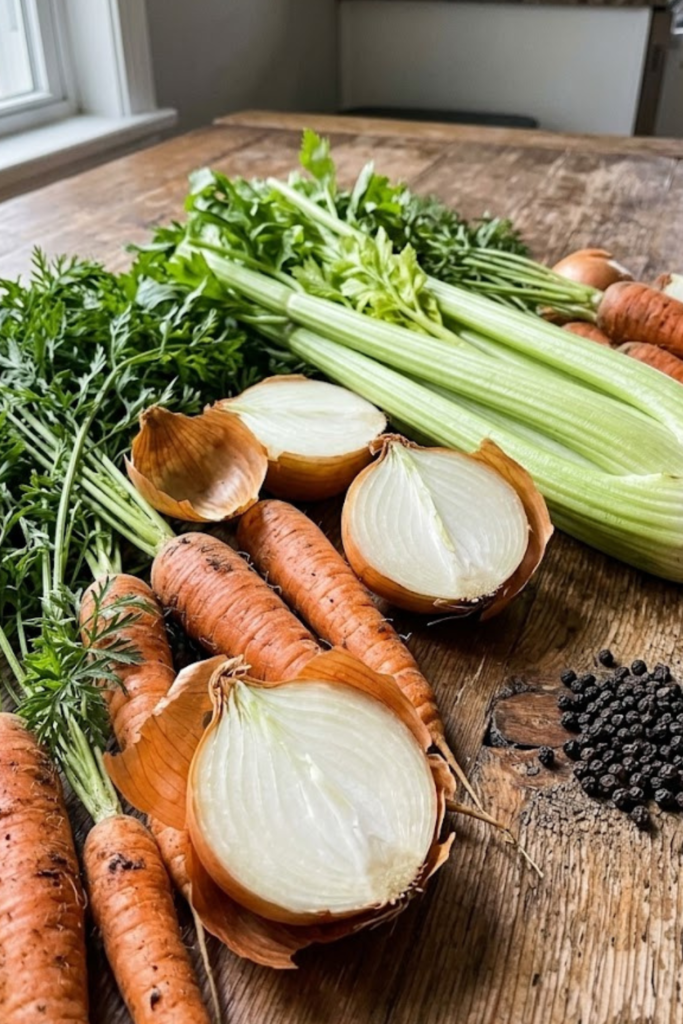
Essential Ingredients for Maximum Flavor
When I first started cooking, I thought I could just throw the chicken in some water and call it a day. Boy, was I wrong! To get that professional taste, you need what chefs call the “holy trinity” of veggies: onions, carrots, and celery. I don’t even peel the carrots most of the time—I just give them a good scrub. The onion skins actually give the broth a beautiful golden color, so I leave those on too. Just chop them into big chunks; they don’t need to be pretty.
Next up are the herbs. In my kitchen, fresh parsley and thyme are like my best friends. They add a bright, earthy flavor that cuts through the heaviness of the chicken fat. And don’t forget a couple of bay leaves. I used to think they didn’t do much, but they really help pull all the flavors together. It is like the glue for your soup.
Here is a little trick I tell all my friends: add a splash of apple cider vinegar and some whole peppercorns. The vinegar helps get all the good minerals out of the bones. You won’t taste the sourness at all, I promise. The peppercorns give it a tiny bit of heat that makes the back of your throat feel warm. These simple things take your rotisserie chicken soup stock recipe from “okay” to “wow, can I have the recipe?”
I also like to throw in a few smashed cloves of garlic. You don’t even have to peel them; just hit them with the side of your knife and toss them in the pot! It adds a savory note that really rounds out the smell. If you have some leek tops or even the green ends of green onions in your crisper drawer, throw those in too. They have a mild, sweet flavor that makes the broth taste like you grew the veggies yourself.
I usually wait until the very end to add any salt, because as the liquid simmers down and gets more concentrated, the saltiness gets way stronger. It is much easier to add a pinch at the end than it is to try and fix a soup that tastes like the ocean! By picking out your own fresh ingredients like this, you know exactly what is going into your food. This is way better than reading those long, confusing labels on the back of a store-bought carton that have ingredients you can’t even pronounce.
Remember, you don’t need fancy tools here. Just fresh stuff and a little bit of patience. Most of these items are probably already sitting in your fridge or pantry right now!
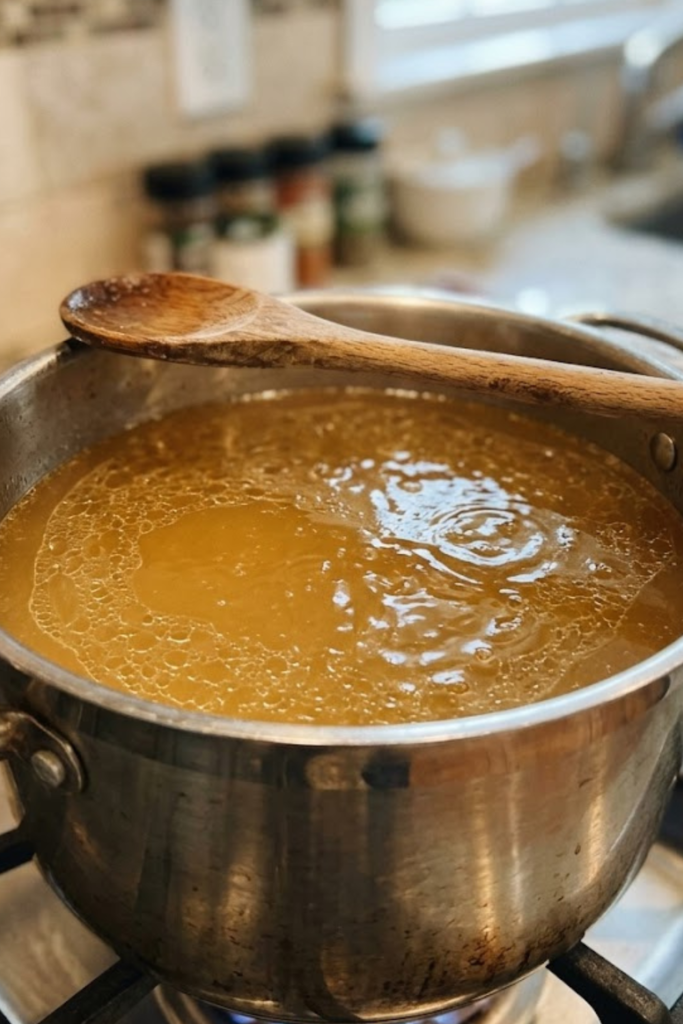
Step-by-Step: From Carcass to Liquid Gold
Now that you’ve got your pile of bones and your veggies ready, it’s time to actually get cooking. I usually pull out my big, heavy stockpot that’s been in my cabinet for years. But hey, if you have a slow cooker or an Instant Pot, those work great too! If you use a slow cooker, you can just set it on low and let it do its thing overnight. There is nothing better than waking up to a house that smells like a Sunday dinner. For the stovetop, I just toss everything in and cover it with cold water—about an inch over the bones is plenty.
The “low and slow” method is really the only way to go. I can’t stress this enough: please don’t let the pot come to a big, rolling boil. If you see those huge bubbles, just reach over and turn the heat down a notch. You want tiny little bubbles that barely break the surface. I usually let my rotisserie chicken soup stock recipe simmer for about 4 to 6 hours. The longer it sits, the more flavor you’re gonna get out of those roasted bones.
When it’s finally finished, it’s time for the “big reveal.” I grab a fine-mesh strainer and a big bowl. Whatever you do, don’t forget the bowl underneath! I actually poured a whole batch down the sink once because I wasn’t thinking, and I felt so silly. Once it’s strained and cooled, I pour it into glass jars or freezer-safe bags. If you use bags, lay them flat so they stack nicely. Having this stuff in the freezer is a total lifesaver for “soup emergencies” or when you just need a quick base for gravy. Just make sure you leave a little room at the top of the jars because the liquid will expand as it freezes, and you don’t want any broken glass!
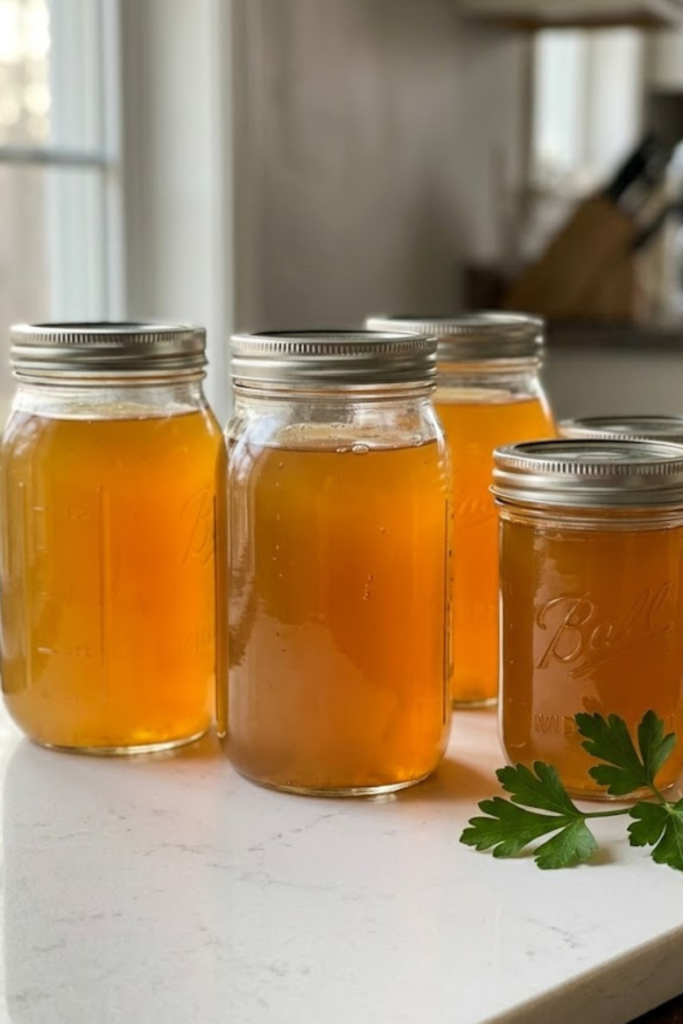
So, there you have it! Making your own rotisserie chicken soup stock recipe is one of the smartest things you can do in your kitchen. It is easy, it saves a lot of money, and it makes your home smell like a dream. You are taking something that most people just throw away and turning it into a base for dozens of different meals. Whether you use it for a classic chicken noodle soup or just sip it out of a mug on a cold day, you are going to notice a huge difference in how it tastes compared to the store-bought stuff.
Just remember the big rules: use the roasted bones, keep the heat low so it doesn’t get cloudy, and don’t forget that tiny bit of vinegar to get the good stuff out of the bones. I really think once you try this, you will never want to go back to those salty boxes again. It feels good to be a little less wasteful, right? If you loved this guide, please take a second to share it on Pinterest! It helps me out a lot and lets other people find these helpful kitchen tips.