Did you know that nearly 60% of home cooks reach for a store-bought bird when they’re exhausted after work? Honestly, I’m one of them! There is absolutely no shame in the rotisserie game—it’s the ultimate kitchen “cheat code” for a reason. I remember this one Tuesday night where I almost ordered takeout for the third time that week, but instead, I grabbed a cold chicken from the fridge and some wilted parsley.
That’s how this Rotisserie Chicken Lemon Herb Pasta was born! It’s zesty, it’s comforting, and it feels way more fancy than a 20-minute meal has any right to be. I used to think I had to spend an hour at the stove to get that deep, savory flavor, but the rotisserie bird does all the heavy lifting for you. It’s already seasoned and perfectly roasted, so you just have to focus on the bright, fresh notes of the citrus and the herbs. Plus, there is hardly any cleanup since you aren’t scrubbing a roasting pan all night. Whether you are feeding a hungry family or just looking for a quick solo dinner that tastes like a restaurant meal, this recipe is going to be your new go-to. Let’s get cooking!
The Secret to Juicy Rotisserie Chicken in Pasta
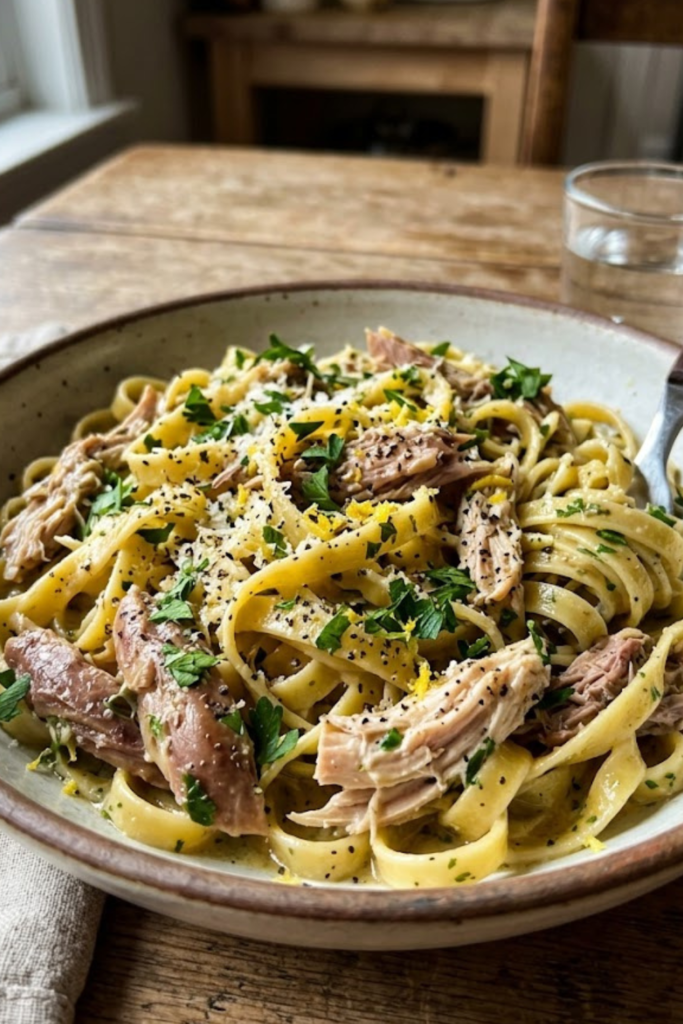
I’ve noticed that when I use leftover chicken, the biggest mistake I make is throwing it in the pan way too early. If you let that pre-cooked rotisserie meat simmer in the sauce for ten minutes, it ends up feeling like a pencil eraser. It gets tough, dry, and honestly, nobody wants to eat that.
The trick I’ve learned over the years is to wait until the very last second. I usually shred the chicken by hand while the pasta water is boiling. I actually prefer those rustic, uneven bits because they catch the lemon and oil much better than perfect little cubes do. Once my pasta is all tossed and coated in that garlic and lemon sauce, I just fold the chicken in to warm it through. It stays nice and juicy that way.
Also, here is a little pro tip: toss your shredded chicken in a small bowl with a squeeze of lemon juice and some cracked black pepper before it even touches the pasta. It wakes up the flavor of the meat so it doesn’t just taste like “reheated leftovers.”
You should also keep an eye on the skin. While some people toss it, I like to crisp it up in a separate toaster oven for a minute and then crumble it over the top like savory sprinkles. It adds a salty crunch that goes so well with the soft pasta. If you find the breast meat is a bit too dry even after shredding it, try mixing in a spoonful of the juices from the bottom of the rotisserie container. That “chicken gold” is packed with salt and fats that help the meat stay moist. I’ve found that using the dark meat—like the thighs and legs—actually works better for pasta because it has more fat and doesn’t dry out as fast as the white meat. Another thing I do is let the chicken sit at room temperature for about 15 minutes before adding it. Putting ice-cold chicken straight into hot pasta drops the temperature of your dinner too fast, and you end up with a lukewarm meal. By letting it warm up a bit on the counter first, it only needs about thirty seconds in the pan to be perfect. This little step makes a huge difference in the texture of the final dish.
Choosing the Right Pasta Shape for Zesty Sauce
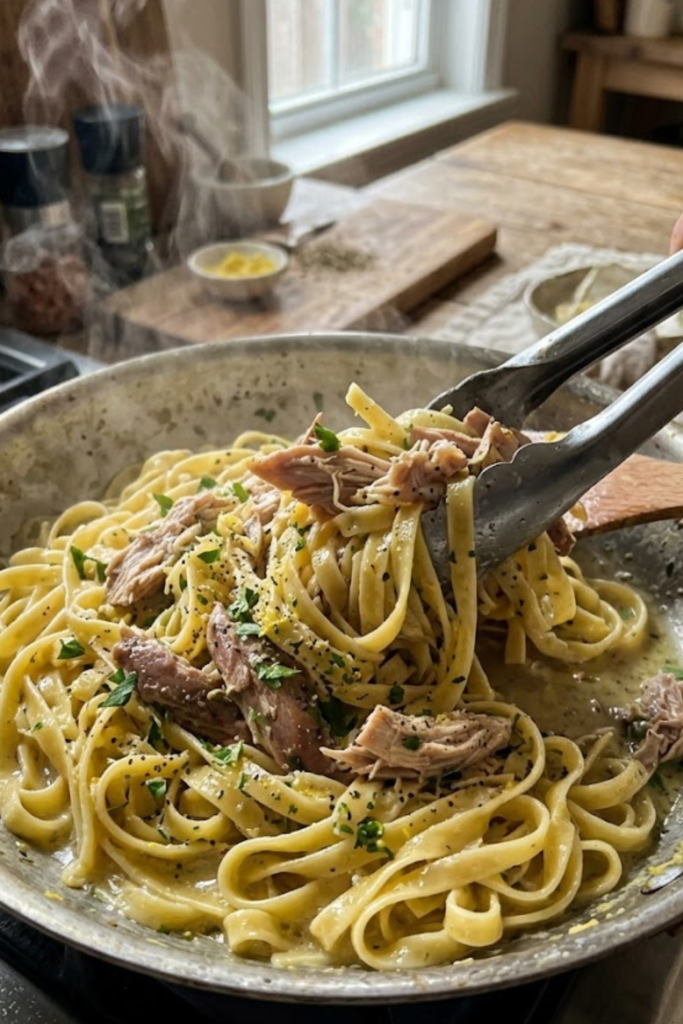
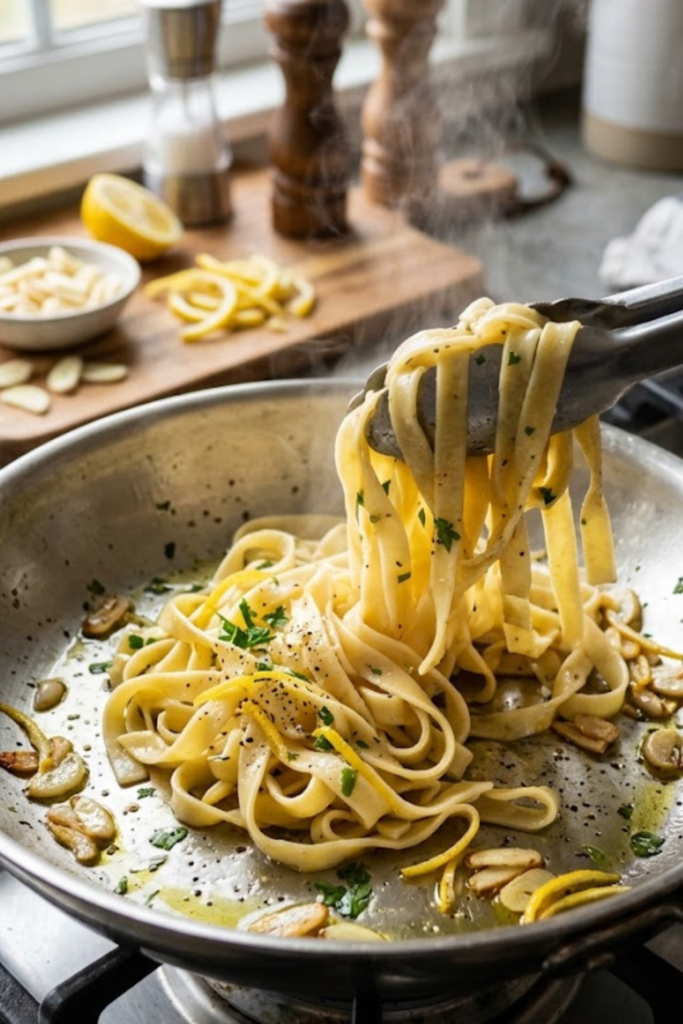
I used to think any box of pasta in the pantry would work, but I’ve learned that the shape actually changes how the whole meal tastes. If you use a tiny pasta like orzo, the lemon and oil just sink to the bottom of the bowl. For a zesty rotisserie chicken dish, you want a shape that can really grab onto that silky sauce.
Linguine or fettuccine are my personal favorites here. Because they are long and flat, they have more surface area for the lemon-butter emulsion to coat. It makes every bite feel rich without being heavy. If you have kids or just prefer smaller bites, fusilli (the spirals) or farfalle (the bowties) are great too. Those little twists and folds act like tiny pockets that trap the fresh herbs and garlic bits. Whatever you pick, make sure you save a splash of that salty pasta water before draining! It’s the “liquid gold” that helps the lemon juice and oil turn into a real sauce instead of just a puddle.
If you are feeling a bit more adventurous, try using campanelle. The name means “little bells,” and the ruffled edges are perfect for scooping up the tiny bits of zest and red pepper flakes. I also really like using rigatoni when I want a heartier meal. The large holes in the middle get filled with the shredded chicken and sauce, so you get a massive burst of flavor in every single bite. One thing I’ve learned is to avoid very smooth pastas like spaghetti or vermicelli for this specific recipe. Without ridges or a flat surface, the light oil-based sauce just slides right off the noodle and pools at the bottom of your plate, leaving the top layer tasting a bit bland. You really want something with a bit of texture. Also, pay attention to the cooking time on the box, but stop about two minutes early. I finish cooking the pasta directly in the pan with the lemon juice and that reserved water. This lets the starch bond with the fats, creating a creamy coating that stays stuck to the pasta instead of dripping off. It turns a simple home meal into something that looks like it came out of a professional kitchen.
Fresh vs. Dried Herbs: What Actually Works?
I used to be the person who thought a sprinkle of dried parsley from a jar that’s been in the back of my cabinet for three years was “good enough.” I was wrong. When you are making a light dish like this lemon pasta, the herbs aren’t just a garnish—they are basically the main event.
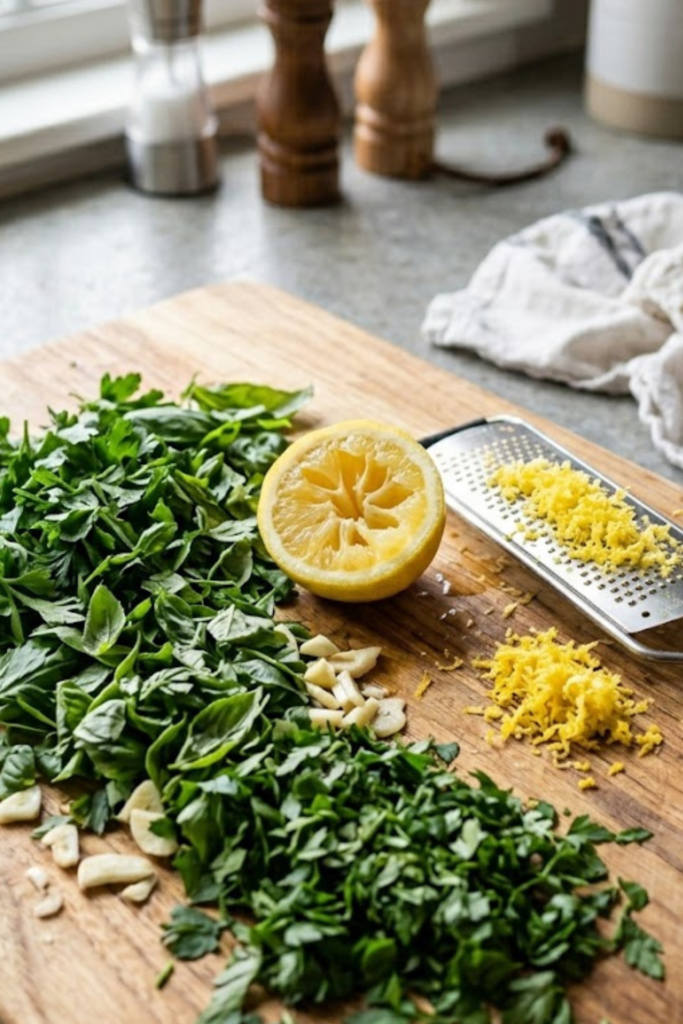
For this recipe, I always try to use the “Big Three”: parsley, basil, and maybe some chives if I have them in the garden. Fresh parsley gives it that “clean” taste, while basil adds a bit of sweetness that balances out the sour lemon. If you absolutely have to use dried herbs, try to stick to “hard” herbs like oregano or thyme. A little trick I learned is to add those dried herbs into the warm olive oil for a minute before adding anything else. This “blooms” the flavor so they don’t just taste like dry grass. But for the fresh stuff? Wait until the heat is off. If you cook fresh basil too long, it turns black and loses that amazing smell. Toss them in at the very end so they stay bright green and fragrant.
Another thing I’ve noticed is that the stems of the parsley actually have more flavor than the leaves. I usually chop the stems very fine and sauté them with the garlic at the start, then save the leaves for the final toss. If you are using fresh chives, try to snip them with kitchen scissors instead of a knife. It keeps them from getting bruised and slimy on the cutting board. I once tried using dried cilantro because I was out of parsley, and let me tell you, it was a disaster—some things just don’t swap well! If you really want to level up, try rubbing the fresh mint leaves between your fingers before dropping them in. It sounds weird, but it releases the oils and smells incredible with the lemon. Also, don’t be afraid to be generous with the amounts. I used to just do a tiny pinch, but now I use a whole handful of greens. It makes the pasta look like it belongs in a magazine. If your herbs are looking a bit wilted in the fridge, dunk them in a bowl of ice water for five minutes. They snap right back to life and get that crunch again. This simple step saves me so much money because I’m not throwing away half-used bunches of greens every week.
At the end of the day, making a great Rotisserie Chicken Lemon Herb Pasta isn’t about being a fancy chef. It’s about using those clever kitchen shortcuts—like a store-bought bird—and pairing them with high-quality, fresh ingredients. By focusing on keeping that chicken juicy and picking the right pasta to hold your sauce, you can turn a boring Tuesday night into a meal that feels like a real treat.
I really hope these tips help you get a delicious dinner on the table in record time! If you tried this or have a favorite herb combo I missed, let me know. And if you found this helpful, please share it on Pinterest so other busy cooks can find it too!