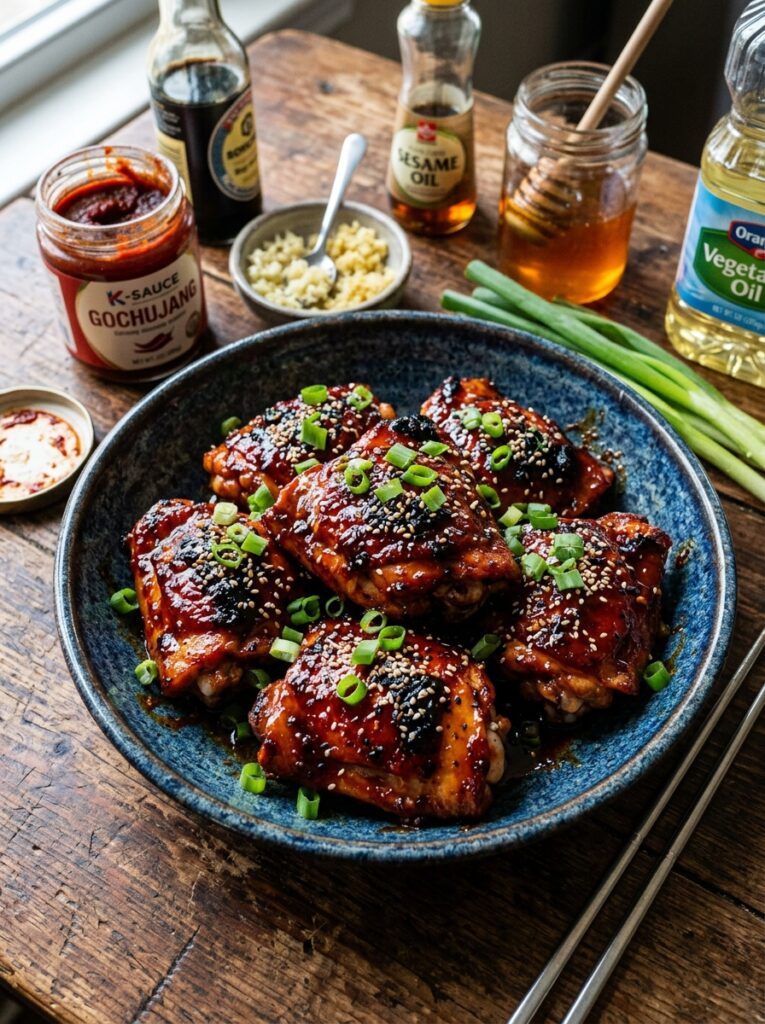
This gochujang chicken thighs recipe delivers tender, juicy chicken with a spicy, savory Korean chili glaze that coats every bite. The gochujang chicken thighs are perfect for weeknights, offering bold flavor with minimal effort. Each thigh is marinated in a simple blend that caramelizes beautifully during roasting. You can use bone-in or bone-out pieces depending on your preference. This dish pairs well with rice, noodles, or crisp vegetables for a complete meal. The gochujang paste provides deep umami notes without overpowering the natural chicken taste. Home cooks will appreciate the straightforward steps and reliable results. Enjoy a delicious dinner that brings Korean-inspired flavors to your table tonight.
Recipe Overview
| Prep Time | 15 minutes |
|---|---|
| Cook Time | 25 minutes |
| Total Time | 40 minutes |
| Servings | 4 people |
| Difficulty | Easy |
| Cuisine | Korean |
Why This Recipe Works
This recipe works because the gochujang paste creates a balanced heat that complements the savory chicken thighs. The marinade uses pantry staples like soy sauce, garlic, and ginger to build depth. The honey in the glaze encourages caramelization for a sticky finish. I prefer thighs because they stay moist during high-heat roasting. The method is simple and repeatable for home cooks.
When I tested this dish, the gochujang chicken thighs remained juicy even after resting. The marinade penetrates quickly due to the shallow cuts on each thigh. Using a wire rack ensures even browning on all sides. I skip the broiler to avoid burning the sugars. The result is a dependable weeknight dinner with bold flavor.
The ingredients scale easily for more servings without changing the ratio. I recommend preheating the baking sheet for faster searing. The sauce thickens as it cools and clings to the meat. This approach works with skin-on or skinless pieces. The technique delivers consistent results every time.
Pair this recipe with steamed rice and quick-pickled vegetables for balance. The spicy glaze cuts through richer sides like noodles or potatoes. For a lighter meal, add a fresh cucumber salad. The gochujang flavor is the star, so keep sides simple. This strategy keeps the meal cohesive and satisfying.
For more ideas, see our guide on easy Korean weeknight dinners. Additional background is available at Wikipedia Gochujang. The recipe adapts well to grilling with a two-zone fire setup. You can also use a skillet finish for crisp edges. The method is flexible and forgiving.
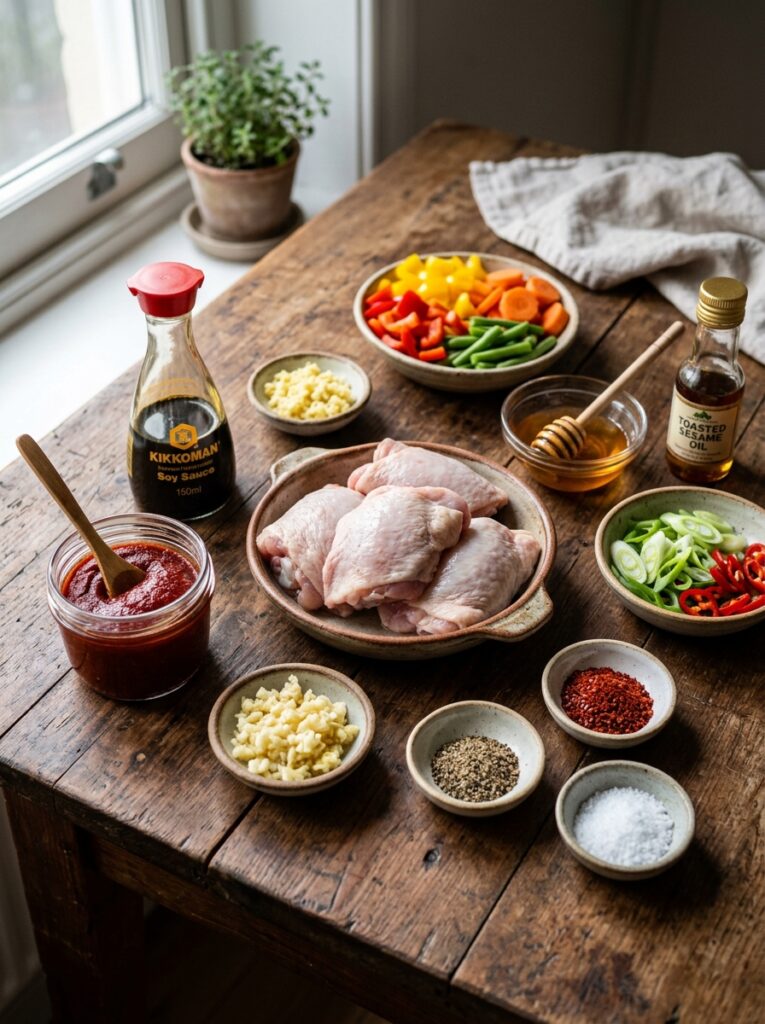
Ingredients
| Ingredient | Quantity | Notes |
|---|---|---|
| Chicken thighs | 8 pieces | Bone-in, skin-on for extra juiciness; boneless skinless works too |
| Gochujang paste | 3 tablespoons | Korean red chili paste; adjust heat level to taste |
| Soy sauce | 2 tablespoons | Use gluten-free tamari for a gluten-free option |
| Honey | 2 tablespoons | Maple syrup works for a different sweetness profile |
| Garlic | 4 cloves | Finely minced for maximum flavor infusion |
| Ginger | 1 tablespoon | Fresh grated; avoid powdered for brighter taste |
| Sesame oil | 1 tablespoon | Toasted sesame oil adds aromatic depth |
| Vegetable oil | 2 tablespoons | Neutral oil for coating and roasting |
| Rice vinegar | 1 teaspoon | Balances sweetness with mild acidity |
| Black pepper | 1/2 teaspoon | Freshly ground for better aroma |
| Salt | 1/2 teaspoon | Adjust based on sodium in soy sauce |
| Scallions | 3 | Sliced for garnish and fresh bite |
Step-by-Step Instructions
Phase One: Make the Marinade
Gather a mixing bowl and add gochujang, soy sauce, honey, sesame oil, and rice vinegar. Stir until the paste dissolves and the glaze looks glossy. Fold in minced garlic and grated ginger for aroma. Season with salt and pepper to taste. This mixture becomes the foundation for gochujang chicken thighs.
Phase Two: Prepare the Chicken
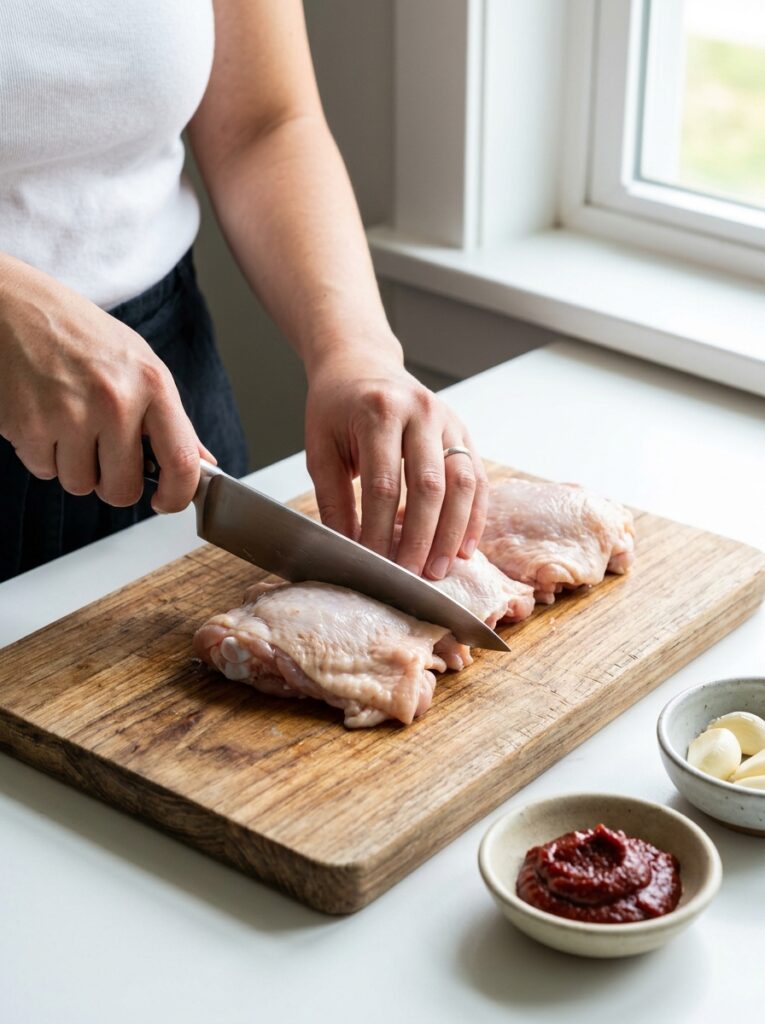
Pat the chicken thighs dry with paper towels for better browning. If using bone-in pieces, make shallow cuts on the skin to help absorption. Place the thighs in a large bowl or resealable bag. Pour the marinade over the chicken and coat evenly. Massage the marinade into the meat for one minute.
Phase Three: Marinate and Preheat
Rest the chicken in the refrigerator for at least 20 minutes. For deeper flavor, marinate for up to 4 hours. Preheat the oven to 425°F and position a rack in the center. Line a baking sheet with foil and set a wire rack on top. Lightly oil the rack to prevent sticking.
Phase Four: Roast to Perfection
Arrange the chicken on the rack with space between each piece. Bake for 20 to 25 minutes until the skin is blistered and caramelized. Brush reserved glaze halfway through for extra shine. Check that internal temperature reaches 165°F at the thickest part. Rest for 5 minutes before serving to retain juices.
Chef Tips for Perfect Results
- Pat the chicken dry thoroughly; moisture dilutes the glaze and slows browning for gochujang chicken thighs.
- Use a wire rack; air circulation crisps the skin evenly and prevents soggy bottoms in the oven.
- Don’t skip the sugars; honey promotes caramelization and creates the signature sticky finish on the chicken.
- Check the temperature with a thermometer; 165°F guarantees safe doneness without overcooking the meat.
- Reserve some glaze; apply during roasting for a stronger flavor and glossy final appearance.
- Rest the meat briefly; juices redistribute and the crust sets, improving texture and taste.
Common Mistakes to Avoid
- Skipping the dry step; wet thighs steam instead of sear, reducing crispness and caramelization.
- Overcrowding the pan; it traps steam and prevents even roasting, leading to soggy skin.
- Using too much heat; excessive broiling burns the sugars and creates bitter notes on gochujang chicken thighs.
- Ignoring internal temperature; guesswork can cause undercooked or overcooked chicken and unsafe food.
- Adding vinegar late; a small splash early balances sweetness without overpowering the chili glaze.
- Not tasting the marinade; adjust salt, honey, or gochujang to suit your preferred heat level.
Variations and Substitutions
| Ingredient | Substitution | Impact on Flavor |
|---|---|---|
| Gochujang paste | Red pepper flakes plus miso | Less complex heat with a mild umami boost |
| Honey | Maple syrup | Slightly earthier sweetness with a different finish |
| Soy sauce | Coconut aminos | Milder salinity and a hint of natural sweetness |
| Garlic | Garlic powder | Less pungent aroma; add with extra pepper for depth |
| Vegetable oil | Olive oil | Fruitier notes; use light olive oil to avoid bitterness |
| Chicken thighs | Chicken breast | Leaner texture; reduce cook time to avoid dryness |
Serving Suggestions and Pairings
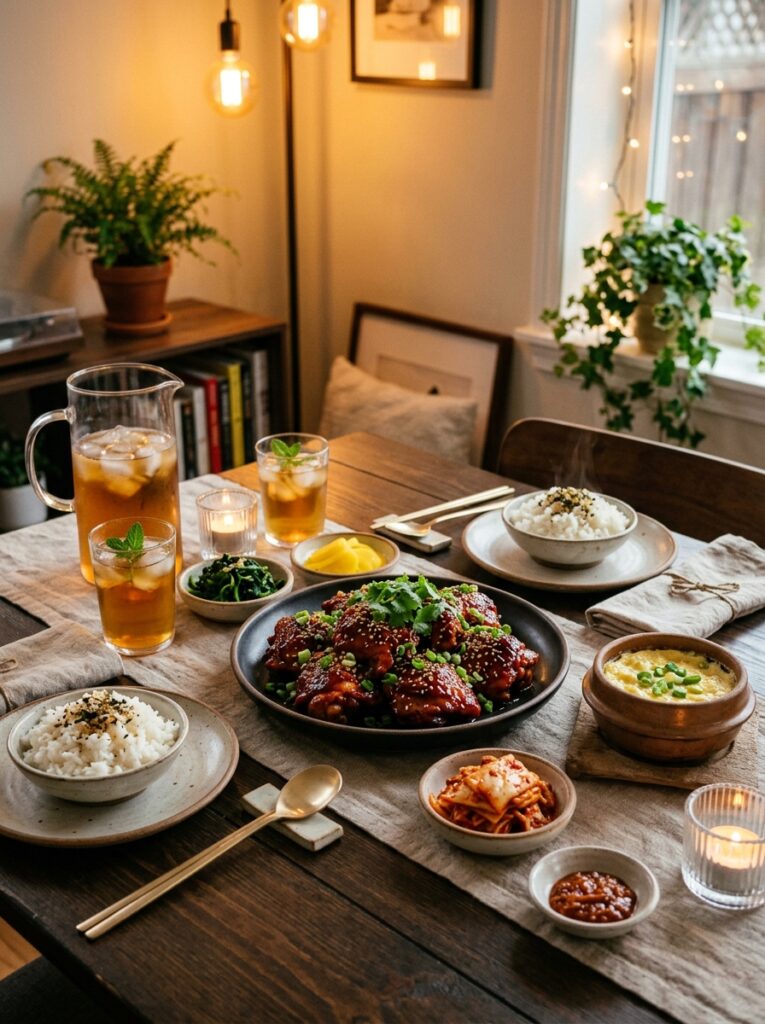
Serve gochujang chicken thighs with steamed jasmine rice and quick cucumber kimchi for contrast. Pair with roasted broccoli or sweet potatoes for a balanced plate. Offer a side of sesame spinach for an earthy note. For a light drink, consider iced barley tea or sparkling water with lemon. This meal fits weeknight dinners, casual gatherings, and weekend meal prep.
Set the table with small bowls for shared sides to encourage mixing flavors. If you want more ideas, browse Korean side dish recipes. For background, see Korean Bapsang. Keep the focus on the spicy chicken by choosing clean, simple accompaniments. Your guests will appreciate the bold yet approachable taste.
Storage and Reheating
| Method | Duration | Instructions |
|---|---|---|
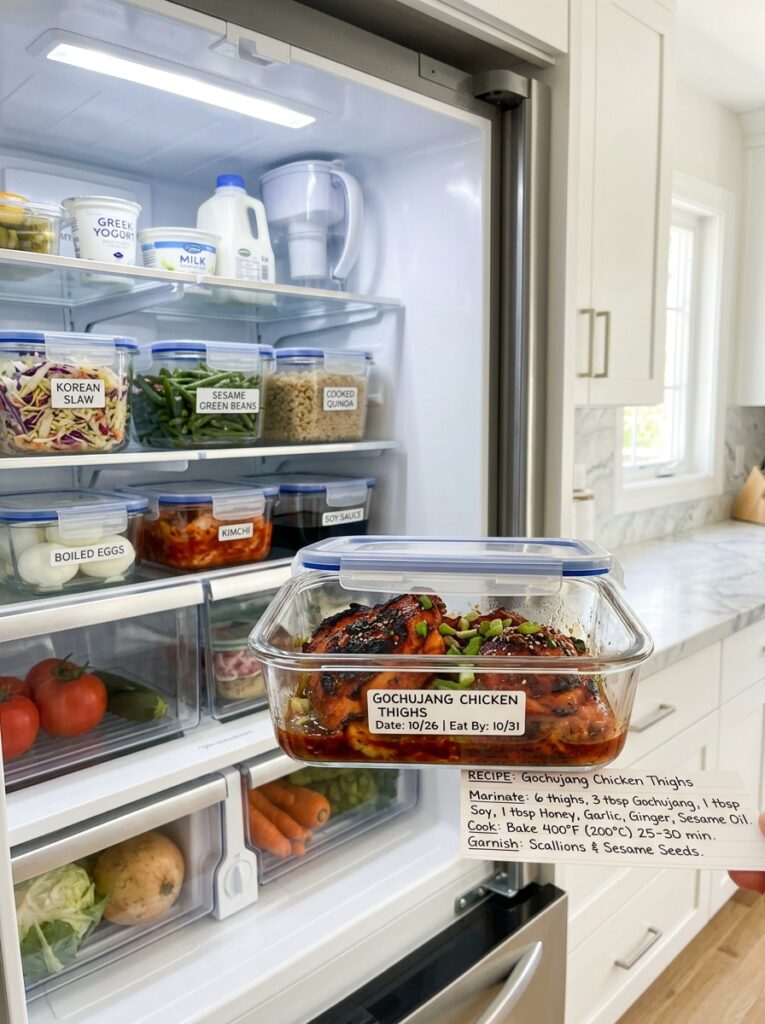
| Refrigerator | 3 to 4 days | Store in airtight containers; keep glaze separate if possible. |
| Freezer | 2 to 3 months | Wrap tightly; thaw overnight in the refrigerator before reheating. |
| Oven | 10 to 12 minutes | Reheat at 350°F on a rack until warmed through and crisp. |
| Skillet | 6 to 8 minutes | Warm over medium heat with a splash of water or broth. |
| Microwave | 2 to 3 minutes | Cover loosely; heat in bursts to avoid rubbery texture. |
Nutritional Information
| Nutrient | Amount per Serving |
|---|---|
| Calories | Approximately 410 |
| Protein | Approximately 30 g |
| Fat | Approximately 24 g |
| Carbohydrates | Approximately 12 g |
| Fiber | Approximately 1 g |
| Sugar | Approximately 8 g |
| Sodium | Approximately 700 mg |
Frequently Asked Questions
Can I make gochujang chicken thighs with boneless chicken?
Yes, use boneless thighs or chicken breast pieces with similar timing. Reduce cook time slightly to prevent dryness. Check that the thickest part reaches 165°F for safety.
What is the best way to check doneness without a thermometer?
Cut into the thickest thigh; juices should run clear and the meat should no longer be pink. The internal color is a reliable visual cue when a thermometer is unavailable.
How do I tone down the heat if the marinade is too spicy?
Balance with extra honey and a teaspoon of rice vinegar. This keeps sweetness and acidity in check while mellowing the perceived heat from gochujang.
Can I prepare gochujang chicken thighs ahead of time?
Marinate up to 4 hours or overnight for deeper flavor. Store marinated chicken sealed in the refrigerator and roast just before serving.
Will the skin stay crispy if I sauce the chicken before roasting?
Apply glaze halfway through roasting for crisp skin with a sticky finish. Avoid coating too early, as excess sugar can burn under high heat.
Is it safe to freeze cooked gochujang chicken thighs?
Yes, cool completely, wrap tightly, and freeze for up to 3 months. Thaw overnight in the refrigerator and reheat using oven or skillet methods.
Can I grill gochujang chicken thighs instead of roasting?
Yes, use medium-high heat with two zones; sear over direct heat and finish over indirect heat. Brush with glaze during the last few minutes to avoid burning.
What sides pair best with this dish for a weeknight dinner?
Rice, roasted broccoli, and quick cucumber kimchi pair well with gochujang chicken thighs. The sides offer balance and let the spicy glaze shine.
How should I store leftover glaze safely?
Refrigerate in a sealed jar for up to one week. Use as a dipping sauce or brush on chicken during reheating to refresh flavor.
Can I use chicken drumsticks instead of thighs?
Yes, drumsticks work well with the same marinade and oven time. Ensure the internal temperature reaches 165°F for food safety.
Conclusion
This gochujang chicken thighs recipe brings bold, spicy flavor to your table with minimal effort. The marinade delivers juicy meat and a glossy, caramelized finish that satisfies weeknight cravings. Pair the chicken with simple sides for a balanced meal that guests will love. Save this guide, share it with friends, and enjoy the signature taste of gochujang in every bite.
Print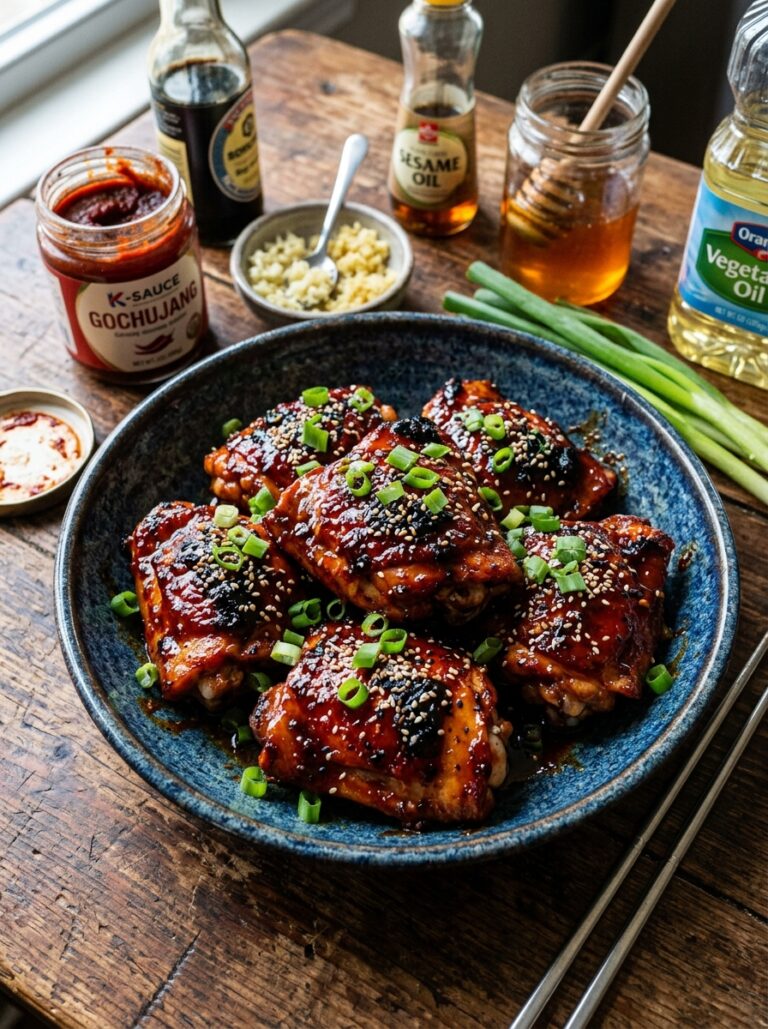
Gochujang Chicken Thighs
Tender, juicy Korean-style chicken thighs glazed in a sweet-spicy gochujang marinade. Perfectly balanced umami and caramelized heat, roasted to perfection in 25 minutes with minimal effort. Serve with rice, noodles, or veggies for a satisfying weeknight meal.
- Total Time: 40
- Yield: 4 servings 1x
Ingredients
4 bone-in chicken thighs (6–8 oz each)
3 tablespoons gochujang paste
2 tablespoons soy sauce (low sodium preferred)
1 tablespoon sesame oil
1 tablespoon honey
2 cloves garlic, minced
1 teaspoon grated ginger
1 teaspoon vegetable oil (for pan)
2 scallions, thinly sliced (for garnish)
Instructions
Preheat oven to 425°F (220°C)
In a bowl, mix gochujang, soy sauce, sesame oil, honey, garlic, and ginger
Lay chicken thighs in a shallow baking dish, then brush the marinade over both sides
Place on wire rack over a preheated baking sheet (optional but improves browning)
Roast for 20 minutes, flip, and roast 5-8 minutes more until internal temperature reaches 165°F
Brush any remaining glaze on thighs during last 5 minutes of cooking
Garnish with scallions before serving
Notes
Make shallow cuts across the chicken to help marinade penetrate
Preheating the baking sheet for 10 minutes ensures better sear
Thighs can be baked skin-on or skinless, skin-on produces crispier texture
Skip finishing in the broiler to prevent burning the honey-based glaze
Sauce thickens slightly as it cools, clinging to the chicken more firmly
Store leftovers in an airtight container for up to 4 days
- Prep Time: 15
- Cook Time: 25
- Category: Cozy Chicken
- Method: Roasting
- Cuisine: Korean
- Diet: Non-Vegetarian
Nutrition
- Serving Size: 1 chicken thigh
- Calories: 380
- Sugar: 12g
- Sodium: 650mg
- Fat: 22g
- Saturated Fat: 5g
- Carbohydrates: 8g
- Fiber: 1g
- Protein: 38g
- Cholesterol: 95mg