Have you ever pulled a chicken breast out of the oven, cut into it, and realized you basically baked a rubber tire? I have, and it’s heartbreaking! There is nothing worse than looking forward to a healthy dinner only to be chewing on dry, flavorless meat that requires a gallon of water to swallow. But listen, I’ve finally cracked the code. This isn’t just another generic recipe; it’s a method that guarantees juicy perfection every single time. We are going to transform your weeknight dinners with a technique that locks in moisture and packs a serious flavor punch!
Choosing the Right Chicken for Baking
You know that sinking feeling when you pull a pan out of the oven, and your beautiful chicken breasts have shrunk to half their size? I absolutely hate that. For the longest time, I thought I was just a bad cook. I’d buy the mega-pack on sale, toss it in the oven, and end up with rubbery, watery meat that nobody wanted to eat. It was so frustrating! But eventually, I learned that the problem wasn’t always my cooking; it was the chicken itself. If you want a baked chicken breast that actually tastes good, you have to be picky at the grocery store.
The Water-Chilled Trap
Here is the thing I wish someone told me ten years ago. Most of the chicken you see in the store is “water-chilled.” This means the processing plant dunks the birds in a giant vat of ice water to cool them down. The meat absorbs that water—sometimes up to 10% of its weight!
So, when you buy it, you are literally paying for water. Then, when you bake it, all that water comes pouring out, and your chicken ends up steaming instead of roasting. That is why it turns out rubbery. I switched to air-chilled chicken a few years ago, and it was a total game changer. The skin (if you keep it) crisps up better, and the meat tastes like, well, meat. It costs a little more, but it is worth it for a decent meal.
Watch Out for the “Woody” Breast
Have you ever bitten into a piece of chicken that felt crunchy or hard? That is called “woody breast,” and it is gross. It usually happens with those massive, steroid-looking chicken breasts that weigh a pound each.
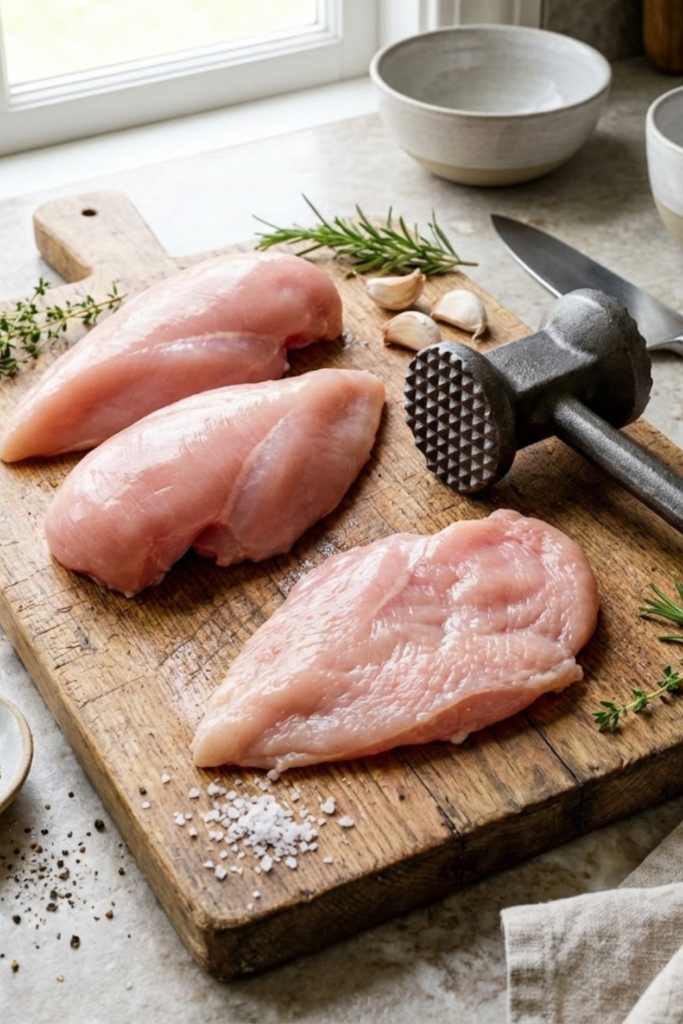
I try to look for smaller, organic breasts if I can find them. They are usually more tender. If you are stuck with the big ones, do not just throw them in the oven as is. The tapered end will dry out before the thick end is cooked. You gotta grab a meat mallet (or a heavy rolling pin) and pound them to an even thickness. It’s also great for getting out some frustration after a long day! Aim for about an inch thick all the way across.
Fresh vs. Frozen
I know, we all have that bag of rock-hard chicken in the back of the freezer. It’s fine in a pinch, but fresh is always going to be better for a baked chicken breast recipe. Freezing ice crystals can mess with the meat fibers.
If you must use frozen, never thaw it on the counter. I made that mistake once and got pretty sick. Just put it in the fridge the night before. If you are in a rush, put the sealed bag in a bowl of cold water. Change the water every 30 minutes. Just don’t bake it while it’s still half-frozen, or the outside will burn while the inside stays raw. Trust me, nobody wants that.
The Secret Brine and Marinade Techniques
Honest confession time: for years, I skipped this step completely . I thought marinating was something you only did for big summer barbecues or fancy dinner parties. I would literally just sprinkle some salt on top of the meat right before tossing it in the oven. And then I’d wonder why my baked chicken breast tasted like cardboard. It was so frustrating! I remember serving dinner to my husband one night, and he was politely chewing for what felt like five minutes on a single bite. That was my wake-up call. I realized that if I wanted juicy meat, I had to prep it properly.
The Magic of Salt (Brining)
If you take nothing else away from this, please listen to this part. You gotta get salt into the meat, not just on it . This is called brining. I used to be intimidated by the word “brine” because I pictured a giant turkey bucket taking up my whole fridge.
But you don’t need to do all that. A simple dry brine works wonders. I just sprinkle coarse kosher salt over the chicken about 30 minutes before I cook. The salt breaks down the muscle proteins. It helps the meat hold onto its own natural juices while it cooks . If I have more time, I might do a wet brine (water + salt) for an hour, but honestly? The dry brine is easier and less messy. It makes such a huge difference in texture.
Building the Perfect Marinade
Once I figured out the salt thing, I messed up the next part: the marinade. I used to think, “The longer it sits, the better.” So I would leave chicken soaking in straight lemon juice overnight.
Big mistake. Huge.
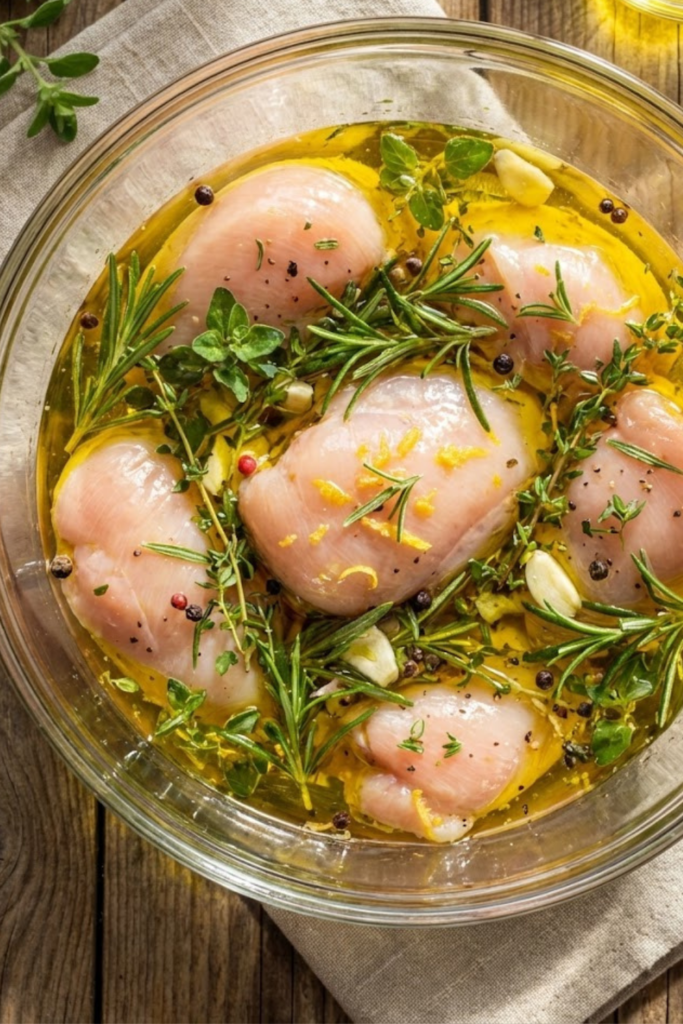
I learned the hard way that too much acid actually cooks the meat before it even hits the heat . The texture became mushy and gross. It was edible, but barely. Now, I follow a simple formula for a juicy chicken marinade: fat, acid, and flavor.
- Fat: You need a base. I usually grab extra virgin olive oil. It carries the flavor and keeps the outside from drying out.
- Acid: This tenderizes the meat. I like lemon juice or apple cider vinegar. But go easy!
- Aromatics: This is the fun stuff. Fresh garlic, dried herbs, maybe some onion powder.
Timing is Everything
You really don’t need to let it sit forever. I’ve found the sweet spot is between 30 minutes and two hours . If you leave it longer than that, especially if there is a lot of citrus, the texture gets weird.
I usually toss the chicken in a Ziploc bag with the marinade right when I get home from work. By the time I’ve changed clothes, yelled at the kids to do their homework, and preheated the oven, the chicken is ready to go. It is super simple. Just giving the baked chicken breast a little bit of love before it goes into the heat makes it taste like a restaurant meal. It’s a small effort for a massive reward.
The Best Seasoning Blends for Oven Baked Chicken
I used to treat my spice cabinet like a chemistry experiment gone wrong. I’d just grab five random jars and shake them over the pan, hoping for the best . Usually, it was a disaster. I remember one time I accidentally used cinnamon instead of cumin on a savory baked chicken breast. My kids looked at me like I had two heads. It was sweet, meaty, and totally gross. I learned that less is often more, and you need a plan before you start shaking jars .
Sticking to the Classics
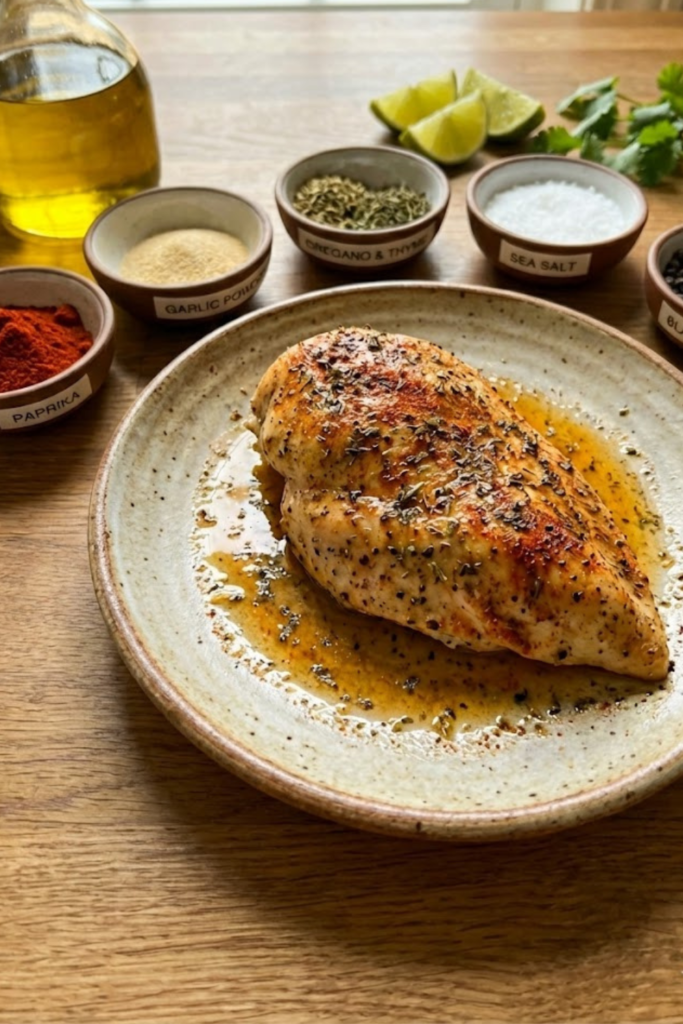
You really can’t go wrong with a classic herb blend. It’s my safety net. If I’m tired and don’t want to think, I grab dried oregano, basil, and thyme. These are staples for a reason. They work with basically any side dish, whether it’s mashed potatoes or a salad .
I like to mix my spices in a little ramekin first. I combine the herbs with a solid amount of garlic powder and onion powder. Fresh garlic is great, but for the rub, powder sticks better and doesn’t burn as easily in the oven. This creates a savory crust that makes the oven baked chicken actually enjoyable to eat. It is reliable and keeps everyone at the table happy.
Adding a Spicy Kick
Sometimes, I need a little excitement in my life. Or at least in my dinner. If you are bored with the same old herbs, add some heat. I’m not talking about blowing your head off with ghost peppers. Just a little cayenne pepper or chili powder goes a long way .
I love using smoked paprika too. It gives the meat this beautiful red color and a smoky flavor that mimics a grill. Even if it’s freezing outside and I’m just using my oven, it tastes like summer. Just be careful with cayenne; I once spilled the jar and ruined a whole batch of dinner. We ended up ordering pizza because it was inedible .
The Rub Down
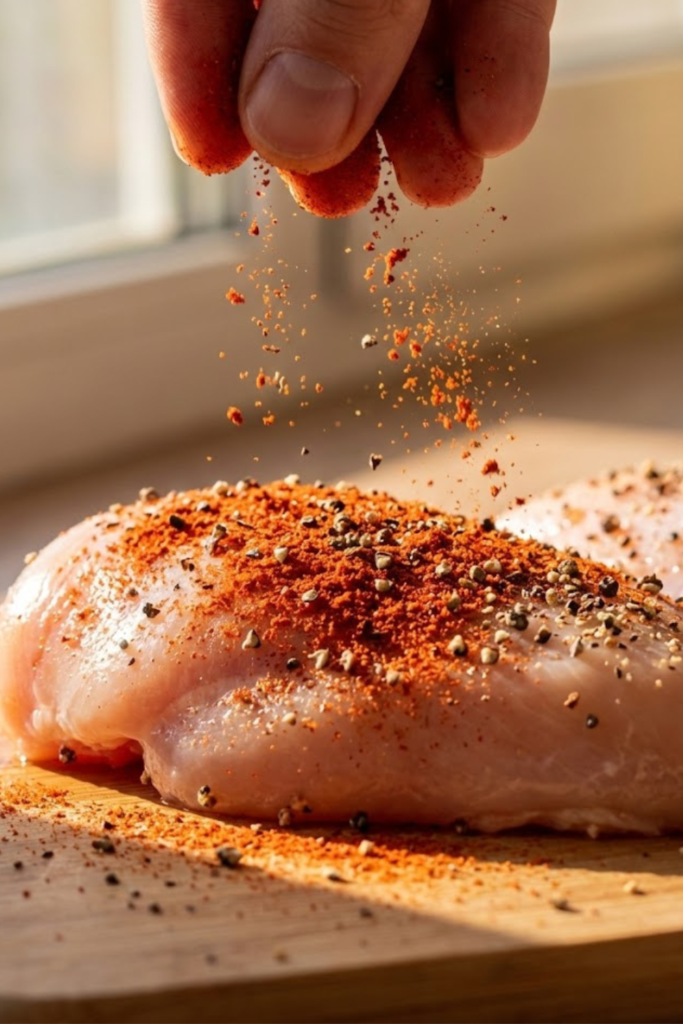
Here is a mistake I see all the time. People just sprinkle spices on the very top of the breast. But chicken is three-dimensional! You have to rub the seasoning in everywhere .
I get my hands dirty. I rub the oil and spice mix under the chicken, on the sides, and in any little crevices. This helps the seasoning stick and flavor the meat more deeply. If you only season the top, the bottom tastes plain and sad. You want every bite of that baked chicken breast to be packed with flavor. It’s messy, but wash your hands after and it’ll be fine.
How Long to Bake Chicken Breast at 400°F (200°C)
I have a confession to make: I used to be terrified of undercooking chicken. I would bake it until it was basically jerky, just to be safe. I’d pull it out, cut into the thickest part (letting all the juice run out, by the way), and if I saw even a hint of pink, I’d panic and throw it back in for another twenty minutes. It was a disaster. I was ruining perfectly good meat because I was guessing instead of measuring. But eventually, I learned that timing and temperature are science, not magic.
The Temperature Sweet Spot
For the longest time, I baked everything at 350°F because that felt like the “safe” temperature. But for baked chicken breast, 350°F is actually kind of a trap. It takes too long. By the time the center is cooked, the outside has dried out completely.
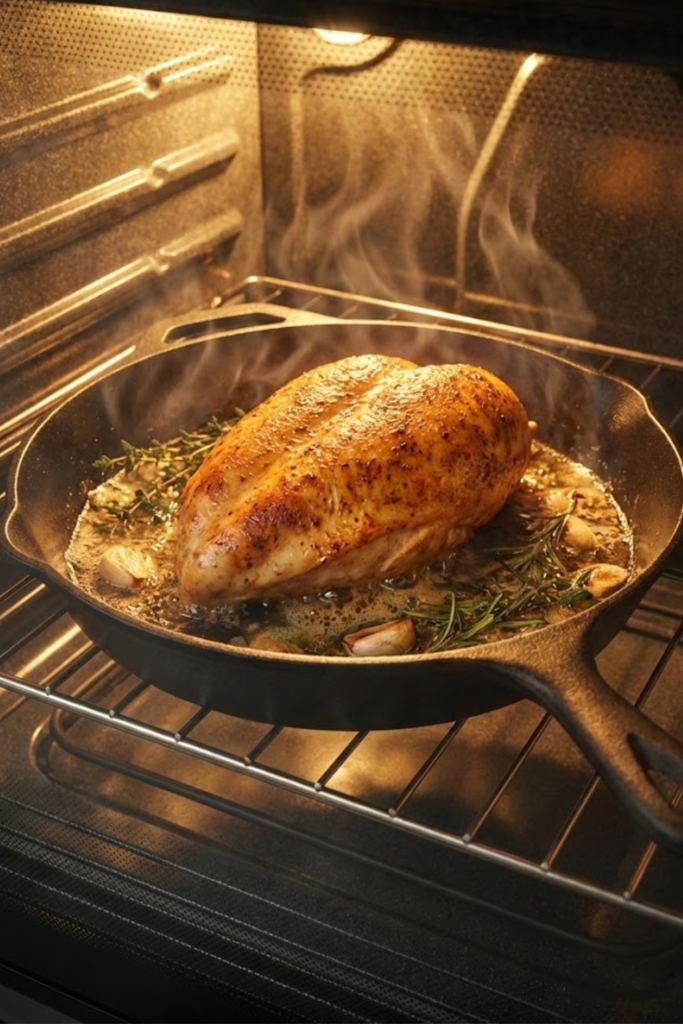
I finally switched to 400°F (200°C), and it changed everything. The higher heat creates a nice seal on the outside faster, which helps lock in the moisture. It cooks the chicken quickly and efficiently. Now, my chicken comes out golden and juicy instead of pale and sad. It is faster, too, which is a lifesaver on busy Tuesday nights when I just want to sit on the couch.
Stop Guessing, Start Measuring
If you take one piece of advice from me, let it be this: buy a meat thermometer. Please. They cost like ten bucks. Using the “cut and check” method is the worst thing you can do because you are literally puncturing the seal and letting the moisture bleed out.
I aim for an internal temperature of 160°F (71°C), not 165°F. I know, the FDA says 165°F. But here is the trick: carryover cooking. When you take the chicken out of the oven, it keeps cooking from the residual heat. If you pull it at 165°F, it will rise to 170°F or more while it sits, and boom—dry chicken. Pull it at 160°F, let it rest, and it will hit that perfect, safe 165°F right on the counter.
Timing by Size
Since getting a scale, I realized how much sizes vary. A huge 10-ounce breast takes way longer than a puny 6-ounce one. If you put them in the same pan, one will be perfect and the other will be shoe leather.
- Small breasts (5-6 oz): These usually take about 18-20 minutes.
- Medium/Large breasts (8-10 oz): Look for 22-25 minutes.
I always check the smallest piece first. If it’s done, I take it out and let the big guys keep going. It’s a little annoying to manage, but it guarantees that every piece of oven baked chicken is edible. Don’t just set a timer and walk away; pay attention to the meat!
Resting: The Most Important Step for Juiciness
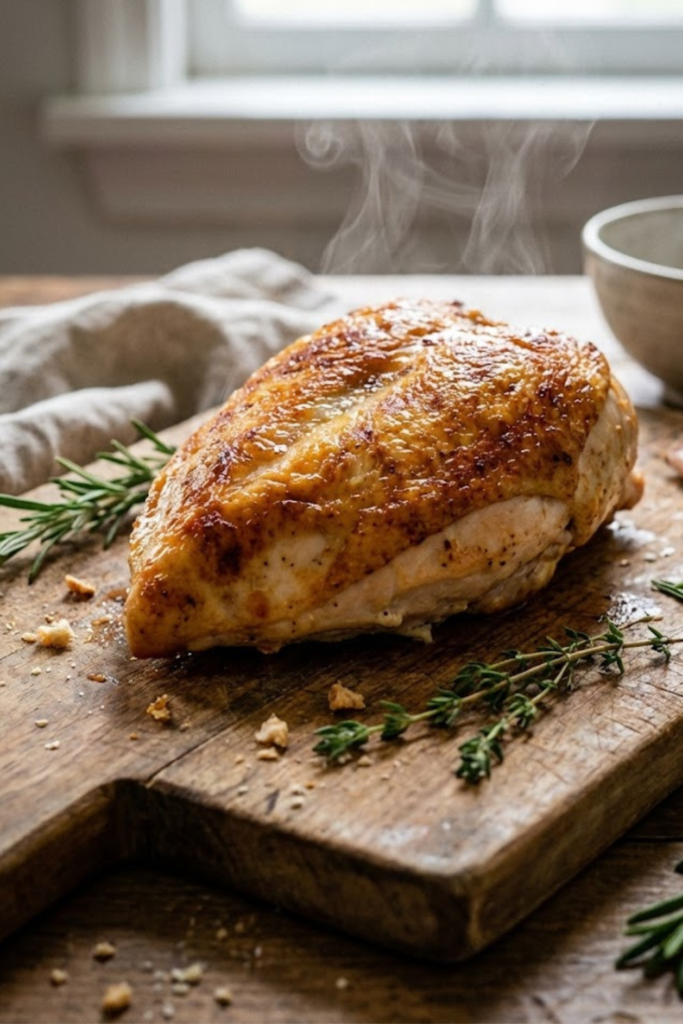
I am the worst at waiting. Seriously, when that timer beeps, I am ready to eat right now. For the longest time, I treated the oven beep like a starting gun for a race. I’d yank the baked chicken breast out and hack into it immediately because I was starving.+1
I vividly remember making dinner for my in-laws one time. I was so stressed about timing that I served the chicken the second it came out of the oven. As my father-in-law cut into his piece, a literal river of juice ran across his plate and onto the tablecloth. I was mortified!
Not only was it a mess, but the chicken tasted like chalk. I couldn’t understand why. I had marinated it! I had timed it! But I had skipped the most critical step because I was rushing.
Why You Gotta Wait
Here is what is happening inside the oven. As the chicken cooks, the heat makes the muscle fibers contract and tighten up. It’s like squeezing a water balloon. All the moisture gets pushed into the very center of the meat to escape the heat.
If you slice it while it’s hot and tight, that moisture has nowhere to go but out. By letting it rest, you allow those muscles to relax. The juices flow back out from the center to the edges. This ensures every bite is tender, not just the middle.
The Heat Keeps Working
Remember how we talked about pulling the meat out at 160°F? This resting time is when the magic happens. The internal temperature will actually rise about 5 degrees while it sits on the counter.
This is called carryover cooking. If you cut the chicken right away, you interrupt this process. You might find the center is slightly underdone because it didn’t get those final few minutes of gentle heat. So resting isn’t just about juice; it’s about finishing the cook safely so you don’t get sick.+1
How to Rest Without Getting Cold
People always ask me, “Won’t the food get cold?” It really doesn’t. A thick baked chicken breast holds heat surprisingly well.
I usually take the pan out and set it on the stove. Then, I take a piece of aluminum foil and just drape it over the top. Do not scrunch it down around the edges! If you seal it tight, you are steaming the meat. You worked hard for that roasted flavor; don’t ruin it now with steam.
Let it sit there for at least 5 to 10 minutes. I use this time to toss a salad or wrangle the kids to the table. If you cut into it and don’t see steam rising, don’t panic. The meat is still plenty hot, but now the juice stays in your mouth, not on the plate. It is the easiest way to upgrade your cooking instantly.
Serving Suggestions and Storage
I used to view chicken as just “fuel.” I’d stand over the sink eating a cold piece of plain baked chicken breast like a sad raccoon. It was pathetic. I realized that just because I was trying to eat healthy didn’t mean I had to be miserable . You have to dress it up! The chicken is the star, but even stars need backup dancers.
Perfect Pairs
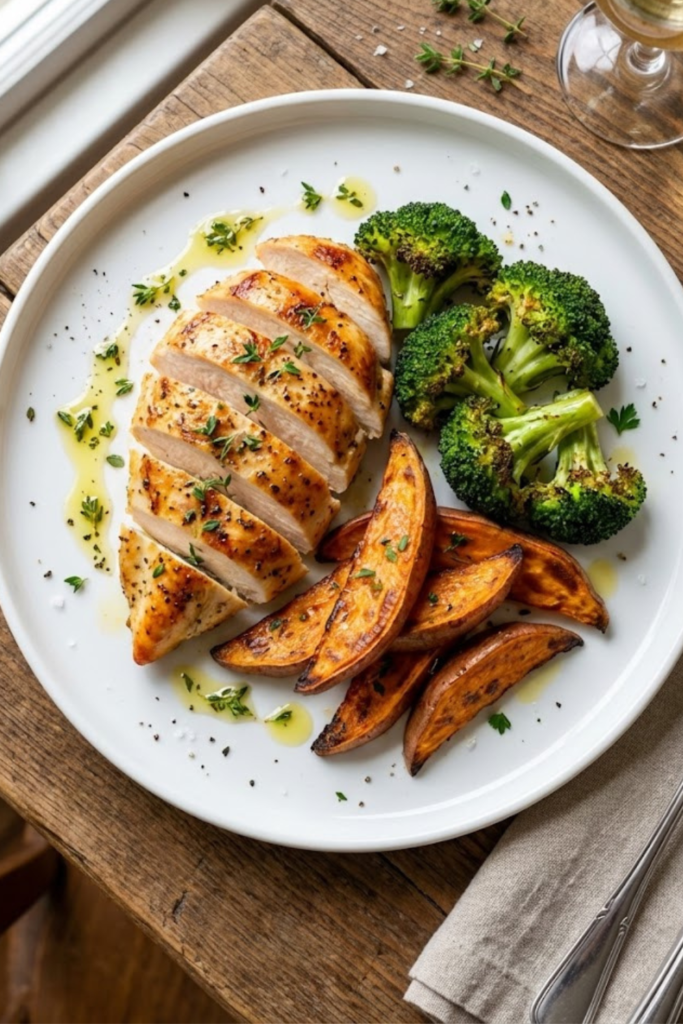
Since your oven is already hot, why make life harder? I am all about efficiency (read: laziness). I usually toss a sheet pan of broccoli or sweet potatoes in at the same time. Just toss them in olive oil and salt.
If I’m feeling fancy, I’ll boil some quinoa or rice while the chicken bakes. But honestly, a big green salad is usually enough. The savory herbs on the chicken pair so well with a sharp vinaigrette. It makes the whole meal feel fresh and light, not heavy and greasy .
The Leftover Lunch
This recipe is a lifesaver for meal prep. I usually bake four or five breasts on Sunday night so I don’t have to think about lunch for the rest of the week.
Store the leftovers in an airtight container . They will stay good in the fridge for about 3 to 4 days. After that, they get a little funky, so freeze them if you can’t eat them in time. I slice the meat before storing it so it’s ready to toss into a wrap or salad instantly. It saves me from hitting the drive-thru when I’m stressed at work .
The Reheating Rule
Okay, listen closely. The microwave is the enemy of juicy chicken . I have ruined so many good leftovers by nuking them on high for two minutes. The chicken explodes, the microwave gets dirty, and the meat turns into rubber.
If you must use the microwave, turn the power down to 50%. Sprinkle a little water or chicken broth over the meat and cover it loosely with a paper towel. This creates a little steam bath that wakes the meat up without drying it out . Better yet, eat it cold! Sliced cold baked chicken breast on a sandwich with some mayo and pickles? That is honestly better than a warm meal sometimes.
There you have it! Mastering the perfect baked chicken breast isn’t about being a master chef with a fancy degree. It’s just about paying attention to the little things—the salt, the temperature, and the rest time . Once you stop guessing and start using these tricks, you will never settle for dry, boring dinners again.
It feels pretty good to serve a healthy meal that your family actually wants to eat, right? Give this method a shot tonight. You might mess up once or twice, but that’s how we learn . Stick with it, and soon you’ll be the one teaching your friends how to cook.
Call to Action: Don’t lose this recipe in the chaos of the internet! Pin this to your Healthy Dinner Ideas board on Pinterest so you can find it whenever you need a quick protein fix .