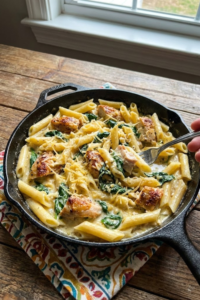
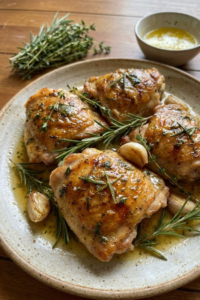
You know, there is nothing quite like the smell of roasting chicken filling up the kitchen—it just feels like home! I remember the first time I tried to bake chicken thighs; I was terrified I’d undercook them, so I blasted them until they were basically chicken jerky. Yuck! But after years of trial and error (and a lot of dry dinners), I finally cracked the code. Did you know that chicken thighs are actually more forgiving than breasts because of the higher fat content? It’s true! In this guide, I’m going to share my absolute favorite method for baked chicken thighs that comes out perfect every single time. Let’s get cooking!
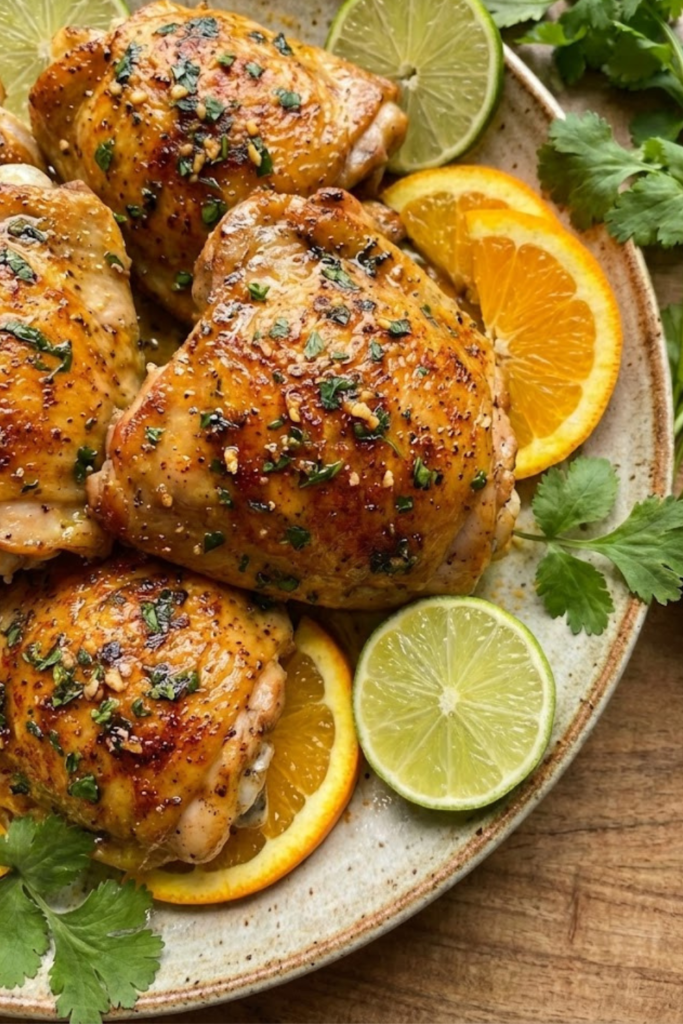
Choosing the Right Chicken Thighs for Baking
I remember standing in the meat aisle of my local grocery store a few years back, staring blankly at the cooler. There were family packs, organic packs, boneless, bone-in… I was totally overwhelmed. I grabbed a pack of boneless, skinless thighs because I thought, “Hey, easier to eat, right?” Big mistake.+3
I took them home and threw them in the oven. The result was these sad, rubbery pucks that were dry as a bone. It was so disappointing after a long day of work! That failed dinner taught me that for baked chicken thighs, the type of meat you buy makes or breaks the dish. You can’t just swap them out and expect the same result.
Go for Bone-In and Skin-On
If you want that juicy, fall-off-the-bone experience, you absolutely need to buy bone-in, skin-on chicken thighs. The bone acts as an insulator, helping the meat cook evenly while keeping the moisture locked inside.
Without the bone, the meat cooks too fast and dries out before you know it. And the skin? That is the best part! The fat under the skin renders down while it bakes, basically basting the meat in its own juices. I used to serve skinless chicken to “cut calories,” but my family just complained that it was dry. Now, I stick to the skin-on variety. It’s cheaper, tastier, and much more forgiving if you accidentally leave it in the oven a few minutes too long.
Check for Freshness and Size
When you are picking out your pack, take a good look at the color. You want a nice, healthy pink hue. If the meat looks gray or dull, put it back immediately.+1
I also try to find a package where the thighs are all roughly the same size. This sounds picky, but it saves you a headache later. If you have one giant thigh and three tiny ones, the small ones will burn before the big one is safe to eat. I’ve had dinners where I had to pull half the pan out and leave the rest in. It’s a total pain to manage.
The Prep Work Is Key
Once you get home, there is a little bit of work to do before seasoning. I always grab my kitchen shears and trim off the extra flaps of skin hanging off the sides. If you don’t trim it, that extra skin just gets soggy and flabby.
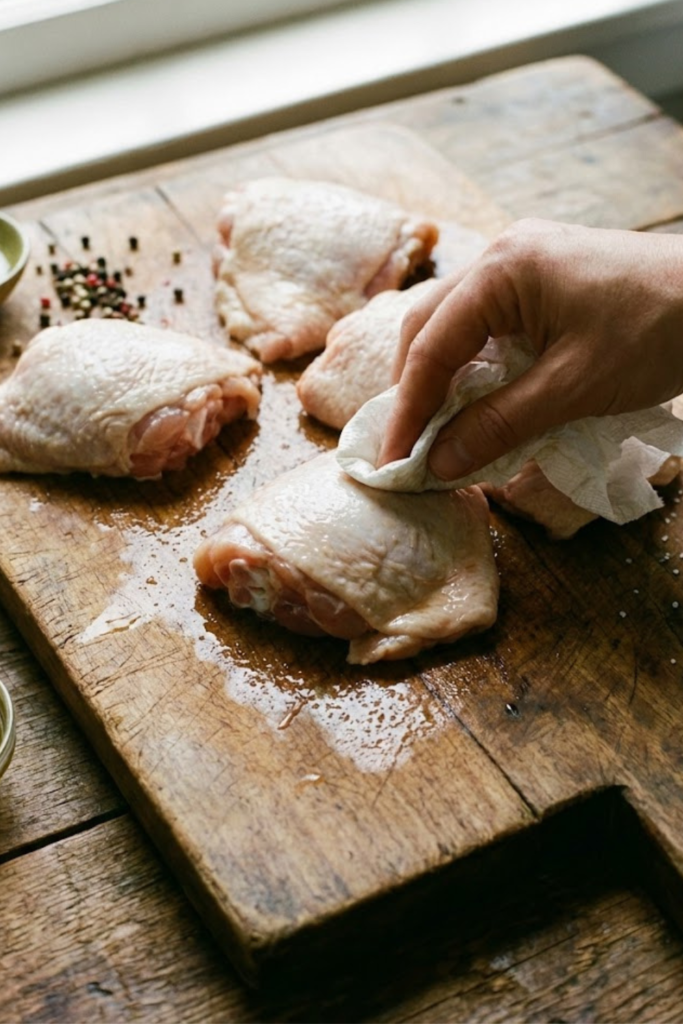
Nobody wants to chew on a piece of rubbery fat. Just snip it off so the skin fits the meat nicely. Then, and this is the most important tip I have, you must pat the chicken dry with a paper towel. I mean really dry. Get in there and blot up all the moisture on the surface.+1
I used to skip this because I was lazy or in a rush. But if the skin is wet, it creates steam in the oven. Steam kills crispiness. If you want that crunch on your baked chicken thighs, the skin has to be bone dry before you add oil. It’s a small step that makes a massive difference in the final texture.
A Note on Temperature
One last thing I learned is to take the chicken out of the fridge about 15 minutes before you plan to cook. Putting cold meat into a hot oven can sometimes make it seize up and get tough. I usually pull the pack out, trim it, dry it, and let it sit while I chop veggies. It helps the chicken cook more evenly. Just don’t leave it out for hours, obviously! Safety first.
The Secret Seasoning Blend for Flavor
You know, for the longest time, my chicken tasted incredibly boring. I would just sprinkle a little salt and pepper on top and call it a day. I was so afraid of “ruining” the meat that I ended up serving dinner that tasted like absolutely nothing.
It was pretty embarrassing when my kids would drown the chicken in ketchup just to get some flavor! That hurt my feelings a bit, I won’t lie. But I learned that with baked chicken thighs, you have to be bold.
Chicken meat is like a blank canvas. It needs a lot of help to taste good.
The Binder: Why You Need It
First things first, you need something to make the spices stick. I used to try rubbing dry spices onto dry skin, and they would just fall off onto the pan. What a waste of good seasoning!
Now, I always use a binder. My favorite is a good quality olive oil. It adds a nice richness and helps the skin crisp up.
I once tried using melted butter because I love the taste of butter. Bad idea. The milk solids in the butter burned at the high oven temperature, and I set off the smoke alarm.
So, stick to oil for baking at high heat. You want to coat the chicken all over. It shouldn’t be swimming in oil, just nicely glistening.
My “Holy Quartet” of Spices
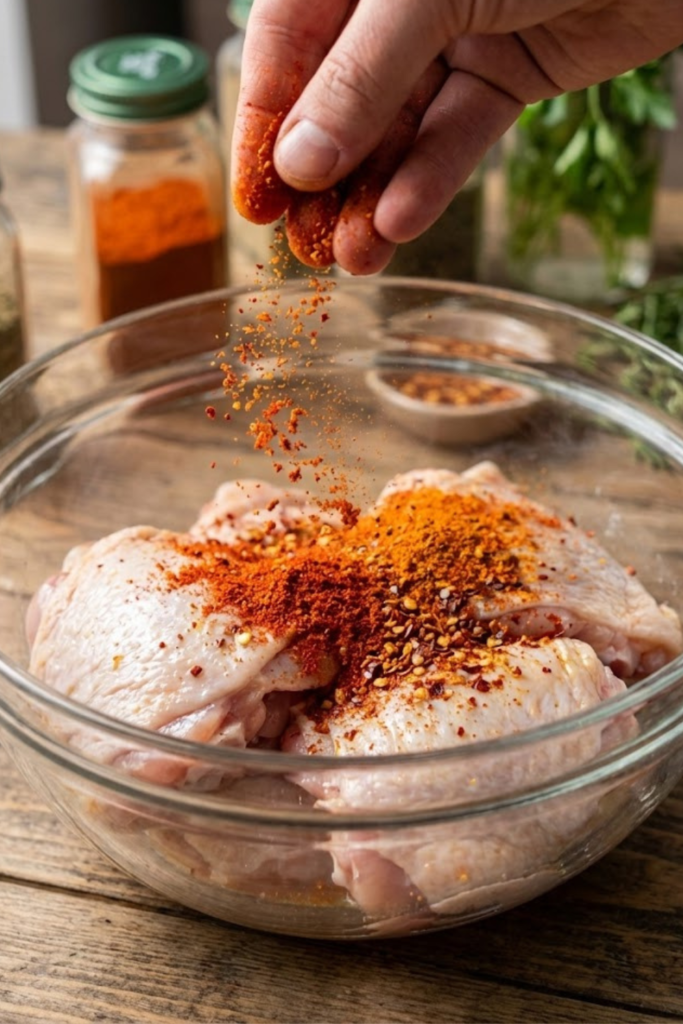
Okay, here is the mix I use almost every week. It’s simple, but it works every time. I grab a small bowl and mix up smoked paprika, garlic powder, onion powder, and dried oregano.
The smoked paprika is the real MVP here. It gives the chicken this gorgeous, deep red color that makes it look like it came off a grill. Plus, the smoky flavor is just to die for.
I used to use regular paprika, and honestly, it doesn’t add much flavor, just color. Smoked is the way to go. For the garlic and onion powder, don’t be shy.
I usually do a teaspoon of each. And salt! Please don’t forget the salt.
I used to under-salt everything because I read some article about sodium. But chicken without salt is just sad. You need about a teaspoon of kosher salt per pound of meat.
The Technique: Get Under the Skin
Here is a mistake I see people make all the time. They season the skin perfectly, but the meat underneath is bland. The skin acts like a raincoat; it blocks the spices from getting to the meat.
So, here is what you have to do. Gently lift up the skin (don’t tear it off!) and rub some of that spice mix directly onto the meat. It feels a little gross and slimy, I know.
I usually have to wash my hands three times afterward to get the paprika stain off. But it is so worth it. When you bite into the chicken, you get flavor all the way through, not just on the surface.
This is the difference between “meh” chicken and “can I have seconds?” chicken.
Do You Need to Marinate?
Ideally, yes. If I am organized (which is rare), I’ll season the chicken in the morning and let it sit in the fridge all day. This allows the salt to penetrate deep into the muscle fibers.
But let’s be real, usually, I am rushing to get dinner on the table at 6 PM. If you don’t have time to marinate, don’t stress about it. Baked chicken thighs are pretty forgiving.
Even if you season them right before they go into the oven, they will still taste great. Just make sure you coat them evenly. Sometimes I toss everything in a big ziplock bag and shake it up.
It saves me from having to wash another bowl. And honestly, anything that saves me dishwashing time is a winner in my book.
Oven Temperature and Cooking Times
I used to be terrified of cranking my oven past 350 degrees. I don’t know why, but I had this irrational fear that high heat would just burn everything to a crisp. So, for years, I made baked chicken thighs at a moderate temperature.
They were edible, sure. But the skin was always kind of flabby and rubbery. It was definitely a texture nightmare!
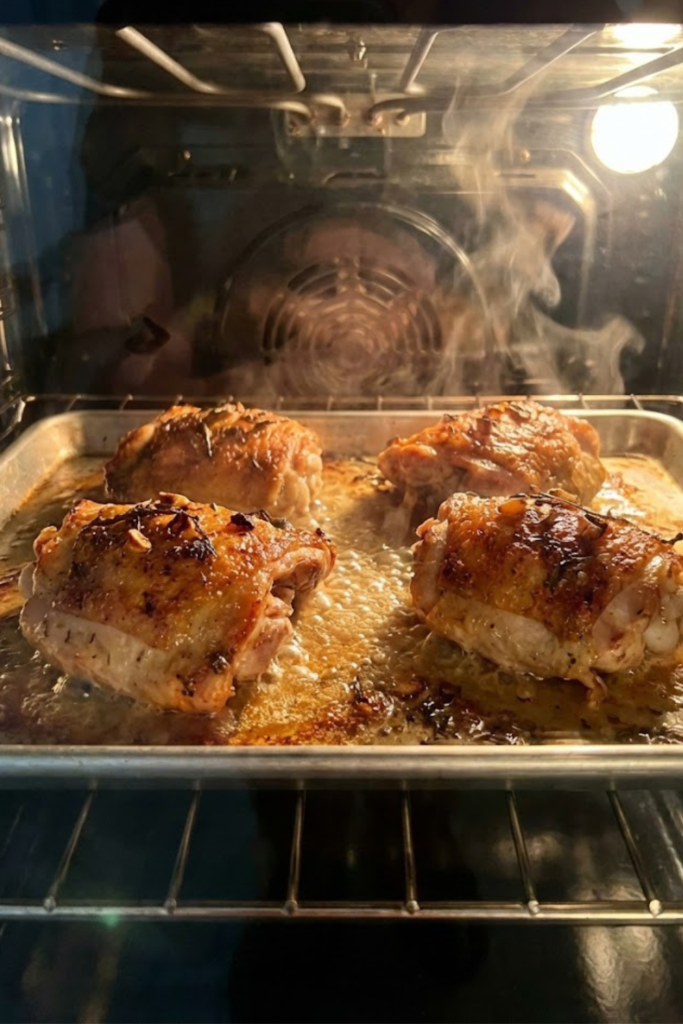
One day, I got impatient and turned the dial up to 400°F just to speed things up. The result changed my life. The skin actually crunched when I bit into it.
Finding the Sweet Spot
If you want that crispy goodness, you have to embrace the heat. 350°F is fine for baking cookies, but for chicken skin, it’s just too gentle. You need high heat baking to render out the fat properly.
My magic number is 400°F (200°C). It is hot enough to crisp the skin but not so hot that the spices burn instantly. I’ve tried 425°F before, and while it works for plain salt and pepper, my garlic powder turned bitter and black.
So, stick to 400°F. It is the perfect balance for a sheet pan dinner. Just make sure your oven is actually clean.
I learned that the hard way when my oven started smoking like a chimney because of old cheese drippings on the bottom!
How Long Does It Take?
This is the question I get asked the most. “How long do I cook it?” The honest answer is: it depends.
Generally, bone-in thighs take about 35 to 45 minutes at 400°F. But ovens can be weird. My mom’s oven runs hot, so hers are done in 30 minutes flat.
My oven is a bit older and sometimes struggles to hold temp, so I usually need the full 45 minutes. Size matters too. If you bought those massive thighs that look like they came from a turkey, they will obviously take longer.
Small organic ones might be done quicker. Don’t just set a timer and walk away. Check on them around the 30-minute mark.
The Tool You Can’t Live Without
Please, stop cutting your chicken open to check if it’s done! I used to do this all the time. I’d slice right into the thickest part, peek inside, and see if it was pink.
Guess what happens when you do that? All the delicious juice runs out onto the pan. You are literally bleeding the flavor out of your dinner.
It’s tragic. instead, buy a digital meat thermometer guide. It costs like ten bucks.
You want the chicken internal temperature to hit 165°F (74°C). I usually pull mine out when the thermometer reads 162°F. The residual heat on the hot pan will finish cooking it those last few degrees.
The Hardest Part: Waiting
Once you take the pan out of the oven, the smell is going to be intoxicating. You will want to grab a piece immediately. Don’t do it!
You have to let the meat rest for at least 5 to 10 minutes. If you cut into it right away, the juices haven’t had time to redistribute. They will just spill out, and your meat will be dry.
I usually tent a piece of foil over the pan loosely to keep them warm. Use this time to set the table or pour a drink. Your patience will be rewarded with the juiciest baked chicken thighs you’ve ever had.
Well, friends, we made it to the end! I really hope this guide takes some of the stress out of your weeknight dinner routine. I know how easy it is to get stuck in a rut making the same old dry chicken dishes over and over again. I’ve been there, and it’s no fun for anyone.
But honestly, mastering baked chicken thighs is a total game changer. It’s one of those meals that feels fancy and comforting, but it barely takes any real effort. Just remember the golden rules we talked about: stick to bone-in meat for the best flavor, make sure that skin is bone-dry before seasoning, and don’t be afraid of the high heat!
If you try this recipe, please let me know how it turned out! Did you mix up the spices? Did your family love the crispy skin as much as mine does? I’d love to hear about your triumphs (or even the little hiccups) in the kitchen. We are all learning together, right?
Oh, and one last favor! If you found this helpful, I would be so grateful if you could share it. Go ahead and pin this to your “Favorite Dinners” or “Weeknight Meals” board on Pinterest. It helps other home cooks find these tips, and it helps me keep sharing what I learn. Happy cooking, everyone!