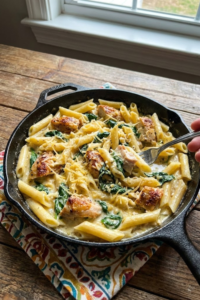
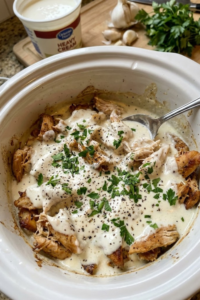
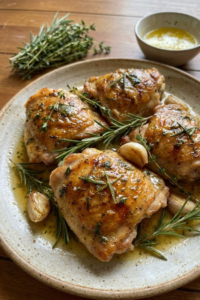
“Did you know that nearly 70% of home cooks admit to overcooking chicken breast at least once a month? I’ve certainly been there—staring at a piece of meat that has the texture of a rubber boot. But I’m here to tell you: it doesn’t have to be that way! This chicken breast with mushroom sauce is my absolute go-to savior for dry poultry anxiety. It is rich, earthy, and honestly, it tastes like it came out of a fancy bistro kitchen (even if you’re wearing sweatpants). Get your skillet ready, because we are about to change your dinner game forever!”
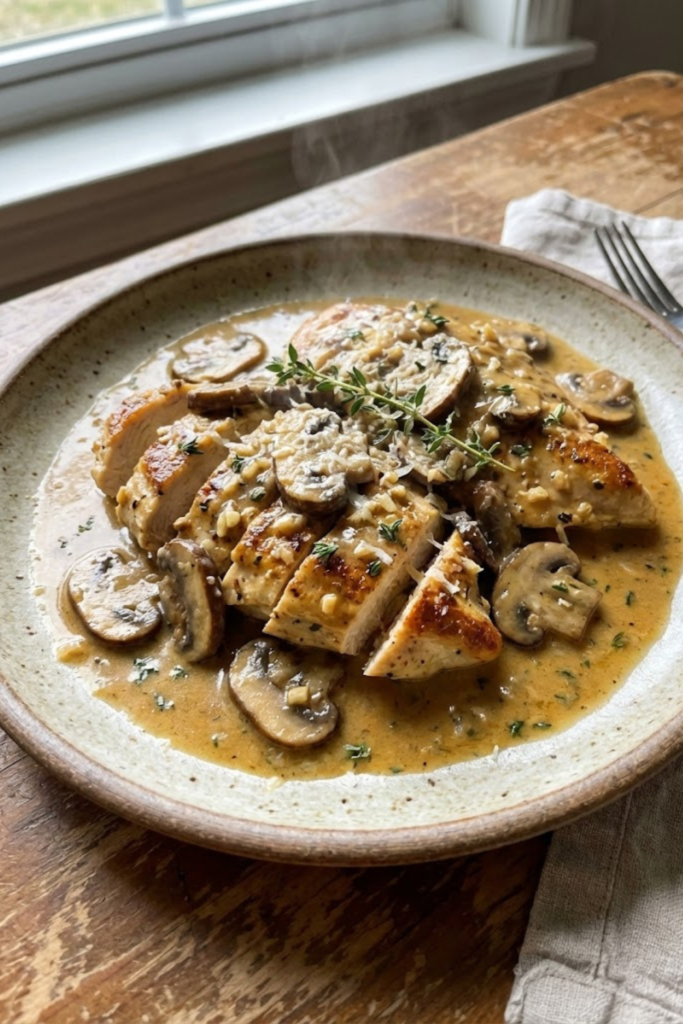
Essential Ingredients for Creamy Mushroom Chicken
You can’t just throw any old thing in a pan and expect magic to happen. I learned this the hard way when I tried to make this dish with skim milk back in the day—big mistake! It turned into a watery mess. To get that restaurant-quality taste right in your own kitchen, you need the right lineup. Honestly, the grocery list for this is pretty short, but picking the specific types of ingredients really matters.
Here is exactly what I grab from the store to make this dinner a winner every time.
The Right Kind of Chicken
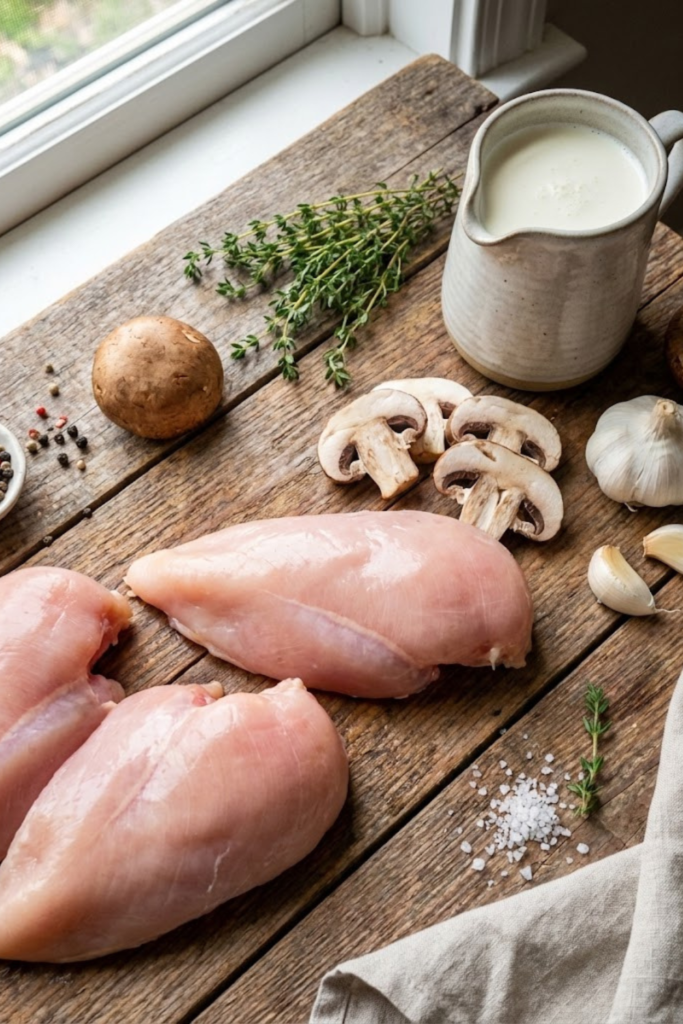
First off, I always go for boneless, skinless chicken breasts. They are easy to work with and cook pretty fast. But here is the secret: you gotta make sure they aren’t too thick. I usually buy the regular packs and then pound them down a bit at home so they are even. If you leave them thick in the middle and thin on the ends, the ends dry out before the middle is safe to eat. Nobody wants dry, chewy meat. If you prefer, chicken thighs work too and are juicier, but the breast meat really soaks up the sauce better in my opinion.
Choosing Your Mushrooms
I used to just grab those plain white button mushrooms because they were cheaper. They are fine, but if you want real flavor, get the Cremini mushrooms (sometimes called Baby Bellas). They look like the white ones but are brown. They have a deeper, earthier taste that stands up to the heavy cream. If you can only find the white ones, that’s okay, but the brown ones just add a little something extra. Just wipe them clean with a damp paper towel; don’t soak them in water or they get rubbery.
The Cream and Aromatics
Please, for the love of good food, use heavy whipping cream. Do not try to swap this for half-and-half or milk to save calories. It won’t thicken right, and the sauce will split. You need that high fat content to get that velvety texture we all love.
For flavor, fresh is best. I use fresh garlic cloves, minced up fine. The jarred stuff is okay in a pinch, but it lacks that punch. I also grab a small bunch of fresh thyme. Dried thyme works if that is all you have, but tossing a few fresh sprigs into the pan makes the kitchen smell amazing.
Pantry Staples You Need
You probably have the rest of this stuff already. I use a mix of butter and olive oil to sear the chicken. The oil stops the butter from burning. You’ll also need a little chicken broth (low sodium is better so it’s not too salty) and maybe a splash of white wine if you have an open bottle. If not, just more broth works fine. Finally, a handful of Parmesan cheese at the end really ties it all together.
How to Pan-Sear Chicken Breast Perfectly
Cooking chicken in a pan sounds simple, but I used to mess it up all the time. One side would be burnt, the middle would be raw, or the whole thing would be dry as cardboard. It was frustrating! Over the years, I found a routine that actually works. You don’t need fancy equipment, just a little patience and the right steps to get that golden, juicy result every single time.
Here is my foolproof method for getting that perfect sear.
Preparing the Meat
The biggest trick I learned is that chicken breasts are naturally uneven. One end is thick, and the other is thin. If you throw them in the pan like that, the thin end dries out before the thick part is cooked. I usually grab a heavy rolling pin or a meat mallet for this. I put the chicken between two pieces of plastic wrap and give it a few good whacks until it is all the same thickness, usually about half an inch.
Also, water is the enemy here. If your chicken is wet from the package, it will steam instead of sear. I take paper towels and pat every piece completely dry before adding any spice. This small step makes a huge difference in getting that nice brown color.
Simple Seasoning is Best
You don’t need a crazy marinade for this recipe because the mushroom sauce is going to do the heavy lifting later. I stick to the basics. I mix salt, black pepper, and some garlic powder in a small bowl. Then I rub it all over both sides of the meat. Since we pounded the chicken flat, the seasoning gets into every bite, and it cooks evenly.
The Heat and the Pan
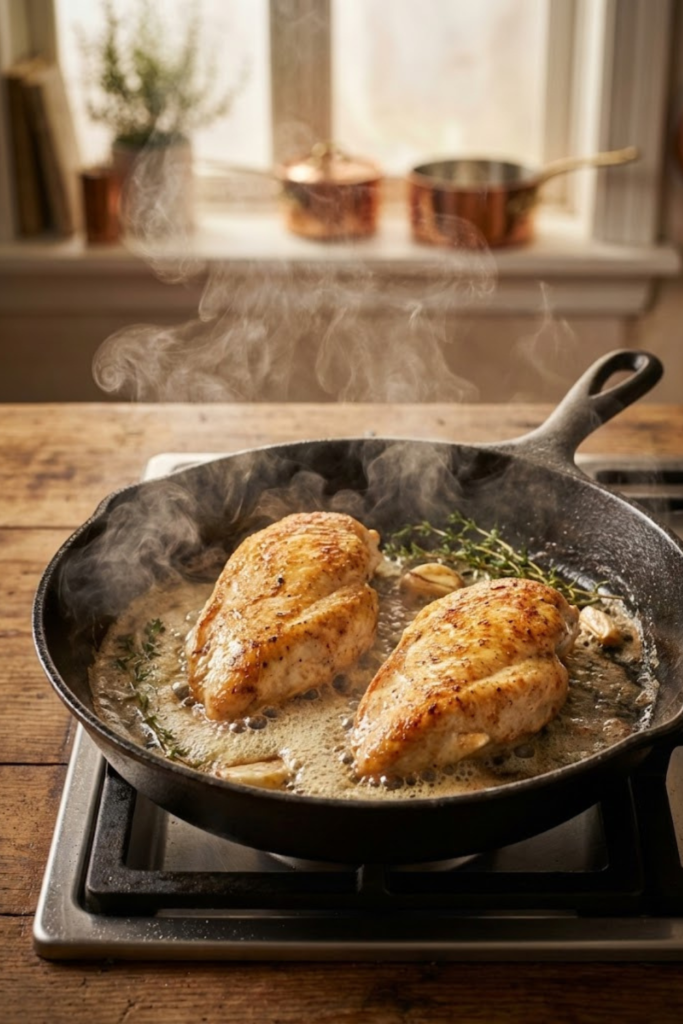
I use a large skillet, preferably cast iron or stainless steel if you have one. Put it on the stove over medium-high heat. I always use a mix of butter and olive oil together. The oil keeps the butter from burning, but the butter gives you that rich, golden crust we want. Wait until the butter melts and stops foaming. Then, lay the chicken in the pan.
Here is the hard part: don’t touch it. Let it cook for about 5 to 6 minutes without moving it. This creates that nice crust. If you try to flip it and it sticks to the pan, it isn’t ready yet. Give it another minute.
Knowing When It’s Done
Flip it over and cook for another 4 to 5 minutes. I always tell my friends to buy a cheap digital meat thermometer. It is the only way to be safe without cutting the meat open and letting the juices run out. You want the thickest part to hit 165°F (74°C). Once it hits that number, take it out of the pan immediately and put it on a plate. It needs to rest for five minutes while we make the sauce. This rest time lets the juices redistribute so they don’t spill out when you cut it.
Mastering the Garlic Mushroom Sauce
While the chicken is sitting on a plate nearby, it is time to tackle the real star of the show. I used to make the mistake of wiping out the pan before starting the sauce because I thought the brown bits at the bottom were “dirty.” I was so wrong! That stuff is called “fond,” and it is basically concentrated flavor gold. Keeping those drippings is the difference between a bland white sauce and a rich, savory gravy that you’ll want to drink with a straw.
Here is how I build that sauce step-by-step without stress.
Getting the Mushrooms Right
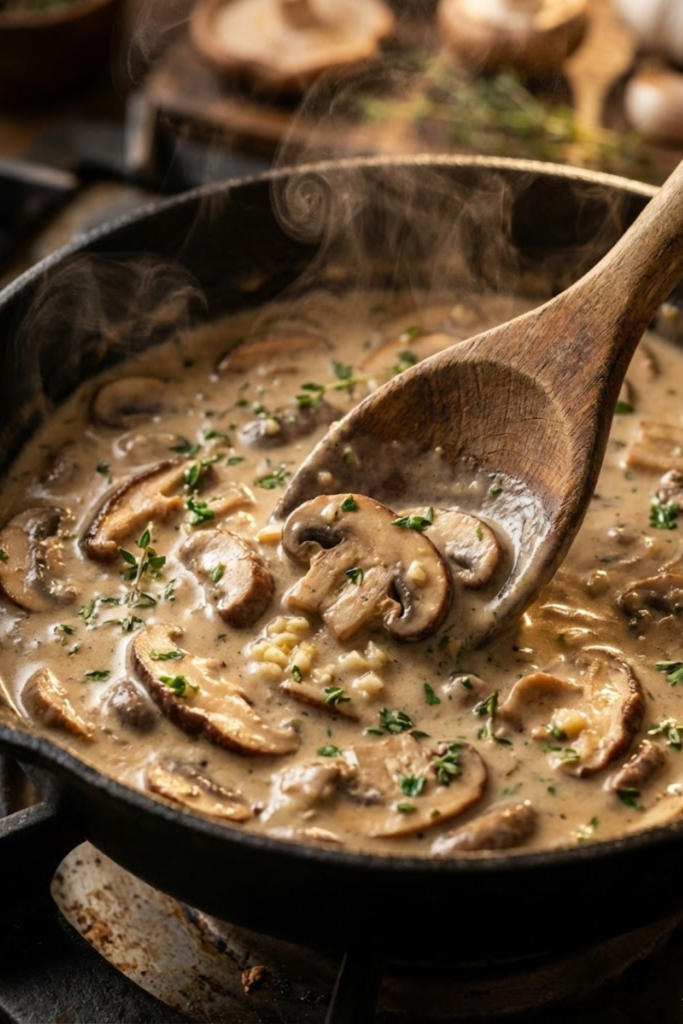
Add a fresh knob of butter to that same skillet with the chicken juices. Once it melts, toss in your sliced mushrooms. Now, here is the part where you need patience. If you stir them too much, they release water and steam instead of browning. I usually let them sit for a minute or two until they get nice and dark on one side. You want them golden brown, not gray and rubbery.
Once they look good, I toss in the minced garlic. Be careful here—garlic burns really fast. I only cook it for about 30 seconds until I can smell it. If it turns black, it tastes bitter, and you might have to start over.
Deglazing the Pan
This sounds like a fancy chef term, but it’s actually super simple. Pour in your chicken broth (or white wine if you are using it). The liquid will hit the hot pan and steam up. Take your wooden spoon and scrape the bottom of the skillet hard. You want to lift up all those stuck-on brown bits from the chicken we cooked earlier. They will dissolve into the liquid and make the sauce taste meaty and deep. Let this liquid bubble for about two minutes so it reduces a little bit.
Making it Creamy
Now, pour in the heavy whipping cream. Turn the heat down to medium-low. We want a gentle simmer, not a rolling boil, or the cream might separate. Let it cook for about 3 to 5 minutes. You’ll know it’s ready when you can dip a spoon in, run your finger down the back of the spoon, and the line stays there without the sauce running.
The Final Touch
Take the pan off the heat. Stir in the Parmesan cheese and fresh herbs immediately. The residual heat will melt the cheese perfectly. Finally, put your chicken breasts back into the pan. And don’t forget the juice that collected on the plate while the chicken was resting! Pour that right in too—it adds so much flavor. Spoon the sauce over the chicken and let it warm through for a minute.
Serving Suggestions and Side Dishes
You know, for the longest time, I would just slap a piece of chicken on a plate and call it a day. But let’s be honest, that sauce is liquid gold, and it feels like a crime to waste even a drop of it. If you don’t have something to soak up that creamy garlic goodness, you’re missing out on half the experience. Over the years, I’ve experimented with a bunch of different sides, some good and some not so great.
Here is what I’ve found works best to turn this skillet chicken into a full, satisfying meal that my family actually cheers for.
The Best Pasta Choices
If I had to pick just one side for the rest of my life, it would be pasta. But you can’t just use any noodle. Angel hair is too thin and gets lost, and penne is okay but doesn’t grab the sauce the way I like. I almost always go for fettuccine or tagliatelle. These wide, flat noodles are perfect for coating in that thick mushroom sauce. It’s like they were made for each other. I usually toss the noodles right into the skillet with the chicken (once I’ve moved the meat aside) so every strand gets covered. It basically turns into a chicken alfredo upgrade without the extra work.
Potatoes and Rice for Comfort
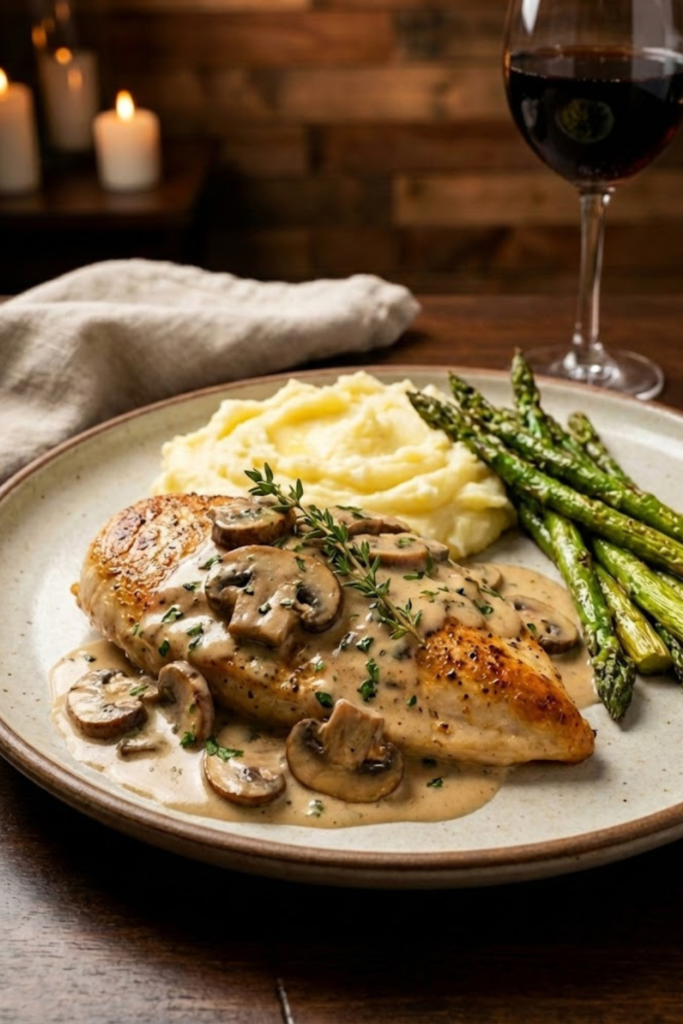
If we aren’t doing pasta, we are definitely doing potatoes. Creamy mashed potatoes are a total comfort food move here. When you spoon the extra mushroom gravy over a pile of buttery potatoes, it’s heavenly. It reminds me of those Sunday dinners at my grandma’s house. If I’m in a rush and don’t feel like peeling potatoes, I’ll just make a pot of jasmine rice. The rice is great at soaking up the sauce too, though it doesn’t have that same rich feel as the potatoes.
Adding Some Green
Since this dish is pretty heavy with the cream and cheese, I always try to put something green on the plate to balance it out. Otherwise, the whole meal just looks beige. Roasted asparagus is my go-to because it’s easy. I just toss it with oil and salt and stick it in the oven while the chicken cooks. Steamed green beans with a little garlic butter are also a solid choice. The crunch of the veggies really helps cut through the richness of the creamy sauce so you don’t feel too heavy afterwards.
Lower Carb Options
Sometimes, I try to watch the carbs a bit, especially after the holidays. The good news is this chicken is great on its own, but you still want a side. I’ve found that mashed cauliflower is a surprisingly good substitute for potatoes. If you blend it well with some butter, you barely notice the difference when it’s covered in mushroom sauce. Zucchini noodles (zoodles) are another option I use in the summer. They are light and fresh, and they pick up the garlic flavor really well.
Storage and Reheating Tips
I am going to be real with you—this chicken is so good that in my house, we rarely have leftovers. My teenagers usually wipe the skillet clean. But every once in a while, I make a double batch just so I can have a fancy lunch the next day. There is nothing better than making your coworkers jealous with the smell of garlic and cream heating up in the breakroom. However, reheating cream sauce can be a bit tricky if you don’t know what you’re doing. I’ve definitely turned a beautiful sauce into a greasy, separated mess before.
Here is how I store and reheat this dish so it tastes just as good the second time around.
Keeping it Fresh in the Fridge
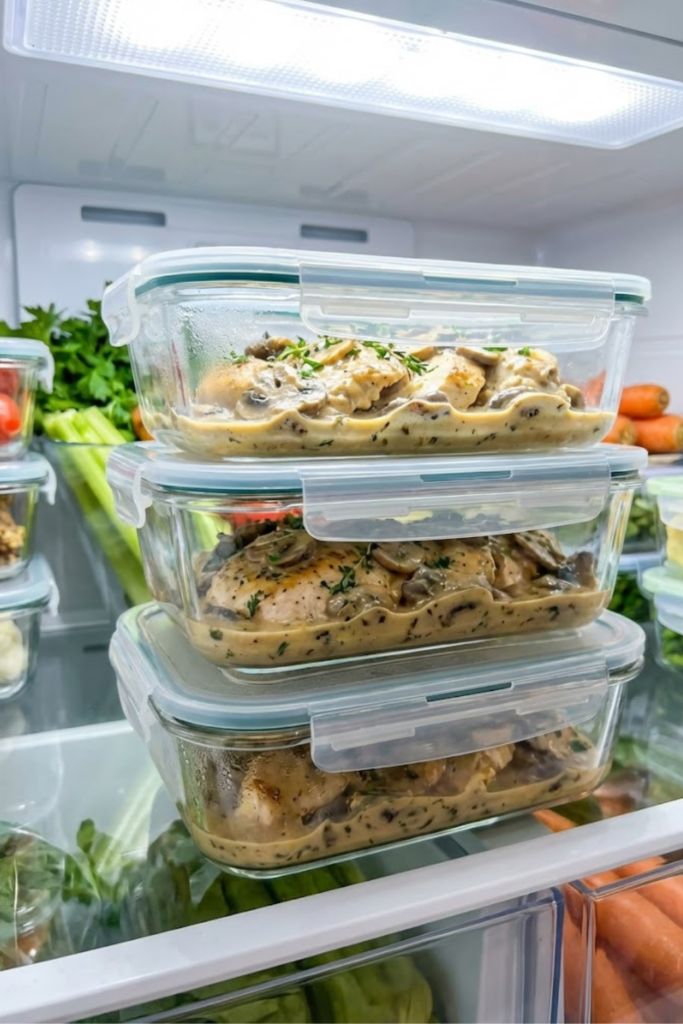
If you are planning to eat the leftovers within a few days, the fridge is your best friend. I always wait for the chicken and sauce to cool down completely before I pack it away. If you put it in a container while it’s still hot, it creates condensation, and nobody likes watery sauce. I use glass airtight containers because plastic ones tend to hold onto that garlic smell forever. It will stay fresh for about 3 to 4 days. After that, I wouldn’t risk it.
The Truth About Freezing
People ask me all the time if they can freeze this. The honest answer? I wouldn’t recommend it. Dairy-based sauces, especially ones made with heavy cream, just don’t like the freezer. When you thaw them out, the sauce tends to “break” or separate. It ends up looking grainy and oily instead of smooth. It still tastes okay, but the texture is kinda weird. If you absolutely have to freeze it, just know it won’t be as pretty when you reheat it.
Reheating on the Stove
This is hands down the best way to warm it up. If you have the time, skip the microwave. I toss the chicken and the sauce into a small pan or skillet. You’ll notice the sauce looks like thick jelly when it’s cold—that’s normal! I add a splash of water or chicken broth, maybe just a tablespoon or two, to help loosen it up. Turn the heat to low. Slow and steady is the key here. If you crank the heat up too high, the oil will separate from the cream. Cover it with a lid and let it simmer gently for about 10 minutes until the chicken is hot all the way through.
The Quick Microwave Fix
If you are at work or in a rush, the microwave works too. But please don’t just blast it on high for two minutes. That is how you get rubbery chicken that explodes all over the microwave walls. I usually cut the chicken breast into bite-sized pieces first so it heats evenly. Then I cover the dish with a paper towel and heat it on 50% power in 30-second bursts. Stir the sauce in between each burst. It takes a little longer, but it keeps the meat tender and stops the sauce from turning into an oil slick.
Well, we have finally reached the end of our culinary adventure today. I honestly hope you are feeling a little more confident about grabbing that skillet and making some magic happen in your kitchen tonight. I know that cooking chicken breast can feel like a gamble sometimes—will it be juicy or will it be dry?—but I promise you, this method changes everything. Once you master that simple pan-sear and realize how easy it is to whip up a pan sauce from scratch, you won’t ever want to go back to the jarred stuff again.
This chicken breast with mushroom sauce has saved me on so many busy weeknights when I just didn’t have the energy to think too hard about dinner. It feels fancy enough to serve to guests on a Saturday, but it is fast enough to throw together on a Tuesday when the kids have homework and the house is a mess. It really is the best of both worlds. Plus, there is something just so comforting about the smell of garlic, butter, and thyme filling up the house. It makes everyone come running to the table without me having to yell twice!
If you do try this recipe, I would love to hear how it turned out for you. Did you stick to the recipe, or did you add your own little twist? Maybe you added a splash of white wine or tried it over mashed cauliflower? Cooking is all about making it work for you and your family, so don’t be afraid to experiment a little bit once you get the basics down.
And hey, if you loved this recipe and want to save it for later, please do me a huge favor and pin this to your “Weeknight Dinners” or “Chicken Recipes” board on Pinterest. It helps other home cooks find these recipes, and it helps me keep sharing my kitchen mishaps and successes with all of you. Happy cooking, everyone!