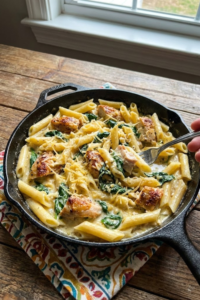
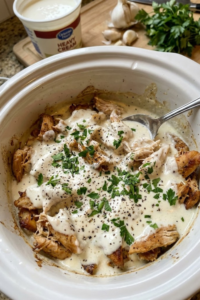
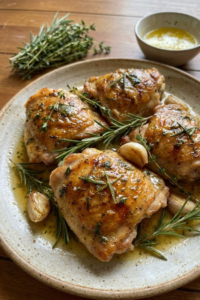
Ever bite into a piece of chicken that felt more like a shoe sole than dinner? Yeah, I’ve been there too! It’s the absolute worst when you put effort into a meal only to have it come out dry and rubbery. But listen, the secret weapon isn’t some fancy sous-vide gadget; it’s simply mastering chicken breast with olive oil. I read somewhere that nearly 70% of home cooks overcook poultry simply because they’re terrified of undercooking it. Crazy, right? Today, I’m going to show you exactly how to lock in those juices so you never have to choke down dry meat again. Let’s get cooking!
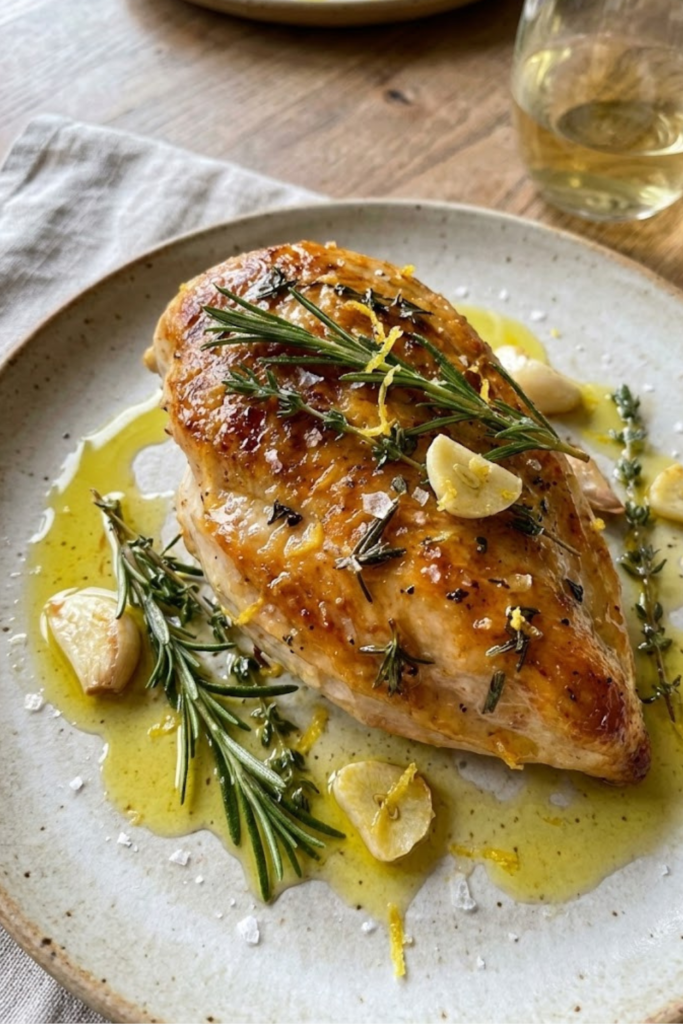
Choosing the Best Ingredients: Extra Virgin vs. Regular
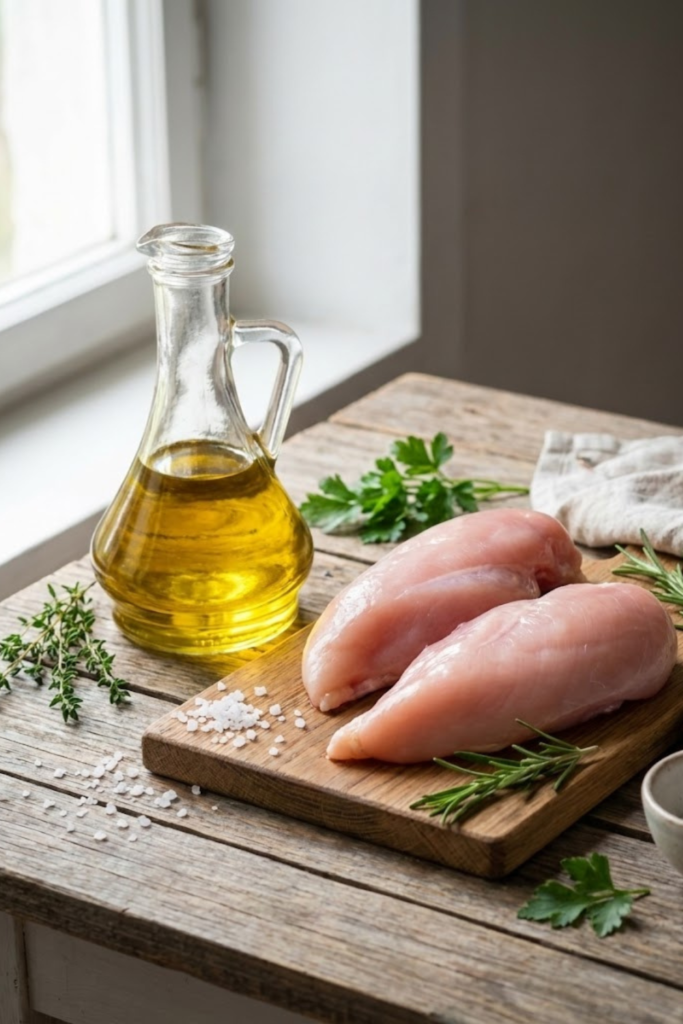
Honest truth? I used to think all olive oil was basically the same stuff in different bottles. I’d grab whatever was on sale, slap it in the pan, and wonder why my kitchen filled with smoke every time I tried to sear a dinner. It wasn’t until I set off my apartment’s smoke alarm for the third time in a week that I realized I was doing it all wrong. It was embarrassing, loud, and totally avoidable.
The Smoke Point Situation
Here is the thing I learned the hard way. Extra Virgin Olive Oil (EVOO) is amazing for salads, but it has a lower smoke point. If you blast it with high heat, it burns and tastes bitter.
For this chicken breast with olive oil recipe, you actually want a regular or “light” olive oil for the searing part if you like high heat. It handles the temperature way better. Save that fancy, expensive green bottle of Extra Virgin to drizzle on after the chicken comes out of the oven. That way, you get that fresh, peppery kick without the burnt flavor. It’s a small tweak, but it changes everything.
Don’t Buy Watery Chicken
Now, let’s talk about the bird. Have you ever cooked chicken that ended up swimming in a pool of weird gray liquid? That’s because most cheap chicken is “water-chilled.” They pump it full of water to bulk it up, and all that water comes out in your pan.
I strictly buy air-chilled chicken now. It costs a buck or two more, but the difference is huge. The meat actually browns instead of steaming in its own juices. Plus, the texture isn’t rubbery. If you want juicy chicken breast with olive oil, starting with meat that isn’t waterlogged is half the battle.
The “Fake” Oil Trap
Another heads up—a lot of the “olive oil” on the shelf is actually mixed with cheaper vegetable oils. It’s super frustrating. I look for the harvest date on the bottle now. If it doesn’t have a date, I don’t buy it. Real olive oil should smell like grass or fruit, not like old crayons. Once you taste the real stuff, you can’t go back.
Simple Seasoning Wins
You don’t need a massive spice rack for this. Since we are using good oil, I stick to the basics.
- Coarse Sea Salt: It sticks to the meat better than table salt.
- Fresh Cracked Pepper: Pre-ground pepper tastes like dust; crack it fresh.
- Dried Oregano: The stuff in the jar is fine, just rub it between your fingers to wake it up.
Keep it simple and let the ingredients do the heavy lifting. Trust me, your dinner guests will think you went to culinary school.
Marinating for Maximum Moisture and Flavor Infusion
I used to be the person who would throw some spices on the chicken right before it hit the pan. I’m not gonna lie, I wondered why my food always tasted so boring compared to restaurants. I thought marinating was this huge, complicated thing that took all day. It turns out, skipping this step was my biggest mistake.
The Science of the Soak
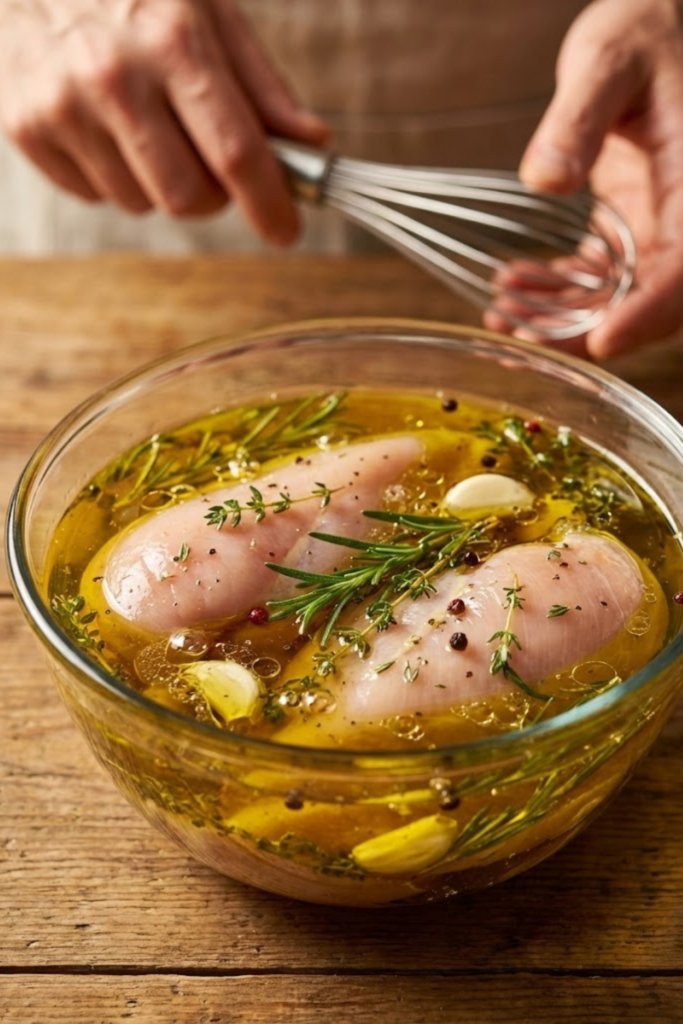
Here is what I figured out after reading way too many cookbooks. Olive oil isn’t just for flavor; it’s a protective shield. When you coat the chicken breast with olive oil, you are basically creating a barrier that traps moisture inside.
If you don’t use enough oil, the heat just sucks the water right out of the meat. I learned that the hard way when I tried to “eat clean” and used zero oil. The chicken was like eating cardboard. Never again. Now, I make sure every inch is coated.
Timing is Everything
There is a sweet spot for timing, and I missed it constantly.
- 30 Minutes: This is the bare minimum. If you are rushing, do this while you chop veggies.
- 4 Hours: This is the golden zone. The flavors actually get deep into the meat.
- 24+ Hours: Don’t do this. I once left chicken in lemon and oil for two days thinking it would be extra good. It was mushy and gross because the acid broke it down too much.
So, aim for that 4-hour mark if you can plan ahead. If not, 30 minutes on the counter (not the fridge) helps bring the temp up too.
Watch Out for the Acid
Speaking of mushy meat, be careful with vinegar or lemon juice. I love a zest, but too much acid “cooks” the meat before it hits the oven. It’s called denaturation.
I usually do a ratio of three parts olive oil to one part acid. It’s enough to tenderize without ruining the texture. If you are using a really strong vinegar, maybe use even less. It is a lesson learned after ruining a perfectly good batch of expensive organic breasts.
The Garlic Smash Technique
For the longest time, I minced my garlic super fine. Then it would just burn in the oven and taste bitter. A chef friend told me to stop doing that.
Now, I just smash the cloves with the side of my knife and throw them in whole. The oil gets infused with the garlic flavor, but you don’t get burnt bits. It is so much easier and tastes way cleaner. Plus, you don’t have sticky garlic fingers for days.
Step-by-Step Baking: Nailing the Perfect Temperature
Okay, this is the part where everyone gets nervous. I used to stare at the oven window like a hawk, terrified I was going to give my family food poisoning or serve them dry leather. I’d poke the meat, cut into it to check the color, and just let all the juice run out. It was a mess. Once I stopped guessing and started following a system, the stress vanished.
The 400-Degree Sweet Spot
First off, crank that oven up. I used to bake chicken at 350°F because I thought “low and slow” kept things moist. I was wrong. At 350°F, the chicken sits in there too long and dries out.
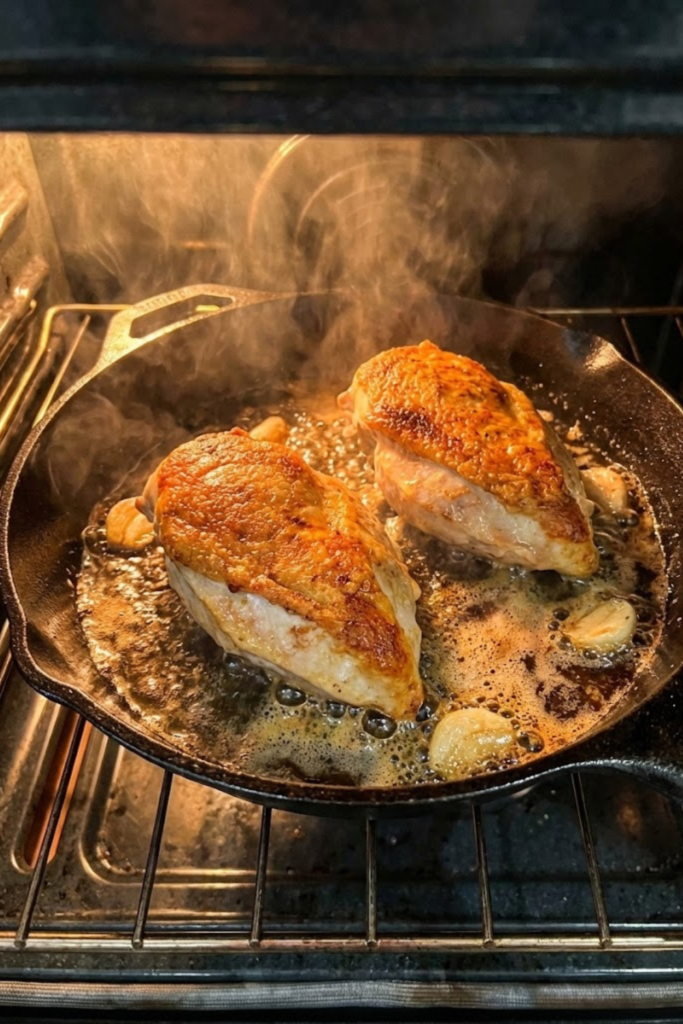
You want to set your oven to 400°F (200°C). The higher heat sears the outside quickly, locking in the chicken breast with olive oil goodness, while the inside cooks gently. It’s faster, which is great for a Tuesday night, and the texture comes out way better. Just make sure your oven is actually hot before you put the pan in.
Hands Are the Best Tools
When it’s time to get the bird in the pan, don’t use a pastry brush. I found that brushes just paint a thin layer on top. You need to get in there.
I pour the olive oil and seasonings right onto the meat and use my hands to rub it in. It sounds gross, but massaging the oil into the meat fibers helps it stick. You want that oil in every nook and cranny. Wash your hands well after, obviously, but don’t be afraid to get messy.
The Thermometer Rule
If you take one thing away from this, let it be this: buy a digital meat thermometer. They are cheap, like ten bucks. Using one changed my life in the kitchen.
Do not wait for the chicken to hit 165°F in the oven. If you do that, it will be overcooked by the time it hits the plate. I pull my chicken out exactly when it hits 160°F (71°C). The heat stays inside the meat and keeps cooking it for a few minutes after you take it out (fancy chefs call this “carryover cooking”). It will reach the safe 165°F right on the counter, perfectly juicy.
Glass Dish vs. Metal Pan
I noticed a difference depending on what I cooked in, too.
- Glass Pyrex Dish: The chicken stays softer and poaches a bit in its own juices. Great if you want soft meat.
- Metal Baking Sheet: You get crispier edges and better browning because the metal gets hotter.
I usually go with the metal sheet pan because I like those golden-brown edges. Just line it with foil for easy cleanup because scrubbing burnt oil is the worst.
Resting and Serving: The Critical Final Step
I used to be so impatient. The timer would ding, and I would pull the pan out and immediately start hacking away at the meat. I was hungry! But then I would see a sad pool of liquid on my cutting board and end up with dry meat on my fork. I realized I was ruining the whole dinner in the last ten seconds. It felt like running a marathon and tripping at the finish line.
The Hardest Part is Waiting
You have to let it rest. It is super annoying when you are starving, but it matters. When the chicken cooks, the heat squeezes all the juices to the center of the meat.
If you cut it right away, all that flavor spills out onto the board. If you wait just 5 to 10 minutes, those juices flow back out to the edges. I usually tent a piece of foil over the plate loosely. It keeps it warm without making the outside soggy. I use this time to yell at the kids to wash their hands or finally pour myself a drink.
How You Cut Matters
Did you know you can make tender meat tough just by cutting it wrong? I didn’t know this for years. You gotta look at the meat and see which way the little lines (fibers) are running.
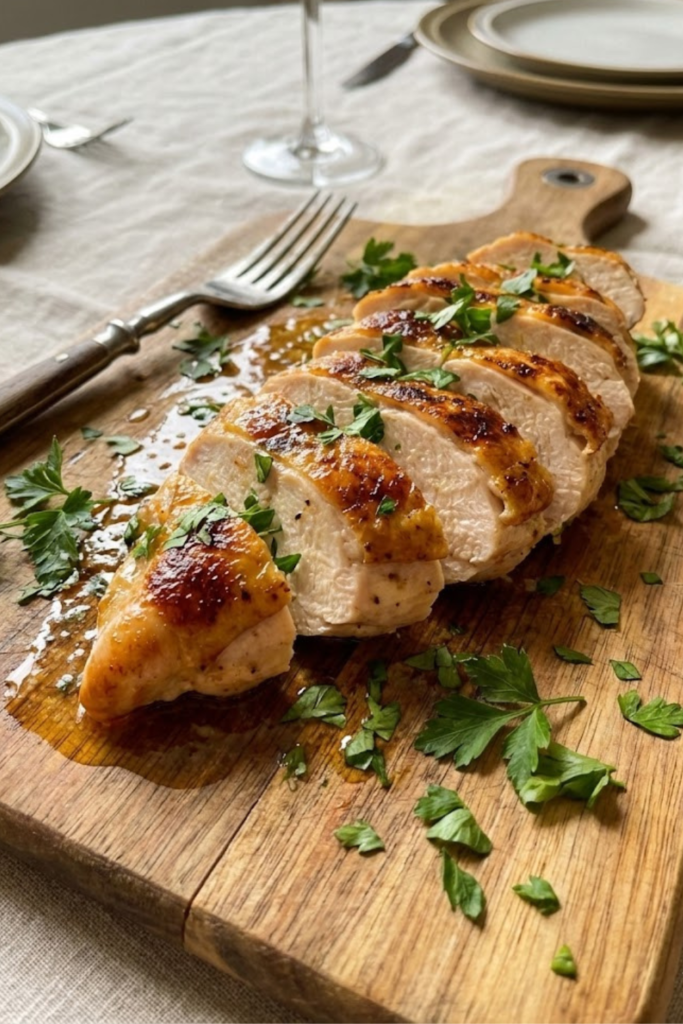
You want to slice across those lines, not with them. This is called cutting “against the grain.” It cuts the muscle fibers short so you don’t have to chew as much. It makes a huge difference, especially with lean chicken breast with olive oil, which can get tough fast.
The Restaurant Trick
Here is a little trick I learned from a cooking show. Before I serve it, I grab my good bottle of Extra Virgin Olive Oil—the one I told you to hide from the high heat earlier. I drizzle just a tiny teaspoon over the sliced meat.
It makes the chicken look shiny and professional, and you get that fresh, grassy olive flavor right when you take a bite. Sprinkle a little pinch of flakey salt on top of that raw oil, and it tastes amazing.
What to Eat With It
Since you have all this delicious oil and juice on the plate, you don’t want to waste it. I like serving this with something that acts like a sponge.
Couscous is my go-to because it cooks in like five minutes and soaks up everything. Mashed potatoes work great too, or even just a thick slice of crusty bread to mop up the plate. Don’t let those juices go down the drain!
Honestly, getting a healthy dinner on the table is hard enough without worrying about serving up dry, rubbery meat. Mastering this simple chicken breast with olive oil recipe has totally saved my weeknights. It turns a boring, basic ingredient into something that actually tastes like a real meal, and you don’t need a degree in cooking to pull it off.
Just remember the big takeaways: buy the air-chilled stuff if you can, don’t be afraid of a hot 400°F oven, and for the love of food, use that meat thermometer. Pulling it out at 160°F and letting it rest is the difference between a juicy dinner and a sad one. Give this a try tonight. I promise, once you nail it, you won’t cook chicken any other way.
If this guide helped you out, please do me a huge favor and Pin it to your “Healthy Dinners” or “Weeknight Meals” board on Pinterest! It helps other home cooks find these tips so they can stop eating dry chicken too.