Did you know that over 40% of home cooks struggle with dry, rubbery poultry? I’ve been there, staring at a piece of meat that tastes like a flip-flop!
It’s a total bummer when you spend money on good meat just to have it come out tough. But honestly, making a succulent chicken breast with savory herb butter isn’t magic. It’s about the butter and the heat. I finally figured out how to get that golden-brown crust without drying out the middle. You are going to love how this smells in your kitchen!
Choosing the Right Cut for Your Chicken Breast with Savory Herb Butter
I used to think all chicken was basically the same. I’d go to the store and just grab whatever was on sale in the big yellow packages. Man, was I wrong! I remember this one Tuesday night I tried to make a nice dinner and the chicken just released so much water it looked like it was swimming in a soup. It didn’t brown at all. It just stayed this sad, rubbery white color. That’s when I realized that the “cut” of meat you start with is half the battle. If you want that golden crust, you have to be picky at the meat counter.
Why I Look for Air-Chilled Chicken
Most of the chicken you see in the grocery aisle is “water-chilled.” That means they soak the birds in big tubs of ice water to cool them down after processing. The chicken soaks up that water like a big sponge. When you put it in a hot pan, all that extra water leaks out and ruins your sear. This is why your chicken might taste “steamed” instead of fried. Now, I always look for the words “air-chilled” on the label. They use cold air instead of water. It costs a bit more, but the skin and the meat stay way drier. This is the best way I’ve found to get that crispy, restaurant-style finish at home without the mess. Plus, you aren’t paying for extra water weight.
Fixing the Football Shape
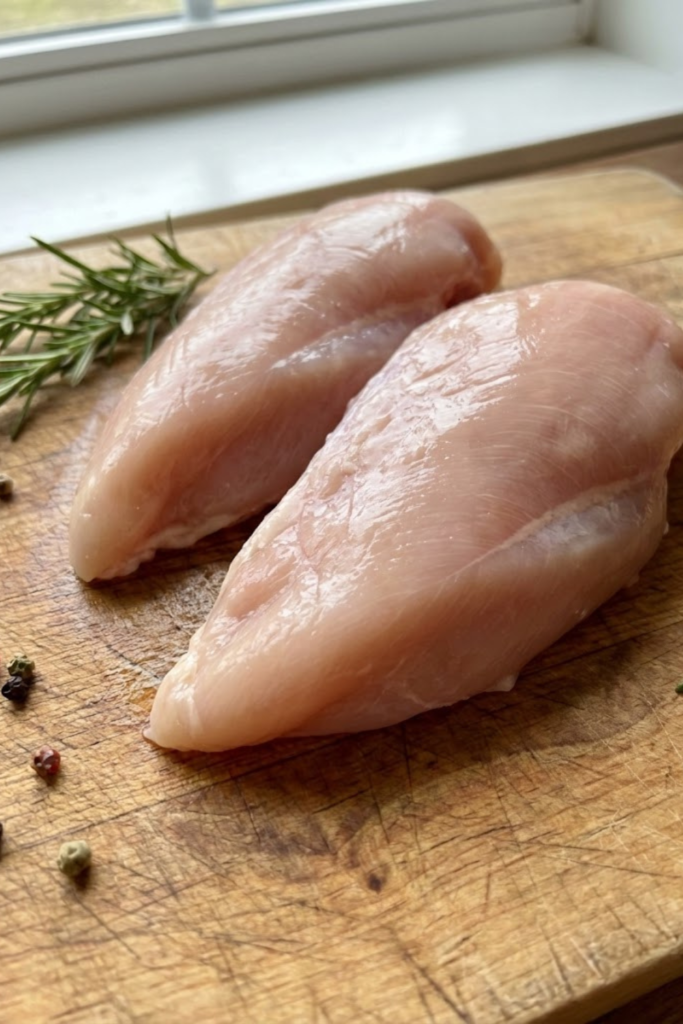
Chicken breasts are naturally uneven. One side is fat like a football and the other side is thin and pointy. If you just throw them in the pan, the thin part gets dry as a bone while the thick part is still raw. I learned this the hard way when I served a piece that was literally pink in the middle. It was a total dinner disaster! Now, I use a heavy pan or a mallet to pound the thick part down. Just put the meat between two pieces of plastic wrap so you don’t make a mess. Aim for about an inch of thickness all the way across. It makes a huge difference because every bite cooks at the same speed.
Does Quality Matter?
In my experience, pasture-raised or organic chicken just tastes more like real food. It has a richer flavor that stands up to the savory herb butter. Cheap chicken can be pretty bland and sometimes has a weird, woody texture. If your budget allows, go for the better quality stuff. It makes the whole meal feel more special and keeps the family coming back for seconds. Getting the right meat is the first step to a perfect dinner.
The Secret to the Perfect Savory Herb Butter Infusion
I’ll be the first to admit that I used to be a “tub butter” kind of person. I thought as long as it was yellow and greasy, it would taste fine on a piece of meat. But the first time I made a real herb butter—what chefs call a compound butter—it totally changed how I look at dinner. I remember trying to rush it the first time. I took a rock-hard stick of butter from the fridge and tried to mash it with a fork. It just went flying across the kitchen and hit the toaster! I learned pretty fast that you can’t force the butter to be ready. You have to be patient and let it sit on the counter until it’s soft enough to spread like frosting.
Stop Using the Microwave for Your Butter
One big mistake I see people make is trying to soften the butter in the microwave. I did this twice and both times I ended up with a yellow puddle and some hard chunks. It ruins the texture and won’t hold the herbs right. If you want the best results for your savory herb butter, just take it out an hour before you start cooking. It should be soft, but not melting. This lets you whip the herbs inside so every single bite of that chicken breast has flavor. If you forget to take it out, you can grate the cold butter with a cheese grater to help it soften faster. It’s a little trick I tell my students all the time.
Why Fresh Herbs Beat the Dried Stuff
When I’m making this, I always go for fresh thyme and rosemary. I used to use the dried stuff from the glass jars that had been in my pantry for three years. It tasted like I was seasoning my food with lawn clippings! Fresh herbs have oils that wake up when they hit the hot chicken. I like to chop the rosemary really small because nobody wants to bite into a woody stem. For the thyme, I just pull the tiny leaves off the stalk. Mix those in with a little bit of sea salt and some garlic that you’ve smashed into a paste. The smell alone will make your neighbors jealous.
The Rolling and Chilling Trick
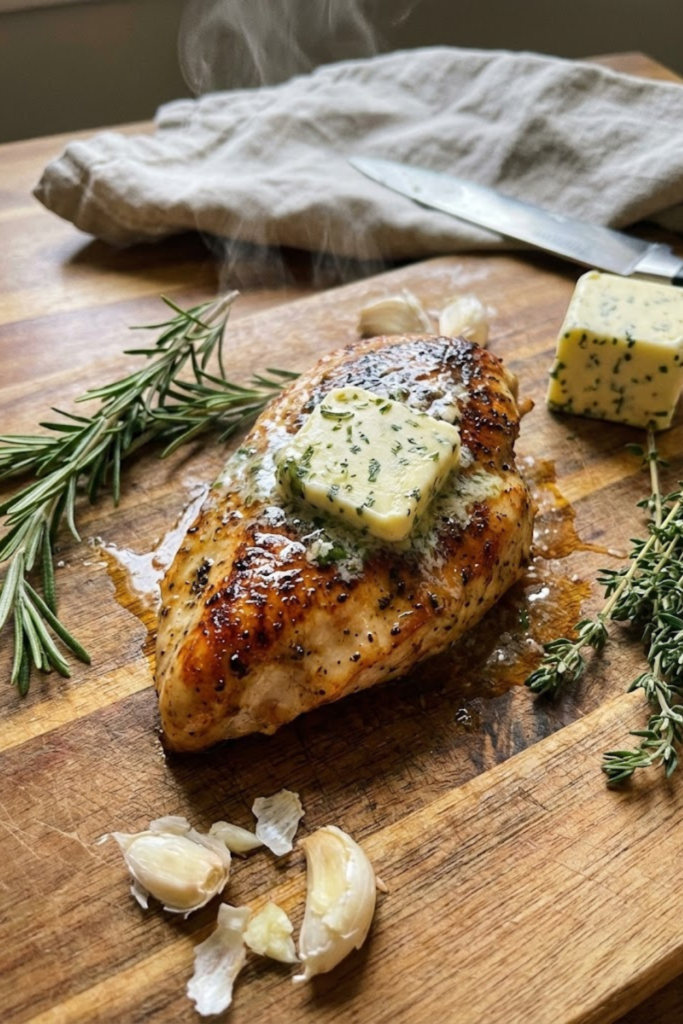
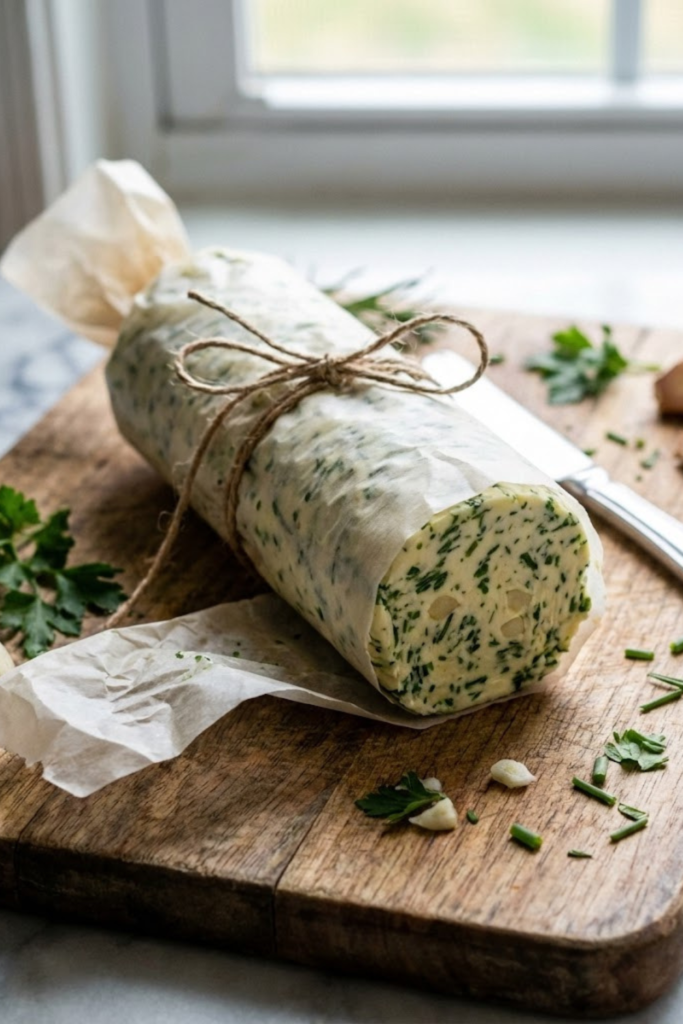
Once you have your butter mixed up, don’t just leave it in a bowl. I like to plop it onto a piece of parchment paper and roll it up like a big piece of candy. Twist the ends tight and put it back in the fridge for about twenty minutes. This makes it firm again so you can cut perfect little coins of butter. When you drop a cold slice of this onto a hot chicken breast, it melts slowly and creates this amazing sauce that coats the meat perfectly. It looks so professional, but it’s actually one of the easiest things you can do to upgrade your cooking. It really makes the dish feel like it came from a fancy bistro instead of your own stove.
Pro Searing Techniques: No More Dry Meat!
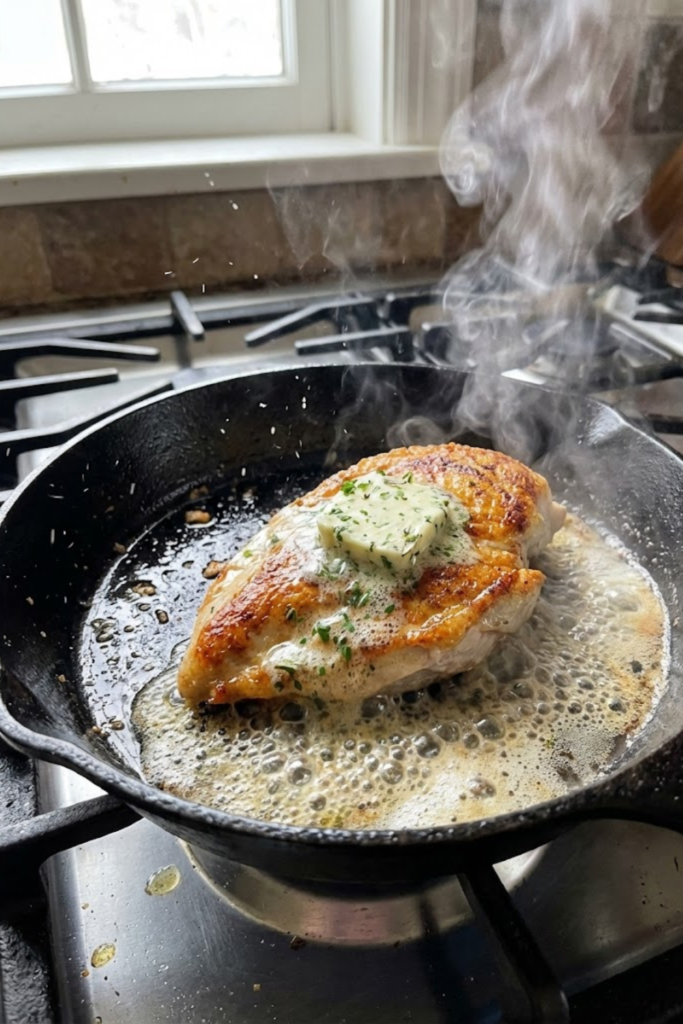
I used to be terrified of high heat. My mom always cooked everything on low because she was afraid of a grease fire. But cooking a chicken breast with savory herb butter on low heat is a big mistake. It just makes the meat tough and grey. I finally learned that you need a hot pan to lock in those juices. If you don’t hear a loud sizzle the moment that meat touches the metal, your pan isn’t hot enough. It took me a few smoky kitchens to figure this out, but once I did, I never looked back. You want that chicken to have a crunch on the outside but stay soft on the inside.
The Power of Cast Iron
I swear by my old cast iron skillet. It’s heavy and holds heat way better than any of those thin non-stick pans I got for my wedding. When you use cast iron, you get an even sear across the whole surface. I usually put my pan on the burner for at least five minutes before I even think about adding the oil. You want it so hot that a drop of water dances and disappears instantly. This is how you get that beautiful golden-brown color that makes people think you actually know what you’re doing in the kitchen. Just remember to use a potholder! I’ve burned my hand more times than I care to admit because I forgot the handle gets hot too.
Picking the Right Oil
Don’t reach for the extra virgin olive oil here. I made that mistake once and my whole house smelled like a campfire. Olive oil burns at a low temperature and turns bitter. For a good sear, I use avocado oil or grapeseed oil. These can handle the high heat without smoking you out. Once the oil is shimmering, lay the chicken away from you so the grease doesn’t splash back. Leave it alone! I used to poke and prod my meat every ten seconds. Let it sit for four or five minutes to build up that crust. If it’s sticking to the pan, it’s not ready to flip yet.
The 165 Degree Rule
The most important tool in my kitchen is my digital meat thermometer. I used to try the “finger poke” test or just cut into it to see if it was pink. Cutting it lets all the juice run out, which is exactly what we don’t want. Now, I pull the chicken off the heat when it hits 160 degrees. It will keep cooking while it rests and reach that safe 165 mark. This is the only way to make sure your chicken breast with savory herb butter stays juicy. Trust the tech, not your eyes! Overcooking is the enemy of good poultry. If you wait until it looks “done” in the pan, it’s probably already too dry.
Why You Must Let Your Chicken Rest (And How to Serve It)
I know the feeling. You just pulled that beautiful, golden-brown chicken out of the pan. The herb butter is bubbling, the smell of garlic is filling the whole house, and you are absolutely starving. Your first instinct is to grab a fork and dive right in. I used to do that every single time! But then I’d notice a huge puddle of juice on my plate, and by the third bite, the meat felt dry and stringy. It took me a long time to realize that the most important part of cooking happens after you turn off the stove. You have to let that chicken sit still for at least five to ten minutes.
The Science of the “Quiet Time”
When you cook meat, the heat pushes all the juices into the center. If you cut it right away, all that liquid just runs out like a popped balloon. I tell my students to think of it like a sponge that you’ve squeezed really tight. If you let it go, it takes a few minutes for the sponge to soak the water back up. Resting the meat lets the juices move back into the edges of the chicken breast. This is the secret to getting a piece of meat that is moist from the first bite to the last. I usually just tent a piece of foil over the plate—not too tight, or you’ll lose that crispy crust—and go set the table or finish up a side dish.
Slicing for the Best Texture
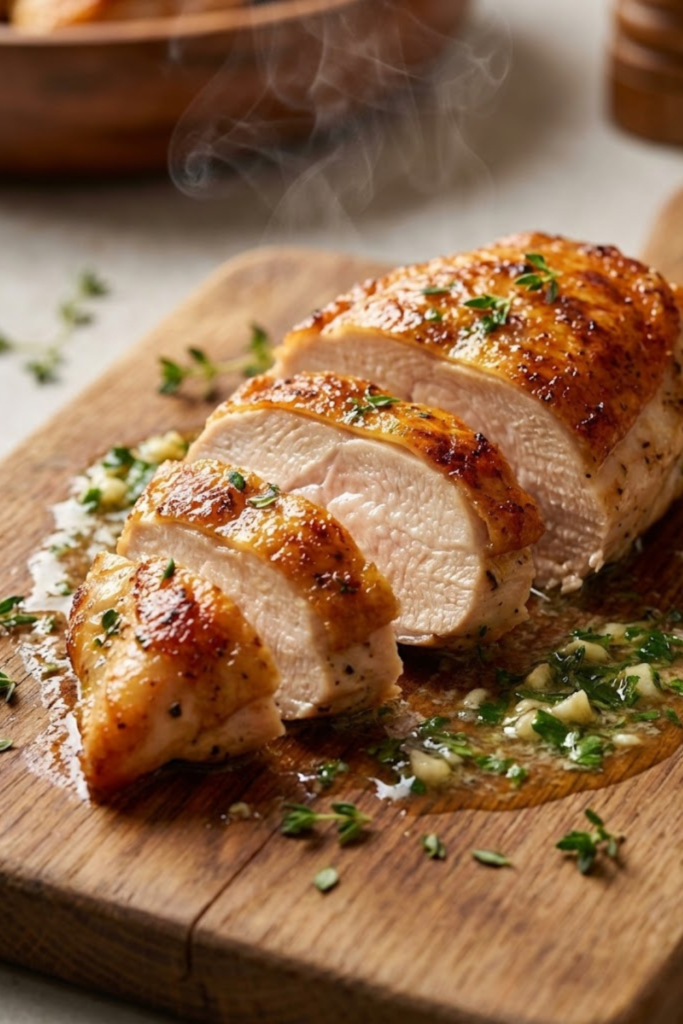
Once the chicken has rested, how you cut it actually matters more than you think. I always look for the “grain” of the meat, which are those little lines you see in the muscle. If you cut in the same direction as those lines, the chicken can feel a bit chewy. I always slice across those lines. It breaks up the fibers and makes the meat feel much more tender in your mouth. I like to cut mine into thick slices about half an inch wide. Then, I take any of that extra herb butter from the pan and drizzle it right over the top. It looks like something you’d get at a fancy steakhouse, and it tastes even better.
What to Put on the Side
When I make this chicken breast with savory herb butter, I usually keep the sides pretty simple. Since the butter is so rich and full of flavor, I like something that can soak it up. A pile of mashed potatoes or some crusty bread is perfect for catching every drop of that garlic and thyme sauce. I also love to throw some green beans or asparagus into the same pan I used for the chicken while the meat is resting. They pick up the leftover bits of flavor and cook in just a few minutes. It makes the whole meal feel balanced and satisfying without having to wash five different pots.
Mastering the perfect chicken breast with savory herb butter isn’t about being a professional chef; it’s about paying attention to the little things. From choosing the right air-chilled meat to making sure you don’t burn your butter, these small steps add up to a huge difference in flavor. I really hope these tips help you avoid the dry, boring chicken of the past. There is nothing better than seeing your family actually enjoy a healthy dinner! Give this a try tonight and let that herb butter work its magic.
Love this recipe? Pin it to your Pinterest “Easy Dinners” board so you don’t lose it!