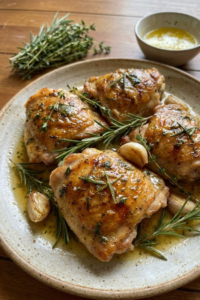
Have you ever bitten into a piece of chicken that was so dry it felt like eating cardboard? I know I have, and it’s tragic! But let me tell you, when I finally discovered the magic of using dark meat combined with a garden’s worth of greenery, my dinner game changed forever. Chicken thighs with fresh herbs aren’t just a meal; they are an experience. Did you know that chicken thighs naturally contain more myoglobin than breasts, which keeps them juicy even if you accidentally overcook them by a minute or two? It’s true! In this guide, we are going to banish boring poultry from your kitchen and embrace the aromatic explosion of fresh rosemary, thyme, and sage. Let’s get cooking!
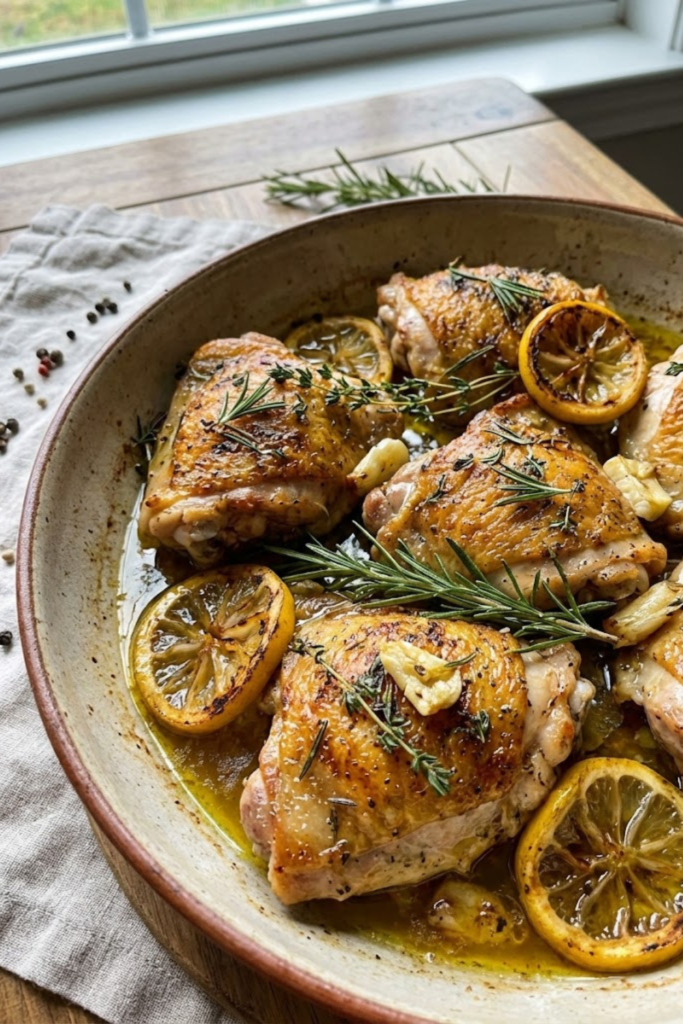
Why Chicken Thighs Are Superior to Chicken Breasts
I have to be honest with you—for the longest time, I was scared of dark meat. I grew up thinking that boneless, skinless chicken breasts were the only “healthy” option. Man, was I wrong. I can’t tell you how many dinners I ruined by serving up dry, chalky white meat that needed a gallon of gravy just to be swallowable. It was embarrassing! But then I switched to chicken thighs with fresh herbs, and everything changed.
The Flavor is in the Fat
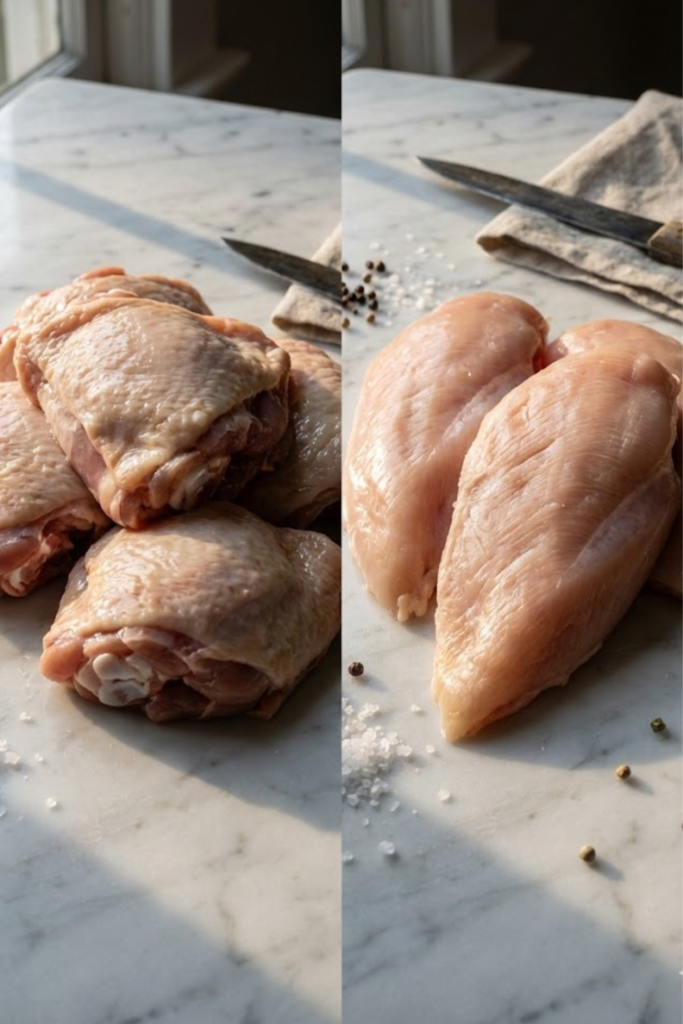
Let’s get real about why thighs taste better. It’s the fat content. Chicken breasts are lean, sure, but they are also unforgiving. Chicken thighs have just enough fat to keep the meat moist while it cooks.
When you cook them, that fat renders down and basically bastes the meat from the inside out. I remember the first time I roasted thighs; the difference was night and day. The meat was actually savory and rich, not bland like the breasts I was used to. You don’t even need to do much to them. A little salt, pepper, and some heat, and you have a winner.
You Can’t Mess Them Up
This is my favorite part. I am not a professional chef, and I get distracted. I’ve left chicken in the oven ten minutes too long because I was helping with homework or scrolling on my phone.
If you do that to a chicken breast, it’s game over. You’re eating shoe leather. But chicken thighs? They are incredibly forgiving. Because of that higher myoglobin and fat, they stay juicy even if you overshoot the internal temperature a bit. For a home cook, that safety net is priceless. It saves me from the stress of watching the clock like a hawk.
More Bang for Your Buck
Have you looked at grocery prices lately? It’s crazy. Chicken breasts can cost an arm and a leg, especially if you want the organic kind. Thighs are almost always cheaper.
I can feed my whole family for a fraction of the cost just by switching cuts. Plus, I think you actually get more nutrients with the dark meat, like iron and zinc. So, my wallet is happier, and my taste buds are definitely partying. Stop punishing yourself with dry white meat. Give the thighs a shot, and I promise you won’t look back.
Essential Fresh Herbs for the Perfect Marinade
I used to think that herbs were just for show. You know, like those little parsley sprigs they put on your plate at a diner that nobody actually eats. But then I started experimenting with chicken thighs with fresh herbs, and I realized I was missing out on a lot of flavor. My spice cabinet used to be full of dusty jars that were probably way past their expiration date. Once I tried the real deal from the produce section, I never looked back. It makes a huge difference in how the house smells while the chicken is roasting.
The Big Three You Need
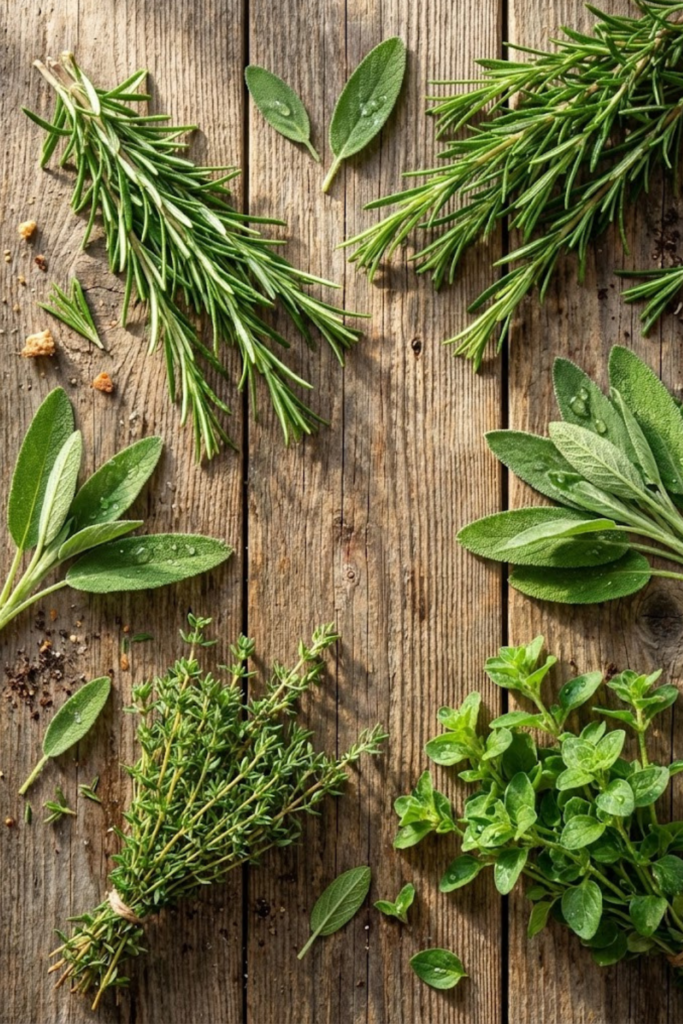
If you are just starting out, don’t get overwhelmed by all the options at the store. You really only need three main ones to make a killer chicken dish: rosemary, thyme, and sage. Rosemary looks like tiny pine needles and has a really strong, woodsy scent. It’s powerful, so don’t go overboard or your chicken might taste a bit like a Christmas tree! Thyme is much smaller and has a softer, earthy taste. It’s basically the best friend of any poultry dish. Then you have sage. Sage is a bit fuzzy to the touch and has a very savory flavor that pairs perfectly with the juice from the thighs.
Why You Should Skip the Dried Jars
I know, it is way easier to just shake a jar than it is to wash and chop fresh leaves. But the oils in fresh herbs are what give you that amazing taste. Dried herbs lose most of those oils during the drying process and while they sit on the grocery shelf. When you use fresh stuff, those oils release right into the chicken skin and the fat as it cooks. It gives you a bright, clean flavor that you just can’t get from a powder. Plus, fresh herbs stay green and look beautiful on the finished plate.
Preparing Your Greenery
You don’t need to be a pro with a knife to handle these. Just give them a good rinse under the faucet first. I like to dry mine really well with a paper towel. If they are soaking wet, the oil and salt won’t stick to the meat very well. To get the leaves off rosemary or thyme, just hold the top of the stem and pull your fingers down toward the bottom. The leaves will just pop right off. Give them a quick chop—nothing fancy—and they are ready to go. It’s simple, but it makes you feel like a real chef in your own kitchen.
Step-by-Step Preparation and Marinating Techniques
I used to think that marinating was just a fancy word for letting food sit in a bowl for a while. I didn’t realize there was actually a bit of a science to it if you want your chicken thighs with fresh herbs to taste like they came from a restaurant. When I first started cooking, I would just throw some bottled dressing on the chicken and hope for the best. It was okay, but it wasn’t great. Now, I have a little system that makes sure every bite is packed with flavor. It isn’t hard to do, but it makes a huge difference in the final result.
Picking Your Oil and Acid
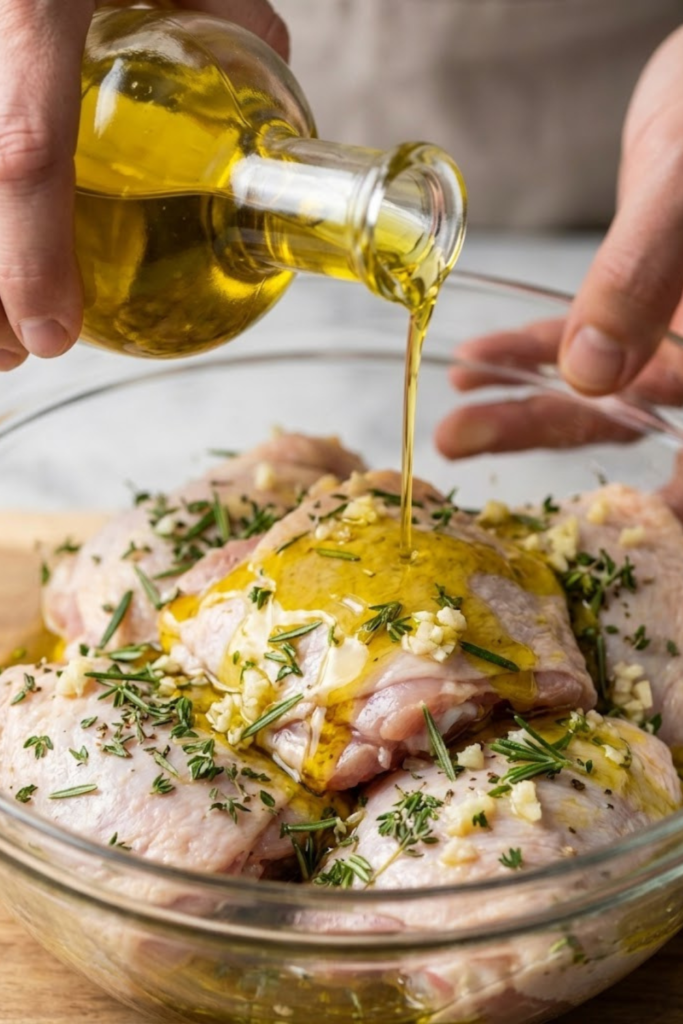
You need a good base for your marinade. I usually reach for extra virgin olive oil because it has a nice flavor that goes well with the herbs. If I am cooking at a really high heat, I might use avocado oil instead. The oil is what carries the herb flavors into the meat. But you can’t just use oil; you need some acid to break down the fibers and make the chicken tender. I love using fresh lemon juice or even a splash of balsamic vinegar. The zing from the lemon really cuts through the richness of the chicken fat. It’s a balance that you will get the hang of pretty quickly after a few tries.
Finding the Timing Sweet Spot
One mistake I made early on was leaving the chicken in a heavy acid marinade for too long. I thought leaving it overnight would make it better, but sometimes the lemon juice can start “cooking” the meat and make the texture feel mushy. For these thighs, I have found that thirty minutes to an hour is usually plenty of time to get that herbal flavor deep inside. If you are in a huge rush, even fifteen minutes is better than nothing! Just leave it on the counter for a bit so the meat isn’t ice-cold when it hits the pan.
The Secret Under the Skin
Here is a little trick I learned from a fellow teacher. Most people just rub the herbs on the outside of the skin. That’s fine, but the skin acts like a raincoat and keeps the flavor from reaching the meat. What I do now is gently lift the skin with my fingers and shove some of that herb and garlic mixture right underneath. I sometimes even mix the herbs with a little bit of softened butter first. This makes sure the meat gets flavored directly while the skin gets nice and crispy on top. It is a total game-changer for dinner night.
Mastering the Cook: Pan-Sear to Oven-Roast Method
I used to think that roasting chicken was as easy as putting it on a cookie sheet and waiting. I was wrong. My chicken always came out with soggy skin and meat that was either raw in the middle or dry as a bone. It took me a long time to figure out that the best way to make chicken thighs with fresh herbs is to use two different types of heat. It might sound like a lot of work, but I promise it’s the easiest way to get that crunch we all want without the stress.
Why You Need a Cast Iron Skillet
If you don’t have a cast iron skillet yet, you should really go get one. They are heavy and stay hot, which is exactly what you want for this recipe. I used to use thin non-stick pans, but they just don’t hold the heat well enough to brown the meat properly. A good heavy pan lets you get a beautiful sear on the stovetop before you slide the whole thing into the oven. It saves you from washing extra dishes, too, which is a big win in my book. I love that I can do everything in just one pan.
Get That Skin Crispy
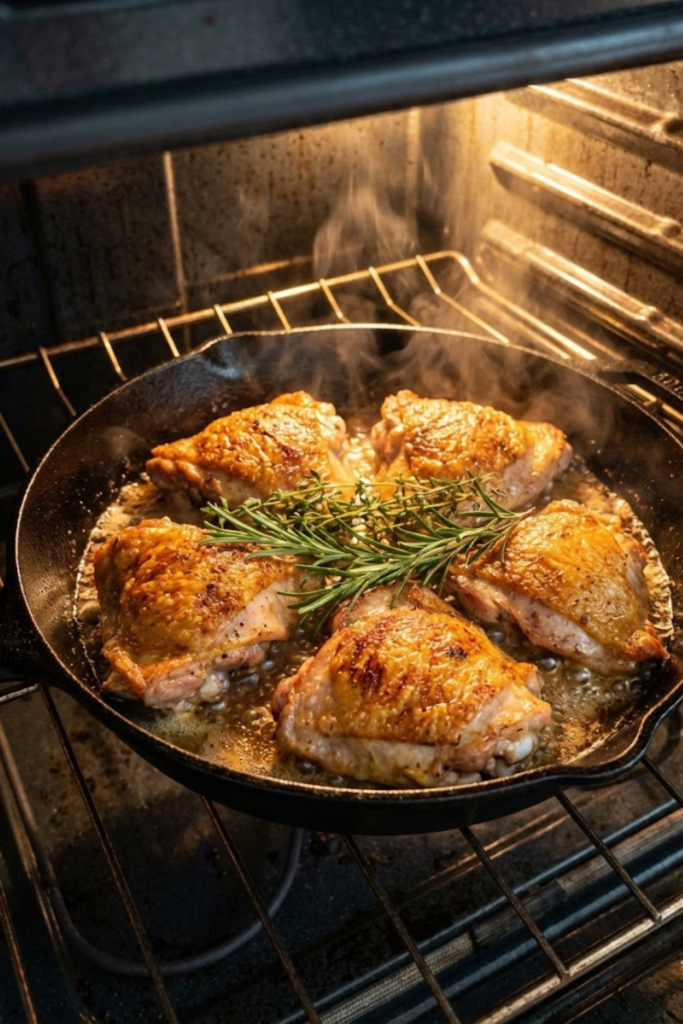
The biggest mistake I made for years was putting cold chicken into a super hot pan with a bunch of oil. Now, I start my thighs skin-side down in a pan that is just starting to get warm. This helps the fat melt away slowly—the pros call this rendering. If you rush it, the skin burns before the fat can go anywhere. You want that fat to turn into liquid gold. Let it sizzle for about five to eight minutes until it looks golden brown and doesn’t stick to the pan anymore. Don’t flip it too early! Patience is hard, especially when the kitchen smells like rosemary, but it is worth it.
Finishing in the Oven
Once the skin is crispy, flip the thighs over and put the whole skillet into a hot oven at 400 degrees. This cooks the meat evenly without burning the outside. I always use a meat thermometer now because guessing is how I ended up with dry dinners in the past. You want the thickest part of the thigh to hit 165 degrees. Once it hits that number, take it out and let it rest for five minutes. This lets the juices stay inside the meat instead of running out all over your plate. Trust me, this method makes the best chicken you’ve ever had.
Serving Suggestions and Side Dish Pairings
I finally reached the point where I don’t just cook for fuel; I cook because I love how a good meal brings everyone together. Serving chicken thighs with fresh herbs always feels special, like I’m putting a little bit of my heart on the plate. After all that work getting the skin crispy, you want the rest of the plate to look just as good. I’ve tried a lot of different sides over the years, and some work way better than others. It is funny how a simple side dish can totally change the vibe of the whole dinner.
Soak Up All That Flavor
You really need something on the plate to catch all the juices. I usually go with roasted potatoes. I just toss them in the same pan if there is room, or roast them on a separate sheet. They soak up that herb-infused oil and get all crispy on the edges. If I’m feeling a bit fancy, I’ll make a pot of creamy polenta or even some simple herb rice. The main goal is to have something that acts like a sponge for all that goodness coming off the chicken. My kids love it when the rice gets “chicken flavored” from the drippings. It’s their favorite part of the meal!
Balancing the Richness
Since thighs are a bit richer and fattier than breasts, I like to serve something bright and green on the side. My go-to is roasted asparagus with a little bit of lemon zest. The acidity really helps cut through the fat of the chicken. A simple salad with a sharp vinaigrette works wonders too. I used to think salads were boring, but when you have a savory, herbal piece of chicken, a cold and crunchy salad is actually the perfect partner. It keeps the meal from feeling too heavy, especially when the weather is warm outside.
Don’t Waste the Pan Drippings
While the chicken is resting on the counter, I sometimes make a quick sauce right in the skillet. I just add a splash of chicken broth or even some white wine to the hot pan and scrape up all those little brown bits. That stuff is pure gold! I let it simmer for a minute until it thickens up a bit, then pour it right over the meat. It really brings the whole dish together. For a drink, I usually stick with a cold glass of Chardonnay or even a light Pinot Noir if I want red. It doesn’t have to be expensive to be a great dinner. Just keep it simple and enjoy the company.
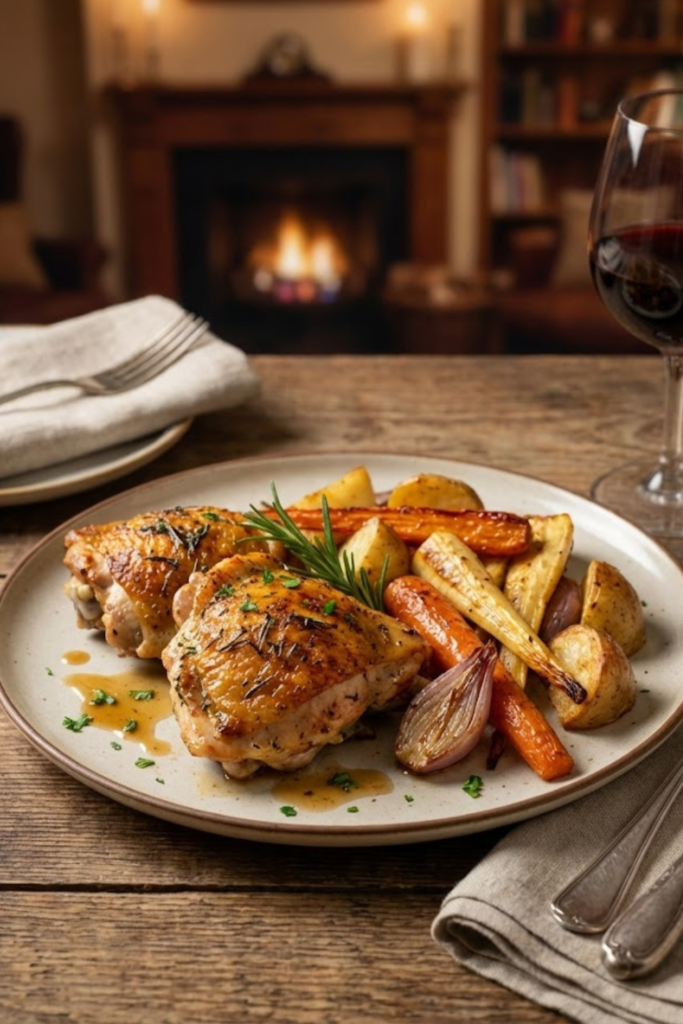
There you have it—the blueprint for the best chicken thighs with fresh herbs you’ll ever taste! By choosing the right cut of meat, respecting the fresh ingredients, and mastering the sear-roast method, you are guaranteeing a dinner that screams comfort and sophistication. Don’t let those fresh herbs go to waste in your fridge ever again. Now, grab that skillet and get cooking!
Call to Action: Did this recipe make you hungry? Pin it to your “Weeknight Dinners” board on Pinterest so you never lose it!