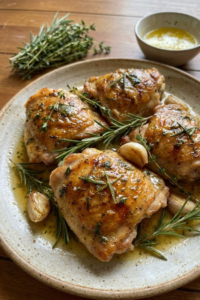
I’ll never forget the first time I tried to make fancy poultry for my family, thinking I was a pro, but it ended up dry as a bone and totally disappointing. That disaster actually led me to perfect this recipe for chicken thighs with garlic thyme butter, which has since become my absolute go-to for busy weeknights when I want something that tastes rich but is actually super easy to pull off. There is just something magical about how the savory thyme and punchy garlic melt into the hot butter and coat the meat, keeping it incredibly juicy while that skin gets perfectly crisp in the pan. It’s honestly the kind of meal that makes everyone quiet down at the table because they are too busy eating, and for someone who deals with loud classrooms all day, that peaceful silence is pure gold.
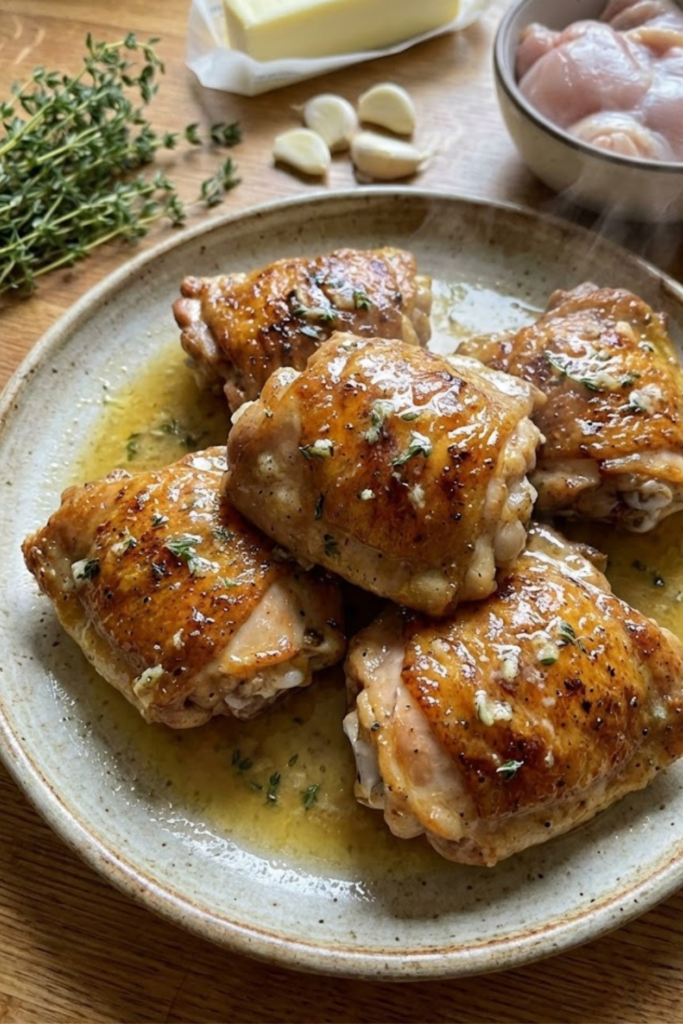
Why This Flavor Combination Works Magic
You know, I used to think that cooking was some kind of big mystery, like trying to solve a hard algebra problem without the formula. But honestly, it’s mostly just about finding ingredients that like each other. And let me tell you, garlic, thyme, and butter? They are basically best friends.
I remember when I first started cooking for myself, I would just sprinkle some dried herbs on a chicken breast and wonder why it tasted like cardboard. It was gross. I learned the hard way that you need fat—in this case, that rich, golden butter—to actually carry the flavor of the herbs into the meat. It’s kind of like a science experiment; the fat grabs onto the earthy taste of the thyme and the punchy garlic and soaks it right into the chicken.
Plus, we are using thighs here, not breasts. Thighs have a bit more fat on them naturally, which keeps them juicy while the skin gets crispy in the pan. When you mix that rendering chicken fat with the garlic butter, you get a sauce that is so good you’ll want to drink it (but please don’t, that would be weird). It’s a simple combination, but it works every single time because the earthy herbs cut through the richness of the butter perfectly. It just makes sense.
Essential Ingredients for Garlic Thyme Chicken
You don’t need a massive shopping list for this one, which is why I love it on school nights when I’m exhausted. But, you do need to get the right specific items if you want it to taste like the pictures. I’ve tried swapping things out before to save a trip to the store, and it just wasn’t the same.
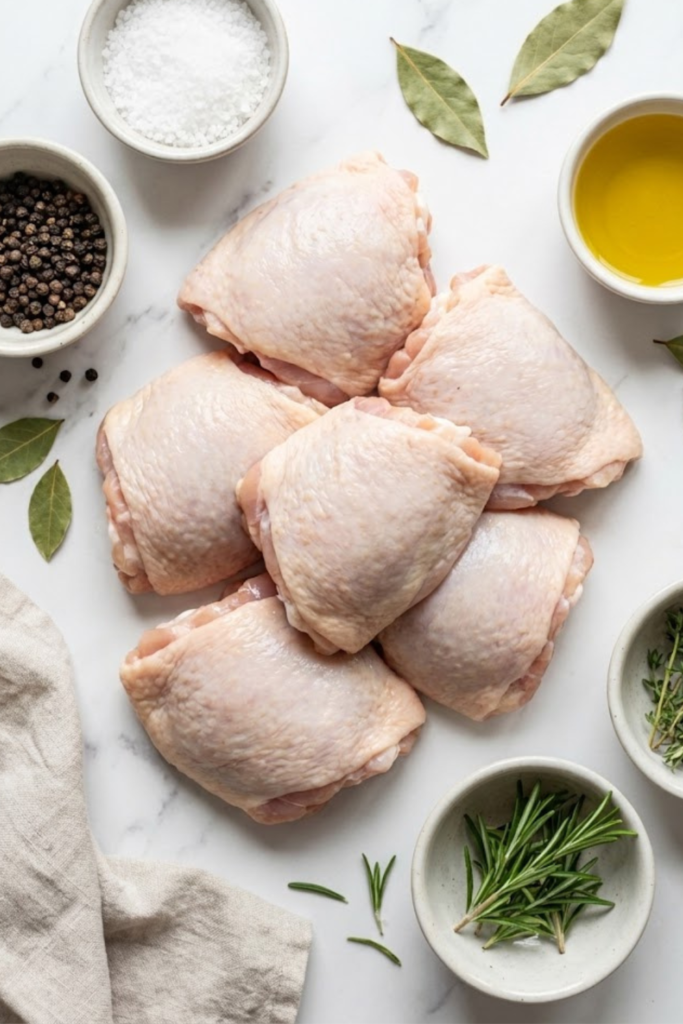
First off, let’s talk about the chicken. Please, do yourself a favor and buy bone-in, skin-on chicken thighs. I know boneless skinless breasts are popular because they are “easy,” but they dry out so fast. The skin is essential here because when it fries up in the butter, it gets this crunch that is honestly the best part. Plus, keeping the bone in helps the meat stay moist while it cooks.
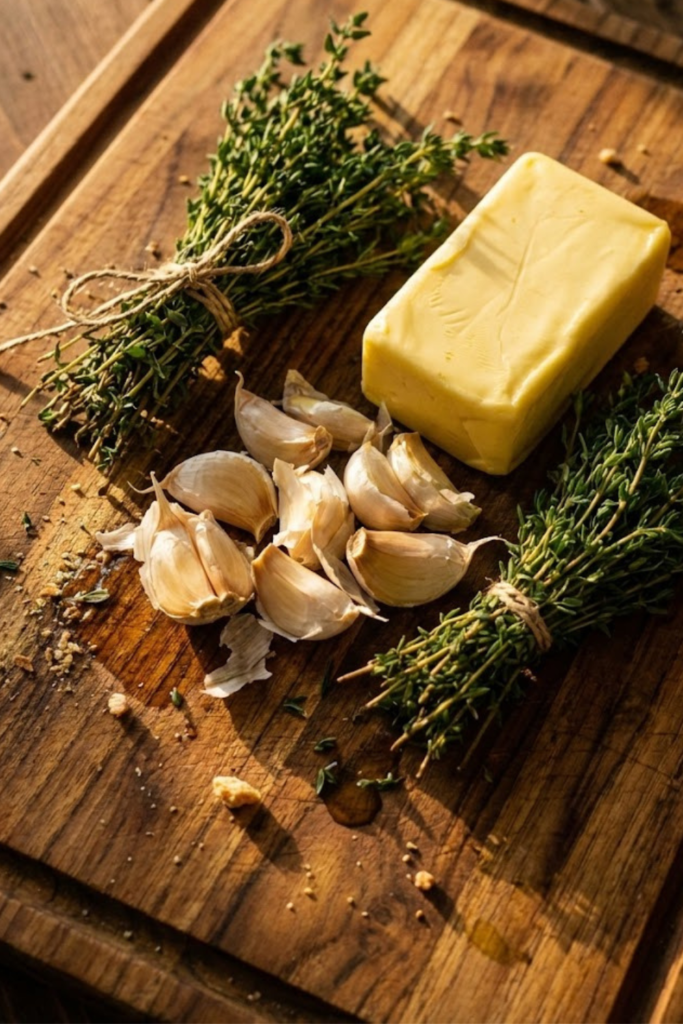
Then there is the thyme. You really need fresh thyme sprigs for this. I tried using the dried stuff from the jar once because I didn’t have fresh, and it just looked like little specks of dirt on the chicken and didn’t have that bright, lemony smell. Just grab a small bundle from the produce section.
For the fat, I use a mix. You need a little olive oil to get the searing started without burning, but the star is the butter. Salted or unsalted works, but if you use salted, just go easy on the seasoning later. And finally, fresh garlic. Don’t use the jarred minced stuff; it burns too fast. You want whole cloves that you just smash a little bit with the side of your knife. It makes a huge difference.
Step-by-Step Cooking Instructions
Alright, time to turn on the stove. This part used to scare me a little because of the hot oil popping everywhere, but I learned a few tricks to keep it safe and easy.
The very first thing you have to do is dry the chicken. And I mean really dry it. Grab a handful of paper towels and pat those thighs down until there is no moisture left on the skin. If the chicken is wet, it will just steam in the pan and you won’t get that nice crunch we are looking for. I learned that the hard way when I tried to rush dinner last Thanksgiving.
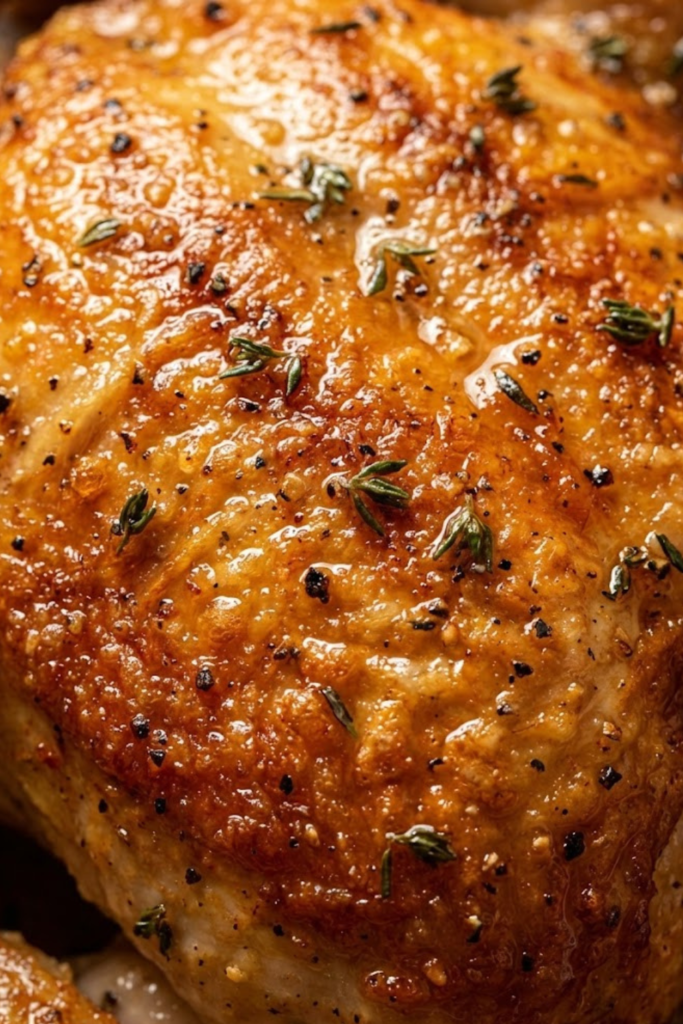
Now, here is a trick that changed my life: start with a cold pan. I know, it sounds wrong, but place your chicken thighs skin-side down in your skillet before you even turn the heat on. Then, turn the heat to medium-high. This lets the fat under the skin melt slowly (fancy cooks call this rendering) so the skin gets super thin and crispy instead of chewy.
Let it cook for about 10 minutes without touching it. Seriously, don’t touch it! If you try to lift it and it sticks to the pan, it’s not ready. It will release on its own when it’s perfectly golden.
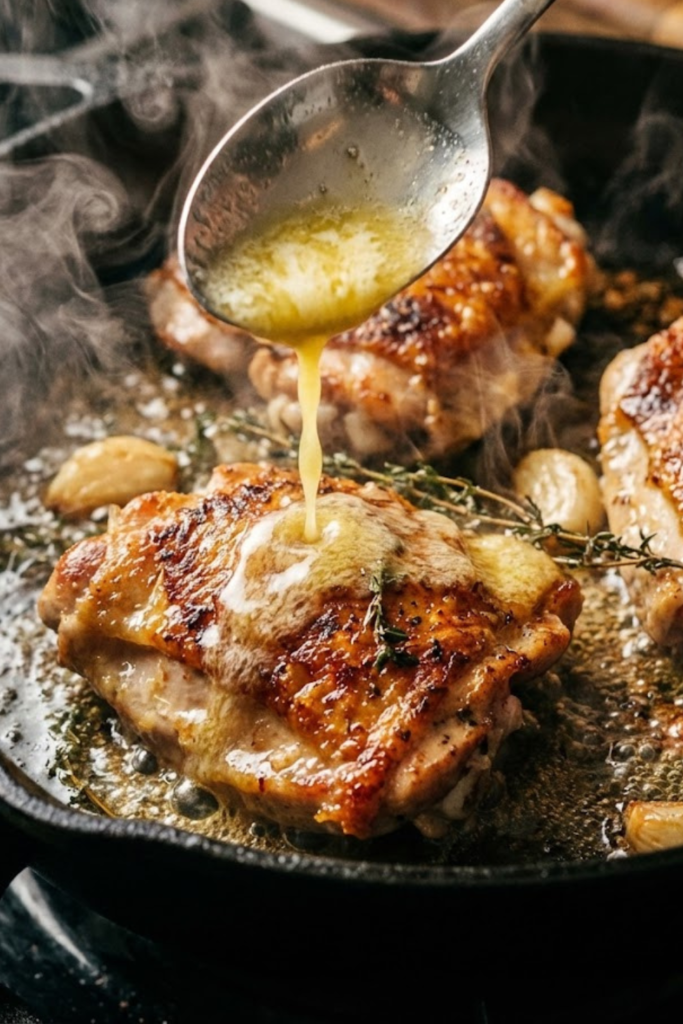
Once you flip the chicken, that’s when you add your butter, smashed garlic, and thyme sprigs. The butter will melt and start to foam up. Take a big spoon, tilt the pan a little, and scoop that hot, garlicky butter over the chicken again and again. This keeps the meat moist and cooks it from the top while the bottom sears. It smells amazing, like a bakery and a roast dinner had a baby. Cook it for another 5 or 6 minutes until it’s done, then take it off the heat.
Tips for Achieving the Crispiest Skin
Okay, if you are like me, the skin is the best part. It’s basically a built-in potato chip. But there is nothing worse than biting into it and it’s all soggy and rubbery. Yuck. I have ruined plenty of batches before I figured out the tricks, so let me save you the trouble.
The biggest mistake I used to make was overcrowding the pan. I would try to jam five or six thighs into my skillet because I didn’t want to wash a second pan (I really hate doing dishes). But when you pack them in too tight, the moisture gets trapped between the pieces. Instead of frying, the chicken steams, and the skin turns gray and soft. Give them some personal space! If you have to cook in two batches, just do it. It takes longer, but the crunch is worth it.
Another thing: keep the lid off. I know the grease splatters everywhere and it makes a mess of the stove. I used to put a lid on to keep the kitchen clean, but the lid traps all the steam inside. That moisture settles right back onto the chicken and ruins all the hard work you did to get it crispy. I’d rather spend five minutes wiping down the stove than eat soggy chicken.
Finally, if you find the skin is browning too fast before the meat is cooked through, you can pop the whole skillet into the oven at 400°F for a few minutes. This finishes cooking the inside without burning the outside. It’s a game changer.
Serving Suggestions and Side Dishes
You definitely can’t serve this chicken by itself. The sauce is basically liquid gold, and it would be a crime to leave it sitting at the bottom of the pan. You need something to soak it all up.
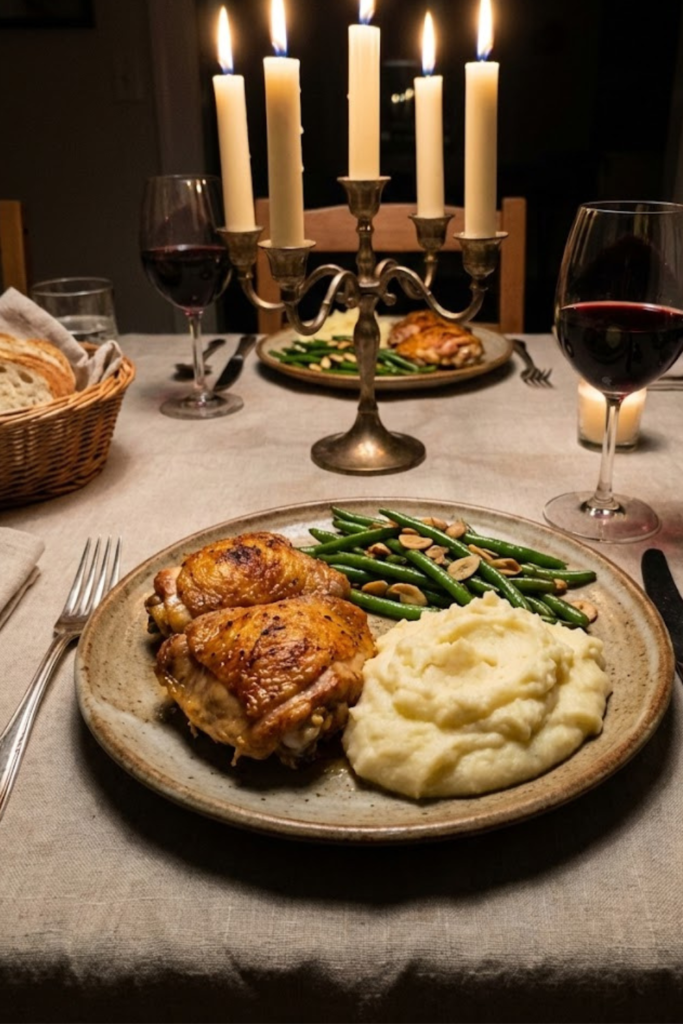
My family’s absolute favorite thing to have with this is mashed potatoes. I’m talking about the creamy kind with plenty of milk. When you pour that extra garlic thyme butter over a mound of potatoes, it is heaven. If I’m feeling lazy and don’t want to peel potatoes (which is most nights, let’s be honest), I’ll just grab a loaf of crusty bread from the store to dip in the sauce. It gets the job done and everyone is happy.
Since the chicken and butter are pretty rich, I like to balance it out with something green. Roasted asparagus or green beans work perfectly because you can cook them in the oven while the chicken is finishing on the stove. I usually just toss them with a little oil and salt. You don’t need to get fancy with the veggies because the chicken has so much flavor already.
And if you have leftovers? You are lucky. This chicken makes a great lunch the next day. I slice it up cold and put it on top of a salad, or I reheat it in the toaster oven so the skin gets crisp again. Just don’t microwave it if you can help it; the skin gets soggy and sad, and nobody wants that.
Well, there you have it. Making restaurant-quality chicken at home isn’t actually that hard, even if it sounds fancy. I honestly used to think that “garlic thyme butter” was something you only got at those expensive places with white tablecloths, but now I make it in my pajamas on Tuesday nights.
It really just comes down to being patient with the skin and not being afraid of a little bit of butter. The flavor you get from mixing those fresh herbs with the rendering fat is just unbeatable. It has saved my dinner routine more times than I can count, especially when I’m tired and just want something that tastes like a hug.
If this recipe made your mouth water, or if you try it and your family actually eats it without complaining (the ultimate win!), please do me a favor. Pin this recipe to your “Weeknight Dinners” board on Pinterest. It helps you find it later when you’re standing in the grocery store wondering what to buy, and it helps me out too! Happy cooking!