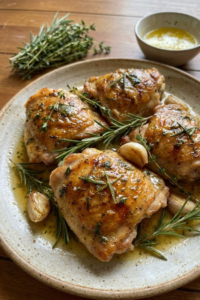
Let’s be real for a second—there is nothing sadder than dry chicken. I’ve been there, staring at a plate of pale, flavorless poultry, wondering where I went wrong. But this recipe? It’s the antidote! Chicken thighs with herb butter are the absolute champions of weeknight dinners because they are forgiving, affordable, and packed with flavor.
Did you know that dark meat chicken contains higher levels of zinc and iron compared to white meat? It’s true! We are going to dive deep into creating a meal that feels fancy but takes minimal effort. I’m talking about golden, crispy skin and meat that practically falls off the bone. Grab your apron, because we are about to make your kitchen smell amazing!
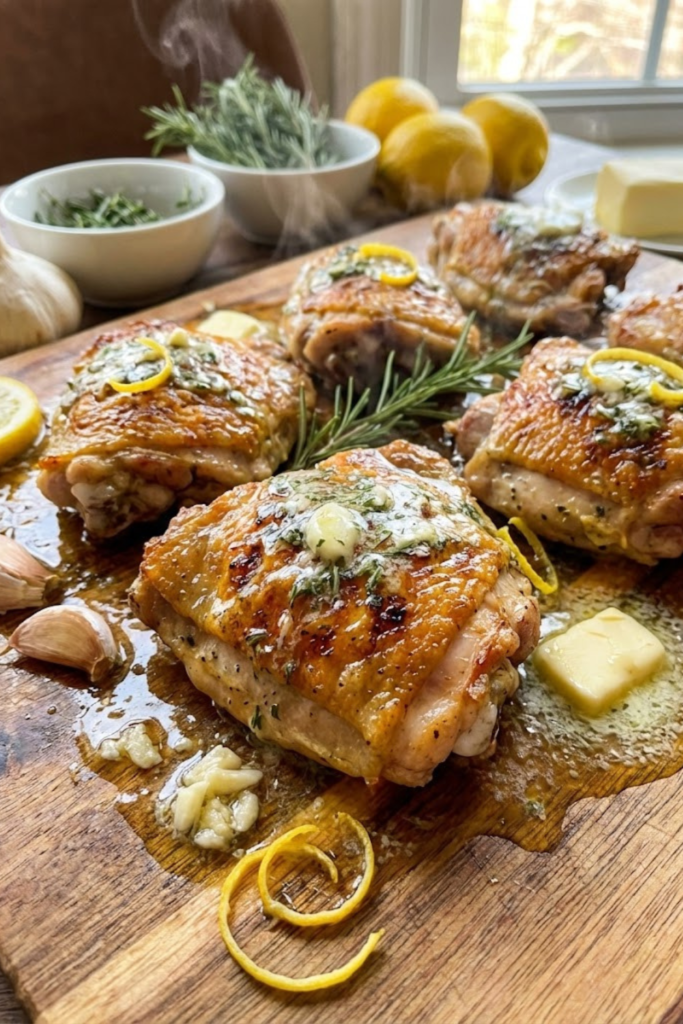
Why Bone-In Skin-On Chicken Thighs Are the Juiciest Cut
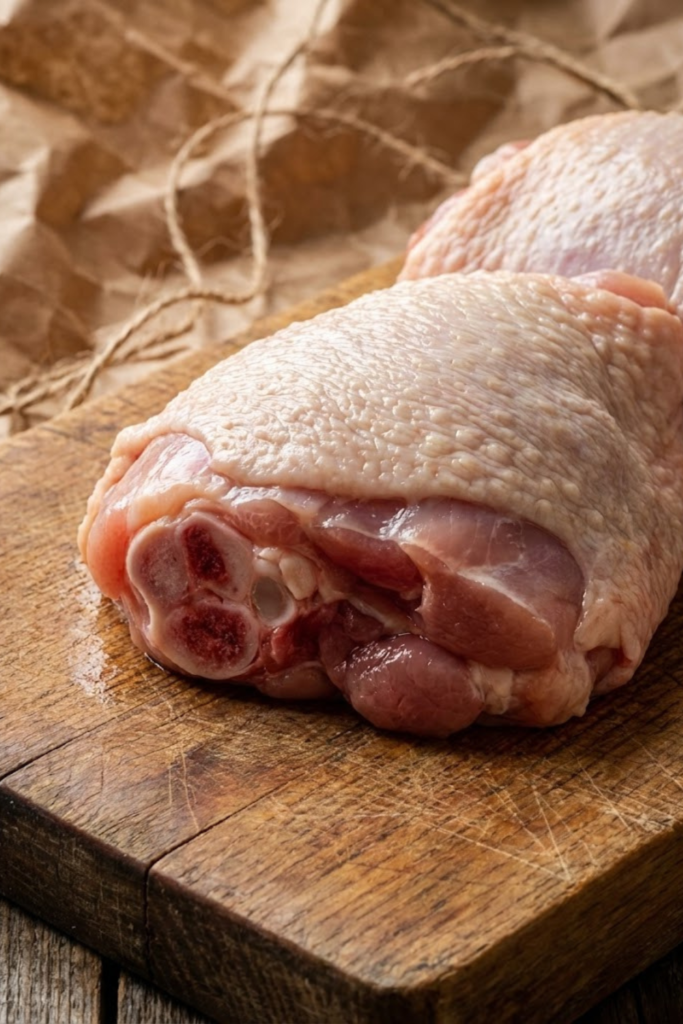
I used to be that person who walked right past the dark meat section in the grocery store. I was strictly a “boneless, skinless breast” cook for the longest time. And honestly? I spent years eating dry, rubbery dinners and wondering why my cooking didn’t taste like the stuff at restaurants. It wasn’t until I accidentally grabbed a pack of bone-in skin-on chicken thighs one hectic Tuesday that everything clicked.
I threw them in the pan, totally guessing on the time, and they came out incredible. I felt like a genius, but really, it was just the cut of meat doing the heavy lifting.
The Bone is Nature’s Insulator
Here is the thing I learned the hard way: bones are actually your best friend in the kitchen. When you are making chicken thighs with herb butter, that bone acts like a little insulator. It protects the meat from cooking too fast.
I remember once I got distracted by a phone call while cooking dinner. I left the pan on high heat way longer than I should have. If those were chicken breasts, they would have been like shoe leather. But because the bone was there, the meat inside was still tender. It heats up slower than the meat, which helps the chicken cook more evenly from the inside out.
Fat Equals Flavor (and Forgiveness)
Let’s talk about the fat for a second. I know we’re often told to trim every bit of white off the meat, but with thighs, you want to keep some of that.
- Self-Basting: As the chicken cooks, that fat under the skin renders down. It literally bastes the meat for you, keeping it moist without you having to do anything.
- The Crunch Factor: You can’t get crispy skin without a little fat to fry it in. That crunch is the best part!
Dark meat also has more connective tissue than white meat. When you cook it, that tissue breaks down into gelatin, which makes the meat feel silky and juicy in your mouth. You just don’t get that texture with other cuts.
It’s Almost Impossible to Overcook
This is my favorite part because I am definitely not a perfect cook. Chicken breasts dry out the second they hit 165°F. It’s stressful! But chicken thighs are way more forgiving.
They actually taste better if you cook them to about 175°F or even 180°F. The meat gets more tender the longer it cooks, to a certain point. So if you forget to check the oven for an extra ten minutes because you’re helping with homework or watching TV, dinner isn’t ruined. It’s actually probably better. That safety net is why I switched to thighs and never looked back.
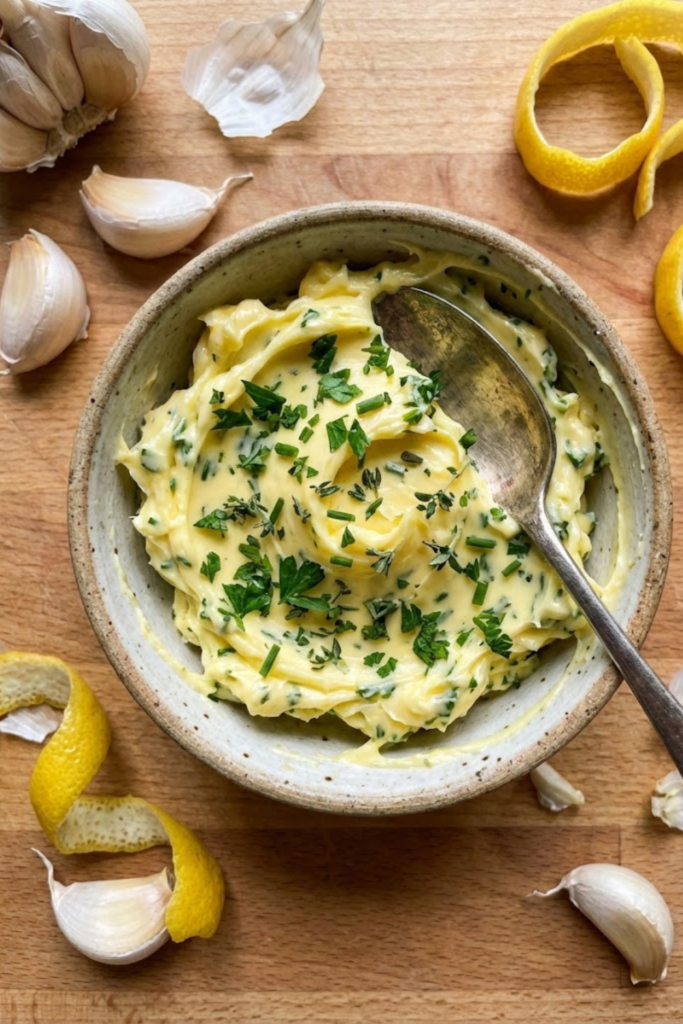
Mastering the Homemade Garlic Herb Butter Compound
I used to think that butter was just butter. I would grab whatever was on sale, usually the salted kind, and call it a day. But when I started making chicken thighs with herb butter regularly, I realized that the butter isn’t just an ingredient—it is the whole personality of the dish.
If you have ever bitten into a piece of chicken that tasted great on the outside but boring on the inside, it was probably missing a good compound butter. This mixture melts down into the nooks and crannies of the chicken, flavoring it from the outside in. It sounds fancy, but honestly, it takes about five minutes to throw together.
Why I Always Buy Unsalted Butter
Here is a lesson I learned the hard way: not all salted butters are created equal. One brand might be perfectly fine, while another is like a salt lick.
When I cook, I like to be the boss of the salt shaker. By using unsalted butter for this recipe, I control exactly how much sodium goes into the meal. If I use salted butter and then add salt to the chicken skin, it is usually too much. I prefer to add a pinch of good kosher salt to my butter mixture myself. It guarantees that the final dish tastes seasoned, not salty.
Fresh Herbs vs. The Stuff in the Jar
I am a busy person, so I am not against using dried herbs when I am in a rush. However, for this recipe, fresh herbs really do make a huge difference.
- Rosemary: It has a piney, woodsy smell that pairs perfectly with chicken fat.
- Thyme: This adds a subtle, earthy lemon note.
- Parsley: I use this mostly for color and a fresh, grassy finish.
If you absolutely have to use dried herbs, just remember they are stronger than fresh ones. A good rule of thumb I tell my friends is to use one-third of the amount if you are swapping fresh for dried. So if the recipe calls for a tablespoon of fresh rosemary, just use a teaspoon of dried.
The Secret Ingredient: Lemon Zest
This is the trick that changed my cooking game. Butter and chicken fat are heavy. They are delicious, but they are rich. Adding the zest of one lemon cuts right through that heaviness.
It doesn’t make the chicken taste like lemonade, I promise. It just adds a little “zing” that wakes up your taste buds. It brightens up the whole dish. Without it, the herb butter can feel a little one-note. Just be careful not to scrape the white pith underneath the yellow skin, because that part is bitter.
Mixing It All Together
The biggest mistake people make here is trying to mix herbs into cold butter. It just doesn’t work. The herbs won’t spread evenly, and you end up with clumps.
I always leave my butter out on the counter for a few hours before I start cooking. If I forget (which happens a lot), I put it in the microwave for literally five seconds—no more, or it melts completely. You want it soft enough to smash with a fork. I dump the minced garlic, chopped herbs, lemon zest, and a pinch of salt into a small bowl and mash it all into the butter until it looks like a green-speckled paste. It smells so good you will want to spread it on toast!
Achieving the Perfect Crispy Skin in a Cast Iron Skillet
I used to be intimidated by my cast iron skillet. It weighs a ton, and I was always worried I would ruin the “seasoning” everyone talks about. But once I tried cooking chicken thighs in one, I realized why people are so obsessed. You just cannot get that same golden-brown crunch with a non-stick pan. It simply doesn’t happen.
If you are chasing that restaurant-style skin that snaps when you bite into it, you need heavy metal holding the heat.
Dry It Like You Mean It
This is the step I used to skip because I was lazy. Do not skip this! If you take the chicken out of the package and throw it right into the pan, it is covered in moisture. Water creates steam. Steam makes the skin soggy and gray.
I grab a handful of paper towels and pat each thigh down until it is completely dry. I mean bone-dry. Then I season it. The salt sticks better, and when it hits the hot oil, it sizzles instead of splatters. It makes a mess of the paper towels, but it is worth it for the final result.
The Patience Test
Here is where I usually mess up: I want to move the chicken. I want to peek underneath to see if it’s burning. Don’t do it!
I get my skillet hot over medium-high heat with a little oil. When I lay the chicken in, skin-side down, I press it flat for a second so all the skin touches the pan. Then I walk away. Seriously. If you try to flip it too early, the skin will stick to the pan and tear off. That is a tragedy. When it is ready, usually after about 6 to 8 minutes, it will release from the pan on its own. It should look like deep-fried gold.
Basting with Liquid Gold
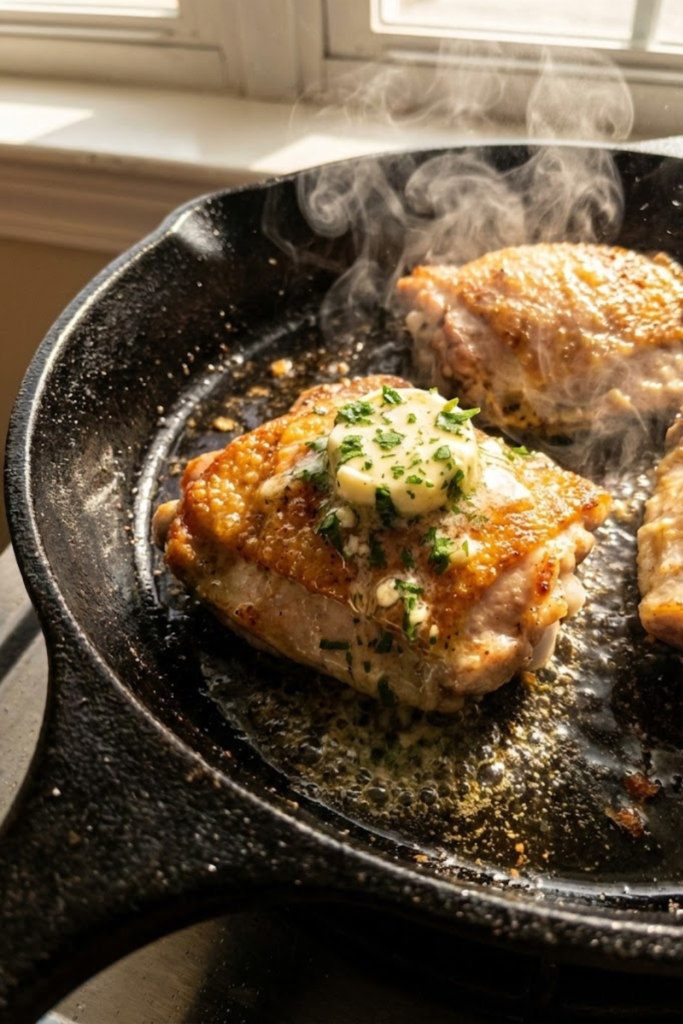
Once I flip the chicken, the real magic happens. I drop that herb butter we made earlier right into the pan. It melts instantly and foams up.
I tilt the pan slightly (please use an oven mitt, the handle gets extremely hot!) and use a big spoon to scoop that hot, foaming butter and pour it over the chicken. Chefs call this “arroser,” which is just a fancy word for basting. It keeps the meat juicy and cooks the top slightly while the bottom finishes searing.
Finish It in the Oven
Because chicken thighs have the bone in them, they take a while to cook all the way through. If you try to do it all on the stove, you will probably burn the skin before the middle is safe to eat.
I transfer the whole skillet into a 400°F oven for about 10 to 15 minutes. This makes sure the meat is cooked near the bone without turning the skin into charcoal. It’s the perfect one-two punch for dinner.
Essential Side Dishes to Pair with Buttered Chicken
I have definitely been guilty of spending all my energy on the main dish and completely forgetting about the sides until the chicken is already coming out of the oven. We have all been there, right? You end up heating up a can of corn or throwing some plain bread on the table. But honestly, chicken thighs with herb butter deserve a little better than that.
Because this recipe is so rich—I mean, we are talking about butter and chicken fat here—you need sides that can either soak up all that goodness or cut through the heaviness so you don’t feel sluggish afterwards. It is all about balance.
You Need Something to Soak Up the Sauce
The absolute best part of this meal is the sauce left in the bottom of the skillet. It is liquid gold. If you serve this chicken with something that can’t absorb liquid, you are basically wasting flavor. That is why I almost always make mashed potatoes.
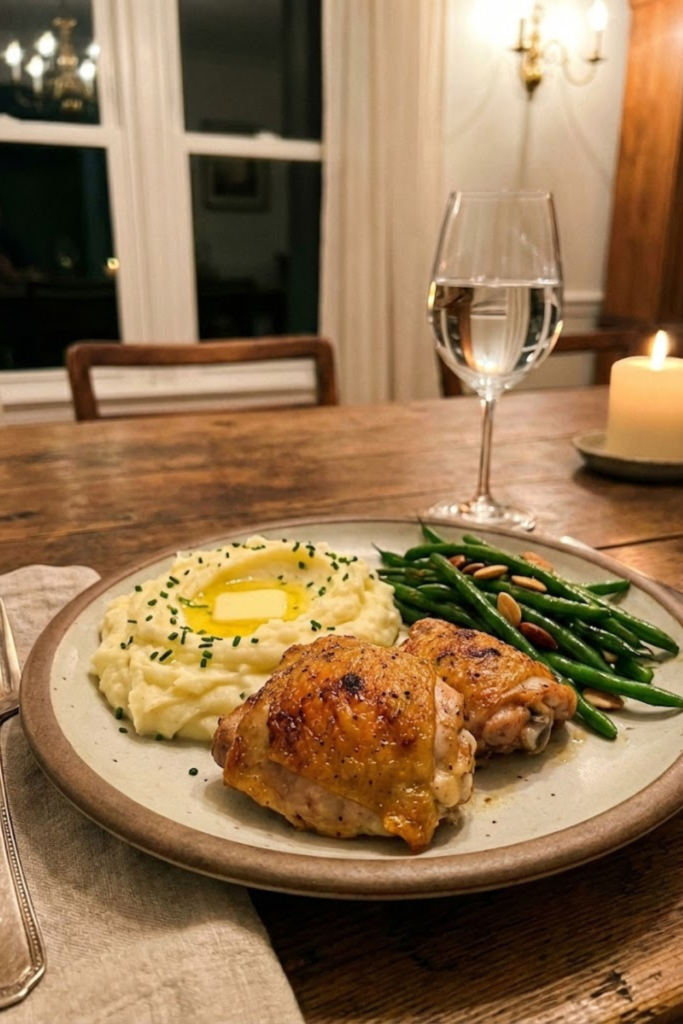
I don’t do anything fancy. I just boil some Yukon Gold potatoes, mash them with a little milk and butter, and pile them high on the plate. When you pour that extra garlic herb butter over the potatoes? Oh my goodness. It is comfort food heaven.
If you aren’t a potato person, roasted root vegetables work really well too. Carrots or parsnips roasted in the oven (you can even throw them on a separate rack while the chicken finishes) get sweet and tender. They act like a sponge for the sauce, and the sweetness pairs really nicely with the savory garlic.
Adding Some Green to the Plate
Since the chicken and potatoes are heavy, I always try to add something green and bright. If the whole plate is brown and yellow, it just looks kind of sad. Plus, you need some acid or crunch to wake up your palate.
My go-to is usually green beans. I steam them quickly so they are still crunchy, then toss them with a tiny bit of lemon juice and salt. That lemon echoes the zest we put in the butter. A simple arugula salad with a sharp vinaigrette is also perfect. The peppery taste of the greens cuts right through the fat of the chicken skin. It makes you feel a little better about eating all that butter, too.
What to Drink with It
Now, I am definitely not a wine expert. I usually just buy whatever bottle is on sale or has a pretty label. But I have learned that with a buttery dish like this, you want a white wine that tastes crisp.
A Chardonnay is the classic choice because it usually has a buttery flavor that matches the dish, but sometimes that is too much butter for me. I prefer a Pinot Grigio or a Sauvignon Blanc. They are lighter and more refreshing. If you prefer red wine, a Pinot Noir is light enough that it won’t overpower the chicken. And hey, if you are just drinking iced tea or water, that works too! The most important thing is that you enjoy your meal.
Well, we made it to the end! If you had told me five years ago that I would be preaching the gospel of chicken thighs with herb butter to anyone who would listen, I would have laughed. I was so stuck in my chicken breast rut. But honestly, making the switch to bone-in, skin-on thighs was the best decision I ever made for my weeknight dinner rotation.
I really hope you give this recipe a shot. It is one of those meals that looks impressive—like you spent all day slaving over a hot stove—but in reality, you just let the cast iron and the oven do the work for you.
To recap, just remember the big three rules we talked about:
- Don’t fear the bone: It keeps your meat juicy and safe from drying out, even if you leave it in the oven a few minutes too long.
- Dry that skin: If you want that crunch, you have to pat the chicken dry with paper towels. Water is the enemy of crispy skin.
- The butter is boss: Whether you use fresh rosemary or just whatever is in your spice cabinet, mixing it with butter and lemon zest is what takes this from “okay” to “amazing.”
It feels good to put a meal on the table that costs way less than a steak dinner but tastes just as satisfying. My family clears their plates every single time I make this, and I bet yours will too. Cooking doesn’t have to be perfect to be delicious. It just needs good ingredients and a little bit of love (and butter, definitely butter).
If you found this helpful, please do me a huge favor and pin this recipe to your “Weeknight Dinners” or “Chicken Recipes” board on Pinterest! It helps other home cooks find it, and it saves you from frantically searching for it next Tuesday when you are hungry and don’t know what to make.
Happy cooking!