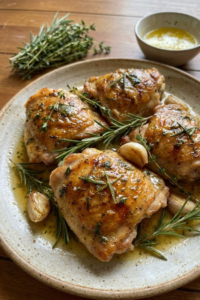
Can I make a confession? I used to think chicken thighs were just the “greasy” alternative to breasts! Boy, was I wrong. Did you know that chicken thighs actually contain significantly more iron and zinc than white meat? That’s a huge win for flavor and nutrition! In this post, I’m sharing my absolute favorite way to cook chicken thighs with parsley. It’s savory, it’s fresh, and honestly? It’s a total game-changer for your weeknight rotation. Whether you are a pro chef or just trying to survive the Tuesday dinner rush, you need this dish. Let’s dive right into this herbaceous goodness!
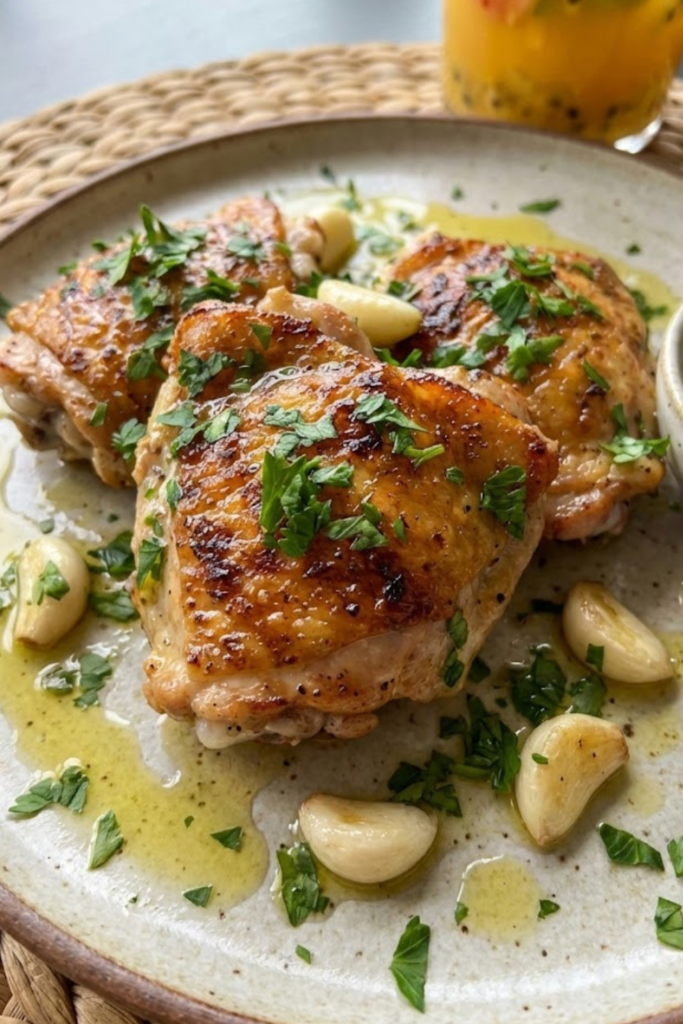
Choosing the Best Chicken Thighs for Flavor
I have to be honest with you—for years, I was terrified of dark meat. I grew up thinking boneless, skinless chicken breasts were the holy grail of health, but man, was I missing out. I remember the first time I tried to make chicken thighs with parsley for a dinner party; I bought the wrong kind of meat, and it turned into a rubbery disaster. It was embarrassing! But I learned my lesson. Now, I’m gonna save you from that same mistake because picking the right cut is literally 90% of the battle here.
Why Bone-In is the Real MVP
You might be tempted to grab the boneless packs because they look easier to cut. Don’t do it. Bone-in thighs are superior for this recipe, hands down. The bone acts like a little heat shield, keeping the meat closest to it from overcooking while the rest gets tender.
When you cook chicken thighs with parsley, you want that slow rendering of fat. Bones help the meat hold onto moisture. In my experience, bone-in thighs stay juicy even if you accidentally leave them in the oven 5 minutes too long (we’ve all been there). Plus, they are usually cheaper! I often find bone-in thighs for about $1.50 less per pound than the boneless stuff. That’s a win for your wallet and your taste buds.
The Skin is Your Flavor Trap
If you buy skinless thighs for this, you are throwing away the best part. Seriously, the skin is what protects the meat from the high heat of the sear. Without it, the parsley herb rub just scorches directly onto the flesh, creating a bitter taste instead of that garlicky goodness we want.
I used to peel the skin off before cooking to “save calories,” and the meat always came out dry as a bone. Now, I leave it on. The fat renders out and bastes the meat naturally. It makes the chicken thighs with parsley taste like they came from a restaurant kitchen. You can always remove the skin after cooking if you really want to, but you need it there during the process.
Spotting Freshness at the Store
I’ve had moments where I just grabbed the first package I saw, only to get home and realize it smelled… funky. Gross, right? When you are at the store, look for meat that is pinkish-rosy, not gray or dull.
The fat should be white or creamy, not yellow. And give the package a sniff if you can—it shouldn’t smell like anything. If it smells sour, put it back. You want fresh, clean poultry to really let those herbs shine. Trust me, starting with quality meat makes the whole “chef” experience way less stressful.
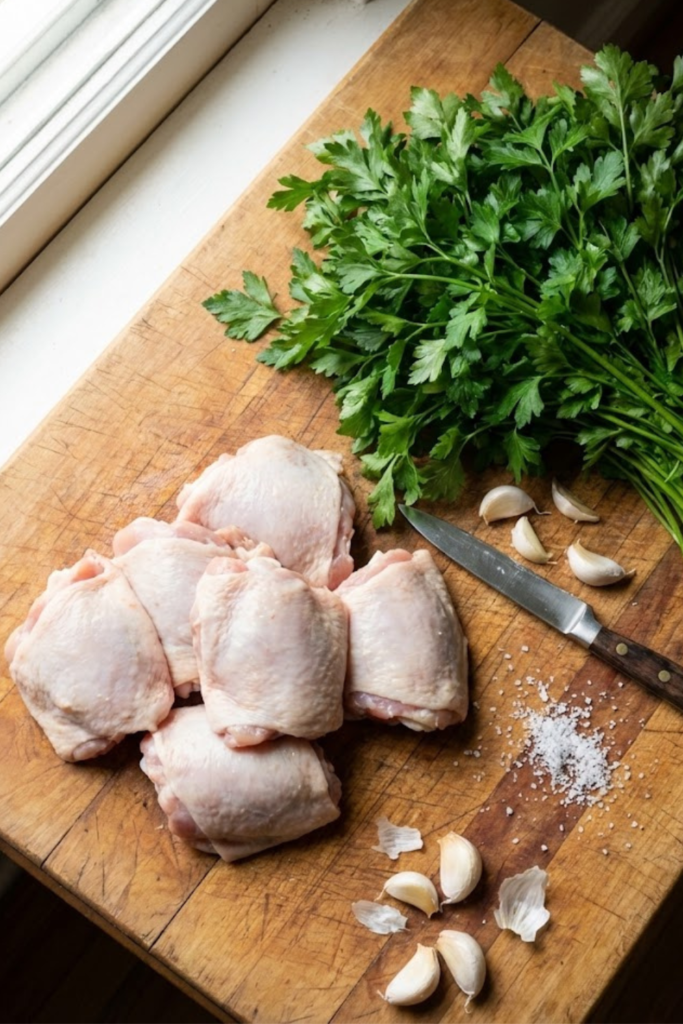
Essential Ingredients for Your Parsley Herb Rub
I used to think seasoning just meant shaking some salt and pepper and calling it a day. But for this dish, the rub is everything. It’s what makes the difference between “meh” chicken and “can I have seconds?” chicken. You don’t need a fancy pantry, just a few basics that pack a punch.
Fresh vs. Dried Parsley: The Big Debate
Okay, look. I have a cabinet full of dried herbs from who knows when. We all do. But please, for the love of food, do not use dried parsley here. I tried it once when I was rushing, and it tasted like… well, nothing. It was basically green dust.
You need fresh flat-leaf parsley (some people call it Italian parsley). Curly parsley is okay for a garnish, but the flat stuff has that deep, grassy flavor that really soaks into the meat. It’s cheap, it’s bright, and it makes the kitchen smell amazing when you chop it. Trust me, the extra dollar at the produce section is worth it.
The Garlic Connection
I am a garlic girl. I put it in everything. For this rub, you really want fresh cloves. I know the jar of pre-minced garlic in the fridge is easier. I’ve bought it plenty of times. But it has this weird, sour taste that can mess up the freshness of the parsley.
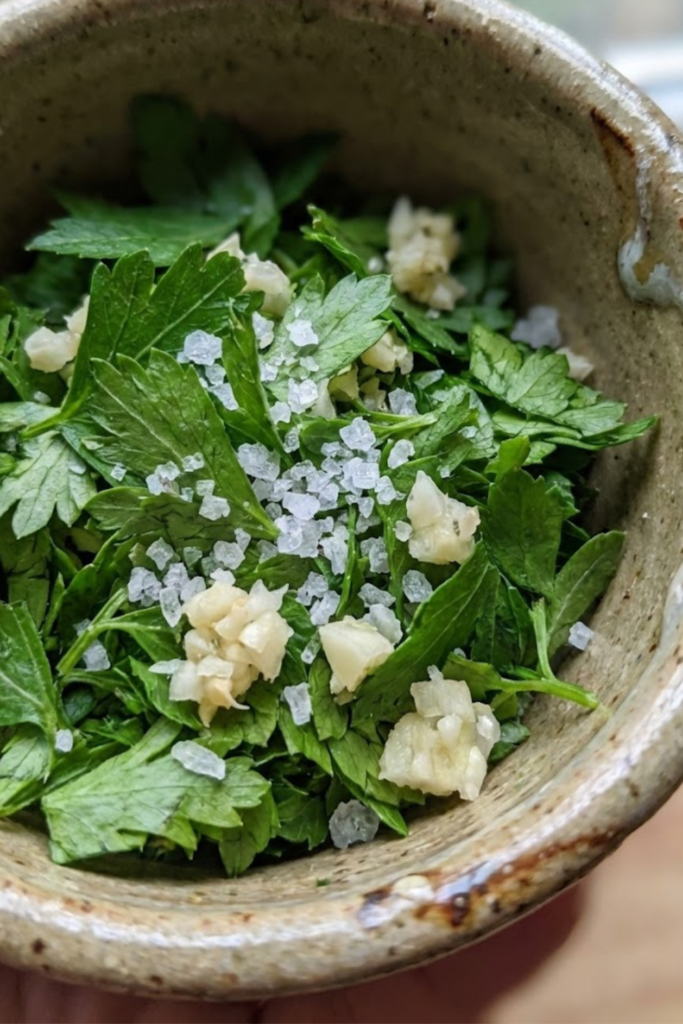
Smashing and chopping a few cloves yourself takes like two minutes. The sticky juices from the fresh garlic mix with the parsley oils, and that is where the magic happens. It creates a paste that sticks to the chicken skin better than any dry powder ever could.
Oil and Acid: The Glue
You need something to hold all those herbs together. I use a good glug of olive oil. It doesn’t have to be the super expensive bottle you save for salads, but don’t use the cheap vegetable oil either. Olive oil adds a richness that helps the skin crisp up.
Then, I add a squeeze of lemon juice. Just a little bit. The acid helps break down the meat fibers just enough to make it tender without turning it mushy. It cuts through the fat of the thighs perfectly so the whole bite feels balanced.
Preparing and Marinating for Maximum Tenderness
This part is where things get a little messy, but it’s honestly the most important part of the whole recipe. If you just slap the herbs on top of wet chicken, it’s going to steam instead of roast. Nobody wants soggy chicken skin. I learned that the hard way when I tried to rush dinner for my in-laws one night. It was not my best moment.
The Pat-Dry Technique
Before you do anything else, grab some paper towels. You need to get that chicken bone-dry. I mean really dry. I take the thighs out of the package and pat them down on all sides until the paper towel comes away mostly clean.
If the skin is wet, it will never get crispy. It will just stay flabby and sad. By drying it off, you are making sure that when it hits the hot pan, it sizzles immediately. It takes an extra two minutes, but it makes a huge difference in the final texture.
Under-the-Skin Seasoning
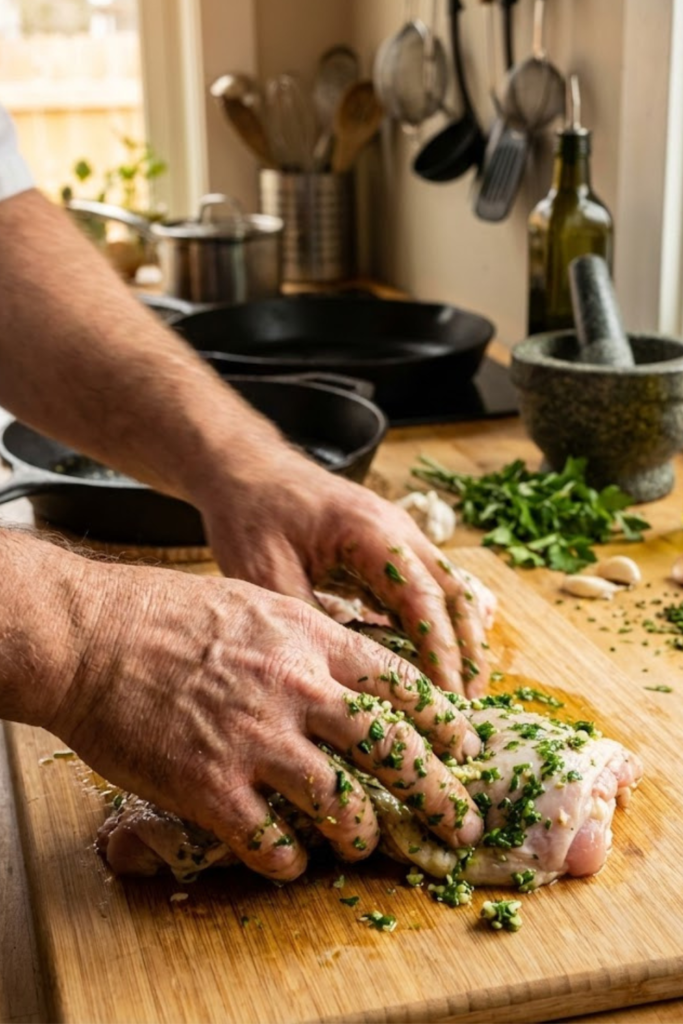
Here is a trick I learned from watching cooking shows on weekends. Don’t just put the parsley and garlic on top of the skin. You have to get in there. I gently lift the skin up with my fingers—be careful not to tear it—and shove some of that green herb mixture right onto the meat itself.
It feels a little weird to do, and your hands will get oily. But this way, the flavor actually cooks into the meat instead of just sitting on the surface. Plus, the skin acts like a blanket, keeping the garlic from burning while the chicken cooks.
How Long Should It Sit?
In a perfect world, I would say let this sit in the fridge overnight. That gives the lemon and salt time to really work their magic. But let’s be real, I usually don’t plan that far ahead.
If you are rushing, just let it sit on the counter for about 20 or 30 minutes while the oven heats up. Even that short time helps the meat relax and absorb the flavors. If you do marinate it in the fridge, just remember to take it out a bit before cooking so it isn’t ice-cold when it hits the pan.
Pan-Searing Techniques for Crispy Skin
I used to be so scared of pan-searing. I thought I’d set off the smoke alarm or end up with a greasy mess all over my stove. But once I figured out the trick to getting that perfect “crunch” on chicken thighs with parsley, there was no going back. If the skin isn’t crispy, the dish just feels unfinished.
The Power of Cast Iron
If you have a cast iron skillet, now is the time to pull it out. I swear by mine. It holds heat so much better than those thin non-stick pans. When you put the chicken in, the temperature of the pan doesn’t drop, which is the secret to a good sear.
If you don’t have one, just use the heaviest pan you own. You want something that can get hot and stay hot. I usually add just a tiny bit of oil to the pan first, even though the thighs have oil on them. It helps create a bridge between the pan and the skin so every inch gets golden.
Temperature Control is Key
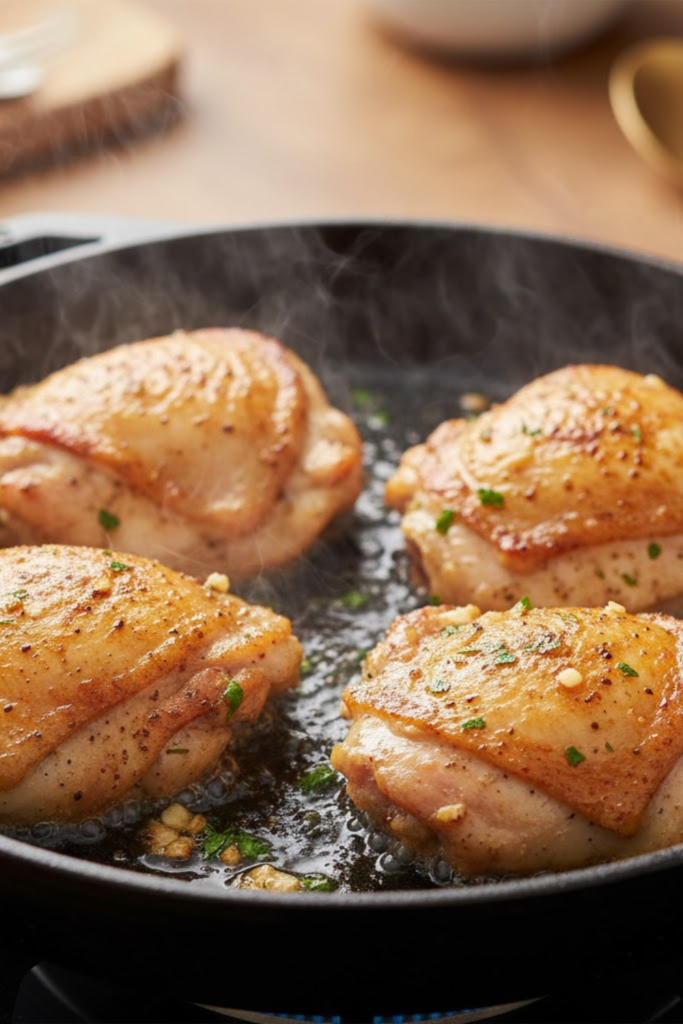
Don’t just crank the heat to high and walk away. I’ve burned plenty of garlic that way, and let me tell you, burnt garlic tastes like charcoal. I start with medium-high heat. You want to hear a loud sizzle the second the meat touches the metal.
Lay the chicken skin-side down and then—this is the hard part—don’t touch it! I used to be a “peeker,” always lifting the corner to see if it was brown yet. If you move it too soon, the skin sticks and tears. Give it about 5 or 6 minutes. It will naturally release from the pan once that crust has formed.
Don’t Crowd the Pan
I know you want to get dinner finished fast. I’ve tried to cram six big thighs into one skillet before, and it was a mistake. When the pieces are touching, they trap steam between them. Instead of frying in the fat, they end up boiling in their own juices.
If I’m cooking for the whole family, I do it in two batches or use two pans. You need at least an inch of space around each piece. It makes the chicken thighs with parsley look so much better, and that crispy skin stays crispy instead of getting soggy from the steam.
Finishing in the Oven: The Secret to Juiciness
Once you have that perfect crust from the pan, you might think you’re done. But if you try to cook a thick chicken thigh all the way through on the stove, the outside usually burns before the inside is safe to eat. I’ve served “pink-near-the-bone” chicken once, and let me tell you, that’s a quick way to lose your status as the family cook. The oven is your best friend for getting it just right.
Oven Temperature Guide
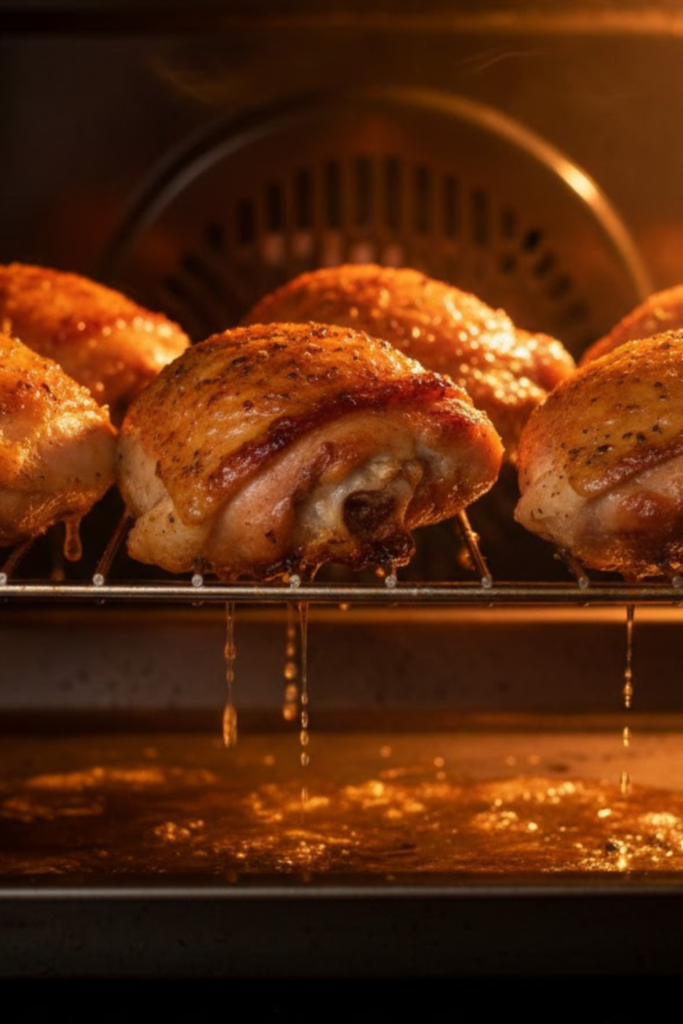
I find that 400°F (about 200°C) is the sweet spot. It’s hot enough to keep that skin crisping up while the meat finishes. I just slide the whole cast iron skillet right from the stove into the oven. If your pan isn’t oven-safe, just move the thighs to a baking dish.
It usually takes about 15 to 20 minutes. I love this part of the process because it gives me time to clean up the flour and herb mess I usually make on the counters. Plus, the smell of roasting chicken thighs with parsley and garlic filling up the house is better than any candle you can buy.
Internal Temperature Safety
I used to guess if chicken was done by poking it or cutting a slit to see the juice color. That’s a bad habit. One part might look clear while the other is still underdone. Now, I use a simple meat thermometer. It’s the only way to be sure.
You want the thermometer to hit 165°F (74°C). Aim for the thickest part of the thigh, but make sure you don’t hit the bone with the metal tip, or you’ll get a wrong reading. Getting the temp right means you won’t end up with dry, woody meat. It stays tender and pulls right off the bone.
Resting the Meat
This is the hardest part of the whole recipe: waiting. When the timer goes off and those thighs are sizzling, you’ll want to eat them immediately. Resist the urge! I always pull them out and let them sit on a plate or a cutting board for at least 5 or 10 minutes.
If you cut into them right away, all that delicious juice runs out all over the plate, leaving the meat dry. By letting them rest, the fibers soak the juice back in. I usually use this time to toss a quick salad or set the table. Trust me, that short wait makes the chicken thighs with parsley taste ten times better.
There you have it! Getting chicken thighs with parsley right isn’t about being a master chef; it’s just about respecting the meat and using fresh stuff. I really hope you give this a shot next time you’re staring at the fridge wondering what to make for dinner. The mix of that salty, crispy skin and the punch of fresh green herbs is something my family asks for at least once a week now.
If you try it and love it, please do me a favor and share this post on Pinterest!