“Cooking is at once child’s play and adult joy. And cooking done with care is an act of love.” This quote by Craig Claiborne always hits home for me. I used to think that making restaurant-quality chicken with garlic thyme butter required a culinary degree or a fancy French kitchen. I was wrong! I spent years serving up dry, rubbery poultry until I realized the magic is all in the basting technique and the aromatics. Today, I’m going to show you how to get that golden-brown crust and juicy interior every single time. We aren’t just making dinner; we’re making a masterpiece that will make your family think you’ve been moonlighting as a chef!
Choosing the Best Poultry for Basting
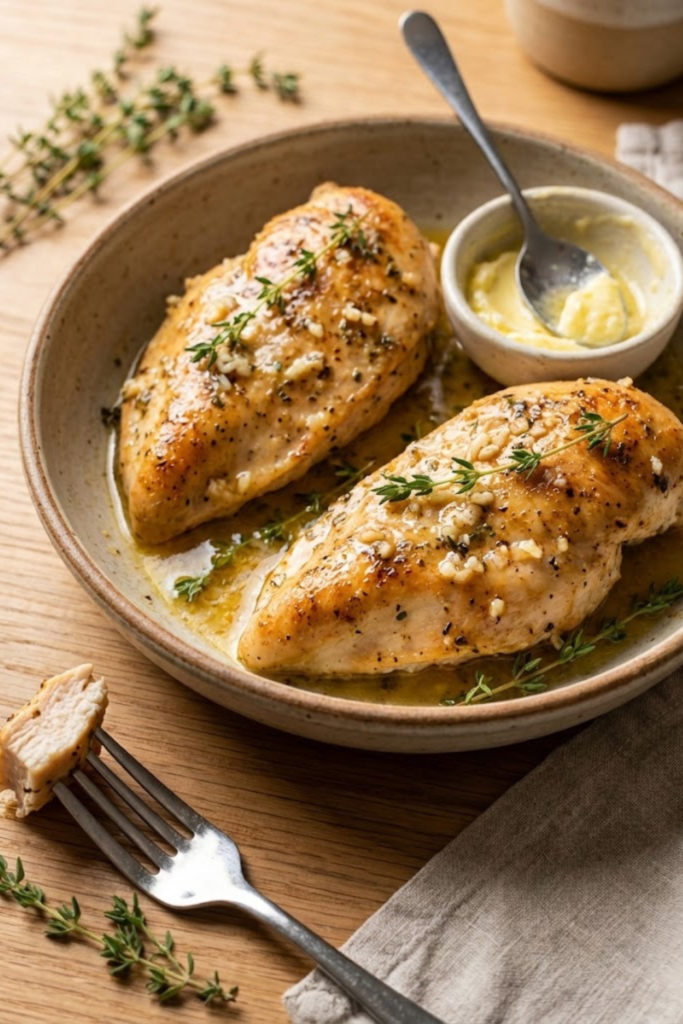
When I first started cooking, I thought all chicken was pretty much the same. I would go to the grocery store and just grab the first package I saw on the shelf. But after making chicken with garlic thyme butter a hundred times for my family, I realized that the meat you start with is just as important as the herbs you use. If you start with poor-quality meat, no amount of butter or garlic can save your dinner. You want something that can handle the high heat of the pan while staying moist on the inside.
Why I Prefer Air-Chilled Chicken
Have you ever noticed how some chicken seems to shrink and leak a ton of white liquid in the pan? That’s because it is “water-chilled.” Basically, the factory soaks the meat in cold water to cool it down, and the meat sucks up that water like a sponge. When you cook it, all that extra water comes out and steams your meat instead of searing it. I always look for “air-chilled” on the label now. It costs a little bit more, but it helps the chicken with garlic thyme butter get that crispy, golden-brown skin we all love. Plus, it tastes more like actual chicken and less like water.
Breasts vs. Thighs: The Big Debate
In my kitchen, I usually use breasts because they cook fast on a busy Tuesday night. But let me tell you, if you are new to basting, you should try chicken thighs. They have more fat, which means they stay juicy even if you cook them a little too long. If you do go with breasts, look for ones that are medium-sized. Those giant “mega-breasts” you see sometimes can be “woody,” which is a way of saying they have a weird, crunchy texture that nobody likes.
Getting the Prep Right
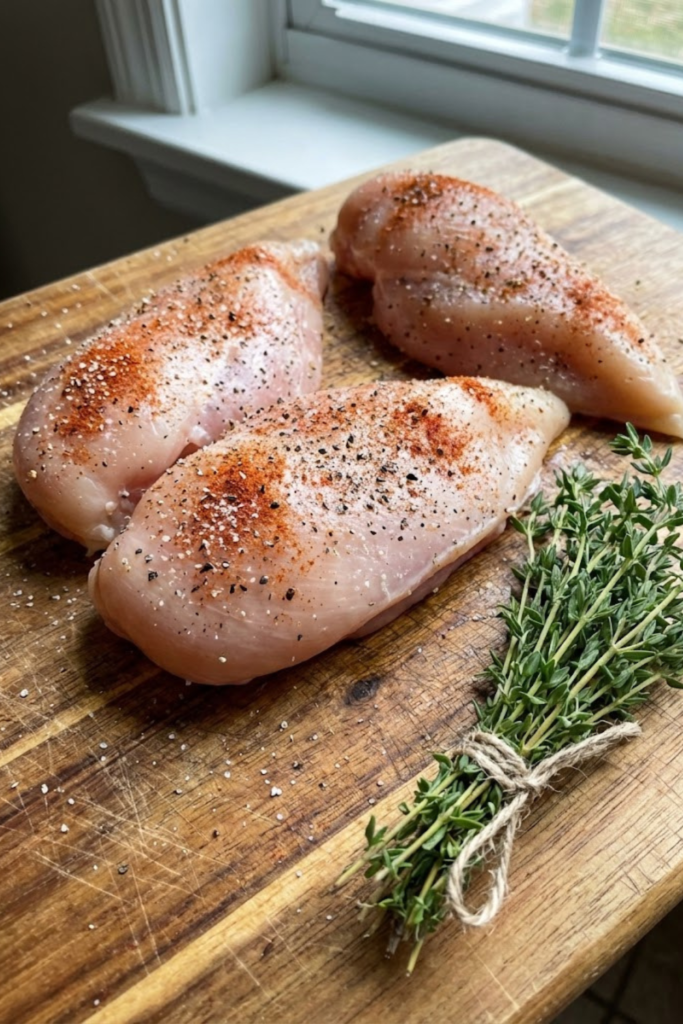
Before you even turn on the stove, you have to get the meat ready. I always pat the chicken dry with paper towels. Seriously, get it as dry as you can. If the surface is wet, it won’t brown. It will just boil in its own juices and look grey. I also like to season it with salt about 10 minutes before it hits the pan. This gives the salt time to get inside the meat so every bite tastes good. Just don’t let it sit too long or it might get a bit tough. Making sure the meat is at room temperature is another trick I use. I usually take it out of the fridge 20 minutes before I start. This helps the chicken with garlic thyme butter stay tender all the way through without the middle staying cold while the outside burns. It is these small steps that make you look like a pro.
The Science of Garlic Thyme Butter Sauce
When I first started cooking, I thought a sauce was just something you poured on at the end from a jar. I didn’t realize that for chicken with garlic thyme butter, the sauce is actually being built right inside the pan while the meat cooks. It’s like a little science experiment happening on your stove. If you understand how these three ingredients work together, you will never have a boring meal again. I remember one time I just threw a bunch of cold butter and dried herbs into a pan at the start, and it was a greasy mess. I learned the hard way that timing and temperature are everything.
Why Unsalted Butter is Your Best Friend
I always tell my students to buy unsalted butter for this recipe. You might think, “But salt tastes good!” And you’re right, but here is the deal: if you use salted butter, you lose control. Different brands have different amounts of salt, and by the time you sear your chicken and the butter browns, it can end up way too salty. By using unsalted butter, you get to decide exactly how much seasoning goes in. Plus, butter has milk solids in it. When these solids get hot, they start to toast and turn brown. That “brown butter” smell is what gives the chicken with garlic thyme butter its deep, nutty flavor that makes everyone want seconds.
The Magic of Fresh Thyme Oils
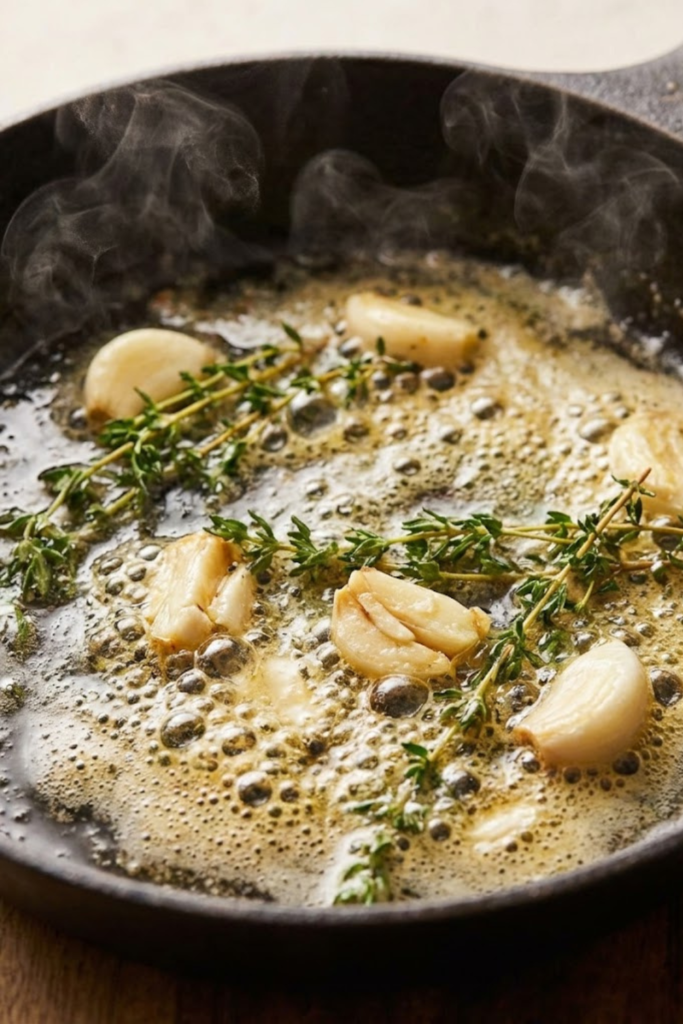
Thyme is what we call a woody herb. It’s not like parsley or cilantro that wimps out the second it hits heat. Thyme has these tiny leaves full of essential oils. To get those oils out, you need hot fat. When you drop those fresh sprigs into the bubbling butter, the heat breaks down the plant cells and releases that earthy, lemony scent. I used to use dried thyme because it was easier, but honestly, it just tastes like dust compared to the fresh stuff. If you want your house to smell like a professional kitchen, you have to use fresh sprigs.
The Golden Rule of Garlic Timing
The biggest mistake I see people make is putting the garlic in too early. Garlic is delicate. If it sits in a hot pan for more than a minute or two, it turns black and tastes bitter. It will ruin your whole dinner! I wait until the chicken is almost done and the butter is foaming. Then, I add my smashed cloves. This lets the garlic infuse the butter without burning. It creates a mellow, sweet flavor that perfectly coats the chicken with garlic thyme butter. It’s all about being patient and watching that pan like a hawk. When the garlic smells fragrant but is still pale gold, you’ve nailed it.
The Secret to the Perfect Pan Sear
Getting a good sear is what separates a soggy meal from a great one. When I talk about chicken with garlic thyme butter, people always ask me how to get that dark, crunchy crust without drying out the meat. It took me a lot of burnt pans and smoke-filled kitchens to figure it out. You see, searing isn’t just about heat; it’s about how the meat reacts to the metal. If you do it right, you lock in the juices and create a flavor that is deep and savory. It’s one of those basic skills that makes everything you cook taste ten times better.
Why Your Pan Matters
I used to use those lightweight non-stick pans for everything. They are easy to clean, but they are terrible for searing. To make a proper chicken with garlic thyme butter, you need a pan that can hold a lot of heat. I always tell my students to get a cast iron skillet. Cast iron is heavy and stays hot even when you drop a cold piece of meat into it. This is important because you don’t want the pan temperature to drop. If it drops, the chicken will just sit there and steam instead of getting crispy. If you don’t have cast iron, a heavy stainless steel pan is your next best bet. Just avoid the thin stuff. You want something with some weight to it so the heat stays even across the whole surface.
Understanding the Maillard Reaction
There is a fancy term for that golden-brown color: the Maillard reaction. This is basically when the proteins and sugars in the meat get hot enough to change their chemical structure. It sounds like science class, but it’s what makes food taste good! For chicken with garlic thyme butter, you need to keep the heat around medium-high. You want to see the meat change from pink to white and then to a beautiful brown. Don’t be afraid of a little bit of smoke, but if it starts to smell like something is burning, turn it down a notch. The goal is a crust that looks like a toasted marshmallow—deep, rich, and full of flavor.
Mastering the Arroser (Butter Basting)
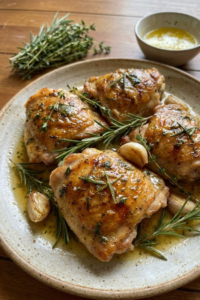
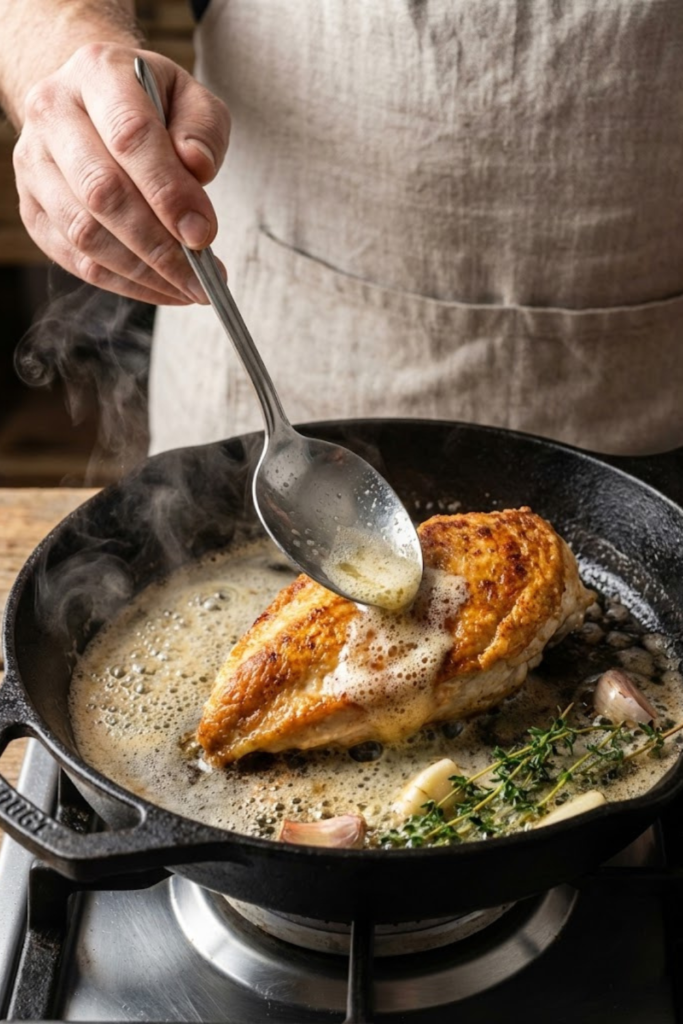
This is my favorite part of the whole process. Once the chicken is flipped, the pan is already very hot. This is when you do what the French call “Arroser,” which is just a fancy way to say basting. You throw in your butter, garlic, and thyme. As the butter melts and foams, tilt the pan slightly so the liquid pools at the bottom. Take a big spoon and keep splashing that hot, flavored fat over the top of the chicken with garlic thyme butter. This does two things: it adds tons of flavor and it cooks the top of the meat gently while the bottom sears. It’s a bit of a workout for your arm, but your taste buds will thank you. Keep that spoon moving until the meat is perfectly cooked through.
Essential Kitchen Tools for Success
If you want to make the best chicken with garlic thyme butter, you don’t need a kitchen full of fancy gadgets that take up all your drawer space. I used to be the person who bought every “as seen on TV” tool, thinking it would make me a better cook. Spoiler alert: it didn’t! Most of that stuff just gathered dust. Over the years, I’ve narrowed it down to just a few things that actually make a difference. These tools help you stay in control so you don’t end up with a burnt pan or raw meat. When you have the right gear, the whole process feels way less stressful and a lot more fun.
The Magic of a Meat Thermometer
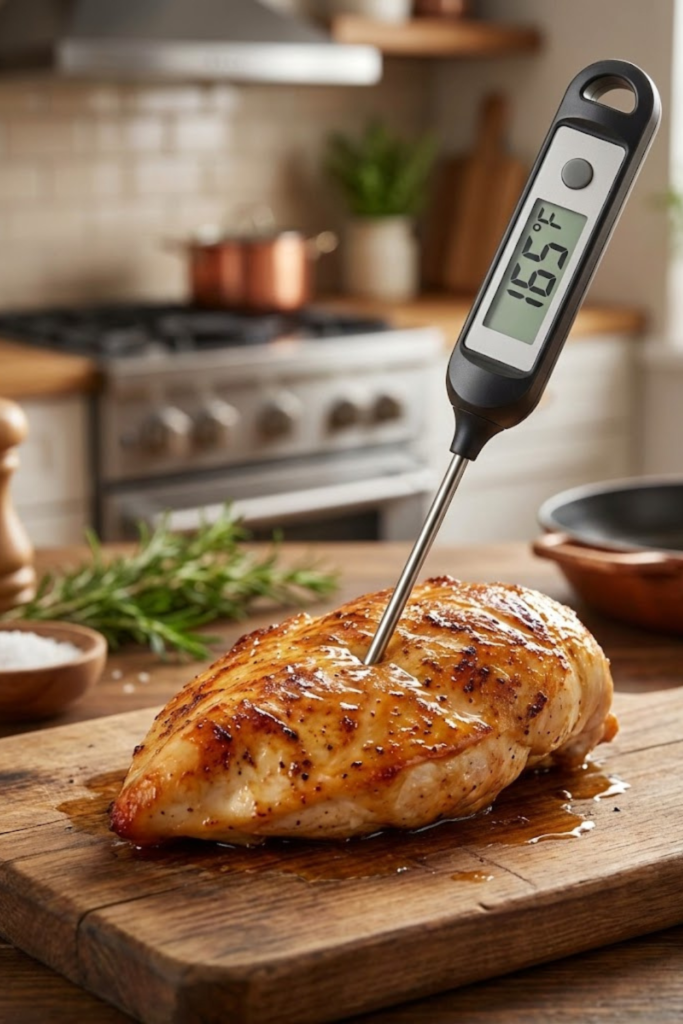
This is the number one thing I tell everyone to buy. Seriously, stop guessing if your chicken is done by poking it with your finger or cutting it open and letting all the juice run out. I used to do that all the time, and I always ended up with dry meat. Now, I use a digital meat thermometer. For chicken with garlic thyme butter, you want to pull the meat off the heat when it hits about 160°F. The temperature will keep rising to 165°F while it rests. It’s a total game changer. You’ll never have to worry about serving undercooked poultry to your family again. It gives you peace of mind that is worth every penny.
Why You Need a Sturdy Spatula
You might think any old flipper will do, but when you are working with a heavy skillet, you need something that won’t bend. I prefer a stainless steel fish spatula. It sounds weird to use a “fish” tool for chicken, but they are thin and flexible enough to slide right under that crispy skin without tearing it. When you are making chicken with garlic thyme butter, you want to keep that crust intact. If you use a thick plastic spatula, you might end up scraping off all that good flavor you worked so hard to build. A good metal one lets you get right under the meat and flip it with confidence.
Choosing the Right Tongs
I also keep a pair of long-handled tongs nearby. Sometimes a spatula isn’t enough, especially if you need to hold the chicken on its side to brown the edges. I like the ones with silicone tips so they don’t scratch my pans, but plain metal works fine too. Just make sure they have a good grip. There is nothing worse than dropping a piece of chicken with garlic thyme butter back into hot oil and getting splashed! Having these basic tools ready to go makes the cooking flow much smoother. You can focus on the smells and the sounds of the sizzle instead of hunting through a messy drawer for something that works.
So, there you have it. That is my whole routine for making chicken with garlic thyme butter. It really isn’t as scary as it sounds, is it? I know I used to get so nervous about cooking meat for people. I was always worried about making someone sick or serving something that tasted like a dry piece of wood. But once you practice that basting motion a few times, it becomes second nature. It’s almost like riding a bike. You don’t even have to think about it after a while. You just see the butter foaming and your hand reaches for the spoon automatically. I’ve seen plenty of people struggle at first, but don’t give up!
I remember the first time I got it exactly right. My kids actually asked for thirds! That never happens at my house. Usually, they are pushing broccoli around their plates or asking if we can go get burgers. But when I put that platter of chicken with garlic thyme butter on the table, the whole room smelled like a fancy five-star restaurant. It made me feel like I actually knew what I was doing in the kitchen for once. And that’s the best feeling, right? Just being able to provide a good, warm meal that people actually enjoy eating.
I really hope you give this a shot this week. Don’t worry if your first try isn’t perfect. My first five tries were basically charcoal! Just keep an eye on your heat and don’t be stingy with the butter. Butter is where all the love is. If you have any questions about the pan you’re using or if you can’t find fresh thyme at your store, just leave a comment. I’m always happy to help out a fellow home cook. We are all in this together, trying to figure out how to feed our families without losing our minds.
I usually serve this with some simple mashed potatoes because they soak up all that extra garlic butter from the pan. You don’t want to let a single drop of that liquid gold go to waste! A little bit of crusty bread is great too for dipping. Sometimes I even throw some asparagus right into the pan at the very end so they get coated in the herbs. It’s an easy way to get a vegetable on the plate without washing another pot. Anything that saves me time on dishes is a win in my book.
Love this recipe? Pin it to your “Easy Weeknight Dinners” board on Pinterest so you never lose it!