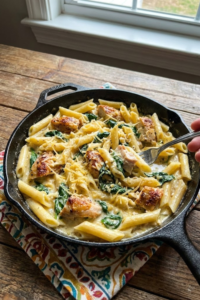
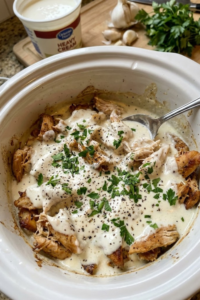
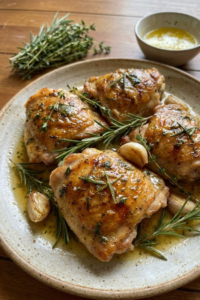
Do you know that feeling when you bite into a piece of chicken and it’s just… sad and dry? It’s the worst! But let me tell you, this Chicken with Lemon Sauce is the complete opposite. It is an absolute game-changer for weeknight dinners. We are talking about juicy, golden-brown chicken bathed in a sauce so bright and savory you’ll want to drink it with a spoon! I’ve made this mistake-proof recipe a dozen times, and my family clears their plates every single time. Whether you are a pro chef or just trying to survive Tuesday night, this dish brings that restaurant-quality flair right to your kitchen table. Let’s get cooking!
Selecting the Best Ingredients for Lemon Chicken
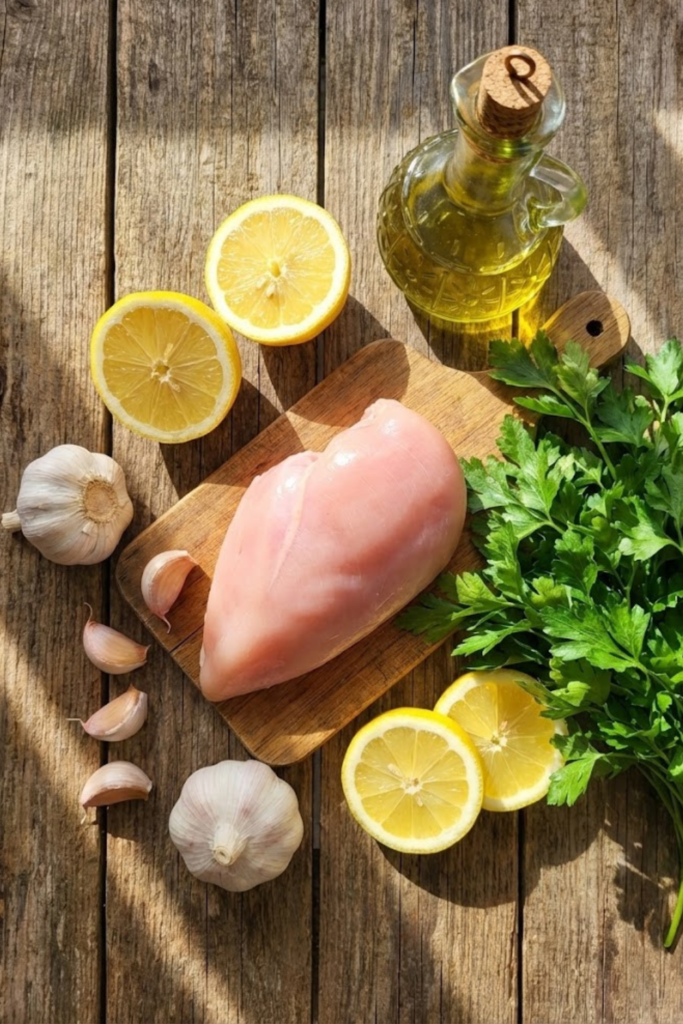
I have to be honest with you, I used to think all chicken was created equal. I’d grab whatever was on sale, toss it in a pan, and wonder why my chicken with lemon sauce tasted like rubber. It was frustrating! After years of feeding my family (and a few dinner disasters that we still laugh about), I’ve learned that the magic really is in the groceries you buy. You don’t need to break the bank, but you have to be smart about it.
The Chicken: Breast vs. Thighs
Most people reach for the boneless, skinless chicken breasts for this recipe. It’s the classic choice. But here is the thing I wish someone told me years ago: try to find “air-chilled” chicken if you can.
Standard chicken is cooled in water, so it absorbs liquid. When you cook it, that water comes out and steams the meat instead of searing it. Air-chilled meat browns so much better. If you are constantly overcooking white meat, don’t be afraid to swap in boneless chicken thighs. They are way more forgiving and stay juicy even if you leave them on the heat a minute too long.
Step Away from the Plastic Lemon
Please, for the love of food, put the plastic squeeze bottle down. I used to use that stuff because it was “convenient,” but it has this weird, chemical aftertaste that just ruins the sauce. It took me embarrassing long to realize why my dish tasted like furniture polish.
You need fresh lemons for lemon chicken. Real lemons give you two things: the tart juice and the oils from the zest. The zest is where that floral, bright aroma lives. Without it, the sauce falls flat.
Butter and Broth: The Flavor Base
Here is a mistake I made a hundred times: using salted butter. The broth has salt, the cheese (if you add it) has salt, and then you add salt to the meat. If you use salted butter too, you end up with a salt lick.
Using unsalted butter lets you control the seasoning. It sounds like a small detail, but it makes a huge difference in the final taste. Also, go for a low-sodium chicken broth. I like to have control over how salty my dinner gets, not the soup company. If I’m feeling a little fancy, I’ll swap half the broth for a dry white wine, like a Pinot Grigio. It adds a depth that makes you look like a pro chef!
Preparing and Dredging Your Chicken Cutlets
You might think you can just throw the chicken straight from the package into the pan, but that is a rookie mistake I made for years. I used to wonder why my chicken with lemon sauce ended up with the outside burnt while the inside was still pink. It was stressful! The secret isn’t actually in the cooking; it is in the prep work. It takes five extra minutes, but it saves you from eating dry, sad chicken.
Flattening the Meat
First off, chicken breasts are huge these days. They are usually thick on one end and super thin on the other. If you cook them like that, the thin tail dries out and turns into leather before the thick middle is even safe to eat. You have to even them out.
I grab a heavy ziplock bag or just two sheets of plastic wrap to cover the meat. This is important because you do not want raw chicken juice flying around your kitchen counters. Then, take a meat mallet (or a heavy rolling pin if you don’t have one) and whack it. You aren’t trying to destroy it, just flatten it until it is all the same thickness, maybe half an inch. It feels good to get a little frustration out after a long day at school! This step breaks down the fibers, making the meat way more tender.
The Flour Mixture
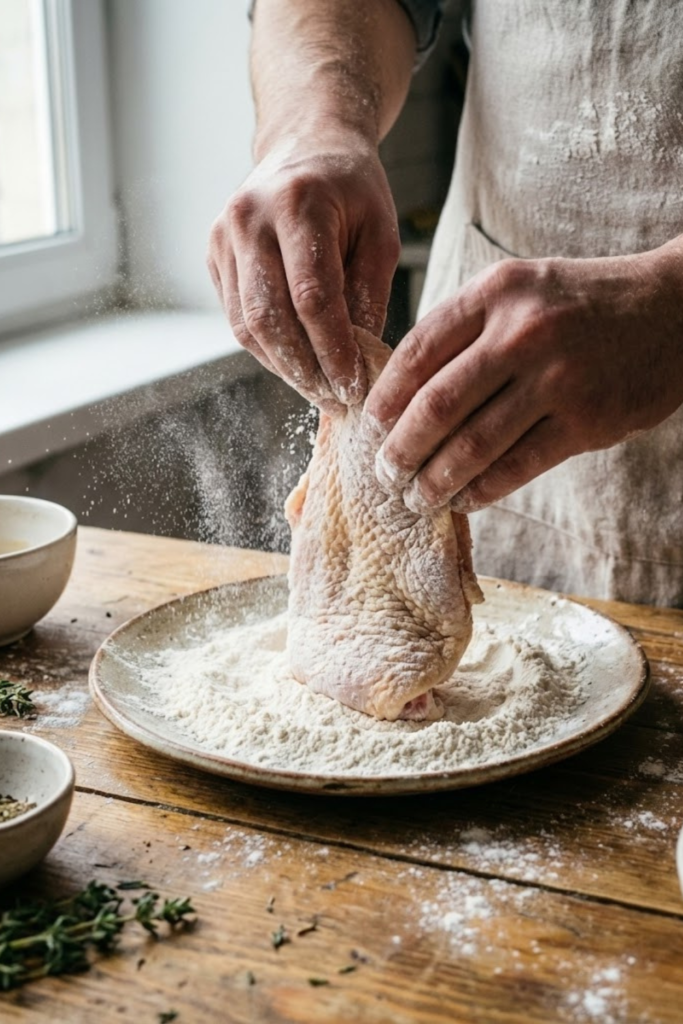
Now, let’s talk about the coating. Please don’t just use plain white flour. That is a missed opportunity for flavor. You want seasoning in every single layer. I take a shallow bowl—a pie plate works great for this—and mix my all-purpose flour with plenty of salt and black pepper. Sometimes I sneak in a little garlic powder or paprika if I’m feeling adventurous.
Before you put the chicken in the flour, pat the meat dry with a paper towel. If the chicken is too wet, the flour clumps up and gets gummy instead of crispy.
The Light Dusting
Here is the trick I learned the hard way: don’t cake it on. Take your cutlet, press it into the flour mixture, flip it, and then shake it. You want a thin veil of white dust, not a heavy winter coat. If there is too much flour, it absorbs all the oil and gets soggy.
Once they are coated, let them sit on a plate for about five minutes while you get the pan hot. This resting time helps the flour stick to the meat so the crust doesn’t fall off when you flip it later. It is a small step, but it helps make the final dish look like it came from a nice restaurant.
Searing the Chicken to Golden Perfection
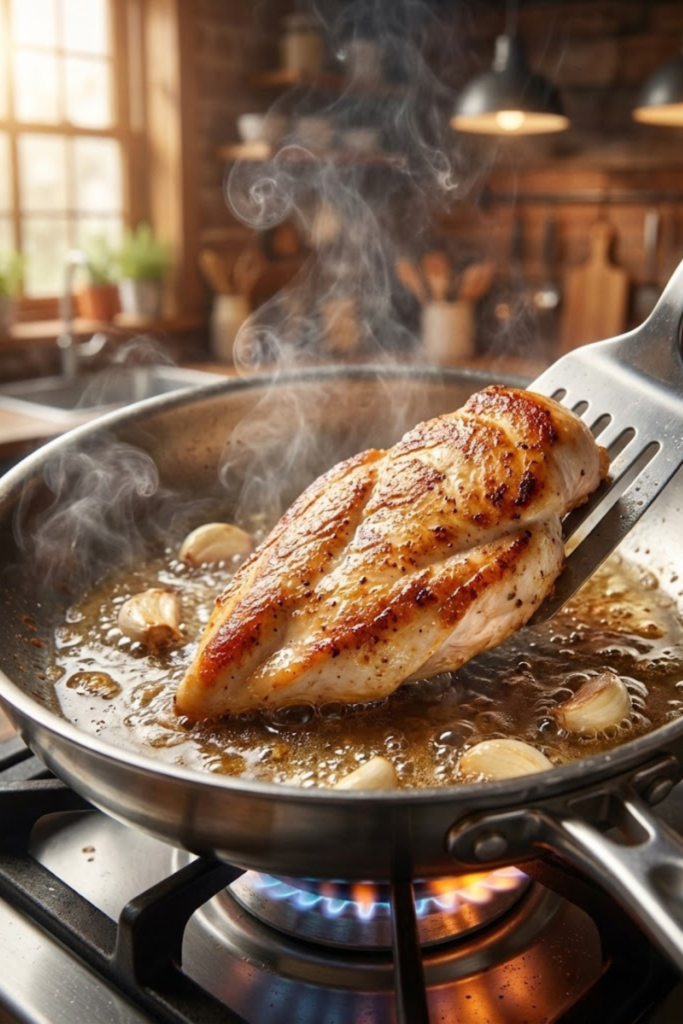
Okay, this is the part where things start to smell amazing in the kitchen. But it is also the part where I used to mess up the most. I cannot tell you how many times I set off the smoke alarm trying to get a “good sear” on my chicken. My kids used to joke that the smoke alarm was the dinner bell! But over time, I learned that searing isn’t just about blasting the heat; it is about control. You want that beautiful golden-brown color because that is where all the flavor lives. If the chicken looks pale, it is going to taste bland.
The Pan Temperature Test
Before you even think about putting meat in the pan, you have to make sure the pan is hot enough. If the pan is cold, the chicken will just sit there and soak up the oil, which is gross. I use a large stainless steel skillet or a cast iron pan for this.
Here is a little science experiment I show my own kids: get your hand wet and flick a few tiny drops of water into the pan. If the water just sits there and boils, it’s not ready. If the water dances and sizzles and evaporates instantly, you are good to go. It’s a simple trick, but it works every time.
The Butter and Oil Duo
You might wonder, “Why do I need oil and butter?” Here is the deal. Butter tastes incredible, but it burns really fast at high heat. Olive oil can handle higher heat, but it doesn’t have that rich flavor we want for chicken with lemon sauce.
So, we use a team approach. I add a splash of olive oil first, let it shimmer, and then melt the butter into it. The oil actually helps protect the milk solids in the butter from burning black instantly. It gives you a safety net so you get the flavor without the burnt taste.
Don’t Crowd the Pan
This is the number one mistake people make. I used to do it too because I just wanted to get dinner done fast. I would shove all the chicken pieces into the pan at once like a puzzle. Big mistake.
When you pack the chicken in tight, the moisture comes out of the meat and has nowhere to go. instead of searing, the chicken steams in its own juices. You end up with grey, rubbery meat. Nobody wants that. Give the chicken pieces their personal space. If they are touching, they are too close. You will probably have to cook in two batches. It takes a few extra minutes, but the result is crispy, golden chicken that actually tastes like it came from a restaurant.
The “Don’t Touch It” Rule
Once you lay the chicken in the pan, resist the urge to move it. I know, it is hard! You want to check on it. But if you keep scooting it around, a crust will never form. Let it sit there and do its thing for about 4 to 5 minutes.
If you try to flip it and the chicken sticks to the pan, stop! It is trying to tell you it is not ready. Meat naturally releases from the metal once it is properly seared. If you have to scrape it, you are flipping too early. Be patient, let it release on its own, and you will get that perfect golden color we are looking for.
Crafting the Silky Garlic Lemon Butter Sauce
Now for the best part. Honestly, if you offered me a bowl of just this sauce and some bread, I would be happy. This is where the magic happens. You take all that flavor left in the pan from the chicken and turn it into something incredible. I used to think making a pan sauce was super fancy and hard, like something they only do on cooking shows. But it is actually really simple if you just pay attention to a few little things.
Don’t Burn the Garlic
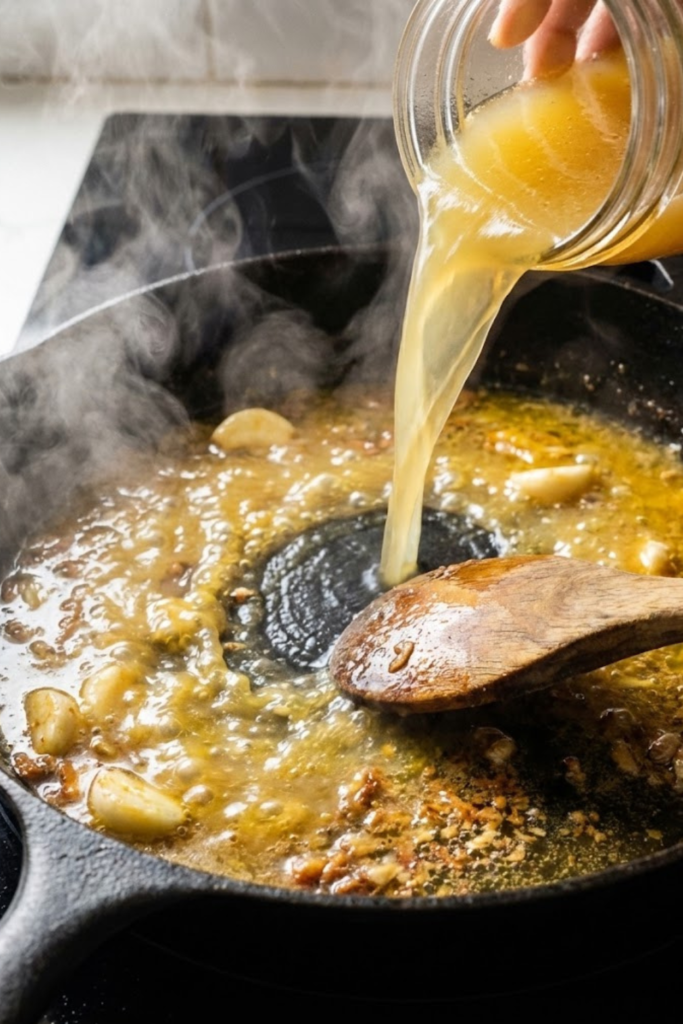
So, you just took the chicken out of the pan. Leave that oil and those little brown bits in there! That is flavor gold. Turn the heat down to medium-low. If the pan is smoking hot, your garlic will burn instantly, and burnt garlic tastes bitter and nasty.
Toss in your minced garlic. You only want to cook it for about 30 seconds to a minute. Seriously, don’t walk away to check your phone. As soon as you can smell that amazing garlic smell fill the kitchen, it is ready for the liquid. If it starts turning dark brown, you went too far.
The Magic of Deglazing
This is a fancy word for “cleaning the pan with liquid.” Pour in your chicken broth (or white wine if you are using it). It will hiss and bubble up a lot—that’s good! Take a wooden spoon and scrape the bottom of the pan hard. You want to mix all those crispy stuck-on bits into the liquid.
I used to scrub those bits off in the sink thinking the pan was dirty. Big mistake! Those bits are called “fond,” and they are pure concentrated chicken flavor. By scraping them up, you are cleaning your pan and flavoring your sauce at the same time.
Letting It Reduce
Now, let the liquid bubble. You want it to reduce, which basically means letting the water evaporate so the flavor gets stronger. I usually let it simmer for about 3 to 5 minutes. You will see the liquid go down by about half. It should look a little thicker, not like plain water anymore.
Squeeze in your fresh lemon juice now. I like to add it later in the process so the lemon flavor stays bright and zingy. If you cook the lemon juice too long, it loses its punch.
The Cold Butter Trick
Here is the restaurant secret I learned that changed everything. Turn the heat off. Take your cold butter (it has to be cold, not melted!) and add it to the pan. Whisk it constantly until it melts.
Why turn the heat off? If the pan is too hot, the butter separates into oil and milk solids, and the sauce looks greasy. By whisking in cold butter off the heat, it emulsifies. That’s a science word! It just means the fat and liquid mix perfectly to create a glossy, creamy, velvety sauce without using any cream at all. It coats the back of a spoon, and it is just perfect.
Serving Suggestions and Side Dish Pairings
You did the hard work. The chicken is cooked, and the kitchen smells amazing. Now, what do you eat with it? I remember making this huge fancy meal once and forgetting the sides until the very last minute. We ended up eating gourmet chicken with plain toast. Not my best moment! This chicken with lemon sauce has a bold, tangy flavor, so you want sides that can handle that without fighting it. Mostly, you want things that can soak up that liquid gold we just made in the pan.
The Pasta Choice
In my house, pasta is usually the winner. I almost always grab angel hair or linguine. Why? Because those thin noodles act like a mop for the extra sauce. If you use a big chunky pasta like penne or rotini, the sauce kind of slides off. You want every bite of noodle to be coated in that garlic butter.
I like to toss the pasta with a little bit of the sauce before plating it. It is simple, cheap, and fills everyone up. If you are trying to watch what you eat, zucchini noodles (zoodles) are actually pretty good here too. I was skeptical at first, but the strong lemon taste covers up that “I’m eating a vegetable” vibe.
Veggies That Work
Since the chicken is rich with all that butter, I like to keep the green stuff fresh and simple. Steamed broccoli is a classic for a reason. The little florets act like sponges and hold onto the lemon sauce nicely. It turns a boring veggie into something my kids actually eat.
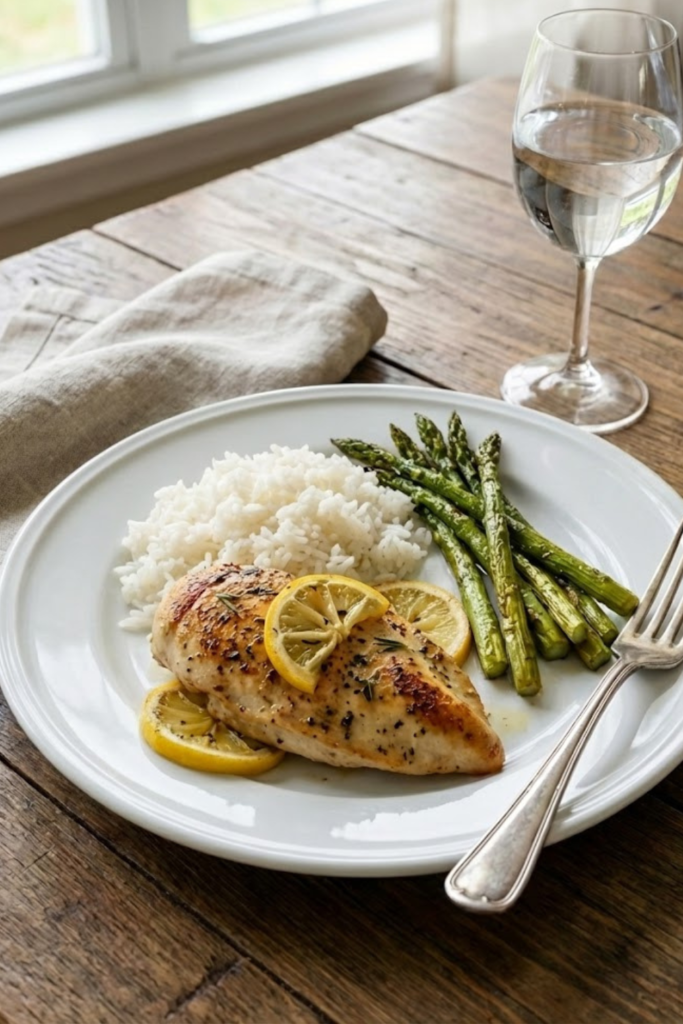
Roasted asparagus is another go-to for me. I just put them on a sheet pan with a little oil and salt for 10 minutes while the chicken cooks on the stove. You don’t need to put cheese sauce or heavy seasoning on the vegetables. Let the lemon chicken be the star of the show. If you make the sides too complicated, you just end up with a plate of confusing flavors.
Potatoes, Rice, and Bread
If you aren’t a pasta person, mashed potatoes are surprisingly amazing with this. I know, lemon and potatoes might sound weird, but think about it—butter goes on potatoes, right? And this sauce is basically delicious, garlicky butter. It works perfectly as a comfort food meal.
White rice is good too if you want to soak up every drop of sauce. My husband loves it over rice because it reminds him of takeout, but way fresher. And please, have some crusty bread on the table. You are going to want to wipe the plate clean. It is considered rude in some places, but in my kitchen, it is a compliment!
The Final Touch
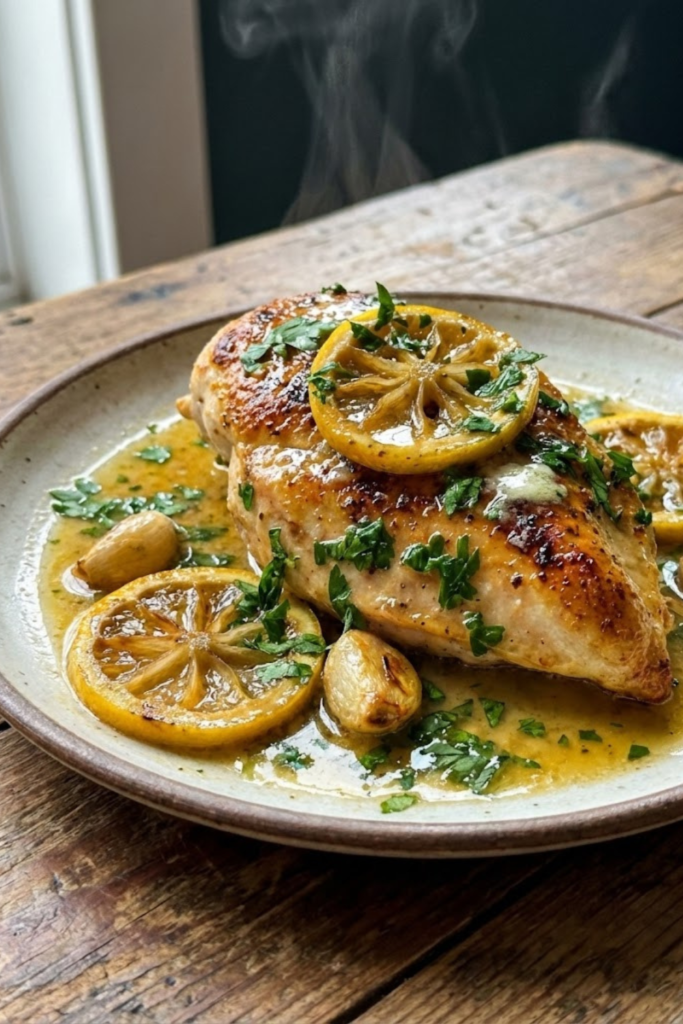
Before you carry the plates to the table, throw some chopped fresh parsley on top. I used to skip this step because I thought garnishes were just for fancy chefs on TV. But honestly, the bright green color makes the yellow sauce pop. It makes the dish look appetizing and finished.
Also, put a couple of fresh lemon slices on the plate or on top of the chicken. It tells people what flavor to expect, and it just looks pretty. We eat with our eyes first, right? A little sprinkle of color makes it look like you spent hours cooking, even if you are standing there in your sweatpants.
Well, we made it to the end! I really hope you give this chicken with lemon sauce a try this week. It’s funny, I used to look at recipes like this and think, “I don’t have time for that on a Tuesday.” But honestly, once you make it one time, you realize it is actually faster than ordering a pizza and waiting for the delivery guy. Plus, it tastes a million times better.
There is something really nice about putting a homemade meal on the table that doesn’t come out of a box. I know life gets crazy—believe me, between grading papers and driving kids to practice, I get it. But taking twenty minutes to cook something fresh is like a little gift to yourself and your family. The smell of the garlic and lemon alone is enough to make everyone come running to the kitchen without you having to yell “dinner!” five times.
A Quick Note on Leftovers
If you actually have any leftovers (which is rare in my house!), they keep pretty well. Just put the chicken and the sauce in an airtight container in the fridge. It stays good for about three days. When you want to eat it again, don’t microwave it on high power or the chicken gets rubbery. I usually warm it up in a pan on the stove with a splash of water or extra broth to bring the sauce back to life. It makes for a really fancy lunch the next day that will make your coworkers jealous in the breakroom.
Share the Love!
I would absolutely love to hear how this turned out for you. Did you add extra garlic? Did you serve it with rice or pasta? It makes my day to hear your stories. Cooking shouldn’t be stressful or perfect; it should just be good food with the people you care about.
If you loved this recipe and want to save it for later, please Pin this to your Dinner Ideas board on Pinterest! It helps other busy cooks find it, and it helps me keep sharing these recipes with you. Thanks for hanging out in my kitchen today—now go enjoy that lemon chicken!