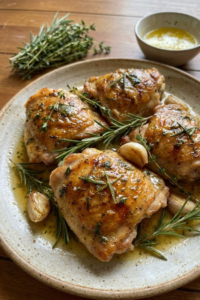
You know that amazing smell of butter and fresh herbs hitting a hot pan? That is exactly why I love making chicken with thyme and rosemary for my family. It used to scare me a little because I always dried out the meat or burned the garlic, but I kept trying until I got it right. Now, this dish is a total lifesaver when I’m exhausted from teaching and just need something comforting and fast. It turns out crispy, juicy, and takes about 30 minutes, so you aren’t stuck standing in the kitchen all night long. Trust me, if I can pull this off on a crazy Tuesday, you can definitely do it too.
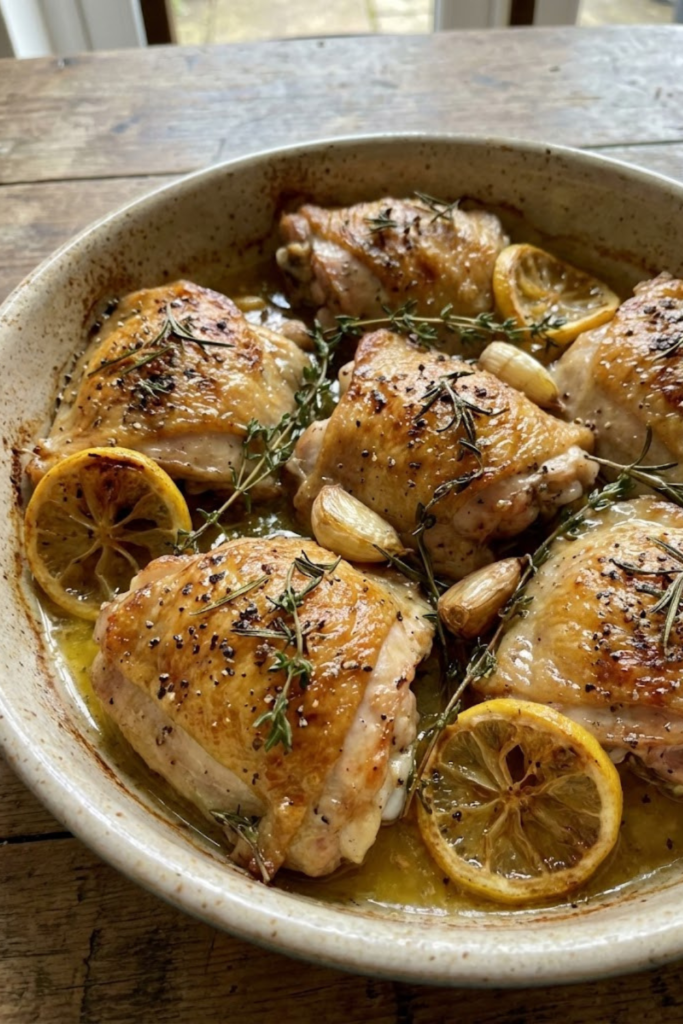
Why Fresh Herbs Make or Break This Dish
Look, I’m not gonna judge you if you grab the dried shaker from the pantry because you are in a rush. I have definitely done that on busy school nights when I just didn’t have the energy to run to the store. But I have to be honest with you—using fresh herbs in this recipe is the difference between an “okay” dinner and a meal that tastes like you ordered it at a nice restaurant. I used to think those little glass jars of dried green flakes were just fine since they last forever, but once I switched to fresh bundles, I couldn’t go back.
The Flavor Is in the Oil
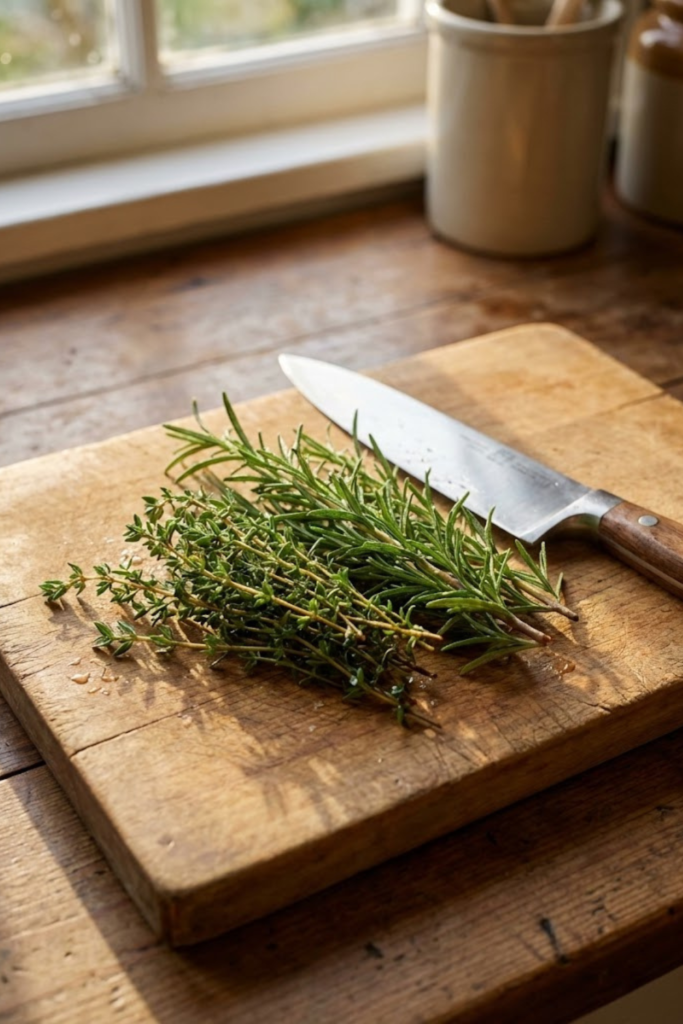
The biggest reason you want fresh stuff is the oil. Dried herbs have been sitting in a factory and then on a shelf for who knows how long. By the time they get to your chicken, a lot of the flavor has evaporated. Fresh rosemary and thyme are full of natural oils that release when you heat them up. When you throw a fresh sprig of rosemary into hot butter, you can actually smell it in the next room. It infuses the fat with this deep, woodsy flavor that dried herbs just can’t copy. If you use dried, it mostly just sits on top of the meat without really getting into the sauce.
Nobody Likes Eating Pine Needles
Another thing I learned the hard way is the texture. Have you ever eaten a piece of chicken with dried rosemary on it? It can feel like you are chewing on little sharp pine needles. It’s not pleasant. Dried rosemary stays hard and pointy, even after you cook it. But when you use fresh rosemary, the leaves crisp up beautifully in the pan, or they get soft if they are swimming in the butter sauce. It adds a nice crunch rather than getting stuck in your teeth.
Thyme Is Delicate, So Be Gentle
Thyme is a little different than rosemary. The leaves are tiny, and stripping them off the stem can feel like a huge waste of time when you are hungry. Here is a teacher trick I learned: you don’t always have to pick the leaves off! If the stems are soft and green, I just chop the whole thing up. If the stems are woody, I just throw the whole sprig in the pan and fish the sticks out later. It saves so much time. Just remember that fresh thyme burns faster than rosemary, so keep an eye on it. Using fresh herbs might cost a couple of dollars more, but for a simple dish with only a few ingredients, it is the best way to get that big flavor we are looking for.
Ingredients You’ll Need for Perfect Herb Chicken
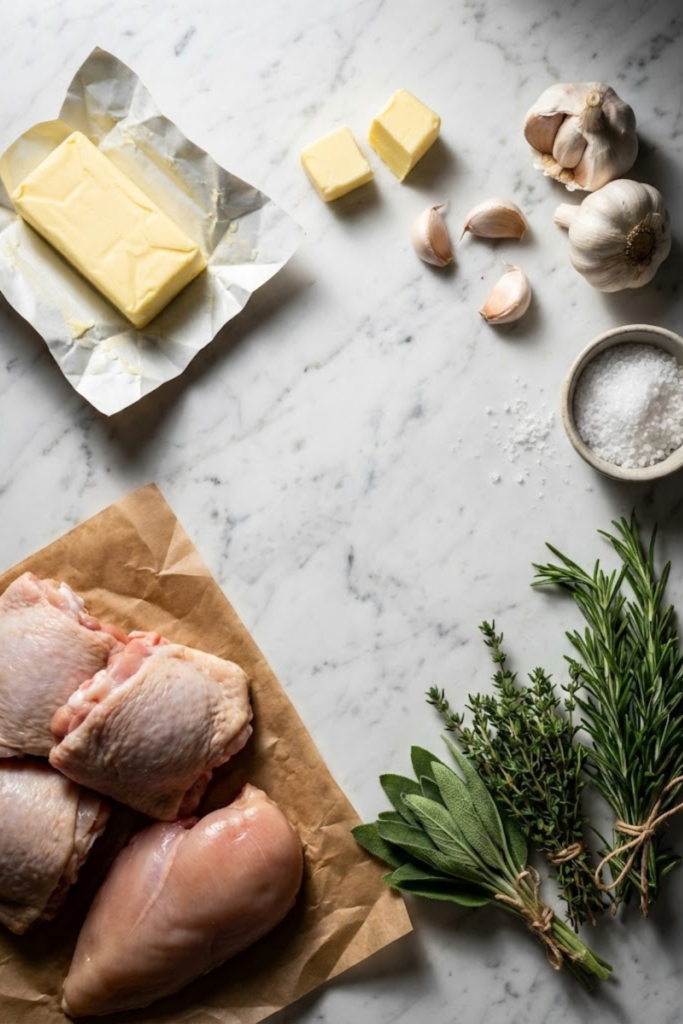
One thing I really love about this recipe is that you don’t need to go on a wild treasure hunt at the grocery store. I hate it when a recipe asks for something weird that I will buy once, use a teaspoon of, and then let sit in my fridge until it grows mold. We are keeping it simple here. The list is short, but every single thing on it has a job to do. If you get the right stuff, half the work is already done for you.
Why I Always Choose Thighs Over Breasts
Okay, first things first: the chicken. I used to buy boneless, skinless chicken breasts for everything because I thought they were healthier or easier. But for this dish? Please don’t do it. You need to get bone-in, skin-on chicken thighs. Here is why. The bone helps the meat cook evenly so it doesn’t dry out, and the skin acts like a little jacket that protects the meat while it sears.
When you cook breasts in a pan, they go from raw to tough like an old shoe in about two minutes. Thighs are way more forgiving. They have a little more fat, which means they stay juicy even if you leave them in the pan a minute too long while you are helping your kid with math homework. Plus, that skin gets so crispy and golden, which is the best part.
Butter and Garlic: The Real Flavor Makers
Next up is the butter. I usually grab whatever is on sale, but I try to use unsalted butter if I can. That way, I can control how much salt goes in. If you only have salted, just be careful not to add too much extra salt later. You are going to use a good amount of butter here to baste the meat, so don’t be shy with it.
Then there is the garlic. Please, I am begging you, do not use that pre-chopped stuff in the glass jar. It tastes weirdly sour and doesn’t have that spicy kick real garlic has. Just buy a bulb, smash a few cloves with the side of your knife, and peel them. You don’t even have to chop them up tiny! Leaving them whole or just smashed prevents them from burning too fast in the hot pan.
A Few Pantry Basics You Can’t Skip
You will also need a little bit of olive oil. Butter burns really fast if it gets too hot, but mixing it with a splash of oil helps it handle the heat better. And obviously, you need salt and pepper. I like to use coarse kosher salt because it’s easier to pinch with your fingers and sprinkle evenly.
One last tip that isn’t really an ingredient but is super important: patience. Before you start cooking, take your chicken out of the fridge and let it sit on the counter for about 20 minutes. If you throw cold meat into a hot pan, it seizes up and gets tough. Letting it come to room temperature helps it cook smoother and keeps it tender. It’s a small step, but it makes a huge difference in the end.
Step-by-Step: How to Cook Chicken with Thyme and Rosemary
Now we get to the fun part. Cooking this dish is actually pretty therapeutic once you get the hang of it. It smells amazing, and there is something really satisfying about watching the skin turn that perfect golden brown color. But, like I tell my students, you have to follow the instructions if you want the right result. If you rush, you end up with soggy skin or burnt garlic, and nobody wants that.
Getting the Pan Ready
First, you need a heavy pan. I use my cast iron skillet for almost everything because it holds heat so well. If you don’t have one, a heavy stainless steel pan works too. Just don’t use a flimsy non-stick pan if you can help it; they just don’t get hot enough to sear the meat properly.
Put your pan on the stove over medium-high heat. Add a splash of olive oil and let it get hot. You know it’s ready when the oil starts to shimmer and move around the pan quickly like water. If you put the chicken in cold oil, it will just soak it up and get greasy. Pat your chicken thighs dry with a paper towel—this is super important for crispy skin—and season them with salt and pepper.
The Hardest Part: Don’t Touch It!
Place the chicken in the pan, skin-side down. You should hear a loud sizzle immediately. If you don’t, your pan wasn’t hot enough. Now, here is the part where everyone messes up: do not touch it. Seriously. Leave it alone.
I know it’s tempting to lift up a corner to see if it’s burning, but you have to trust the process. If you try to flip it too soon, the skin will stick to the pan and tear off. That’s a tragedy. Let it cook for about 6 to 8 minutes. You will see the fat rendering out and the edges starting to look golden. When the skin releases easily from the pan, that means it’s ready to flip. Turn them over, and they should look beautiful and crispy.
The Butter Bath (My Favorite Part)
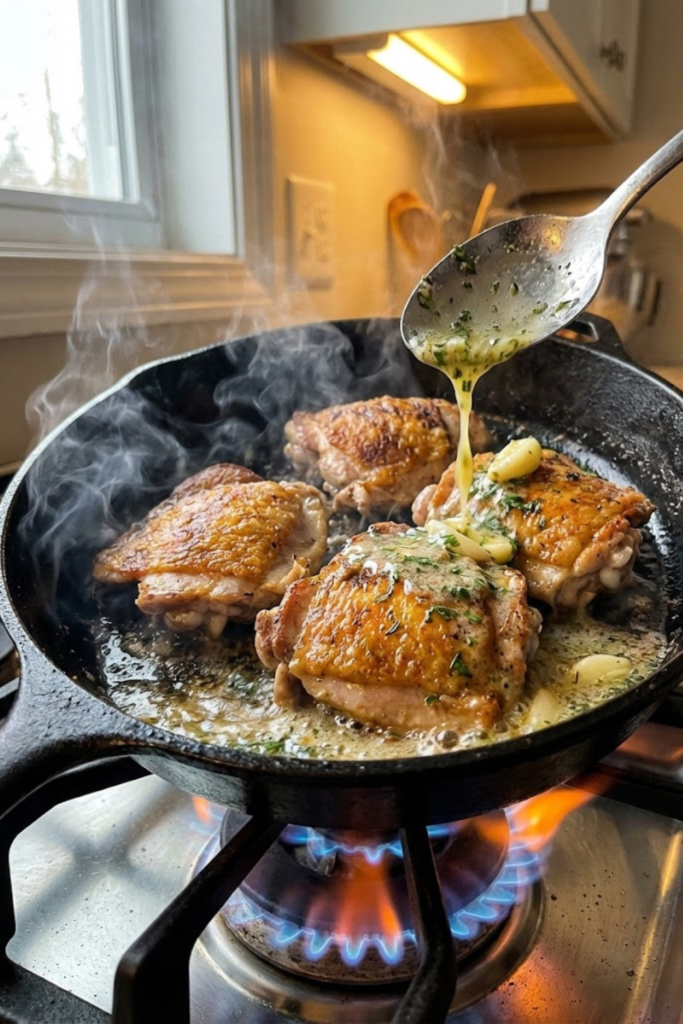
Once you flip the chicken, turn the heat down to medium so things don’t burn. This is where we add the flavor. Toss in your smashed garlic cloves, your sprigs of rosemary, and the thyme. Then, drop in a big knob of butter.
As the butter melts and starts to foam, it’s going to mix with the chicken fat and the herbs. It will smell incredible. Tilt the pan slightly so the liquid pools at the bottom. Take a large spoon and scoop up that hot, herby butter and pour it over the chicken. Keep doing this for a few minutes. This keeps the meat moist and helps cook the inside gently while flavoring it. It makes you feel like a real chef, too.
Checking if It is Done
After basting for a few minutes, you need to check if the chicken is cooked through. Don’t just guess! I used to cut into the meat to check, but that lets all the juice run out. Use a meat thermometer. You want the thickest part of the thigh to read 165°F (74°C).
Once it hits that number, take the chicken out of the pan and put it on a plate. Let it rest for at least 5 minutes before you serve it. If you cut into it right away, the juices spill out and the meat gets dry. Letting it rest keeps all that moisture inside where it belongs.
Serving Suggestions and Side Dishes
So, you have this beautiful pan of chicken with thyme and rosemary sitting on your stove. It smells amazing, and you are ready to dig in. But unless you want to eat just a pile of meat (which I have definitely done before), you probably need something to go with it. Since the chicken is rich and buttery, you want sides that can handle that flavor or help cut through it.
Potatoes Are Your Best Friend
In my opinion, you cannot serve this dish without potatoes. It’s almost a rule. My absolute favorite thing to do is mashed potatoes. Why? Because you have all that leftover garlic-herb butter in the pan! After I take the chicken out to rest, I usually pour that liquid gold right over a big mound of mashed potatoes. It acts like a gravy, but better because it has that crispy rosemary flavor.
If you don’t feel like boiling and mashing, roasted potatoes are great too. Sometimes, if I am being efficient (or lazy), I will toss some baby potatoes in olive oil and salt and throw them in the oven on a baking sheet while the chicken cooks on the stove. By the time the chicken is done resting, the potatoes are crispy and ready. It’s a win-win.
Keep It Fresh with Green Beans
Since the chicken is cooked in a good amount of butter, the meal can get kind of heavy. I like to balance it out with something green so I don’t feel like I need a nap immediately after dinner. Green beans are my go-to because they are super fast.
I usually just steam them or sauté them quickly in a separate pan with a little lemon juice. The acid from the lemon cuts through the richness of the chicken fat perfectly. A simple salad with a vinegar dressing works really well, too. You don’t need anything fancy—just some greens to make the plate look pretty and make you feel a little healthier.
Don’t Let the Sauce Go to Waste
I mentioned pouring the sauce on potatoes, but if you aren’t doing potatoes, get some crusty bread. There is usually a layer of brown bits stuck to the bottom of the skillet after you take the chicken out. That is pure flavor.
Grab a chunk of French bread or sourdough and wipe the pan clean with it. It might look a little messy, but it is the best bite of the whole meal. If you have guests over, maybe put the sauce in a little bowl so they can dip their bread politely. But if it’s just family? We just dip right in. It’s simple, it fills you up, and it makes sure none of that hard work goes in the trash.
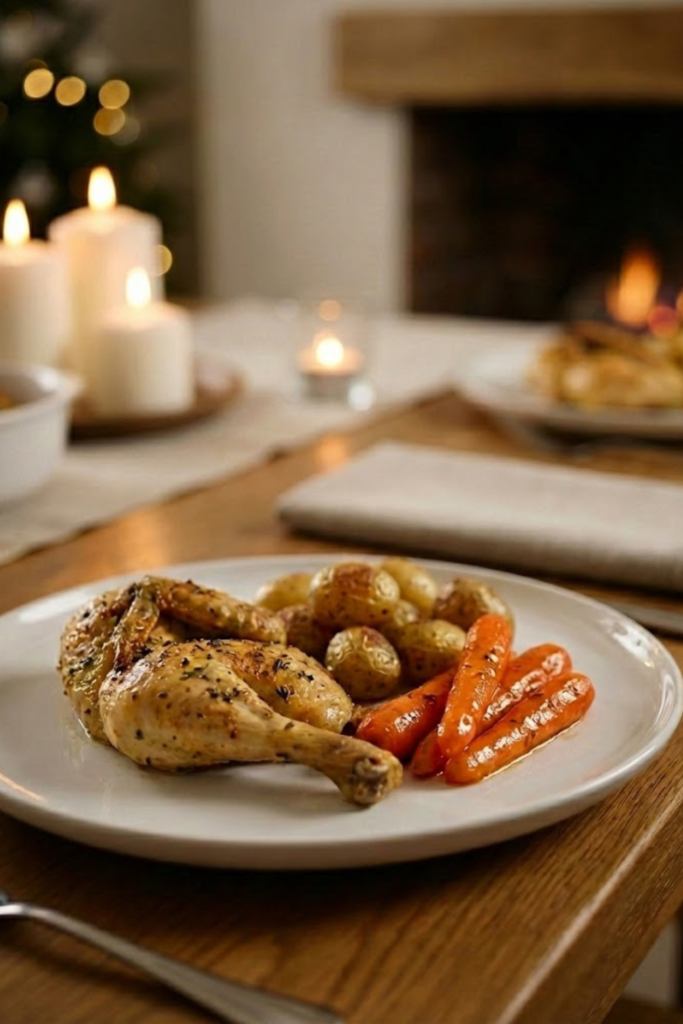
So, there you have it. That is my absolute favorite way to make chicken with thyme and rosemary. It really isn’t complicated, right? I know we went through a few specific steps, but once you do this a couple of times, you won’t even need to look at the recipe anymore. It will just become one of those meals you can make with your eyes closed—though please don’t actually close your eyes around a hot stove, safety first!
I really hope this helps you feel a little more confident in the kitchen. I remember when I first started cooking, I was so scared of ruining dinner and having to order pizza. But the cool thing about chicken thighs is that they are affordable and tough. Even if you overcook them a tiny bit, all that butter and those fresh herbs are going to save you. It is a very forgiving dish, which is exactly what we need on a busy Tuesday night.
Just remember the big things we talked about. Use fresh herbs if you can because the flavor is just so much better than the dried stuff. Don’t rush the searing process—let that skin get crispy and brown before you flip it. And please, give that bird a butter bath! Basting is the secret weapon that makes this taste like a restaurant meal instead of dry leftovers.
Cooking dinner doesn’t have to be a nightmare. It doesn’t need to take two hours or use a bunch of fancy equipment you’ll never touch again. Sometimes, the best meals are just a few good ingredients cooked simply. This chicken is proof of that. It’s warm, it’s comforting, and it feeds the soul just as much as it feeds the belly.
If you try this and it turns out great (which I know it will), I would love to hear about it. Or better yet, save this recipe so you don’t lose it in the black hole of the internet. Pin this to your dinner board on Pinterest so it is right there next time you are standing in the grocery store wondering what to make. It helps me out a ton when you share my stuff, and it helps other busy people find easy recipes too. Thanks for hanging out in my kitchen today, and happy cooking!