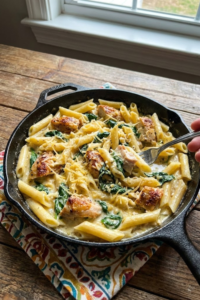
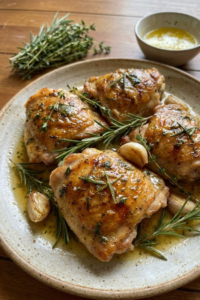
I used to be absolutely terrified of overcooking poultry! You know that feeling when you bite into a piece of meat and it’s dry as dust? Terrible. That is exactly why I switched to cooking garlic chicken thighs. They are incredibly forgiving and packed with flavor! Did you know that dark meat chicken contains more zinc and iron than white meat? It’s true. In this article, I’m going to show you exactly how to get that crispy skin and tender meat every single time. Get your skillet ready, because we are about to make some magic happen in the kitchen!
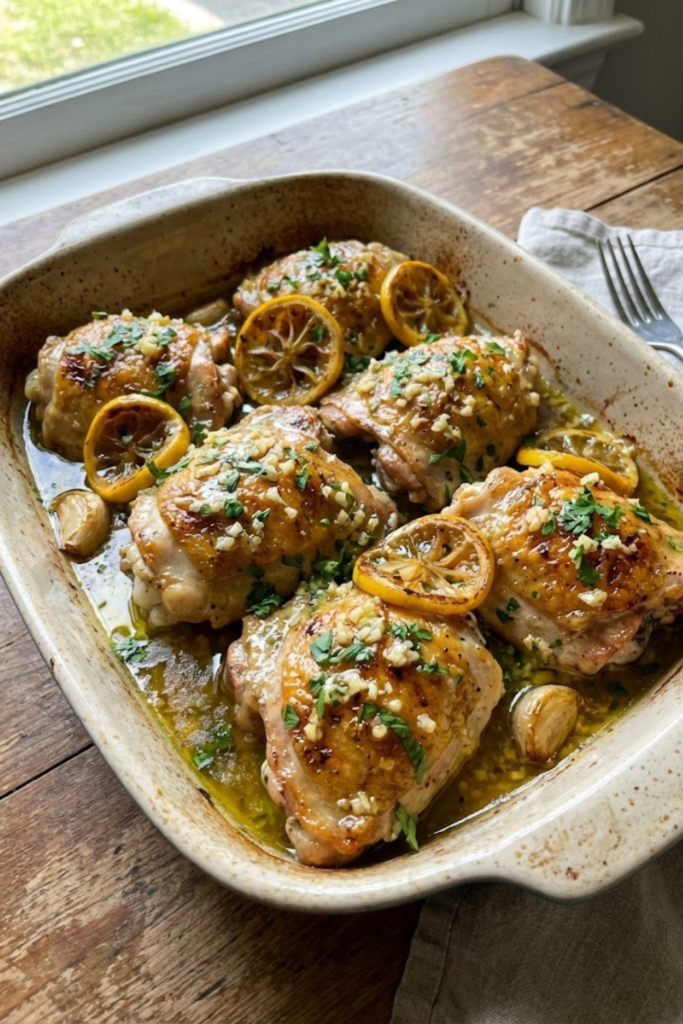
Selecting the Best Chicken Cuts for Flavor
I used to stand in the meat aisle for twenty minutes just staring at the packages. It was ridiculous. I’d usually grab the boneless, skinless breasts because I thought they were easier to deal with and “healthier.”
But let me tell you, that was a huge mistake. When I first tried to make garlic chicken thighs with those pale, skinny fillets, they turned into rubber. It was heartbreaking to chew through that dry meat after spending an hour cooking.
Bone-In is the Real Winner
You really have to go with bone-in, skin-on thighs for this recipe. The bone acts like a little heat shield for the meat. It keeps the inside juicy while the skin gets that amazing crunch.
If you use boneless meat for garlic chicken thighs, you miss out on all that flavor rendering down from the skin. I know bone-in cuts look a bit intimidating if you aren’t used to them. But trust me, the flavor difference is night and day.
Watch Out for the Color
When you are at the store, look closely at the package. Fresh chicken should be pinkish and shiny, not gray or dull. I once bought a pack that looked a little off just because it was on sale.
I regretted that instantly when I opened it at home. The smell was funky, and I had to order pizza instead. Don’t risk it just to save a couple of dollars.
Trimming the Fat
Now, you don’t need to be a surgeon here. I used to chop off every tiny bit of white fat I could see. My poor chicken ended up looking like it had been in a fight.
You actually want some of that fat to stay on. It melts down and makes its own sauce in the pan. Just snip off the long, dangling bits that look like they won’t cook down.
Is Organic Worth It?
I struggled with this choice for years because of the price tag. But for a recipe where the meat is the star, I think it matters. The organic birds tend to be smaller, but the meat is usually more tender.
If you can swing it, give it a try. If not, regular chicken is still totally fine if you cook it right. Just keep an eye on those expiration dates!
The Skin Factor
The skin is the best part of garlic chicken thighs. It holds all the seasoning. I used to be scared of the calories, so I pulled the skin off before baking.
My family was so disappointed. The garlic butter just slid right off the meat without the skin there to grab it. Now I leave it on and just enjoy the meal.
It crisps up beautifully in the oven. If you really don’t want to eat the skin, you can take it off after cooking. But please, keep it on while it bakes to protect the meat!
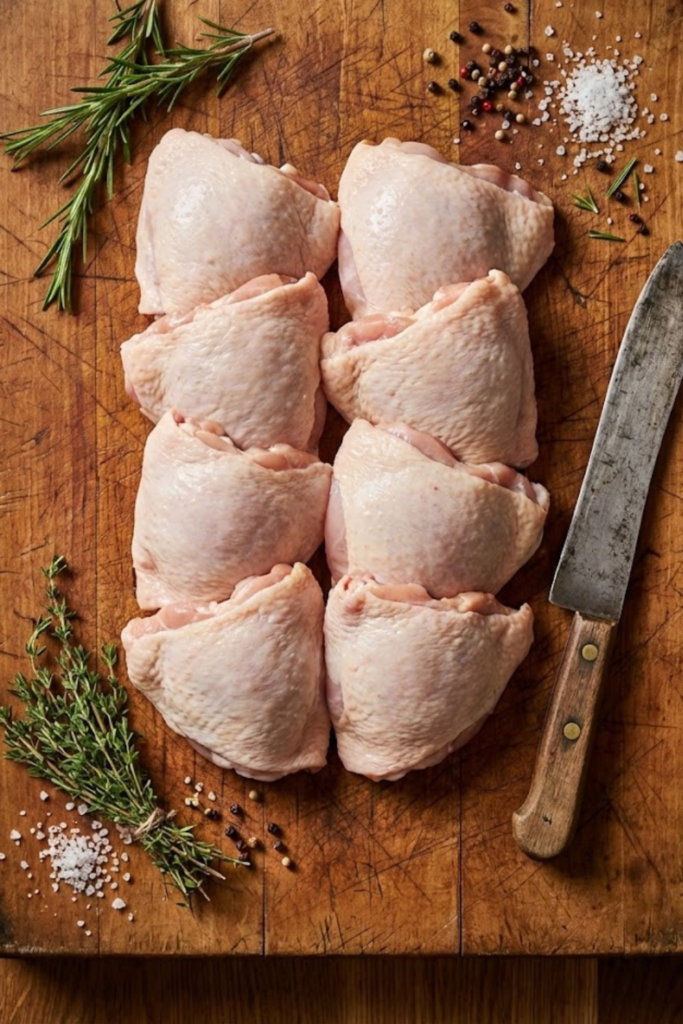
Crafting the Perfect Garlic Herb Marinade
I used to think that pouring a bottle of store-bought Italian dressing over chicken was “cooking.” I mean, it was easy, right? But honestly, the flavor was never quite there. It always tasted kind of fake and salty.
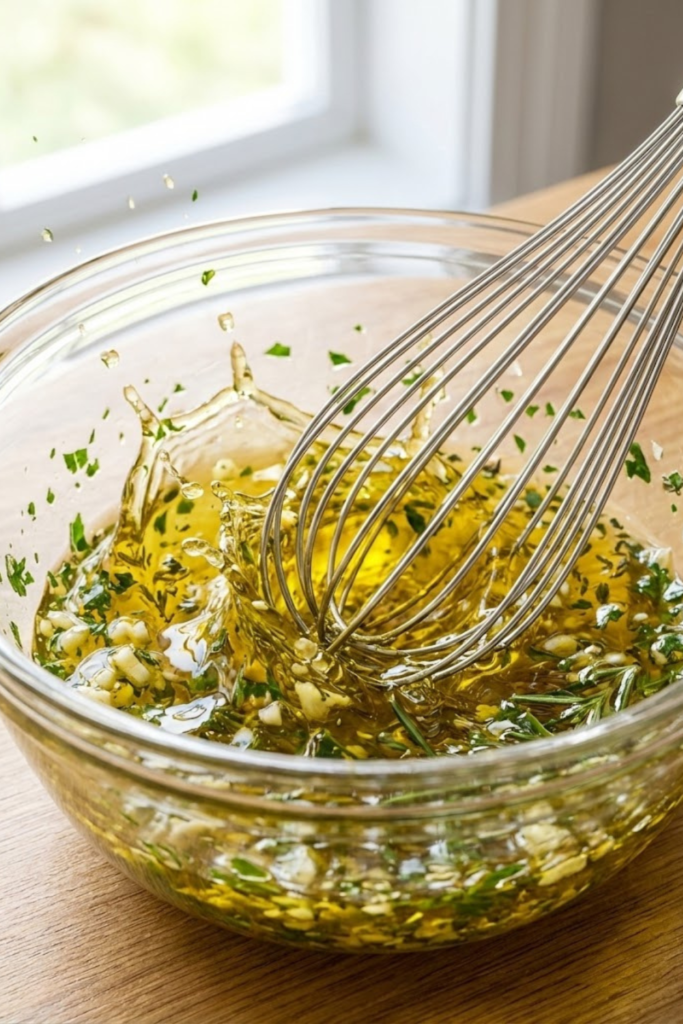
When I finally started making my own marinade for garlic chicken thighs, I realized I had been doing it wrong for years. You don’t need twenty ingredients. You just need the right ones.
Please Use Fresh Garlic
Okay, look. I know the jar of minced garlic is convenient. I have one in my fridge right now for emergencies. But for this? You really need fresh cloves.
I remember making this once with garlic powder because I was too tired to chop. My kids ate it, but they didn’t ask for seconds. The powder just sits on top and burns. Fresh garlic gets sticky and sweet when it cooks. It makes a huge difference.
Grab a heavy knife and smash those cloves. It feels good after a long week, honestly.
Getting the Balance Right
You need fat and you need acid. That is the secret. If you use too much lemon juice, the meat gets weird and mushy. I learned that the hard way when I let some thighs sit in pure lemon juice overnight. They basically dissolved. It was gross.
I stick to a simple mix: mostly olive oil, with just a splash of lemon or vinegar. It keeps the garlic chicken thighs tender without ruining the texture.
Picking Your Herbs
I used to buy those little plastic packs of “poultry blend” herbs. Half the time they went bad in the drawer before I could use them again.
Now, I usually just grab rosemary and thyme. They are sturdy herbs. They don’t turn black and slimy in the oven like basil does. If you only have dried herbs in the pantry, that is fine too! Just rub them between your fingers before you drop them in. It wakes up the smell.
“Does it really matter?” my friend asked me once. Yes, it does. The smell of rosemary baking with chicken is the best air freshener you can buy.
How Long to Wait?
This is where I always messed up. I thought “longer is better,” so I would marinate things for two days. Bad idea. The meat gets mealy.
For these garlic chicken thighs, thirty minutes on the counter is actually enough if you are in a rush. If you have time, a few hours in the fridge is the sweet spot. But don’t stress if you forget to prep it the night before. I forget all the time. It still comes out tasting great.
Mastering the Pan-Sear and Oven Method
I used to just throw my chicken in a glass baking dish and shove it in the oven. It came out okay, but the skin was always kind of flabby. It was edible, but it wasn’t great.
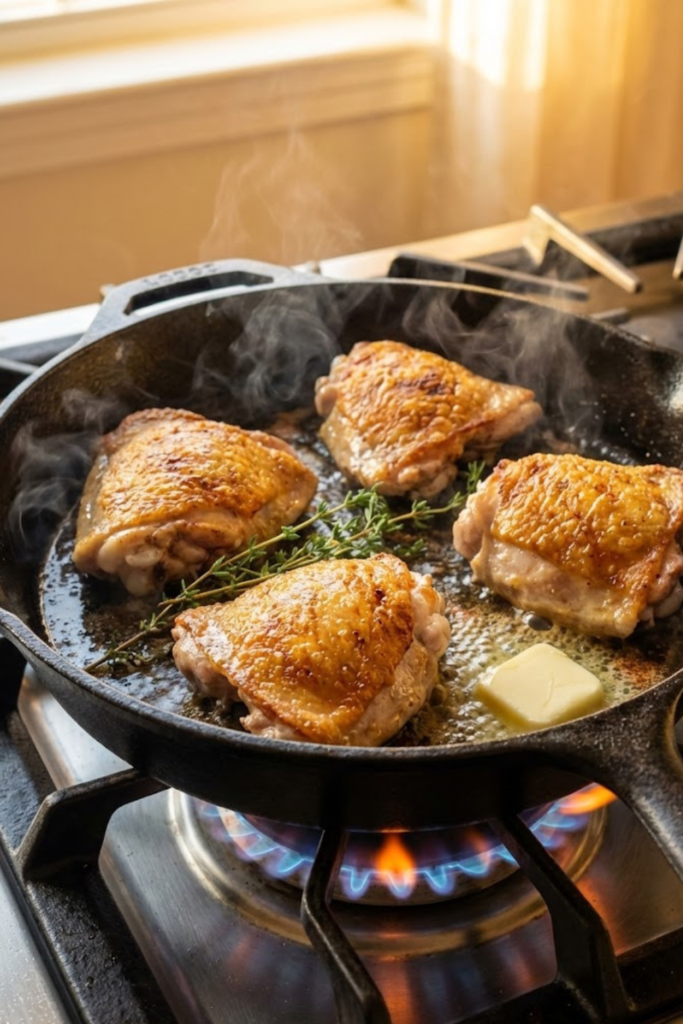
Then I learned about searing. This is the step that changed everything for my garlic chicken thighs. You have to start on the stove and finish in the oven. It sounds like extra work, but it really isn’t.
The Skillet Matters
If you have a cast iron skillet, use it. I used to be scared of mine because it was so heavy and hard to clean. But it holds heat better than anything else.
If you don’t have one, just use a stainless steel pan. Just please, make sure the handle is oven-safe! I melted a rubber handle once. The smell was awful, and I had to throw the whole pan away.
Get the pan hot before you put the meat in. If you put chicken in a cold pan, it just steams. You want to hear a sizzle the second it hits the metal.
Skin-Side Down First
This is the most important rule. You have to put the chicken in skin-side down. And then, you have to leave it alone.
I used to poke at the meat constantly. I was worried it was burning. But if you try to flip it too soon, the skin will rip off and stick to the pan. That is a tragedy.
Give it about 5 to 7 minutes. If you lift a corner and it releases easily, it’s ready to flip. If it sticks, it needs another minute. Be patient.
The Oven Does the Rest
Once the skin is golden brown and crispy, flip the thighs over. Now, turn off the burner and move the whole pan into the oven.
I set my oven to 400°F (200°C). I used to bake chicken at 350°F because I thought high heat would dry it out. I was wrong. The higher heat cooks the garlic chicken thighs faster so they stay juicy inside.
If you cook them too slow, they just dry out.
Don’t Forget to Baste
About halfway through the oven time, I like to open the door and spoon some of that garlic butter juice over the chicken. It makes the meat look shiny and keeps the top from getting dry.
Just be quick about it. You don’t want to let all the heat out of the oven. A quick spoon-over is all it takes to make them look like a restaurant meal.
Ensuring Food Safety and Internal Temperatures
I used to be so paranoid about serving raw chicken. I would bake my poor garlic chicken thighs until they were practically leather just to be safe. “Better dry than dangerous,” I would tell myself.
That was a terrible way to cook. If you are guessing, you are probably ruining dinner.
Get a Digital Thermometer
I fought this for years. I thought I could tell by touching the meat or looking at the color. I was wrong.
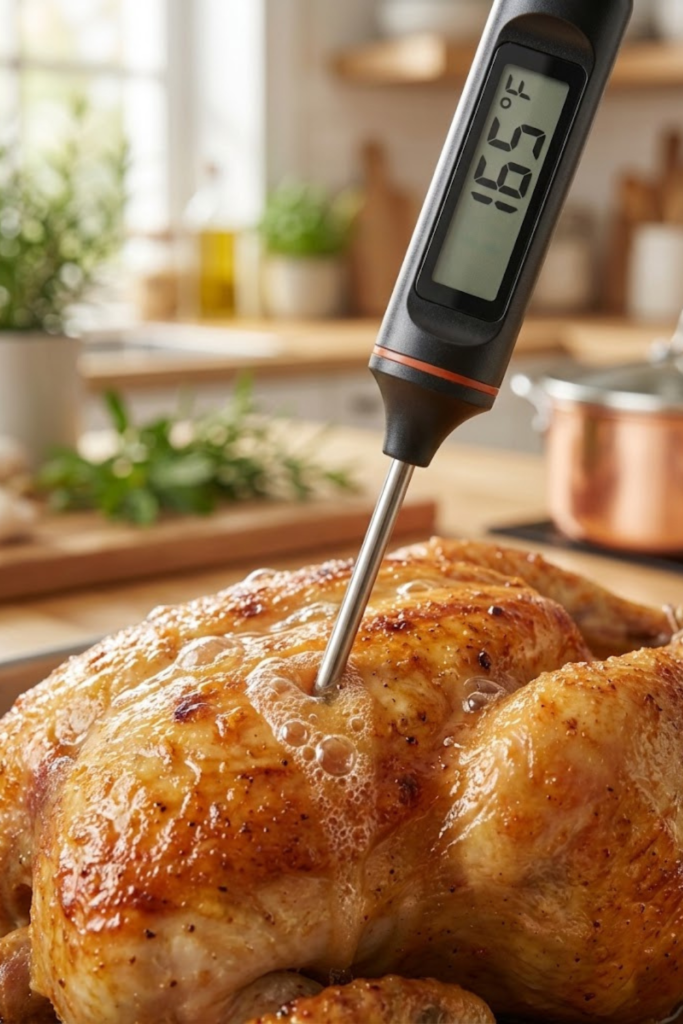
Finally, I bought a cheap digital thermometer at the grocery store. It changed everything. You just stick the probe into the thickest part of the thigh, making sure you don’t hit the bone. The bone gets hotter than the meat and will give you a fake number.
The Magic Number
You are looking for 165°F (74°C). That is the safe zone.
But here is a little secret I learned: I usually pull the garlic chicken thighs out of the oven when they hit about 160°F.
Why? Because of “carryover cooking.” The pan is still hot, and the meat keeps cooking for a few minutes while it sits on the counter. If you wait until it hits 165°F in the oven, it might be 170°F by the time you eat it. That means it might be a little dry.
Stop Cutting into It!
I used to slice into the biggest piece to check for pink. That is the worst thing you can do.
When you cut the meat right away, all those delicious juices run out onto the cutting board. You want that juice inside the chicken, not on the board.
Trust your thermometer. If it says it’s done, it’s done.
let It Rest
This is the hardest part. You smell the garlic and butter, and you just want to eat. But you have to wait.
Let the chicken rest for at least 5 to 10 minutes before you serve it. This lets the juices settle back into the meat. If you cut it too soon, it steams out and gets dry. Use that time to finish your salad or set the table. Your patience will pay off, I promise.
Pairing Side Dishes for a Complete Meal
I used to be the worst at planning sides. I’d spend all this energy making the main dish and then realize I had nothing to go with it. We ate a lot of plain toast in those days.
But garlic chicken thighs are rich and buttery, so you need the right partners on the plate. If you serve the wrong thing, the meal just feels heavy.
Bring on the Carbs
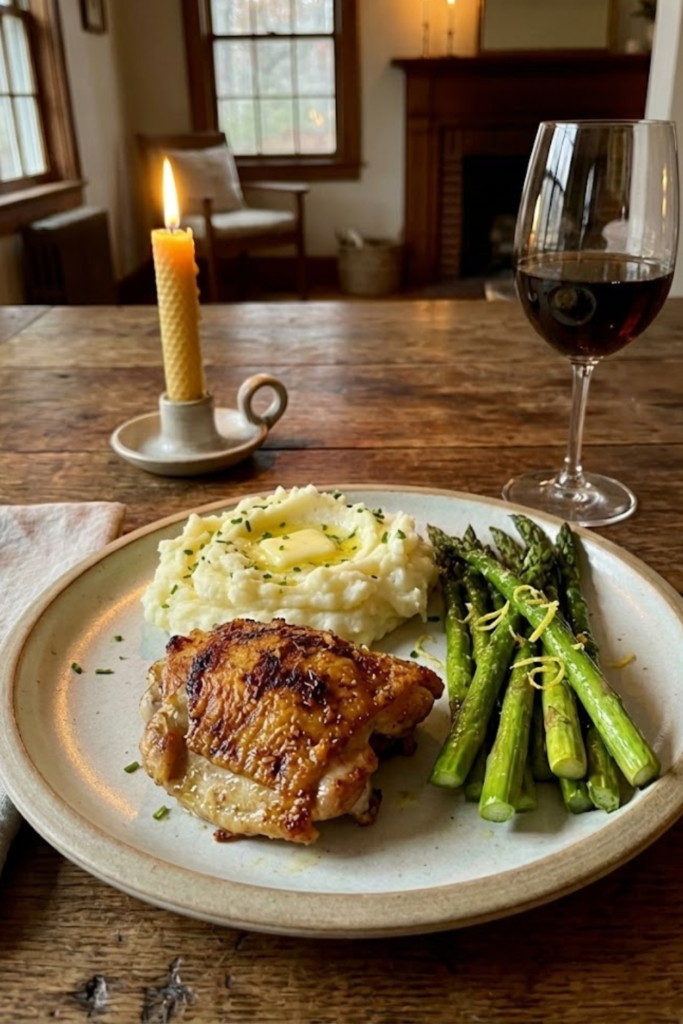
I love potatoes. I really do. For this recipe, mashed potatoes are the absolute best choice. You can make a little well in the center of the potatoes and pour the extra garlic sauce right in. It is heaven.
If I am feeling lazy and don’t want to peel potatoes (which is often), I just cut up some baby red potatoes. I toss them on a baking sheet and roast them at the same time as the chicken. It makes cleanup way easier.
Garlic butter rice is another good one. It soaks up the juices really well.
Add Some Green
My plate always looks a little sad if it is just brown meat and white potatoes. You need some color.
I usually go with asparagus because it cooks fast. You can even throw it in the pan with the chicken for the last ten minutes. Green beans work well too.
If the meal feels too heavy, try a salad. A simple arugula salad with lemon juice helps cut through the grease. It makes you feel a little better about eating all that butter.
Don’t Waste the Sauce
The liquid left in the pan is liquid gold. Please don’t wash it down the drain!
I always buy a loaf of crusty bread from the bakery section. We use it to mop up every drop from the skillet. My kids actually fight over who gets to dip the last piece of bread.
If you have leftovers, that sauce is amazing over pasta. It beats the jarred stuff any day.
Keeping it Low Carb
I tried the Keto diet for a month a while back. It was hard, but this chicken recipe saved me. Since it is mostly protein and fat, it fits perfectly.
Instead of potatoes, I used cauliflower rice. I know, it’s not the same, but when you mix it with the garlic drippings, it actually tastes pretty good. Zucchini noodles are another option, but make sure you dry them off first so they don’t make your sauce watery.
Well, there you have it. That is my whole routine for garlic chicken thighs. I hope it didn’t sound too complicated. Honestly, once you do it one or two times, you won’t even need to look at the instructions anymore.
I know it can be scary to try a new cut of meat if you are used to chicken breasts. But the flavor here is just so much better. You won’t regret it.
If this helped you out, please take a second to pin this to Pinterest. It helps me share this with more people, and you can save it for next time you are hungry. Thanks for reading, and I hope your dinner turns out great!