I’ve got to tell you, I used to waste hours roasting my own chickens just for a pot pie. It was exhausting trying to get a good dinner ready after working all day. Once I tried making rotisserie chicken chicken pot pie filling, everything changed for my weeknight meals. It is so creamy and savory, and it really beats the frozen stuff by a mile. You skip all the raw meat mess, which saves a ton of cleaning up. We are going to make this homestyle favorite easy and fast.
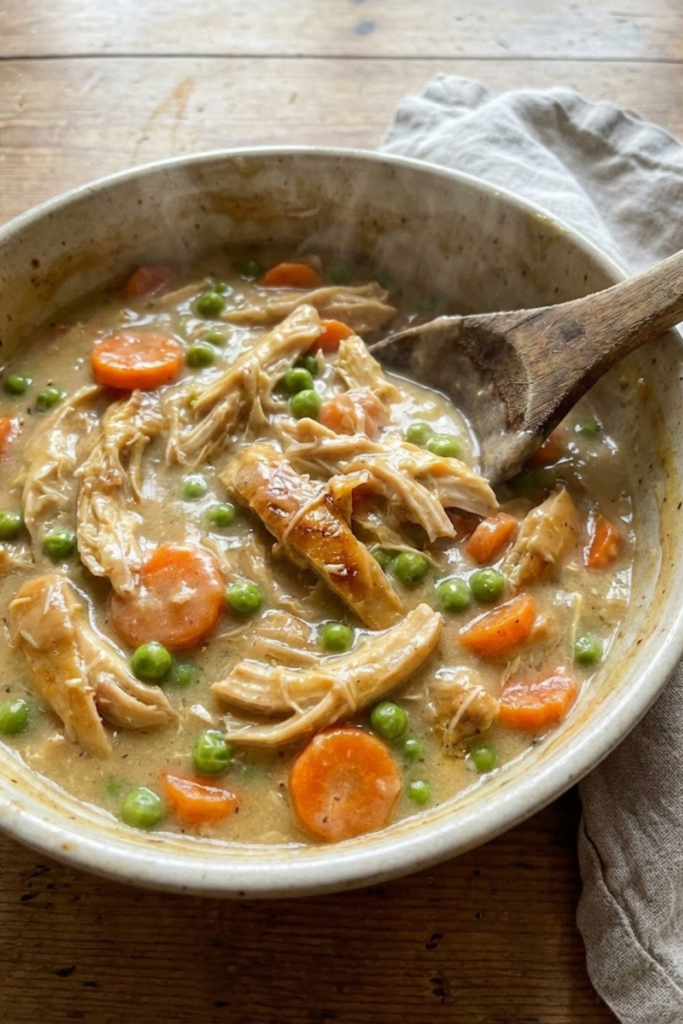
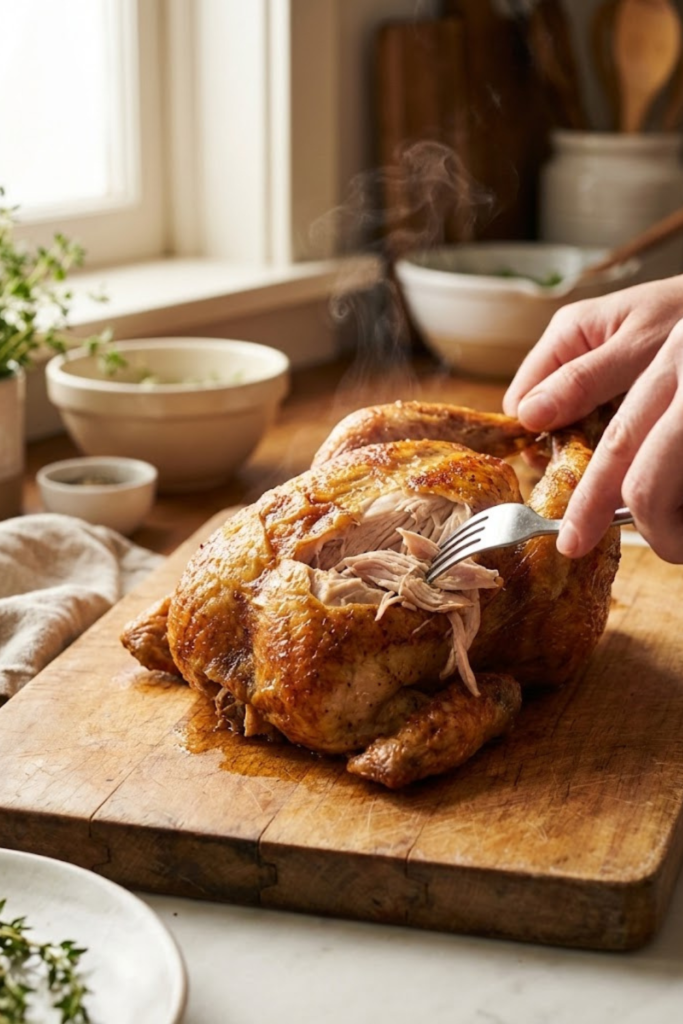
Why Rotisserie Chicken is the Secret Weapon for Pot Pie Filling
I have to be honest with you—I used to be a total snob about making everything from scratch. I thought if I didn’t roast the bird myself, I was failing. But let me tell you, that mindset led to a lot of dry, sad dinners and a mountain of dishes I didn’t want to wash. It wasn’t until I ruined a beautiful Sunday roast that I finally caved and bought a grocery store bird. That was the day I realized that rotisserie chicken chicken pot pie filling is actually superior to the “authentic” way.
The Flavor Factor You Can’t Fake
When you boil or bake a plain chicken breast at home, it’s fine. It does the job. But it just doesn’t have that deep, salty, savory punch that a rotisserie chicken has. These birds are marinated and slow-roasted for hours, meaning the flavor goes all the way to the bone.
I remember trying to mimic that taste with a dozen different spices from my cabinet. I made a huge mess, and it still tasted bland. When you use the pre-cooked meat, you are instantly injecting that seasoned goodness right into your sauce. The rotisserie chicken chicken pot pie filling ends up tasting like it simmered all day, even if you only spent twenty minutes on it.
Texture Is Everything
Here is a mistake I made a dozen times: I would cook raw chicken cubes in the pie. Do not do this. By the time the crust was golden and flaky, the meat was tough as shoe leather. It was heartbreaking.
Rotisserie meat is already perfectly tender. Because it’s dark and white meat mixed together, it has a higher fat content that keeps it moist. When you bake it inside the pie, it doesn’t dry out; it just gets softer and soaks up that creamy gravy. It’s the difference between a pie you tolerate and a pie you actually crave.
Saving My Sanity on Weeknights
I love cooking, but I also love sitting down. Plucking meat off a warm bird takes five minutes. Roasting one takes an hour and a half.
- No raw meat cross-contamination: I hate scrubbing cutting boards with bleach on a Tuesday night.
- Predictable yield: You know exactly how much meat you’re getting.
- Cost-effective: Honestly, sometimes the cooked bird is cheaper than the raw one!
Using rotisserie chicken chicken pot pie filling isn’t cutting corners; it is just being smart with your time. You get to skip the hard part and go straight to the eating part, which is really what we are all here for anyway.
Essential Ingredients for a Creamy Pot Pie Base
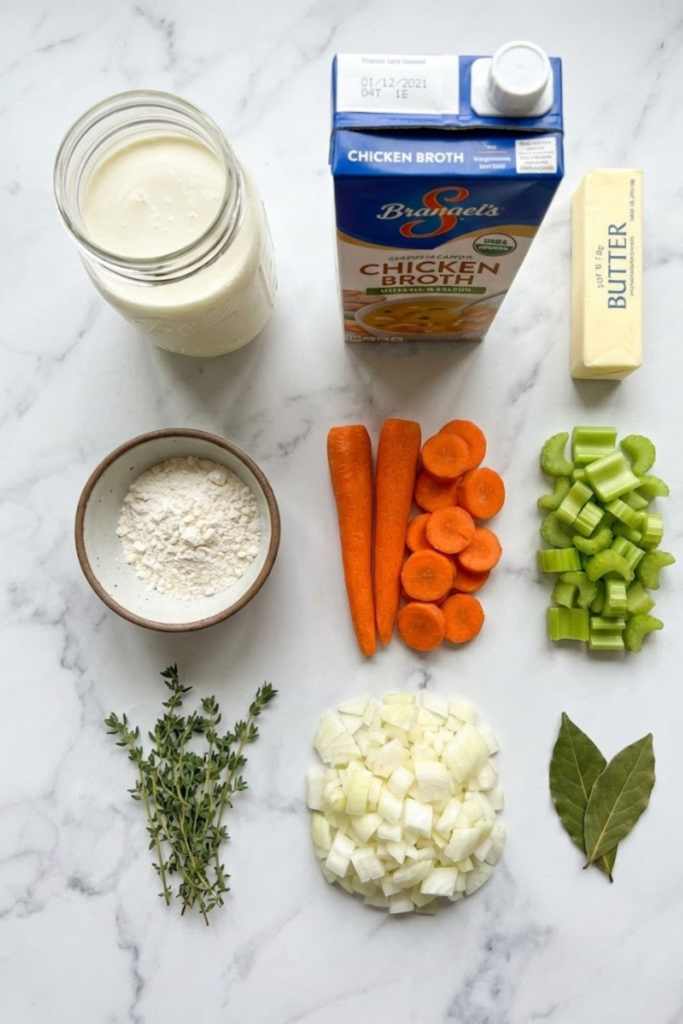
I used to think that making a pot pie filling was just about dumping a can of soup over some veggies and calling it a day. Boy, was I wrong. My first few attempts were either flavorless mush or a watery mess that soaked through the bottom crust instantly. It took me a few years of trial and error to realize that the base ingredients are actually more important than the chicken itself. If you want that rich, velvety rotisserie chicken chicken pot pie filling, you can’t just wing it with leftovers from the fridge.
Respect the Holy Trinity
In culinary school—okay, I didn’t go to culinary school, but I watch a lot of cooking shows—they call it a mirepoix. It’s just onions, carrots, and celery. I used to skip the celery because I hate the stringy texture.
Big mistake.
Celery adds this salty, savory depth you can’t get from salt alone. Now, I make sure to dice everything super small. If the carrots are too big, they don’t cook through, and you end up crunching into a hard rock of a vegetable in your soft pie. Nobody wants that. I usually aim for a classic ratio: two parts onion, one part carrot, one part celery. It creates the perfect savory bed for everything else to sit on.
The Liquid Gold Ratio
This is where I messed up the most in my early days. I used to use skim milk because I was trying to be “healthy.” Let me be real with you: pot pie is not health food. When I used milk, the sauce broke and looked curdled.
You really need the fat content to keep the sauce stable. I’ve found that a mix of good quality chicken broth and heavy cream is the only way to go. I usually do about two cups of broth to half a cup of cream. It gives you that silky texture that coats the back of the spoon without being like glue. If you don’t have heavy cream, half-and-half works, but please, leave the skim milk for your cereal. The rotisserie chicken chicken pot pie filling needs that richness to stand up to the crust.
Herbs and The Secret Weapon
Dried herbs are fine, but fresh herbs change the game. I have a little thyme plant on my windowsill that I mostly ignore, but it shines here. I strip the leaves off about three sprigs.
If you only use dried, just remember they are stronger, so use less. But here is the trick I learned from a diner chef: Turmeric. Just a tiny pinch. It doesn’t add much flavor, but it turns the sauce from a sad, pale beige to a beautiful, appetizing golden yellow. It makes the rotisserie chicken chicken pot pie filling look like it came out of a magazine. It’s a small thing, but we eat with our eyes first, right?
Butter Makes It Better
Don’t use oil for your veggies. Use butter. Salted butter. It adds a flavor that oil just can’t match. I usually start with about four tablespoons. It seems like a lot, but remember, this fat is what mixes with the flour to thicken your sauce later. If you skimp on the butter, your sauce won’t thicken right, and you’ll be sad. I’ve been there. Trust me on the butter.
Step-by-Step: Making the Roux and Sauce
I still remember the first time I heard the word “roux.” I thought it was some fancy French technique that I had no business trying in my messy kitchen. I was so scared I would burn the house down or make a gluey disaster. But honestly? Once I figured it out, I realized it is just a fancy word for “cooking flour and butter together.” This is the most important part of your rotisserie chicken chicken pot pie filling, so don’t skip ahead!
Getting the Flour Right
After your veggies are soft and smelling good in that butter, you can’t just dump the liquid in. I made that mistake once, and I ended up with a soup, not a pie filling. You have to sprinkle the flour right over the vegetables.
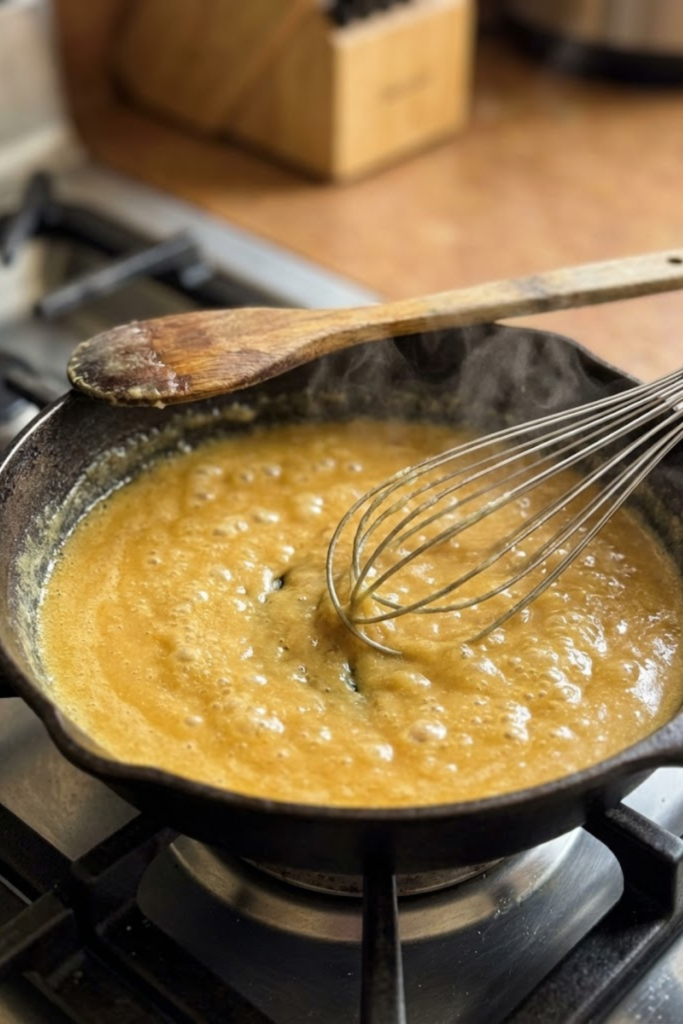
I usually use all-purpose flour. You want to stir it around constantly for about two minutes. You aren’t just mixing it; you are actually cooking the raw taste out of the flour. If you don’t do this, your sauce will taste like playdough. I wait until it starts to smell a little bit nutty, kind of like toasted bread. It will look like a paste coating all your onions and carrots. It looks weird, but trust the process.
The Slow Pour (Do Not Rush This!)
This is where my patience gets tested. I am a rusher. I want to dump the whole carton of broth in and be done with it. But if you do that, you will get lumps. Big, gross lumps of flour that never dissolve.
You have to pour the broth in slowly. I pour a splash, whisk like crazy, then pour another splash. My arm usually gets a little tired, not gonna lie. But as you whisk, that paste starts to turn into a smooth, thick gravy. It’s actually kind of satisfying to watch. Once you have added about half the broth and it looks smooth, you can dump the rest in safely.
** The Spoon Test**
How do you know when it is done? I used to guess and hope for the best. Now, I use the spoon test. Let the sauce simmer (little bubbles, not a big boil) for about five minutes. Dip a metal spoon in and pull it out. Run your finger down the back of the spoon.
If the line stays clean and the sauce doesn’t run immediately to cover it up, it’s perfect. It should be thick, almost like pudding before it sets. This is crucial because when you add the meat for your rotisserie chicken chicken pot pie filling, it releases a little moisture. If your sauce is too thin now, your bottom crust will be a soggy nightmare later. Finally, stir in your cream and take it off the heat immediately so it doesn’t separate.
Customizing Your Vegetable Mix-Ins
I used to be so strict with my recipes. If it didn’t say “fresh organic garden peas,” I wouldn’t make it. But let’s be real, who has time for shelling peas on a Wednesday? I learned the hard way that sometimes convenience is actually better. The beauty of this rotisserie chicken chicken pot pie filling is that it is forgiving. You can toss in what you have, and it still tastes amazing.
Frozen vs. Fresh: The Great Debate
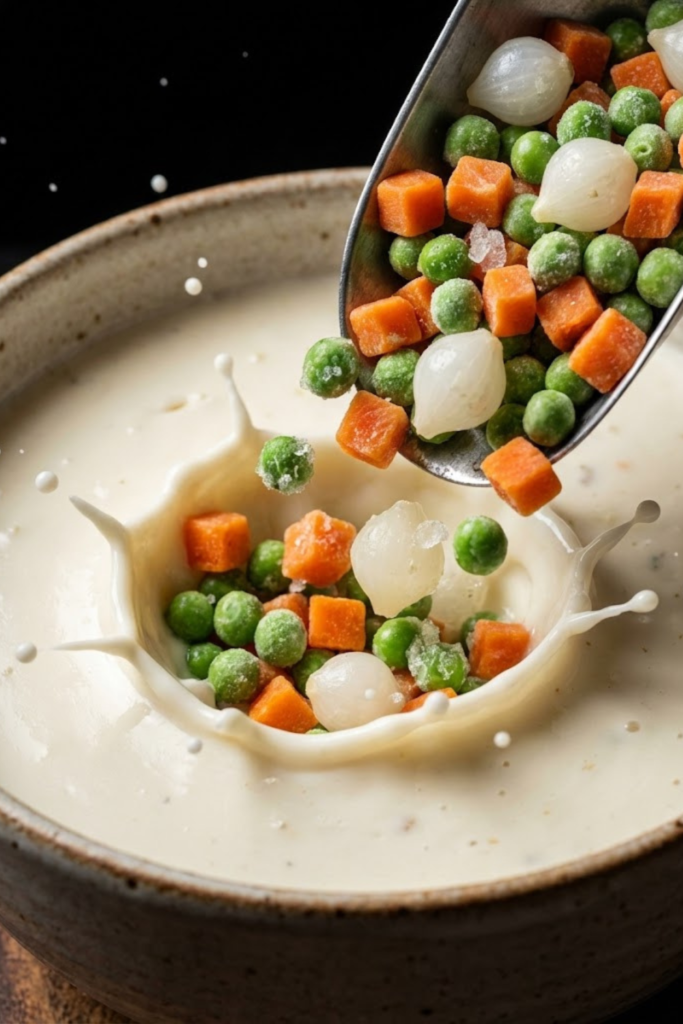
I actually prefer frozen vegetables for this. I know, scandal! But here is why: fresh peas and corn take forever to cook, and by the time they are soft, your chicken is dry. Frozen veggies are flash-blanched, which means they are already halfway cooked.
I grab a bag of frozen peas, carrots, and corn from the freezer. I don’t even thaw them. I just dump them right into the hot sauce at the very end. The residual heat from the gravy thaws them perfectly without turning them into mush. It keeps them bright green and snappy. If you use canned veggies, they are already so soft they just disintegrate. Frozen is the sweet spot for me.
Adding Texture (No More Mushy Pies)
One time, I tried to add raw potatoes to the filling. Huge disaster. They were still crunchy when the pie was done. My family was polite, but I saw them picking around the hard cubes.
If you want potatoes in your filling—and I usually do because they are delicious—you have to par-cook them. I dice my potatoes super small, like the size of a dice, and boil them for about 5 minutes before adding them. They should be just tender enough to poke with a fork but not falling apart. This way, they soak up the sauce without ruining the texture. Mushrooms are another great add-in, but sauté them first! Mushrooms release a ton of water, and if you throw them in raw, your nice thick sauce will turn into soup.
Greens and unexpected additions
Sometimes I want to feel a little healthier, so I toss in some green beans. But you have to cut them small. Long stringy beans are awkward to eat in a pie. I chop them into one-inch pieces.
I have even thrown in leftover roasted broccoli from the night before. It was surprisingly good! The key is to make sure whatever you add is bite-sized. You want to get a little bit of everything—chicken, sauce, crust, and veggie—in one bite. If the pieces are too big, it ruins the experience. Just have fun with it. As long as you stick to the creamy base, you can really make this rotisserie chicken chicken pot pie filling your own.
Storage and Freezing: Meal Prep Like a Pro
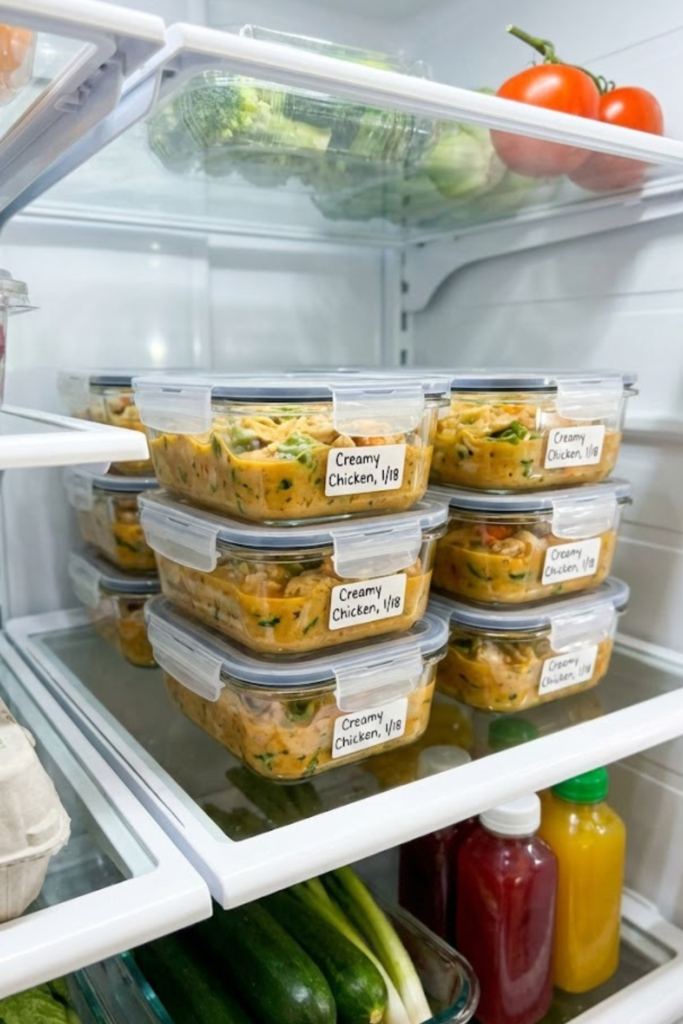
I am a huge fan of cooking once and eating twice. As a teacher, my weekdays are crazy, and coming home to a meal that is already done is the best feeling in the world. I used to be scared to freeze anything with cream in it because I heard it would curdle and get gross. But after wasting a huge batch of rotisserie chicken chicken pot pie filling because we couldn’t eat it fast enough, I decided I had to figure out the freezer game. It turns out, you can totally freeze this, but you have to follow a few rules so you don’t end up with a watery mess.
How Long Does It Last?
First things first, let’s talk about the fridge. I used to push my luck and eat leftovers that were probably a week old. My stomach did not thank me. Now, I stick to a strict 3-to-4 day rule.
Because this recipe uses rotisserie chicken that was already cooked once before you bought it, you need to be a little careful. I always store the filling in glass containers. I learned the hard way that the turmeric in the sauce will stain your nice plastic Tupperware yellow forever. Seriously, I have a few bowls that still look neon yellow from 2021. Glass cleans up easy and doesn’t hold onto smells. Make sure the filling is completely cool before you put the lid on. If you trap the steam, it turns into water droplets, and water is the enemy of a thick sauce.
The Freezer Technique
If you want to freeze this for later, you absolutely can. I usually make a double batch specifically for this. The trick is cooling it down fast. I spread the filling out on a baking sheet to let the heat escape quickly before bagging it up.
I prefer using heavy-duty freezer bags instead of rigid containers. Why? because you can lay them flat. I fill a bag about halfway, squeeze all the air out (air causes freezer burn!), and seal it. Then I lay it flat on a shelf in the freezer until it’s a solid brick. Once it’s frozen, you can stack them like books. It saves so much space in my tiny freezer. It should stay good for about three months. Just remember to label it! There is nothing worse than defrosting a mystery bag thinking it is soup and realizing it is pie filling.
Reheating Without the Mess
This is where people mess up. If you take that frozen bag and nuke it in the microwave on high, the sauce is going to break. The oil will separate from the cream, and it will look greasy and weird. It still tastes okay, but the texture is ruined.
I always let it thaw in the fridge overnight. When it’s time to heat it up, I put it in a pot on the stove over low heat. If it looks a little separated or too thick, don’t panic. Just add a splash of fresh chicken broth or a tiny bit of milk and whisk it gently as it warms up. It usually comes right back together. If you are baking it into a pie, you can actually dump the cold (but thawed) filling right into your crust. It will heat through perfectly while the crust bakes, which actually helps keep the bottom crust from getting soggy. It’s a win-win.
Making a homemade meal doesn’t have to mean spending hours by the oven. I used to think that if I didn’t sweat over the stove for half the day, it wasn’t a “real” dinner. But honestly, who has the energy for that? By using this rotisserie chicken chicken pot pie filling method, you get all that rich, slow-cooked flavor in a fraction of the time. It really is a lifesaver on those days when you just want to order pizza but know you should probably eat a vegetable.
I hope this recipe becomes a staple in your cozy dinner rotation like it has in mine. There is something really special about pulling a bubbling pie out of the oven and seeing your family’s eyes light up. It’s warm, it’s filling, and it smells like a hug. Plus, using the rotisserie bird means you aren’t left with a sink full of raw chicken dishes, which is a huge win in my book.
Remember, cooking doesn’t have to be perfect to be good. Even if your crust isn’t pretty or your veggies are a little uneven, it’s going to taste amazing because you made it. Don’t stress about the small stuff. Just enjoy the creamy, savory goodness.
If you found this guide helpful and want to save it for a rainy day, please pin it to your “Comfort Food” or “Easy Dinners” board on Pinterest! It helps other home cooks find the recipe, and it helps me keep sharing these tips with you. Happy cooking!