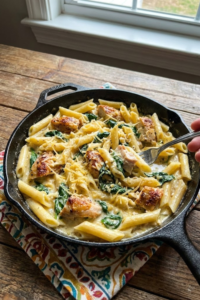
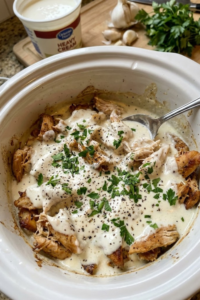
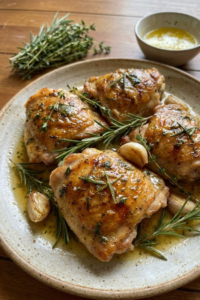
Did you know that nearly 80% of families struggle to put a healthy dinner on the table during the busy work week? I totally get it. Life gets fast, and sometimes you just want to collapse on the couch instead of standing over a stove. That is why I am obsessed with this rotisserie chicken spinach pasta! It is my “emergency” meal. I’ve made it when I was tired, grumpy, and even when I accidentally burned a different side dish. It’s saved my sanity more than once! You just grab a pre-cooked chicken, some greens, and a box of noodles. Boom. Dinner is done in the time it takes to boil water.
Choosing the Best Rotisserie Chicken for Your Pasta
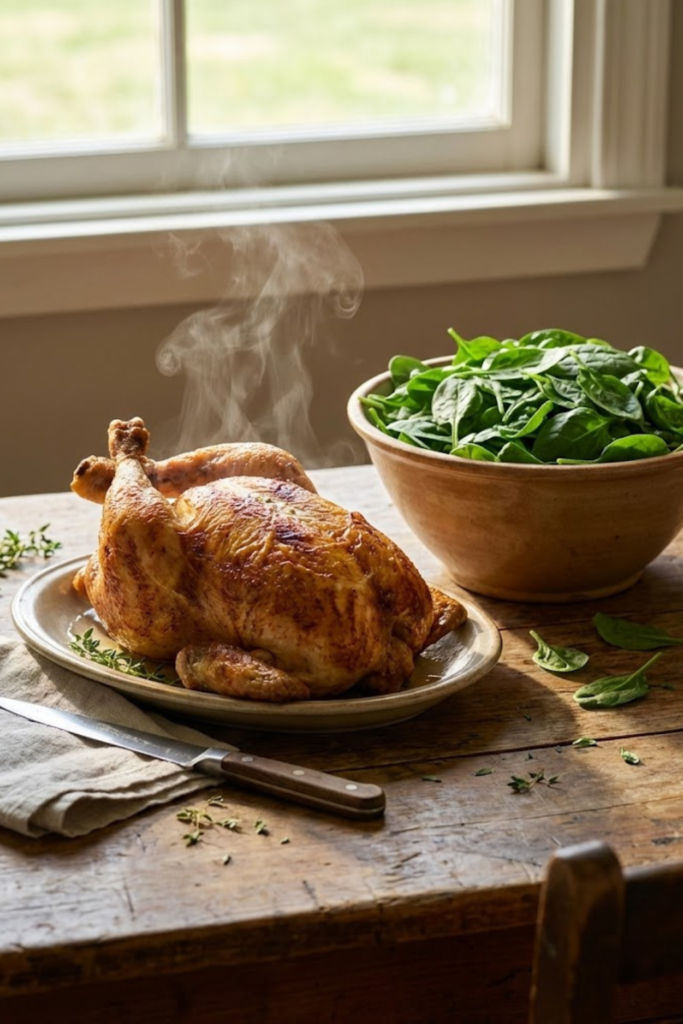
I have spent many years rushing into the grocery store after a long day at school, just trying to find something quick to feed my family. The rotisserie chicken is basically a gift to busy parents. But let me tell you, not all store-bought birds are the same. If you want your rotisserie chicken spinach pasta to taste like a five-star meal instead of a dry, salty mess, you have to be picky at the warming rack. I used to just grab the first container I saw, but after a few disappointing dinners, I learned my lesson. You really have to look at what you are buying before you head to the checkout line.
Look for the Juice (The Bag Test)
When you are standing there in the deli aisle, look at the bottom of the plastic container or bag. You want to see some liquid in there. If the bottom looks bone dry, that bird has probably been sitting under the heat lamp way too long. I always try to find the heaviest-looking one. A heavy chicken usually means it is still full of juice, and that juice is what makes the sauce for your rotisserie chicken spinach pasta so much better. I once picked a “sale” chicken that was super light, and it was so tough we could barely chew it. Never again! A juicy chicken makes the whole dish feel fresh.
Picking the Right Flavor
Most stores have a few options like Lemon Pepper, Garlic, or Original. For a rotisserie chicken spinach pasta, I usually stick with the Original or Garlic Roasted. The Lemon Pepper can be okay, but sometimes the seasoning is too strong and it fights with the fresh spinach. If you get the Garlic one, it just adds another layer of flavor to your pasta. I like things to be easy, so if the chicken already tastes like garlic, that is one less clove I have to peel and chop later. It is all about working smarter, not harder.
Shred While It Is Still Warm
If you can, buy your chicken warm and shred it as soon as you get home. I know, you are tired and want to sit down, but warm meat pulls apart so much easier. If you put it in the fridge and try to do it the next day, the fat gets hard and it is a greasy mess to work with. I just put a big bowl on the counter, put on some music, and get it done in five minutes. Plus, you can snack on a wing while you work—it is a teacher’s perk! This simple step keeps your rotisserie chicken spinach pasta from having big, weird clumps of cold fat in it.
The Perfect Pasta Shape and Cooking Tips
I’ve spent years teaching eighth graders, and let me tell you, if you don’t have a solid plan, things go south fast. It’s the same in the kitchen. When I first started making rotisserie chicken spinach pasta, I thought any old noodle would do. I had a box of thin angel hair pasta in the back of the pantry and figured it would be fine. Boy, was I wrong. It turned into a giant, tangled ball of mess. The chicken and the spinach just sat on top like they didn’t even belong there. It was one of those nights where I almost just ordered pizza instead. But through a lot of trial and error, I figured out that the pasta you choose is actually the backbone of the whole meal.
Picking the Best Noodle Shape
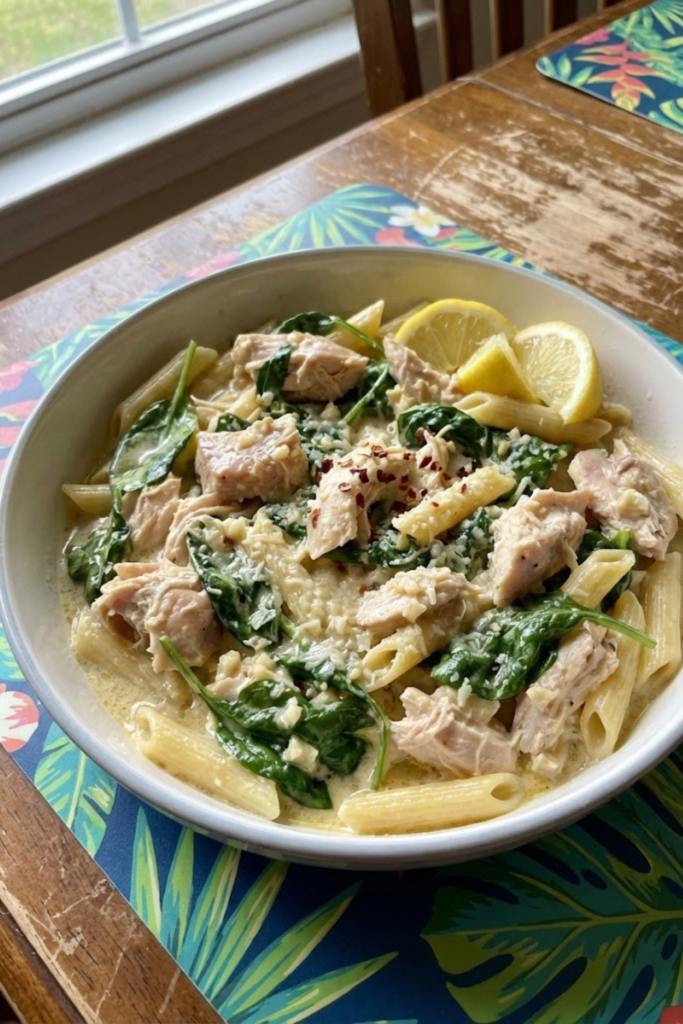
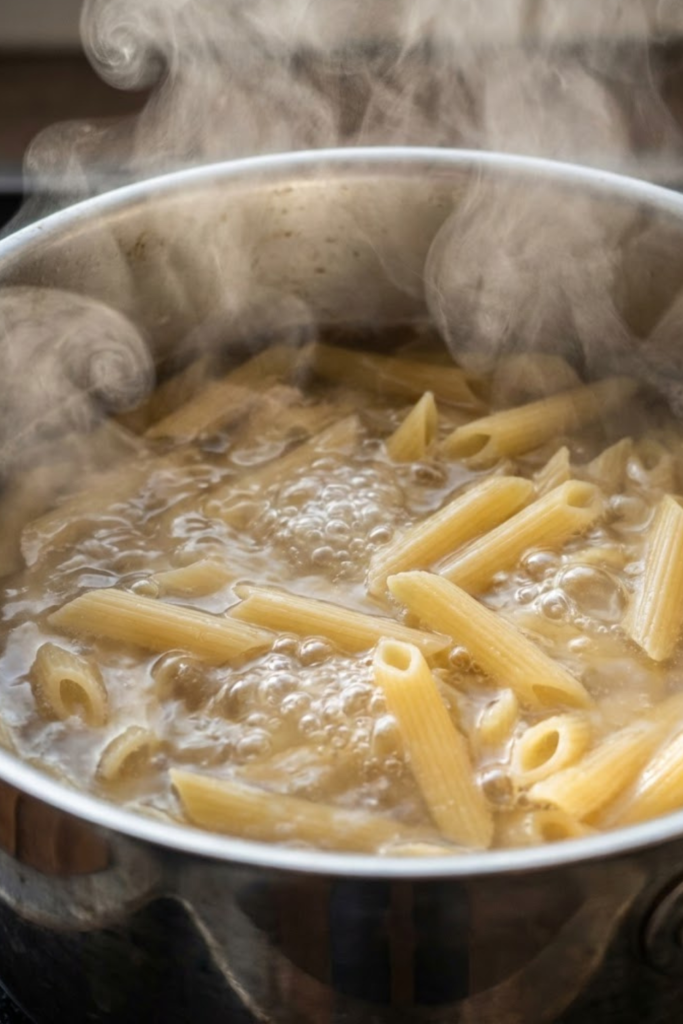
You want a noodle that has some “nooks and crannies,” as I like to say. My go-to is usually penne or fusilli. Those little ridges on the penne are like tiny hands that hold onto the sauce and the bits of garlic. If you use something flat or smooth, the flavor just slides right off. I’ve also used those little shell pastas before, and they are great because the spinach gets trapped inside the shells. It’s like a little surprise in every bite! Whatever you pick, just stay away from the long, skinny stuff like linguine for this one. You want something hearty enough to stand up to the chunks of chicken.
The Secret of Al Dente
Timing is everything. I always tell my students that being a minute late is the same as being an hour late. With pasta, being a minute late means you have mush. I always look at the box and then subtract two minutes from the cooking time. You want the pasta to be “al dente,” which is just a fancy way of saying it still has a bit of a firm bite. This is super important because you’re going to toss the noodles into the pan with the chicken and the greens. They will keep cooking for a bit in the heat of the sauce. If they are already soft when they leave the pot, they’ll fall apart before you even get them to the table.
Saving the Liquid Gold
One thing I used to do—and I still cringe thinking about it—is pour all the pasta water down the drain. I didn’t know any better! Now, I always keep a measuring cup or a mug right by the sink to remind me. Before I drain the pot, I scoop out about a cup of that cloudy, starchy water. I call it “liquid gold.” If my rotisserie chicken spinach pasta looks a little bit dry or the sauce isn’t sticking to the noodles, I just pour a splash of that water in. It makes everything silky and perfect without having to add a ton of extra butter. And don’t forget to salt your boiling water! It should taste like the sea. It’s the only way to make sure the noodles themselves actually have some flavor.
Making the Creamy Spinach and Garlic Sauce
Making the sauce is the part where people usually get a little nervous, but honestly, it is the most fun part for me. It is the moment when the kitchen starts smelling like a real Italian restaurant and your family starts poking their heads in to ask when dinner will be ready. For this rotisserie chicken spinach pasta, the sauce isn’t heavy or greasy; it is just light enough to coat everything perfectly. I have had my share of sauce disasters over the years—like the time I tried to make a fancy cream sauce and it curdled into something that looked like cottage cheese. Yuck! My students would have had a field day laughing at that one. But this garlic and spinach base is much more forgiving and easier to get right.
Don’t Burn the Garlic
Garlic is a tricky little thing. It smells like heaven, but if you take your eyes off it for even a second, it turns black and bitter. I always start my pan on low heat with a good glug of olive oil. I like to use fresh cloves when I have the energy, but I will be honest, as a busy teacher, I have used the pre-minced stuff in the jar plenty of times. It is okay to take shortcuts! Just do not let it sit in the hot oil too long. You just want it to get soft and smell amazing. Once you smell that scent, you know it is time for the next step. If it starts to brown too much, just pull the pan off the burner for a minute to cool it down. It is better to be a bit slow than to ruin the whole flavor of your rotisserie chicken spinach pasta.
The Magic of Disappearing Spinach
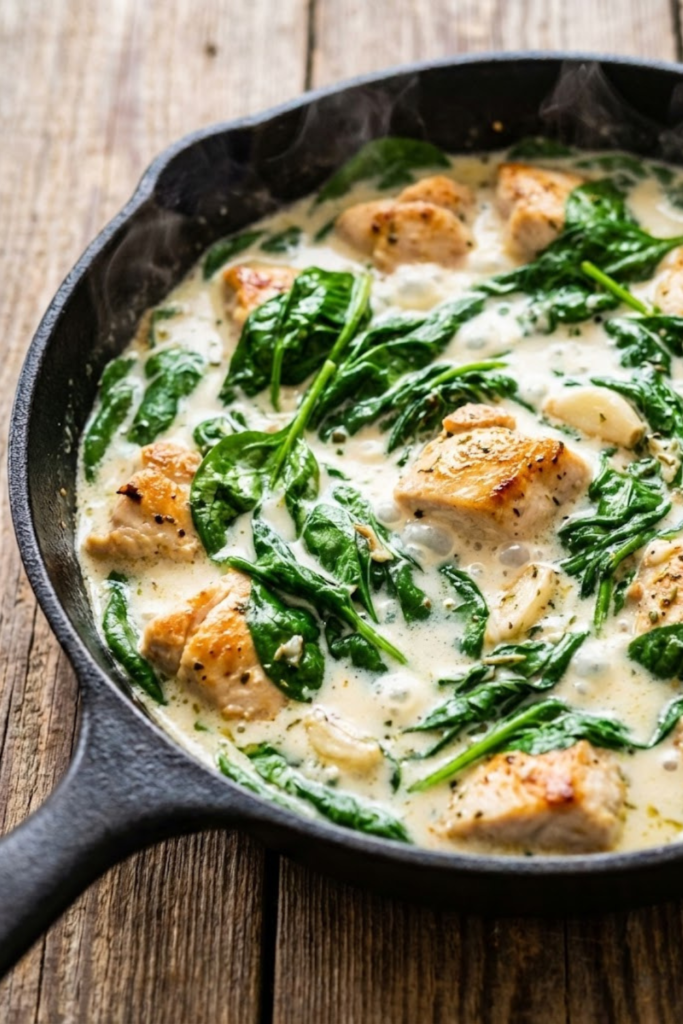
Then comes the spinach. This is my favorite part to show people because it feels like a magic trick. You take a giant, overflowing bag of fresh baby spinach and dump it into the pan. It looks like way too much—like you are making a giant salad instead of a pasta dish. But within two minutes, it wilts down into almost nothing! I always tell my kids to eat their greens, and this is the easiest way to hide a whole lot of nutrition in a meal they actually like. Just toss it around with the garlic and oil until it is bright green and soft. Do not overcook it until it turns a dark, mushy grey; you want that pretty color to stay in the dish.
Finishing with Big Flavor
Finally, we bring it all together with the cheese and the chicken. I grab a big handful of grated Parmesan—the real kind from the refrigerated section, not the stuff in the shaker can—and stir it in. This is where you use that “liquid gold” pasta water we talked about earlier. A little splash helps the cheese melt into a silky sauce that hugs the chicken perfectly. If you like a little kick, throw in some red pepper flakes. I personally love a squeeze of fresh lemon right at the end. It cuts through the saltiness of the chicken and makes the whole rotisserie chicken spinach pasta taste bright and fresh. It is simple, fast, and tastes like you really know your way around a kitchen!
Final Tips and Storing Your Leftovers
After all these years of teaching middle schoolers, I’ve learned that a good ending is just as important as a good start. The same goes for this rotisserie chicken spinach pasta. Once you have everything in the pan, you might think you are done, but there are a few little things I do to make sure the meal stays good even after the first night. Let’s talk about what to do if you actually have leftovers—which, in my house, is pretty rare because my husband usually goes back for thirds! I’ve made this dish so many times now that I can do it with my eyes closed.
How to Reheat Without It Getting Dry
One big mistake I used to make was just tossing my rotisserie chicken spinach pasta in the microwave for three minutes. It always came out dry and the chicken got that weird rubbery texture. Now, I add a tiny splash of water or a little bit of milk before I heat it up. It helps recreate that sauce we made with the pasta water earlier. It’s like a little refresh button for your dinner. If you have an air fryer, you can even put a small bowl in there, but the microwave is usually just fine as long as you don’t overdo it. Your going to love how it stays fresh the next day.
Fun Variations and Easy Swaps
Don’t feel like you have to follow my recipe exactly every single time. If I have some mushrooms in the fridge that are starting to look a bit sad, I’ll sauté those right alongside the garlic. Or, if I want it to be a bit more spicy, I add more of those red pepper flakes. You can also swap the spinach for kale if you want something with a bit more crunch, just remember that kale takes a few more minutes to soften up. This rotisserie chicken spinach pasta is very flexible. It adapts to whatever you have in the pantry, and it don’t matter if you skip an ingredient or two.
Final Thoughts from the Kitchen
The most important thing to remember is that cooking should not be a chore that makes you stressed. If the pasta is a little too soft or you forgot to save the pasta water, it’s okay! It will still taste good because you made it yourself. I hope you give this rotisserie chicken spinach pasta a try next time you are at the store. Don’t forget to share this on Pinterest if you liked it, so other busy people can find an easy win for dinner too! We all need a little help sometimes.