Miso cabbage steaks are thick-cut slices of cabbage that have been brushed with a savory miso-based glaze and roasted until caramelized and tender. This Japanese-inspired vegetable dish delivers intense umami flavors with minimal effort, transforming simple cabbage into a restaurant-quality side dish or standalone meal. Miso cabbage steaks are perfect for weeknight dinners, meal prep, and plant-based entertaining because they cook quickly, require just one pan, and showcase how miso paste can elevate everyday ingredients into something truly special.
| Prep Time | Cook Time | Total Time | Servings | Difficulty | Cuisine |
|---|---|---|---|---|---|
| 10 minutes | 25 minutes | 35 minutes | 4 | Easy | Japanese-Inspired |
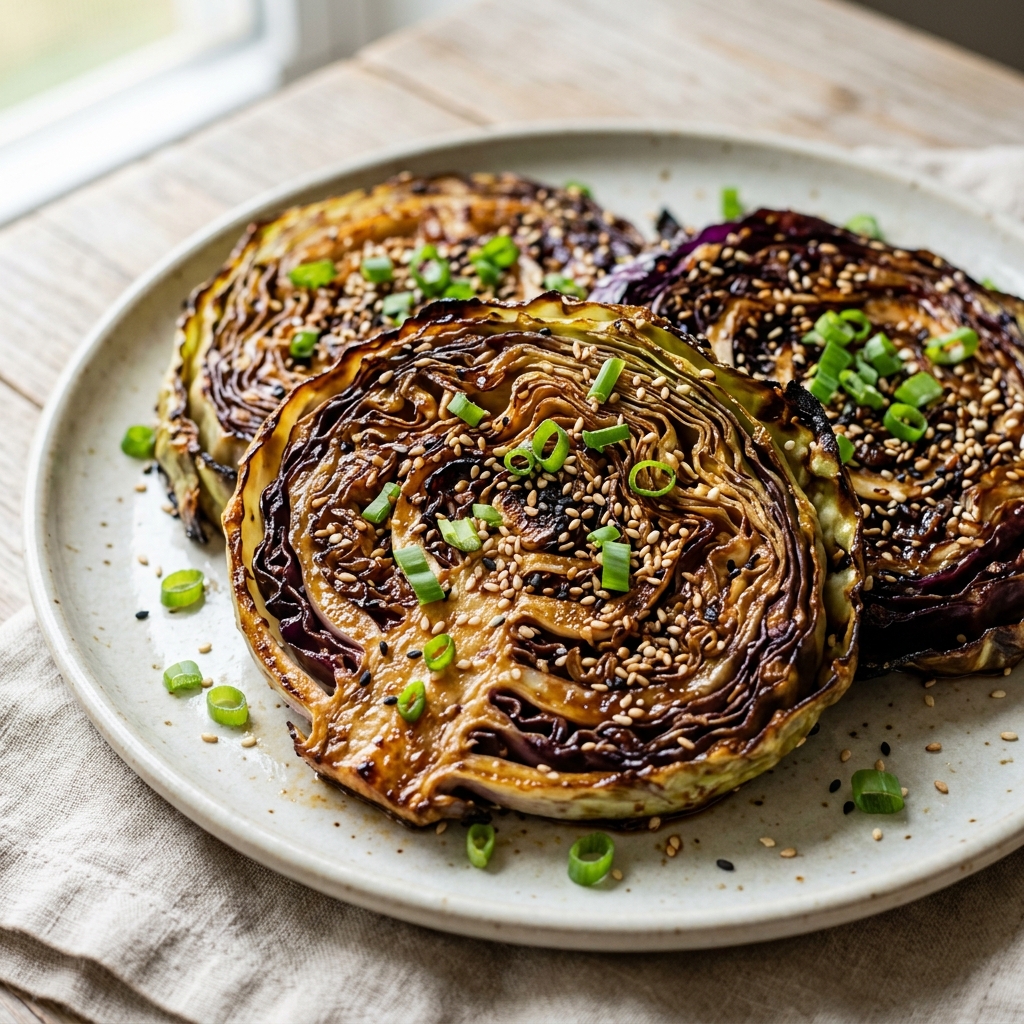
Table of Contents
Table of Contents
Why This Miso Cabbage Steaks Works
Miso cabbage steaks work because they combine simplicity with sophisticated flavor. The miso paste provides a deeply savory, fermented umami base that penetrates the cabbage during roasting, creating a complex taste profile that feels indulgent despite using humble ingredients. I’ve made miso cabbage steaks at least a hundred times for family dinners, meal prep bowls, and dinner parties, and they consistently impress everyone at the table, even those who claim they don’t like cabbage.
The texture transformation is remarkable. Raw cabbage becomes silky and caramelized at the edges after roasting, developing crispy, charred bits that add textural contrast to the tender interior. When you slice cabbage into thick steaks and roast them cut-side down on a hot pan, the sugars naturally caramelize and concentrate, creating a mild sweetness that balances the savory miso glaze perfectly.
Miso cabbage steaks are incredibly forgiving and reliable. You cannot easily overcook them because cabbage has high water content and stays moist throughout roasting. The miso glaze prevents sticking and creates a glossy, appealing finish without requiring any complicated basting or monitoring. This makes miso cabbage steaks ideal for beginners and busy home cooks who want restaurant-quality results without fussing.
The health benefits make this dish appealing to everyone from nutritionists to busy parents. Cabbage is packed with vitamin C, fiber, and antioxidants, while miso adds probiotics and beneficial enzymes from fermentation. Miso cabbage steaks deliver serious nutrition alongside serious flavor, making them work equally well for weeknight family meals, plant-based entertaining, or meal prep for the week ahead.
Finally, miso cabbage steaks are incredibly versatile. You can serve them hot, room temperature, or even cold the next day. They pair beautifully with grain bowls, work as a side to nearly any protein, or stand alone as a vegetable-forward main course. The adaptability of miso cabbage steaks means you’ll make them frequently without feeling repetitive.
Miso Cabbage Steaks Ingredients
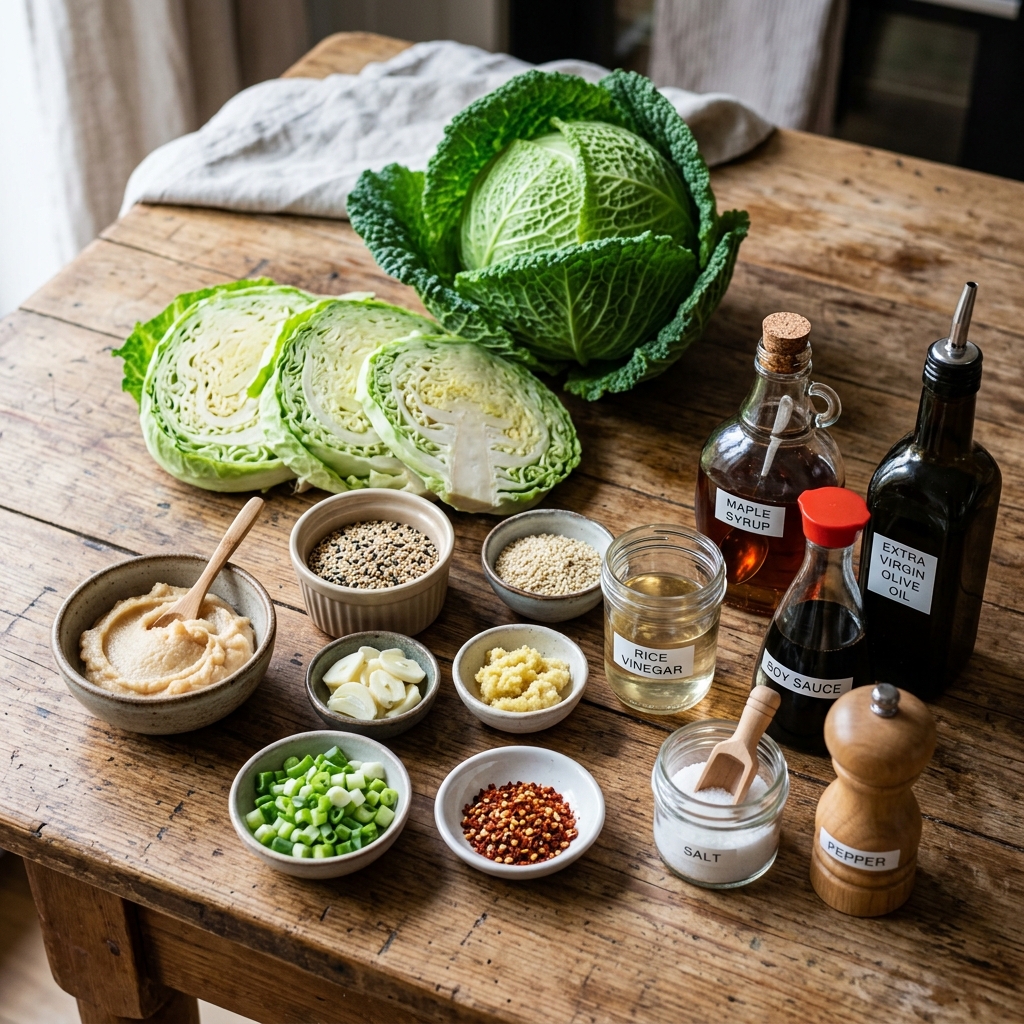
Understanding your ingredients ensures your miso cabbage steaks turn out perfectly every time. The quality of your miso paste directly impacts the final flavor, so choose a good-quality miso and pay attention to whether you prefer white miso’s mild sweetness or red miso’s deeper earthiness.
| Ingredient | Quantity | Notes with Alternatives |
|---|---|---|
| Green or Napa cabbage | 1 large head (about 2 pounds) | Green cabbage has more crunch; Napa cabbage is milder. Purple cabbage adds beautiful color but takes slightly longer to roast. You can also use savoy cabbage for a tender, delicate texture. |
| White miso paste | 3 tablespoons | Use red or barley miso for deeper flavor. Avoid brown miso paste as it can taste too strong. Miso paste keeps for months in the refrigerator; store in an airtight container. |
| Olive oil | 2 tablespoons | Use extra virgin olive oil for best flavor. Avocado oil or neutral cooking oil works if you prefer milder flavor. Sesame oil (1 teaspoon) can replace 1 tablespoon of olive oil for richer sesame notes. |
| Maple syrup or agave nectar | 1 tablespoon | Honey can replace maple syrup (use same quantity). Brown sugar or coconut sugar work as substitutes. Sweetness balances miso’s saltiness; adjust to taste preference. |
| Rice vinegar or fresh lemon juice | 1 tablespoon | Apple cider vinegar provides more tang. Fresh lime juice adds brightness. White vinegar is too sharp; use sparingly if substituting. |
| Garlic, minced | 2 cloves | Fresh garlic is essential here; do not use garlic powder. Adjust quantity based on your taste preference. Roasted garlic is milder and sweeter if using for a second time. |
| Fresh ginger, grated | 1 tablespoon | Fresh ginger adds warmth and spice. Avoid powdered ginger, which tastes different. For milder flavor, reduce to 1 teaspoon. Pre-minced ginger in jars works in a pinch. |
| Low-sodium vegetable or soy sauce | 1 tablespoon | Tamari provides a gluten-free option. Coconut aminos tastes slightly sweeter. Use less if using regular soy sauce instead of low-sodium version. |
| Sesame seeds | 2 tablespoons | White or black sesame seeds both work beautifully. Toast them briefly in a dry pan for deeper flavor. Omit if allergic; nutritional yeast adds savory umami instead. |
| Green onions or scallions, sliced | 3 tablespoons | Fresh green onions add color and freshness. Chives or cilantro work as alternatives. White and green parts can both be used; green parts are milder. |
| Sea salt and black pepper | To taste | Add after roasting to prevent cabbage from releasing too much water. Miso already contains salt, so taste before adding more. Freshly ground black pepper provides best flavor. |
These miso cabbage steaks ingredients are intentionally straightforward because the magic comes from how they work together, not from complicated additions. The miso acts as the foundation, while ginger and garlic add complexity, and maple syrup brings balance.
How to Make Miso Cabbage Steaks
Making miso cabbage steaks is straightforward and requires just a few basic steps. Follow this method and you’ll have perfectly caramelized, tender miso cabbage steaks ready to serve in about thirty-five minutes.
Preparing Your Cabbage
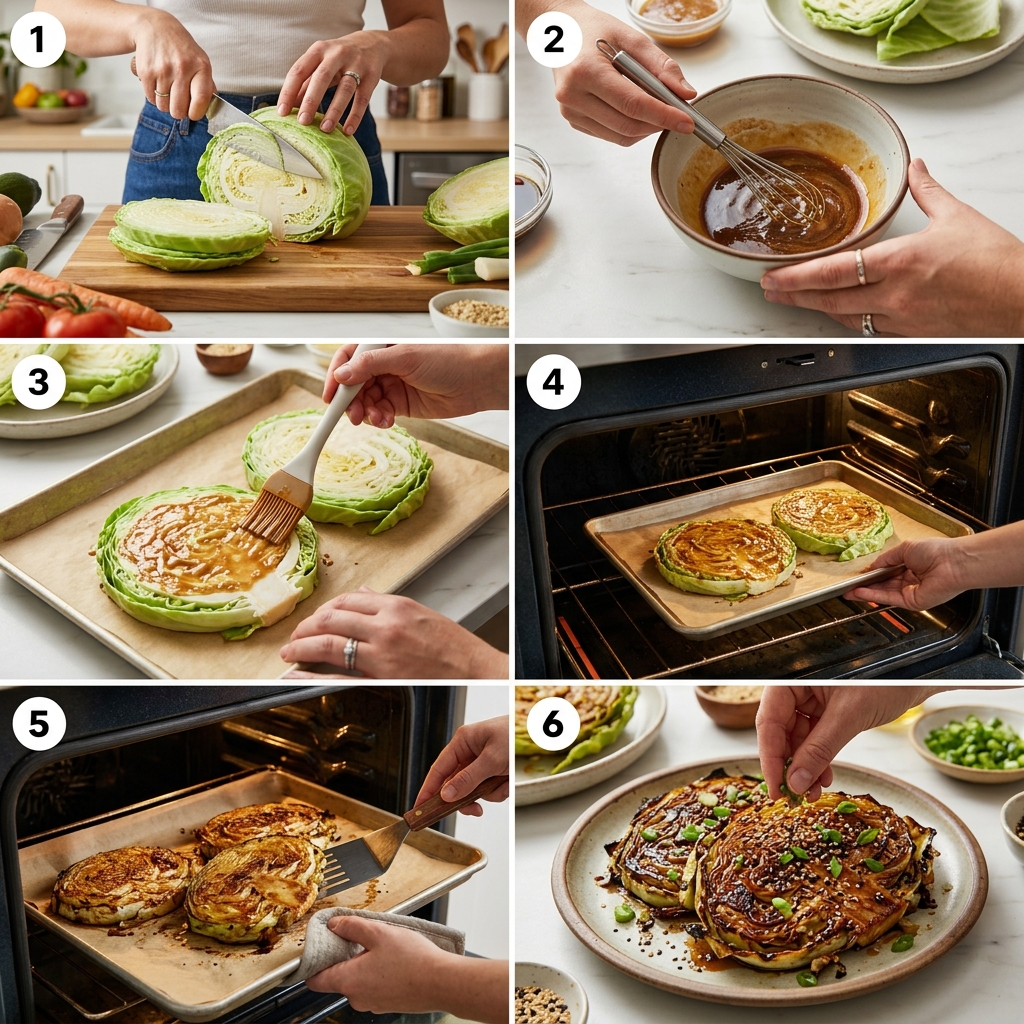
- Rinse your cabbage head under cold water and pat completely dry with paper towels or a clean kitchen cloth.
- Cut the cabbage vertically into four thick steaks, each approximately one and a half inches thick, leaving the core intact so the steak holds together during cooking.
- Gently remove any damaged outer leaves and brush any dirt away with a damp cloth.
Making the Miso Glaze
- Whisk together white miso paste, olive oil, maple syrup, rice vinegar, minced garlic, and grated ginger in a small bowl until smooth and well combined.
- Add soy sauce to the mixture and stir until the glaze reaches a pourable consistency similar to salad dressing.
- Taste the glaze and adjust seasoning with additional miso for depth or maple syrup for sweetness as needed.
Roasting the Miso Cabbage Steaks
- Preheat your oven to 400 degrees Fahrenheit and line a large baking sheet with parchment paper for easy cleanup.
- Arrange the cabbage steaks cut-side up on the prepared baking sheet, spacing them evenly so they cook uniformly.
- Brush the miso glaze generously over the cut side of each miso cabbage steak, reserving about two tablespoons of glaze for the second coating.
- Roast uncovered for twelve to fifteen minutes until the edges begin to caramelize and turn golden brown.
- Remove the baking sheet from the oven and carefully flip each miso cabbage steak to the other cut side.
- Brush the second coat of miso glaze over the newly exposed cabbage surface and return to the oven.
- Roast for another ten to twelve minutes until both sides are caramelized, tender, and lightly charred at the edges.
Finishing and Serving
- Remove the miso cabbage steaks from the oven and let cool for two minutes on the baking sheet.
- Transfer each miso cabbage steak to a serving platter using a wide spatula to keep them intact.
- Sprinkle sesame seeds and sliced green onions over the top while still warm, and add a pinch of sea salt and black pepper.
- Serve your miso cabbage steaks immediately while still warm for the best texture and flavor.
Chef Tips for Perfect Miso Cabbage Steaks
These professional tips ensure your miso cabbage steaks turn out beautifully every single time. I’ve learned these details through years of preparing this dish for family and friends.
- Pat your cabbage completely dry before roasting. Moisture on the surface prevents caramelization and creates steam, which makes miso cabbage steaks limp instead of tender and caramelized. Use paper towels to remove every trace of water from the cut sides.
- Use a hot oven set to 400 degrees Fahrenheit. This temperature is high enough to caramelize the cabbage sugars quickly while keeping the interior tender. Lower temperatures take too long and won’t create that desirable charred edge that makes miso cabbage steaks so delicious.
- Brush the glaze on twice during roasting. The first coat caramelizes in the initial heat, creating flavor depth. The second coat, applied after flipping, ensures both sides have that glossy, caramelized finish and deeper miso flavor penetration that makes miso cabbage steaks special.
- Don’t skip the core when cutting. Keeping the core intact holds each miso cabbage steak together during cooking. If the core falls apart, your steaks will crumble. The core becomes tender and sweet after roasting, adding textural interest.
- Let miso cabbage steaks rest for two minutes after roasting. This brief rest allows the residual heat to continue softening the interior while the exterior sets, creating the perfect texture contrast that makes miso cabbage steaks so satisfying.
- Season after roasting, not before. Salt draws moisture from the cabbage and prevents proper caramelization if applied too early. Wait until after roasting, then season with a light sprinkle of sea salt and black pepper to bring all flavors together in your finished miso cabbage steaks.
Common Miso Cabbage Steaks Mistakes to Avoid
Understanding what goes wrong helps you avoid these pitfalls when making miso cabbage steaks. I’ve made every one of these mistakes myself and learned from each one.
Wet cabbage that won’t caramelize. This happens when you skip the drying step or don’t pat thoroughly. Moisture prevents caramelization because the cabbage steams instead of roasting. Fix this by making absolutely certain your cabbage is completely dry before brushing with glaze. If your miso cabbage steaks look steamed rather than caramelized after cooking, increase oven temperature by twenty-five degrees next time and ensure your sheet is dry.
Miso glaze that’s too thick or doesn’t coat properly. Using miso paste straight from the jar without adding oil creates a glaze that’s too concentrated and doesn’t spread smoothly over miso cabbage steaks. The solution is simple: always whisk your miso with enough oil to reach a pourable consistency like salad dressing. If your glaze becomes too thick, thin it with a little rice vinegar or water one teaspoon at a time.
Undercooked cabbage that stays tough and hard. Cutting your steaks too thin or lowering the oven temperature causes this problem because the interior doesn’t soften properly. Fix this by using the full one-and-a-half-inch thickness and maintaining oven temperature at 400 degrees. If your miso cabbage steaks are still tough after the recommended time, reduce the heat to 350 degrees and roast for an additional five to ten minutes until completely tender.
Miso cabbage steaks that fall apart or lose their shape. This occurs when you remove the core completely or flip too aggressively. The fix is to leave the core intact when slicing and use a wide, sturdy spatula to flip gently and deliberately. If your miso cabbage steaks are still fragile, make sure your core is truly intact and try roasting a minute or two longer so the interior becomes firmer.
Burned edges that taste bitter. Oven temperature that’s too high or roasting time that’s too long creates burnt, acrid miso cabbage steaks. Prevent this by sticking to 400 degrees and checking your steaks at the minimum time. Every oven runs slightly differently, so if edges are charring too quickly, reduce temperature to 375 degrees and add a few extra minutes to total cooking time.
Best Miso Cabbage Steaks Variations and Substitutions
Miso cabbage steaks are wonderfully adaptable, and you can create different flavor profiles and accommodate various dietary needs with these simple substitutions. These variations keep miso cabbage steaks interesting when made regularly.
| Ingredient | Substitution | Impact on Flavor |
|---|---|---|
| White miso paste | Red miso paste (use same amount) | Creates deeper, more robust umami flavor with earthier notes. Miso cabbage steaks become more savory and less sweet. |
| Maple syrup | Brown rice syrup or coconut sugar | Brown rice syrup provides subtle sweetness; coconut sugar adds slight molasses notes. Either option creates milder sweetness in miso cabbage steaks. |
| Rice vinegar | Apple cider vinegar (use three-quarter amount) | Apple cider vinegar adds sharper tang and complexity. Miso cabbage steaks become more acidic and less delicate. Use sparingly as it’s stronger than rice vinegar. |
| Soy sauce | Tamari or coconut aminos (use same amount) | Tamari provides gluten-free option with slightly deeper flavor. Coconut aminos tastes milder and slightly sweet, making miso cabbage steaks less savory. |
| Sesame seeds | Nutritional yeast or crushed peanuts | Nutritional yeast adds cheesy umami depth; crushed peanuts provide nutty crunch. Both create different textural and flavor experience in miso cabbage steaks. |
| Fresh ginger | Ground ginger (use one-quarter teaspoon) | Ground ginger provides spicy warmth but less fresh brightness. Miso cabbage steaks taste more warming and less fresh-tasting overall. |
| Green or Napa cabbage | Purple or savoy cabbage | Purple cabbage adds visual drama and slightly different sweetness profile; savoy cabbage creates more delicate, tender miso cabbage steaks with milder flavor. |
| Olive oil | Sesame oil (use one-half amount) plus additional neutral oil | Sesame oil creates richer, toastier flavor profile. Miso cabbage steaks become more intensely aromatic with stronger Asian influence. |
These variations let you create different versions of miso cabbage steaks throughout the week without repetition. I often make two versions in the same oven session by using half of each variation to discover new favorites.
Serving Suggestions for Miso Cabbage Steaks
Miso cabbage steaks work beautifully across countless meal contexts and serve purposes from casual weeknight dinners to impressive dinner party sides. The versatility of miso cabbage steaks makes them endlessly useful for meal planning.
Serve miso cabbage steaks as a vegetable side. They pair perfectly with grilled fish, roasted tofu, or pan-seared halibut, bringing umami depth that complements protein without overwhelming it. At family dinners, miso cabbage steaks occupy the important vegetable side role, and everyone eats them eagerly because they taste sophisticated rather than like typical steamed vegetables.
Build grain bowls featuring miso cabbage steaks. Combine a roasted miso cabbage steak with cooked quinoa, brown rice, or farro as your base, add roasted chickpeas for protein and crunch, include fresh greens like spinach or arugula, and top with a tahini dressing. This creates a satisfying plant-based meal where miso cabbage steaks provide both substance and deep umami character.
Serve miso cabbage steaks at room temperature for entertaining. Prepare them hours in advance and let them cool naturally. Guests can enjoy them warm or at room temperature as part of a vegetable-forward spread, and they pair beautifully with hummus, Mediterranean dips, or alongside an international cheese board where miso cabbage steaks add unexpected depth.
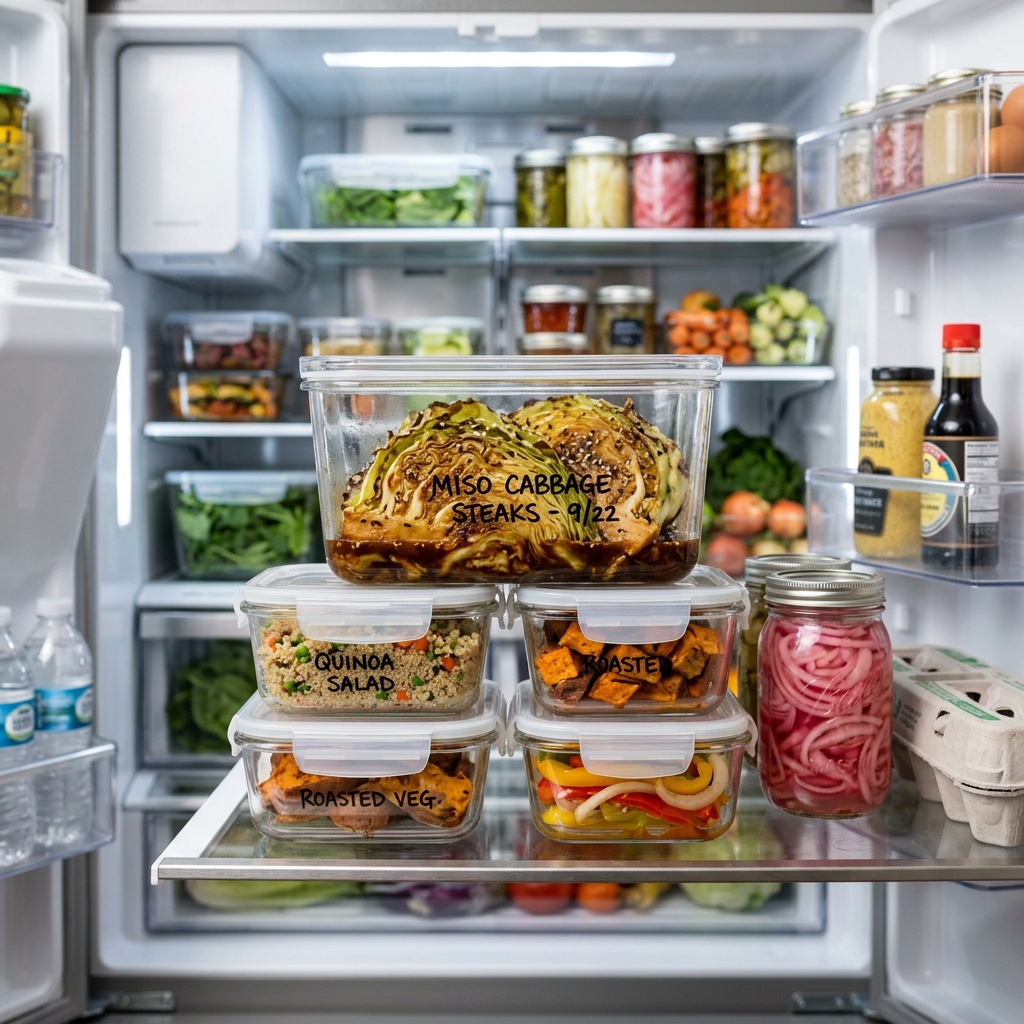
Make miso cabbage steaks for lunch bowls and meal prep. Cut each steaks into bite-sized pieces and store in containers alongside other prepared vegetables, grains, and proteins. Throughout the week, combine different components into various bowls, and miso cabbage steaks keep well in the refrigerator for four to five days, maintaining good texture and flavor.
Serve miso cabbage steaks alongside Asian-inspired dishes. They complement rice bowls, noodle dishes, and vegetable stir-fries beautifully. The Japanese-inspired miso flavor makes miso cabbage steaks work perfectly in Asian-themed meals, and they add restaurant-quality vegetable elements without requiring additional cooking.
Offer miso cabbage steaks at holiday gatherings. For Thanksgiving, Christmas, or other celebrations, miso cabbage steaks provide a unique vegetable side that impresses guests and accommodates various dietary preferences. They’re easier than traditional roasted vegetables and deliver more sophisticated, interesting flavor that becomes memorable.
Pair miso cabbage steaks with acidic or cooling accompaniments. Serve with a bright yogurt-based sauce, tangy pickled vegetables, or cool slaw as accompaniments that balance the richness of the miso glaze and provide textural contrast. These pairings make miso cabbage steaks feel complete and restaurant-like when served to family or guests.
Storage and Reheating for Miso Cabbage Steaks
Proper storage keeps miso cabbage steaks tasting delicious for days and makes weeknight meals faster when you plan ahead. Understanding storage methods lets you prepare miso cabbage steaks whenever convenient and enjoy them throughout the week.
| Method | Duration | Instructions |
|---|---|---|
| Refrigerator Storage | 4-5 days | Let miso cabbage steaks cool completely to room temperature. Transfer to an airtight container or cover tightly with plastic wrap. Store in the refrigerator. Miso cabbage steaks keep their texture and flavor for up to five days when properly stored. |
| Freezer Storage | Up to 3 months | Cool miso cabbage steaks completely, then wrap each steak individually in plastic wrap and place in a freezer bag. Label with the date. Thaw in the refrigerator overnight before reheating. Texture may become slightly softer after freezing, but flavor remains excellent. |
| Reheating in Oven | 10-12 minutes | Preheat oven to 350 degrees Fahrenheit. Place miso cabbage steaks on a baking sheet and cover loosely with foil. Reheat for ten to twelve minutes until warmed through. This method preserves the best texture and prevents the edges from drying out. |
| Reheating on Stovetop | 5-7 minutes | Heat a skillet over medium heat and add a light coating of oil. Place miso cabbage steaks cut-side down and warm for five to seven minutes, then flip and warm the other side. This method reactivates the caramelized exterior and restores some crispness. |
| Serving Cold | N/A | Miso cabbage steaks taste delicious served cold or at room temperature. Use them in grain bowls, salads, or as part of a vegetable spread. Cut into bite-sized pieces for easier eating in cold applications. |
| Make-Ahead Preparation | Up to 2 days before | You can prepare the miso glaze and cut the cabbage up to two days in advance. Store both separately in the refrigerator. Assemble and roast when ready to serve for fresh, hot miso cabbage steaks without last-minute work. |
These storage methods mean miso cabbage steaks fit easily into your routine whether you meal prep weekly or cook spontaneously. The flexibility of miso cabbage steaks storage makes them perfect for busy homes.
Nutritional Information for Miso Cabbage Steaks
Understanding the nutritional profile of miso cabbage steaks helps you make informed choices about incorporating them into your diet. This information represents approximate values for one miso cabbage steak serving.
| Nutrient | Amount per Serving |
|---|---|
| Calories | 120 |
| Protein | 3 grams |
| Total Fat | 7 grams |
| Saturated Fat | 1 gram |
| Carbohydrates | 13 grams |
| Dietary Fiber | 3 grams |
| Total Sugar | 7 grams |
| Sodium | 380 milligrams |
| Vitamin C | 45% of daily value |
| Vitamin K | 55% of daily value |
These approximate values show that miso cabbage steaks are nutrient-dense and relatively low in calories. The cabbage provides excellent vitamin C and K, while the miso adds probiotics and beneficial fermented compounds. Each miso cabbage steak serving delivers substantial nutritional benefits with moderate calories and healthy fats from olive oil.
Frequently Asked Questions About Miso Cabbage Steaks
What is the best type of cabbage for miso cabbage steaks?
Green cabbage and Napa cabbage both work beautifully for miso cabbage steaks. Green cabbage provides more crunch and earthier flavor, while Napa cabbage offers milder taste and more delicate texture. Purple cabbage creates stunning visual drama and slightly different sweetness but takes a few extra minutes to roast. Choose based on your texture preference and the visual presentation you want for your miso cabbage steaks.
Can I make miso cabbage steaks without miso paste?
While miso is central to these miso cabbage steaks, you can approximate the flavor by combining soy sauce with a bit of fermented ingredients like tamari. However, the result won’t be true miso cabbage steaks because miso provides specific umami depth that soy sauce alone cannot replicate. For authentic miso cabbage steaks, invest in miso paste, which lasts months in your refrigerator and transforms many other dishes.
How do I know when miso cabbage steaks are fully cooked?
Properly cooked miso cabbage steaks are tender when pierced with a fork, with caramelized golden-brown to dark brown edges. The cut sides should be slightly darkened from the glaze, and the exterior edges may show some charring. If your miso cabbage steaks still feel firm inside after the recommended cooking time, return them to the oven for five more minutes and check again.
Can I prepare miso cabbage steaks in advance for dinner parties?
Yes, miso cabbage steaks are perfect for entertaining because you can prepare the glaze and cut the cabbage hours in advance. Store both separately in the refrigerator, then assemble and roast thirty-five minutes before serving. For completely make-ahead entertaining, roast miso cabbage steaks earlier in the day and serve them at room temperature or reheated gently in a low oven just before guests arrive.
What are the best side dishes to serve with miso cabbage steaks?
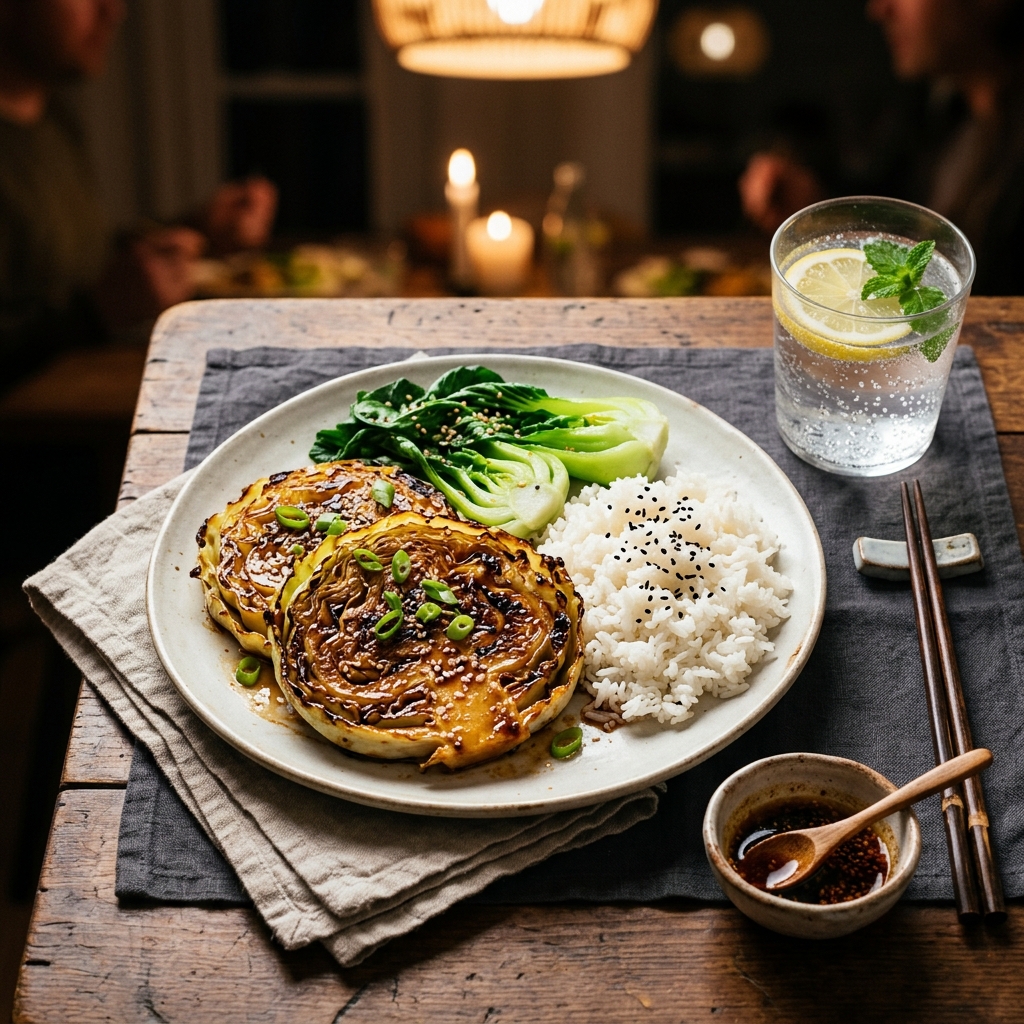
Miso cabbage steaks pair beautifully with steamed jasmine rice, quinoa bowls, roasted root vegetables, or simple green salads. They work equally well alongside grilled proteins or as the main component of vegetable-forward plates. Serve with cooling accompaniments like cucumber yogurt sauce or pickled vegetables to balance the rich miso glaze on your miso cabbage steaks.
Can I freeze miso cabbage steaks for later use?
Yes, miso cabbage steaks freeze successfully for up to three months. Cool them completely, wrap each steak individually in plastic wrap, then place in a freezer bag. Thaw in the refrigerator overnight, then reheat in a 350-degree oven for ten to twelve minutes. The texture becomes slightly softer after freezing, but the flavor remains excellent in your thawed miso cabbage steaks.
Are miso cabbage steaks suitable for plant-based or vegan diets?
Absolutely, miso cabbage steaks are naturally plant-based and vegan because they contain only vegetables, miso paste, and plant-based oils. No animal products are involved in making traditional miso cabbage steaks. They’re an excellent protein-rich side dish when served with legumes or grains, making them perfect for plant-based meal planning.
How can I adjust the flavors in miso cabbage steaks to be less salty?
Miso paste and soy sauce add significant salt to miso cabbage steaks. Reduce sodium by using low-sodium soy sauce or tamari, cutting the soy sauce amount in half, and adding more maple syrup or rice vinegar to compensate for flavor. You can also rinse your miso paste under cool water for a few seconds, though this removes some umami. Taste your finished miso cabbage steaks and adjust before serving rather than during cooking.
What are some creative flavor variations for miso cabbage steaks?
Create variation by adding sriracha or hot sauce to your glaze for spicy miso cabbage steaks, incorporating tahini for creamy richness, mixing in gochujang for Korean-inspired depth, or adding fresh orange juice for bright citrus notes. You can also top finished miso cabbage steaks with toasted nuts, crispy chickpeas, or different garnishes like cilantro or mint to create completely different flavor experiences.
How long do miso cabbage steaks keep in the refrigerator?
Properly stored miso cabbage steaks keep in the refrigerator for four to five days in an airtight container. They maintain good texture and flavor throughout this time period, making them ideal for meal prep. After five days, miso cabbage steaks may begin to develop off-flavors or texture degradation, so consume within this window for best results.
Can children help prepare miso cabbage steaks?
Yes, children of various ages can help prepare miso cabbage steaks. Younger children can help mix the glaze and add garnishes, while older children can practice knife skills under supervision when cutting cabbage or measuring ingredients. Involving children in miso cabbage steaks preparation builds cooking confidence and often encourages them to eat vegetables they might otherwise avoid.
Conclusion
Miso cabbage steaks represent the intersection of simplicity and sophistication in vegetable cooking. This straightforward dish transforms ordinary cabbage into something memorable through the magic of miso paste, creating deep umami flavors that rival restaurant-quality cooking. Whether you’re planning a weeknight family dinner, preparing meal prep for the week, or impressing dinner guests with an unexpected vegetable side, miso cabbage steaks deliver reliably delicious results every time. The textures are perfect—caramelized edges giving way to tender, glossy interiors that showcase how roasting concentrates and improves humble ingredients. Make miso cabbage steaks soon and discover why this Japanese-inspired preparation has become a favorite in home kitchens everywhere, earning a permanent place in your regular cooking rotation through their incredible flavor and enduring versatility.
Baking Soda Recipe for Weight Loss
Learn more about the health benefits of fermented miso paste and discover nutritional information about cruciferous vegetables to deepen your cooking knowledge.
Print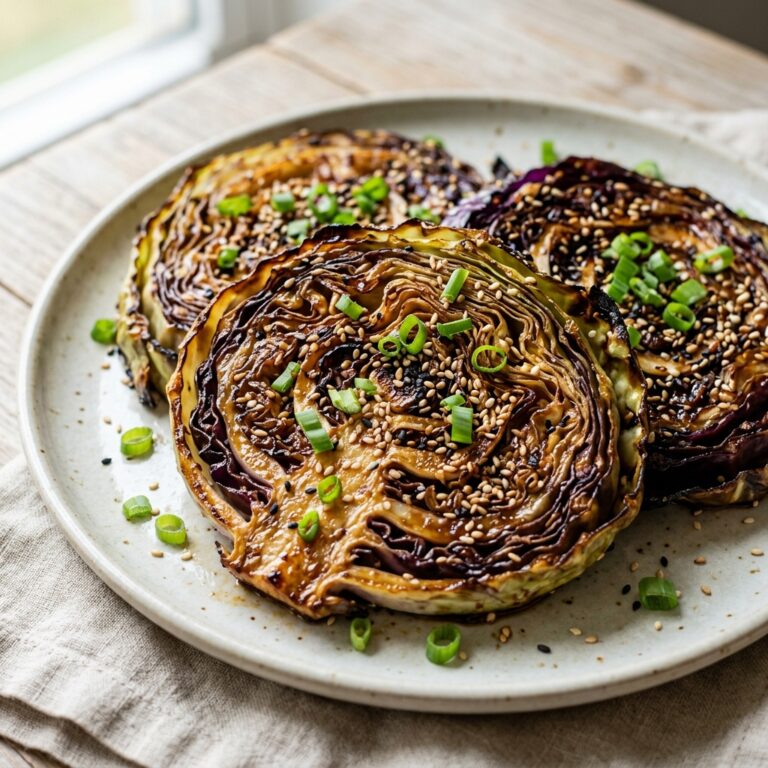
Viral Miso Cabbage Steaks 2026
Miso cabbage steaks are thick-cut slices of cabbage brushed with a savory miso glaze and roasted until caramelized and tender.
- Total Time: 35 minutes
- Yield: 4 servings 1x
Ingredients
- 1 large green or Napa cabbage
- 3 tablespoons white miso paste
- 2 tablespoons olive oil
- 1 tablespoon maple syrup or agave nectar
- 1 tablespoon rice vinegar or lemon juice
- 2 cloves garlic, minced
- 1 tablespoon fresh ginger, grated
- 1 tablespoon low-sodium soy sauce
- 2 tablespoons sesame seeds
- 3 tablespoons green onions or scallions, sliced
- Sea salt and black pepper to taste
Instructions
- Preheat oven to 400°F and line a baking sheet with parchment paper.
- Rinse the cabbage and pat completely dry.
- Cut the cabbage vertically into 4 thick steaks, leaving the core intact.
- Whisk together miso paste, olive oil, maple syrup, rice vinegar, garlic, ginger, and soy sauce in a bowl.
- Arrange cabbage steaks on the prepared baking sheet.
- Brush the cut side of each steak generously with the miso glaze.
- Roast for 12 to 15 minutes until edges begin to caramelize.
- Carefully flip each cabbage steak with a spatula.
- Brush the second side with the remaining glaze.
- Return to the oven and roast another 10 to 12 minutes until tender and caramelized.
- Remove from oven and let cool for 2 minutes.
- Top with sesame seeds, sliced green onions, sea salt, and black pepper before serving.
Notes
Pat the cabbage completely dry before roasting for the best caramelization. White miso creates a milder flavor while red miso adds deeper umami richness.
- Prep Time: 10 minutes
- Cook Time: 25 minutes
- Category: Side Dish
- Method: Roasting
- Cuisine: Japanese-Inspired
- Diet: Vegan
Nutrition
- Serving Size: 1 cabbage steak
- Calories: 120
- Sugar: 7g
- Sodium: 380mg
- Fat: 7g
- Saturated Fat: 1g
- Unsaturated Fat: 6g
- Trans Fat: 0g
- Carbohydrates: 13g
- Fiber: 3g
- Protein: 3g
- Cholesterol: 0mg