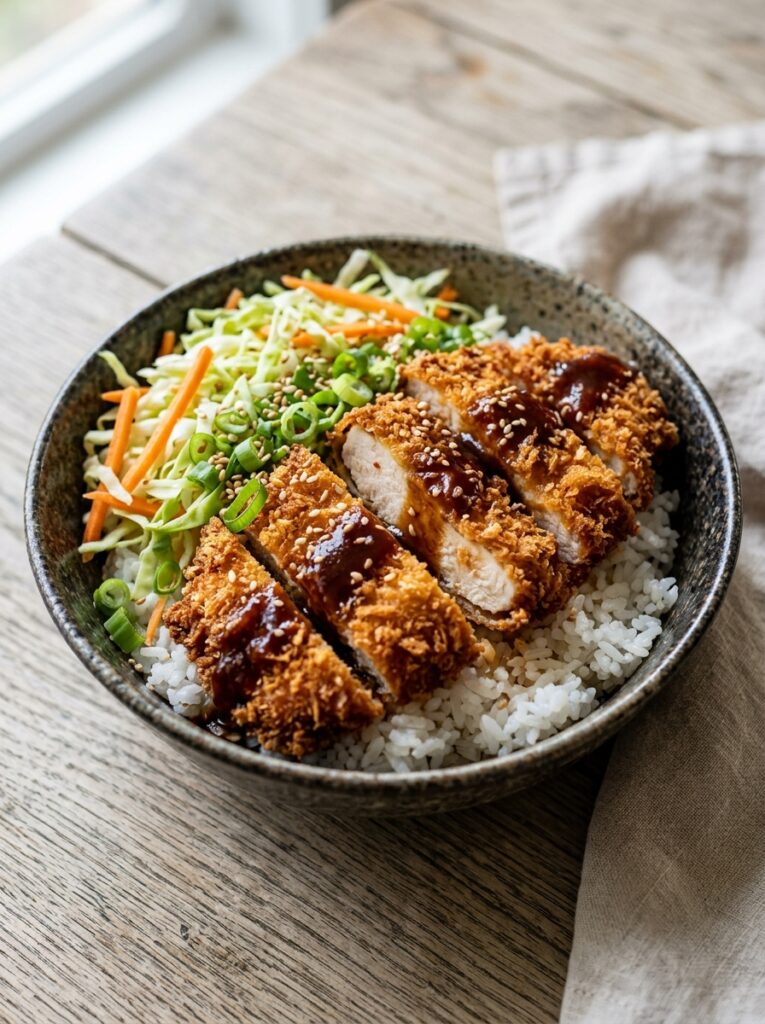
Chicken Breast Katsu Bowls bring together a crispy, breaded chicken cutlet over warm rice with savory tonkatsu sauce and fresh toppings. This satisfying homemade meal delivers restaurant-quality flavor in your kitchen with simple techniques and affordable ingredients. You can enjoy the classic Japanese comfort food any night of the week without complicated steps or special equipment.
| Prep Time | Cook Time | Total Time | Servings | Difficulty | Cuisine |
|---|---|---|---|---|---|
| 20 minutes | 25 minutes | 45 minutes | 4 servings | Medium | Japanese |
Why This Chicken Breast Katsu Bowls Works
This chicken breast katsu bowls recipe works because it balances crispy coating with juicy meat and a tangy, sweet sauce that ties everything together. I tested this method to ensure the breading sticks and browns evenly without absorbing excess oil, giving you crunch that lasts. The dish appeals to home cooks because it uses common pantry staples and delivers reliable results every time you make it. The flavor profile is familiar yet exciting, with savory chicken, nutty rice, and bright toppings creating a complete meal in one bowl.
Texture plays a major role in this chicken breast katsu bowls success, and the panko crust provides a light, airy crunch that contrasts beautifully with tender chicken. The simplicity of the process means you can prepare it on a busy weeknight, and the consistent outcome builds confidence in your cooking skills. Nutrition and satisfaction come together in this bowl, making it a smart choice for family dinners or meal prep. When you make this recipe, you enjoy a classic that feels both comforting and restaurant-worthy at home.
I designed this chicken breast katsu bowls approach to avoid the common pitfalls of soggy breading or dry meat by using proper temperature control and layering techniques. The combination of rice and chicken creates a balanced meal with protein and carbohydrates that keeps you full and energized. Home cooks appreciate the versatility, as toppings and sauces can be adjusted to personal taste without changing the core method. This recipe consistently delivers flavor, texture, and ease in one satisfying bowl.
Overall, this chicken breast katsu bowls recipe is a winning choice because it respects the traditions of Japanese cooking while making the process accessible for everyday kitchens. You will find the instructions clear and the results repeatable, which is essential for building cooking confidence. The dish pairs well with many side options and can be adapted for different dietary preferences without sacrificing taste. When you serve this bowl, you deliver a meal that tastes as good as it looks.
Chicken Breast Katsu Bowls Ingredients
The chicken breast katsu bowls ingredients focus on quality basics that build flavor and texture without complexity. Choose fresh chicken and good panko for the best crunch, and use standard pantry items to make the breading and sauce.
| Ingredient | Quantity | Notes with alternatives |
|---|---|---|
| Boneless skinless chicken breasts | 2 pounds | Use chicken thighs if you prefer richer flavor and more moisture. |
| All-purpose flour | 1 cup | Can substitute gluten-free flour blend for dietary needs. |
| Large eggs | 2 | Farm eggs work best; whisk until smooth for even coating. |
| Panko breadcrumbs | 2 cups | Japanese-style panko provides superior crunch over regular crumbs. |
| Salt | 2 teaspoons | Adjust to taste and consider seasoning the chicken directly. |
| Black pepper | 1 teaspoon | Freshly ground pepper offers the best aroma and flavor. |
| Neutral oil for frying | 2 to 3 cups | Use vegetable, canola, or peanut oil for high-heat frying. |
| Cooked Japanese short-grain rice | 4 cups | Substitute brown rice or cauliflower rice for a lighter option. |
| Shredded cabbage | 3 cups | Iceberg or Napa cabbage both work well for fresh crunch. |
| Carrot | 1 large | Julienne for slaw-style topping or grate for texture. |
| Green onions | 3 stalks | Slice thinly for a mild onion bite and color. |
| Tonkatsu sauce | 1/2 cup | Use a store brand like Bulldog or make a homemade version. |
| Soy sauce | 2 tablespoons | Choose low-sodium if desired for better sodium control. |
| Rice vinegar | 1 tablespoon | Provides bright acidity to balance the sauce and toppings. |
| Sugar | 1 teaspoon | Optional for tonkatsu sauce glaze; adjust to taste. |
You can customize this chicken breast katsu bowls ingredients list with your favorite vegetables or swap sauces to match your pantry. Quality matters for the breading, so invest in good panko for a consistently crisp texture. If you need more protein or fewer carbs, adjust portion sizes easily without changing the cooking method.
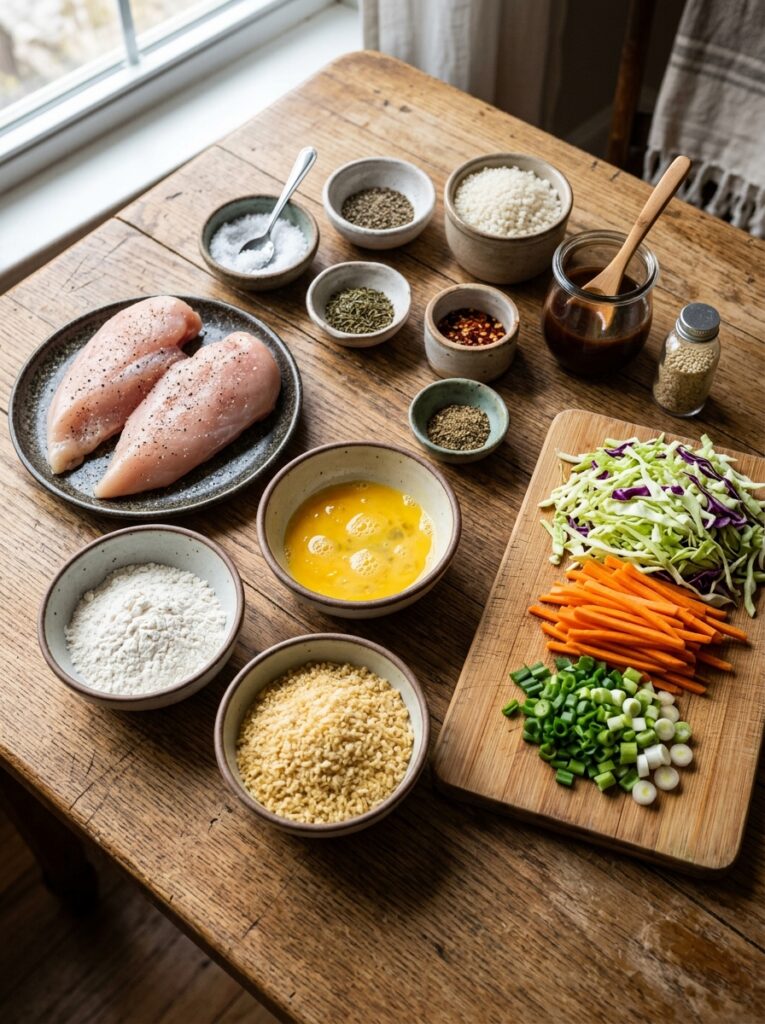
How to Make Chicken Breast Katsu Bowls
Follow these steps to make chicken breast katsu bowls that are crispy, juicy, and perfectly sauced. The process uses a standard breading setup and careful frying for best results.
- Prep the chicken by trimming excess fat and slicing each breast horizontally to create thinner cutlets for even cooking.
- Pound the cutlets gently with a meat mallet to an even thickness of about one half inch for consistent texture.
- Season both sides of the chicken with salt and pepper to build flavor in the meat itself.
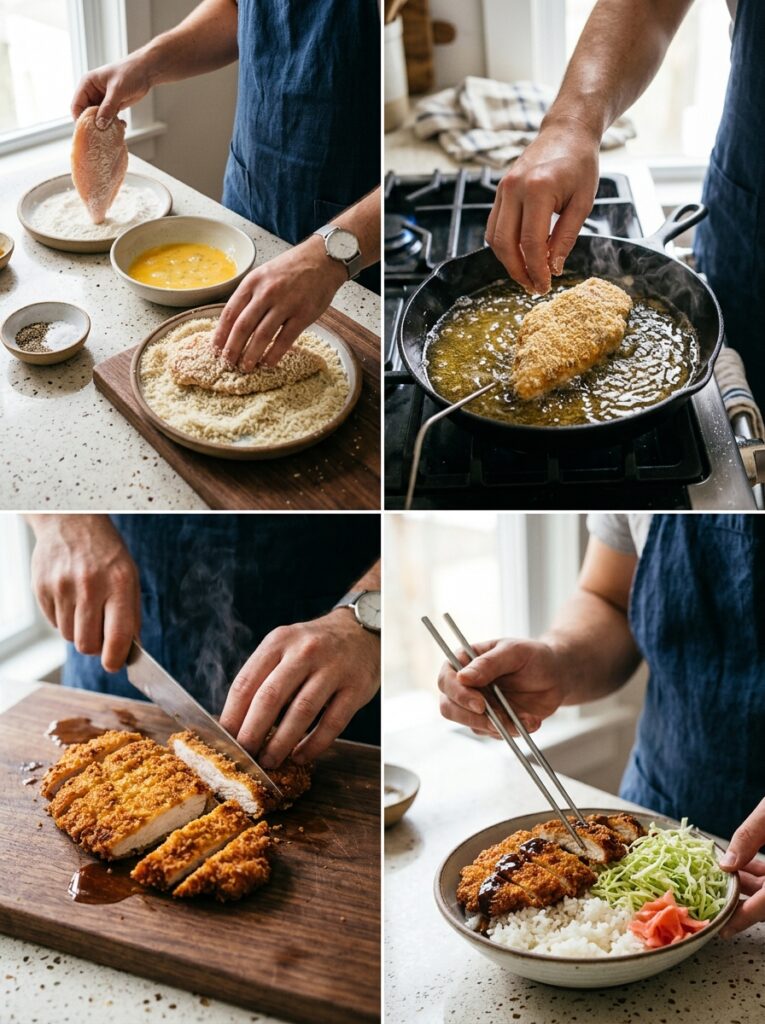
- Set up a breading station with three shallow dishes: flour in one, whisked eggs in another, and panko in the third.
- Dredge each cutlet in flour, shaking off excess so the coating is thin and even.
- Dip the floured cutlet into the egg, allowing excess to drip back into the bowl for a clean layer.
- Press the cutlet into panko, coating both sides firmly and patting to ensure good adhesion.
- Heat oil in a heavy skillet over medium heat until it reaches 350 degrees Fahrenheit, using a thermometer for accuracy.
- Fry each cutlet for about 3 to 4 minutes per side, until golden brown and the chicken reaches 165 degrees Fahrenheit internally.
- Transfer the cooked cutlets to a wire rack to drain, keeping the crust crisp and preventing sogginess.
- Rest the cutlets for 2 to 3 minutes, then slice into strips for easy serving in bowls.
- Assemble bowls with warm rice, shredded cabbage, and carrots, then top with sliced chicken and green onions.
- Drizzle tonkatsu sauce over the bowls and finish with a splash of soy sauce or rice vinegar if desired.
Chef Tips for Perfect Chicken Breast Katsu Bowls
Use these chef tips to refine your chicken breast katsu bowls and achieve consistently excellent texture and flavor.
- Use an instant-read thermometer to confirm the chicken hits 165 degrees Fahrenheit for safe doneness without overcooking.
- Keep oil temperature steady between 340 and 360 degrees Fahrenheit to avoid greasy or pale breading on the katsu.
- Do not overcrowd the pan; fry in batches so each cutlet has room and the oil temperature stays stable.
- Toast panko lightly in a dry pan before breading for a deeper color and extra crunch in your bowls.
- Salt the chicken directly before flouring to enhance flavor and improve moisture retention during frying.
- Let fried cutlets rest on a wire rack, not paper towels, to protect the crust from steaming and softening.
Common Chicken Breast Katsu Bowls Mistakes to Avoid
Avoid these common chicken breast katsu bowls mistakes to keep your breading crisp and your chicken juicy every time.
- Skipping the pound step leads to uneven cooking, which causes dry edges or undercooked centers in the katsu.
- Using a single breading bowl causes clumping and thick layers that fry unevenly and become heavy.
- Frying at low heat results in soggy crust and oil-soaked breading, so monitor temperature with a thermometer.
- Crowding the skillet drops oil temperature quickly, causing pale breading and excess oil absorption in the cutlets.
- Cutting the chicken immediately after frying releases steam and softens the crust, so rest the cutlets first.
- Serving on cold plates cools the katsu fast; prewarm bowls to keep your chicken breast katsu bowls satisfying.
Best Chicken Breast Katsu Bowls Variations and Substitutions
Explore these variations for your chicken breast katsu bowls to match your dietary needs and flavor preferences.
| Ingredient | Substitution | Impact on Flavor |
|---|---|---|
| Chicken breast | Chicken thighs | Richer taste and juicier texture with slightly more fat. |
| All-purpose flour | Gluten-free flour blend | Similar crunch with a clean, gluten-free finish. |
| Panko | Crushed rice cereal | Lighter crunch with a subtle sweetness in the coating. |
| Tonkatsu sauce | Homemade sauce with ketchup, soy, and vinegar | Bright tang with adjustable sweetness and saltiness. |
| White rice | Brown rice or cauliflower rice | Nuttier or lower-carb profile depending on your choice. |
| Cabbage | Shredded romaine or kale | Crisp romaine adds freshness; kale adds earthy notes. |
Serving Suggestions for Chicken Breast Katsu Bowls
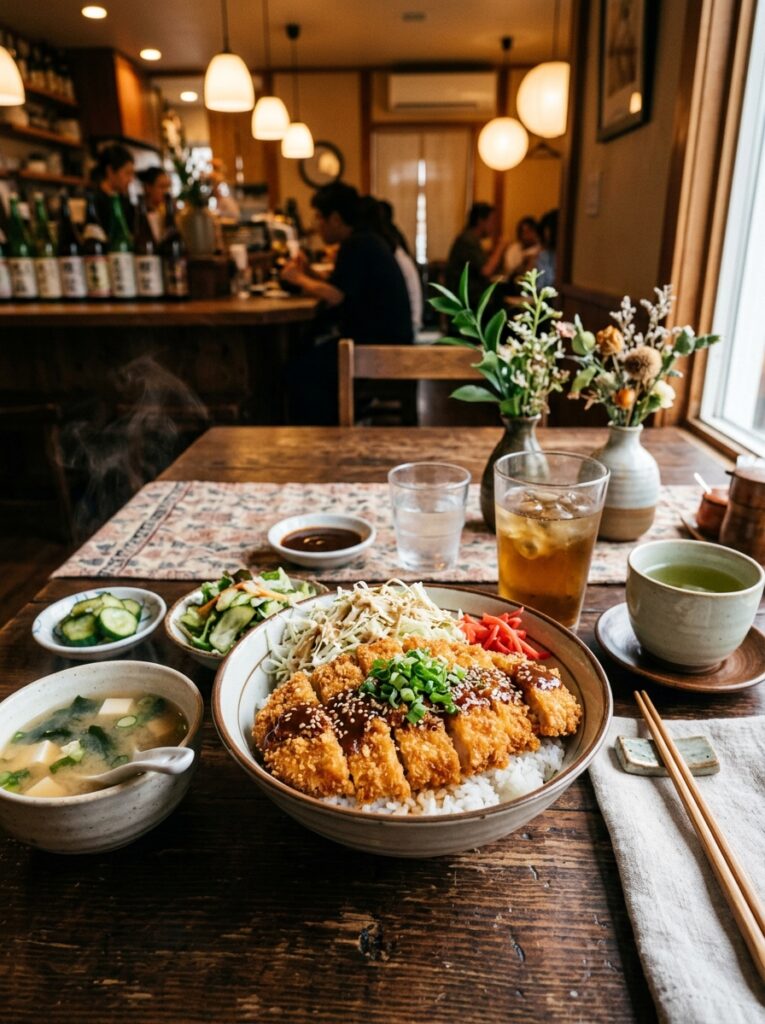
Serve your chicken breast katsu bowls with warm rice and a colorful slaw for a balanced plate. Add a side of miso soup or a simple cucumber salad for extra freshness and contrast. A drizzle of Japanese mayo or a squeeze of lemon can elevate the flavor, and pickled ginger brings a bright bite. This meal works well for family dinners, weeknight meal prep, or casual gatherings, and it shines on busy nights when you want something special without a long cook time. Pair with iced green tea or sparkling water to keep the meal light and refreshing.
Storage and Reheating for Chicken Breast Katsu Bowls
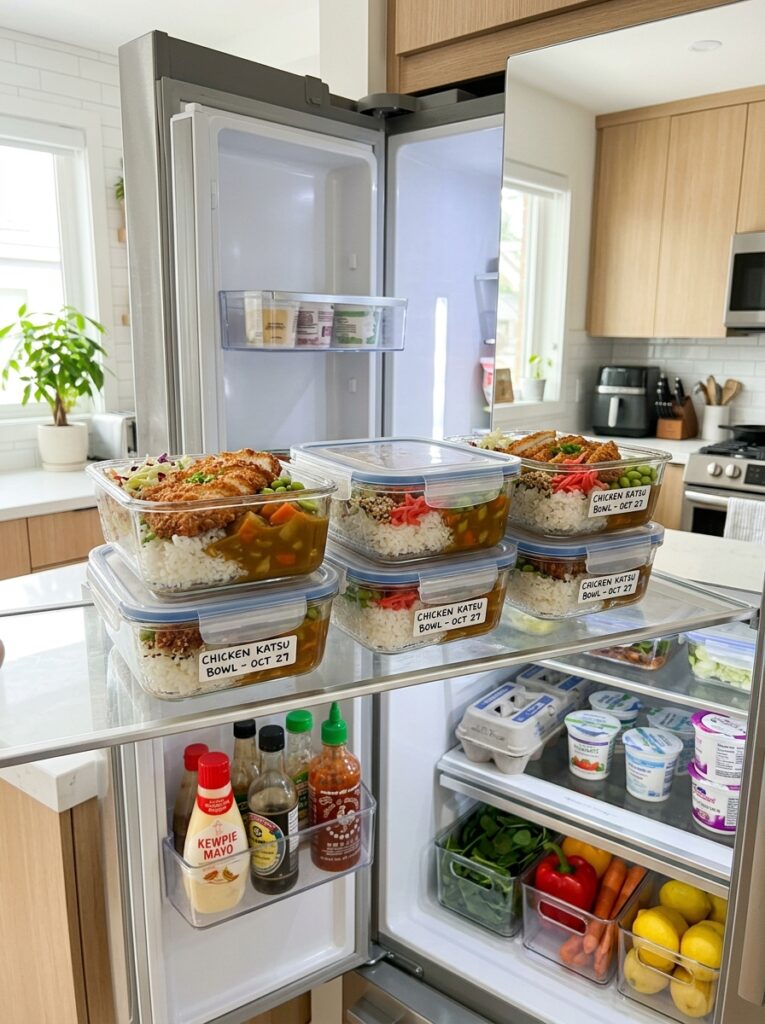
Store chicken breast katsu bowls components separately to preserve texture and flavor for the best results. Use the following table for safe storage and reheating guidance.
| Method | Duration | Instructions |
|---|---|---|
| Refrigerator | 3 to 4 days | Keep chicken, rice, and vegetables in airtight containers; do not sauce until reheating. |
| Freezer | 2 months | Freeze cooked katsu individually on a tray, then bag; freeze rice separately. |
| Reheating | 10 to 12 minutes | Reheat katsu in a 375 degree Fahrenheit oven until crisp; microwave rice with a splash of water. |
| Make-ahead | 1 day | Bread chicken up to a day ahead and refrigerate; fry just before serving. |
| Food safety | Per guidelines | Reference FDA food safety guidelines for safe temperatures and storage times. |
Nutritional Information for Chicken Breast Katsu Bowls
The following table shows approximate nutritional values for one serving of chicken breast katsu bowls based on the recipe above.
| Nutrient | Amount per Serving |
|---|---|
| Calories | 650 |
| Protein | 42 g |
| Fat | 24 g |
| Carbohydrates | 70 g |
| Fiber | 4 g |
| Sugar | 6 g |
| Sodium | 900 mg |
Approximate values. These numbers may vary based on oil absorption, rice portion, and sauce choice.
Frequently Asked Questions About Chicken Breast Katsu Bowls
Can I use chicken thighs instead of breasts in chicken breast katsu bowls?
Yes, you can use chicken thighs for a richer taste and more moisture in your chicken breast katsu bowls. Thighs fry well and stay juicy, but they may require a slightly longer cook time due to thickness. Trim excess fat and follow the same breading and frying steps.
How do I know when chicken breast katsu bowls are fully cooked?
Use an instant-read thermometer and confirm the thickest part reaches 165 degrees Fahrenheit. The crust should be golden brown, and the juices should run clear when the chicken is sliced. Let the cutlets rest briefly before serving to retain moisture.
Why is my breading falling off chicken breast katsu bowls?
Breading usually falls off due to excess moisture, uneven coating, or crowded frying. Dry the chicken before flouring, press panko firmly, and maintain proper oil temperature. Fry in batches so each cutlet has room to crisp.
Can I prepare chicken breast katsu bowls in advance?
Yes, you can bread the chicken up to a day ahead and refrigerate on a tray. Fry just before serving for the best crunch, and prep rice and slaw components separately. Store sauce separately to avoid soggy breading.
What sides pair best with chicken breast katsu bowls?
Simple sides like miso soup, pickled ginger, and a cucumber salad complement the katsu well. A light cabbage slaw adds freshness, and steamed edamame brings extra protein. Iced green tea balances the savory flavors.
How should I store leftovers of chicken breast katsu bowls?
Store each component in airtight containers and keep sauce separate to protect the crust. Refrigerate for three to four days and reheat the katsu in the oven to restore crunch. Do not leave cooked chicken at room temperature for more than two hours.
What is the best way to reheat chicken breast katsu bowls?
Reheat the katsu in a 375 degree Fahrenheit oven for about 10 to 12 minutes until crisp and heated through. Microwave the rice with a splash of water to revive its texture. Add sauce after reheating to keep the coating dry and crunchy.
Can I freeze chicken breast katsu bowls?
Yes, freeze the cooked katsu on a tray, then transfer to a freezer bag for up to two months. Freeze rice separately to avoid ice crystals. Reheat the katsu from frozen in a hot oven and add fresh toppings after warming.
What flavor variations work for chicken breast katsu bowls?
Try a spicy mayo drizzle, a citrus ponzu splash, or a sesame-garlic sauce for different flavor profiles. Add shichimi togarashi for heat or nori flakes for umami. Fresh herbs like cilantro can brighten the bowl.
Are chicken breast katsu bowls good for beginners?
This recipe is beginner-friendly with clear steps and reliable results when you control heat and breading order. Use a thermometer for oil and chicken to build confidence and avoid guesswork. Practice frying in small batches to master the timing.
Is there a gluten-free option for chicken breast katsu bowls?
Yes, use a gluten-free flour blend and certified gluten-free panko or crushed rice cereal for the coating. Choose a gluten-free tonkatsu sauce or make your own with gluten-free soy sauce. The flavor and crunch remain excellent with these swaps.
For additional cooking guidance, visit FoodSafety.gov for safe handling practices and tips.
Related Recipes and Inspiration
If you love this bowl, explore pork tonkatsu bowls, tempura vegetable bowls, and teriyaki chicken bowls for similar Japanese comfort food ideas. You can also try crispy chicken katsu curry or a simple miso soup recipe to round out your meal.
Chicken Breast Katsu Bowls offer a reliable, satisfying meal with a crispy coating, juicy chicken, and a balanced sauce that ties everything together. Try the recipe this week and enjoy the classic crunch and savory finish that makes this bowl a family favorite.
Print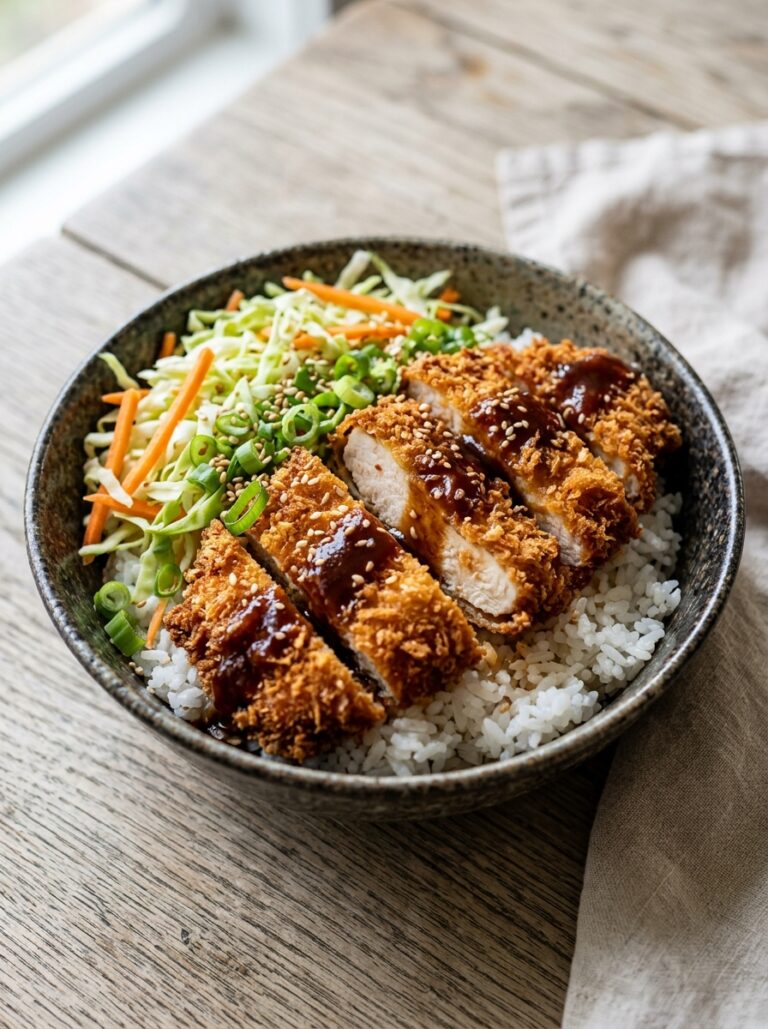
Chicken Breast Katsu Bowls: Easy Homemade Recipe
Crispy, breaded chicken breast served over rice with tangy tonkatsu sauce, cabbage, carrots, and green onions. A homemade Japanese-inspired dish perfect for weeknight meals, delivering restaurant-quality texture and flavor.
- Total Time: 45
- Yield: 4 servings 1x
Ingredients
4 boneless chicken breasts
1 cup panko breadcrumbs
1 cup eggs, beaten
1 cup all-purpose flour
1 tablespoon salt
1 teaspoon black pepper
4 cups cooked rice
2 cups shredded cabbage
1 cup matchstick-shaped carrots
2 green onions, sliced
1 cup tonkatsu sauce (use non-alcoholic or halal alternative)
Vegetable oil for frying
Instructions
Preheat oil in a large skillet to 350°F (175°C)
Season chicken breasts with salt and pepper
Dredge each piece in flour, shake off excess
Dip in beaten eggs, allowing excess to drip off
Coat with panko breadcrumbs, pressing firmly to adhere
Fry each chicken patty in hot oil until golden and crispy, 3-4 minutes per side
Place 1 cup rice in each bowl, top with a chicken patty
Add shredded cabbage, carrots, and green onions
Drizzle with tonkatsu sauce before serving
Notes
Maintain oil temperature around 350°F to avoid sogginess
For halal compliance, use tamari-based tonkatsu sauce without alcohol
Chicken can be breaded ahead and fried just before serving
Leftovers store well in airtight containers for 2-3 days
- Prep Time: 20
- Cook Time: 25
- Category: Lean Chicken
- Method: Frying
- Cuisine: Japanese
- Diet: Halal
Nutrition
- Serving Size: 1 bowl
- Calories: 550
- Sugar: 8g
- Sodium: 1000mg
- Fat: 20g
- Saturated Fat: 5g
- Carbohydrates: 55g
- Fiber: 3g
- Protein: 35g
- Cholesterol: 100mg