“The secret to a happy life is a well-seasoned cast iron skillet and enough onions to make you cry tears of joy,” a famous chef once told me, and honestly? They weren’t lying! If you’ve ever struggled with dry, rubbery meat, this chicken breast with creamy onion sauce is about to be your new best friend. Did you know that over 60% of home cooks struggle with overcooking poultry? It’s a tragedy, really! But today, we’re fixing that with a recipe that’s so lush and velvety, you’ll want to drink the sauce with a straw. We are talking about deep caramelization, heavy cream, and just the right touch of herbs to make your kitchen smell like a five-star bistro.
The Secret to Perfection: Searing Your Chicken
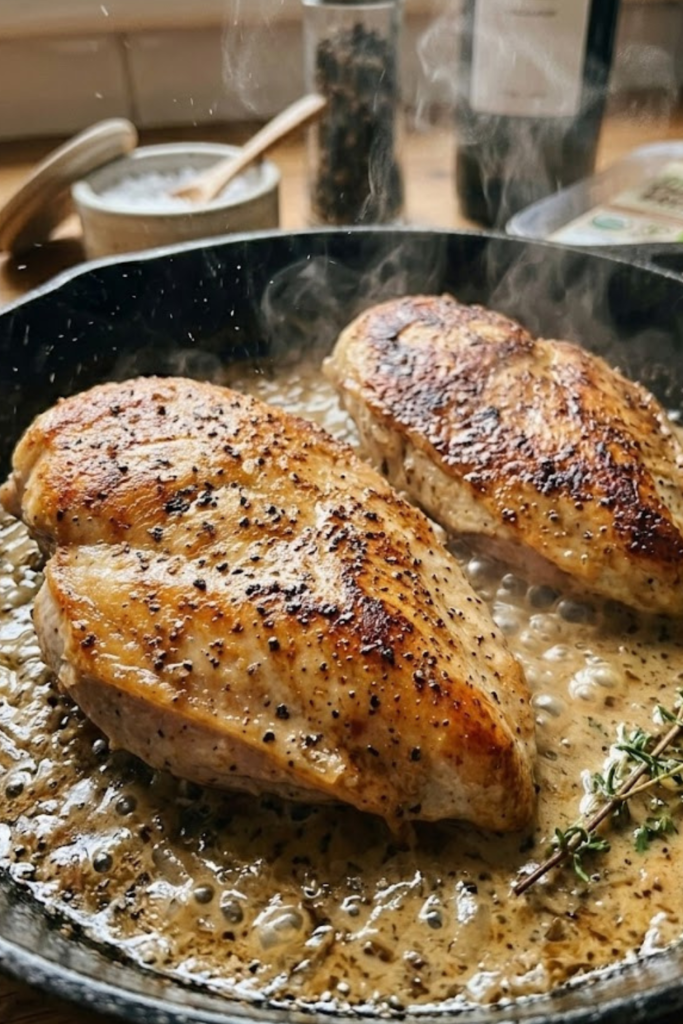
You know, I’ve taught a lot of folks how to cook over the years, and the one thing that separates a “meh” dinner from a “wow” dinner is how you handle the meat at the start. When making chicken breast with creamy onion sauce, you can’t just throw the poultry in the pan and hope for the best. You need a good sear.
I remember when I first started out, I used to be so afraid of the high heat that I’d put the chicken in a lukewarm pan. It would just sit there and turn a sad, gray color. It tasted like cardboard! Now I know better. You want that pan nice and hot—not smoking, but definitely sizzling. Pat your chicken dry with a paper towel first. If it’s wet, it’ll just steam instead of getting that beautiful golden crust we call the Maillard reaction.
One of the biggest mistakes people make is poking the chicken too soon. If you try to flip it and it sticks, it’s not ready! You just have to leave it alone for four or five minutes. When it has a good crust, it will literally release itself from the pan. If you force it, you’ll leave all that tasty golden skin stuck to the metal, and that’s just a waste of flavor.
You also need to give the pieces some space. If they are touching each other, the temperature of the pan drops and you lose that crispiness. I usually do two at a time if my skillet is small. It might take a bit longer, but it’s better than having soggy, boiled-looking meat. Plus, it gives you a second to breathe and sip some water while you cook.
I always tell my students to get a digital thermometer. You want to pull the chicken out when it hits about 160°F or 162°F. It will keep cooking while it rests on a plate, reaching that safe 165°F mark without becoming dry as a bone. Most people overcook chicken because they are scared, but the thermometer takes all the guesswork out of it.
It takes a little patience, but getting that golden brown color on the outside makes the whole dish taste much more expensive than it actually is. It’s the foundation for everything else we’re going to do in the pan.
Mastering the Caramelized Onion Base
If you want a sauce that people actually talk about the next day, you’ve got to get the onions right. I used to think I could just crank up the heat and be done in five minutes, but all I got was burnt bits and a bitter taste. No thanks! The secret to that deep, savory sweetness in chicken breast with creamy onion sauce is giving those onions the time they deserve.
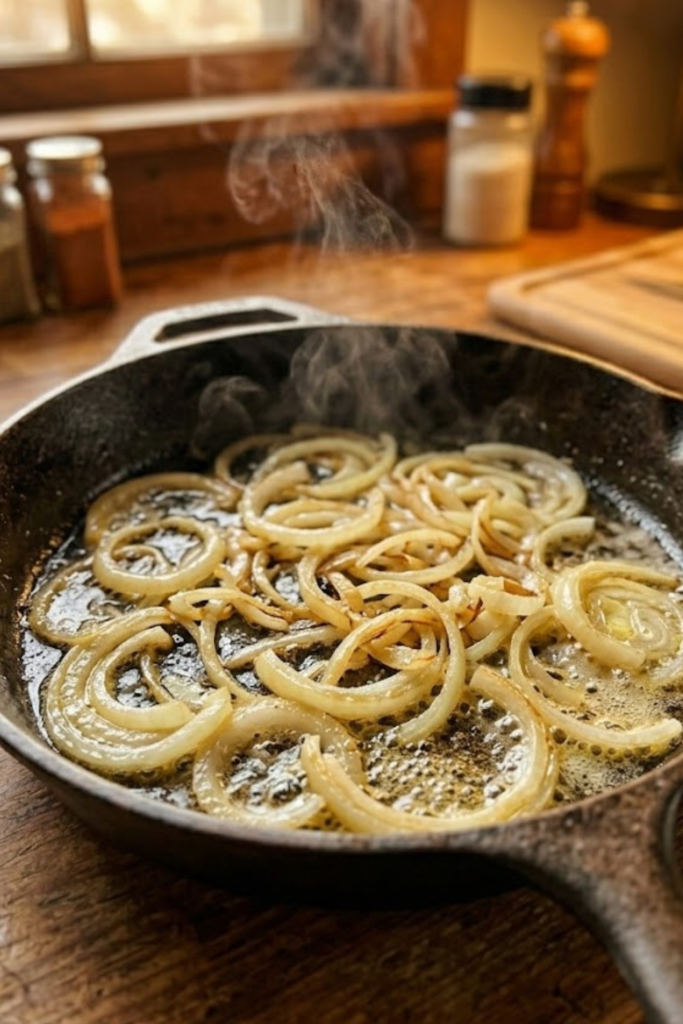
I usually use yellow onions or Vidalias because they have more sugar in them. Slice them thin—not paper thin, but enough so they melt down into the sauce. When you put them in the pan with a little butter, keep the heat on medium-low. You’re looking for that soft, jammy texture. It’s okay if they take 15 or 20 minutes; just stir them every so often while you’re cleaning up the kitchen or checking your emails.
If the onions start to look dark brown too fast, turn your stove down immediately. You want a rich golden color, not a charred black mess. Caramelization is a slow chemical reaction, and if you rush it, you end up with onions that are burnt on the outside and raw in the middle. Low and slow is the only way to get that candy-like sweetness that balances out the savory chicken.
Once the onions are soft and brown, there’s going to be a lot of flavor stuck to the bottom of your pan. This is what chefs call “fond,” and it’s pure gold. I usually pour in a splash of chicken stock or a little white wine to loosen it up. Use a wooden spoon to scrape all those brown bits up so they dissolve into the liquid. That’s where the “umami” lives, and it gives the sauce a depth you just can’t get from a jar.
You’ll know they’re ready when they look translucent and start to smell like heaven. If they still have a crunch or a sharp bite, they aren’t done yet. Don’t rush the softness! You want them to be so tender they practically disappear into the cream later on. It’s a simple step, but skipping the caramelization is like trying to build a house without a foundation. It just won’t hold up, and your sauce will taste flat.
Building the Creamy Onion Sauce
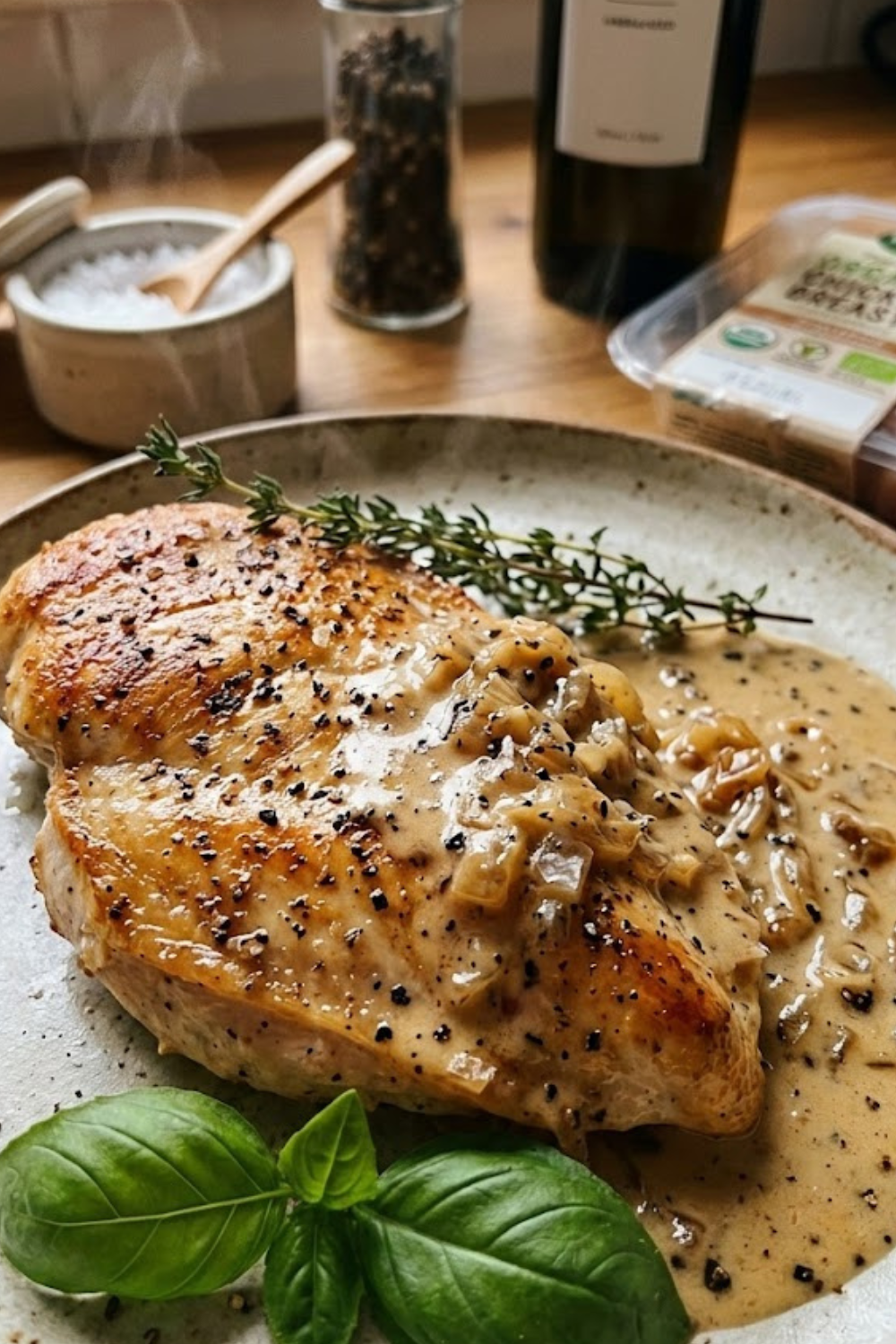
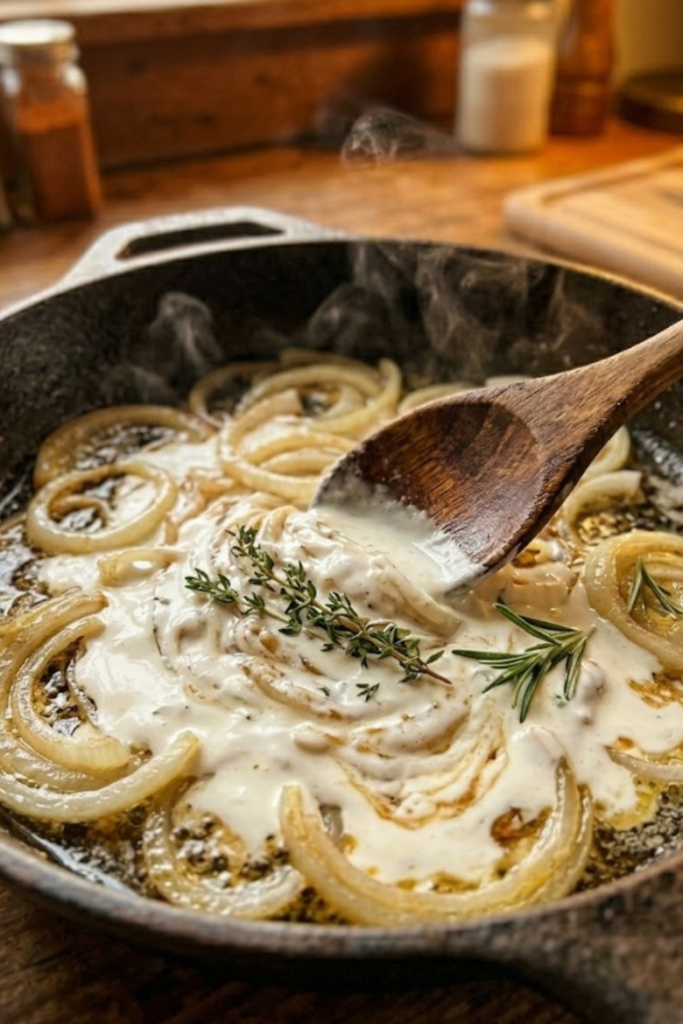
Now we’re at the part where everyone usually starts drooling. Once those onions are soft and golden, it’s time to turn them into a sauce that’s so good you’ll want to lick the pan. I’ve made the mistake of using milk before because I was trying to be healthy, but honestly? It just made the sauce thin and kind of sad. If you want that restaurant-style chicken breast with creamy onion sauce, you really need to go for the heavy cream.
The trick here is to let the sauce simmer. You don’t want a violent boil, just a nice steady bubble. As the water in the cream evaporates, the sauce gets thicker and the onion flavor gets more concentrated. It’s like magic. Sometimes I get distracted by my dog barking at the mailman and let it go a little too long, but don’t panic! If it gets too thick, just stir in a spoonful of broth to loosen it back up.
When you are picking out your ingredients, always use heavy whipping cream for the best results. It has the right amount of fat to stay stable when it hits the heat. If you absolutely have to swap it, full-fat coconut milk works okay, but it changes the flavor a bit and makes it taste a little more tropical. Avoid half-and-half if you can, because it tends to break and look curdled if the heat is even a tiny bit too high.
Fresh herbs are a total game changer for this part of the recipe. I love tossing in some chopped thyme or even a bit of parsley right at the end. It cuts through the richness of the cream and makes the whole dish look way better than if it was just a sea of beige. I remember one time I forgot the herbs, and the dish just looked a bit “blah,” even though it tasted fine. The green bits make it feel like a real meal.
Before you put the chicken back in, grab a clean spoon and do a final taste test. This is your last chance to get it perfect before serving. Does it need more pepper? Maybe another pinch of salt? Sometimes a tiny squeeze of lemon juice can brighten the whole thing up if it feels too heavy. You want to be happy with the flavor now so you aren’t trying to fix it at the dinner table.
Once the sauce is thick enough to coat the back of your spoon, slide those golden chicken breasts back into the pan. Let them hang out in the sauce for a minute so they get all happy and coated. This lets the meat soak up some of that onion goodness while the juices from the chicken mix back into the cream. It’s the best way to finish the dish!
Honestly, making chicken breast with creamy onion sauce is one of those things that makes you feel like a pro even on a Tuesday night. It’s all about those layers of flavor—the crust on the chicken, the sweetness of the onions, and that silky finish from the cream. I’ve made this for my family a dozen times, and there are never any leftovers. My kids usually end up scraping the last bits of sauce off the plate with a piece of bread!
I really hope these tips help you get a dinner on the table that you’re proud of. Cooking doesn’t have to be scary or perfect; it just has to taste good. If you tried this and loved it, please share it on Pinterest so your friends can get in on the goodness too!