Did you know that 75% of home cooks say chicken is their go-to protein, but over half admit it usually ends up dry and boring? Not today! I’m going to show you how to make a truly juicy chicken breast with garlic butter glaze. Trust me, it’s an absolute game-changer for busy weeknights. Let’s fix those dry chicken woes forever!
Choosing the Right Skillet for Your Pan-Seared Chicken
Let’s talk about pans. In my classroom, I tell my students that having the good tools makes any job easier. It’s the exact same thing when you are cooking at home for your family. I’ve seen so many people get frustrated because their food doesn’t look like the pictures, and usually, it’s just because they are using a flimsy pan that can’t handle the heat.
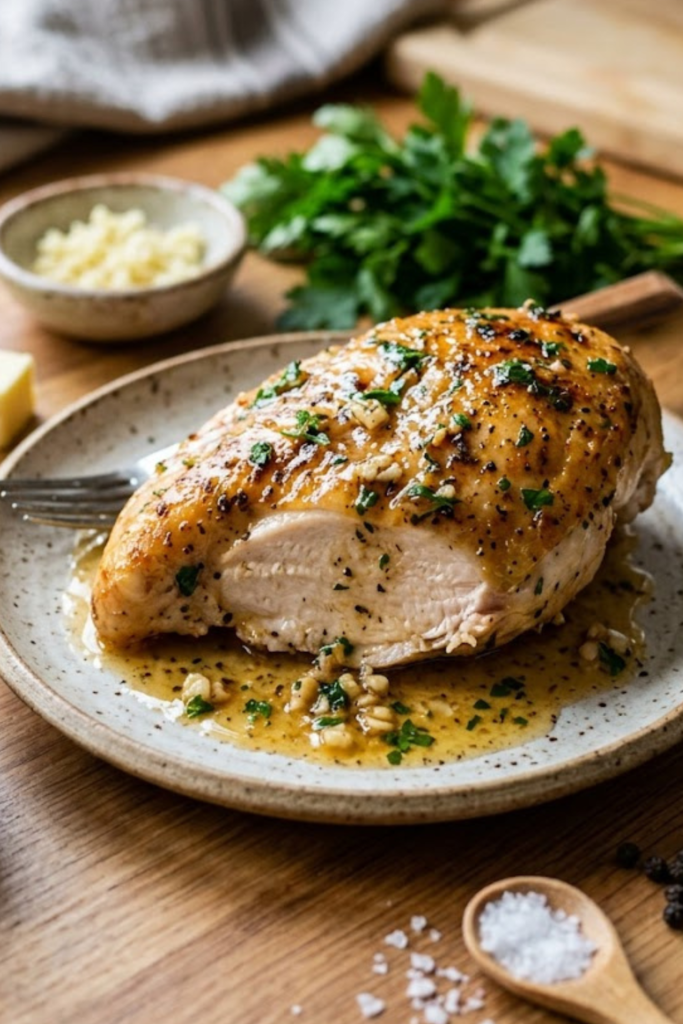
If you really want a beautiful golden crust on your meat, a heavy cast iron pan beats a regular non-stick skillet every single time. Teflon is fine for cooking up morning eggs, but for making this chicken breast with garlic butter glaze, you need a pan that holds heat super well. Cast iron is thick and heavy, which means once it gets hot, it stays hot even when you drop a cold piece of meat onto it. This constant heat is what creates that delicious “crunch” on the outside while keeping the inside soft.
Getting that great crust means you have to get the pan nice and hot before the meat even goes inside. If the pan is cold, the meat will just boil in its own juices and you won’t ever get that golden color we all love. You want to hear a loud sizzle the second that chicken touches the metal. If you don’t hear that sound, take the meat out and wait another minute or two because a quiet pan is the enemy of a good dinner.
But be careful, you have to watch your stove temperature so the butter doesn’t burn later on. Keep the heat on medium-high for the first sear, then be ready to turn it down low when we start making the sauce right in the same pan. If the pan stays screaming hot, the milk solids in the butter will turn black and bitter in seconds, ruining your whole glaze. I always keep a kitchen towel nearby to move the pan off the burner for a moment if I see too much smoke starting to rise.
Also, make sure your pan is big enough so you aren’t crowding the chicken pieces together. If they are touching each other, they will steam instead of sear, and you’ll lose that crispy texture we are working so hard to get. A 12-inch skillet is usually perfect for two or three large breasts. If you try to cram four in there, you’re just asking for soggy meat, and nobody wants that! Taking the time to pick the right size and material for your cookware really is the first step to becoming a better cook.
Prepping Ingredients for the Perfect Garlic Butter Sauce
I really believe that prep work is half the battle in the kitchen. Chop and measure all your ingredients before you even turn on the stove, so you aren’t running around the kitchen panicking while the meat cooks.
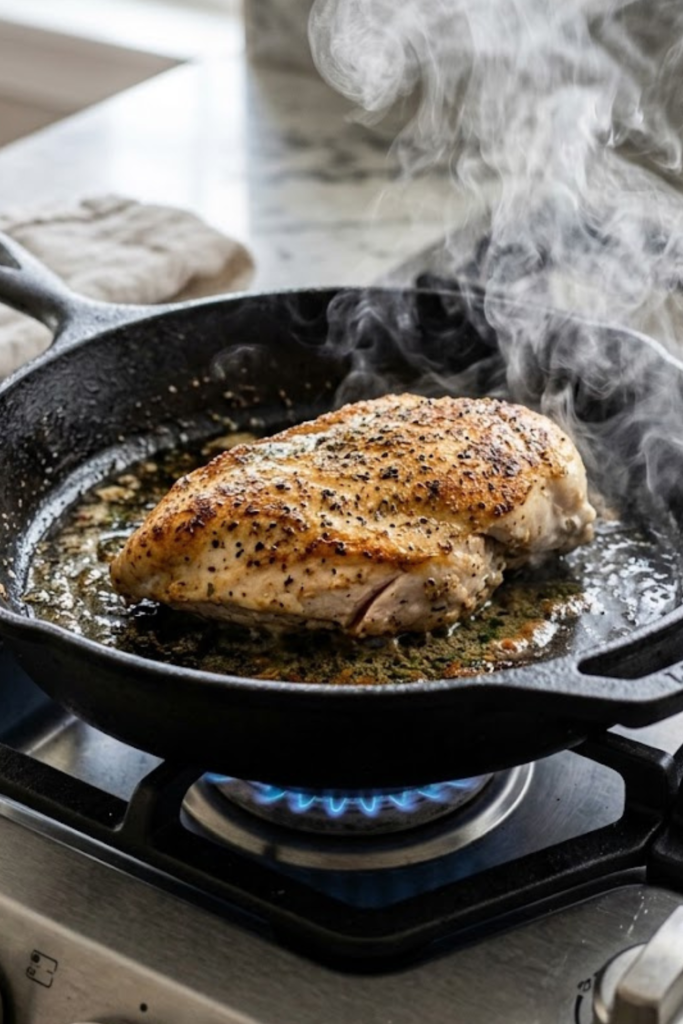
First, let’s talk about the garlic. The difference between chopping fresh garlic yourself and using those little jars of wet garlic paste from the store is huge. Fresh wins every time for taste, there’s just no comparison for flavoring your food!
Make sure you pick a good quality unsalted butter too. Because we are melting it right in the pan to create our chicken breast with garlic butter glaze, you need to control exactly how salty your dinner gets. You can always add a pinch of salt yourself at the end.
Grab some fresh herbs like parsley or thyme from the produce section as well. Fresh greens really wake up this rich, buttery dish, and honestly, it just looks super pretty on the plate.
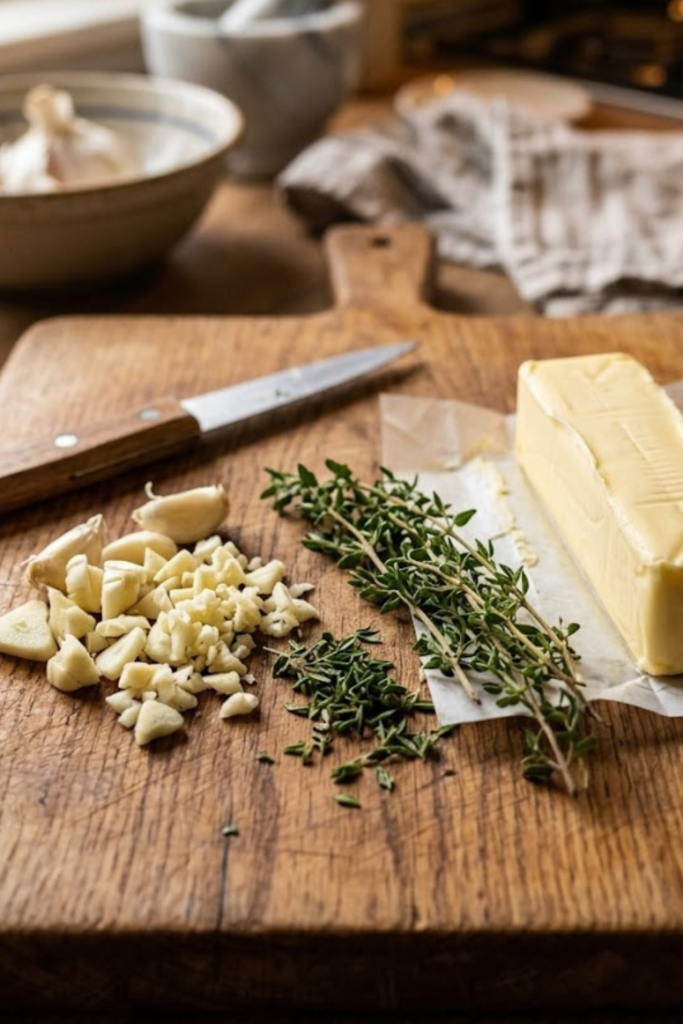
Step-by-Step Cooking: Nailing the Juicy Chicken Breast
Okay, here is the part that stresses out a lot of home cooks: cooking the poultry without turning it into dry cardboard. First, take a paper towel and pat your meat dry to remove surface moisture, which really helps it brown better.
Put a little drizzle of oil in your hot pan and lay the chicken down. The idea is to sear each side for about 5 to 7 minutes without overcooking the inside of the meat.
The golden rule here? Don’t touch it! Just let it sit there quietly in the pan so it forms a nice brown crust on the bottom before you try flipping it with your spatula. If it sticks to the pan, it means it’s not ready to flip yet.
I highly recommend buying a digital meat thermometer if you don’t have one already. Guessing the temp with your finger is the best way to get dry meat. You want the thickest part to reach 165°F, but here’s a pro tip: take the pan off the burner when the thermometer hits 155°F, because the meat keeps cooking itself with its own heat!
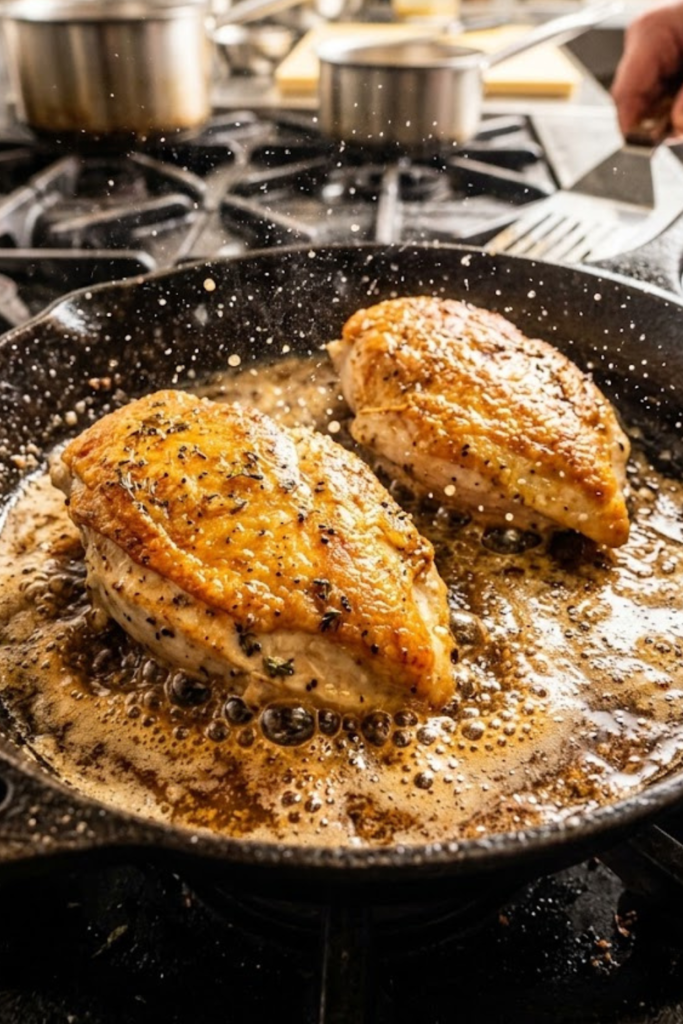
Basting the Chicken Breast With Garlic Butter Glaze
I remember a real disaster when I first started cooking for my friends: I cooked the poultry so long it looked like a shoe sole. It was so dry we had to drink huge glasses of water just to swallow every bite! It was super embarrassing because I really wanted to impress them with my skills, but instead, we all just sat there chewing for what felt like hours. That was the day I realized that high heat alone isn’t your friend when it comes to lean meats.
That is when I found out about the magic of basting meat at the end of cooking. Basting a chicken breast with garlic butter glaze is the absolute secret to giving it incredible flavor and keeping all the softness inside. It creates a sort of protective barrier that keeps the heat from drying out the surface while forcing that delicious fat back into the fibers. I honestly think this is the difference between a “okay” meal and a restaurant-quality dinner you’d pay thirty dollars for.
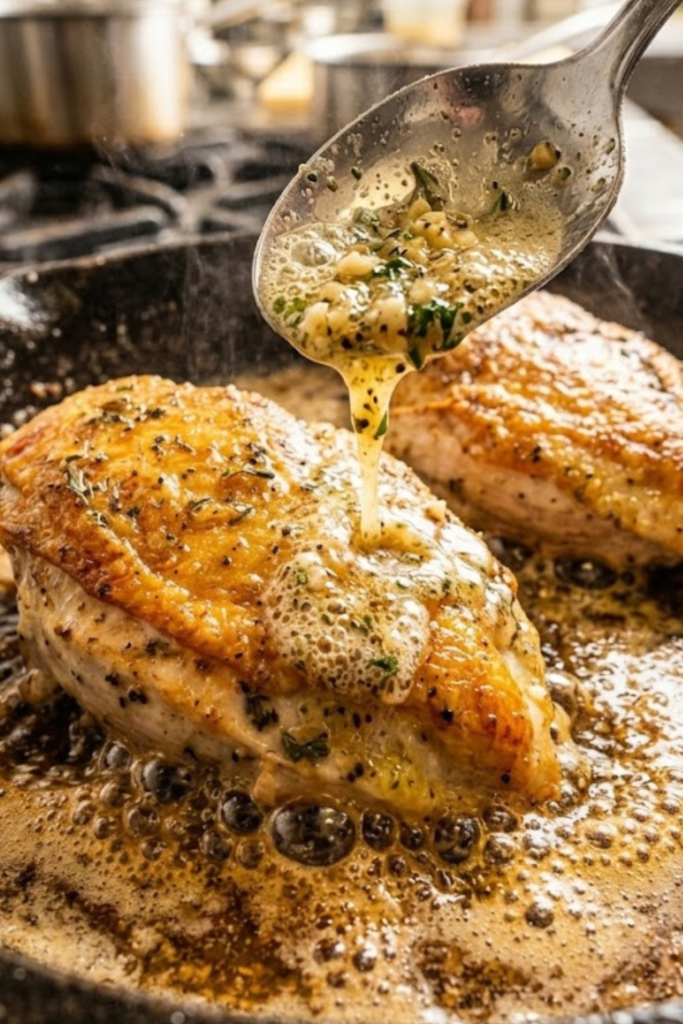
When your chicken is almost done cooking, drop the heat down low. Toss in your butter, your smashed fresh garlic cloves, and your sprigs of thyme. The butter will melt, get super bubbly, and smell amazing in your whole house. Take a regular soup spoon and tilt your pan slightly toward you to collect the liquid. You want that butter to be foaming but not turning brown or black, so keep an eye on that burner. If it starts to smoke, you’ve gone a bit too far and should pull it off the heat immediately.
Start scooping up that melted, flavored butter and pour it right over the top of the meat continuously for a solid minute. This process, which French chefs call “arrosé,” helps the chicken finish cooking gently in a bath of aromatic fat. You’ll see the color of the crust deepen into a beautiful mahogany brown as you work. I usually do about ten to fifteen big scoops per breast just to be sure every inch of that chicken breast with garlic butter glaze is fully coated and glistening.
Finally, the most important part: let the meat rest! If you cut it right away, all the juices will run all over the cutting board and you’ll be back to square one with dry meat. Put the chicken on a plate, cover it loosely with foil, and leave it alone for at least 5 minutes. This gives the muscle fibers time to relax so they can hold onto those juices. Then serve it up and pour all the leftover pan juices right on top for that extra punch of garlic goodness!
Well guys, the bell is about to ring on this cooking lesson! Making this chicken breast with garlic butter glaze ain’t rocket science, but it sure tastes like it took all day. It is requested by my family at least twice a week.
Let’s review what we learned today. First, using that heavy cast iron skillet is gonna give you that amazing golden crust. Then, making sure you use fresh minced garlic and unsalted butter makes the flavor profile pop.
I remember times when dinner was ruined because I just guessed the cooking time. Getting a meat thermometer changed my life! The meat was saved by me finally learning to pull it off the heat at 155°F before it dried out.
And please, do not forget the most important step of all. Spoon-basting your chicken breast with garlic butter glaze adds so much rich moisture. Then, resting the meat keeps all those wonderful juices right where they belong.
Between grading papers and running kids around, weeknight meals need to be fast. This 20 minute meal is my absolute lifesaver. You can totally throw in some easy side dishes like roasted veggies or mashed potatoes to round it out.
I’ve made plenty of mistakes in the kitchen over the years. Overcooking poultry is a rite of passage, honestly. But once you master this pan seared chicken technique, your family friendly dinners will never be boring again.
This juicy chicken really does speak for itself. Your kitchen is going to smell absolutely unbelievable tonight. Just thinking about that savory herb butter makes my mouth water!
If you found this little lesson helpful, I’d love it if you passed it along. Pin this chicken breast with garlic butter glaze recipe to your favorite Pinterest dinner board so you don’t lose it. Class dismissed, and happy cooking!