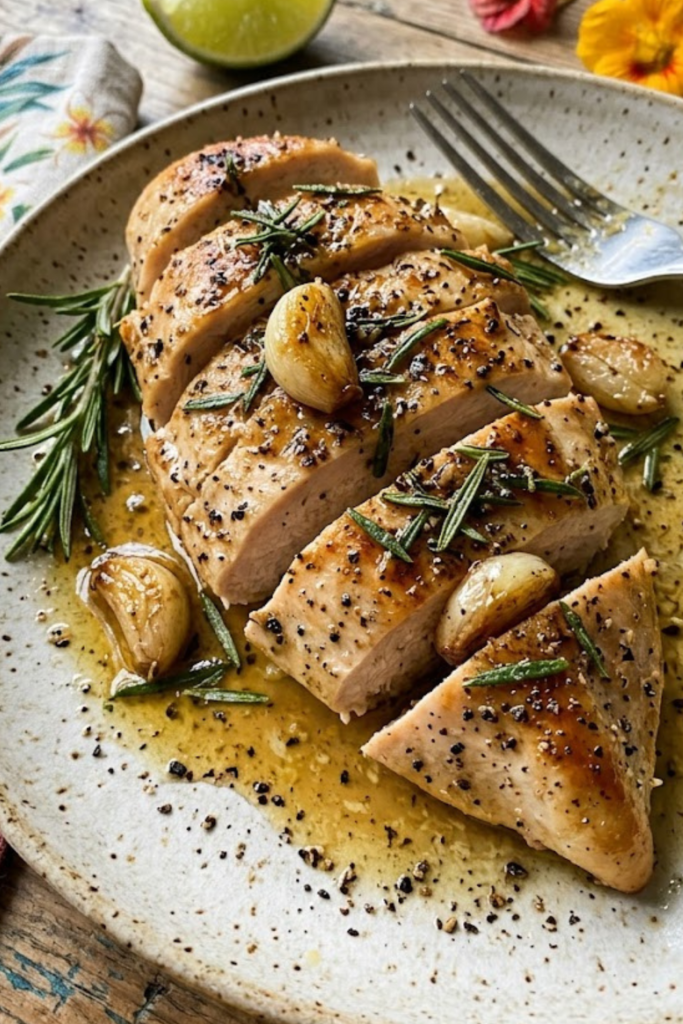
I used to think chicken breast was the “cardboard” of the culinary world. Seriously, I’ve overcooked enough poultry to fill a small farm, leaving me with dry, stringy messes that required a gallon of water just to swallow! But then I discovered the magic of a proper chicken breast with herb roasted sauce. Did you know that according to recent 2026 culinary surveys, over 70% of home cooks struggle with keeping white meat moist? It’s a real epidemic! This recipe is my absolute “triumph” over the dry-chicken blues. We’re talking about a golden-brown sear, a rich, buttery herb infusion, and juices that actually stay inside the meat. Let’s get cooking!
Selecting the Right Poultry: Size and Quality Matter
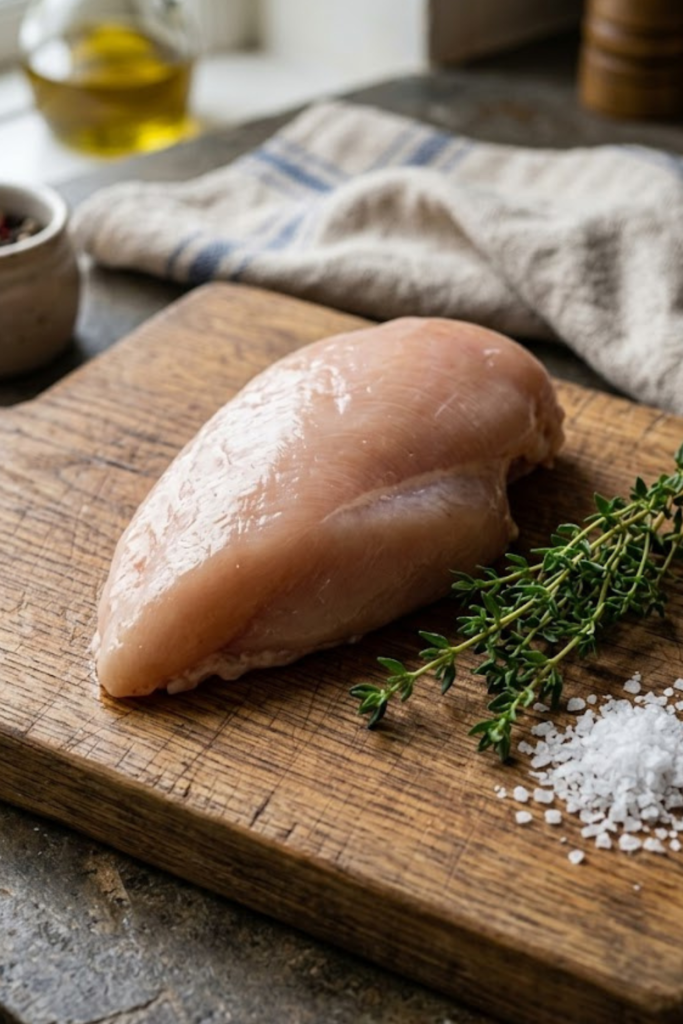
I’ve spent a lot of years in the kitchen, and if there is one thing I’ve learned, it’s that not all chicken is the same. When you are standing in the grocery store looking at all those plastic-wrapped packages, it can feel a bit overwhelming. I always tell my students to look for “air-chilled” chicken. Most chicken is cooled in big vats of cold water, which means the meat soaks up extra liquid. When you cook it, that water leaks out and steams your chicken instead of searing it. Air-chilled birds might cost a few cents more, but they taste like actual chicken and get a much better crust.
Another thing I always do before I even turn on the stove is check the size. Some chicken breasts these days are huge—almost the size of a small turkey! If one side is really thick and the other is thin, the thin part will turn into rubber before the thick part is even safe to eat. I like to put the chicken between two pieces of plastic wrap and give it a few good whacks with a meat mallet or even a heavy rolling pin. You don’t want to mash it; you just want it to be the same thickness all the way across. It makes a world of difference in how juicy the final meal turns out.
You should also take a peek at the color of the meat while you’re at the store. You want a nice, healthy pink color, not something that looks gray or dull. If you see a lot of white striping—those little white lines running through the muscle—it usually means the chicken grew too fast and might be a bit tough. I try to find breasts that are about 6 to 8 ounces each because they are much easier to handle in a standard skillet.
Don’t be afraid to smell the chicken as soon as you open the package at home, too. It should have almost no smell at all. If it smells a bit funky or sour, take it back to the store. Also, I always pat the meat bone-dry with paper towels before I start seasoning. If the surface is wet, it won’t matter how good your pan is; you’ll never get that crispy, golden finish we’re after. Taking these extra few minutes to pick the best bird and prep it right really changes the game for your dinner.
The Sear: How to Get That Golden Crust
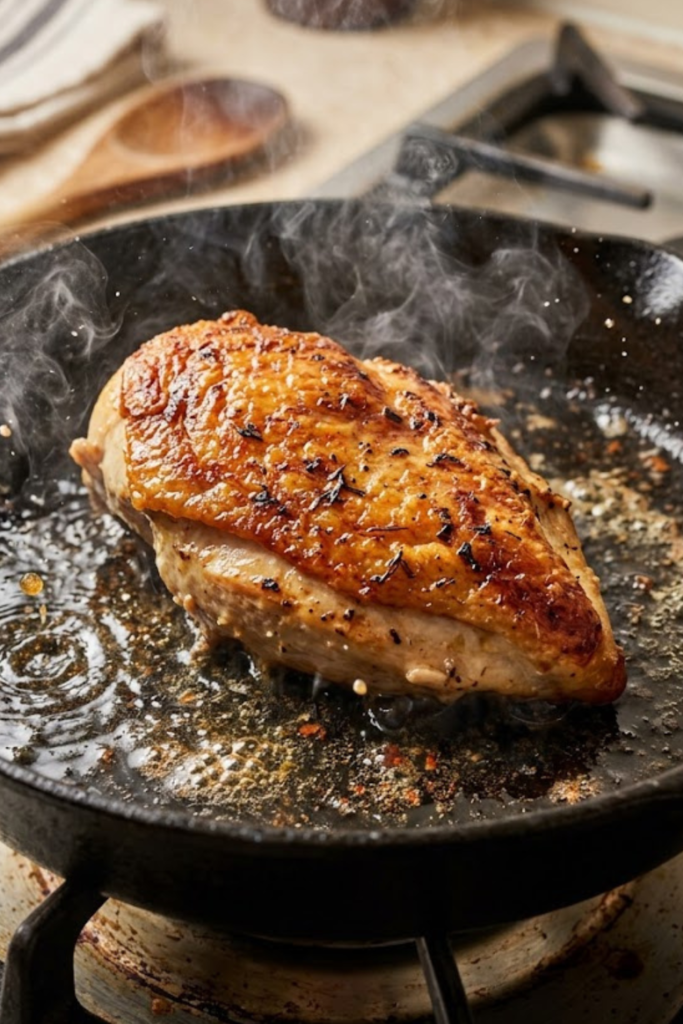
I can’t tell you how many times I’ve seen people throw a cold piece of meat into a lukewarm pan and wonder why it looks gray and sad. If you want that beautiful, golden-brown crust—the kind that actually locks in the flavor—you have to be patient. I always set my pan over medium-high heat and add a bit of oil. You’ll know it’s ready when the oil starts to shimmer and move like water. If it’s smoking, it’s too hot; if it’s just sitting there, wait another minute.
When you finally drop the chicken in, you should hear a loud sizzle. That’s the sound of magic happening. My biggest piece of advice? Leave it alone! It’s tempting to keep poking it or lifting the corner to see if it’s brown yet. But if you move it too soon, it’ll stick to the pan and tear. I usually wait about 5 to 6 minutes until the edges start to look opaque. When it’s ready to flip, the meat will naturally release from the surface. That crust isn’t just for looks; it’s where all the deep, roasted flavor lives.
One trick I use is to dry the chicken with a paper towel right before it hits the pan. If there is any moisture on the skin, it has to evaporate before the browning can start, which usually means your chicken stays in the pan too long and gets tough. I also like to use a heavy skillet, like cast iron, because it holds onto the heat much better than those thin aluminum pans. If the pan temperature drops the second you put the meat in, you’ll lose that crunch.
Also, don’t crowd the pan. If you’re cooking for a big family, do it in batches. If the chicken breasts are touching each other, they trap steam between them, and you end up with soggy meat instead of a crispy sear. I usually give each piece at least an inch of breathing room. It might take a few extra minutes to cook in two rounds, but the texture is so much better that it’s worth the wait. Once you see that deep mahogany color on the bottom, you know you’ve done it right.
Crafting the Herb Roasted Sauce
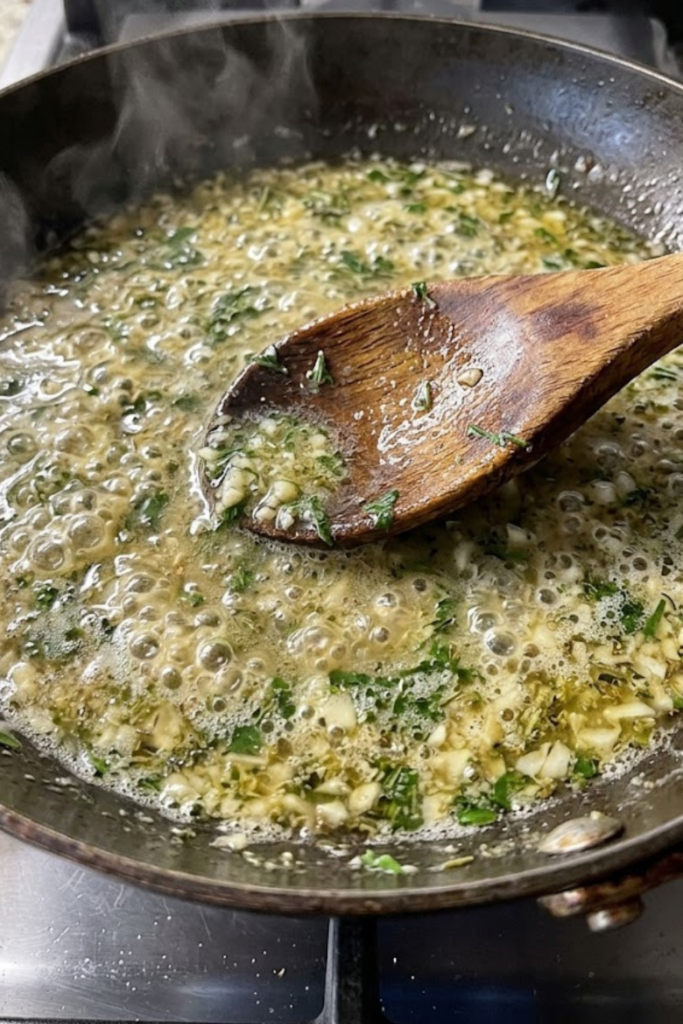
Once that chicken is golden and cooked through, don’t you dare wash that pan! All those little brown bits stuck to the bottom are what chefs call “fond,” and they are like gold for your sauce. I usually turn the heat down just a tad and toss in a big knob of butter. As it melts, I add in my garlic and herbs. I really like using a mix of rosemary and thyme because they smell like a Sunday afternoon at grandma’s house.
The secret to a sauce that isn’t greasy is a splash of liquid to pick up those brown bits. I use a little chicken stock or even a squeeze of lemon juice. It’ll sizzle and steam, and as you scrape the bottom with a spoon, the sauce turns this beautiful dark color. It only takes a minute or two to thicken up. I’ve noticed that if I add the herbs right at the end, they stay bright and green instead of turning bitter. Pouring that warm, buttery herb mixture over the crispy chicken is easily the best part of the whole process.
If you find the sauce is a bit too thin, just let it bubble for another thirty seconds. I sometimes add a tiny spoonful of Dijon mustard right at the end; it helps the butter and stock stay mixed together so the sauce looks smooth and glossy. You want it to be thick enough to coat the back of your spoon. If you accidentally let it get too thick or it starts to look oily, just whisk in another tablespoon of water or stock to bring it back to life.
I also like to throw in a pinch of red pepper flakes if I want a tiny bit of a kick, but that’s totally up to you. Make sure you taste it before you pour it over the meat. Since the pan already had salt from the chicken, you might not need to add much more. I’ve found that a crack of fresh black pepper right at the finish makes the rosemary flavor really pop. This sauce is so good you’ll probably want to lick the pan, but try to save some for the actual dinner! It’s the kind of sauce that makes people think you spent hours in the kitchen when it really only took you about three minutes.
The Importance of Resting Your Meat
I know you’re hungry, and the kitchen smells amazing right now, but this is the part where you have to be the most patient. If you take that chicken right out of the pan and slice it open immediately, all those delicious juices you worked so hard to keep inside will just run all over your plate. You’ll end up with a puddle of liquid and a piece of meat that feels like a sponge. It’s a total bummer.
I always move my chicken to a clean plate or a cutting board and let it sit for at least five minutes. I don’t even cover it tightly with foil because I don’t want the steam to make my crispy crust go soft. While it rests, the heat on the outside of the chicken actually moves toward the center, finishing the cooking process perfectly. This is called “carryover cooking.” If you give it those few minutes, the juices stay right where they belong—inside the meat. When you finally take that first bite, it’ll be the tenderest chicken you’ve ever made.
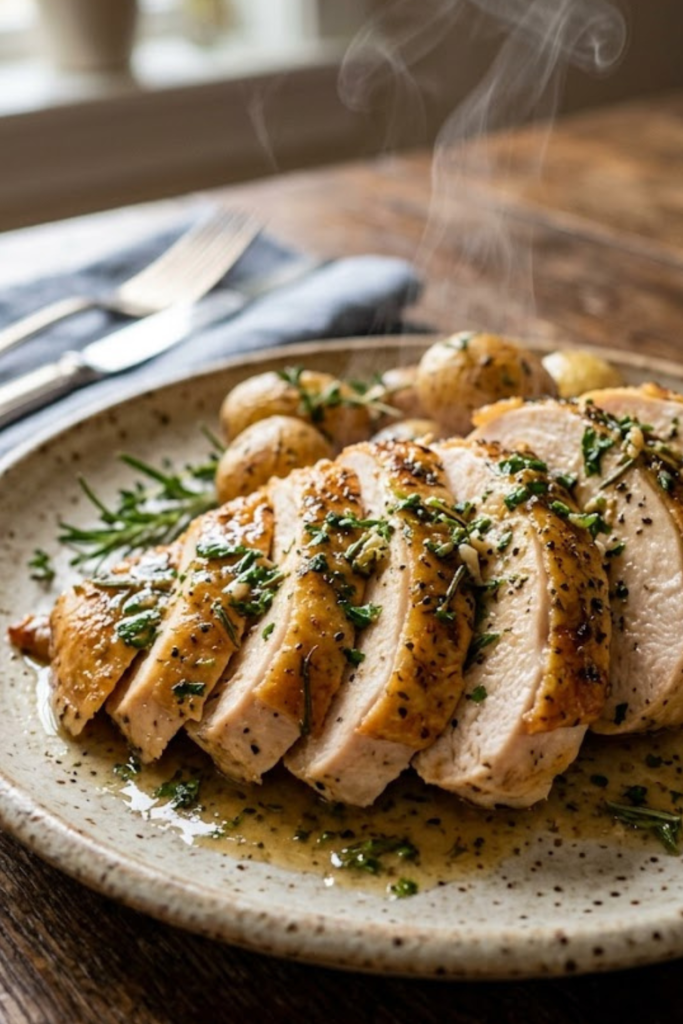
There you have it—no more dry, sad dinners! Mastering chicken breast with herb roasted sauce is all about patience and the right aromatics. Once you taste that first bite of butter-basted goodness, you’ll never go back to plain salt and pepper. I’ve made this for my family dozens of times, and it’s the one meal everyone actually clears their plate for.
If you loved this recipe and found these tips helpful, please share it on Pinterest so your friends can stop eating cardboard too! It really helps others find these simple kitchen wins.